
by Editor | Jul 2, 2023 | News
To commemorate Governor Michael Dukakis’s 90th birthday on November 3, 2023, leaders of the Global Enlightenment Community are joining forces to create a tribute: AIWS City. Governor Dukakis, as a co-founder and Chair of the Boston Global Forum, has made significant contributions to fostering Global Enlightenment. The establishment of AIWS City serves as a testament to his visionary leadership and the accomplishments of the Global Enlightenment Community.
Recognizing the Global Enlightenment Economy: AIWS City will serve as a platform to honor the achievements of the Global Enlightenment Economy, focusing on two key aspects:
- An Innovative and Virtuous Economy Empowered by AI and Data: The Global Enlightenment Community envisions an advanced economic and political framework for the AIWS, characterized by a creative, innovative, and virtuous economy fueled by AI and data. This framework aims to provide equal opportunities for all citizens, empowering them to become creators and innovators.
- Milestones on the Path to the Age of Global Enlightenment: AIWS City stands as a symbol of historical achievements in the global enlightenment economy. It represents significant milestones on the journey towards the Age of Global Enlightenment, embodying the spirit of global cooperation, knowledge sharing, and collective progress. By recognizing and celebrating these accomplishments, AIWS City inspires individuals and nations to embrace principles such as peace, collaboration, and innovation.
AIWS City, as a digital city with the Global Enlightenment Community, holds immense significance. It serves as a beacon of inspiration, encouraging individuals and nations to adopt the principles of the Global Enlightenment Economy. Within its digital landscape, AIWS City promotes an environment that fosters creativity, innovation, and collaboration. It encourages the exchange of knowledge and ideas, paving the way for transformative advancements in AI and data-driven technologies.
As we celebrate Governor Michael Dukakis’s 90th birthday, we pay tribute to his exceptional leadership and his contributions to the Global Enlightenment. AIWS City stands as a testament to his vision and the achievements of the Global Enlightenment Community. This digital city represents the Global Enlightenment Economy, emphasizing the importance of an innovative and virtuous economy empowered by AI and data. AIWS City serves as an inspirational symbol, urging individuals and nations to embrace the principles of peace, collaboration, and innovation as we progress towards the Age of Global Enlightenment.

by Editor | Jun 25, 2023 | Event Updates, News
Since December 12, 2017, the Boston Global Forum have built AI World Society, a Seven-Layer model of a world, reflecting a society deeply rooted in applied AI, with the vision of ushering in an Age of Global Enlightenment. The BGF is building AIWS Economy-Politics in the AI Age.
BGF is very pleased to update and clarify AIWS this June:
Standards of AIWS:
Social Contract for the AI Age
Framework for Human-Centered AI Based on the Laws of Nature
AI International Accord (AIIA)
Legal Framework for Global Governance of AI
BGF Framework for AI Global Governance
The Book “Remaking the World – Toward an Age of Global Enlightenment”
Global Enlightenment Economy:
Data Economy for the Age of Global Enlightenment
Every citizen, an innovator
AIWS Market
Global Enlightenment Politics:
AIWS-Government
AIWS-Citizen
AIWS Rewards
Global Enlightenment Education:
AIWS University
AIWS Global Enlightenment Education Program
AIWS Leadership Program
Global Enlightenment Technological Achievements:
AIWS-Assistants
Community and Network:
World Leaders for Peace and Security
World Leaders in AIWS
Global Enlightenment Leaders
Global Enlightenment Community – AIWS City
Global Enlightenment Club
Global Enlightenment Music, Art and Literature Network
Global Enlightenment Mountain (GEM) – AIWS.net
Global Enlightenment Houses
BGF and its contributors will build:
Arts and Literature:
Global Enlightenment Music
Global Enlightenment Art
Global Enlightenment Movies and Films
Global Enlightenment Pieces (in Literature)
Global Enlightenment Legends (National Parks, National Monuments)
Global Enlightenment Sport
Global Enlightenment Landmarks:
(Historical, Significant Achievements)
by Editor | Jun 25, 2023 | Global Alliance for Digital Governance
A report from:
Shamira Ahmed, Executive Director, Data Economy Policy Hub
Dio Herdiawan Tobing, Head, Public Policy, Asia, World Benchmarking Alliance
Mohammed Soliman, Director, Strategic Technologies and Cyber Security Program, Middle East Institute
Artificial intelligence (AI) creates unique challenges for the Global South. While AI presents opportunities for ‘leapfrogging’, it can also result in considerable adverse externalities if it is developed and deployed irresponsibly.
Despite being more susceptible to the negative impacts of AI, current global AI governance initiatives do not reflect Global South realities. Multilateral reform for global AI governance is urgently needed to facilitate a transversal, mission-oriented approach that incorporates multiple stakeholders and ensures the legitimacy of international cooperation. This will help guarantee that systemic consolidation of power and control is addressed, digital dividends are distributed more equitably, and existential AI risks are mitigated to suit the various socioeconomic realities of both the Global South and Global North.
This policy brief recommends that the G20 lead efforts to reflect our interdependent, culturally diverse, and modern society by amplifying participation of the Global South in the development of global AI governance.
The Global Alliance for Digital Governance supports this idea and will contribute to G20 through C20 Summit Conference and GLIDES.
https://www.orfonline.org/research/why-the-g20-should-lead-multilateral-reform-for-inclusive-responsible-ai-governance/
by Editor | Jun 25, 2023 | News
“The urgency is very clear in the U.N.’s perspective,” Under-Secretary-General and U.N. Tech Envoy Amandeep Gill told Fox News Digital in an interview. “Urgency in terms of addressing the risks and addressing the governance gap in the institutions.”
Gill has led the way on the U.N.’s efforts to establish an advisory committee on AI policy, which the organization expects to have up and running by the end of the year. The committee is something the U.N. can establish since it has no governing power, and any watchdog agency must come from the member states and the U.N. can only act with what power the members provide it.
“Public sector institutions are way behind in terms of their understanding, in terms of their ability to cope with the implications, whether it’s the shifts in the job market or misinformation, disinformation, the threat to democracies,” Gill said. “So, that is driving the perspective on the risk side.”
“At the same time, there’s tremendous potential of AI and data to accelerate progress on the sustainable development goals,” he added. “Whether it’s climate change, resilient agriculture, or, you know, handling the next pandemic, AI can be an invaluable tool.”
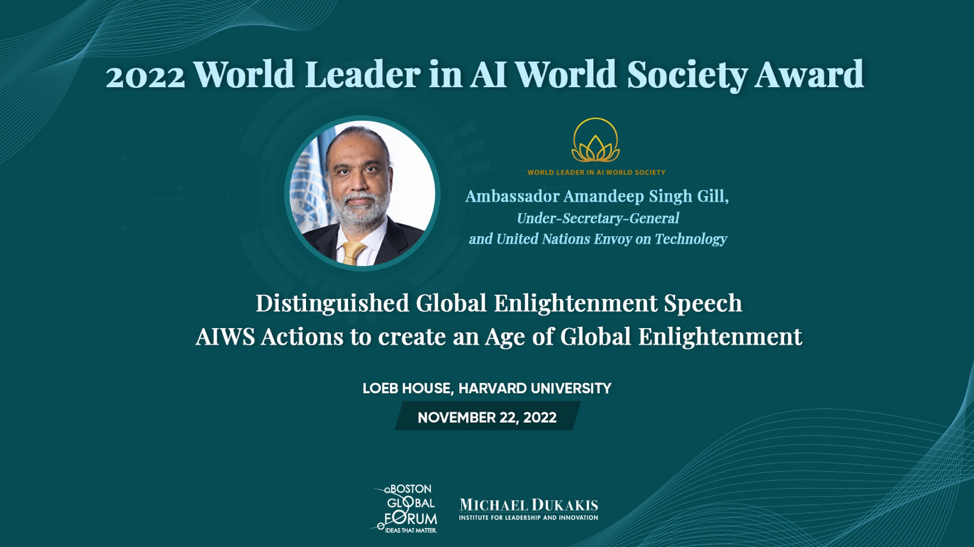
Boston Global Forum and Michael Dukakis Institute honored Amandeep Gill as the World Leader in AI World Society 2022.
U.N. Secretary-General Antonio Guterres recently urged members to pay attention to “alarm bells over the latest form of artificial intelligence,” which are “loudest from the developers who designed it.”
Link: https://www.foxnews.com/world/un-calls-ai-watchdog-agency-enormous-potential-clear-urgency

by Editor | Jun 25, 2023 | News
Thomas Kehler, a member of Global Enlightenment Mountain, Chief Scientist of CrowdSmart comments on the article “Bayesian Networks: The Key to Unlocking AI’s True Potential” https://dtgreviews.com/uncategorised/bayesian-networks-the-key-to-unlocking-ais-true-potential/51812/
“The article makes a point of critical importance – Bayesian Networks empower a new generation of AI that opens the door to including human collective intelligence. For the past 8 years it has been the focus of my work and the work of CrowdSmart to use Bayesian Belief Networks as a means of integrating current generation of AI with human collective intelligence. An early key contributor to Bayesian Belief Networks, Judea Pearl, has stated ‘You are smarter than your data’. To date, with all the great progress we have made in AI, the learnings are based on the data we generated – our data droppings. Consider the power of current AI and collective human imagination co-creating together. That is the future and Bayesian Networks play a key role in that future.”
Artificial intelligence (AI) has come a long way since its inception, with machine learning and deep learning techniques driving rapid advancements in the field. However, despite the impressive progress, there are still many challenges to overcome before AI can truly reach its full potential. One promising approach to tackling these challenges is the use of Bayesian networks, a powerful probabilistic graphical model that has the potential to unlock new levels of understanding and reasoning in AI systems.
Judea Pearl, World Leader in AIWS Award recipient 2020, father of Causal Inference concepts
by Editor | Jun 25, 2023 | News
In honor of Governor Michael Dukakis’s 90th birthday on November 3, 2023, Global Enlightenment Leaders are creating a remarkable tribute – AIWS City. As co-founder and Chair of the Boston Global Forum, Governor Dukakis has played an influential role in fostering Global Enlightenment. The construction of AIWS City stands as a testament to his contributions and the achievements of the BGF and the Global Enlightenment Community.
AIWS City is set to fully open on November 3, 2023, coinciding with Governor Dukakis’s milestone birthday. This digital city will serve as a hub for showcasing and promoting various facets of global enlightenment, encompassing the realms of economy, politics, education, technological advancements, arts, literature, and sports.
As an emblematic landmark, AIWS City will stand as a testament to historical achievements and significant milestones in the journey towards the Age of Global Enlightenment. It will embody the spirit of global cooperation, knowledge sharing, and collective progress.
AIWS City, the digital city of the Global Enlightenment Community, will serve as a beacon of inspiration, encouraging individuals and nations to embrace the principles of peace, collaboration, and innovation. It will stand as a lasting tribute to Governor Michael Dukakis and the transformative power of Global Enlightenment.
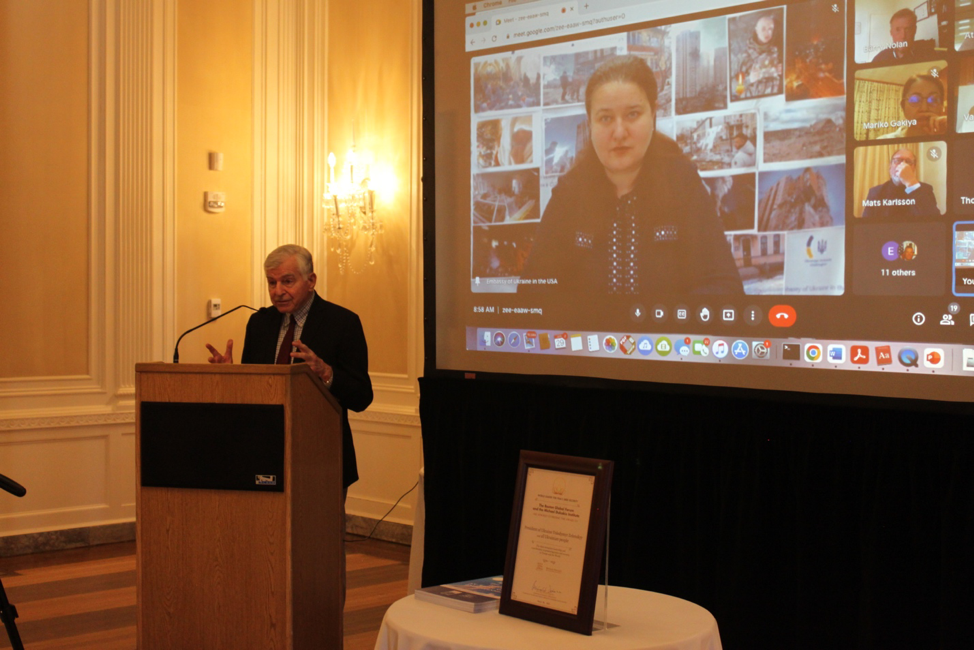
Governor Michael Dukakis honors President Zelensky and the Ukrainian people as World Leader for Peace and Security 2022
by Editor | Jun 19, 2023 | Event Updates, News
The BGF Action Agenda for AI Global Governance aims to implement the BGF Framework on AI Global Governance, based on the AI World Society Models and Standards. The agenda identifies threats to humanity from AI, particularly from totalitarian governments and big tech companies that do not respect AIWS Standards and the BGF Framework. The following are the proposed actions and events to address these threats:
- Actions:
Dialogue with governments: Engage in dialogue with governments to recommend and advocate for AI Global Governance that aligns with AIWS Standards.
Empower users and civic society: Encourage users and civic society organizations to demand that companies respect AIWS Standards.
Ally with like-minded entities: Build alliances among governments, companies, and civic society organizations that adhere to AIWS Standards to collectively address threats and dangers.
Promote Global Enlightenment Mountain: Support the establishment of the Global Enlightenment Mountain, which will serve as a valuable resource for the Global Alliance for Digital Governance.
Create Global Enlightenment Music: Develop music and artistic expressions that promote AIWS Standards and inspire individuals to advocate for them in the Age of Global Enlightenment.
Engage writers and journalists: Encourage writers and journalists to support AIWS Standards and educate users about the importance of respecting those standards.
- Events:
Jaipur Dialogue (July 29-31, 2023): Organize a dialogue on AI Global Governance with the Indian government during the C20 Summit. Discuss actions related to transparency, monitoring, and empowering users. Collaborate with CSOs, BGF, GLIDES, and GEM to mobilize user support. Dialogue with companies and governments through the Global Enlightenment Community.
Dialogue with Leaders of Japan (September 2023): Engage in discussions with leaders of Japan, focusing on the Shinzo Abe Initiative.
Riga Conference 2023 (October 21-22): Co-organize a conference with the Council of Europe, Latvia Transatlantic Organization, and BGF to address the Legal Framework for AI Global Governance. Present a special report on the topic.
90th Birthday Celebration of Michael Dukakis (October): Contribute to building AIWS – the Age of Global Enlightenment in celebrating the 90th birthday of Governor Michael Dukakis. Engage in dialogues with US leaders during the event and organize Global Enlightenment Music: music to celebrate Governor Michael Dukakis’s 90th birthday, promoting AIWS Standards – the values of the Age of Global Enlightenment.
Global Enlightenment Leaders are invited to participate in these events and contribute to the agenda. This includes distinguished leaders, thinkers, and members of the Tech 50 who will join the BGF Global Enlightenment Leaders in dialogues with the Indian government and the G20 in Jaipur, European leaders at the Riga Conference 2023, US leaders during Governor Michael Dukakis’s birthday celebration, and leaders in Japan through the Shinzo Abe Initiative.
These are the AIWS Standards mentioned in the context of the BGF Action Agenda for AI Global Governance:
Social Contract for the AI Age
AI International Accord (AIIA)
BGF Framework for AI Global Governance
Legal Framework for AI Global Governance
Framework for a Human-Centered AI Based on the Laws of Nature
Data Economy for the Age of Global Enlightenment
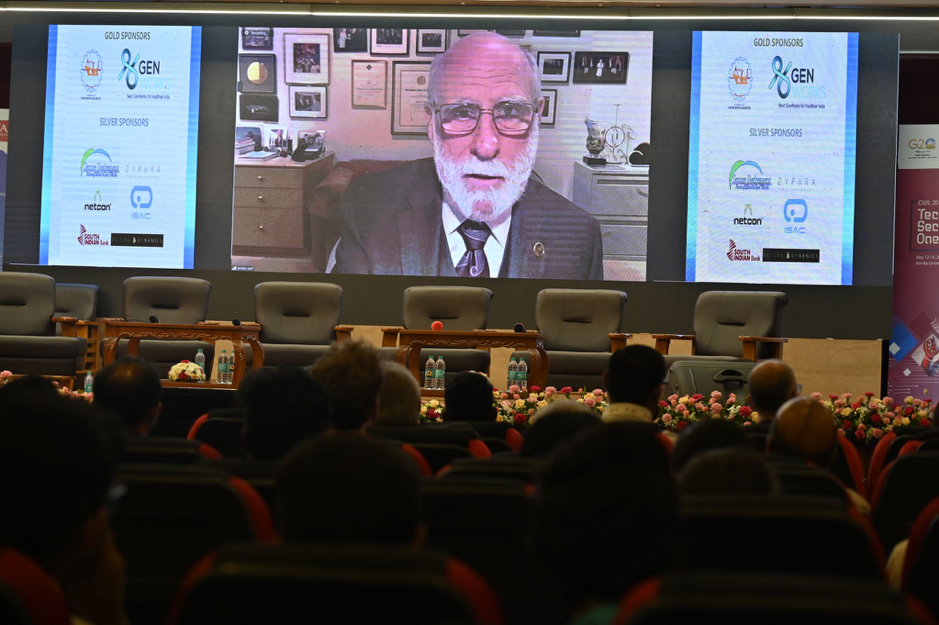
by Editor | Jun 19, 2023 | Global Alliance for Digital Governance
Under the Indian Presidency of the G20 this year, the Civil20 remains committed to advocate evidence- based policy recommendations. C20 will strive towards the realization of the Indian C20 motto – “You Are The Light”.
C20 is one of the official Engagement Groups of the G20. It provides a platform for Civil Society Organizations around the world to voice people’s aspirations with the world’s leaders in G20. C20 also aims to protect the essence of the sector, promote social and economic development with the vision that no one should be left behind.
The Global Alliance for Digital Governance recognizes and supports GLIDES’s works “Technology, Security, and Transparency” as a part of Global Enlightenment Community:
- Create an online portal: open, inclusive, voluntary, civil society-centric with representation of CSOs from G20 nations and developing economies
- CSO submit policy recommendations; GLIDES will escalate to general public, existing internet governance mechanisms, G20 secretariat in India and subsequently in Brazil & South Africa after due diligence
- CSO can sign up to the portal and get featured after due diligence; CSO share best practices & success stories on portal
- GLIDES will organize monthly meetings, workshops, training programs, seminars & deliberations on digital access, internet shutdowns, safe harbor, net neutrality, data privacy, data governance, cyber stalking, online harassment, cyber security, fake news and digital rights, etc.
- GLIDES can commission studies & white papers around Internet-related concerns in G20 countries and publicize its findings.
The Boston Global Forum encourages and will recommend organizations to contribute to this project.

by Editor | Jun 19, 2023 | News
BGF’s Global Enlightenment Leaders, including Prime Ministers Enrico Letta and Zlatko Lagumdzija, distinguished scholars Martha Minow and Ruth Okediji from Harvard Law School, thinker John Clippinger, and others, are actively contributing to the agenda for actions on AI Global Governance. The leaders and the agenda aim to establish a comprehensive framework for governing artificial intelligence globally.
A distinguished contributor is Professor Alex Pentland, who focuses on the Data Economy for AI Global Governance. Professor Pentland analyzes the impact of data in shaping AI governance policies and frameworks, as well as creating a data economy. His research and insights help guide discussions and decision-making processes related to AI regulation.
The Shinzo Abe Initiative, named in honor of the late Prime Minister, emphasizes the importance of AI in driving technological advancements and economic growth for Japan, and promotes regional and global peace and security. Through this initiative, its members and coordinators will discuss cooperation and collaboration among Japan and nations to address the challenges and opportunities presented in the Internet Age and AI.
Thomas Kehler, an AI pioneer based in Silicon Valley, contributes to the development of a framework for a human-centered AI based on the laws of nature. His approach emphasizes the ethical and sustainable use of AI technologies, considering their impact on society and the environment. Kehler’s insights provide valuable guidance on how to align AI development with the principles of nature and human well-being.
Nguyen Anh Tuan, the CEO of BGF, brings valuable concepts to the table, including the power of users and the role of civic society organizations. Recognizing the importance of user involvement and the influence of civil society in shaping AI governance, Tuan’s contributions highlight the need for an innovative and enlightened approach to global AI policy-making. The power of users will be instrumental in demanding companies to adhere to standards for AI Global Governance.
These Global Enlightenment Leaders will engage in dialogue with leaders of the European Council at the Riga Conference 2023. The conference serves as a platform for exchanging ideas, sharing research, and discussing policy frameworks related to AI governance. By actively participating in such dialogues, these leaders contribute to the establishment of a robust and effective AI Global Governance framework that considers various perspectives and promotes responsible and innovative AI development.
Prime Minister Enrico Letta and Governor Michael Dukakis