
by Editor | Jun 19, 2023 | News
To celebrate the 90th Birthday of Michael Dukakis, Global Enlightenment leaders will contribute to building AIWS – the Age of Global Enlightenment. Engaging in dialogues with US leaders during the event and organize Global Enlightenment Music: music to celebrate Governor Michael Dukakis’s 90th birthday, promoting AIWS Standards – the values of the Age of Global Enlightenment.
Global Enlightenment Leaders are invited to participate in significant BGF events on AI Global Governance and contribute to the agenda for actions. This includes distinguished leaders, thinkers, and members of the Tech 50 who will join the Global Enlightenment Leaders in dialogues with the Indian government and the G20 in Jaipur, July 29-31, 2023, European leaders at the Riga Conference 2023, US leaders during Governor Michael Dukakis’s birthday celebration in October 2023, and leaders in Japan through the Shinzo Abe Initiative Conference in September 2023.
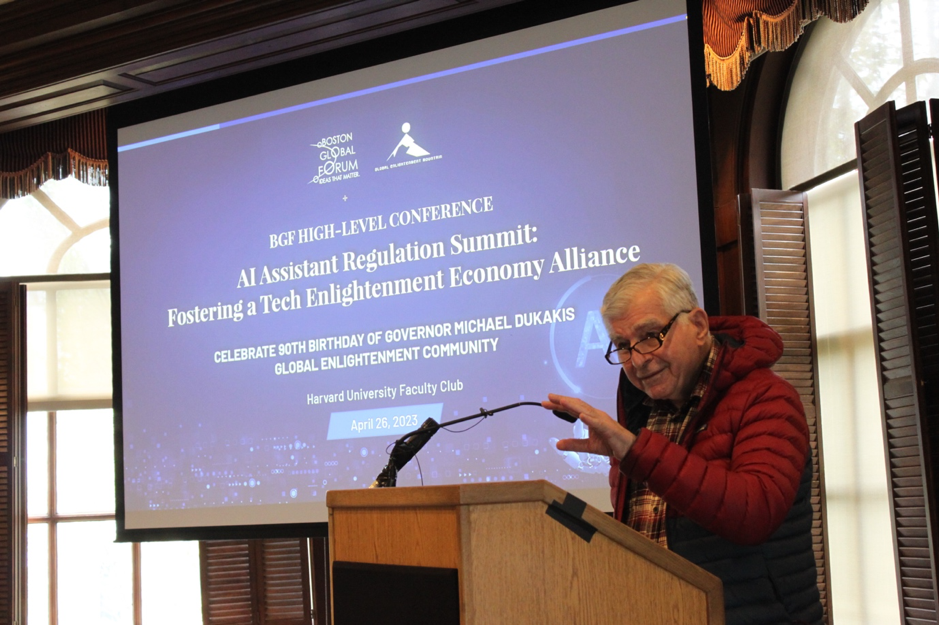
Governor Dukakis at a Boston Global Forum event in Loeb House, Harvard University
by Editor | Jun 11, 2023 | News
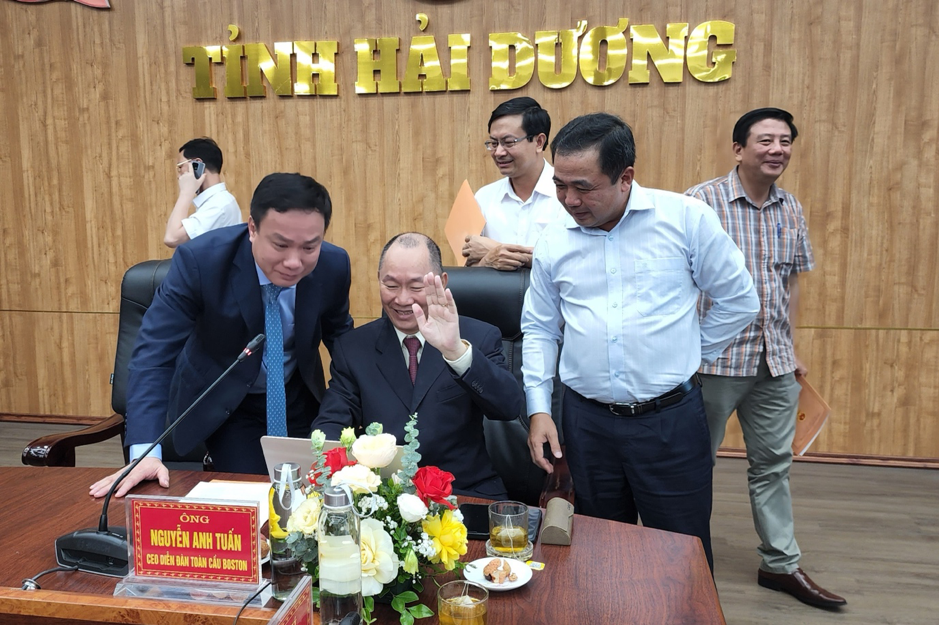
On June 8, 2023, the esteemed leaders of the Hai Duong Government, including Mr. Tran Duc Thang, Chief of the Party of Hai Duong, and Governor Trieu The Hung, gathered to attend and speak at a momentous event. The occasion marked the launch of a new Information Gateway in Hai Duong, Vietnam. Among the distinguished keynote speakers was Boston Global Forum CEO Nguyen Anh Tuan, who delivered a compelling address focusing on ideas and strategies to position Hai Duong as a vibrant innovation hub in Northern Vietnam while fostering engagement in Global Enlightenment Mountain (GEM).
In his speech, CEO Nguyen Anh Tuan emphasized the importance of nurturing innovation and creating an environment conducive to its growth within Hai Duong. He shared insightful strategies that would help propel the region towards becoming a thriving center of technological advancement and economic development.
Tuan highlighted the significance of engaging with GEM, stressing the need to connect with leading institutions and experts from around the world to leverage their expertise, insights, and resources for the benefit of Hai Duong’s progress.
The presence of other notable BGF leaders, such as Harvard professor Thomas Patterson and MIT professor Alex Pentland, further added to the prestige of the event. Their participation underscored the commitment of the Boston Global Forum and its affiliated experts to support Hai Duong’s vision of becoming an innovation-driven region.
The launch of the new Information Gateway and the insights shared by CEO Nguyen Anh Tuan and other distinguished speakers marked a significant milestone in Hai Duong’s journey towards technological advancement, economic growth, and global engagement. The event served as a platform to inspire and rally the community, fostering a shared vision and determination to realize the ambitious goals set forth by the Hai Duong Government and the Boston Global Forum.
Governor Trieu The Hung, Mr. Nguyen Anh Tuan, Chief of Party of Hai Duong Tran Duc Thang say hello to professors Alex Pentland and Thomas Patterson
by Editor | Jun 11, 2023 | Global Alliance for Digital Governance
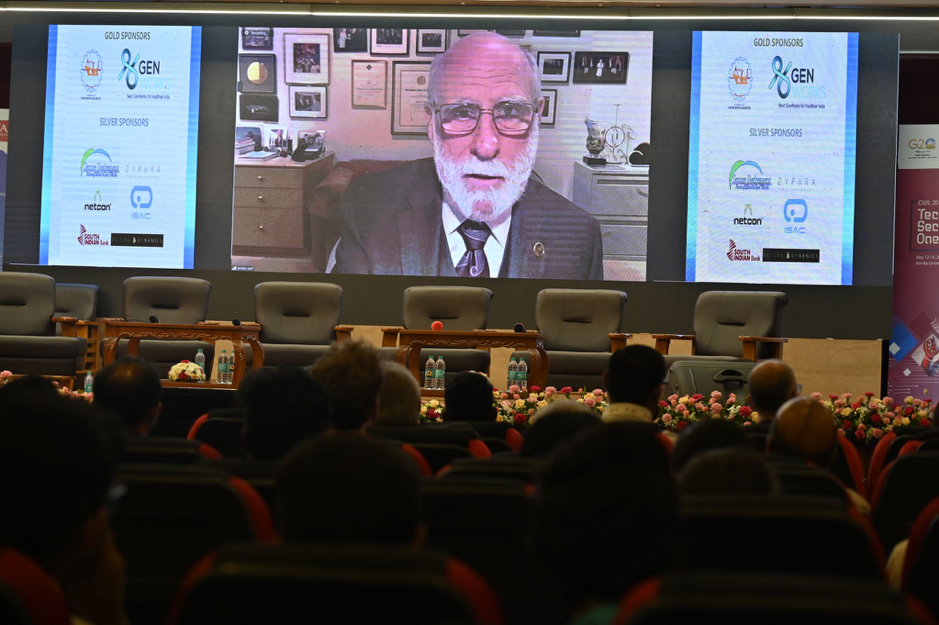
The Global Internet Governance, Digital Empowerment and Security Alliance (GLIDES), a grouping of Civil Society Organizations (CSO), was formally launched by Mr. R.N. Ravi, Hon’ble Governor of Tamil Nadu state in India during the Civil 20 (C20) Technology & Security for One World summit held at Amrita Vishwa Vidyapeetham, Coimbatore, India on 13 May 2023.
Dr. Vint Cerf, Internet pioneer considered one of the fathers of the Internet, delivered a special keynote on “Connectivity is Everything” during the summit as the first meeting and activity of this alliance.
This alliance is intended as a launching pad for evolving the multi-stakeholder policy-making process for security and Internet governance and other pressing issues like digital access, safe harbor, net neutrality, data privacy, fake news, multilingual Internet, and digital rights. CSOs from 23 countries have signed up for the alliance including CyberPeace Institute from Switzerland; Connect Humanity & Boston Global Forum from the USA; Digital Leadership Institute (DLI) from Belgium; E-lunch from Japan; Policy+ from Indonesia; TechForGood Australia from Australia; AçãoEducativa from Brazil; Kijiji Yeetu from Kenya and various Internet Society chapters in India, Africa, and South America.
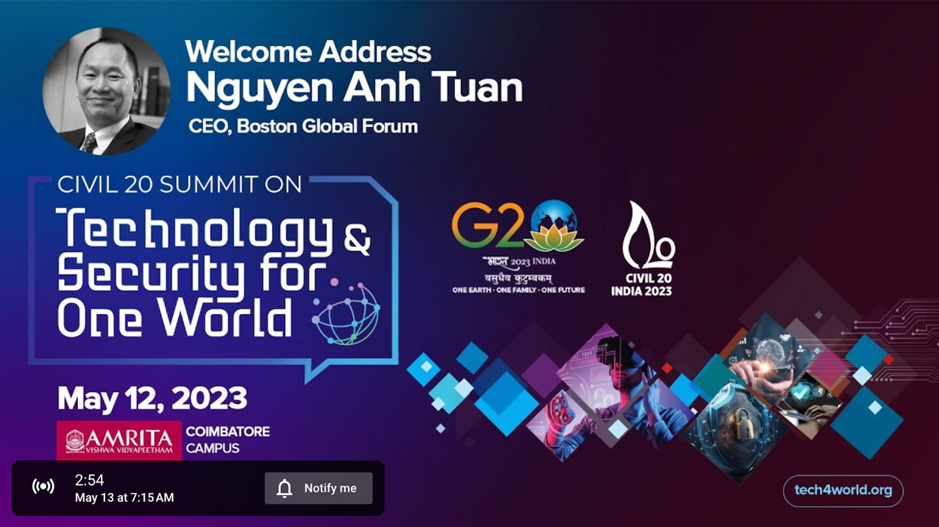
BGF CEO Nguyen Anh Tuan highlighted in his Special Welcome Address at the opening of the event “Global Enlightenment Community: From Words to Actions – The Urgency for Government and Civic Action” at the “Technology and Security for One World” Summit May 12-14, 2023. He presented an idea in allying social society organizations in building data and AI economy for every citizen:
We will establish a technology-driven economic market across the United States, Japan, India, Europe, Canada, Australia, South Korea, Israel, ASEAN, and beyond. Our goal is to connect with all countries and citizens who uphold and implement the standards set forth in the Social Contract for the AI Age. Through this alliance, we will leverage the power of the market and democracy to protect values, standards, and the dignity of individuals worldwide.

by Editor | Jun 11, 2023 | News
On June 8, 2023, Professor Thomas Patterson, the Director of the AIWS Leadership Program and a renowned Harvard professor and Global Enlightenment Leader, unveiled the program during a special event organized by the Hai Duong Government in Vietnam. The occasion marked the launch of the New Information Gateway of Hai Duong and engage Hai Duong to the Global Enlightenment Mountain, a new Silicon Valley aimed at connecting the United States, Japan, India, and Europe to foster the Age of Global Enlightenment.
Equipping Leaders to Navigate the Challenges and Opportunities of the Digital Age, the AIWS Leadership Program is designed to empower leaders with the visionary, knowledge and skills necessary to thrive in the digital age, focusing on the groundbreaking concept of “Remaking the World – Toward an Age of Global Enlightenment.”
Addressing the Challenges of the Digital Age In today’s world, digital disruption is not a temporary phenomenon but a permanent characteristic. To leverage the potential opportunities it presents, organizations must establish a strong foundation for adapting to digital changes effectively.
Key Benefits For senior leaders: Acquire fresh strategic insights and leadership skills essential for navigating the Digital Age. This program enables you to lead change, foster innovation, leverage disruptive transformations, think comprehensively, motivate employees, and expand your organization’s capabilities.
For emerging leaders: Evaluate your leadership strengths and weaknesses, broaden your understanding of the challenges, opportunities, and tools defining the Digital Age, and accelerate your personal growth as a high-performing leader.
Unique Features of the Program What sets the AIWS Leadership Program apart from others is its diverse panel of presenters who represent various institutions and organizations. These experts, hailing from esteemed establishments such as Harvard, MIT, Stanford, as well as from business and government sectors, have been carefully selected for their status as top thought leaders in their respective fields. Their expertise ensures a comprehensive understanding of the ideas and technologies that will shape our digital future.
Moreover, the program’s holistic approach to leadership in the digital age distinguishes it from traditional executive education programs. While most programs focus on specific aspects like marketing, the AIWS Leadership Program recognizes that digital technology permeates all areas within and between organizations. Effective leadership in the Digital Age demands a comprehensive, team-oriented perspective.
Co-hosted by the Hai Duong Government, the AIWS Leadership Program for Vietnam will also feature a special session highlighting the esteemed leadership lessons of great Vietnamese leaders such as Tran Nhan Tong, Tran Hung Dao, and Nguyen Trai.
Harvard Professor Thomas Patterson

by Editor | Jun 11, 2023 | News
Professor Alex Pentland, an esteemed data science expert and a global enlightenment leader, delivered a keynote speech on “Data Economy for Vietnam” at the Launching Ceremony of the New Information Gate of Hai Duong Government. The event, attended by leaders of Hai Duong, Vietnam, aimed to discuss strategies and plans to position Hai Duong as a gateway and innovation hub for northern Vietnam, engaging it with the Global Enlightenment Mountain (GEM) with supporting by the Boston Global Forum.
Professor Pentland brought his extensive expertise and insights to the ceremony, emphasizing the value of data as a resource for economic growth, innovation, and social development. He highlighted the potential of a data-driven economy to stimulate sectors such as healthcare, agriculture, finance, and manufacturing.
During his presentation, Professor Pentland stressed the importance of establishing a robust data infrastructure that encompasses data collection, storage, and analysis mechanisms. He emphasized the need for secure and ethical data practices, prioritizing privacy protection and data sovereignty. Additionally, he discussed the role of government policies in fostering an environment conducive to the growth of the data economy. This included developing data governance frameworks, regulations, and incentives to promote data-driven innovation.
Furthermore, Professor Pentland proposed strategies for building a strong data ecosystem in Vietnam. He underscored the significance of forging partnerships between the government, academia, and industry to encourage collaboration, knowledge exchange, and skill development. He advocated for investments in research and development, the implementation of data literacy programs, and the establishment of data science and analytics institutes.
Professor Pentland’s presentation shed light on the potential benefits and challenges associated with developing a data economy in Vietnam. His expertise and visionary insights served as an inspiration for the leaders of Hai Duong, encouraging them to prioritize and invest in this area. The groundwork laid by Professor Pentland’s ideas paved the way for future initiatives and collaborations aimed at harnessing the transformative power of data to drive economic growth, innovation, and social progress in Vietnam.
Global Enlightenment Leader and MIT Professor Alex Pentland
by Editor | Jun 4, 2023 | Event Updates
On June 7, 2023, in the evening EDT, leaders from the Boston Global Forum, such as Governor Michael Dukakis, Nguyen Anh Tuan, Thomas Patterson, and Alex Pentland, will speak in a special event organized by leaders of Hai Duong province, Vietnam. The event aims to garner support and collaboration in establishing the Global Enlightenment Mountain’s Hub in northern Vietnam at Hai Duong.
The Global Enlightenment Mountain’s Hub, an ambitious project led by Hai Duong province, seeks to create a center of innovation and intellectual exchange in northern Vietnam. This initiative aims to attract global leaders, thinkers, creators, and innovators to drive advancements in technology and foster the spirit of Global Enlightenment.
The event will provide a platform for dialogue and idea-sharing, with BGF leaders offering their expertise and guidance on strategies to transform Hai Duong into a vibrant hub for innovation, technology, and intellectual development. This collaborative effort between BGF and Hai Duong province aims to lay the foundation for a global enlightenment innovation ecosystem in northern Vietnam.
The Global Enlightenment Mountain’s Hub holds great promise in nurturing talent, fostering research, and attracting investment to the region. By leveraging Global Enlightenment Mountain (GEM) at the Boston Global Forum, Hai Duong province seeks to position itself as a prominent player in the global innovation landscape.
The event signifies a significant milestone in the journey towards building the Global Enlightenment Mountain’s Hub, and the collaboration between BGF and Hai Duong province highlights the shared commitment to advancing knowledge, promoting innovation, and fostering global cooperation in concepts of AI World Society.
Governor Michael Dukakis, co-founder of Global Enlightenment Mountain
by Editor | Jun 4, 2023 | Global Alliance for Digital Governance
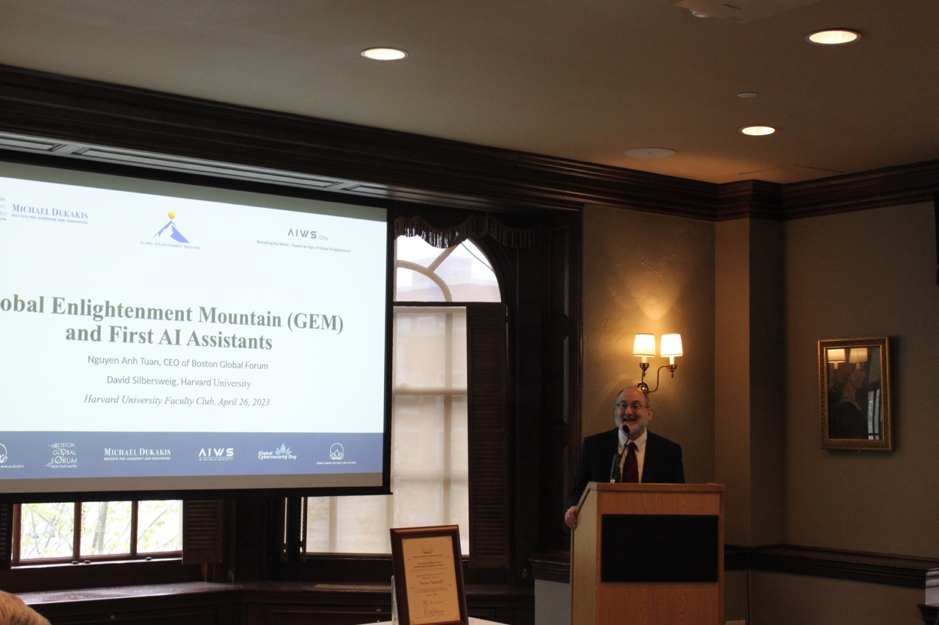
Harvard Professor David Silberswieg, Boston Global Forum Board Member, recommends to discuss the letter of AI experts warned: Mitigating the risk of extinction from AI should be a global priority alongside other societal risks.
Leaders from OpenAI, Google DeepMind, Anthropic and other AI labs warn that future systems could be as deadly as pandemics and nuclear weapon.
Here are the articles of their call: the New York Times, the Boston Globe, and NPR.
Before this call, on May 29, 2023, Boston Global Forum released the Statement of Boston Global Forum in Actions to build AI Legal Framework, AI International Accord for Global Security.
BGF invite distinguished leaders, thinkers, innovators and civic society organizations to join for the actions.
Let us unite our efforts in building a future where data and AI technologies are leveraged for the benefit of all, adhering to the fundamental principles of transparency, responsibility, and innovation.
Please send your ideas and comments to [email protected]
Professor David Silbersweig
by Editor | Jun 4, 2023 | News
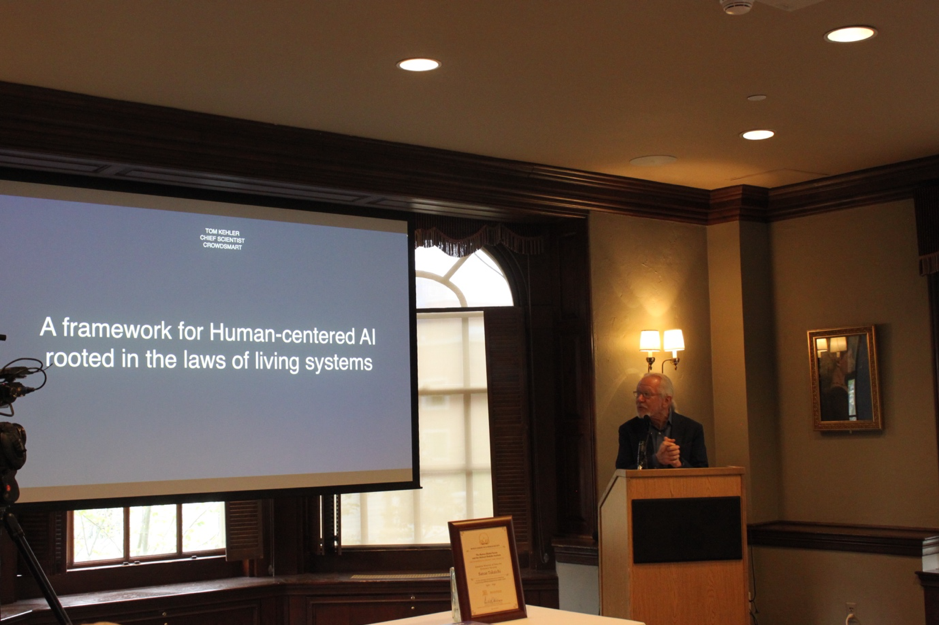
In early June 2023, Global Enlightenment Mountain, an initiative as a new Silicon Valley model, will convene a series of discussions with leaders from the banking industry in the US, Japan, India, Europe, and Vietnam. The objective is to collaboratively develop new business models and strategies that align with the principles and opportunities presented by the Age of Global Enlightenment in the book “Remaking the World – Toward an Age of Global Enlightenment” and the Third Generation of AI and AI Assistants.
Recognizing the pivotal role that banking plays in driving economic growth and societal transformation, Global Enlightenment Mountain aims to harness the collective expertise and insights of banking leaders to shape a future that integrates enlightenment principles into financial systems with responsibility applied AI.
The Age of Global Enlightenment heralds a new era where technological advancements, ethical considerations, and a focus on human-centric values converge. The Global Enlightenment Mountain seeks to ensure that the banking industry are involved in this collaborative effort, shaping financial systems that are not only resilient but also aligned with the broader goals of human progress and well-being.
By engaging with banking leaders, Global Enlightenment Mountain aims to facilitate meaningful dialogue, encourage discussion of ideas, and inspire action to shape the future. The goal is to identify innovative strategies and collaborative initiatives that empower banks to become agents of positive change in society, driving inclusive economic growth, environmental sustainability, and social progress in AI World Society model.
The outcomes of these discussions will contribute to the development of a roadmap that guides the evolution of banking practices in the Age of Global Enlightenment. It is envisaged that this collaboration between Global Enlightenment Mountain and banking leaders will spark a wave of transformation in the financial sector, setting new standards and establishing models that prioritize societal well-being alongside economic prosperity.
Thomas Kehler, a pioneer in the third generation of AI, presenting at the Global Enlightenment Mountain Conference
by Editor | Jun 4, 2023 | News
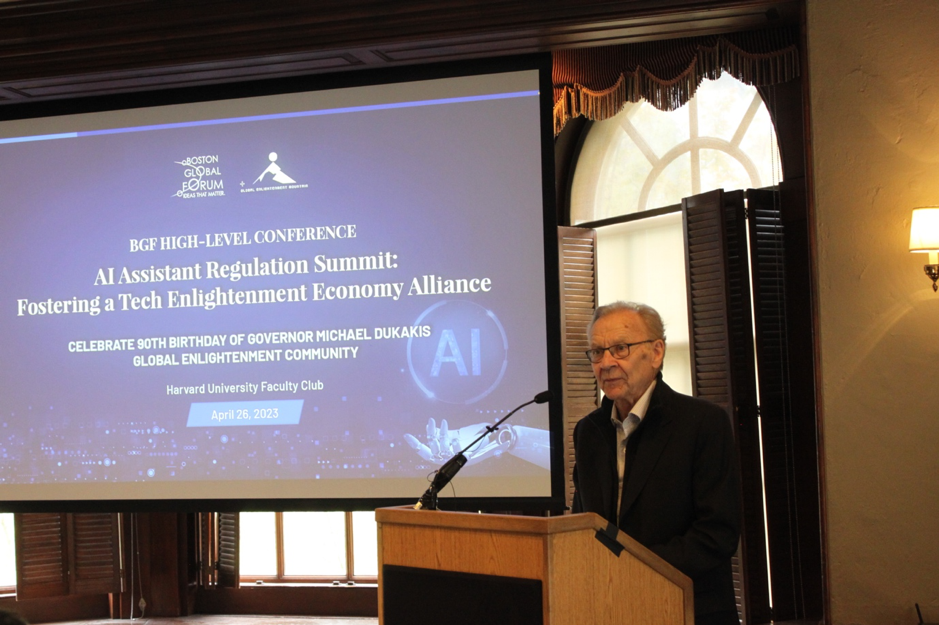
On June 2, 2023, Director of the AIWS Leadership Program, Harvard Professor Thomas Patterson, a Global Enlightenment Leader, introduces the Program: Equipping Leaders to Meet the Challenges & Opportunities of the Digital Age with pioneering “Remaking the World – Toward an Age of Global Enlightenment”
Fast-track your leadership growth through a transformative learning experience. Each lecture in the AIWS Leadership Program offers insights into a key aspect of digital transformation, everything from its leadership and team-building requirements to digital tools like blockchain technology and social media and pioneering concepts, principles, ideas from the AI World Society. By the end of the program, you will have acquired the ideas and skills that empower high-level leadership in the Digital Age.
Meeting the Challenge of the Digital Age
Digital disruption is not a one-time event. It is a permanent feature of our age. Organizations must build a firm foundation for responding to digital change and harnessing the opportunities it offers.
Key Benefits
For top leaders – Gain new strategic insights and leadership skills that enable you in the Digital Age to lead change, drive innovation, capitalize on disruptive change, think holistically, motivate workers, and expand your organization’s capacity.
For emerging leaders – Assess your strengths and weaknesses as a leader; expand your grasp of the challenges, opportunities, and tools that define the Digital Age and that will propel your personal growth and advancement as a high-performing leader.
Distinguishing Features of the Program
The AIWS Leadership Program is an executive education program, of which there are many. One feature that distinguishes the program is that its presenters are not from a single institution or organization. They come from business, government, Harvard, MIT, and Stanford and were selected because they are top thought leaders in their respective fields.
The challenge of the Digital Age will not be met by looking back at what has happened. It requires looking ahead to what will happen. Our presenters are at the forefront of understanding the ideas and technologies that will define our digital future.
The program is also defined by its holistic approach to leadership in the digital age. Executive programs typically take a narrow view of leadership, such as exploring its role in marketing. That approach ignores the fact that digital technology cuts across boundaries within and between organizations. and layers. Effective leadership in the Digital Age requires a total team perspective.
Harvard Professor Thomas Patterson