by Editor | Jun 4, 2023 | News
Leaders of Boston Global Forum contributed a program to support connecting Boston, Massachusetts to leaders of Nha Trang, Khanh Hoa, Vietnam and its people:
Nha Trang, Khanh Hoa, Vietnam, in collaboration with Boston, is spearheading the Age of Global Enlightenment, symbolized by the creation of the AIWS City in Nha Trang. This includes:
Building Global Enlightenment Music Club – Global Enlightenment Music House in Nha Trang: Showcasing the essence of world music, promoting Vietnamese music dedicated to building the Age of Global Enlightenment. The Global Enlightenment Concert takes place annually in Nha Trang on the evening of January 1st.
Building Global Enlightenment Club, Global Enlightenment Zone, Global Enlightenment Forest in Nha Trang Khanh Hoa: The Boston Global Forum organizes the Global Enlightenment Conference and Global Enlightenment Club in Nha Trang, Khanh Hoa, attracting distinguished leaders and creators who contribute to the development of the Age of Global Enlightenment. The Global Enlightenment Forest serves as a tribute to these individuals, with each honored figure being commemorated by a tree bearing their name, signifying their unique contribution to this transformative era.
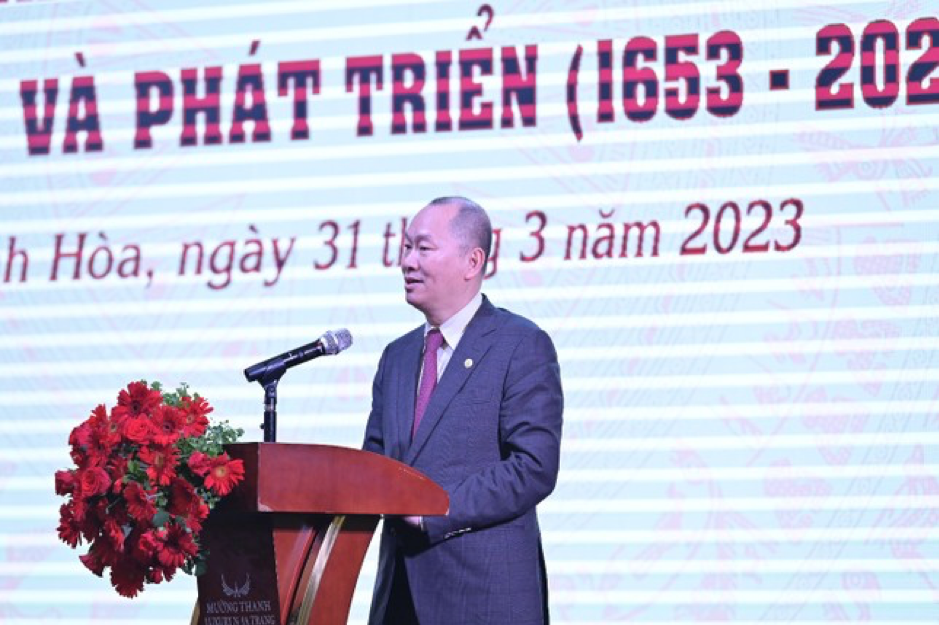
BGF CEO Nguyen Anh Tuan speaking at the 370th year anniversary conference of Nha Trang Khanh Hoa, March 31, 2023 in Nha Trang
by Editor | May 29, 2023 | Global Alliance for Digital Governance, Statements
May 29, 2023
Boston, MA
Since 2017, Boston Global Forum (BGF) has been a pioneer and has been tireless in building a 7-layer model to apply AI responsibly for a better world: AI World Society (AIWS) to shape futures of global security.
Now, it is urgent to take actions to shape the concepts and principles of the Social Contract for the AI Age, AI-Government, AI-Citizen, AI International Accord, BGF Framework for AI Global Governance and model of AIWS into reality, especially as AI become more prominent in public discourse.
In his Welcome Keynote Address at the C20 Summit “Technology and Security for One World,” held during the G20 in India on May 12-14, 2023, Boston Global Forum CEO Nguyen Anh Tuan emphasized the stringent necessity for states to accelerate policy-making efforts related to AI global governance. He also called upon civil society organizations and think-tanks to actively contribute to and engage in dialogue with governments to develop official regulations.
This May, the White House announced New Actions to Promote Responsible AI Innovation, while G-7 Summit leaders called for international standards on AI. Following up these efforts, leaders of OpenAI, Sam Altman, Greg Brockman, and Ilya Sutskever, wrote: “Governance of superintelligence – Now is a good time to start thinking about the governance of superintelligence—future AI systems dramatically more capable than even AGI.”
Former Prime Minister of Bosnia and Herzegovina Zlatko Lagumdzija, a Global Enlightenment leader highlighted on May 27, 2023: “Few years ago at our BGF conferences and in our book ‘Remaking the World – Toward an Age of Global Enlightenment’ as well, I was calling for the establishment on international regulatory body like for nuclear energy (IAEA) with all references for that approach. Now creators of OpenAI are making that call, and BGF leaders will all support and ready to work with leaders of OpenAI for this mission.”
Boston Global Forum and Michael Dukakis Institute in collaboration with the Global Alliance for Digital Governance, the Shinzo Abe Initiative for Peace and Security, and Global Enlightenment Community will act to build an AI Legal Framework and AI International Accord for global security. We will work alongside esteemed leaders and distinguished thinkers, including Global Internet Governance, Digital Empowerment and Security Alliance (GLIDES) of C20 in India, various think tanks, and will work with organizations such as OpenAI, DeepMind, Google, Apple, Amazon, Microsoft, IBM and other AI institutions.
The world is in need of political standards that govern international relations in the realms of AI and Data, akin to the TCP/IP protocol in the field of technology. These political standards are embodied in the Social Contract for the AI Age and the AIWS model, which were announced by the Boston Global Forum and Club de Madrid in September 2020.
We are determined to create a comprehensive timeline and set milestones for engaging in dialogues with governments, including those of the United States, Japan, the European Union, the United Kingdom, India, the United Nations, and the Vatican.
In order to succeed in our mission, it is crucial to involve and engage all individuals in contributing to the development of the AI Global Legal Framework and the AI International Accord – not just state actors, but civil society as well.
Furthermore, it is imperative to leverage the potential of data and AI economies for the benefit of both global economies and societies, while upholding the standards and norms outlined in the Social Contract for the AI Age. Countries that respect and adhere to these standards will gain an advantage in terms of data and AI-driven advancements, fostering innovation, economic growth and societal progress.
To achieve this goal, the Global Alliance for Digital Governance will actively serve as a trusted databank, duly authorized by individuals and companies, to guarantee the security, protection, and ethical utilization of their data. GADG will diligently monitor companies to safeguard the value of individual data, fostering global security in AI and data domains. By establishing robust mechanisms, GADG will ensure that data is managed transparently and responsibly, fostering trust and confidence in data management practices.
Moreover, GADG is firmly committed to empowering every citizen to become an innovator and creator by establishing data and AI ecosystems that prioritize transparency and responsibility. By providing accessible platforms, tools, and resources, GADG will enable individuals to harness the potential of data and AI for innovation and creativity. Additionally, GADG will foster an environment that encourages responsible and ethical practices in data management, innovation, applications, and market participation.
By bringing together individuals, governments, organizations, and institutions, we can collectively work towards the establishment of a fair, inclusive, and secure AI ecosystem. We extend an invitation to all stakeholders to actively participate in shaping the AI Global Legal Framework and endorsing the principles enshrined in the AI International Accord. Through collaboration and shared responsibility, we can create an environment that harnesses the power of AI for the betterment of society, safeguarding individual rights and global security.
Let us unite our efforts in building a future where data and AI technologies are leveraged for the benefit of all, adhering to the fundamental principles of transparency, responsibility, and innovation. Global society can shape the Global Enlightenment Mountain, guided by GADG’s architect, and pave the way for the Age of Global Enlightenment.
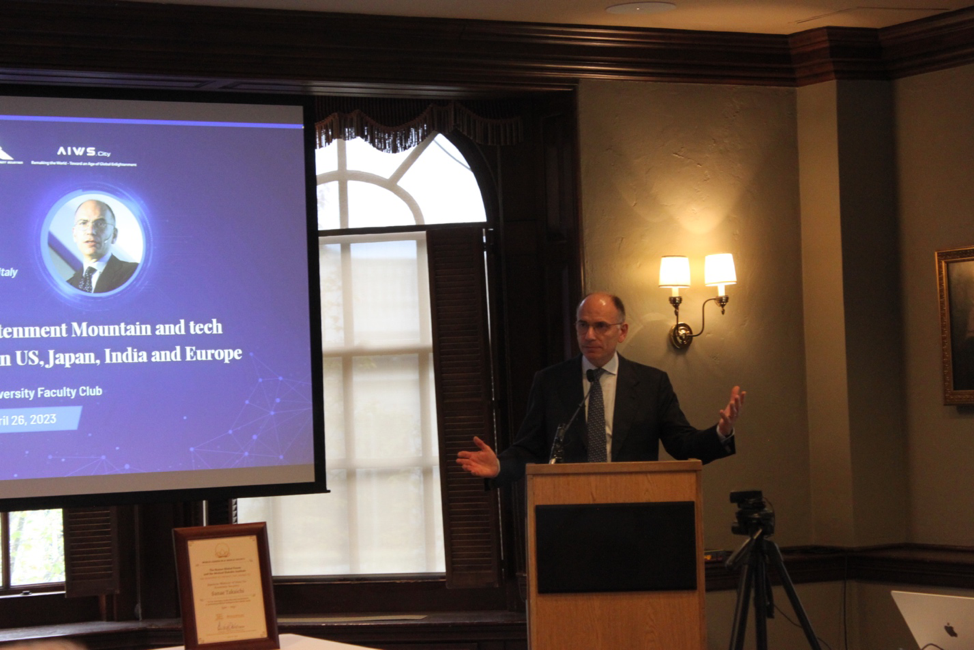
Prime Minister Enrico Letta, a Global Enlightenment Leader
by Editor | May 29, 2023 | Event Updates, News
To help guide the future of artificial intelligence governance, the Global Enlightenment Leaders at the Boston Global Forum have established a dedicated team to develop an AI Legal Framework and Actions. Led by influential figures such as Governor Michael Dukakis, Chair of the BGF, and Nguyen Anh Tuan, CEO of the BGF, this team comprises of esteemed individuals from various disciplines and countries.
The distinguished members of the team are:
- Former Prime Minister of Italy Enrico Letta, former Prime Minister of Israel Ehud Barak, former Prime Minister of Bosnia and Herzegovina Zlatko Lagumdzija, and former President of Latvia Vaira Vike-Freiberga.
- Former Acting Secretary of Commerce of the US Cameron Kerry, former State Minister of Defense of Japan Yasuhide Nakayama, and Vint Cerf, Vice President of Google and one of the “fathers of the Internet.”
- Harvard and MIT professors Thomas Patterson, David Silbersweig, Alex Pentland, and Nazli Choucri.
- Professor Martha Minow, former Dean of Harvard Law School, Professor Ruth L. Okediji, Harvard Law School, Margaret Hagan, Executive Director of the Legal Design Lab and lecturer at Stanford Law School.
- Professor Zaneta Ozolina, Chairwoman of Latvia Transatlantic Organization (LATO), John Henry Clippinger, Co-Director of The Law Lab at Harvard University.
- Thomas Kehler, Chief Scientist of CrowdSmart, and Paul Nemitz, Principal Advisor of the European Commission.
The Global Enlightenment Leaders aim to develop a comprehensive Legal Framework and Actions for AI Global Governance. Drawing on the collaborative efforts of the Boston Global Forum and the Global Alliance for Digital Governance, the team will build upon the Shared Framework for Global Governance AI Assistants and ChatGPT. In pursuit of their objectives, the team intends to engage in dialogue with key stakeholders, including leaders from the European Union, the United States, Japan, India, the United Nations, and the Vatican.
The establishment of this team represents a significant milestone in the global discourse on AI governance. By bringing together esteemed experts from various domains, the Global Enlightenment Leaders at the Boston Global Forum demonstrate their commitment to shaping AI policies that align with the principles of fairness, accountability, and transparency. Through their collaborative efforts, this team will aspire to foster a global environment that harnesses the potential of AI while addressing its associated challenges.

by Editor | May 29, 2023 | News
Based on the idea that music possesses a spiritual power that can elevate humanity toward a more optimistic, creative, innovative, and hopeful life, the Global Enlightenment Music Club (GEMC) was created as a stage for musicians from all over the world to contribute their works to building the Age of Global Enlightenment. GEMC works to connect musicians, organize musical events, support the professional development of the members, and recognize their works and contributions to building the Age of Global Enlightenment.
The Boston Global Forum recognizes the musicians of GEMC, including Ambassador Swanee Hunt, co-founder of Free For All Concert Fund, Julie Leven, Violinist, Founder and Music Director of Shelter Music Boston, Robert Levin, Pianist at Harvard University, Tamas Varga of Vienna Philharmonic, Andris Nelsons, Music Director of Boston Symphony Orchestra, Composer and Music Professor Larry Thomas Bell, Musicians of LESS IS MORE String Quartet, and Singer Bui Thuy.
BGF recognizes the Vienna Philharmonic, Boston Symphony Orchestra, Berliner Philharmonic, and Shelter Music Boston, GEMC as Global Enlightenment Orchestras, which will create musical events that will become the musical heritage of humanity.
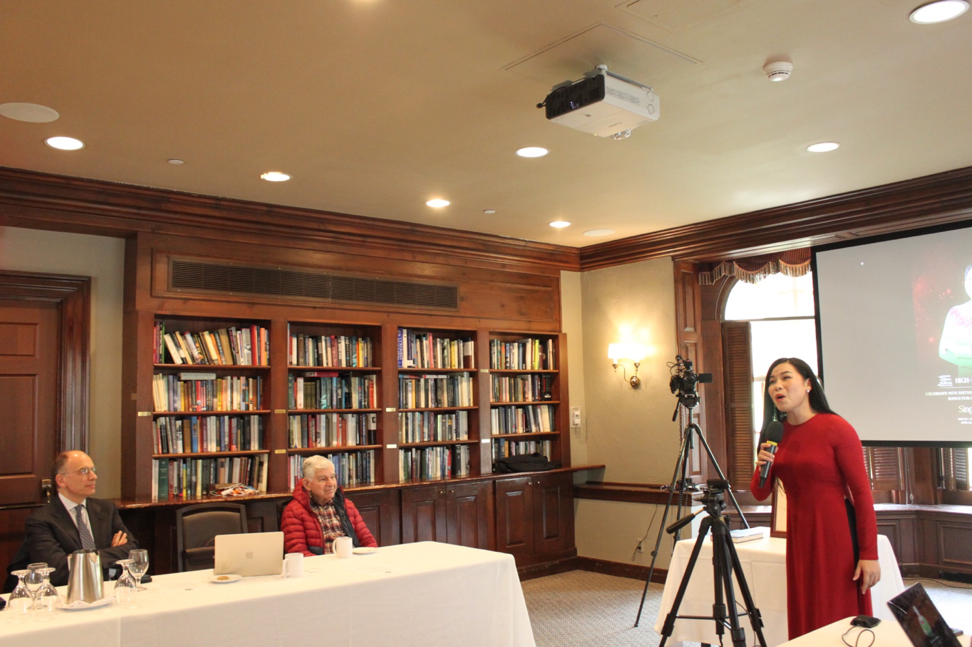
GEMC will organize a Global Enlightenment Concert to commemorate the 90th birthday of Governor Michael Dukakis, in collaboration with the Free for All Concert Fund.
Online Global Enlightenment concerts will also be held to create opportunities for global artists including the United States, Japan, Europe, India, South Korea, and Vietnam to contribute music works and performances that elevate humanity towards building the Age of Global Enlightenment.
A YouTube channel “Global Enlightenment Music,” along with AIWS Concert Hall of AIWS City, will be digital platforms to introduce music that builds the Age of Global Enlightenment and the Global Enlightenment Music Club.
Ambassador Swanee Hunt
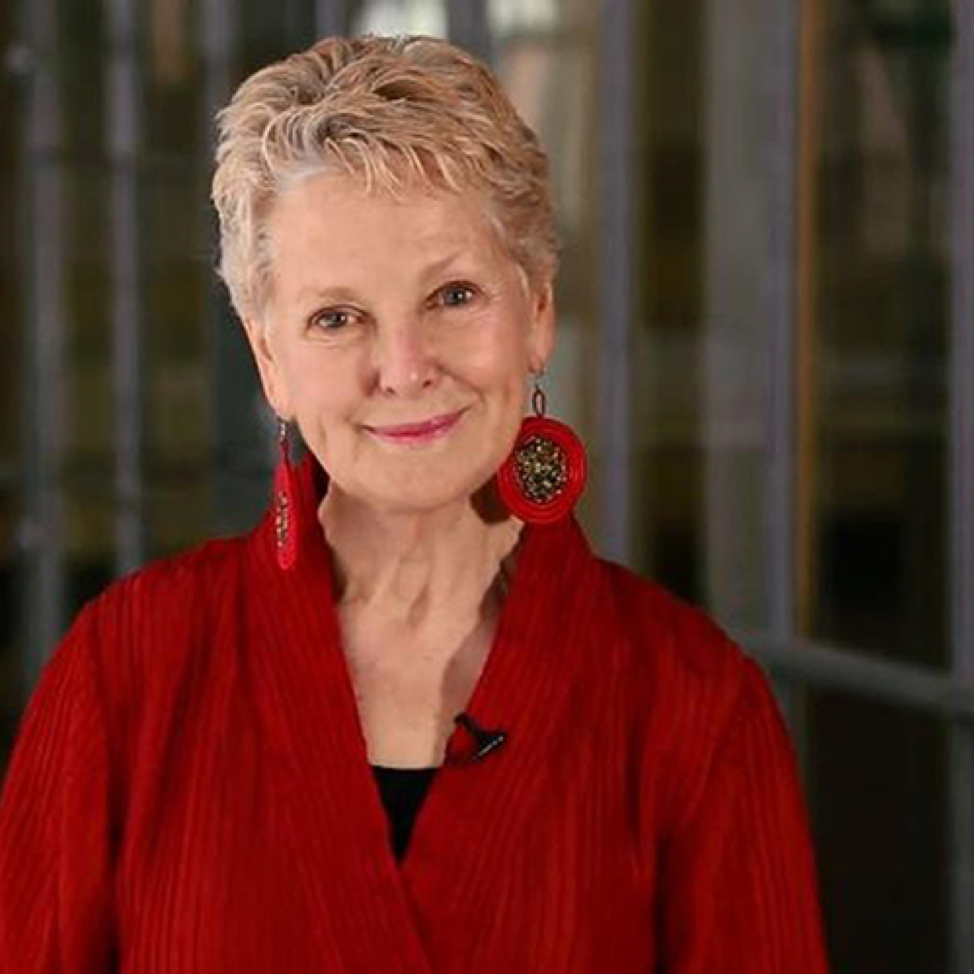
Julia Leven


Singer Bui Thuy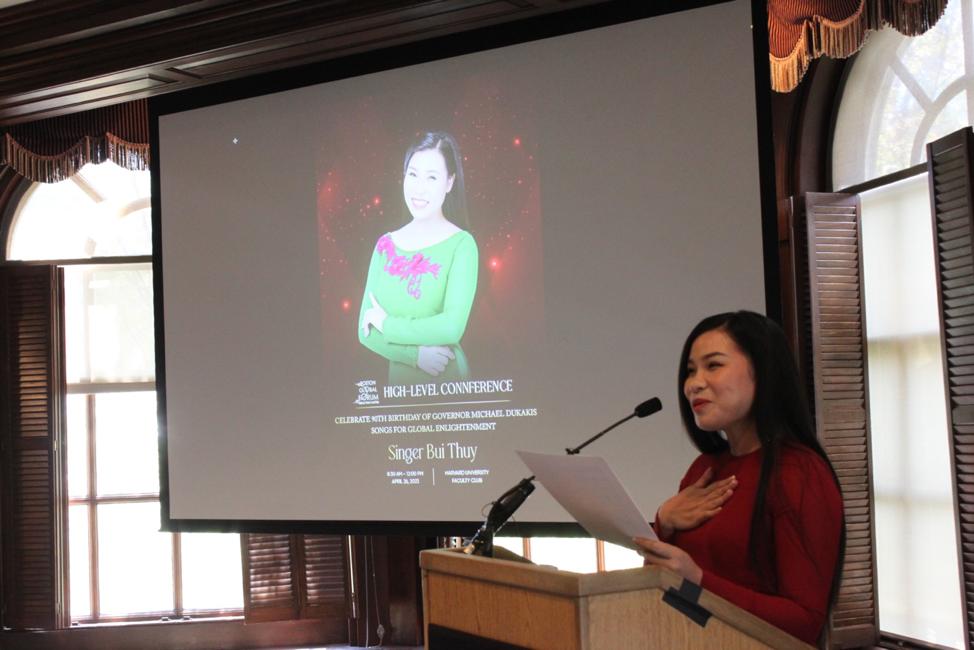
by Editor | May 29, 2023 | News
In this May, the White House announced New Actions to Promote Responsible AI Innovation, while G-7 Summit leaders called for international standards on AI. Following up these efforts, leaders of OpenAI, Sam Altman, Greg Brockman, and Ilya Sutskever, wrote: “Governance of superintelligence – Now is a good time to start thinking about the governance of superintelligence—future AI systems dramatically more capable than even AGI.”
Former Prime Minister of Bosnia and Herzegovina Zlatko Lagumdzija, a Global Enlightenment leader highlighted on May 27, 2023: “Few years ago at our BGF conferences and in our book ‘Remaking the World – Toward an Age of Global Enlightenment’ as well, I was calling for the establishment on international regulatory body like for nuclear energy (IAEA) with all references for that approach. Now creators of OpenAI are making that call, and BGF leaders will all support and ready to work with leaders of OpenAI for this mission.”
Since 2017, Boston Global Forum has contributed AI World Society model to maximizes the benefits of AI while managing and controlling the associated risks for individuals, organizations, and governments. This model seeks to achieve greater intelligence, higher labor productivity, increased efficiency, speed, and optimization, all while ensuring responsible AI development.
BGF has taken several initiatives to lay the foundation for a new AI World Society called the Age of Global Enlightenment. The first of these initiatives was the BGF-G7 Summit in 2018, which introduced the AIWS 7-Layer Model to Build Next Generation Democracy. Subsequently, the AIWS-G7 Summit Initiative in 2019 introduced the concepts of AI-Government and AI-Citizen. In collaboration with the United Nations Academic Impact, BGF co-founded the United Nations Centennial Initiative in 2019, with the goal of building the Age of Global Enlightenment.
To further solidify the framework for AI governance, BGF partnered with the Club de Madrid, an organization of over 100 former presidents and prime ministers, to announce the Social Contract for the Age of Artificial Intelligence in September 2020. This was followed by the announcement of the AI International Accord (AIIA) and the co-founding of the Global Alliance for Digital Governance (GADG) in September 2021. These initiatives provide a framework for relationships between nations, businesses, and individuals in the era of AI, technology, and data. It is crucial to understand that the world of AI, technology, and data requires not only technological standards but also social standards rooted in ethical principles. These fundamental standards represent the ideals that civilized humanity aspires to achieve, ensuring every citizen can maximize their potential in innovation, have equal opportunities, actively participate in social governance and supervision, receive fair opportunities in education, be educated in the foundational values of humanity and society, and have access to information, transparency, and public accountability. By adhering to these standards, we can limit conflicts, mutual destruction, and mitigate the risks posed by AI.
Furthermore, AI and data have the potential to build a better and more democratic society. By leveraging AI, we can restrain governments with extreme nationalist ambitions from deceiving the people through media manipulation and trampling on the sovereignty and territorial integrity of other nations. The Social Contract for the Age of Artificial Intelligence aims to empower each citizen to maximize their own abilities and power while upholding ethical standards.
In collaboration with the United Nations Academic Impact, BGF co-founded the United Nations Centennial Initiative in 2019, laying the groundwork for the Age of Global Enlightenment. The Social Contract for the Age of Artificial Intelligence explicitly recognizes AI Assistants as a center of power. Platforms like ChatGPT, born on November 30, 2022, serve as material embodiments of this idea. The question then arises: how do we control and govern this center of power?
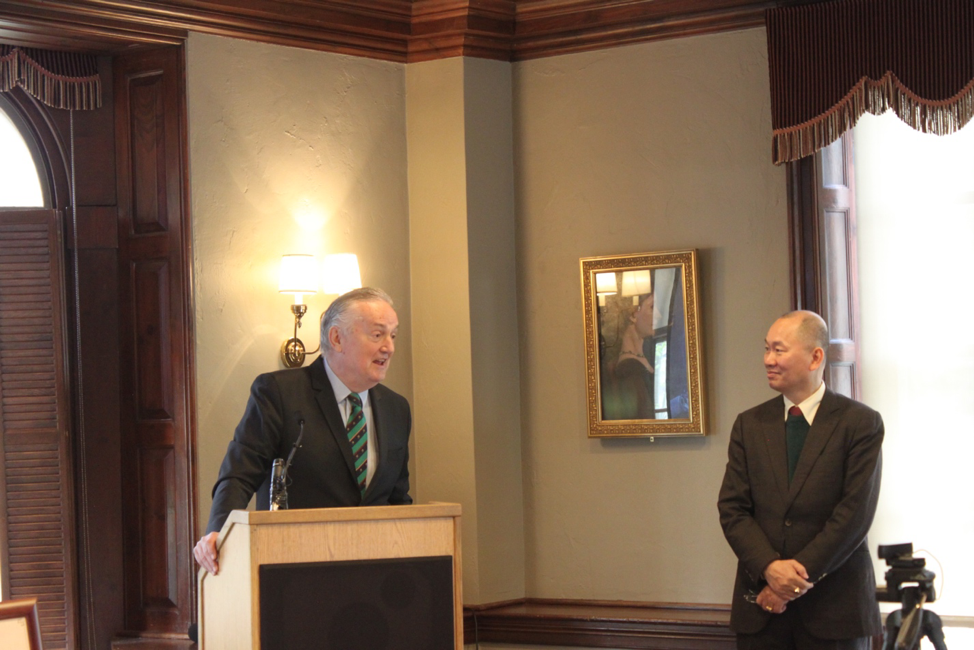
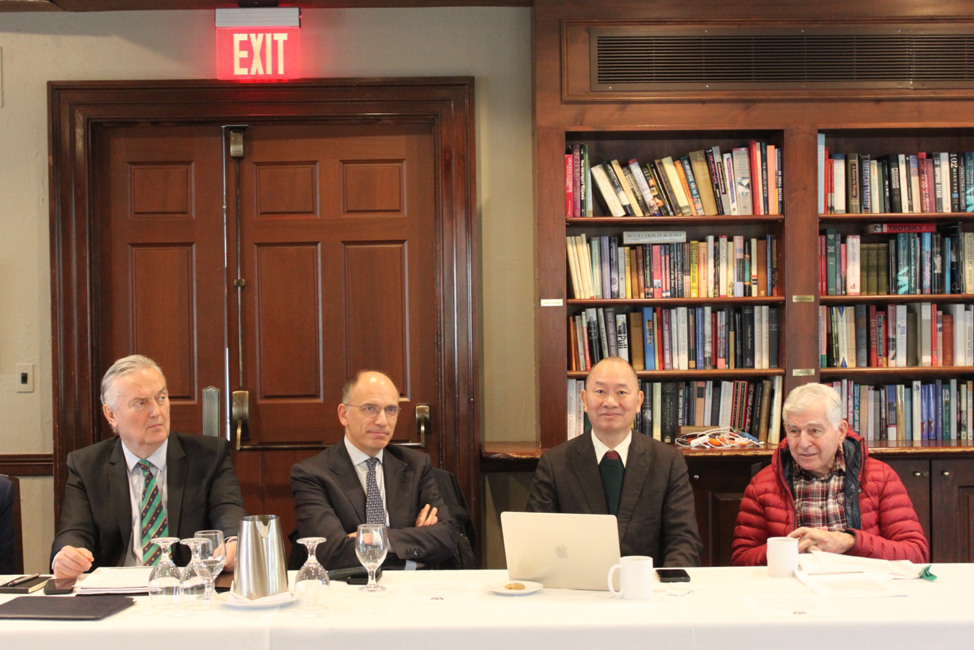
To address this question, BGF organized a series of high-level conferences on Governance for AI Assistants and ChatGPT, culminating in the High-level Conference on April 26, 2023, at the Harvard University Faculty Club. The Framework for Global Governance of AI Assistants and ChatGPT was announced during this conference. These efforts, along with the establishment of the Global Enlightenment Community, create an international platform where leaders, thinkers, innovators, artists, and business leaders can come together to promote thought, creativity, and ethical behaviors worldwide. The community emphasizes the urgent need for government action to translate words into tangible actions.
In building the Age of Global Enlightenment, four pillars play a crucial role: the United States, Japan, Europe, and India. These countries and regions, with their technological prowess and economic models driven by AI and digital advancements, form the foundation for the Global Enlightenment Mountain—a new Silicon Valley model. It is heartening to see the establishment of the Global Internet Governance, Digital Empowerment and Security Alliance (GLIDES), which BGF fully supports as a Charter Member.
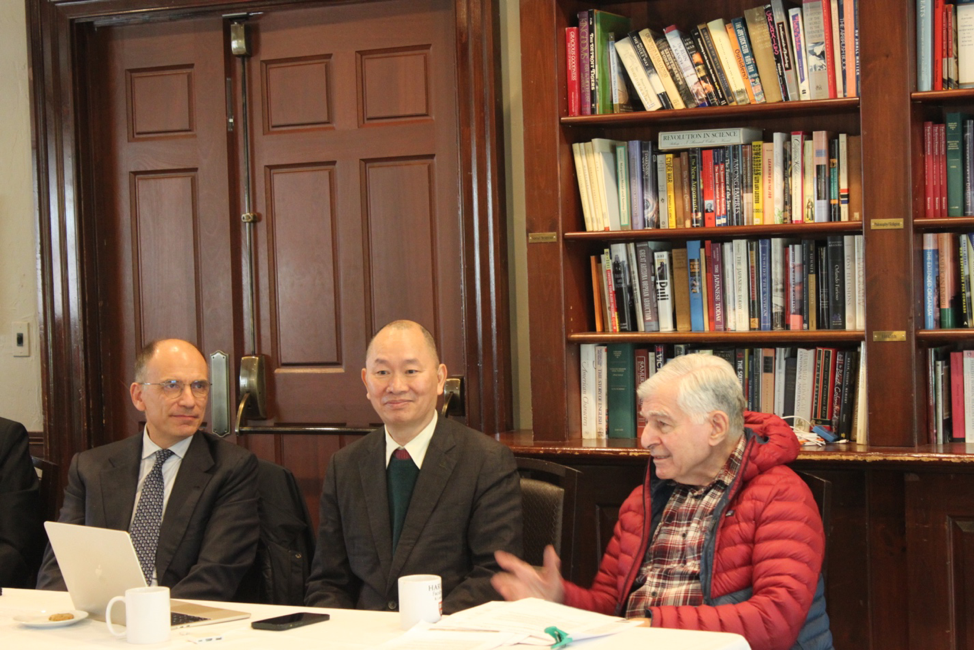
Prime Minister Zlatko Lagumdzija speaking at the BGF High-level Conference at Harvard Faculty Club

by Editor | May 29, 2023 | News
With the aim of promoting historical, esteemed, and culturally significant locations, and enriching them with the values of the AI World Society in the Age of Global Enlightenment, Boston Global Forum is proud to collaborate with distinguished places in cities such as Boston, New York, Washington DC, San Francisco, Tokyo, Rome, New Delhi, as well as preeminent cities and renowned national parks in the United States including the Grand Canyon, Yellowstone, Zion, and more. Together, we will recognize and promote these locations as Global Enlightenment Houses, fostering discussions and initiatives that contribute to the Age of Global Enlightenment. As a part of the Global Enlightenment Mountain, these distinguished places will host special events and gatherings for the Global Enlightenment Community. Esteemed personalities of the Global Enlightenment Community will convene and engage in meaningful discussions at these Global Enlightenment Houses.
By establishing these venues as focal points for intellectual exchange, BGF aims to create a vibrant community that fosters the values of the Age of Global Enlightenment. Through these collaborative efforts, we seek to shape a future that harnesses the transformative power of AI and technology while promoting ethical practices, and the well-being of all. The Global Enlightenment Houses will serve as beacons of knowledge, guiding society toward the Age of Global Enlightenment.


by Editor | May 21, 2023 | Event Updates
Global Enlightenment Mountain (GEM), in collaboration with the Boston Global Forum, has established the Global Enlightenment Monument Program. This initiative aims to recognize and celebrate significant contributions and achievements in the development and advancement of an AI-driven world society, also known as the Age of Global Enlightenment.
As the world continues to witness rapid technological advancements, GEM and the Boston Global Forum seek to honor individuals, organizations, and governments that have made remarkable strides in leveraging Artificial Intelligence (AI) for the betterment of society. The Global Enlightenment Monument Program serves as a platform to acknowledge their groundbreaking work and inspire further progress in this transformative era.
One of the key aspects of the program involves the designation of AI and digital monuments in collaboration with governments in name some nature wonders. These monuments will bear the names of prominent figures, organizations, or pioneering projects that have contributed significantly to shaping the AI World Society. By naming these monuments after the visionaries and trailblazers, GEM and the Boston Global Forum aim to immortalize their impact and inspire future generations.
The selection process for the naming of these monuments will involve a comprehensive evaluation of the contributions made by individuals or entities to the advancement of AI in various domains. The evaluation criteria will consider factors such as societal impact, ethical considerations, technological innovation, and the promotion of global collaboration. The chosen monuments will serve as symbols of progress and serve to remind the world of the efforts toward building an AI World Society rooted in the principles of Global Enlightenment.
by Editor | May 21, 2023 | Global Alliance for Digital Governance
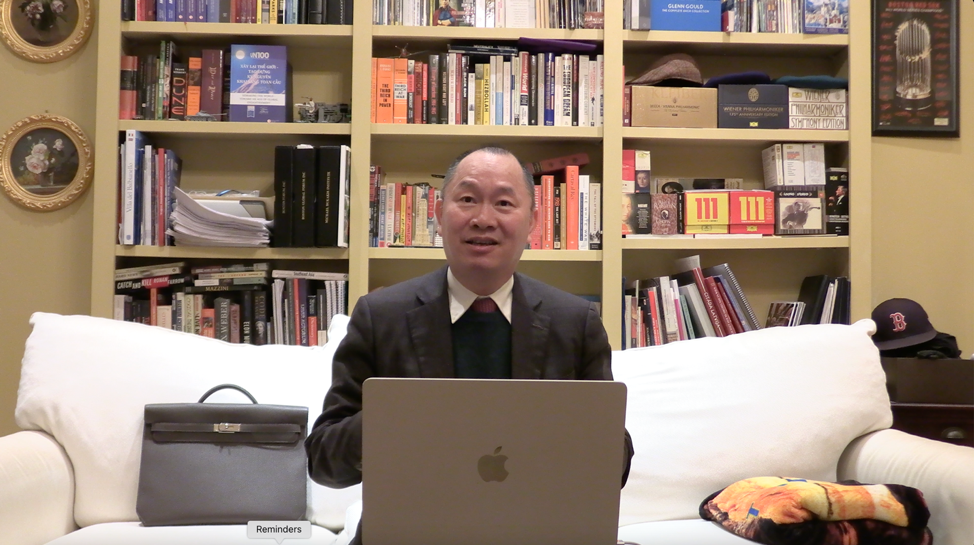
In his Welcome Keynote Address at the C20 Summit “Technology and Security for One World,” held as part of the C20 in India from May 12-14, 2023, Boston Global Forum CEO Nguyen Anh Tuan emphasized the need for faster policy-making by governments regarding AI global governance. Responding to questions from attendees on how to expedite the process, Mr. Tuan encouraged civil society organizations and think tanks to take an active role in contributing to and engaging in dialogue with governments to develop official regulations.
Recognizing the urgency and significance of establishing regulations in the era of AI World Society (AIWS)-the Age of Global Enlightenment, Mr. Tuan stressed the importance of not waiting for governments alone to act. He urged all participants in the conference, as well as civil society organizations and think tanks, to proactively engage in the regulatory process. By actively offering their expertise, insights, and policy recommendations, these entities can help expedite the development of regulations and shape the future of AI governance.
To facilitate this collaborative effort, the Boston Global Forum, in conjunction with the Global Alliance for Digital Governance, pledged to work closely with the resources provided by civil society organizations and think tanks. By harnessing the collective knowledge and expertise from these entities, the aim is to create a more effective framework for AI global governance.
In the AI World Society, where the rapid pace of technological advancement necessitates timely regulation, it is imperative for stakeholders to act swiftly and cooperatively. The call to action from Mr. Tuan serves as a reminder that governments alone cannot bear the responsibility of shaping AI governance. Instead, a multi-stakeholder approach involving civil society organizations, think tanks, and other experts is essential to ensure comprehensive, inclusive, and effective regulations.
By actively engaging with governments, offering proposals, and participating in dialogue, these non-governmental entities can play a crucial role in influencing AI governance policies. Their contributions will help address critical concerns such as privacy, ethics, transparency, and societal impact, fostering an environment that encourages responsible AI development and safeguards the well-being of individuals and communities.
As the Boston Global Forum and the Global Alliance for Digital Governance collaborate with civil society organizations and think tanks, it is expected that their combined efforts will contribute to the formulation of comprehensive and forward-thinking regulations for AI global governance. By acting swiftly and collaboratively, stakeholders can shape the future of AI in a manner that aligns with the principles of the Age of Global Enlightenment.
https://youtube.com/live/G4IxLXGFDOs
Mr. Nguyen Anh Tuan presents his Welcome Keynote Address to C20 Conference, May 12

by Editor | May 21, 2023 | News
Global Enlightenment Mountain (GEM) supports the concept “Data Exchange” of MIT Professor Alex Pentland, Distinguished Contributor to “Remaking the World – Toward an Age of Global Enlightenment.” Data exchanges are peer-to-peer platforms that curate and store data from many agents, conditionally allowing third parties to gain new insights from personal data. Since data exchanges implement the notion of sending the algorithm to the data (instead of sending the data to the algorithm), personal data is never extracted from the original source where it is stored but analyzed within it instead. Boston Global Forum, GEM and Global Alliance for Digital Governance will organize a special conference in early June 2023. Professor Alex Pentland will be a keynote speaker of the Conference.
To further explore the potential of data exchanges and their impact on global governance, making an ecosystem of exchange data, GEM, in collaboration with the Boston Global Forum and the Global Alliance for Digital Governance, will organize a special conference in early June 2023. This conference will bring together scholars and policymakers to discuss the implications, challenges, and opportunities presented by data exchanges.
GEM endorses the “Data Exchange” concept, as it is committed to advancing the principles of global enlightenment, knowledge sharing, and responsible data use. By supporting Professor Pentland’s work, GEM aims to encourage governments, organizations, and individuals worldwide to embrace data-driven approaches that prioritize privacy, transparency, and societal impact.
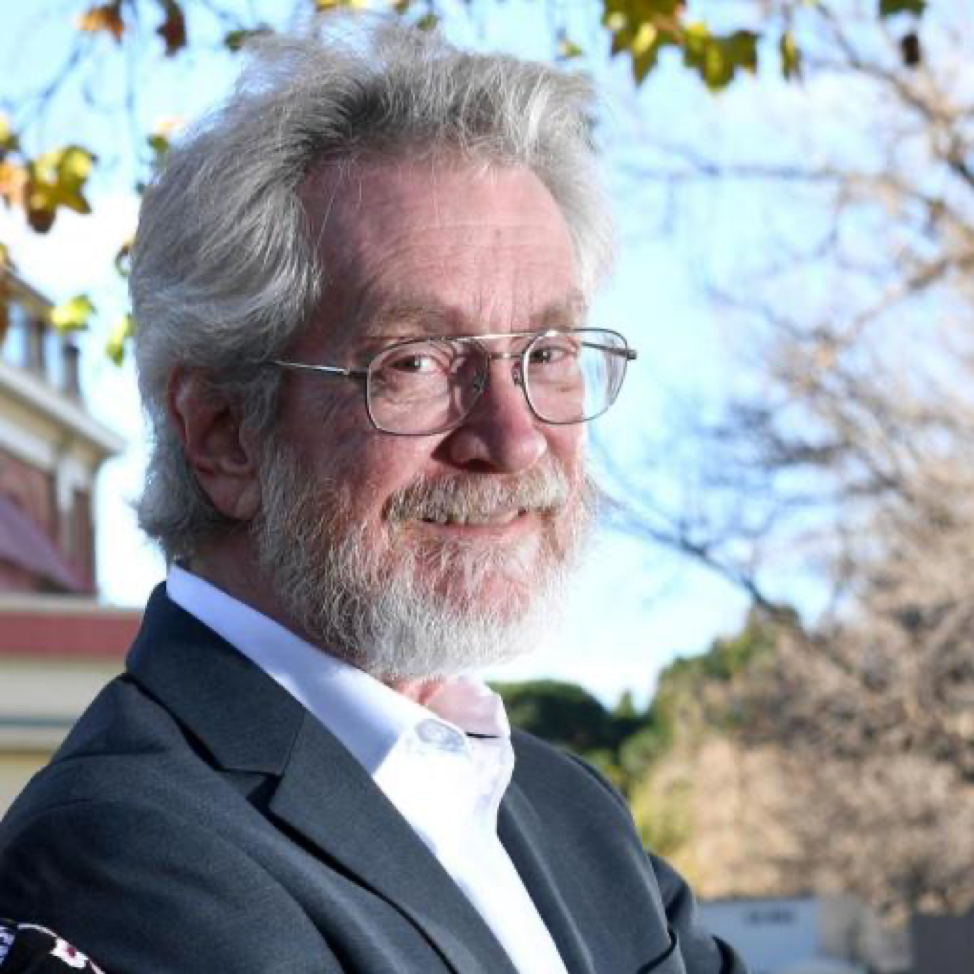
Professor Alex Pentland, co-founder of the Global Enlightenment Mountain (GEM)