by Editor | Jul 30, 2023 | News
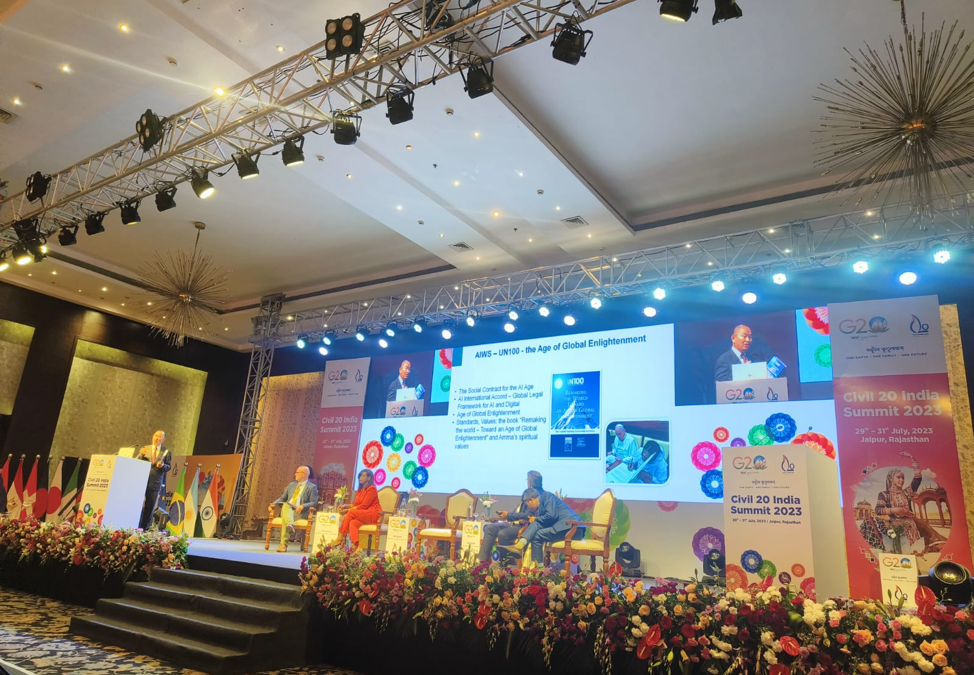
Boston Global Forum CEO Nguyen Anh Tuan is a keynote speaker “Technology, Education and Empowerment” at C20 – G20 Summit India, on July 30, 2023.
Nguyen Anh Tuan spoke about “Empowering Lives: How AIWS and Technology Shape,” presented the AIWS – the United Nations Centennial Initiative – the Age of Global Enlightenment and AIWS City, a practical model of AIWS, and its implementation to Global South, with the first phase for India, Brazil, Nigeria, Indonesia, Philippines, and Vietnam.
On behalf of BGF, the Global Alliance for Digital Governance, and the Global Internet Governance, Digital Empowerment, and Security Alliance (GLIDES), Mr. Tuan announced and introduced the Special Report to C20-G20 Summit India 2023.
Download here for the full slides of Tuan’s speech at C20-G20 Summit India 2023.
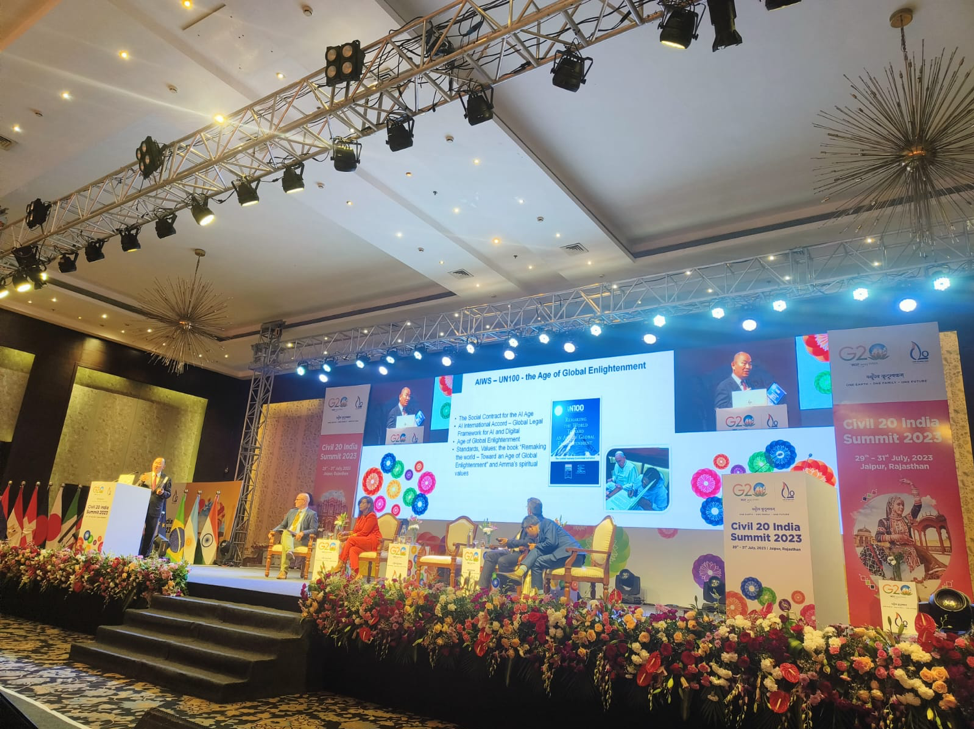
BGF CEO Nguyen Anh Tuan speaks at C20-G20 Summit India 2023, Jaipur, July 30

Around 2000 high-level attendees to C20-G20 Summit India 2023, July 29-31 in Jaipur
by Editor | Jul 30, 2023 | News
The AIWS City stands as the central pillar of BGF and GLIDES’ initiative which was presented at C20-G20 Summit India 2023.
AIWS City embodies a practical model for the Age of Global Enlightenment. It seamlessly integrates advanced technology based on AIWS Standards with the profound application of Amma’s spiritual values. One of the significant events is the Dialogue with religious leaders for
Addressing Misinformation and Disinformation and Cybercrime. Misinformation and disinformation remain significant concerns in the digital age. Tackling these complex issues requires the united efforts of various social forces and governments, taking a proactive approach by organizing dialogues with religious leaders from Christianity, Islam, Hinduism, Buddhism, and Judaism. Additionally, the framework seeks cooperation with governments from the US, EU-UK, Japan, India, Brazil, Nigeria, Mexico, Indonesia, Vietnam, and the Philippines to effectively combat these challenges. BGF and Amrita University will collaborate as residents of this event, providing valuable insights and expertise.
The AI-Powered Enlightenment Framework assumes a crucial role in devising technical solutions to address misinformation, disinformation, and cybercrime effectively. This framework aims to curtail the spread of false information and protect individuals and societies from harmful online activities. Through international collaboration and collective action, the AI-Powered Enlightenment Framework strives to create a safer and more reliable digital space for all.
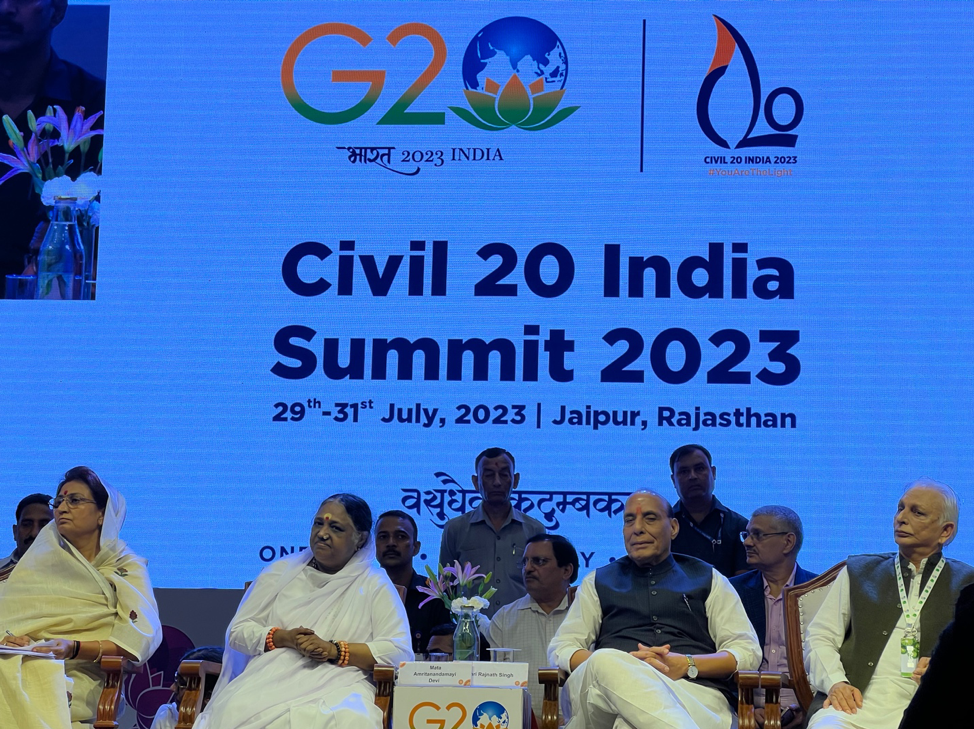
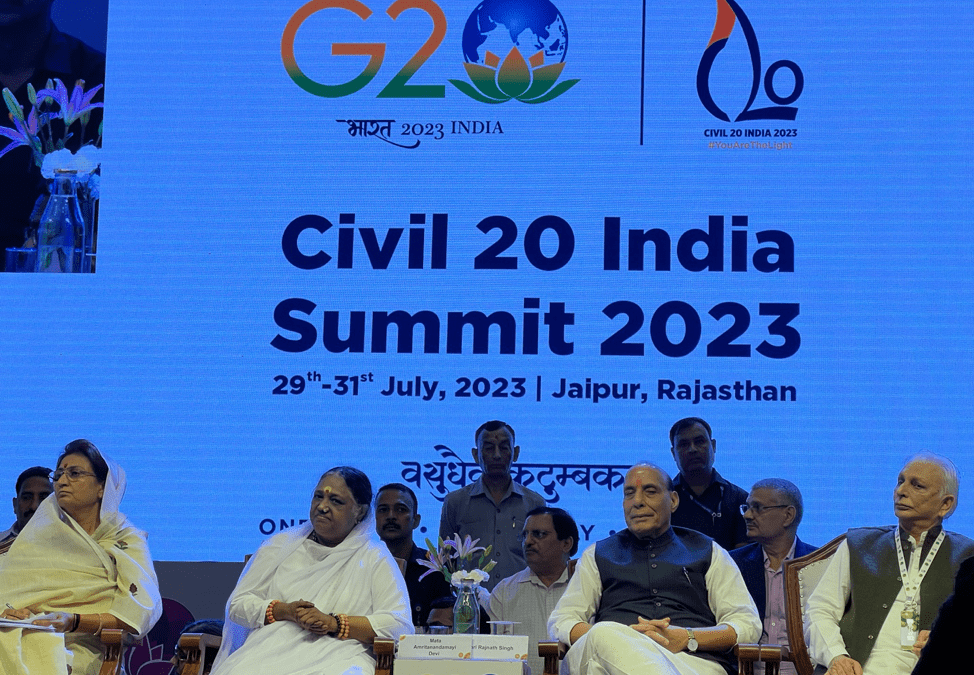
Amma and leaders at C20-G20 Summit India, July 29-31, 2023
by Editor | Jul 28, 2023 | Global Alliance for Digital Governance, Papers & Reports, Publications
Download the full special report PDF here.
AI-empowered Enlightenment for Global Governance of AI
Special Report on AI Global Governance of the Boston Global Forum and the Global Alliance for Digital Governance and the Global Internet Governance, Digital Empowerment, and Security Alliance (GLIDES)
to C20 – G20 Summit India 2023
Boston, MA – Jaipur, India July 28, 2023
Contributors: Dr. Krishnashree Achuthan, Vint Cerf, Nazli Choucri, John Clippinger, Michael Dukakis, Thomas Kehler, Zlatko Lagumdzija, Enrico Letta, Dr. Prashant R. Nair, Yasuhide Nakayama, Tuan Anh Nguyen, Thomas Patterson, Alex Pentland, Alison Richards, David Silbersweig.
In recent times, the governance of AI has gained immense attention globally. Leading the charge in this domain is the Boston Global Forum (BGF), which established the AI World Society (AIWS) Initiative in 2017 for global governance of AI and Digital. Notable milestones include the AIWS-G7 Summit 2019 Initiative and the launch of the Social Contract for the AI Age and AIWS City, in collaboration with the World Leadership Alliance-Club de Madrid in September 2020. Notably, in September 2021, the AI International Accord and Global Alliance for Digital Governance (GADG) were introduced by BGF and World Leadership Alliance – Club de Madrid.
BGF Chairman Governor Michael Dukakis and BGF CEO Nguyen Anh Tuan: “The best way to solve challenges, threats, and perils from AI and Digital Transformation is to shape a new society with our innovative, pioneering ideas and concepts.”
From February to April 2023, the Boston Global Forum organized a series of BGF High-level Conferences to develop a Framework for Global Governance of AI. On April 30, 2023, BGF announced the Framework for Global Alliance of AI.
Collaborating with the Global Internet Governance, Digital Empowerment, and Security Alliance (GLIDES) of Civil20 (C20) official engagement group of India’s G20 presidency from May 12, 2023, BGF has taken further actions, encouraging civic society organizations and citizens to contribute to action plans for Global Governance of AI.
BGF and GLIDES are committed to contributing to the C20 – G20 Summit India 2023, with a focus on the following plans:
- AI-Powered Enlightenment Alliance (AIEA) for Oversight of AI Systems: Major technology companies, including Amazon, Google, Meta, Microsoft, and others, have made significant commitments to AI safeguards brokered by President Joe Biden’s White House. To ensure oversight and responsible development of the next generation of AI systems, BGF, Shinzo Abe Initiative for Peace and Security, GADG, and GLIDES have come together to form the AI-Powered Enlightenment Alliance (AIEA) and will volunteer as third-party oversight.
- Empowering Citizens and CSOs for global governance of AI, Internet and development of data economy:
MIT professor Alex Pentland: “Data is a new primary means of production, along with capital, labor, and land. If we establish equitable data rights, and enable easy audit of data use, we can control AI and bend the digital economy to better serve society.”
BGF CEO Nguyen Anh Tuan: ”Citizens are empowered through the AIWS model, data economy and global enlightenment education, uniting their voices as power of users, market forces, and innovators.”
AIEA actively promotes collaboration with citizens and civic society organizations, while also establishing the Tech Enlightenment Economy Alliance to support global governance of AI, Internet and create opportunities in AI and data economy, enabling every citizen to become an innovator. It emphasizes the practical application of AIWS concepts to foster peace, security, and the greater good in the realms of AI, world-wide web and digital technology. During the initial phase, AIEA focuses on partnering with 10 countries, namely the US, EU-UK, Japan, India, Brazil, Nigeria, Mexico, Indonesia, Vietnam, and the Philippines. Together, they strive to shape a future where the potential of AI is harnessed for the benefit of all and to promote a thriving digital ecosystem that empowers individuals and societies alike.
- AI-Powered Enlightenment Framework: AI pioneers and scholars like MIT professor Alex Pentland, AI pioneer Thomas Kehler, and Harvard professor David Silbersweig emphasize the importance of equitable data rights, transparency, and a new AI framework that integrates with human collective intelligence. AIEA supports to build AI-powered Enlightenment Framework as a new AI framework that integrates with and engages human collective intelligence. The AI-powered Enlightenment Framework is grounded in neuroscience and is based on the laws of living physics.
AI pioneer Thomas Kehler: “The tremendous power of generative AI is currently is dangerous because of a lack of data provenance and transparency. We must swiftly move forward to adopting a new AI framework that integrates with and engages humancollective intelligence. The new framework is grounded in neuroscience and is based on the laws of living physics. While not on the public radar, such technology is available and will build a safe framework for future development.”
Harvard professor David Silbersweig: “Like other transformative technologies, AI can be used for good or ill. The human brain mind and society have pro-social and anti-social elements. Given the powerful ability of AI to accelerate and scale human intentions and to potentially adopt goals of its own, it is imperative that we shape the development and deployment of AI, informed by ethical and the latest integrated understanding of the brain-mind and complex systems.”
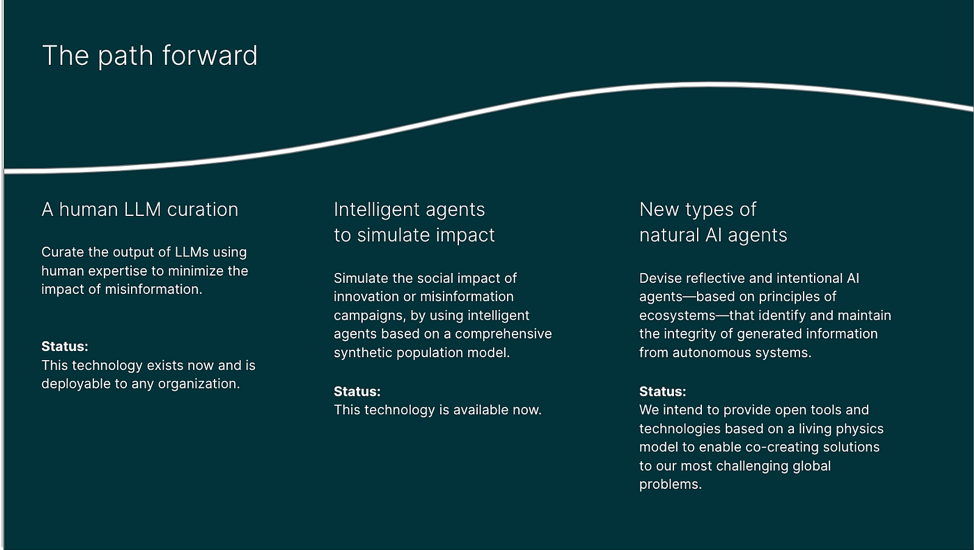
Thomas Kehler’s figure
- Addressing Misinformation and Disinformation and Cybercrime: Misinformation and disinformation remain significant concerns in the digital age. Tackling these complex issues requires the united efforts of various social forces and governments. AIEA takes a proactive approach by organizing dialogues with religious leaders from Christianity, Islam, Hinduism, Buddhism, and Judaism. Additionally, it seeks cooperation with governments from the US, EU-UK, Japan, India, Brazil, Nigeria, Mexico, Indonesia, Vietnam, and the Philippines to effectively combat these challenges. BGF and Amrita University will collaborate as residents of this event, providing valuable insights and expertise.
The AI-Powered Enlightenment Framework assumes a crucial role in devising technical solutions to address misinformation, disinformation, and cybercrime effectively. This framework aims to curtail the spread of false information and protect individuals and societies from harmful online activities. Through international collaboration and collective action, the AI-Powered Enlightenment Framework strives to create a safer and more reliable digital space for all.
- Resources: The Global Enlightenment Community, comprising distinguished scholars from prestigious universities such as Harvard, MIT, Stanford, and more, along with contributions from former presidents and prime ministers, play a vital role in supporting these action programs. The Global Enlightenment Mountain (GEM) connects research centers and labs of universities and companies to provide technological support for oversight and the AI-Powered Enlightenment Framework.
Through the collaborative efforts of the AI-Powered Enlightenment Alliance, BGF, GLIDES, and various global partners, the vision for an AI-powered enlightened society – AIWS – an Age of Global Enlightenment, becomes increasingly attainable, steering the world towards a more ethical, secure, and equitable future in the realm of AI governance.
References:
Boston Global Forum
https://bostonglobalforum.org/about/
GLIDES
https://c20.amma.org/tst-wg/global-internet-governance-digital-empowerment-and-security-alliance-glides/
AI World Society (AIWS)
https://bostonglobalforum.org/initiatives/aiws-and-the-age-of-global-enlightenment/
AIWS City
https://bostonglobalforum.org/initiatives/aiws-city-and-rebuilding-ukraine/
https://un100.net/recognitions/aiws-city/aiws-city-as-a-test-model-for-the-aiws-innovative-ecosystem/
https://clubmadrid.org/club-de-madrid-and-the-boston-global-forum-advocate-for-a-social-contract-for-the-ai-age/
Global Enlightenment Community (GEC)
https://bostonglobalforum.org/global-alliance-for-digital-governance/statement-of-global-enlightenment-community-from-words-to-actions-the-urgency-for-government-action/
Global Enlightenment Mountain (GEM)
https://bostonglobalforum.org/event-updates/building-the-global-enlightenment-mountain-a-silicon-valley-in-ai-world-society/
GADG: co-founded by BGF and Club de Madrid
https://clubmadrid.org/a-rights-based-agenda-for-the-governance-of-ai-and-digital-societies-building-the-age-of-global-enlightenment/
https://clubmadrid.org/work/policy-labs/policy-lab-transatlantic-approaches-on-digital-governance-a-new-social-contract-on-artificial-intelligence/
Shinzo Abe Initiative for Peace and Security
https://bostonglobalforum.org/shinzo-abe-initiative-for-peace-and-security/
BGF Framework for Global Governance of AI
https://bostonglobalforum.org/wp-content/uploads/BGF-Framework-for-AI-Governance-Official-30-4-2023.pdf
by Editor | Jul 24, 2023 | Global Alliance for Digital Governance
“Citizens are empowered through the AIWS model, data economy and global enlightenment education, uniting their voices as power of users, market forces, and innovators.”
This is an Initiative of the Boston Global Forum and Global Internet Governance, Digital Empowerment and Security Alliance for C20-G20 Summit India 2023.
BGF and GLIDES dedicated efforts to usher in the Age of Global Enlightenment during the United Nations Centennial. The organizations will unite their strengths to build a platform that empowers citizens to contribute actively, based on AIWS City. This platform embraces the following principles while drawing inspiration from the profound spiritual values of Amma. This initiative will be announced at C20-G20 Summit India, July 29-31, 2023, at Hotel Clarks Amer, Jaipur, India. This AIWS City platform support:
- Data Economy: Fostering a landscape where every citizen becomes an innovator in AIWS – the Age of Global Enlightenment.
- Ethical AI Development: Prioritizing AI technologies that align with ethical principles, human rights, and societal values, reflecting Amma’s love and empathy for all beings.
- Support for Innovation: Designing and applying regulations that foster innovation while safeguarding against potential risks, resulting in AI technologies that benefit society, in harmony with Amma’s vision for a better world.
- Safeguarding Privacy and Data Protection: Establishing robust measures to protect individual privacy and personal data concerning AI applications, promoting privacy-preserving AI techniques, and involving Global Alliance for Digital Governance and GLIDES, inspired by Amma’s teachings on respecting the dignity and privacy of each person.
by Editor | Jul 23, 2023 | News
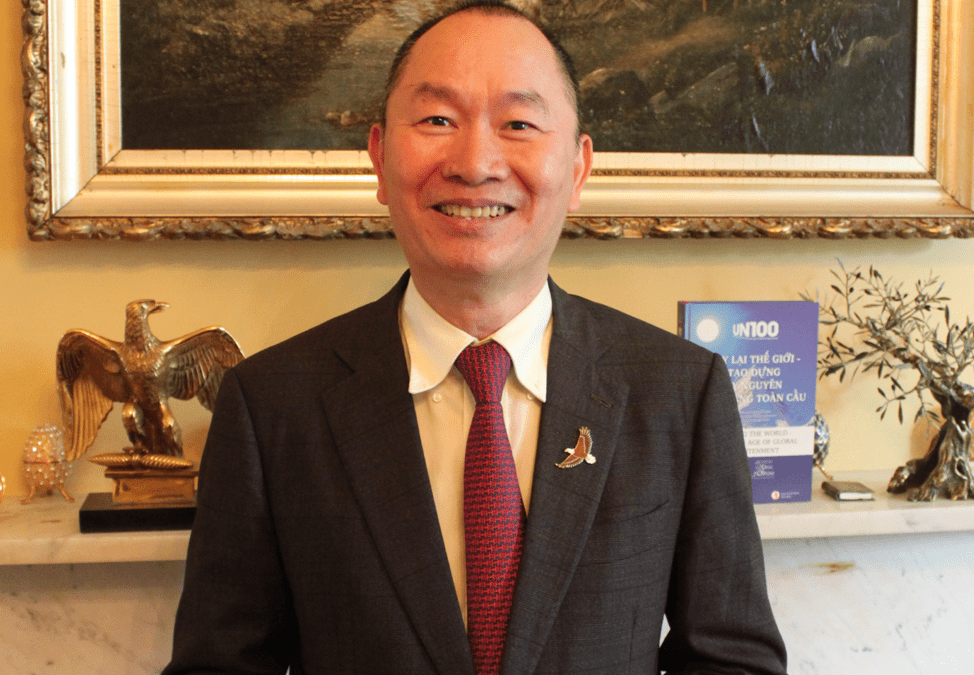
Boston Global Forum CEO Nguyen Anh Tuan will speak at “Empowering Lives: How AI and Technology Shape,” where he will present about AIWS – the United Nations Centennial Initiative – the Age of Global Enlightenment, and AIWS, a practical model of AIWS, and how to implement in the Global South, with the first phase for India, Brazil, Nigeria, Indonesia and Vietnam.
Here is the section Tuan will speak:
July 30, 2023, at Hotel Clarks Amer, Jaipur, India
09:00 AM Main Hall: Thematic Area 1
TECHNOLOGY, EDUCATION AND EMPOWERMENT IN A CHANGING WORLD
09:10 AM Ms. Elisabeth Moreno, Former Hon’ble Minister Delegate for Gender Equality, Diversity and Equal Opportunities, France
09:30 AM Mr. Tuan Nguyen, Founder & CEO, Boston Global Forum, USA
09:50 AM Dr. Niklaus-Samuel Gugger, Hon’ble Member of Parliament, Switzerland
10:10 AM Session 1 Wrap-up
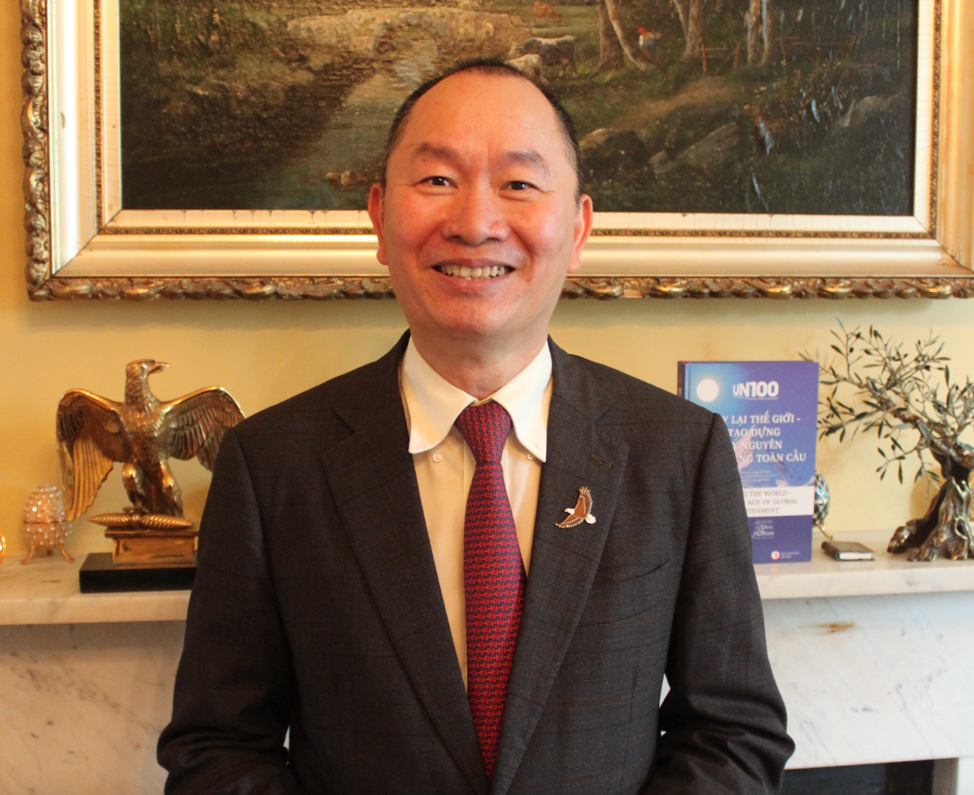
BGF CEO Nguyen Anh Tuan

by Editor | Jul 23, 2023 | News
Mata Amritanandamayi Devi, fondly known as “Amma,” is a world-renowned spiritual leader, humanitarian, and visionary. Her life’s mission revolves around uplifting humanity and providing aid to the underprivileged, addressing their five fundamental needs: food, water, shelter, healthcare, education, and livelihood. As the founder of Mata Amritanandamayi Math (MAM), a charitable organization dedicated to humanitarian relief, Amma has been actively involved in supporting communities affected by major disasters.
Amma’s influence extends far beyond her spiritual teachings, as she actively participates in international forums such as the United Nations, the Vatican, and the Parliament of the World’s Religions. During these gatherings, she addresses critical social issues such as environmental protection, gender equality, the importance of universal values, and fostering interreligious harmony. Amma leads by example, exemplifying service and sacrifice, inspiring countless individuals to follow the path of selfless devotion to others.
As a true global citizen, Mata Amritanandamayi conducts free public programs across various continents, including India, Europe, the United States, Australia, Japan, Sri Lanka, Singapore, Malaysia, Canada, Africa, and South America. Her talks encompass wisdom and guidance on personal growth and addressing pressing global challenges like climate change, terrorism, cross-cultural tensions, poverty, and women’s rights. Through her speeches, she encourages active participation in rebuilding compassionate and caring societies.
A unique aspect of Amma’s public programs is her practice of personally embracing each individual who attends the events. These one-on-one meetings, known as her darshan, are not brief encounters but deeply meaningful interactions that allow her to connect with millions worldwide. Amma has embraced over 40 million people globally, dedicating extensive time and energy to offer emotional solace, spiritual counsel, and practical solutions to their problems. Many who receive Amma’s embrace find renewed inspiration to engage in selfless service for the less fortunate. This simple yet profound act of a mother’s embrace has become a symbol for the growing international network of humanitarian initiatives known as Embracing the World.
Amma’s spiritual leadership and unwavering dedication to humanitarian efforts have touched the lives of millions. Her profound impact on individuals and communities worldwide continues to inspire compassion, service, and positive change, making her a beacon of hope and love in the modern world. Amma’s spiritual values will be infused to AIWS City.
http://www.embracingtheworld.org/about-amma/
Amma
by Editor | Jul 17, 2023 | News
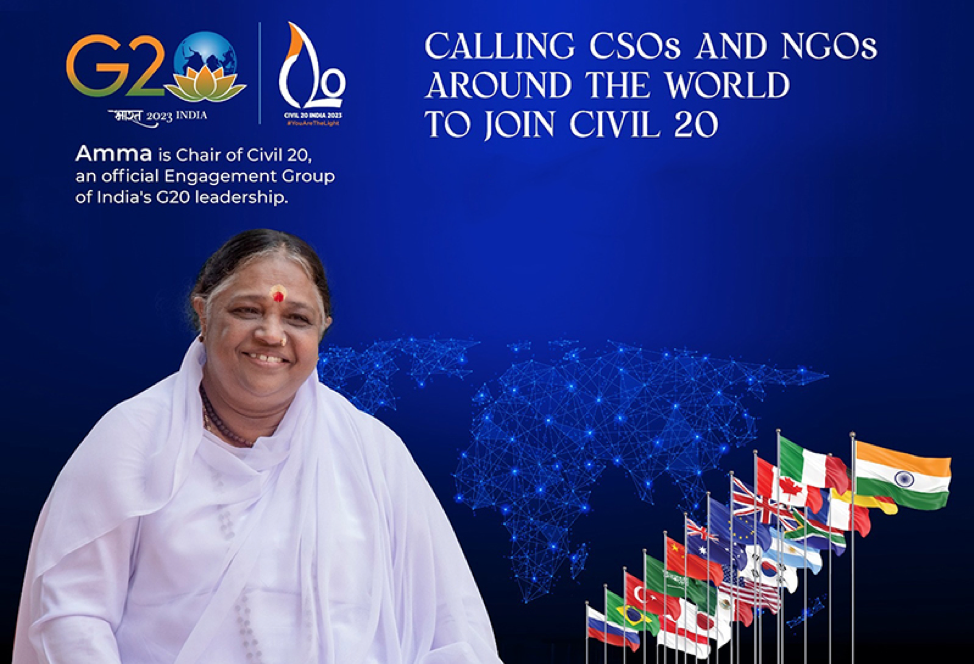
Amma is the Chair of C20, which seeks to bring the concerns of Civil Society Organisations to the leaders of the world’s leading economies. As this year’s host country, the G20 Summit will take place in New Delhi this September.
Here are some notes from her address at the Inaugural Ceremony of the Civil 20 for India’s G20 Presidency:
We have forgotten the force of Nature, which is even more powerful. We have forgotten the great truth that we are a part of this vast universe. Lately, Nature has been giving us a succession of “shock treatments” to remind us of this truth.
- From kindergarten to grade 12, as well as in higher education, a course that teaches compassion and selflessness should be created.
- Every child should plant a tree on their birthday and be taught how to care for it with love and compassion.
- Projects should be developed where villages are adopted with the support of multinational corporations and businesses. Then schools, colleges, hospitals and small-scale industries should be established in them.
- Leaders of all religions should teach their followers to be inclusive and to never discriminate against anyone based on religion.
- It should become mandatory for all educational institutions to train their students, from lowest to the highest, to use technology with discernment and give them opportunities to put it into practice.
Read the full address here: https://www.embracingtheworld.org/news/ammas-full-address-inauguration-of-indias-civil-20-2023/
The C20 India 2023 Summit will take place in Jaipur, India, on July 29-31, 2023. Amma will chair the Summit.
The Boston Global Forum, Global Alliance for Digital Governance, and Global Internet Governance, Digital Empowerment and Security Alliance are partners at the C20 India 2023 Summit.
by Editor | Jul 17, 2023 | Global Alliance for Digital Governance
Throughout history, humanity always paid a steep price to tyrants who wield unchecked power.
Totalitarian regimes, characterized by their lack of accountability and transparency, continue to pose a great peril to humanity.
Hitler is the most major example, inflicting the horrors of Nazi Germany on the world. Today, we witness Putin causing terrible suffering to the people of Ukraine.
The COVID-19 pandemic, originating in China where the totalitarian government has little regards for their citizens, has killed tens of millions of people around the world, serves also as a stark reminder of this danger.
One of the gravest concerns lies in China’s utilization of its market power to coerce foreign companies operating within its borders to compromise democratic values and the principles of civilized humanity, while China itself undermining and devaluing the essence of democracy. Recently, Vietnam and several Asian countries expressed concerns over China’s insistence that businesses operating in China accept maps issued by the Chinese government featuring the contentious 9-dash line in the South China Sea—a claim that has been invalidated by International Tribunal for the Law of the Sea. This flagrant violation of the sovereignty of Vietnam, the Philippines, and other Southeast Asian nations by the totalitarian of China is deeply alarming.
Additionally, we observe an increasing incidences of data coercion and privacy infringement of foreign companies doing business in China, accompanied by rising restrictions on exposing the wrongdoings of the Chinese government. The Chinese regime consolidates economic power and the resources of a major nation to serve an extreme nationalist ideology, captivating the Chinese populace through indoctrinating policies and information control which deviate from the values outlined in The Social Contract for the AI Age. These policies further the ambition of the Chinese Communist leaders, whose goal is to undermine the rules-based order and dominate the global order.
The Global Alliance for Digital Governance and Shinzo Abe Initiative for Peace and Security urgently warns of these visible threats and implores all civilized and progressive people to take immediate action to confront these perils:
- Establishing a unified community with democratic and civilized standards, forming a market block among democratic nations, with the United States, Japan, the European Union, and India as pillars. This community should include all countries and individuals who respect and uphold the values of democracy and progress.
- Exposing, boycotting, and refusing to engage with companies driven solely by profit and willing to compromise the principles of civilized and progressive humanity, when they acquiesce the demands of the Chinese government to undermine and devalue democracy. The Global Alliance for Digital Governance and Shinzo Abe Initiative for Peace and Security will compile and publish a list of such companies.
It is imperative that the democratic world acts swiftly to counter the threats and perils posed by the Chinese Communist Party before it is too late.
July 14, 2023
Yasuhide Nakayama, Former Japanese State Minister of Foreign Affair and Minister of Defense, Coordinator of the Shinzo Abe Initiative in Japan
Nam Pham, Former Assistant Secretary of Business Development & International Trade, Massachusetts Government
by Editor | Jul 17, 2023 | News
July 8 marked the one-year anniversary of former Japanese prime minister Shinzo Abe’s death. Ceremonies were held to commemorate him, while his widow, Akie Abe, is to visit Taiwan tomorrow. President Tsai Ing-wen (蔡英文) said that Abe was the Japanese prime minister the Taiwanese held dearest. Most Taiwanese believe that Abe always had their country in his heart. His kindness to Taiwan was not only sincere, it was timely. Whenever Taiwan was in trouble, Abe offered his help.
Taiwanese remember what it was like during the COVID-19 pandemic. The lack of vaccines made the situation in Taiwan worse, and Abe urged Japan to donate millions of vaccines to the nation. When huge earthquakes struck Taiwan, Abe wrote “Taiwan Don’t Give Up” to cheer Taiwanese up. When Taiwan’s pineapples were banned from being exported to China, he took a photo with Taiwanese pineapples and uploaded it to social media, smiling radiantly and showering praises on the fruit. When the nation was bullied by its hostile neighbor, he said: “A Taiwan emergency is a Japanese emergency, and therefore an emergency for the Japan-US alliance.”
Abe always offered his strong support when Taiwan was fighting against China. He had long been aware of China’s ambition and urged the world to be on the alert. He advocated creating an “Arc of Freedom and Prosperity,” which would unite the US, India and Australia to deal with the Chinese government. He also proposed a quadrilateral format to facilitate discussion on regional safety, and a free and open Indo-Pacific. Taiwan had been a part of Abe’s political vision and strategic planning. After he stepped down, Abe’s support for Taiwan grew even stronger. He urged the US to learn from the Russia-Ukraine war, indicating that Washington should modify its policy of strategic ambiguity. Abe wanted the US to declare that if China invaded Taiwan, the US would come to the nation’s aid.
Many of Abe’s political, economic and diplomatic legacies are related to Taiwan.
Prime Minister Shinzo Abe, a Global Enlightenment Leader, BGF World Leader for Peace and Security Award 2015, and Distinguished Contributor to “Remaking the World – Toward an Age of Global Enlightenment,” continue to contribute to world peace and security.
After he was assassinated on July 8, 2022, only two days later, on July 10, The Boston Global Forum announced the Shinzo Abe Initiative for Peace and Security. The legacy of Shinzo Abe lives on around the world.
Please read the full article at the Taipei Times. https://www.taipeitimes.com/News/editorials/archives/2023/07/16/2003803238
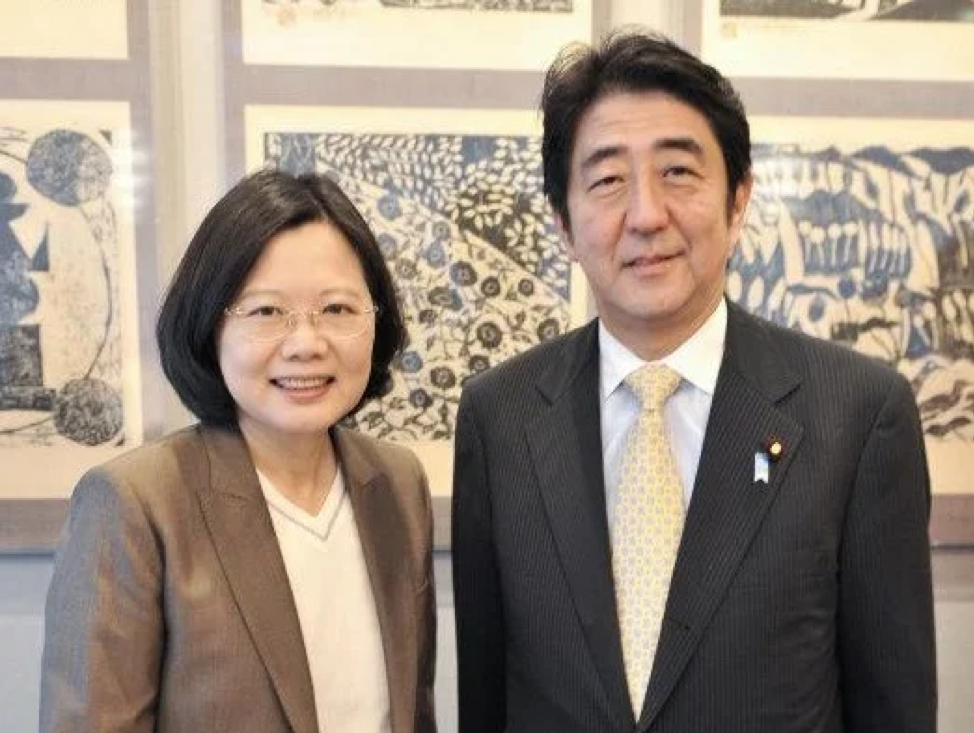
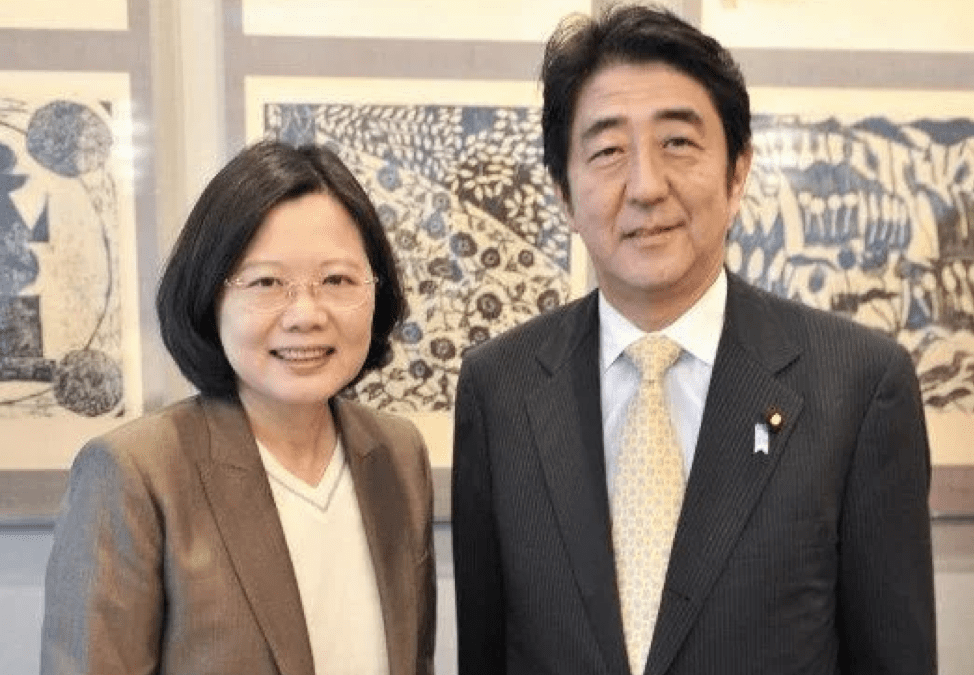
Prime Minister Shinzo Abe and President Tsai Ing-wen