by Editor | Mar 7, 2020 | News
Former Presidents and PMs from Europe and North America will call for a social contract to govern Artificial Intelligence at Harvard and MIT during a three-day meet April 27-29.
When: April 27 (reception), April 28 and 29
Where: Harvard University and MIT, Cambridge Mass.
Who: World Leadership Alliance-Club de Madrid, an organization of former world leaders & The Boston Global Forum think tank, with Harvard and MIT Scholars
Featured Speakers:
Vint Cerf, widely regarded as the “Father of the Internet”
Joseph S. Nye Jr., University Distinguished Service Professor, Emeritus and former Dean of the Harvard’s Kennedy School of Government.
Moderator: Former Massachusetts Governor Michael Dukakis, cofounder of The Boston Global Forum and AIWS Innovation Network
Former Western leaders will meet in Cambridge to create a Social Contract for the Artificial Intelligence Age aimed at enhancing life, fostering equality, and preventing AI—machines that learn and think like humans—from creating a dystopian world of oppression, haves and have-nots and economic disruption.
Delegates will develop a Social Contract to harness Artificial Intelligence in ways that improve our lives without economic disruption and political upheaval.
During the sessions The Boston Global Forum’s AIWS Innovation Network will offer a new model for the AI economy aimed at creating new opportunities, fostering peace, and preserving human rights.

by Editor | Mar 7, 2020 | News
The rapid proliferation of applications of artificial intelligence and machine learning—or AI, for short—coupled with the potential for significant societal impact has spurred calls around the world for new regulation.
The European Union and China are developing their own rules, and the Organization for Economic Cooperation and Development has developed principles that enjoy the support of its members plus a handful of other countries. In January, the U.S. Office of Management and Budget (OMB) also issued its own draft guidance, ensuring the United States a seat at the table during this ongoing, multi-year, international conversation.
The U.S. guidance—covering “weak” or narrow AI applications of the kind we experience today—reflects a light-touch approach to regulation, consistent with a desire to reward U.S. ingenuity. Critics say the White House is embracing “permissionless innovation,” which involves the development and circulation of products or services without prior approval from regulators. Supporters have argued that the dynamic, boundary-pushing innovation principle is better than the restrictive precautionary principle.
The original article can be found here.
According to AI regulation, Michael Dukakis Institute for Leadership and Innovation (MDI) established the Artificial Intelligence World Society (AIWS) and AIWS Innovation Network for the purpose of promoting ethical norms and practices in the development and use of AI. AIWS will identify, publish and promote principles for the virtuous application of AI, and AIWS-IN will develop apps consistent with these principles for use in healthcare, education, transportation, national security, and other areas.

by Editor | Mar 7, 2020 | News
Proscia, a leading provider of artificial intelligence (AI) enabled digital pathology solutions, and the University of California, San Francisco (UCSF) have partnered to introduce artificial intelligence into the practice of pathology. Beginning with prostate cancer, the second leading cause of cancer deaths among men in the U.S., the collaboration will validate the clinical efficacy of computational pathology applications for several high-impact pathology subspecialties.
The standard of care for diagnosing cancer relies on the pathologist’s assessment of tissue biopsies viewed under a microscope. This 150-year-old manual and subjective practice cannot keep pace with the rising cancer burden amid a decreasing pathologist workforce. Prostate cancer diagnosis is especially problematic given its high slide-per-case volume, complex reporting requirements, and qualitative grading system, often leading to delayed turnaround times, increased use of ancillary tests, and reduced confidence in treatment decisions.
Proscia and UCSF are collaborating on the validation of computational pathology applications that drive much-needed quality and efficiency gains for clinical laboratories using digital pathology. As one of the earliest adopters of digital pathology for primary diagnosis, UCSF has amassed volumes of diverse, high-quality digitized data. This data is initially being used to ensure that Proscia’s computational pathology application for prostate cancer accurately accounts for the variability that exists across a wide range of diagnoses, methods of biopsy and tissue preparation, tissue staining procedures, and digital scanning processes.
The original article can be found here.
To support and collaborate AI application and Society, Artificial Intelligence World Society Innovation Network (AIWS-IN) created AIWS Young Leaders program including Young Leaders and Experts from Australia, Austria, Belgium, Britain, Canada, Denmark, Estonia, France, Finland, Germany, Greece, India, Italy, Japan, Latvia, Netherlands, New Zealand, Norway, Poland, Portugal, Russia, Spain, Sweden, Switzerland, United States, and Vietnam.
by Editor | Mar 1, 2020 | Global Alliance for Digital Governance, Global Law and Accord on AI and Digital, News
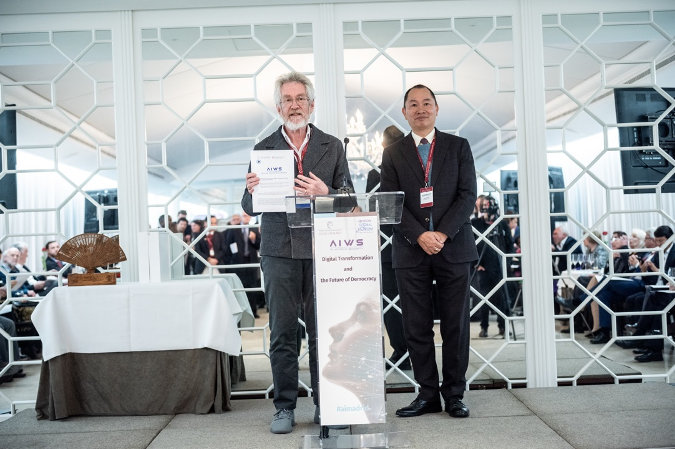
The World Leadership Alliance – Club de Madrid (WLA-CdM) in partnership with the Boston Global Forum (BGF) is organizing a Transatlantic and multi-stakeholder dialogue on global challenges and policy solutions in the context of the need to create a new social contract on digital technologies and Artificial Intelligence (AI). By comparing American and European approaches in the creation of a new social contract on AI and digital governance, under the critical eye of former democratic Heads of State or Government, this policy dialogue will stimulate new thinking and bring out ideas from representatives of governments, academic institutions and think tanks, tech companies, and civil society, from both regions. At the same time, the discussion will generate a space to encourage and strengthen Transatlantic cooperation on the new social contract of digital governance in the framework of needed reforms of the multilateral system and will serve as a platform to establish a Transatlantic Alliance for Digital Governance. Besides, the policy discussion aims to discuss the creation of an initiative to monitor governments as well as companies in using AI and generate an AI Ethics Index at all levels.
by Editor | Mar 1, 2020 | News
The EU wants to become a global leader for AI governance. “There is, however, a gap between Europe’s lofty ambitions and its actual institutional capacity for research, analysis and policy development to define and shape the European way on AI guided by societal values and the public interest. Currently the debate is mostly driven by industry, where most resources and capacity for technical research sit. Compared to industry and business consultancies, European civil society organizations struggle to have as strong an impact on the policy debate. In the US in contrast, there are numerous innovative and highly visible initiatives and research programs that seek to study and address the social, political and ethical challenges of AI in the US. The lack of involvement of civil society poses a serious problem for the EU’s regulatory ambition: Any claims of the EU Commission regarding human-centric and trustworthy AI would be for nought if the concept and underlying regulatory agenda are developed for but not with civil society.” This is the opinion from the report by Stiftung Neue Verantwortung (SNV).
To solve this gap, The Boston Global Forum, World Leadership Alliance-Club de Madrid, and MIT Connection Science will establish The Transatlantic Alliance for Digital Governance. These three institutions will be the residence of the Alliance. The leaders of the Boston Global Forum are Governor Michael Dukakis, Chair, and Mr. Nguyen Anh Tuan, CEO; the leaders of World Leadership Alliance-Club de Madrid are President Danilo Turk and Maria-Elena Aguero, Secretary General; and the leader of MIT Connection Science is Professor Alex Pentland.