by Editor | Aug 3, 2019 | News
David Bray, an AI World Distinguished Lecturer, and Jeff Saviano, Chief of Global Tax Innovation, will speak at the Vietnam CEO Summit on August 8, 2019 in Hanoi. The conference is organized by Vietnam Report.
Jeff Saviano will present a flagship initiative about a global tax system as a part of AI-Government. Last year ,Professor Jason Furman and Mr. Nguyen Anh Tuan presented the breakthrough strategy in AI economy for Vietnam at the Vietnam CEO Summit. In their report, they advised the Vietnamese government to do a leapfrog strategy by building the AI-Government.
The National Academy of Public Administration will join Vietnam Report to create special reports from talks and discussions of the Conference for leaders of the Vietnamese government. Boston Global Forum supported in bringing these two speakers to the Vietnam CEO Summit. Both David Bray and Jeff Saviano will attend and speak at the Vietnam National Television’s Talkshow “AI Shaping Futures”.
by Editor | Aug 3, 2019 | News
Deep learning algorithms often require millions of training examples to perform their tasks accurately. But many companies and organizations don’t have access to such large caches of annotated data to train their models (getting millions of pictures of cats is hard enough; how do you get millions of properly annotated customer profiles — or, considering an application from the health care realm, millions of annotated heart failure events?). On top of that, in many domains, data is fragmented and scattered, requiring tremendous efforts and funding to consolidate and clean for AI training. In other fields, data is subject to privacy laws and other regulations, which may put it out of reach of AI engineers.
This is why AI researchers have been under pressure over the last few years to find workarounds for the enormous data requirements of deep learning. And it’s why there’s been a lot of interest in recent months as several promising solutions including hybrid AI models, Few-shot learning and one-shot learning, as well as Generating training data with GANs have emerged — two that would require less training data, and one that would allow organizations to create their own training examples. These innovative AI solutions are also aligned with AI World Society (AIWS) evaluative criteria including data collection methodology and hybrid algorithm to promote and apply openness and transparency in the use and development of constructive AI for human values.
The original article can be found here.

by Editor | Aug 3, 2019 | News
“In 2017, Facebook announced that it was working on a brain-computer interface that designed to let users type by simply thinking words. And today, the company revealed for the first time how far it’s come in its quest to make such a device a reality.
Facebook’s Research Lab is already exploring a promising alternative: infrared. By measuring blood oxygenation levels, Facebook believes that it can create a less bulky — and far less invasive — brain-computer interface.
In other words, Facebook isn’t going to get inside your thoughts any time soon. A device that can allow us all to move a mouse, type Facebook comments, and play games with our thoughts alone is still many years, if not decades, out.
And it’s also bound to raise plenty of questions concerning privacy. Our thoughts are one of the last safe havens that have yet to be exploited by data hoarding big tech companies.”
The original article can be found here.
Boston Global Forum is building the Social Contract 2020 as a part of AI World Society Initiative. The Social Contract 2020 will include human brain-computer interface.
by Editor | Aug 3, 2019 | News
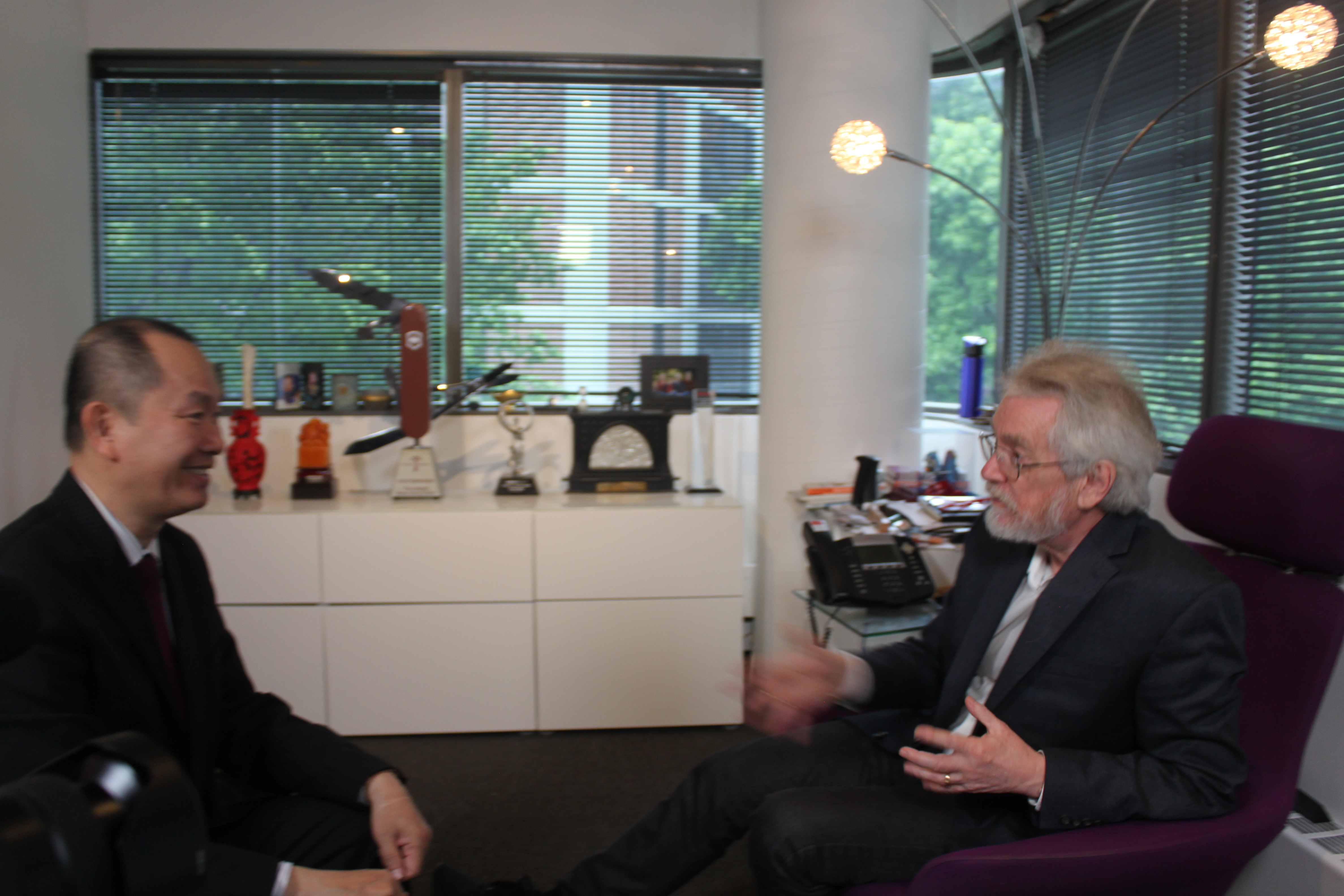
Social Physics is a new way of understanding human behavior based on analysis of Big Data.
In contemporary society we have access to an incredible array of data on social interaction. This abundance of data provides a social science nirvana which allows us to begin to know ourselves in a way we never could before.
Often described as a computational social scientist, Alex “Sandy” Pentland sees his role as being to “help the birth of the world into a data rich environment.”
His research introduced the modest origins of social physics and how the proliferation of data and innovative statistical methods have allowed the field to thrive.
Pentland’s own experimental trajectory reflects those advances. He describes past experiments which observed small groups of people interacting, measuring body motion signalling using tools such as recorders or wearable badges. Now his work has scaled up to the measurement of entire cities, providing fascinating insights into networks of interactions and their implications. Macro-level research can predict a city’s success by looking at its network of relationships, and can even explain surprising recent political outcomes. Meanwhile, at the micro-level, research within corporations can predict innovation and creativity according to interactions.
He describes how the revolution in technology is facilitating the use of social physics in measuring indicators such as poverty, inequality, and sustainability. This allows us to move beyond limited measures such as census data and GDP. With research showing that development aid works better when measurable, Pentland posits that we can, “through knowledge of ourselves, build a better world.”
Professor Alex Sandy Pentland plays a key role in building the Social Contract 2020.
by Editor | Jul 28, 2019 | News
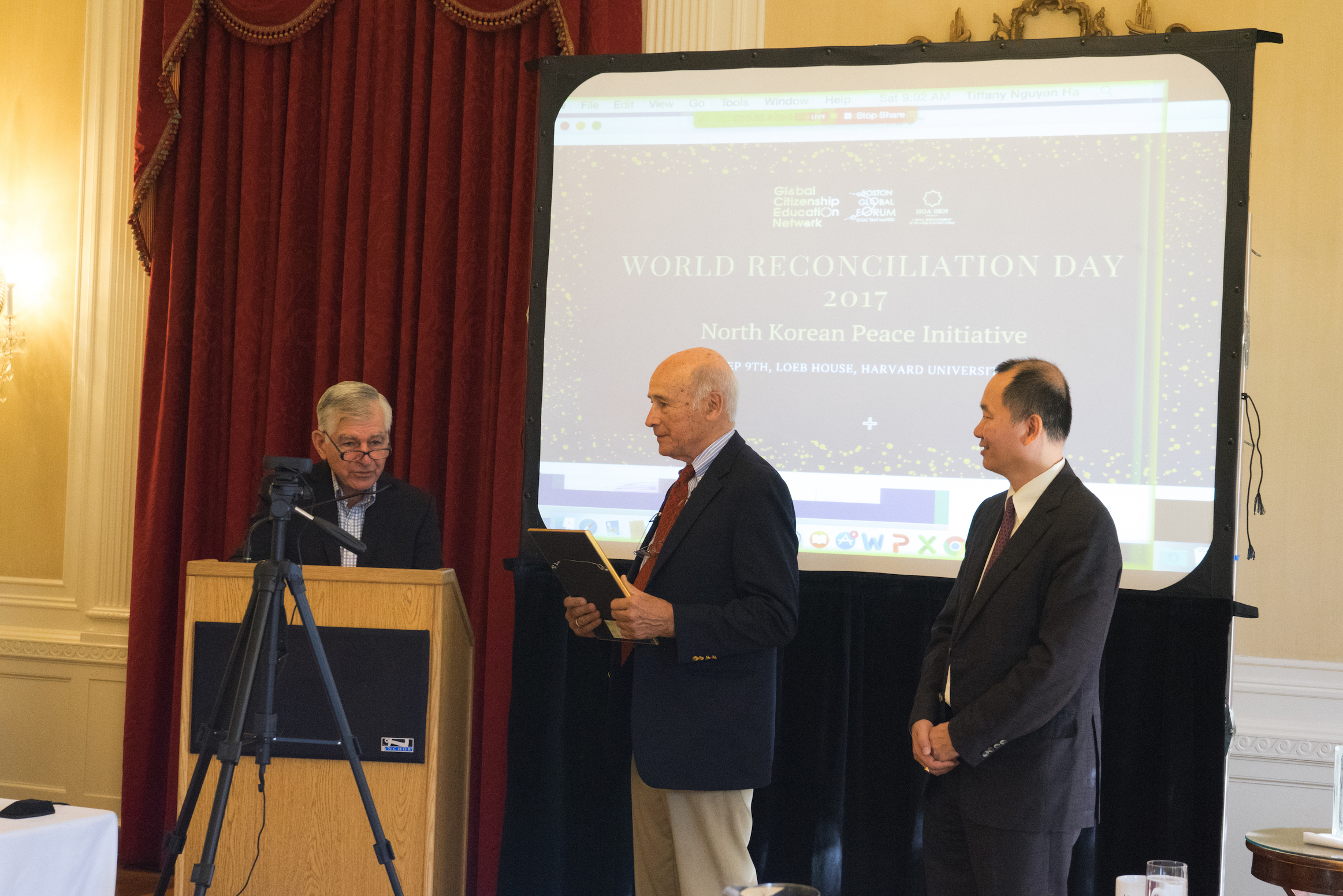
Governor Michael Dukakis, co-founder and chairman of the Boston Global Forum, would like to build a framework for peace and security in the 21st century. The framework is based on democracy, openness, transparency, freedom of information, accountability, responsibility, and protection of the environment. It is standards and norms for the world today.
The US, China, Russia, the EU, India and Japan all play very important roles to maintain peace and security in the world.
To solve conflicts, Governor Dukakis calls for a forum between these nations and countries in conflict and highly contested regions, based on common standards, norms and international laws, to generate solutions.