
by Editor | Jul 28, 2019 | News
Machine learning continues to be one of the toughest skills to acquire. The domain is as vast and as complex as the field of computer science. Developers will have to learn new languages, algorithms, frameworks, tools from an extremely diverse and fragmented ecosystem. They need to learn how to use the cloud to train the models and optimizing those models to integrate with a variety of environments and platforms.
The complexity multiplies when we attempt to take the models to the edge. Each model has to be converted to take advantage of the underlying CPU and GPU architecture. Mainstream inferencing platforms with accelerators such as NVIDIA Jetson, Intel Movidius, and Google Edge TPU use different optimization techniques to run models at the edge. Developers need to learn the nuts and bolts of the hardware and software stacks to even run a simple AI-enabled application at the edge.
While the top cloud vendors are busy in turning their platforms into preferred training environments for deep learning, startups such as Xnor.ai are moving fast in simplifying the integration of AI with edge devices and off-line applications. The development of AI on edge also supports to expand AI on IoT devices and applications for helping people achieve well-being and happiness in a daily life, which is also promoted by AI World Society (AIWS) and Michael Dukakis Institute (MDI).
The original article can be found here
by Editor | Jul 28, 2019 | News
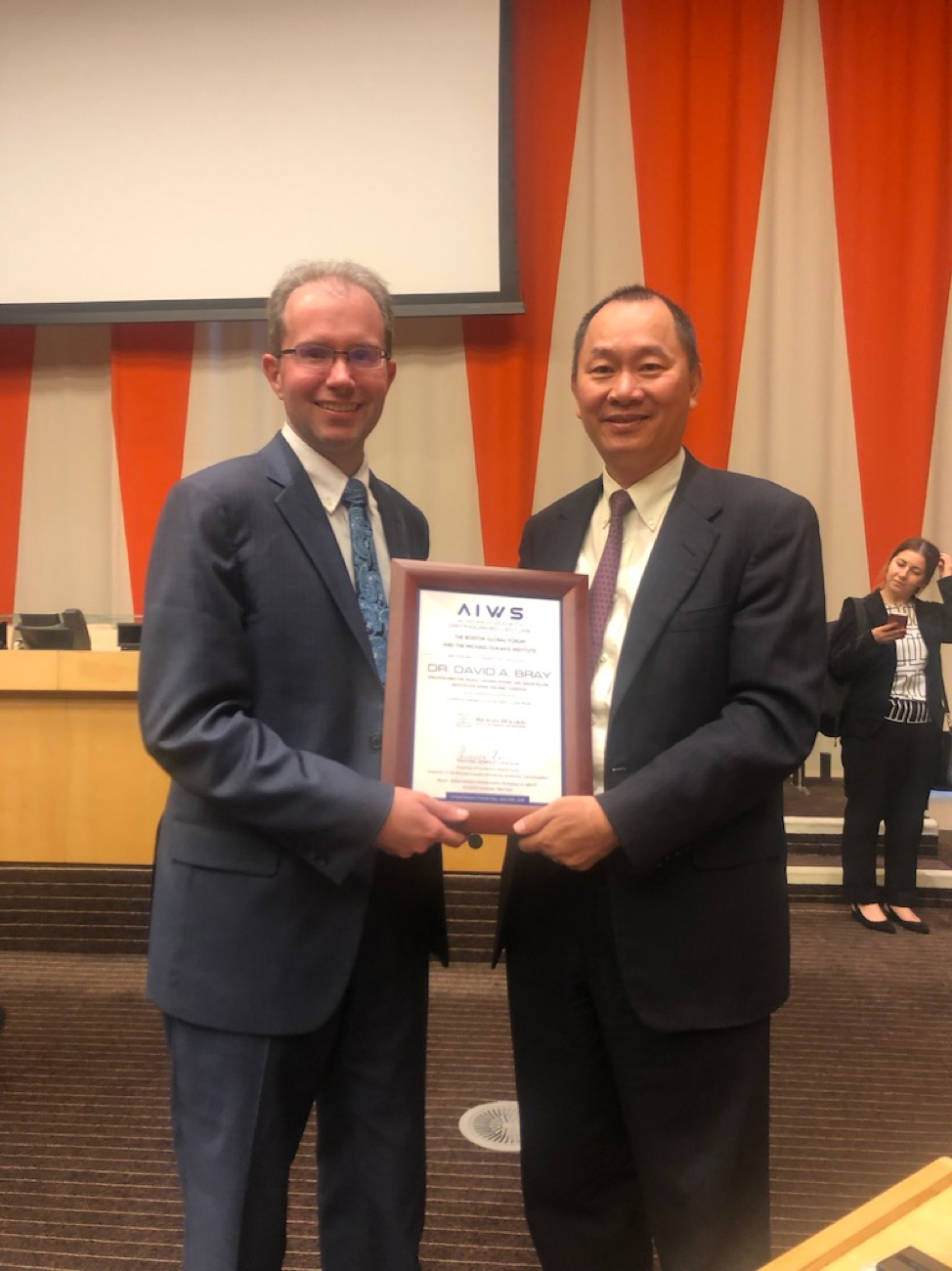
David Bray, one of top 24 Americans under 40 changing the world and also a member of AI World Society Standards and Practice Committee, will visit Vietnam and talk at the Vietnam CEO Summit on August 8, 2019.
He will speak about “Why CEOs Should Embrace Exponential Change, Collaborate, and Co-Existence“. The Vietnam CEO Summit is the conference of CEOs of the top 500 companies in Vietnam, organized by Vietnam Report.
David Bray will also meet and discuss with ICT leaders of Vietnam.
Last year, Professor Jason Furman, who served eight years as a top economic adviser to President Obama, including as the 28th Chairman of the Council of Economic Advisers from August 2013 to January 2017, acting as both his chief economist and a member of the cabinet, was the keynote speaker of the conference.
David Bray was the AI World Society Distinguished Lecturer on United Charter Day June 26, 2019 at Headquarter of United Nations.
by Editor | Jul 28, 2019 | News
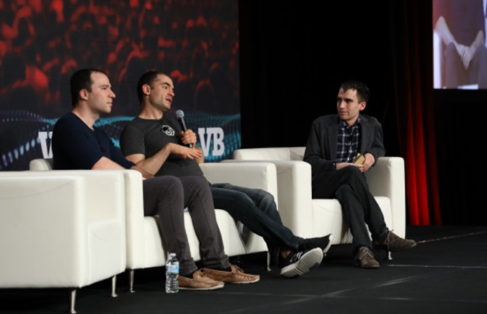
Microsoft today announced that it would invest $1 billion in OpenAI, the San Francisco-based AI research firm cofounded by CTO Greg Brockman, chief scientist Ilya Sutskever, Elon Musk, and others, with backing from luminaries like LinkedIn cofounder Reid Hoffman and former Y Combinator president Sam Altman. In a blog post, Brockman said the investment will support the development of artificial general intelligence (AGI) — AI with the capacity to learn any intellectual task that a human can — with “widely distributed” economic benefits.
To this end, OpenAI intends to partner with Microsoft to jointly develop new AI technologies for the Microsoft Azure cloud platform and will enter into an exclusivity agreement with Microsoft to “further extend” large-scale AI capabilities that “deliver on the promise of AGI.” Additionally, OpenAI will license some of its technologies to Microsoft, which will commercialize them and sell them to as-yet-unnamed partners, and OpenAI will train and run AI models on Azure as it works to develop new supercomputing hardware while “adhering to principles on ethics and trust.” The philosophy on AI Ethics is also initiated by Michael Dukakis Institute for Leadership and Innovation (MDI), which established Artificial Intelligence World Society (AIWS) for the purpose of promoting ethical norms and practices in the development and use of AI.
The original article can be found here
by Editor | Jul 28, 2019 | News
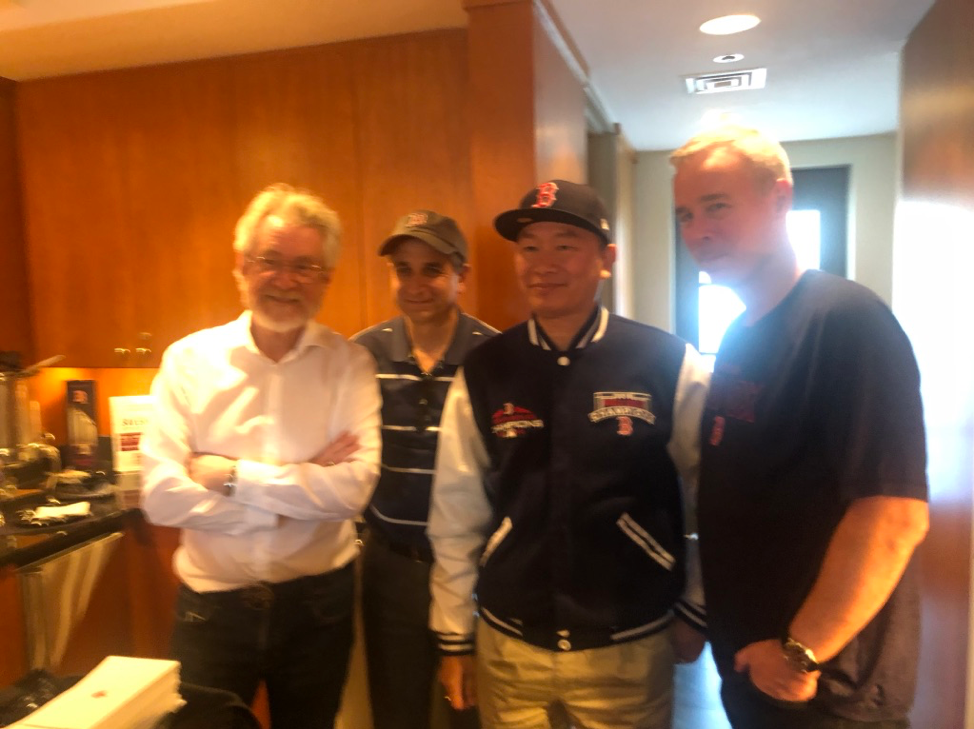
Professor Alex Sandy Pentland, MIT, and Jeff Saviano, Chief of Advanced Global Tax Project of EY, together with the Boston Global Forum and experts of the World Bank and the New American, discussed about applied AI, Blockchain, and Big Data to build the Advanced Global Tax System, as a important part of the AI-Government. They discussed about:
- Influencing taxpayers’ behavior should be an area of focus to develop AI (machine learning) enabled solutions
- How technology (AI in particular) can be leveraged to prompt new and desired behaviors in taxpayers through more effective communications
- How technology-enabled solutions should touch on all the following aspects: (i) enforcement, (ii) compliance, and (iii) trust
The advanced global tax system will be a part of the Social Contract 2020, a project developed by Governor Michael Dukakis, Vint Cerf, one of fathers of Internet, Nguyen Anh Tuan, Professor Alex Sandy Pentland, Professor Nazli Choucri (MIT), Professor Thomas Patterson, and Professor David Silbersweig (Harvard).
by Editor | Jul 21, 2019 | News
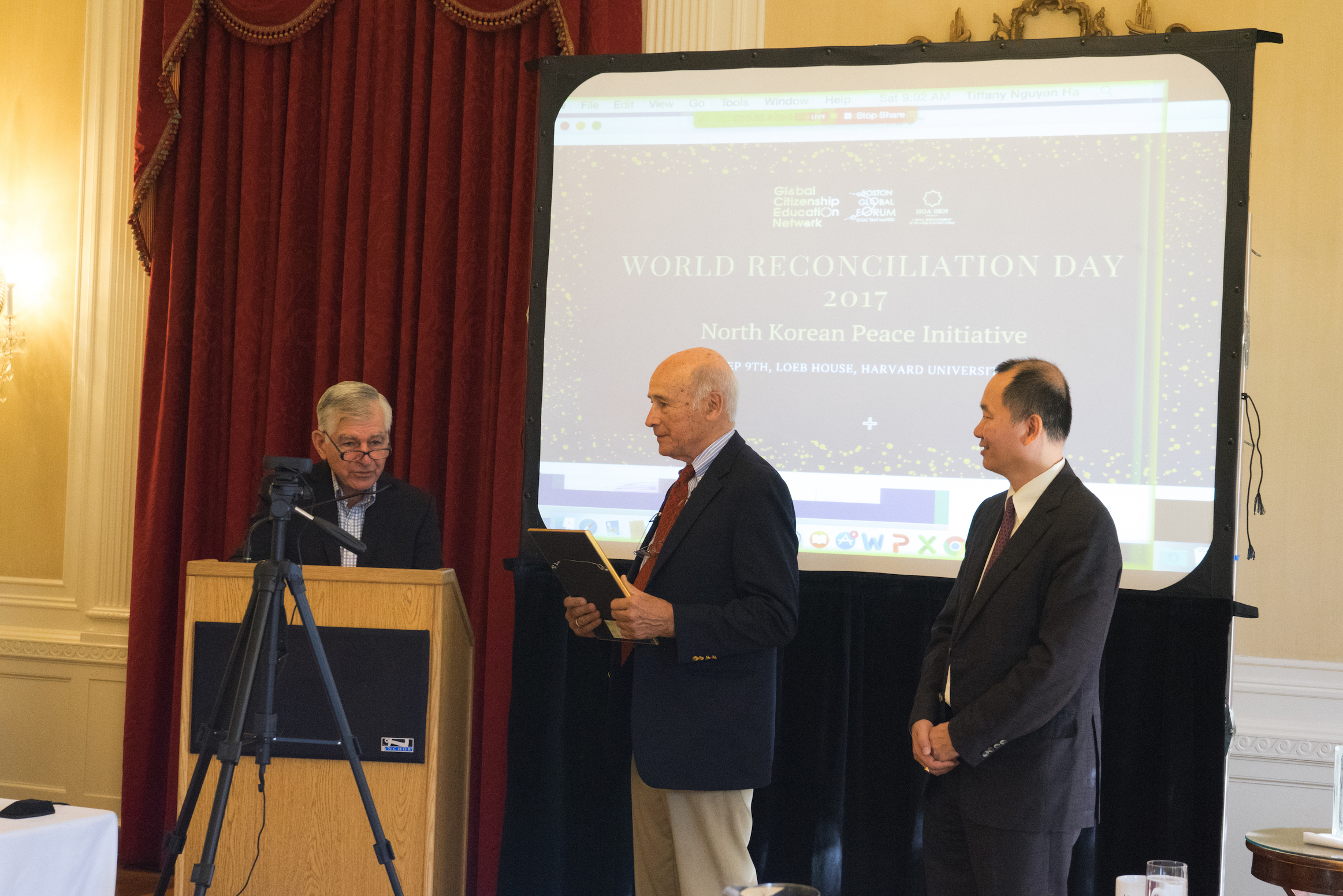
The Boston Global Forum honored Professor Joseph Nye as a Distinguished Global Educator for Peace and Innovation on World Reconciliation Day September 9, 2017, at Loeb House Harvard University. He wrote an article in Project-Syndicate about cybersecurity:
“Understanding deterrence in cyberspace is often difficult, because our minds remain captured by an image of deterrence shaped by the Cold War: a threat of massive retaliation to a nuclear attack by nuclear means. A better analogy is crime: governments can only imperfectly prevent it.”.
The post can be found here