
by Editor | Aug 11, 2019 | News
A brief, non-invasive test using artificial intelligence (AI) has been found to identify patients with abnormal heart rhythm even when their rhythm seems normal.
The study, which involved almost 181,000 patients, is the first to use deep learning to find signals in heart scans that might be invisible to the human eye.
Writing in The Lancet, researchers from the Mayo Clinic describe how they trained an AI model to detect the signature of atrial fibrillation in 10-second electrocardiograms (ECGs), with 83% accuracy.
Atrial fibrillation is estimated to affect as many as six million people in the US alone, and is associated with increased risk of stroke, heart failure and mortality.
Further research is needed before clinical application is possible, but nevertheless the researchers speculate that it may one day be possible to use this technology as a point-of-care diagnostic test in a doctor’s surgery to screen high-risk groups. It might be also possible that the algorithm could be used on low-cost, widely available technologies, including smartphones.
This innovative AI application in medical healthcare is supported by AI World Society (AIWS) and Michael Dukakis Institute for Leadership and Innovation (MDI), which always promote applying AI technology for helping people achieve well-being and happiness.
The full article can be found here.
by Editor | Aug 11, 2019 | News
None of the big three internet foghorns—Facebook, Google, or Twitter—seems to have a clear plan for dealing with AI-generated fake videos, or “deepfakes,” ahead of next year’s presidential election, according to the chairman of the House Intelligence Committee.
Status update: Adam Schiff, a Democrat from California, said Friday that the three companies “have begun thinking seriously about the challenges posed by machine-manipulated media, or deepfakes, but that there is much more work to be done if they are to be prepared for the disruptive effect of this technology in the next election.”
Don’t panic: No need to freak out. There are, in fact, some emerging techniques for spotting videos that have been fabricated using AI.
Face-off: Deepfake videos use recent advances in machine learning to automatically swap faces in a video or perform other reality-blurring tricks. Simple deepfake tools can be downloaded from the web, and you can find many surreal examples of the results across the internet.
The worry: Image manipulation has been around for a long time, but AI is making sophisticated fakery more accessible. During an election, a deepfake could perhaps be used to be used to influence voters at the last moment. In May, a video of Nancy Pelosi that had been doctored to make it appear as if she were slurring her speech circulated rapidly on social media.
Cat and mouse: At the moment, there are a few ways to spot deepfakes. Irregular blinking is one telltale sign a video has been messed with, for example. But detection is something of an arms race, because an AI algorithm can usually be trained to address a given flaw.
Gotcha: This June, a new paper from several digital forensics experts outlined a more foolproof approach. It relies on training a detection algorithm to recognize the face and head movements of a particular person, thereby showing when that person’s face has been pasted onto the head and body of someone else. The approach only works when the system has been trained to recognize someone, but it could at least keep presidential candidates safe from attack.
Keeping quiet? Google actually provided some funding for this new research. So maybe these companies are keeping their cards close to their chest when it comes to deepfake detection. If you want to stay one step ahead of the fakers, that would certainly be a smart move.
The full article can be found here.
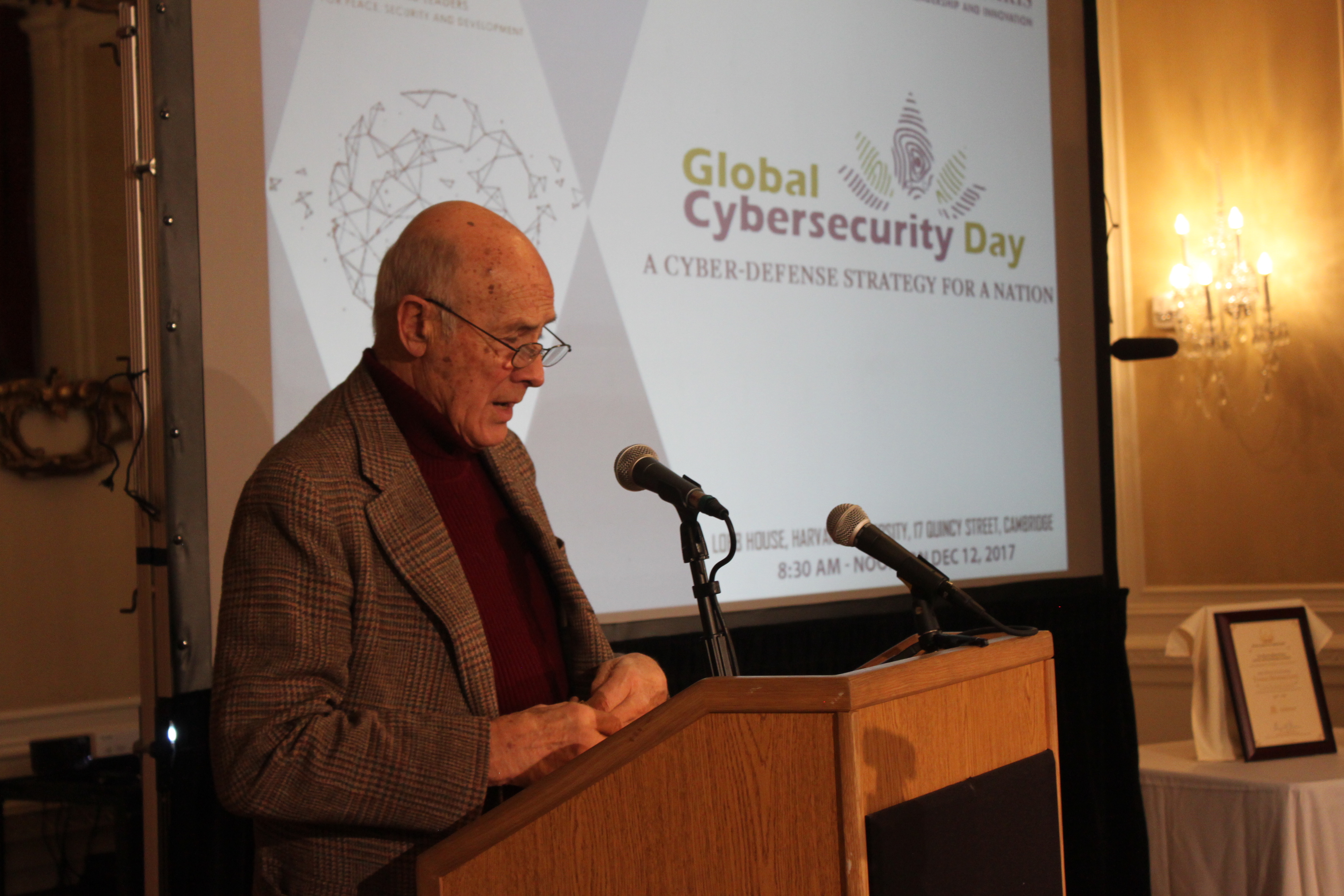
Boston Global Forum has organized conferences to discuss solutions by applying AI to solve cybersecurity issues. AI World Society’s the Social Contract 2020 includes cybersafety for citizens.

by Editor | Aug 11, 2019 | News
Today, AI touches nearly every aspect of our lives.
Today, more than half the people in the world have access to the Internet.
The flow of Data, AI, Internet, and social media connect us globally, create new information ecosystems, and impact directly the economies of entire countries, the actions of governments, and the every day lives of citizens.
But, what are the rule now? And what should the rules be?
The world should begin to have serious discussions aimed at creating a global consensus about what the rules should be for these powerful forces that are shaping our lives.
Ideally, how would such a globally connected society behave?
What should the aims of such a New Social Contract be?
Could AI, the Internet, and social media be used to help and support democracy, promote transparency, provide openess, and protect the rights of citizens in all nations?
Could it be used to encourage all governments to respect human rights and and observe the conventions of International Agreements?
Could we begin to build a new era of democracy that is enabled, but not threatened by AI, Big Data, the Internet, and social media?

by Editor | Aug 3, 2019 | News
Former Democratic presidential nominee Michael Dukakis sounded the alarm on America’s federal deficit Wednesday on “Your World with Neil Cavuto,” and said if both parties don’t act fast it could spin out of control.
“I’m worried about it on both sides. I mean, I don’t hear either party talking about this and I’m astonished,” he said.
“We’re about to run regular trillion-dollar operating deficits in this country, we’re spending already $600 billion on debt service alone, just servicing the national debt. And I don’t hear anything from either side.
“I don’t know where the Republicans are and we certainly didn’t hear much about it from the Democrats. And I think somebody’s got to start paying attention to this.”
The original article can be found here.
Governor Michael Dukakis is a co-founder of AI World Society Initiative.

by Editor | Aug 3, 2019 | News
Artificial intelligence (AI) technology is an integral part of our daily lives, work, and existence. AI-driven medical diagnostics alert doctors to early warning signs of diseases and conditions, allowing them to provide better treatment for patients and save lives. AI improves the way companies, governments, and other organizations solve the world’s most difficult cybersecurity problems, keeping sensitive networks and data safe. It enables banks and card networks to monitor large volumes of financial transactions and more efficiently identify fraud – and alert consumers in real time. AI helps individuals qualify for credit cards, loans, and mortgages through risk assessments of customers without existing credit, expanding financial opportunities for those who might otherwise be left out.
While the potential benefits of AI technologies are enormous, it is impossible to fully predict the future impact. We know the troubling implications of reported bias in facial recognition technology and in the criminal justice system, for example. Given the reach of AI and its significant life-altering implications – particularly when the civil liberties and freedoms of individuals are at stake – we must address the complex issues the technology presents, including mitigating bias, inequity, and other potential harms. That’s why it is incumbent upon industry, policymakers, educators, and communities to work together to ensure AI is built and deployed for the benefit of everyone.
The original article can be found here.
To promote AI technology for helping everyone achieve well-being and happiness, the Michael Dukakis Institute for Leadership and Innovation (MDI) established the Artificial Intelligence World Society (AIWS) for the purpose of ethical norms and practices in the development and use of AI to serve and strengthen democracy, human rights, and the rule of law.