
by Editor | Oct 6, 2019 | News
Blockchain is aimed to enable a digital decentralized society where people can contribute, collaborate, and transact without having to second-guess trust and transparency. Blockchain-projects to operate in EU is supposed to comply with GPDR, a regulation in EU law on data protection and privacy for all individual citizens of the EU and the European Economic Area.
However, it remains unclear as to how this compliance is understood. A recent article of Harvard’s Berkman Klein Center for Internet and Society provides a view on this matter, arguing that blockchain is really incompatible with GDPR. Elizabeth M. Renieris, its author, is the founder of hackylawyER, an innovative consultancy focused on law and policy engineering.
Renieris argues that most existing projects rely on “consent” but do not effectively address the mechanism for obtaining adequate informed consent or its revocable nature. These projects cannot answer the question: what is the “lawful basis” for writing data to the ledger in the first place?
She goes further by saying that the blockchain violates other core principles of GDPR. On the principle of purpose limitation, personal data must be collected for specified, explicit, and legitimate purposes and not further processed in a manner incompatible with those purposes. Given the automatic replication of data across all nodes in a network, it is hard to argue that data is not “further processed” beyond actually writing a given transaction to the ledger. Also, the automatic replication of data across all nodes in a ledger is an automatic violation of the data minimization principle. This is not to mention that the design that a blockchain is meant to be a permanent and immutable digital record is inherently at odds with the storage limitation principle.
Renieris’ arguments are useful to the assessment of the compatibility (or incompatibility) of blockchain and the GDPR. Protection of user privacy seems a never-ending debate.

by Editor | Oct 6, 2019 | News
The advent of artificial intelligence (AI) — once discussed in concept but with few practical applications — is now a reality in practically every aspect of today’s world. Name an industry, and you can be sure that AI applications play a part in its operations. The use of AI is one of the fastest-growing trends in marketing today. But from what I’ve seen as the president of a digital marketing agency that works in the health care and wellness sector, AI is having the biggest impact in health care marketing.
The proof is in the dollars: The national AI health care market is expected to reach $6.6 billion by 2021. Our reliance on AI to support our health care marketing programs has doubled in the past year alone. The greatest usefulness of AI for health care marketing includes predictive analytics, speech recognition technology and chatbots.
While there’s still much work and research to be done in AI and many privacy issues and guidelines to explore, the health care industry seems to be quickly keeping up. Using AI can allow health care systems, clinics and providers to create an engaging, seamless interaction with their patients.
The AI application in healthcare is also promoted by Michael Dukakis Institute for Leadership and Innovation (MDI) and AI World Society (AIWS) to not only help people achieve well-being and happiness, but also support on AI Ethics for the constructive and development of AI.
The original article can be found here.
by Editor | Oct 6, 2019 | News
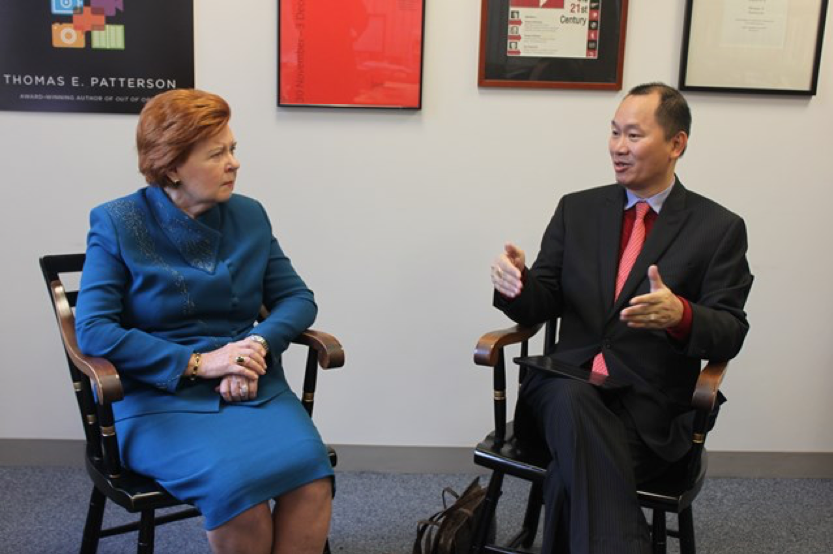
Vaira Vike-Freiberga, the first woman president of Latvia, and a founding member of the World Leadership Alliance–Club de Madrid will be presented with the World Leader for Peace and Security Award on October 21, in Madrid. The award will be presented by Governor Michael Dukakis, Chairman of the Boston Global Forum and Michael Dukakis Institute for Leadership and Innovation (BGF-MDI).
Vike-Freiberga currently serves as the president of Club De Madrid, the world’s largest forum of former heads-of-state and parliamentary governments. She is also a member of the International Programme Board of the Prague European Summit.
Vike-Freiberga, who served two terms as Latvia’s president from 1999-2007, is being recognized in-part for her contributions to the AI World Society Initiative–launched by Boston Global Forum and the Dukakis Institute, as well as other contributions to peace and security in the Baltics, Europe, and internationally.
Club De Madrid has also been partnering with Boston Global forum and The Dukakis Institute in in an effort to build the Next Democracy Generation using AI and AIWS models. This project addresses the main factors that impact the world’s democracies, among them new technologies and social media.
In presenting the award, Gov. Dukakis, whose organization is dedicated to international peace, security and cooperation, is expected to say:
“We’ve been fortunate to have worked with President Vike-Freiberga in recent years. The first contact with her for many of us in Boston was when she was a senior fellow at Harvard University’s Institute of Politics. Since then, she has been a frequent participant in the proceedings of the Boston Global Forum and is a member of our board of international thought leaders. She has made significant contributions for the AI World Society Initiative as well.
“She served for two terms as President of Latvia, at a time when it joined the NATO and the European Union. During her last year in office, Latvia’s economy had GDP growth of more than 10 percent, one of the highest in the world.
“Europe, too, has benefitted from her efforts. She has, for example, served as Vice President of the Reflection Group on the long-term future of the EU, was a member of the European Council on Tolerance and Reconciliation, and chaired the European Commission High Level Expert Group on Media Freedom.
“As Co-Chair of the Nizami Ganjavi International Center, she brought attention to Azerbaijan’s development and its critical role in maintaining peace and harmony in the Caucasus. A Muslim-majority country, Azerbaijan is a model for religious tolerance and cooperation.”
President Vike-Freiberga will also be recognized at the Boston Global Forum’s Global Cybersecurity Day event, to be held at noon, December 12, 2019 at Harvard University.

by Editor | Oct 6, 2019 | News
The Riga Conference 2019 will take place on October 11 and 12. This year, it attracts many governments leaders, thought leaders from Europe, and USA. As usual, President and Prime Minister of Latvia will open and conclude the conference.
Dr Artis Pabriks, Deputy Prime Minister and Minister of Defence of the Republic of Latvia,
Ms Annegret Kramp-Karrenbauer, Federal Minister of Defence of the Federal Republic of Germany
Mr Peter Hultquist, Minister for Defence of the Kingdom of the Sweden
will speak at PLENERY SESSION: COMPREHENSIVE & COLLECTIVE – BUILDING THE FOUNDATION OF NATO’S FUTURE DEFENCE
For 70 years, NATO has successfully adapted to changing political landscapes to maintain peace for its members. As the number of vulnerable domains increases, the Alliance’s collective defence must adapt once more. For decades comprehensive defence has been seen as a strategy for non-aligned countries. Soon this will no longer be the case. How will the comprehensive defence efforts of several allies strengthen the Alliance? How can a comprehensive strategy best complement the collective approach?
Dr Vaira Vīķe – Freiberga, President of the Club de Madrid, former President of the Republic of Latvia
Dr Andreas Norlén, Speaker of the Riksdag
Dr Constanze Stelzenmüller, Robert Bosch Senior Fellow, Brookings Institution
Mr Arseniy Yatsenyuk, former Prime Minister of Ukraine
will speak at PLENARY SESSION: ELITES LOSING THEIR ELECTORATE?
National elections in Western and Eastern Europe show growing support for FN, AfD and similar new populist parties. Political elites who for a long time led the European integration project, the EU accession process, and immigration policy are losing their grassroots supporters. Increasingly elite parties are distrusted in countries like Germany, Italy, Sweden, Ukraine among others. How will this development influence European policy in general? How will EU institutions like the European Parliament, European Council or Commission be affected? Will Europe become inward looking and mercantilist to appease the dissatisfaction amplified by new populist parties?
Mr. Nguyen Anh Tuan, Co-Founder of the Boston Global Forum will be a speaker of the Riga Conference 2019, at Planery Session “ Political Power in the Digital Age “.
The power of technology in the digital age is increasing day by day. Algorithms decide what information we are exposed to, what we should buy, or who we should follow. We can observe the political process increasingly playing out in the digital arena. The democratic need to find a careful balance between censorship and free speech increasingly clashes with the business models and policies of powerful, private social media platforms used by millions of users. What risks do technologies of the digital age pose to the traditional policy making process and political power?
by Editor | Oct 6, 2019 | News
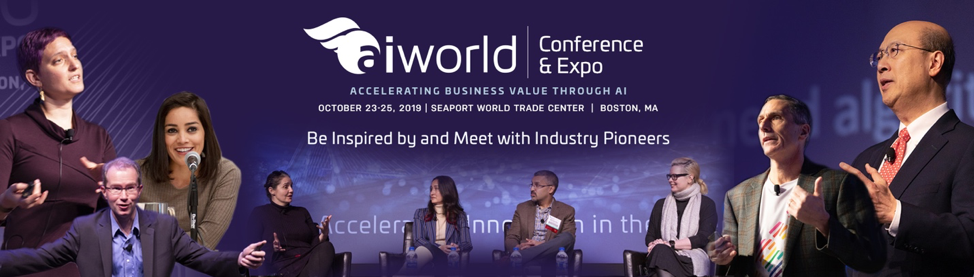
Professor Alex Sandy Pentland, Director of Connection Science of MIT and Co-Founder of AIWS Social Contract 2020 and Mr. Paul Nemitz, team member of AIWS Social Contract 2020, will speak at AI World Conference and Expo 2019.
Join the Boston Global Forum, the Strategic Alliance Host of AI World, Oct 23-25 in Boston, MA – https://aiworld.com/
AI World is the industry’s largest independent business event focused on the state of the practice of AI in the enterprise. The 3-day program delivers a comprehensive spectrum of content, networking, and business development opportunities, all designed to help you cut through the hype and navigate through the complex landscape of AI business solutions. Attend AI World and learn how innovators are successfully deploying AI and intelligent automation to accelerate innovation efforts, build competitive advantage, drive new business opportunities, and reduce costs. Register for your complimentary Expo Pass here at or for your conference pass here.
AI World Society and AIWS Social Contract 2020 is a content partner of the Automation Engineering International Conference in Rome, Italy, October 23-24, 2019. The theme of the conference is Automation and Robotics for a Sustainable Future.
This International Conference on Robotics and Automation Engineering will provide an opportunity for researchers, doctors, practitioners, and educators to exchange research evidence, practical experiences and innovative ideas on issues related to Robotics & Automation Engineering. It is a global platform to explore issues of mutual concern as well as the exchange of knowledge, share evidence, ideas, and knowledge.