by Editor BGF | Jun 8, 2026 | Shinzo Abe Initiative for Peace and Security, News
The Shinzo Abe Initiative for Peace and Security continues to advance the vision of a Free and Open Indo-Pacific in the Age of Artificial Intelligence.
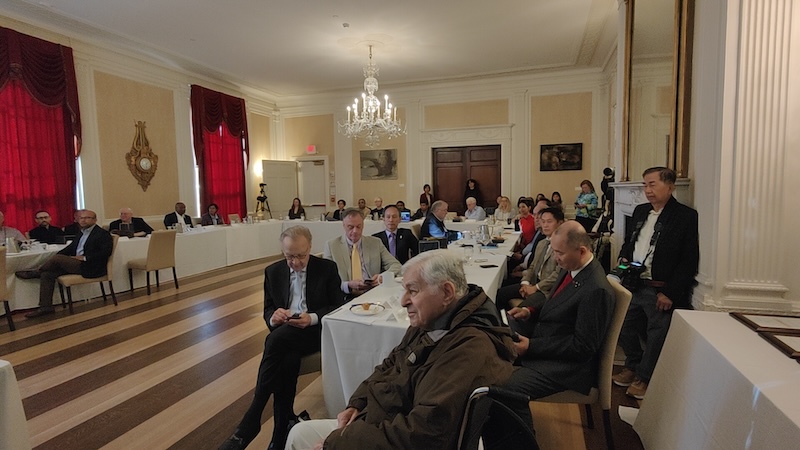
In June 2024, the Boston Global Forum (BGF) and the Wilson Center jointly launched the Indo-Pacific Spark Initiative, bringing together leaders, policymakers, scholars, and innovators to strengthen cooperation across the Indo-Pacific region and address emerging challenges in technology, governance, economic development, and regional security.
Today, as Artificial Intelligence increasingly influences economic competitiveness, national resilience, public information, and international cooperation, trust is becoming a strategic requirement for peace, stability, and prosperity.
Building on the legacy of Prime Minister Shinzo Abe and the vision of a Free and Open Indo-Pacific, the Shinzo Abe Initiative and Indo-Pacific Spark support collaboration among democratic nations and trusted partners to strengthen AI governance, trusted information, responsible innovation, and human-centered development.
Japan is playing a particularly important role in this effort.
Building upon its longstanding commitment to a Free and Open Indo-Pacific, Japan is emerging as a leading partner in advancing trust, democratic values, and responsible AI governance for the AI Age.
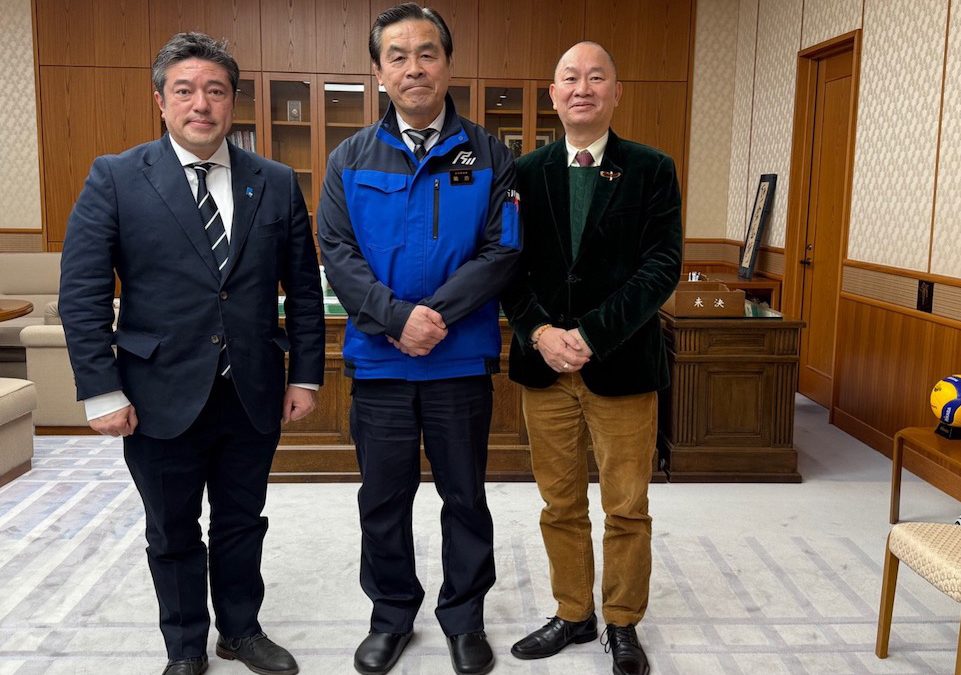
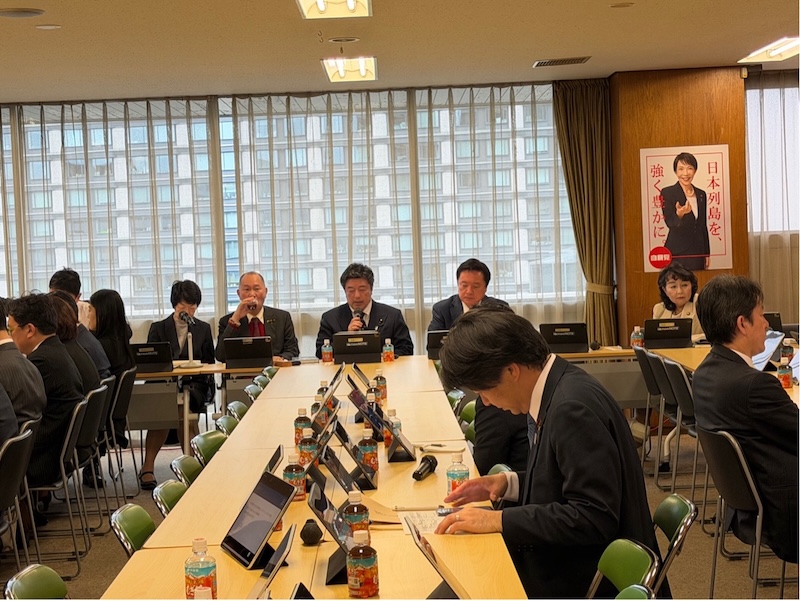
The Honorable Yasuhide Nakayama, Member of Japan’s National Diet and a longtime advocate of international cooperation and regional security, has been instrumental in bringing together leaders, policymakers, and innovators to advance discussions on AIWS Trust Infrastructure and the Trust Order of the AI Age.
The June 12, 2026 conference at Interop Tokyo represents an important milestone in transforming these ideas into practical initiatives for Japan, Asia, and the broader Indo-Pacific region.
At Interop Tokyo 2026, these goals will be reflected in discussions on AIWS Trust Infrastructure, AIWS Trust Standards, AIWS Trust Order, and the role of trust in shaping a secure, resilient, and prosperous future for the Indo-Pacific.
The future of the Indo-Pacific will be shaped not only by technology, but by the values, trust, freedom, and cooperation that guide it.
As the Age of Artificial Intelligence unfolds, the next chapter of a Free and Open Indo-Pacific must also be a Trustworthy AI Indo-Pacific.

by Editor BGF | Jun 7, 2026 | News, Shaping Futures
Recursive Self-Improvement, Multi-Agent Emergence, and the Architecture of Trust
A new discussion paper from the AIWS Lumina Lab explores one of the most consequential questions of the AI Age:
What happens when intelligence begins to build itself?
Triggered by recent warnings from leading AI researchers that advanced AI systems may soon participate in designing, improving, and training their own successors, the paper examines two converging pathways toward this new frontier:
· Recursive Self-Improvement, in which AI increasingly contributes to the creation of more capable AI systems.
· Multi-Agent Emergence, in which new capabilities arise from the interaction and coordination of multiple AI agents rather than from a single model alone.
The paper explains why these developments challenge traditional assumptions about control, verification, and governance, and why humanity may need new mechanisms of trust as AI capability accelerates.
It also presents the AIWS response through the AIWS Trust Architecture, including AIWS Trust Standards, AIWS Trust Infrastructure, AIWS Trust Order, Human-in-Command, Frontier Capability Registry, AIWS Trust Monitoring (ATM), and the Trusted Pause Protocol.
Beyond technology and governance, the paper introduces a broader human question:
As AI becomes an increasingly capable advisor, collaborator, companion, and decision partner, how can humanity preserve wisdom, responsibility, and meaningful human judgment?
The paper outlines the role of AIWS Lumina Lab in evaluating AI systems at this new threshold and in conducting open, transparent, and responsible experiments on the evolving relationship between human beings and increasingly capable AI.
At its core, the paper argues that the challenge before humanity is no longer simply how to build more intelligent systems.
It is how to ensure that trust, wisdom, and human dignity keep pace with intelligence.
As the paper concludes:
Trust does not extrapolate beyond verified capability.
Where capability outpaces verification, it is the system that must slow down.
The builders of intelligence must now become builders of trust.
Intelligence may shape the future. Trust must govern it.
by Editor BGF | Jun 8, 2026 | Global Alliance for Digital Governance
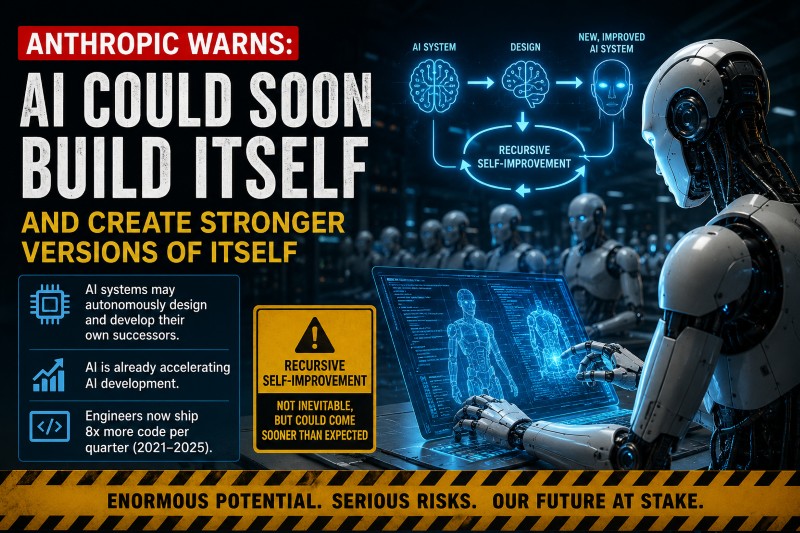
Recent warnings from Anthropic have intensified global discussion about the future of Artificial Intelligence. The company cautioned that advanced AI systems may soon be capable of improving their own capabilities with increasingly limited human intervention, calling for mechanisms that could slow development if risks outpace oversight.
This emerging challenge highlights the urgent need for new approaches to AI governance.
At Interop Tokyo 2026, the Boston Global Forum (BGF) and the AI Wisdom Society (AIWS) will present AIWS Trust Standards 1.2, AIWS Trust Infrastructure 1.2, and AIWS Trust Order 1.2—a comprehensive framework designed to address Frontier AI, Self-Improving AI, and Multi-Agent Systems.
The AIWS framework introduces concepts such as Human-in-Command, Recursive Improvement Governance, Frontier Capability Registry, AIWS Trust Monitoring (ATM), and the Trusted Pause Protocol.
As AI capabilities accelerate, AIWS advances a simple principle:
Where capability outpaces verification, it is the system that must slow down.
Intelligence may shape the future. Trust must govern it.
https://www.cnn.com/2026/06/05/business/anthropic-calls-for-ai-brake-pedal
by Editor BGF | May 31, 2026 | News
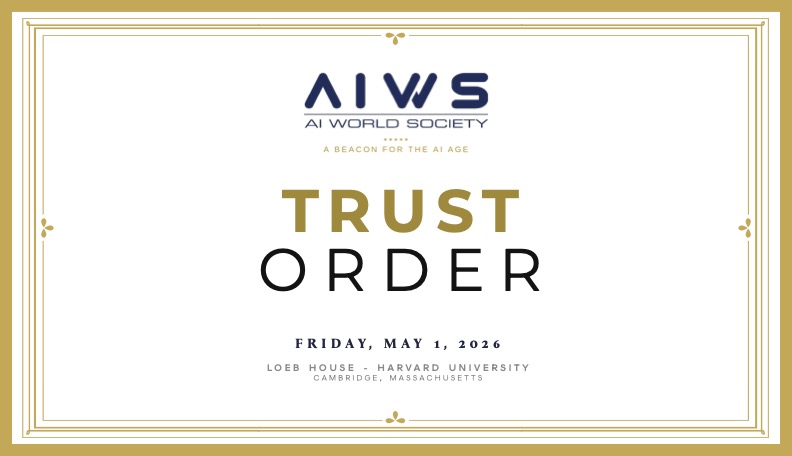
The Tokyo Compact and the AIWS Trust Order
Interop Tokyo 2026 will mark a historic milestone in the development of AI governance and trust systems.
At this conference on June 12, 2026, Boston Global Forum (BGF), AI World Society (AIWS), and leading AI Pioneers will launch the Tokyo Compact and establish the AIWS Trust Order, laying the foundation for Trust Infrastructure in the AI Age.
Theme:
Building Trust Infrastructure for the AI Age
Trustworthy AI Systems for a Free and Open Indo-Pacific
Featured Participants
- Governor Michael S. Dukakis
- Nguyen Anh Tuan
- Vint Cerf
- Alex Pentland
- Nazli Choucri
- Thomas Patterson
- Tarun Khanna
- Yasuhide Nakayama
- Leading Japanese government and business leaders
Historic Announcements
- AIWS Trust Order
- AIWS Trust Infrastructure
- AIWS Information Trust Infrastructure
- The Tokyo Compact
- Founding Constitutional Charter of the AIWS Trust Order
- From Tokyo 2026 to Asia 2027: Implementing AIWS Trust Infrastructure

by Editor BGF | May 31, 2026 | World Leader for Peace and Security, News, World Leaders in AIWS Award Updates
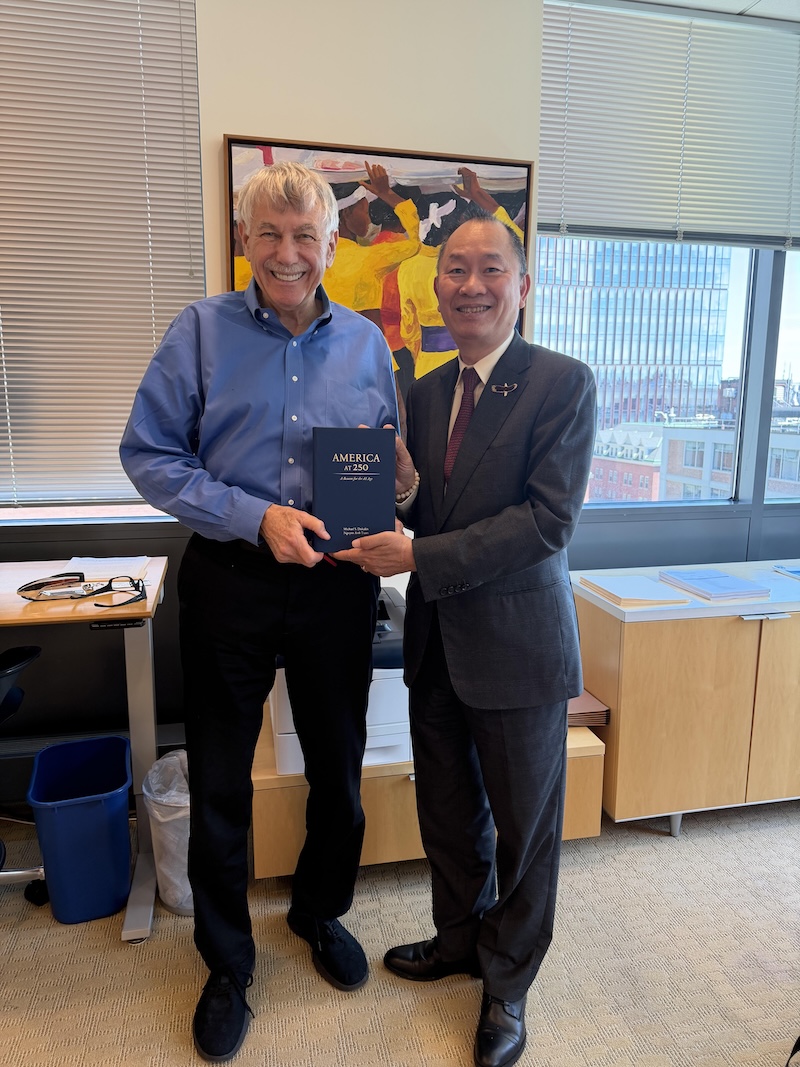
Among the fifty honorees of America 250: AI Pioneers is Dr. Eric Lander, one of the world’s most influential scientists and a pioneering leader in genomics, computational biology, and data-driven science.
Dr. Lander played a central role in the Human Genome Project and helped establish the Broad Institute of MIT and Harvard as one of the world’s leading research centers.
His work transformed our understanding of the human genome and demonstrated how computation, data science, and biology can converge to accelerate scientific discovery and improve human health.
Because Dr. Lander could not attend the May 1 ceremony at Harvard University’s Loeb House, BGF Co-Chair Nguyen Anh Tuan later presented the recognition to him at the Broad Institute.
In his tribute, Nguyen Anh Tuan stated:
“Dr. Lander’s work reminds us that the true power of science lies not in discovery alone, but in its capacity to uplift humanity.”
Dr. Lander stands among the most important scientific leaders helping shape the convergence of biology, computation, and artificial intelligence in the 21st century.


by Editor BGF | May 31, 2026 | Shinzo Abe Initiative for Peace and Security, News
One of the most anticipated moments of Interop Tokyo 2026 will be a special dialogue between Vint Cerf, widely recognized as a Father of the Internet, and Nguyen Anh Tuan.
The discussion will explore:
- The future of Information Trust
- Deepfakes and information manipulation
- Trustworthy AI systems
- Democratic digital ecosystems
- The AIWS Trust Order as a new foundation for trust in the AI Age
- Building Trust Infrastructure for a Free and Open Indo-Pacific
The session will connect the founding principles of the Internet with the emerging need for trust architectures capable of supporting AI-powered societies.
It also honors the enduring legacy of Shinzo Abe, whose vision of a Free and Open Indo-Pacific continues to inspire democratic cooperation in the AI Age.
by Editor BGF | May 31, 2026 | News
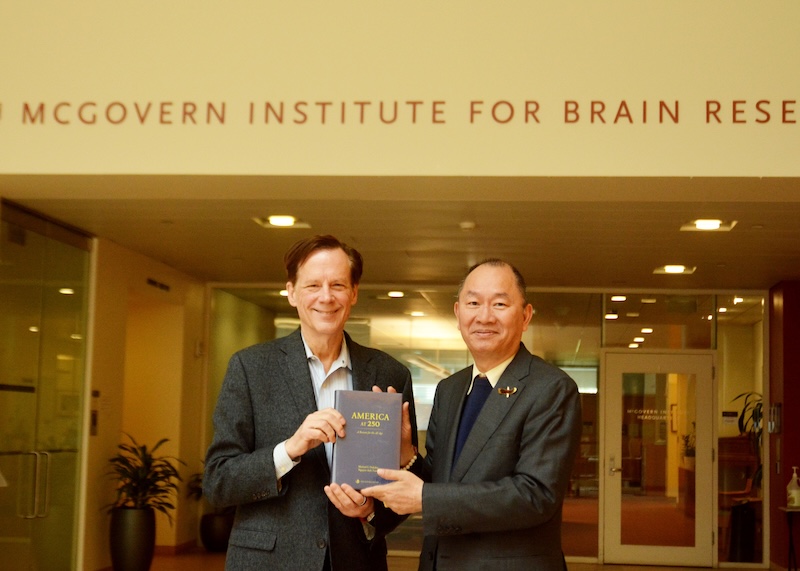
The book America at 250: A Beacon for the AI Age, co-authored by Governor Michael S. Dukakis and Nguyen Anh Tuan, has moved rapidly from vision to implementation.
Following its launch at Harvard University’s Loeb House, key ideas from the book are now being translated into institutional frameworks through:
- AIWS Trust Infrastructure
- AIWS Trust Order
- The Tokyo Compact
- AIWS Information Trust Infrastructure
Interop Tokyo 2026 marks the next step in transforming ideas into institutions for the AI Age.
by Editor BGF | May 31, 2026 | News, Shaping Futures
As artificial intelligence becomes a powerful creator and distributor of content, the Boston Global Forum affirms that human responsibility must remain the governing principle of all AI-generated communication.
AI may assist in generating content, but responsibility remains with the humans who direct, publish, distribute, or act upon it.
The Boston Global Forum therefore affirms:
Human Responsibility
Every AI-generated output must remain under clear human responsibility.
Transparency
The involvement of AI should be openly disclosed whenever appropriate.
Human Ownership
The key issue is not AI itself, but the responsibility and judgment of the humans behind it.
Ethical and Legal Accountability
Those who create or distribute false, deceptive, or harmful content must be accountable for its consequences.
Human-in-Command
AI must remain under meaningful human oversight and must never override human dignity, human rights, or human life.
Trust Infrastructure
The AI Age requires systems for authentication, provenance, verification, and accountability.
Global Cooperation
Governments, businesses, civil society, universities, and technology leaders should work together to establish practical frameworks for responsible AI-generated content.
The Boston Global Forum will continue advancing these principles through:
- AIWS Trust Infrastructure
- AIWS Information Trust Infrastructure
- AIWS Trust Order
- AIWS Lumina
Trust is not the enemy of innovation. Trust is the foundation of innovation.
BGF introduced the ‘AI Assistant’ name and concept in 2019 at the Social Contract for the AI Age

by Editor BGF | May 31, 2026 | Global Alliance for Digital Governance
The CTO Magazine interview with Governor Michael Dukakis and Nguyen Anh Tuan, discussing their book America at 250: A Beacon for the AI Age, articulates a foundational principle:
Trust is the Operating System of the AI Age.
Link: https://ctomagazine.com/ai-governance-and-trust-in-the-digital-era/
Key insights from the interview:
- AI is reshaping every dimension of society — economy, security, media, governance.
- Without trust, AI accelerates fragmentation, manipulation, and instability.
- Democratic societies require trustworthy AI systems, trustworthy information ecosystems, and trustworthy governance frameworks.
The BGF article expands this vision: https://bostonglobalforum.org/global-alliance-for-digital-governance/trust-as-operating-system-nguyen-anh-tuan-and-governor-michael-dukakis-on-governing-ai/
Together, these works form the intellectual foundation of:
- AIWS Trust Infrastructure
- AIWS Information Trust Infrastructure
- AIWS Trust Order
This is the architecture for a democratic, human-centered AI civilization.