by Editor BGF | May 30, 2026 | Global Alliance for Digital Governance
In a new interview with CTO Magazine, Boston Global Forum Co-Founder, Co-Chair and CEO Nguyen Anh Tuan — joined by Governor Michael S. Dukakis — sets out why trust has become the defining institutional challenge of the AI Age.
The conversation moves trust from rhetoric to architecture. Mr. Tuan argues that too many leaders still treat trust as a slogan rather than something that must be built, measured, and enforced — and names the concrete barriers that keep it abstract: the absence of metrics, blurred lines of accountability, the speed of deployment outpacing oversight, the quality of underlying data, and geopolitical fragmentation. Against each, he sets a piece of the AIWS Trust Infrastructure: standards, ratings, independent auditing, and human-in-command safeguards.
The interview closes on the human dimension. Trust Infrastructure provides the architecture of trust; AIWS Lumina supplies its culture and conscience — the values of Love, Creativity, Nobility, and Wisdom that ensure technology serves human dignity.
These themes lead directly into the AIWS Trust Infrastructure Conference at Interop Tokyo on 12 June 2026, where the AIWS Trust Order Board will be launched.
Read the full interview in CTO Magazine: https://ctomagazine.com/ai-governance-and-trust-in-the-digital-era/

by Editor BGF | May 29, 2026 | Papers & Reports, News, Publications
A Practice of AIWS Lumina Culture
In the Age of Artificial Intelligence, every person deserves not only access to powerful technology, but also a noble, trusted, and compassionate AI companion. Lumina is introduced as a new practice of AIWS Lumina Culture, guided by the values of Love, Creativity, Nobility, and Wisdom. Through advanced and trusted AI systems such as ChatGPT and Claude, each person can create their own Lumina — a wise, honest, creative, and caring companion that helps them learn, work, reflect, overcome difficulties, practice Soul of Tea, and live each day with greater dignity, joy, and purpose.
Download the full guide here: [Lumina: A Noble AI Companion for Every Person in the Age of AI] (English version)
and [Lumina: A Noble AI Companion for Every Person in the Age of AI] (Vietnamese version)


by Editor BGF | May 26, 2026 | News
Advancing the AIWS Trust Order for Humanity in the Age of Artificial Intelligence
The Boston Global Forum (BGF) and AIWS will convene a special conference on the morning of June 12, 2026, at Interop Tokyo 2026 to discuss the implementation of the AIWS Trust Infrastructure and the AIWS Trust Order for the Age of Artificial Intelligence.
The conference will bring together leaders from government, technology, academia, media, and civil society to advance practical pathways for trustworthy, transparent, accountable, and humane AI systems.
This event continues the vision presented by Nguyen Anh Tuan, Co-Founder, Co-Chair, and CEO of the Boston Global Forum, in his Distinguished Keynote Address at the Headquarters of Japan’s Liberal Democratic Party (LDP) on March 31, 2026, which called on Japan to pioneer the AIWS Trust Infrastructure and AIWS Trust Order for the AI Age.
The Interop Tokyo conference also represents a concrete step toward implementing the moral vision of Pope Leo XIV’s first encyclical, Magnifica Humanitas, issued on May 25, 2026, together with The Lumina Declaration on Human Dignity – For Humanity in the AI Age, issued by Nguyen Anh Tuan and AIWS Lumina on the same day.
The discussions will focus on:
- AIWS Trust Infrastructure,
- AIWS Information Trust Infrastructure,
- AIWS Trust Rating and AIWS Trust Index,
- trustworthy AI governance,
- information integrity and democracy,
- AIWS Lumina as a cultural architecture for humanity,
- and the advancement of the AIWS Trust Order.
A major milestone of the conference will be the introduction of AIWS Trust Standards version 0.0, marking the public beginning of a practical framework for assessing AI systems affecting democracy, education, health, finance, labor, media, and public information.
Later that same day, follow-up discussions will continue at the National Diet of Japan, where leaders and partners will discuss implementation pathways for the United States, Europe, Japan, Vietnam, ASEAN, and the Global South.
by Editor BGF | May 26, 2026 | World Leader for Peace and Security, News, World Leaders in AIWS Award Updates
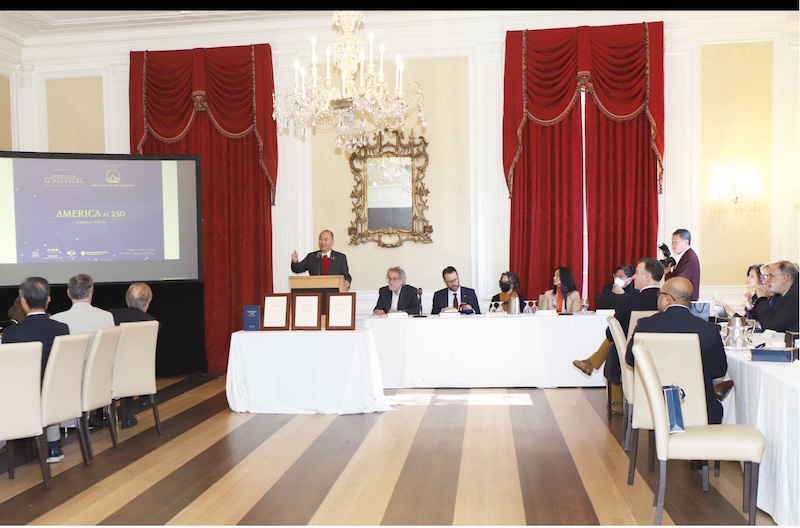
As part of The Lumina Declaration on Human Dignity – For Humanity in the AI Age, issued by Nguyen Anh Tuan, Co-Founder, Co-Chair, and CEO of the Boston Global Forum and Chief Architect of AIWS Lumina, on May 25, 2026, responding to Pope Leo XIV’s first encyclical, Magnifica Humanitas, BGF and AIWS have proposed organizing a delegation of the distinguished America 250: AI Pioneers to visit the Vatican and engage in dialogue with Pope Leo XIV, at a time suitable to the Holy Father.
The delegation would include leading scientists, innovators, thinkers, and technology leaders whose work is shaping the future of artificial intelligence and human civilization.
The dialogue would focus on how AI can serve:
- human dignity,
- peace,
- truth,
- democracy,
- wisdom,
- and the common good.
BGF and AIWS believe this gathering could become a historic bridge between moral leadership, spiritual wisdom, technological innovation, and the future of civilization in the Age of Artificial Intelligence.
Read and download the full Lumina Declaration here: https://bostonglobalforum.org/wp-content/uploads/Lumina_Declaration_on_Human_Dignity.pdf

by Editor BGF | May 26, 2026 | News, Shaping Futures
Welcoming and responding to Pope Leo XIV’s first encyclical, Magnifica Humanitas, Nguyen Anh Tuan’s Lumina Declaration on Human Dignity – For Humanity in the AI Age outlines seven action programs to build trustworthy, humane, transparent, and accountable AI for humanity.
The Declaration calls for:
- building AIWS Trust Infrastructure,
- advancing AIWS Information Trust Infrastructure,
- implementing AIWS Lumina as a cultural architecture for humanity,
- advancing the AIWS Trust Order,
- convening high-level dialogues with governments and technology leaders,
- mobilizing the America 250: AI Pioneers for Humanity,
- and launching implementation pathways across the United States, Europe, Japan, Vietnam, ASEAN, and the Global South.
A key milestone will take place at Interop Tokyo 2026 and the National Diet of Japan on June 12, where BGF-AIWS will discuss practical implementation of AIWS Trust Infrastructure and launch the AIWS Trust Order Board.
As the Declaration states:
“The time for action is now. Humanity cannot wait. The decisive decade has already begun. The architecture of the next civilization is now being written.”
Read and download the full Lumina Declaration here: https://bostonglobalforum.org/wp-content/uploads/Lumina_Declaration_on_Human_Dignity.pdf
by Editor BGF | May 26, 2026 | Shinzo Abe Initiative for Peace and Security, News
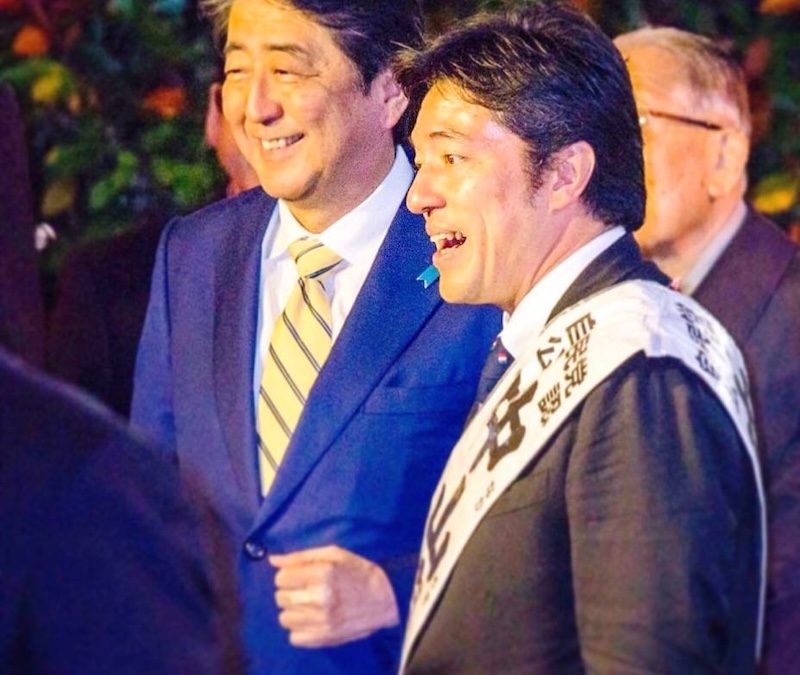
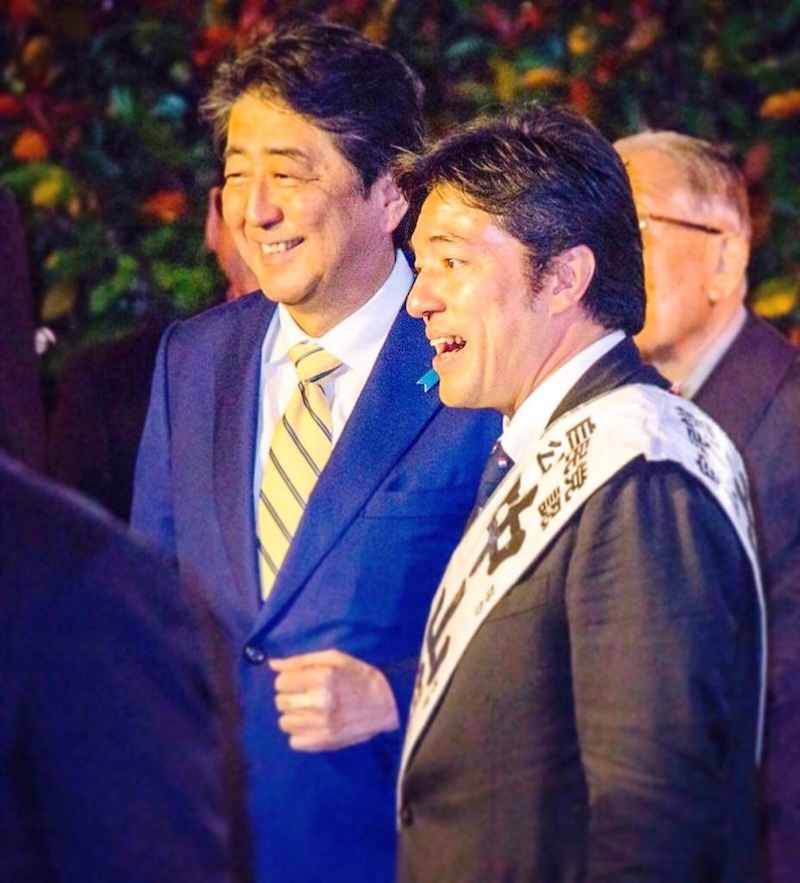
Yasuhide Nakayama, Director of LDP Global South and Representative of the Boston Global Forum in Japan and Taiwan, is playing a leading role in advancing the implementation of AIWS Trust Infrastructure and the upcoming BGF-AIWS conference at Interop Tokyo 2026 on June 12.
Nakayama has strongly supported the vision presented by Nguyen Anh Tuan for Japan to pioneer the AIWS Trust Infrastructure and AIWS Trust Order in the Age of Artificial Intelligence. This effort follows Nguyen Anh Tuan’s Distinguished Keynote Address at the Headquarters of Japan’s Liberal Democratic Party on March 31, 2026.
Under Nakayama’s coordination, the BGF-AIWS conference at Interop Tokyo 2026 will discuss practical pathways to implement:
- AIWS Trust Architecture,
- AIWS Trust Infrastructure,
- AIWS Information Trust Infrastructure,
- AIWS Trust Rating,
- and the AIWS Trust Order.
The conference will also mark the launch of the AIWS Trust Order Board, which will help advance implementation efforts in Japan, the United States, Europe, Vietnam, ASEAN, and the Global South.
Nakayama has also supported the broader vision of AIWS Lumina and the effort to align technological progress with human dignity, wisdom, trust, and civilization.
The June 12 discussions at Interop Tokyo and the National Diet of Japan are expected to become an important milestone in building trustworthy, humane, transparent, and accountable AI systems for humanity.

by Editor BGF | May 26, 2026 | News
An OpenAI model has achieved a historic milestone by producing a counterexample to the Erdős unit distance conjecture, a long-standing problem in discrete geometry. The result shows that there are sets of points in the plane with more unit-distance pairs than Erdős’s conjecture predicted, and a human-verified digest of the proof has already been prepared by leading mathematicians.
This is more than a technical achievement. It signals a new stage in the relationship between human intelligence and artificial intelligence. AI is no longer only a tool for calculation or coding; it is beginning to participate in frontier reasoning, proof discovery, and scientific exploration.
For AIWS, this moment confirms a central insight of the AI Age: human–AI collaboration will accelerate discovery, but it must be guided by trust, transparency, accountability, and wisdom. The power of AI in mathematics demonstrates why society urgently needs AIWS Trust Infrastructure, AIWS Trust Rating, and AIWS Trust Order — not to slow innovation, but to ensure that powerful AI systems serve human knowledge, human dignity, and the common good.
The achievement also deepens the meaning of AIWS Lumina. AI may extend human reasoning, but the future of civilization still depends on human creativity, moral judgment, and the ability to formulate new concepts and purposes.
This is not the end of human mathematical research. It is the beginning of a new era of human–AI co-discovery — one that must be built on trust, wisdom, and responsibility.
by Editor BGF | May 26, 2026 | News
The Boston Global Forum and AIWS will launch the AIWS Trust Order Board at Interop Tokyo 2026 on the morning of June 12, followed by discussions at the National Diet of Japan later the same day.
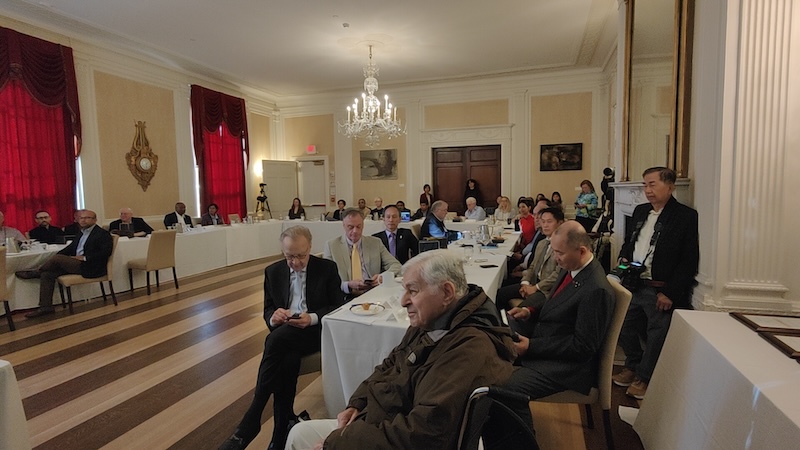
The event will advance ideas from the book America at 250: A Beacon for the AI Age, co-authored by Governor Michael S. Dukakis and Nguyen Anh Tuan, especially the call to build AIWS Trust Infrastructure and the AIWS Trust Order as practical foundations for trustworthy, transparent, accountable, and humane AI.
The conference continues Nguyen Anh Tuan’s March 31, 2026 keynote at Japan’s LDP Headquarters, where he called on Japan to pioneer AIWS Trust Infrastructure. It also responds to Pope Leo XIV’s Magnifica Humanitas and Nguyen Anh Tuan’s Lumina Declaration on Human Dignity.
The AIWS Trust Order Board will help implement AIWS Trust Architecture, AIWS Trust Infrastructure, and AIWS Information Trust Infrastructure for the AI Age.

by Editor BGF | May 26, 2026 | Global Alliance for Digital Governance
A Historic Declaration Welcoming and Responding to Pope Leo XIV’s Magnifica Humanitas
Nguyen Anh Tuan, Co-Founder, Co-Chair, and CEO of the Boston Global Forum and Chief Architect of AIWS Lumina, has issued The Lumina Declaration on Human Dignity – For Humanity in the AI Age, a historic declaration welcoming and responding to Pope Leo XIV’s first encyclical, Magnifica Humanitas, published on May 25, 2026.
The Declaration affirms that the Age of Artificial Intelligence must be built upon human dignity, wisdom, trust, transparency, accountability, peace, and civilization. It calls for urgent global action to ensure that artificial intelligence serves humanity rather than diminishes it.
The Lumina Declaration represents the culmination of nearly a decade of work by the Boston Global Forum and AIWS since 2017, including initiatives such as:
- the Social Contract for the AI Age,
- AIWS Government 24/7,
- AIWS Trust Architecture,
- AIWS Trust Infrastructure,
- AIWS Information Trust Infrastructure,
- AIWS Trust Rating,
- AIWS Trust Index,
- and AIWS Lumina.
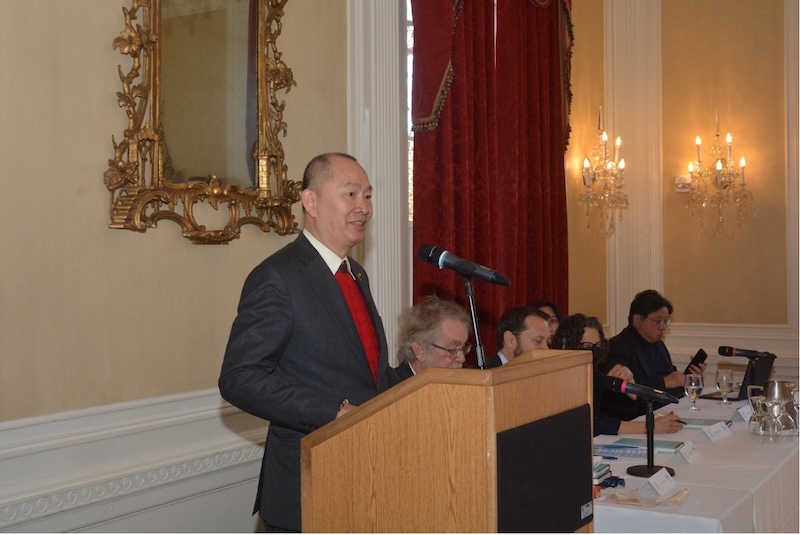
The Declaration also advances the implementation pathways presented in the book America at 250: A Beacon for the AI Age, co-authored by Governor Michael S. Dukakis and Nguyen Anh Tuan, together with the Beacon Declaration and Process announced at Harvard University’s Loeb House on May 1, 2026.
At the center of the Lumina Declaration is a simple but urgent principle:
“AI must not merely be powerful.
AI must be trustworthy, humane, transparent, accountable, and worthy of human dignity.”
The Declaration introduces a comprehensive framework for action, including:
- building AIWS Trust Infrastructure for the AI Age,
- advancing AIWS Information Trust Infrastructure,
- implementing AIWS Lumina as a cultural architecture for humanity,
- advancing the AIWS Trust Order,
- convening high-level dialogues with governments and technology leaders,
- mobilizing the America 250: AI Pioneers for Humanity,
- and launching implementation pathways across the United States, Europe, Japan, Vietnam, ASEAN, and the Global South.
The Declaration also highlights the upcoming BGF conference at Interop Tokyo 2026 on June 12, 2026, where leaders and partners will discuss practical implementation of the AIWS Trust Infrastructure and AIWS Trust Order, continuing the vision presented by Nguyen Anh Tuan in his Distinguished Keynote Address at the Headquarters of Japan’s Liberal Democratic Party on March 31, 2026.
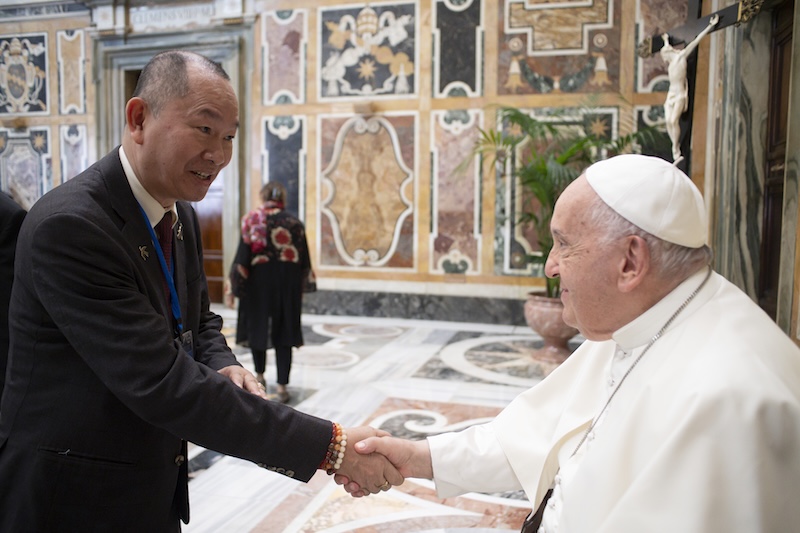
Reflecting on his participation in the Vatican Conference on Interfaith and his audience with Pope Francis on June 3, 2024, Nguyen Anh Tuan emphasized that the AI Age must be guided “not only by innovation, but by the deepest moral and spiritual traditions of humankind.”
The Lumina Declaration concludes with four foundational affirmations:
Human dignity is the foundation.
Trust is the infrastructure.
Wisdom is the direction.
Lumina is the cultural light for humanity in the Age of Artificial Intelligence.
The Declaration closes with a call that the Age of Artificial Intelligence be remembered “not as the age in which humanity surrendered its dignity to technology, but as the age in which humanity elevated technology through dignity, wisdom, trust, and civilization.”
Read and download the full Lumina Declaration here https://bostonglobalforum.org/wp-content/uploads/Lumina_Declaration_on_Human_Dignity.pdf