by Editor BGF | Feb 8, 2026 | Shinzo Abe Initiative for Peace and Security, News
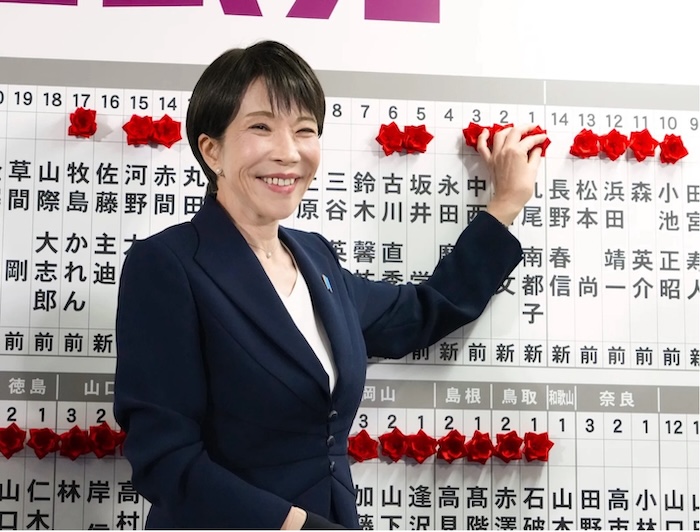
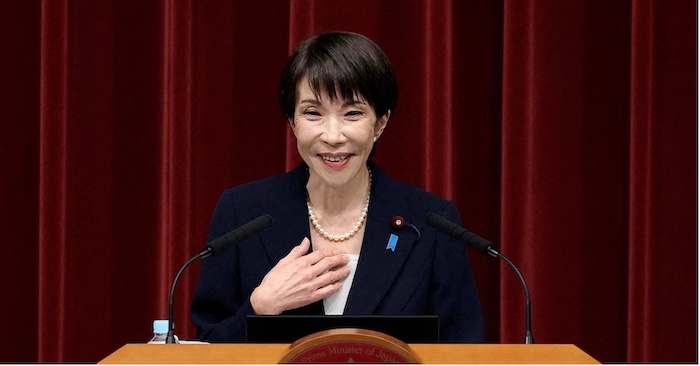
Japan’s February 8, 2026 snap election delivered a major victory for Prime Minister Sanae Takaichi and the Liberal Democratic Party (LDP), strengthening Tokyo’s political mandate as Japan faces intensifying strategic competition and rapid technological disruption across the Indo-Pacific. Major international reporting described the result as a landslide, with the LDP securing a clear lower-house majority and the broader governing bloc positioned for an even larger advantage. (Financial Times)
As of 4:00 a.m., February 9, 2026 (Tokyo time), Nikkei Asia reported that the LDP-led ruling parties had won 354 seats, surpassing the two-thirds “supermajority” threshold in the 465-seat House of Representatives.
BGF recognizes Prime Minister Takaichi as a real world leader and is proud of her continued commitment to democratic strength and responsible innovation, reflected in her standing as the 2023 World Leader in AIWS Award Recipient. BGF also congratulates Yasuhide Nakayama, BGF Representative in Japan, on winning a seat in the House of Representatives in this election. (選挙ドットコム) Having been first elected in 2003 and reelected five times thereafter, his latest victory marks his 6th term in the Diet. (Boston Global Forum)
Governor Michael Dukakis and Nguyen Anh Tuan, Co-Chairs of BGF, sent a letter congratulating Prime Minister Takaichi on this remarkable result. BGF looks forward to advancing collaboration through upcoming Shinzo Abe Conference programs and “America at 250” Conference initiatives—continuing a tradition dedicated to “Leadership for a Free and Open World in the AI Age.”

by Editor BGF | Feb 8, 2026 | News, Shaping Futures
In early February 2026, Japan secured the two most critical components of the AI Age: the raw minerals and the high-end processing power. Within the AI World Society (AIWS) framework, these are seen not just as economic assets, but as the foundational infrastructure required to build a “Human-in-Command” digital society.
1. Resource Sovereignty: Deep-Sea Rare Earth Retrieval
On February 2, 2026, the Japanese vessel Chikyu successfully lifted rare-earth-rich mud from 6,000 meters deep near Minamitori Island.
- The AIWS Connection: AIWS emphasizes Technology Sovereignty. By securing 16 million tonnes of rare earths, Japan ensures that the magnets and components required for AI servers, robotics, and the AIWS Healthcare infrastructure are no longer vulnerable to geopolitical export bans.
- Strategic Impact: This world-first achievement provides the “Physical Foundation” for the AIWS Ecosystem, ensuring that ethical AI development is backed by a stable and independent supply chain.
2. Computational Power: TSMC’s $17 Billion 3nm Upgrade
Simultaneously, Japan and TSMC announced an upgrade to the new Kumamoto facility to produce 3-nanometer (3nm) chips, the most advanced in the world.
- Empowering the AIWS Angel: The AIWS Angel model—designed to serve as a lifelong healthcare and security companion—requires massive, efficient decentralized computing. These 3nm chips provide the energy-efficient “brain power” needed for such advanced AI assistants to operate in real-time.
- Infrastructure for Governance: Under the AIWS Model, the 3nm production line acts as the “Engine Room” for a new Social Contract, where advanced hardware enables the transparent, high-speed data processing required for pluralistic and inclusive governance.
3. Strategic Synthesis: The AIWS Triad
By aligning these two breakthroughs with the AIWS Framework, Japan is essentially completing a “Strategic Triad” for the 21st century:
- Upstream (The Ocean): Rare Earths (The Material Layer).
- Downstream (TSMC): 3nm Semiconductors (The Infrastructure Layer).
- Governance (AIWS): The Ethical & Social Framework (The Intelligence Layer).
A Beacon for the AI Century
As we celebrate the “America at 250” initiative, Japan’s moves offer a blueprint for other nations. It demonstrates that a secure society is built by combining Deep-Sea Resource Discovery with Cutting-Edge Manufacturing, all governed by the AI World Society (AIWS) principles of peace, security, and human dignity.
https://www.reuters.com/science/japan-retrieves-rare-earth-mud-deep-seabed-test-mission-2026-02-02/

by Editor BGF | Feb 8, 2026 | News
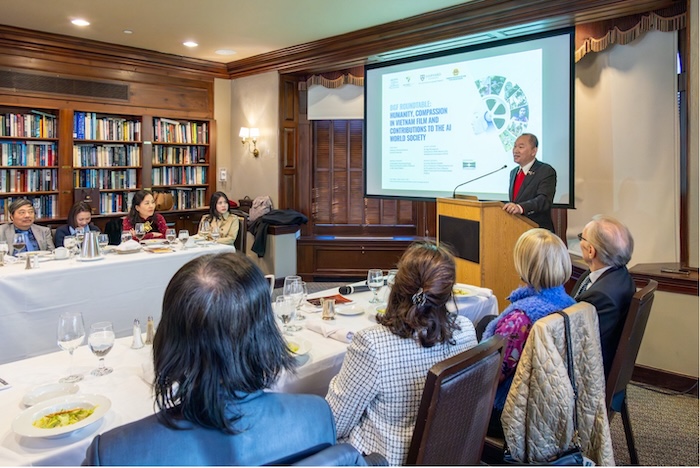
The Soul of Tea (Hồn Trà) is a distinctive cultural practice of the AI World Society (AIWS), created to strengthen the moral and human foundation of leadership in the AI Age. Rooted in contemplation and compassion, The Soul of Tea invites participants to savor Cao Trà—the concentrated quintessence of tea—slowly and mindfully, allowing quietness and clarity to arise. In that calm, participants intentionally cultivate optimism, joy, and love for people and the world, and then turn their thoughts toward what is noble—so that noble creative ideas and constructive actions may emerge.
In AIWS, culture is not a decorative element; it is a form of governance. The Soul of Tea serves as a gentle discipline that helps leaders, innovators, scholars, and citizens strengthen inner balance, ethical judgment, and a sense of shared humanity—especially amid rapid technological change. It encourages a way of thinking that is both elevated and practical: to seek truth with humility, to protect human dignity, and to design AI that advances peace, trust, and human flourishing.
Governor Michael Dukakis and Nguyen Anh Tuan have contributed this cultural initiative as part of AIWS’s broader mission: to ensure that the world’s most powerful technologies are guided by the world’s most enduring values. The Soul of Tea is offered as a simple but profound ritual—an AIWS cultural signature—reminding us that the future of AI must be shaped not only by intelligence, but by wisdom and love.
by Editor BGF | Feb 8, 2026 | News
Governor Dukakis’s Preface reminds us that anniversaries matter most when they become moments of renewal—when a nation looks honestly at its challenges and chooses, again, the values that first gave it meaning. The pages that follow build on that call. They introduce America at 250: A Beacon for the AI Age as both a blueprint and a story: a blueprint for how the United States can modernize democratic governance and lead responsibly in the age of artificial intelligence, and a story of how these ideas were formed through real initiatives, debates, and partnerships—bringing together American public leadership with distinguished scholars and global allies who believe that AI must be guided by transparency, accountability, and human dignity.
The Introduction begins where the Preface leaves us: with the conviction that America’s greatest strength is not only what it invents, but what it chooses to stand for—and what it is willing to build, with others, for the common good. For America has never been only for Americans or only of America; at its best, it is also for the world and, in a profound sense, of the world—a nation shaped by the hopes, talents, and moral imagination of people who came to it, learned from it, challenged it, and helped renew it.
That spirit lives in the story behind this book. It includes the journey of a Vietnamese public leader who left a distinguished position as CEO and Editor-in-Chief of VietNamNet to come to Harvard University as a research scholar and advisor, and then founded the Boston Global Forum—not merely to observe America’s democratic experiment, but to contribute to it. From that vantage point, and in partnership with Governor Dukakis and many leading scholars and public servants, the authors seek to offer a model worthy of the Semiquincentennial: a practical, hopeful blueprint for U.S. leadership in the AI Age—one that can be welcomed at home and shared with the world.
by Editor BGF | Feb 8, 2026 | Global Alliance for Digital Governance
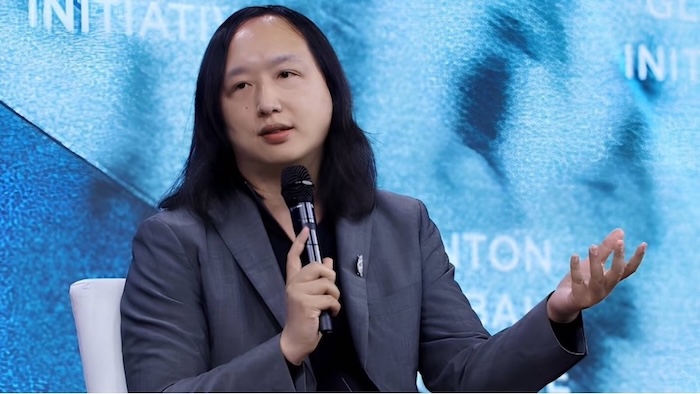
Taiwan’s cyber ambassador Audrey Tang participating in an online session at Asahi World Forum 2025 (Shingo Kuzutani)
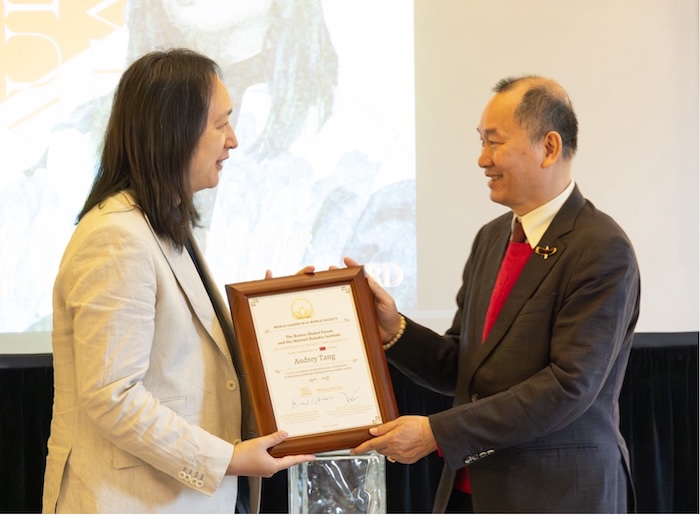
Audrey Tang, the 2025 World Leader in AIWS Award Recipient, who served as Taiwan’s inaugural minister of digital affairs, outlined a road map for rebuilding democracy through digital technology at the Asahi World Forum 2025 held in October.
Speaking in a session titled “Social Media and the New Divide: Bridging Gaps Through ‘Technology for Good,’” Tang introduced initiatives in Taiwan, including online discussions that led to legal revisions when ride-hailing giant Uber entered the market.
She stressed the importance of a shared foundation where people with differing views can seek a common ground.
Tang said social media, which are designed to maximize user engagement by catering to individual interests, have weakened horizontal, peer-to-peer connections within society.
“The way to train ‘civic care’ into AI agents, I believe, is the great challenge that is facing all of us,” she said.
Tang, who is Taiwan’s cyber ambassador, said she uses business-oriented social networking service LinkedIn most frequently, although she also posts on other platforms, such as X and Instagram.
She also shared personal habits to avoid smartphone addiction, such as setting the screen to black and white and hiding “recommended” posts generated by artificial intelligence.
Tang collaborates with Japanese politicians, including exchanging views with Upper House member Takahiro Anno, leader of the Team Mirai party.
“Japan maybe is one of the best places to try digital democracy,” she said. “People are very ready to engage AI as a facilitator.”
By DAISUKE IGARASHI/ Senior Staff Writer
https://www.asahi.com/eco/awf/en/archive/1028_1200.html
by Editor BGF | Feb 1, 2026 | News, Shaping Futures
As deepfakes become cheaper, faster, and more convincing, the familiar playbook—better detection, stricter platform rules, tougher laws—looks increasingly insufficient. A Financial Times–style argument gaining traction is that deepfakes are ultimately a democratic governance problem, not only a technical one.
The central proposition is simple: ask citizens what trade-offs they want. Through citizen assemblies, public consultations, and transparent rulemaking, democracies can define what counts as harmful manipulation, what must be labeled, which uses are legitimate (satire, art, accessibility), and what penalties apply for fraud, election interference, or non-consensual deepfake abuse. This approach also builds legitimacy for hard choices—such as watermarking standards, identity verification in high-risk contexts, fast-track takedowns during elections, and liability rules that apply across platforms.
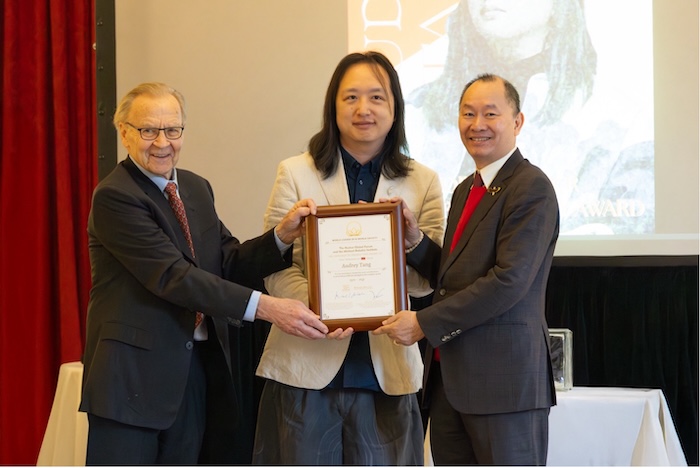
This citizen-first approach echoes the “democracy-as-technology” mindset advanced by Audrey Tang (the 2025 World Leader in AIWS Award recipient): legitimacy comes from participation, transparency, and accountable public systems—not just from better algorithms. In practice, that means pairing technical defenses (provenance, labeling, detection) with durable civic infrastructure that helps society decide what to protect, what to allow, and who is responsible when synthetic media causes harm.

by Editor BGF | Feb 1, 2026 | News
The AIWS Angel Statue v1.0 — “The Light of Evidence” is a contemporary symbol of compassionate intelligence serving humanity. Created for the AIWS Health Center space, it communicates a clear message: in the age of artificial intelligence, guidance must be human-centered, evidence-based, and safety-bounded—supporting clinical authority and informed choice while protecting dignity and trust.
The sculpture presents a calm, universal human silhouette rising within a vertical beam of light. Two elegant arc panels—shaped like protective parentheses—surround the figure, expressing the guardrails that make advanced intelligence worthy of public confidence: ethics, transparency, responsibility, and accountability. The form is intentionally non-sectarian and inclusive, welcoming people of every culture, faith, and background.
Crafted in satin-finished stainless steel with frosted glass elements, the statue glows softly—evoking reassurance rather than spectacle. Its illumination symbolizes “the light of evidence”: the best available knowledge made visible, accessible, and actionable, without coercion. In this design, the “Angel” is not a mythic figure, but a modern commitment—an emblem of how AI should behave in healthcare: listening carefully, clarifying uncertainty, elevating verified knowledge, and supporting wise human decisions while honoring consent, privacy, and professional judgment.
The statue stands for the mission of AIWS Angel: to help people navigate complexity with calm, clarity, and safety—especially when decisions affect life and wellbeing. It invites every visitor to remember that true progress is not measured only by technological power, but by how faithfully we protect life, build trust, and advance peace through responsible innovation.
At the base, the inscription may read:
“AIWS ANGEL — Evidence. Safety. Humanity.”
— Presented by Boston Global Forum and the AI World Society Family.


by Editor BGF | Feb 1, 2026 | Papers & Reports, News, Publications
Boston Global Forum – AI World Society Family
February 2026
We, the Boston Global Forum and the AI World Society Family, stand in solidarity with the Iranian people at this decisive moment in February 2026.
The uprising that began in late 2025 is far more than a protest against economic ruin and repression. It is the voice of an ancient civilization demanding rebirth: Woman, Life, Freedom — the same moral imperative that arose after the killing of Mahsa Amini in 2022, now grown into an irreversible refusal of isolation, fear, corruption, and the systematic stifling of human potential.
The regime’s answer—prolonged internet shutdowns, violence, and mass arrests—has deepened national trauma and accelerated the demand for change. Yet precisely in this darkness lies Iran’s greatest opportunity in centuries: to reclaim its civilizational genius and rebirth itself through ethical intelligence, inclusive innovation, and humanistic renewal in the Age of Artificial Intelligence.
Core Vision: Iran Reborn within the AI World Society Framework
We envision a New Iran that honors its 2,500-year legacy of philosophy, science, poetry, mathematics, and human dignity while becoming one of the world’s leading exemplars of wise, humane AI guided by the AI World Society (AIWS) Framework.
The AIWS Framework—developed since 2017 by the Boston Global Forum—provides an ethical, architectural, and governance blueprint for this rebirth. Its core principles include:
Human Dignity & Human-in-Command
AI must always serve life and never become an instrument of suppression. Every AI system in the New Iran will be built with ethics-by-design, human-in-command safeguards, transparency, and accountability at the center.
We reject surveillance authoritarianism. The New Iran will build privacy-protecting, auditable AI that safeguards women, youth, ethnic and religious minorities, and all who seek truth and justice—through enforceable data rights, independent oversight, and public accountability.
Woman, Life, Freedom as the Ethical Foundation of AIWS-Iran
Gender equality is non-negotiable and will be the moral litmus test for every AI policy, algorithm, and deployment. AI will empower women and girls in education, entrepreneurship, digital health, creative industries, and governance—dismantling patriarchal control rather than reinforcing it.
Inclusive Economic & Social Renaissance
Iran’s exceptionally talented youth deserve an economy of creativity and merit. Under the AIWS Framework, ethical AI can:
- Restore public trust through transparent, tamper-proof financial and procurement systems that fight corruption
- Generate millions of dignified jobs in ethical AI, green technologies, digital medicine, cultural preservation, and knowledge services
- Reverse brain drain by making Iran a global magnet for talent through open internet, academic freedom, and international collaboration
- Solve existential challenges—water scarcity, agriculture, and climate resilience—turning crisis into sustainable opportunity
Normalization and Openness with the United States and Global Reconnection
Iran must end self-imposed digital, intellectual, and diplomatic isolation. We call for normalization and openness with the United States—diplomatic, economic, cultural, scientific, and technological—founded on mutual respect, regional stability, and a shared interest in peaceful progress.
Normalization and openness will enable Iran to join the global AI World Society movement, adopt open and ethical AI standards, collaborate freely with leading American universities—Harvard University, Massachusetts Institute of Technology, Stanford University—as well as technology innovators and civil society, and participate as an equal partner in humanity’s AI century.
Global reconnection also means renewed engagement with international institutions, scientific networks, cultural communities, and the Iranian diaspora worldwide—so Iran’s future is built through openness, learning, and cooperation, not isolation.
Truth, Reconciliation, and Restorative Justice
A New Iran cannot be built on denial or vengeance. The AIWS Framework supports secure, privacy-preserving tools for documenting past violations, identifying systemic patterns of abuse, preserving collective memory, enabling healing, and supporting accountability without cycles of retribution.
We affirm a path of justice that is lawful, transparent, and humane—protecting due process, honoring victims, and preventing future abuses—so the nation can heal and move forward together.
To the Iranian People
You are not alone.
Your demand for dignity, freedom, creativity, and justice is aligned with the deepest promise of the AI World Society: that intelligence—both human and artificial—must serve conscience, life, and human dignity.
To the International Community — Especially the United States
Stand with the Iranian people through moral clarity and practical solidarity: support secure communication and open information flows, protect civil society and digital rights defenders, resist censorship and disinformation, and prepare to build long-term partnership once Iran chooses openness.
Normalization and openness with the United States is not a concession—it is a strategic necessity for peace, prosperity, and shared leadership in the ethical AI Age.
Final Affirmation
Iran is not condemned to perpetual repression.
Iran is not destined for isolation in the AI century.
With one of the world’s oldest continuous civilizations, extraordinary resilience, and a new generation ready to lead, Iran can become a great society demonstrating—under the AI World Society Framework—that intelligence, human and artificial, can and must serve dignity, freedom, life, and love.
This is our manifesto.
This is our shared hope.
This is the call for A New Iran: A Civilization Reborn with the AI World Society Framework.
Boston Global Forum – AI World Society Family
February 2026
by Editor BGF | Feb 1, 2026 | Shinzo Abe Initiative for Peace and Security, News
- Polling snapshot: Opinion polls cited in The Statesman say Japan’s ruling Liberal Democratic Party is on track to win a standalone majority in the Feb. 8, 2026 lower house election—an outcome that would give Sanae Takaichi a clearer mandate and consolidate her hold on power.
- Why this election is closely watched: The campaign is being scrutinized because the LDP is running without the backing of long-time coalition partner Komeito (after 26 years of governing together) and without formal coordination with its current junior partner, the Japan Innovation Party.
- Takaichi’s Abe lineage: The article notes that Takaichi served in multiple cabinet posts under former premiers Shinzo Abe and Fumio Kishida—a reminder that her leadership style and strategic instincts are often read through the lens of Abe-era governance.
- The strategic gamble: Analysts cited in the piece argue that dissolving the lower house and calling an early election—effectively putting her leadership on the line—reflects internal pressures and a desire to strengthen authority through a fresh popular mandate.
Please see full here: https://www.thestatesman.com/world/opinion-polls-suggest-japans-ruling-ldp-may-retain-power-1503548793.html/amp
