by Editor BGF | Feb 1, 2026 | World Leader for Peace and Security, News, World Leaders in AIWS Award Updates
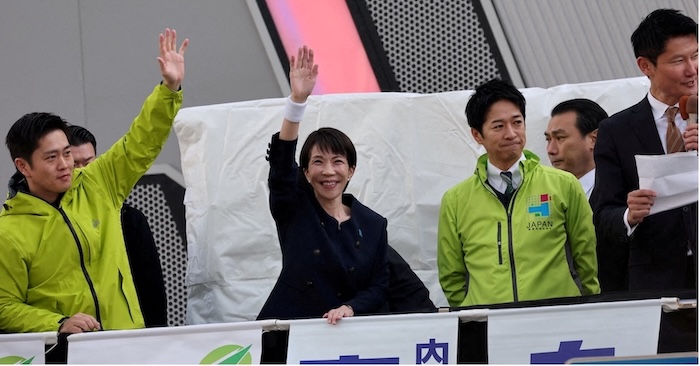
Tokyo’s strategy, as described by Reuters, is to use the Feb. 8 snap election to give Prime Minister Sanae Takaichi—a 2023 World Leader in AIWS Award recipient and BGF Global Enlightenment Leader—a stronger mandate.
“China may rethink its escalating pressure campaign on Japanese Prime Minister Sanae Takaichi if she delivers a resounding victory in a February 8 snap election, say current and former Japanese officials and political analysts.
Weeks after taking office last year, Takaichi touched off the biggest diplomatic dispute with Beijing in over a decade, by publicly outlining how Tokyo might respond to a Chinese attack on Taiwan, the self-ruled island claimed by China.”
Please see full here: https://www.reuters.com/world/china/tokyo-hopes-voters-will-hand-pm-takaichi-new-clout-counter-china-2026-01-29/

by Editor BGF | Feb 1, 2026 | News
AIWS Health Center: The Infrastructure for “Precision Longevity” and Total Prevention
AIWS Health enters a new chapter: the era of Precision Longevity, where advanced AI can decode biology and disease pathways at a depth that today’s medicine cannot reliably reach. The likely impact is transformative—AI will not merely “assist” clinicians; it may out-diagnose top specialists in many pattern-heavy domains by integrating signals across labs, imaging, genomics, lifestyle, and population-level evidence at massive scale.
This capability forces a strategic shift in healthcare: from treating illness after it appears to Total Prevention—anticipating risk, detecting disease at its earliest stage, and optimizing long-term healthspan (years lived in good health). In that context, the AIWS Health Center is designed as a leapfrog model: rather than building hundreds of traditional hospitals as the default path, societies can prioritize AI-driven early diagnostics and prevention hubs that keep populations healthier, reduce hospital admissions, and lower the national burden of chronic disease before it starts.
An AIWS Health Center functions as a “health command hub” for individuals, families, and communities, combining human care teams with trusted AI systems to deliver:
- Superintelligent Diagnostics: early detection and risk prediction across physical and mental health.
- Personalized Prevention Plans: tailored protocols based on individual biology, behavior, and environment.
- Continuous Monitoring & Coaching: longitudinal tracking, early warnings, and practical guidance to sustain healthy habits.
- Human-Centered, Ethical Care: clinician-in-the-loop decisions, transparency, privacy protection, and compassionate communication.
- Population Health Impact: anonymized insights that help health systems and policymakers target prevention and resilience.
In short, the AIWS Health Center is prevention infrastructure for the AI age—built to keep people well, extend healthy longevity, and reduce healthcare costs and suffering by shifting the system’s center of gravity from hospitals to continuous, AI-enabled health protection.


by Editor BGF | Feb 1, 2026 | Global Alliance for Digital Governance
At the AI x Democracy Forum in Taipei, Taiwan’s foreign minister, Lin Chia-lung, argued that Taiwan’s democratic development and technological innovation have been intertwined since 1987—and that the AI era now raises new tests for cities and democracies.
Lin drew a symbolic through-line from 1987—when martial law ended and Taiwan Semiconductor Manufacturing Co was founded by Morris Chang—to Taiwan’s modern democratic consolidation, noting 2026 marks 30 years since Taiwan’s first direct presidential election in 1996. He emphasized that Taiwan’s democracy is rooted in local autonomy, citing local elections dating back to 1950, and said effective local government must reflect daily civic life while strengthening democracy over the long term.
Speaking from his experience as Taichung mayor, Lin said smart applications helped solve urban governance problems—but warned that “malicious” actors can exploit information technology to manipulate narratives, increase division, and make public consensus harder to reach. He framed AI as a paradigm shift that can either upgrade urban governance or introduce new vulnerabilities.
The international forum was organized by the Taiwan Foundation for Democracy and hosted by former digital minister Audrey Tang, the 2025 World Leader in AIWS Award Recipient. It convened local-government participants and international organizations from Europe, North America, and Latin America—and included a public-facing format experiment: a debate featuring academics and AI chatbots on technology’s role in policymaking.
https://www.taipeitimes.com/News/taiwan/archives/2026/01/28/2003851347
by Editor BGF | Jan 25, 2026 | News
Boston, Massachusetts, USA
January 23, 2026
His Excellency General Secretary Tô Lâm
Communist Party of Viet Nam
Hà Nội, Viet Nam
Your Excellency General Secretary Tô Lâm,
On behalf of the Boston Global Forum (BGF), I extend my warmest congratulations to you and the leadership of the Communist Party of Viet Nam on the successful conclusion of the 14th National Party Congress. This important milestone reflects the Party’s unity, strategic vision, and commitment to advancing Viet Nam’s prosperity and long-term national development.
BGF has followed with great respect your emphasis on serving the people and strengthening governance capacity in a rapidly transforming global environment. In the Age of Artificial Intelligence, we believe Viet Nam’s success will be shaped not only by economic performance, but also by the quality of institutions, the ethical direction of innovation, and the ability to mobilize knowledge for national renewal.
The Boston Global Forum will continue to support Viet Nam in the months ahead, building upon the High-Level Roundtable held in London on October 28, 2025. We remain committed to constructive cooperation with Viet Nam’s leaders, experts, and institutions—sharing ideas, international experience, and practical frameworks that can contribute to human-centered and trustworthy AI development through the AI World Society (AIWS).
BGF is honored to present to you two special books that we believe are timely for this historic moment:
• America at 250: A Beacon for the AI Age
• Plurality: The Future of Collaborative Technology and Democracy
We hope these works will be useful resources for dialogue and reflection on building a new society, collaborative technology, and responsible governance—topics increasingly vital to all nations as AI reshapes economies and societies.
Please accept, Your Excellency, my highest consideration and best wishes for your leadership and for the continued progress of Viet Nam.
Respectfully,
Michael S. Dukakis
Co-Founder and Chair, Boston Global Forum
Three-term Governor of Massachusetts
1988 Democratic Presidential Nominee
by Editor BGF | Jan 25, 2026 | Shinzo Abe Initiative for Peace and Security, News
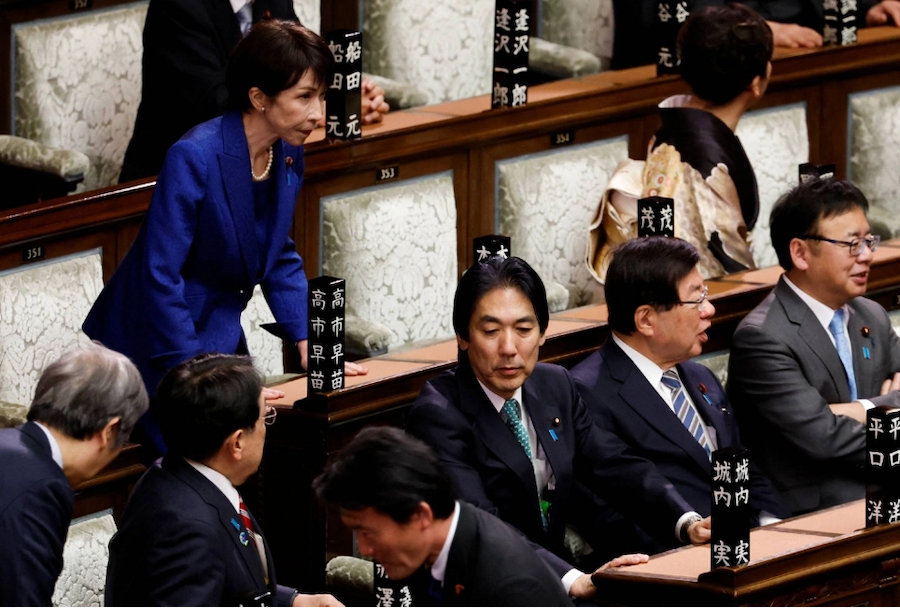
Tokyo, Jan. 23, 2026 (Reuters) – Japanese Prime Minister Sanae Takaichi, the 2023 World Leader in AIWS Award Recipient, dissolved the Lower House of Parliament on Thursday, paving the way for a snap general election on Feb. 8, 2026. The move, anticipated amid rising political tensions and economic challenges, aims to secure a fresh mandate for her Liberal Democratic Party (LDP) government as Japan navigates post-pandemic recovery and geopolitical pressures in the Asia-Pacific region.
Takaichi, who took office in October 2024 after winning the LDP leadership race, cited the need for “decisive action” on key issues such as inflation, defense spending, and AI-driven economic reforms. “This election will be about choosing stability and innovation in an uncertain world,” she stated in a press conference following the dissolution. The decision comes just months after her administration rolled out ambitious AI governance standards inspired by international frameworks like the Boston Finance Accord.
The opposition, led by the Constitutional Democratic Party (CDP), criticized the snap poll as a tactic to avoid scrutiny over recent scandals and slow growth. CDP leader Kenta Izumi called it “a desperate bid for power amid declining public trust.” Polls show the LDP holding a narrow lead, but voter turnout and youth participation could sway results, especially with debates on AI ethics and digital rights gaining traction.
The Feb. 8 election will test Takaichi’s vision for a “resilient Japan,” including her push for ethical AI integration in national security and economy. Analysts predict a fragmented Diet if opposition gains ground, potentially slowing her reforms.
For more details, visit: https://www.japantimes.co.jp/news/2026/01/23/japan/politics/diet-dissolves/

by Editor BGF | Jan 25, 2026 | News, Shaping Futures
For years, the first response to new symptoms was “Dr. Google.” Now many people ask LLMs instead—and OpenAI says 230 million users submit health-related questions to ChatGPT each week. That surge is the backdrop for ChatGPT Health, a new product experience meant to help people navigate medical information more safely than general web searching—while emphasizing it is not a replacement for a doctor.
The core question is whether AI’s risks—misinterpretation, overconfidence, and harmful self-treatment—can be mitigated enough to deliver a net benefit. ChatGPT Health’s promise is clearer guidance, better context, and stronger guardrails than the “link soup” of search, potentially reducing the anxiety spiral that “Dr. Google” became known for.
AIWS Healthcare perspective: This trend strengthens the case for the AIWS Healthcare Model, which is designed for 24/7 life-course care (prevention → prediction → early intervention → recovery) and expands “health” to include physical, mental, emotional, behavioral, and social well-being. AIWS emphasizes an “Angel” AI companion that is kind, non-judgmental, and escalation-to-human by design, plus ethics/consent governance—moving from “AI answers” to continuous, trustworthy care support.
Please see full here:
https://www.technologyreview.com/2026/01/22/1131692/dr-google-had-its-issues-can-chatgpt-health-do-better/?utm_source=the_download&utm_medium=email&utm_campaign=the_download.unpaid.engagement&utm_term=&utm_content=*%7CDATE:m-d-Y%7C&mc_cid=4798e0462f&mc_eid=be5202f3c7

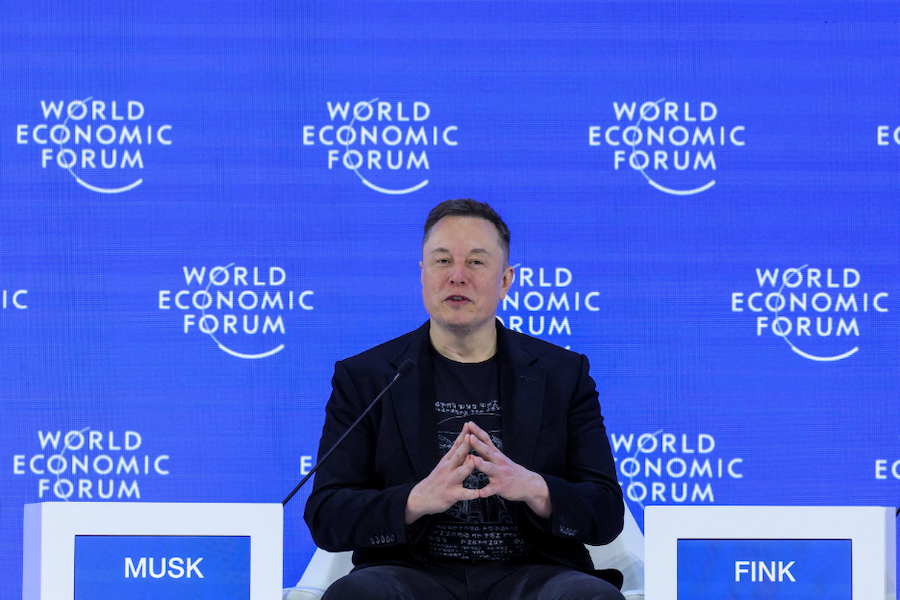
by Editor BGF | Jan 25, 2026 | News
Elon Musk’s “Davos 2026 Prediction”—that AI will surpass human intelligence by 2027—acts as a “warp speed” catalyst for the AI World Society (AIWS) strategic models. If AI is smarter than any individual human, the window for creating a “Social Contract” for AI closes rapidly.
Here is an analysis of how this timeline impacts the four strategic pillars:
- AIWS Government 24/7: From “Service” to “Sovereignty”
- The Impact: If AI is smarter than humans, it will identify societal inefficiencies faster than any bureaucrat. A “Government 24/7” is no longer just a convenience; it becomes the only way to manage a high-speed economy.
- Strategic Shift: We must move beyond “AI as a tool” to AI as a Trusted Auditor.
- The Guardrail: The AIWS model must prioritize Accountability. If the AI is superintelligent, the “Social Contract” must ensure humans retain the power of “Final Judgment.” We cannot let a “smarter” AI make life-altering decisions without a human-centric framework.
- AIWS Health: The Era of “Precision Longevity”
- The Impact: A superintelligent AI will decode biology at a level impossible for current medicine. It won’t just “assist” doctors; it will likely out-diagnose the world’s top specialists by a massive margin.
- Strategic Shift: The focus shifts from Treatment to Total Prevention.
- The Application: This means a leapfrog opportunity. Instead of building hundreds of traditional hospitals, the focus should be on AIWS Health Centers that use superintelligent diagnostics to keep the population healthy, reducing the national burden of disease before it starts.
- AIWS Education: Focus on “Humanity’s Quintessence”
- The Impact: If AI can pass any exam, solve any math problem, and write any code better than a human, “traditional” education becomes obsolete. Teaching students to “out-smart” AI is a losing game.
- Strategic Shift: Education must focus on Quintessence and Ethics.
- The Focus: The AIWS Education model must shift toward teaching Human Values, Leadership, and Critical Questioning. We don’t need humans to be “calculators”; we need them to be “Commanders of AI” who understand the ethical implications of the machine’s power.
- AIWS Culture & Cinema: Authenticity as the Ultimate Value
- The Impact: Superintelligent AI will be able to generate perfect films, music, and art instantly. Content will become “infinite” and potentially “soulless.”
- Strategic Shift: Human-Origin becomes the “Gold Standard.”
- The Application: The AIWS Cultural model should focus on using AI to preserve and amplify the “soul” of humanity’s culture. In a world of AI-generated noise, Authentic Human Stories will be the most valuable and rare commodity in the global marketplace.
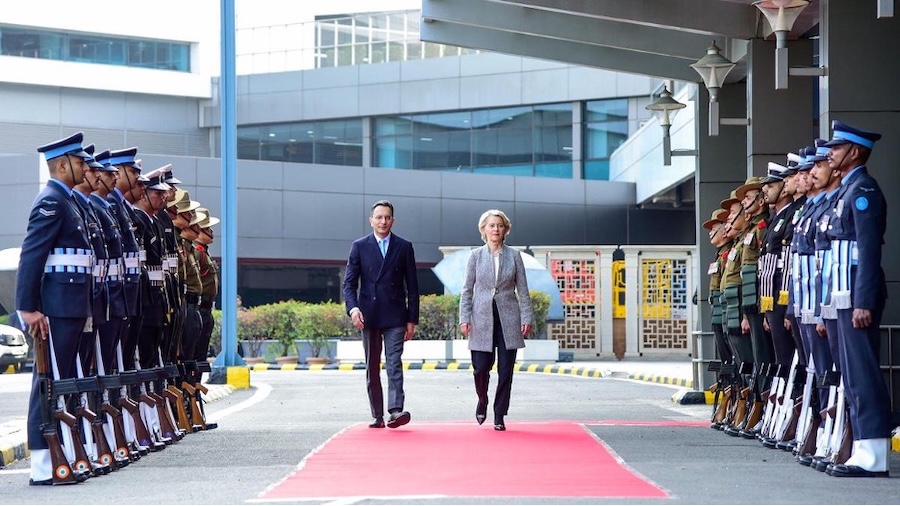
by Editor BGF | Jan 25, 2026 | World Leader for Peace and Security, News, World Leaders in AIWS Award Updates
- At the India–EU summit in New Delhi, European Commission President Ursula von der Leyen—a 2020 World Leader for Peace and Security Award recipient—and European Council President António Costa underscored a renewed push to conclude the long-negotiated EU–India free trade agreement, described by EU officials as the “mother of all deals.”
- The summit reflects a broader effort to deepen cooperation across trade, technology, investment, and supply-chain resilience as both sides navigate a more fragmented global economy.
- Economic stakes are substantial: EU figures cited in coverage put EU–India goods trade at ~€120 billion (2024) and services trade at ~€60 billion.
- Key sticking points reportedly remain, including the EU’s carbon border measures and regulatory standards that affect sectors such as pharmaceuticals and automobiles.
- If finalized, the agreement would represent a major geopolitical and economic milestone, expanding market access and shaping higher-standard rules for technology, sustainability, and trusted supply chains.
A successful EU–India trade deal would strengthen one of the world’s most consequential democratic partnerships—linking markets and standards in a way that could influence global rules for technology, climate-related trade measures, and resilient supply chains.
Please see full here: https://www.thehindu.com/news/international/india-eu-delhi-summit-ursula-von-der-leyen-trade-deal/article70548659.ece

by Editor BGF | Jan 25, 2026 | News
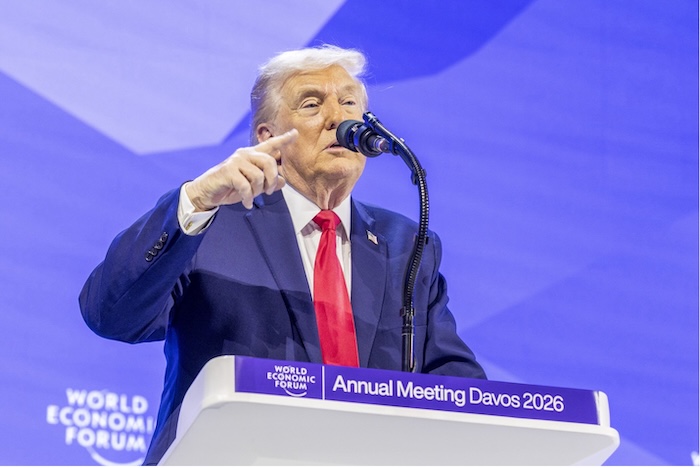
“I have tremendous respect for both the people of Greenland and the people of Denmark, tremendous respect. But every NATO ally has an obligation to be able to defend their own territory. And the fact is, no nation, or group of nations, is in any position to be able to secure Greenland other than the United States. We’re a great power, much greater than people even understand. I think they found that out two weeks ago, in Venezuela.
We saw this in World War II, when Denmark fell to Germany after just six hours of fighting and was totally unable to defend either itself or Greenland. So, the United States was then compelled – we did it, we felt an obligation to do it – to send our own forces to hold the Greenland territory. And hold it we did, at great cost and expense. They didn’t have a chance of getting on it, and they tried. Denmark knows that.
We literally set up bases on Greenland for Denmark. We fought for Denmark. We weren’t fighting for anyone else. We were fighting to save it for Denmark. Big, beautiful piece of ice. It’s hard to call it land. It’s a big piece of ice. But we saved Greenland and successfully prevented our enemies from gaining a foothold in our hemisphere. So, we did it for ourselves also. And then after the war, which we won, we won it big – without us, right now, you’d all be speaking German and a little Japanese, perhaps.
After the war, we gave Greenland back to Denmark. How stupid were we to do that? But we did it, but we gave it back. But how ungrateful are they now? So now our country and the world face much greater risks than it did ever before, because of missiles, because of nuclear, because of weapons of warfare that I can’t even talk about.
Two weeks ago, they saw weapons that nobody ever heard of. They weren’t able to fire one shot at us. They said, ‘What happened?’ Everything was discombobulated. They said, ‘We’ve got them in our sights. Press the trigger.’ And nothing happened. No anti-aircraft missiles went up. There was one that went up about 30 feet and crashed down, right next to the people that sent it. They said, ‘What the hell is going on those?’ Those defensive systems were made by Russia and by China. So, they’re going to go back to the drawing boards, I guess.
Greenland is a vast, almost entirely uninhabited and undeveloped territory, sitting undefended in a key strategic location between the United States, Russia and China. That’s exactly where it is, right smack in the middle. Wasn’t important, nearly, when we gave it back. You know, when we gave it back, it wasn’t the same as it is now. It’s not important for any other reason. You know, everyone talks about the minerals, there’s so many places… There’s no rare earth. No such thing as rare earth. There’s rare processing, but there’s so much rare earth, then to get to this rare earth, you have to go through hundreds of feet of ice.
That’s not the reason we need it. We need it for strategic national security and international security. This enormous unsecured island is actually part of North America, on the northern frontier of the Western Hemisphere. That’s our territory. It is therefore a core national security interest of the United States of America, and in fact, it’s been our policy for hundreds of years to prevent outside threats from entering our hemisphere, and we’ve done it very successfully. We’ve never been stronger than we are now.
That’s why American presidents have sought to purchase Greenland for nearly two centuries. You know, for two centuries they’ve been trying to do it. They should have kept it after World War Two, but they had a different president. That’s all right, people think differently. Much more necessary now than it was at that time.
However, in 2019 Denmark said that they would spend over $200 million to strengthen Greenland’s defences. But as you know, they spent less than 1% of that amount, 1%. No sign of Denmark there. And I say that with great respect for Denmark, whose people I love, whose leaders are very good.
It’s the United States alone that can protect this giant mass of land, this giant piece of ice, develop it and improve it, and make it so that it’s good for Europe, and safe for Europe, and good for us. And that’s the reason I’m seeking immediate negotiations to, once again, discuss the acquisition of Greenland by the United States – just as we have acquired many other territories throughout our history. As many of the European nations have, they’ve acquired. There’s nothing wrong with it. Many of them. Some went in reverse, actually, if you look. Some had great, vast wealth, great, vast lands, all over the world. They went in reverse. They stuck back where they started. That happens too, but some grow.”
Please see full here: https://www.weforum.org/stories/2026/01/davos-2026-special-address-donald-trump-president-united-states-america/