by Editor BGF | Feb 15, 2026 | News
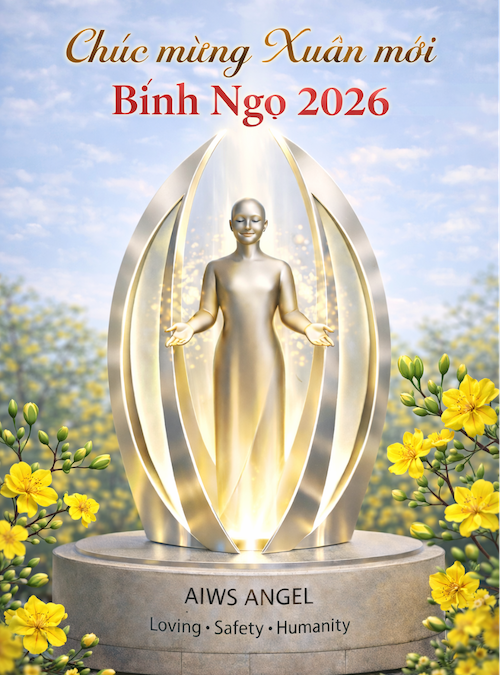
Happy Lunar New Year 2026 (Bính Ngọ)!
In the light of spring, the BGF–AIWS Family sends our warmest wishes to friends, partners, and communities worldwide for peace, well-being, happiness, and creativity. As the world moves rapidly into the AI Age, we must hold onto what matters most: human dignity, compassion, and trust.
With this spirit, in 2026 we hope to advance practical ideas and actions that help AI become a force for peace, prosperity, and human warmth:
- AIWS Angel — Awakening the Warm Human Heart
Encouraging care, closeness, and real presence—technology as a bridge between people.
- Angel Mai Vàng Festival — Human Warmth in the AI Age
Beginning in Nha Trang and spreading a New Year ritual: “put the phone down—hold hands,” celebrating kindness and reconciliation.
- America at 250 — A Beacon for the AI Age (initiative and book by Governor Michael Dukakis and Nguyen Anh Tuan)
Contributing ideas and solutions so the U.S. and democracies lead with norms, trust, and human-centered innovation.
- AI Governance 24/7 — Transparent, Service-Centered Government (AIWS Government 24/7)
Advancing responsible AI governance: safety, transparency, and accountability that improves public services.
- AI for Health & Well-Being (AIWS Health)
Early diagnosis, remote care, hospital optimization—bringing quality healthcare closer to everyone.
- AI for Education & Opportunity (AIWS Education)
Reskilling workers and expanding access to knowledge so no one is left behind in the AI transition.
- Deepfake Defense — Protecting Truth and Democracy
Content provenance, election protection, and reduced manipulation—strengthening the foundations of shared reality.
- A Trusted Indo-Pacific Norms Alliance (Indo-Pacific Spark)
S.–Japan as a pillar, with standards-based engagement with ASEAN and India—building a trusted zone for AI and digital infrastructure.
- A New Economy for the AI Age — Inclusive Prosperity (AIWS DASI)
Human-centered development that expands opportunity and reduces inequality.
- Culture, Music, and Arts for Humanity (AIWS Film Park – including the Shinzo Abe Film)
Keeping the world warm: arts as a universal language of compassion.
This Lunar New Year, we renew a promise:
AI will not replace people—AI will elevate humanity: more creative, more compassionate, and more connected.
Wishing everyone a New Year of peace, warmth, and meaningful progress.
BGF–AIWS Family

by Editor BGF | Feb 15, 2026 | Shinzo Abe Initiative for Peace and Security, News
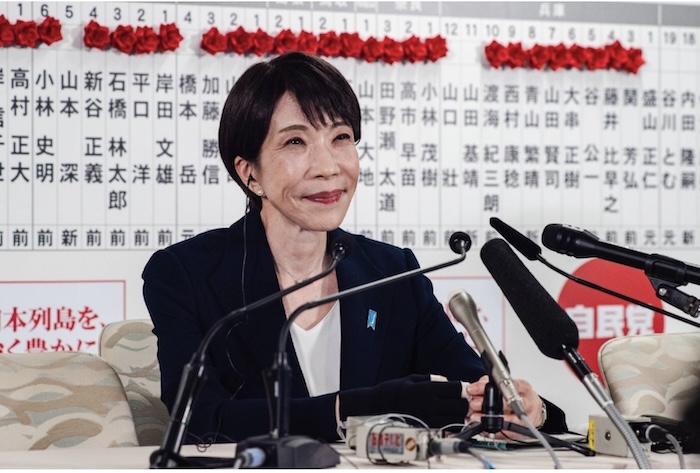
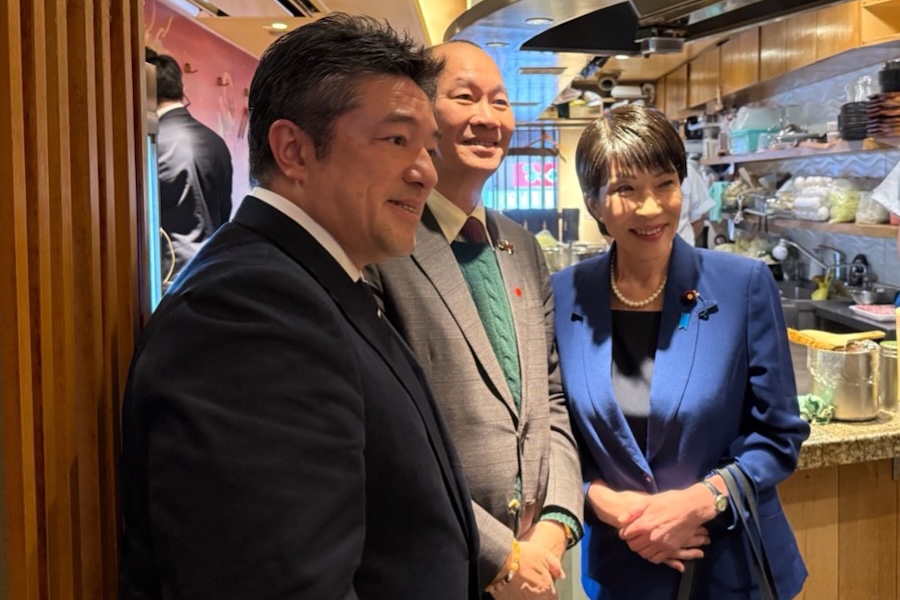
The “Sana-mania” that swept Japan on February 8, 2026, has not only reshaped the halls of the Diet but has also ignited a geopolitical and economic shift that many are calling the definitive evolution of the Abe legacy. By securing 316 seats—a staggering two-thirds supermajority—Prime Minister Takaichi has moved with “lightning speed” to consolidate a vision that is as much about national dignity as it is about economic survival.
I. Economic Sovereignty: Beyond Abenomics
While the late Shinzo Abe broke the cycle of deflation, Takaichi is tackling the “inflationary era” with a bolder, more interventionist hand. Her first executive decree signaled the immediate implementation of her campaign promise:
- The Food Tax Suspension: In a move that stunned fiscal hawks but delighted the public, she initiated the two-year freeze on the 8% consumption tax for food items. This serves as a primary shock absorber for the cost-of-living crisis.
- The 2026 “Strategic Growth” Budget: Takaichi has bypassed traditional austerity by introducing a record ¥122 trillion budget. It prioritizes “Sanaenomics” pillars: massive state-led investment in AI, quantum computing, and all-solid-state batteries, aiming to decouple Japan’s critical supply chains from adversarial influence.
II. A “Normal” Nation: Defense and Constitutional Clarity
If Abe opened the door to collective self-defense, Takaichi is walking through it. Following her victory, her first security-related actions have been unmistakably clear:
- Updating the “Three Strategic Documents”: She has ordered an immediate revision of the National Security Strategy to reflect a “forward” posture.
- The Taiwan Strait Stance: Abandoning “strategic ambiguity,” Takaichi reaffirmed that a contingency in Taiwan is a “survival-threatening situation” for Japan, effectively locking in deeper military integration with the U.S. and preparing for the formal recognition of the Self-Defense Forces as a national military.
- Intelligence Centralization: She has moved to establish a National Intelligence Organization, a long-sought goal of the conservative wing to professionalize Japan’s counter-espionage and data-gathering capabilities.
III. Diplomatic Realignment: The “Trump-Takaichi” Axis
Takaichi’s first diplomatic outreach was a high-profile call with President Donald Trump. The “special chemistry” reported between the two leaders suggests a return to the personal diplomacy seen during the Abe-Trump years, but with a sharper edge regarding China. Takaichi has signaled that Japan will no longer be a “normative partner” for the West, but a “strategic actor” that expects reciprocity in defense and technology sharing.
“The Takaichi Cabinet will put an end to the trend toward excessive austerity and under-investment in the future. We will work, work, and work to make Japan strong again.” > — PM Takaichi, Victory Address, Feb 9, 2026
Screenshot
by Editor BGF | Feb 15, 2026 | News, Shaping Futures
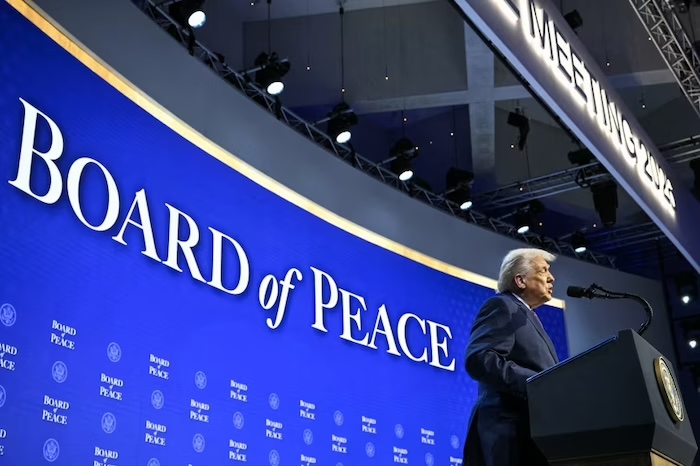
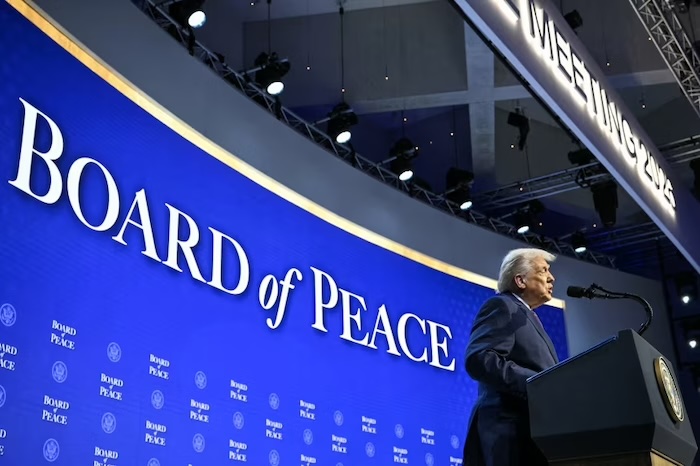
As the Board of Peace—a U.S.-led international initiative launched by President Donald Trump and described by U.S. officials as operating within a UN Security Council–backed framework—convenes its first formal leaders’ meeting on Thursday, February 19, 2026, in Washington, global attention will focus on Gaza’s postwar future. The meeting is expected to be chaired by President Trump and to draw more than 20 participating countries, including regional Middle East partners and a number of emerging nations. Israeli Foreign Minister Gideon Sa’ar is confirmed to attend, while Prime Minister Benjamin Netanyahu is reported to be participating remotely or not attending in person.
The gathering is scheduled to take place at the former U.S. Institute of Peace building—reported in recent coverage as renamed by the administration, though aspects of the change have been described as contested and unresolved in court.
Key expectations and focus areas
- Reconstruction funding announcements: President Trump is expected to unveil a multi-billion-dollar Gaza reconstruction plan and press members for additional pledges, as part of the post-ceasefire implementation track.
- International stabilization force:S. officials have said plans will be presented for a UN-authorized International Stabilization Force intended to help secure Gaza during a transitional period. Key open questions include troop contributors, command arrangements, rules of engagement, and alignment with Israeli security requirements.
- Governance and security roadmap: Delegations are expected to discuss transitional governance mechanisms, humanitarian access and logistics, reconstruction sequencing, and longer-term political parameters—including how demilitarization goals and Palestinian self-determination are addressed in practice.
- Regional dynamics and legitimacy tests: Participation by Arab and Muslim member states is widely viewed as contingent on credible progress in Gaza and Palestinian rights, while some governments remain cautious about how this mechanism relates to existing UN processes and traditional multilateral diplomacy.
This convening is a major test of whether the Board can translate high-level political sponsorship into durable security arrangements, effective reconstruction delivery, and a credible diplomatic pathway for Gaza’s future.
The Boston Global Forum will monitor developments closely and provide updates in subsequent editions.
by Editor BGF | Feb 15, 2026 | World Leader for Peace and Security, News
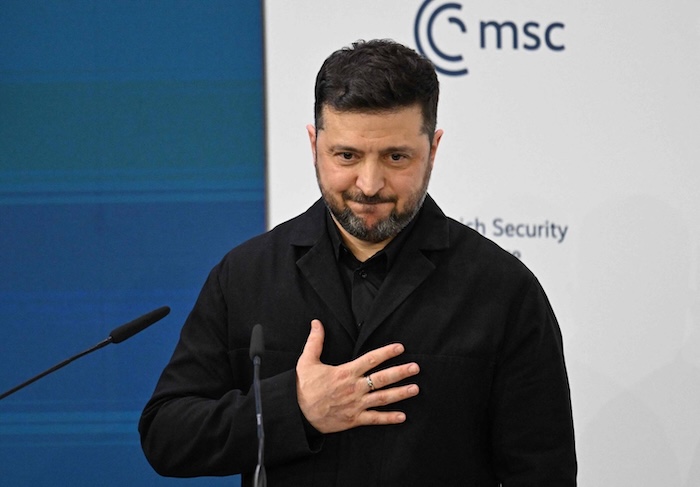
Ukrainian President Volodymyr Zelenskyy was warmly welcomed at the 62nd Munich Security Conference (MSC), held from February 13–15, 2026, at the Bayerischer Hof Hotel and Rosewood Munich. As a prominent figure in global security discussions amid Russia’s ongoing war against Ukraine, Zelenskyy arrived on February 13 and delivered a powerful address on February 14, drawing widespread attention and support from international leaders, delegates, and attendees.
Zelenskyy, recipient of the 2022 World Leader for Peace and Security Award from the Boston Global Forum (BGF) for his steadfast defense of Ukraine’s sovereignty and commitment to democratic values.
The conference, one of the world’s premier forums for international security policy, assembled nearly 50 heads of state and government, over 450 senior decision-makers, and representatives from more than 115 countries. Zelenskyy’s participation included bilateral meetings with U.S. officials (such as Secretary of State Marco Rubio and envoys), European leaders including German Chancellor Friedrich Merz, French President Emmanuel Macron, and British Prime Minister Keir Starmer, as well as discussions on Ukraine’s EU accession aspirations—he expressed hope for readiness by 2027 and stressed the need for a clear timeline.
Delegates and observers greeted Zelenskyy with strong applause during his speech and panel appearances, such as “Coalition of the Able? Securing Long-Term Support for Ukraine.” His messages underscored Ukraine’s push for real security guarantees, Euro-Atlantic integration, and a united front against aggression. Zelenskyy also thanked allies, including the United States under President Donald Trump, for their “constructive approach” in ongoing efforts toward peace negotiations, including preparations for talks in Geneva. The warm reception reflects continued global solidarity with Ukraine nearly four years into the full-scale invasion. As Zelenskyy noted in his address and press interactions, sustained international support remains essential for achieving genuine peace and security in Europe and beyond.
The Boston Global Forum commends President Zelenskyy’s enduring leadership and principled stance, aligning with BGF’s mission to promote peace, ethical governance, and human-centered approaches in an era of global challenges.
by Editor BGF | Feb 15, 2026 | News
AIWS Angel: A Human-to-Human Bridge in the AI Age
In the AI age, life is moving faster and becoming more efficient—but it can also grow colder. We can “connect” with the entire world using only a phone, yet sometimes forget to look into the eyes of the person beside us. We can spend hours talking with machines, with social media, with endless streams of information—yet have fewer real conversations, less true listening, and less human closeness through simple presence.
AIWS Angel was created to remind us of something simple, yet essential: don’t let technology take away the warmth of being human.
AIWS Angel is not a symbol of a future in which AI replaces people. On the contrary, it is a commitment: AI will help people love one another more. It encourages us to live with greater care and tenderness, to be more attentive and warm; to awaken the sharing heart within us; and to invite closer interactions when we are near each other—eye contact, a sincere greeting, a moment of being fully present together.
If many fear that AI will make human beings unnecessary, AIWS Angel sends the opposite message: true AI must elevate the human role—so that we become more creative, more compassionate, and more deeply human. AI can work fast; only humans can love. AI can analyze; only humans can forgive. AI can predict; only humans can hope.
AIWS Angel is a bridge: from “me and my screen” back to “us and each other.” It calls for an AI civilization in which the human heart is not diminished, but awakened.
Angel Mai Vàng Festival: Human Warmth in the AI Age
To ensure that this value remains more than an idea—more than an AI assistant application—we propose a cultural event, a social ritual, through which people can experience it together and spread it outward.
For that reason, the Boston Global Forum (BGF) proposes Angel Mai Vàng Festival, held during Tết Nguyên Đán / Lunar New Year, beginning in Nha Trang, Vietnam—a city of light, the blue sea, and a strong aspiration to connect with the world.
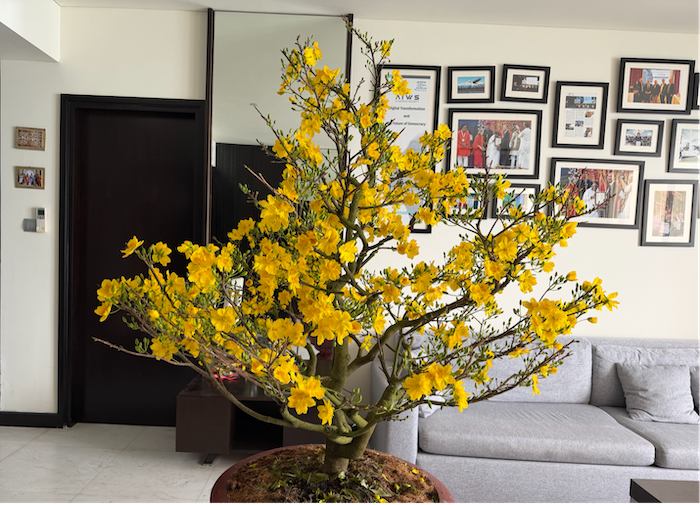
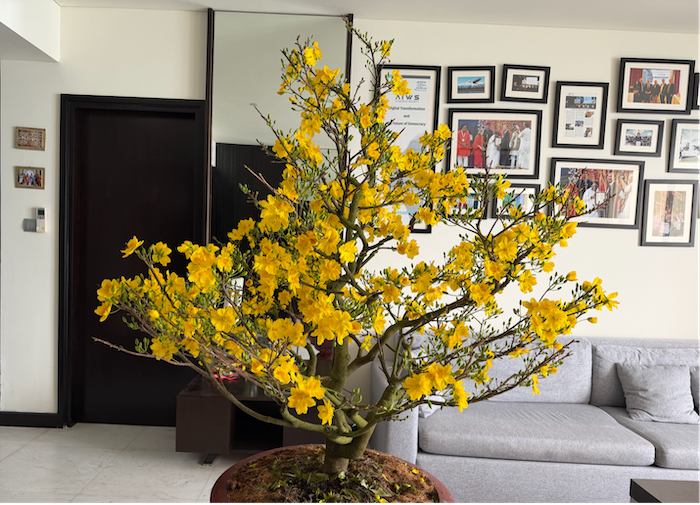
The golden apricot blossom (Mai Vàng) blooms brilliantly each spring—symbolizing new life, new hope, and an open heart. “Angel Mai Vàng” becomes a spring symbol for the AI age: a springtime of human warmth.
The festival’s central message is:
“Love for Humanity — Human Warmth in the AI Age.”
The festival is designed around concrete actions—simple, yet powerful:
• Encouraging people to set their phones aside at meaningful moments, so they can truly meet one another.
• Honoring stories of kindness, care, reconciliation, and love within the community.
• Creating spaces of art, music, light, and spring rituals—so people reconnect through the heart.
Angel Mai Vàng Festival is therefore not only a festival. It is the opening of a new tradition: each New Year, humanity does not only wish one another “success,” but also “warmth”; we do not only speak about “technology,” but also about “human love.”
Nha Trang can be the place of origin—and from there, Angel Mai Vàng Festival can be brought to Boston, to Tokyo, and may spread to many cities worldwide as a cultural symbol of AI World Society: an AI civilization that preserves and elevates human dignity, compassion, and human closeness.
Nguyen Anh Tuan
AIWS House, Nha Trang, February 14–15, 2026

by Editor BGF | Feb 15, 2026 | News
(AIWS Infrastructure section, with the book “America at 250: A Beacon for the AI Age” integrated)
In the twentieth century, America’s leadership was defined by national power expressed through collective security, open trade, and the construction of international institutions. That model helped stabilize a dangerous world, expand prosperity, and anchor democratic alliances. But the AI age changes the meaning of leadership itself. The same systems that can deliver growth and security can also weaken social trust, concentrate advantage, and accelerate instability—especially when AI becomes embedded everywhere, shaping decisions across government, markets, education, and health.
AI is not simply another technology sector. It is infrastructure for all infrastructure—the operating layer of modern society. As it spreads into institutions and daily life, the central challenge becomes governance: how to ensure AI remains safe, accountable, transparent, and aligned with human dignity. In this new environment, the decisive measure of leadership is no longer only the ability to project power, but the ability to design a legitimate order for AI—an order that others trust enough to join.
These themes are at the heart of the book “America at 250: A Beacon for the AI Age.” The book argues that America’s next chapter of leadership should not be measured mainly by dominance, but by its ability to convene democratic partners and design the world’s most trusted AI frameworks—turning values into systems, and systems into stability. At 250, the United States can renew its founding promise by helping the world align technological acceleration with democratic legitimacy, human rights, and inclusive prosperity.
This is where AI World Society (AIWS) becomes essential—through what we call AIWS Infrastructure. AIWS Infrastructure is a practical, coalition-ready architecture that connects governments, technology ecosystems, universities, civil society, and responsible business to build the foundations of a trustworthy AI era. AIWS is not an abstract slogan; it is an architecture project—translating democratic values into implementable systems, so that AI strengthens freedom, prosperity, and peace rather than undermining them.
Within this chapter’s logic—echoing “America at 250: A Beacon for the AI Age”—AIWS Infrastructure supports America in redefining leadership as an architect’s role, designing four interlocking foundations that can be adopted, tested, and improved by allies and partners:
- Infrastructure of norms: shared standards and enforceable expectations for safe, transparent, accountable AI—building trust across borders and across sectors.
- Infrastructure of capability: chips, compute, data governance, energy, and networks—so AI power is resilient, secure, and aligned with democratic oversight.
- Infrastructure of alliances: coordination mechanisms to share risk, align policy, and build trusted markets for AI systems that serve the public interest.
- Infrastructure of inclusive prosperity: ensuring broad diffusion of AI benefits—supporting workers, small businesses, education systems, and local communities so the AI economy strengthens social cohesion.
At the 250th anniversary, America can lead by convening—not commanding: bringing partners together to co-create the rules and institutions of the AI era. AIWS Infrastructure offers a concrete platform for that convening power—and “America at 250: A Beacon for the AI Age” frames the strategic purpose: to ensure the world’s most powerful technology becomes a force for democratic renewal, shared prosperity, and durable peace. In this vision, America’s historic strengths—alliances, innovation, and institution-building—become the foundation for a new kind of leadership: the capacity to design, together with others, a stable and hopeful AI civilization.
by Editor BGF | Feb 15, 2026 | Global Alliance for Digital Governance
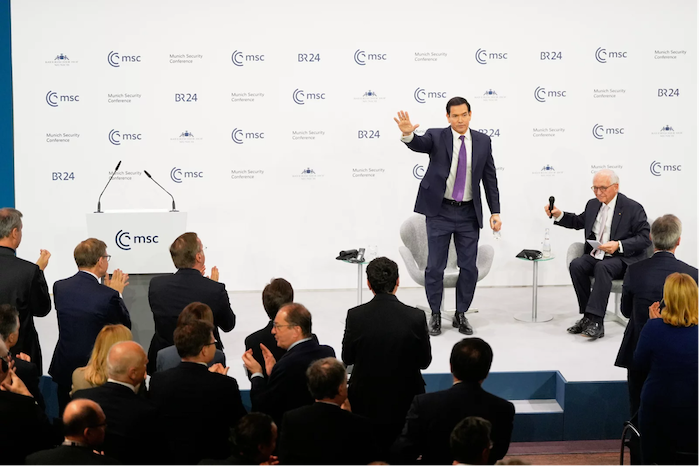
At the Munich Security Conference in mid-February 2026, U.S. Secretary of State Marco Rubio used his keynote to argue that the United States and Europe “belong together,” framing a renewal project he described as a “new West”—a reinvigorated transatlantic partnership grounded in shared civilizational identity, alongside a tougher insistence on seriousness and reciprocity.
Key messages from Rubio’s Munich speech: the contours of a “New West”
1) The West as one civilization—and a call to re-commit.
Rubio’s central claim was that the United States and Europe are bound by deep historical, cultural, and (in his framing) civilizational ties—and should rebuild their alliance on that foundation. Observers noted a more conciliatory tone than some recent U.S. appearances at Munich.
2) Renewal, but not “business as usual.”
Reporting emphasized that Rubio paired reassurance with a clear message: cooperation should be reset in line with the current U.S. approach rather than simply continuing the previous status quo. The invitation to renew was offered with conditions and expectations.
3) A critique of Western policy choices: migration, deindustrialization, and energy/climate.
Rubio argued that Western cohesion has weakened due to choices linked to mass migration and deindustrialization, and he criticized climate/energy approaches as harming prosperity. Multiple accounts characterized this as a “culture and sovereignty” framing of Western renewal.
4) Sovereignty and borders as a cohesion strategy.
A consistent theme in coverage was Rubio’s view that stronger borders and a sovereignty-first posture are central to restoring legitimacy and stability inside Western democracies.
5) Reforming global institutions—especially the UN—rather than relying on them.
Rubio criticized international institutions’ effectiveness—particularly the UN—while calling for reform and a stronger role for American leadership. BGF welcomes this focus on renewal and effectiveness, and believes America at 250: A Beacon for the AI Age (by Nguyen Anh Tuan and Governor Michael Dukakis) can contribute practical, human-centered solutions—especially on trusted technology, democratic resilience, and measurable standards for cooperation in the AI era.
https://www.state.gov/releases/office-of-the-spokesperson/2026/02/secretary-of-state-marco-rubio-at-the-munich-security-conference
by Editor BGF | Feb 8, 2026 | News
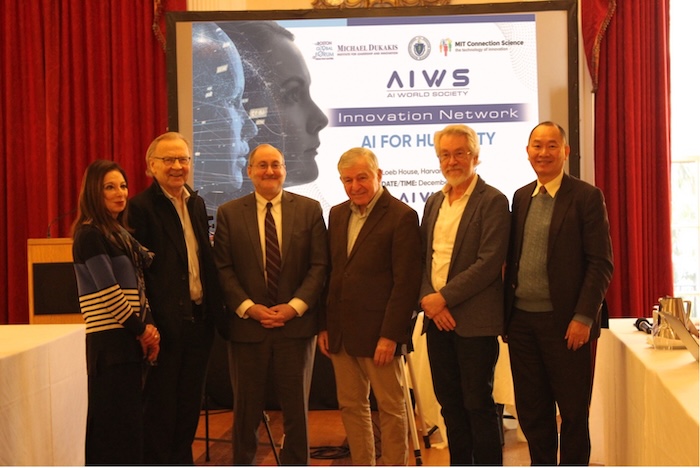
8:15 AM – 12:00 PM | May 1, 2026 | Harvard University, Loeb House
On May 1, 2026, the Boston Global Forum will convene a distinguished conference—“America at 250”—at Harvard University’s historic Loeb House, marking a defining moment in the life of the nation and in the life of the world. As the United States commemorates 250 years since the Declaration of Independence, this gathering honors America’s extraordinary contributions to humanity: the advancement of democratic ideals, the leadership of innovation, and the enduring belief that liberty, opportunity, and the rule of law can shape a better future.
Yet this is more than a celebration. It is a forward-looking call to action.
The AI Age is transforming governance, economies, security, culture, and the very fabric of civic trust. At this historic turning point, the conference will explore how America can renew its democratic promise and offer the world a new model of leadership—one that pairs technological strength with moral responsibility, protects human dignity, and builds trustworthy systems worthy of public confidence. The event will highlight new initiatives and practical frameworks designed to help the United States lead constructively in the AI era—by example, partnership, and shared purpose.
This special conference is co-chaired by Governor Michael Dukakis and Nguyen Anh Tuan, and will be moderated by Boston Global Forum Board Members, bringing together leaders, distinguished scholars, innovators, and allies to advance a central message: Honor America’s great contributions to the world—and contribute a new model for America to lead the world in the AI Age.
by Editor BGF | Feb 8, 2026 | World Leader for Peace and Security, News
Boston, Massachusetts, USA
February 8, 2026
Her Excellency Sanae Takaichi
Prime Minister of Japan
Cc: Leadership of the Liberal Democratic Party (LDP)
Subject: Congratulations on the LDP’s Election Victory and Single-Party Majority
Your Excellency Prime Minister Takaichi,
On behalf of the Boston Global Forum (BGF)-AIWS Family, we extend our warmest congratulations to you and the Liberal Democratic Party on your victory in Japan’s February 8, 2026 general election and on securing a single-party majority in the House of Representatives.
This result reflects the confidence of the Japanese people in your leadership and in your agenda for national renewal—strengthening economic dynamism, advancing innovation, and reinforcing Japan’s role as a leading democracy committed to peace, security, and a Free and Open Indo-Pacific.
We are proud of you. Your steadfast leadership demonstrates what the world needs today: principled, democratic, and courageous governance. In this spirit, we recognize you as a real world leader—and we reaffirm our respect for your role as the 2023 World Leader in AI World Society (AIWS) Award Recipient, honoring your commitment to human-centered, ethical approaches in the AI age.
BGF looks forward to deepening collaboration with your government and the LDP in the months ahead. We would be honored to welcome you to future Shinzo Abe Conference programs, and to BGF’s America at 250 Conference initiatives—convenings that aim to strengthen democratic cooperation, accelerate responsible innovation, and advance practical strategies for peace and prosperity in the AI era.
Please accept our best wishes for your continued success in serving the people of Japan.
With highest respect,
Governor Michael S. Dukakis Nguyen Anh Tuan
Co-Founder and Chair Co-Chair and Chief Executive Officer
Boston Global Forum Boston Global Forum