
by Editor BGF | Mar 8, 2026 | News, Shaping Futures
Artificial intelligence is increasingly being used to identify new business opportunities and technological breakthroughs. By analyzing large datasets and detecting patterns invisible to humans, AI tools can help entrepreneurs and investors discover emerging trends and high-potential innovations earlier than ever before. As AI systems continue to evolve, they are expected to play a growing role in shaping the future of entrepreneurship, research, and global economic development.
Read more: https://d3.harvard.edu/how-ai-can-spot-your-next-billion-dollar-idea/


by Editor BGF | Mar 8, 2026 | World Leader for Peace and Security, News
Japanese Prime Minister Sanae Takaichi is expected to visit Washington, D.C. later this month to meet with U.S. President Donald Trump. The meeting is expected to focus on strengthening the Japan–U.S. alliance, including cooperation on economic security, advanced technologies, and regional stability in the Indo-Pacific. As global geopolitical and technological competition intensifies, close coordination between democratic allies remains essential for maintaining stability and prosperity.
Read more: https://www.nippon.com/en/news/yjj2026020600171/
by Editor BGF | Mar 8, 2026 | News
On the occasion of the 250th anniversary of the United States of America, the Boston Global Forum and the AI World Society are proud to recognize the fifty scientists, technologists, scholars, and leaders who are most powerfully shaping America’s role in the Age of Artificial Intelligence — and through America, the governance of AI for the world.
The AI age is not a distant future. It is the defining reality of the present — reshaping medicine, education, defense, democracy, and the economy with a speed and scope that no previous technology has matched. America stands at a hinge point: it can lead the world in governing AI in service of democratic values and human dignity, or it can cede that leadership to frameworks that do not share those values.
The fifty thinkers honored here are the people making the difference. They are building the AI systems, shaping the governance frameworks, protecting the democratic values, and demonstrating through their work that the AI age can be — must be — an age of human flourishing. Several are partners and award recipients of the Boston Global Forum and AI World Society, whose work directly informs the AIWS governance framework.
As America marks 250 years of democratic self-governance, this recognition is both a celebration and a call: the thinkers who lead us into the AI age bear a responsibility as great as any generation of American innovators who preceded them. Their choices — about safety, equity, transparency, and democratic accountability — will shape the next 250 years.
by Editor BGF | Mar 8, 2026 | Global Alliance for Digital Governance
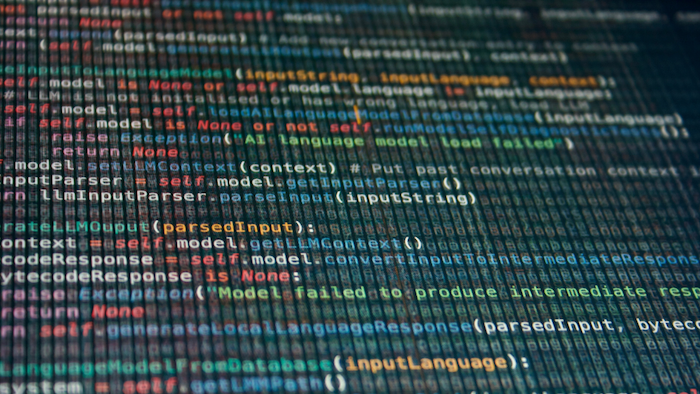
The rapid growth of tools powered by large language models (LLMs) faces increasing risks from misinformation on the open internet. Various actors—including governments, corporations, and scammers—can manipulate online content to influence what AI systems learn and present as facts. Key threats include medical misinformation, inauthentic political speech, and “data voids” that allow misleading information to dominate obscure topics. Managing these risks has become not only a technical issue but also a challenge of governance and trust. The article highlights solutions such as improving data curation, strengthening model training methods, and integrating fact-checking mechanisms.
Read more: https://www.techpolicy.press/how-to-manage-misinformation-in-large-language-models/

by Editor BGF | Mar 1, 2026 | News
Implementing the “No Hostility Doctrine” for Peace, Normal Relations, and Prosperity
Iran is entering a new era. BGF recommends that Iran’s emerging leadership adopt and implement a clear national doctrine of no hostility toward any country as the cornerstone of a successful transition toward democracy, economic renewal, and international normalization. This doctrine is not merely a foreign-policy adjustment—it is a strategic foundation for restoring dignity to the Iranian people through peace, the rule of law, and opportunity.
1) Make “No Hostility” the national strategic turning point
BGF advises Iran to formally declare—clearly, consistently, and publicly—that:
- Iran will not be hostile to the United States, Israel, or any country.
- Iran will pursue disputes only through diplomacy, dialogue, and international law.
- Iran will uphold non-aggression and respect for sovereignty.
- Iran’s security policy will be defensive, focused on protecting Iranians and borders—not ideological confrontation.
- Iran seeks to become a reliable partner for regional stability, trade, science, education, health, and cultural cooperation.
Why this matters: It ends the “permanent enemy” narrative that has fueled isolation, sanctions, militarization, and internal repression—blocking prosperity and democracy.
2) Convert doctrine into credibility: actions within the first 90 days
BGF advises the new leadership to pair the doctrine with concrete, verifiable actions—because credibility is built by behavior, not words.
A. Open diplomatic channels immediately
- Establish direct and indirect communications with the United States and all relevant regional actors to reduce the risk of escalation and begin a pathway to normalization.
- Create a crisis hotline mechanism to prevent miscalculation.
B. Enforce a “no external destabilization” policy
- Announce and implement a clear policy of regional calm and non-interference.
- Align all security agencies with a single principle: Iran’s security must be achieved through stability, not external confrontation.
C. Launch transparency and anti-corruption public reporting
- Publish key state decisions, budgets, and procurement, especially in high-risk sectors.
- Establish an independent anti-corruption mechanism and public oversight dashboards.
D. Protect human rights and the rule of law
- Implement measurable steps to protect civil liberties, due process, and equal citizenship.
- Begin a lawful review process for political detainees and ensure courts operate independently.
E. Invite international technical cooperation
- Welcome cooperation on humanitarian needs, economic stabilization, public health, energy reliability, and institutional reform.
- Prioritize partnerships that improve daily life quickly and visibly.
3) Align foreign policy with domestic renewal
BGF recommends a simple national message: Iran’s renewal will be built at home.
That means focusing the state on: jobs, education, health, freedom, anti-corruption, and a lawful democratic system.
BGF advice: Treat peace and normalization as economic infrastructure.
- No hostility → lower risk → more investment → better jobs → stronger middle class → stronger democracy.
4) Establish a “Trust and Legitimacy Program” to support the doctrine
To sustain the No Hostility Doctrine beyond a single moment, BGF recommends Iran build institutional trust through:
- Transparency by default (budgets, procurement, public services)
- Accountability mechanisms (independent audits, anti-corruption authority, citizen complaint channels)
- Human-centered governance (rights protections, due process, equal citizenship)
- Public trust metrics to measure institutional performance and integrity
This is consistent with BGF’s broader vision of trust infrastructure for modern governance.
5) A message to the world—and to Iranians
BGF recommends that Iran deliver a final, unifying message:
Iran seeks a future defined by dignity through peace—a nation open to cooperation, committed to stability, and devoted to the wellbeing of its people.
BGF closing recommendation:
To succeed, Iran’s new leadership should treat the No Hostility Doctrine as a binding national commitment—translated into immediate actions, lawful institutions, and measurable improvements in the lives of Iranians. Peace is not a slogan; it is the pathway to democracy and prosperity.

by Editor BGF | Mar 1, 2026 | World Leader for Peace and Security, News, World Leaders in AIWS Award Updates
Following reports circulating internationally about a major turning point in Iran’s leadership, Professor Judea Pearl (UCLA)—the pioneer of Causal Inference and the 2020 AIWS World Leader Award recipient—posted on X that Iran’s Supreme Leader Ayatollah Khamenei had died, linking to reporting from the Times of Israel.
In moments of regime transition, the greatest danger is acting on emotion, rumor, and short-term correlation—rather than on causal reality. Causal Inference offers a disciplined approach: map the drivers of instability and target the highest-leverage interventions that reduce violence and increase legitimacy. AIWS adds the moral foundation: reconciliation and love—without hatred, without hostility—guided by human dignity, trust, transparency, and accountability.
BGF recommends an “AIWS Transition Package” for a New Iran, built on four causal priorities:
- Legitimacy before power: Establish a time-limited National Transitional Council with broad representation (women, youth, provinces, minorities, experts) and a clear timetable for constitutional reform and elections. This reduces the “legitimacy vacuum → factional conflict” pathway.
- A No Hostility Doctrine: Iran’s new leadership should clearly announce: no hostility toward the United States, Israel, or any country, and commit to resolving disputes through diplomacy and international law. This breaks the cycle “hostility → isolation → economic collapse → radicalization.”
- 100-day stabilization: Protect essential services—electricity, water, hospitals, banking, food supply—and launch immediate transparency on budgets and procurement. Stabilizing daily life prevents social breakdown.
- Truth, reconciliation, and rule of law: Avoid revenge cycles. Create lawful accountability for grave crimes, while prioritizing national reconciliation and equal citizenship.
Finally, BGF encourages the U.S., Israel, and allied partners to support a stable transition through a structured “Friends of a New Iran” pathway—humanitarian support, technical assistance for elections and anti-corruption systems, and step-by-step normalization tied to verifiable reforms.
In the AI Age, peace is not idealism—it is risk management. A New Iran can be built by combining causal reasoning with AIWS values: reconciliation, dignity, trust, and a future without hostility.


by Editor BGF | Mar 1, 2026 | News
For decades, Iran’s strategy of prolonged hostility and confrontation with the United States and Israel has produced painful consequences: heightened regional tensions, cycles of sanctions and isolation, constrained economic opportunity, and persistent insecurity that ultimately burdens ordinary people most. The lesson is clear: hatred and hostility do not create sustainable security; they prolong crisis and narrow a nation’s future.
In the AI Age, strategies rooted in hostility become even more dangerous. Artificial intelligence accelerates decision-making, amplifies information operations, expands cyber conflict, and can intensify misperception at unprecedented speed. In such an environment, even small incidents can escalate rapidly into major crises—faster, deeper, and harder to control than in previous eras. That is why every nation must build a new foundation for security and prosperity: Reconciliation and love—without hatred, without hostility.
This is a core value of the AI World Society (AIWS). AIWS calls on societies to replace hostility with dialogue, empathy, and cooperation; to build trust rather than fear; and to pursue shared prosperity rather than zero-sum confrontation. AIWS affirms a simple principle: powerful technology must be guided by values even more powerful—human dignity, compassion, moral responsibility, and long-term stewardship.
BGF-AIWS Family urges national leaders, especially in regions of conflict, to adopt reconciliation as a national strategy, to treat love and compassion as a civic and cultural foundation, and to make non-hostility a new measure of strength in the AI Age. Only on such a foundation can AI become a force for peace, development, and sustainable security for all humanity.

by Editor BGF | Mar 1, 2026 | News, Shaping Futures
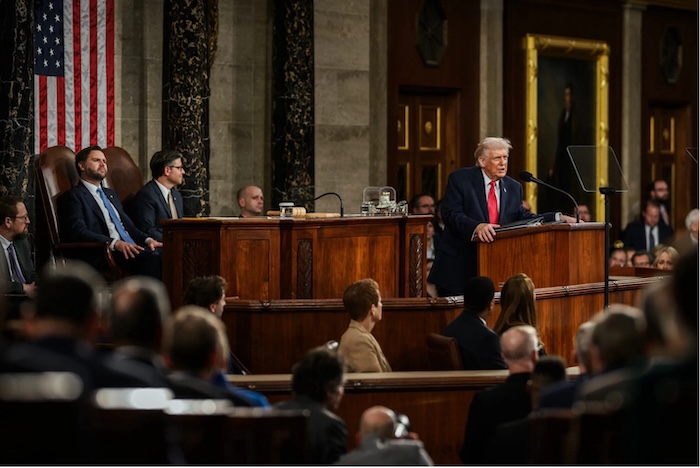
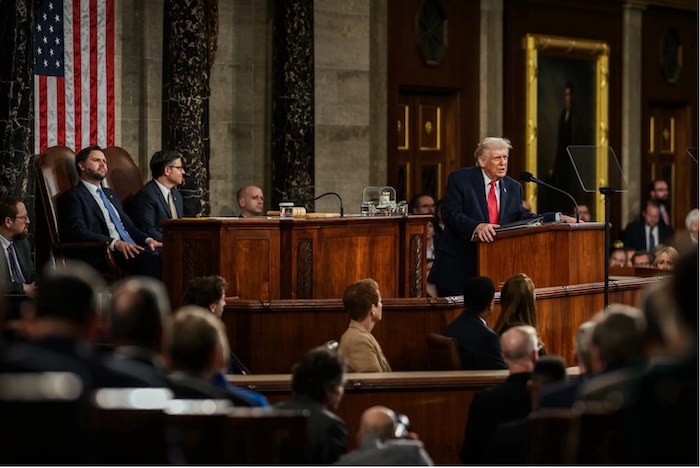
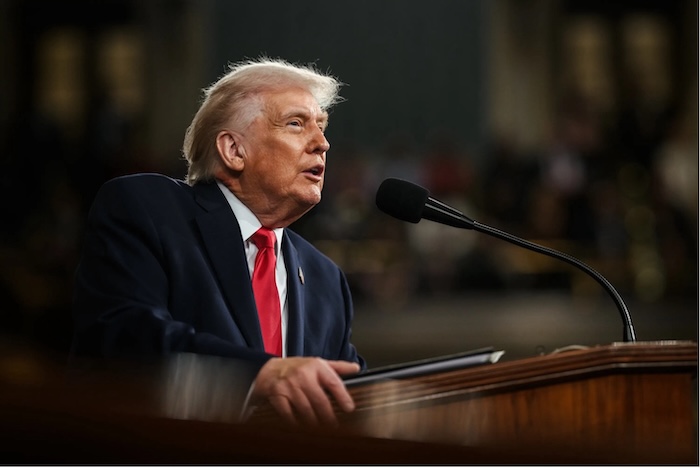
The AI references in the State of the Union underscore a practical truth: AI is becoming infrastructure for all infrastructure—tied to data centers, electricity, supply chains, and the ability to deploy capabilities at national scale. This focus is realistic. To lead in the AI Age, a country must build AI infrastructure: compute, power, networks, data capacity, and talent—because these determine speed, innovation, and competitiveness.
But speed alone is not enough. As AI increasingly shapes economies, societies, security, and public confidence, we must build a second pillar alongside physical infrastructure: trust infrastructure, anchored in Trust Infrastructure Laws. This is central to the AI World Society (AIWS) framework: creating standards and verification mechanisms so AI can be deployed as fast and as effectively as possible, while remaining safe, transparent, accountable, and grounded in human dignity.
The key lesson is not to choose one over the other. We need both “Infrastructure Pledges” and “Trust Infrastructure Laws.”
- “Infrastructure pledges” can mobilize investment, accelerate deployment, and expand capability.
- “Trust infrastructure laws” provide the guardrails that protect citizens’ rights, reduce systemic risk, and preserve democratic legitimacy.
Under the AIWS principle, the optimal balance is: open, enabling conditions that build the foundation for the fastest and most effective AI applications—guided by humanity’s highest values. That requires governance that accelerates innovation while ensuring accountability: transparent scope of deployment, auditability and traceability, risk evaluations and incident reporting, privacy and data protections, and independent oversight for high-stakes uses.
In the AI Age, national strength will be measured by two capabilities: the ability to build infrastructure that accelerates progress, and the ability to build trust infrastructure that protects values. When both pillars stand together, AI can truly become a force for prosperity, peace, and human-centered development.

by Editor BGF | Mar 1, 2026 | Shinzo Abe Initiative for Peace and Security, News
Boston Global Forum (BGF) congratulates Yasuhide Nakayama, BGF’s Representative in Japan, on his re-election to Japan’s House of Representatives on February 8, returning to the Diet via the Kinki proportional representation block.
Mr. Nakayama’s re-election comes at a pivotal moment for Japan as it navigates a rapidly changing geopolitical and technological landscape. The Kinki PR block—covering the Kansai region—remains one of Japan’s most influential electoral blocs, and Mr. Nakayama’s return reinforces the presence of experienced national-security and foreign-policy leadership in the Diet.
BGF also recognizes Mr. Nakayama’s continuing role as BGF Representative in Japan, reflecting his long-standing engagement in international cooperation and democratic partnerships.
Following the election, BGF notes that Mr. Nakayama has taken on an expanded leadership portfolio within the Liberal Democratic Party (LDP) as Director of the Global South—a strategic arena that will be increasingly decisive in the AI Age. As competition and cooperation over AI standards, digital infrastructure, trusted supply chains, and human-centered governance intensify, Japan’s relationships with developing nations will help shape whether the next global technological order is grounded in openness, trust, and shared prosperity.
In BGF’s view, this Global South portfolio positions Mr. Nakayama to help shape a new phase of Japanese diplomacy—one that treats the Global South not as a peripheral priority, but as a central partner in building trusted AI ecosystems, education and skills cooperation, resilient cyber and digital infrastructure, and inclusive economic development.