by Editor BGF | Mar 22, 2026 | News
All panelists are honorees of the America 250: AI Pioneers Award, as the conference advances trust infrastructure, trusted information systems, and a special Hollywood dialogue on storytelling and the AIWS Film Park.
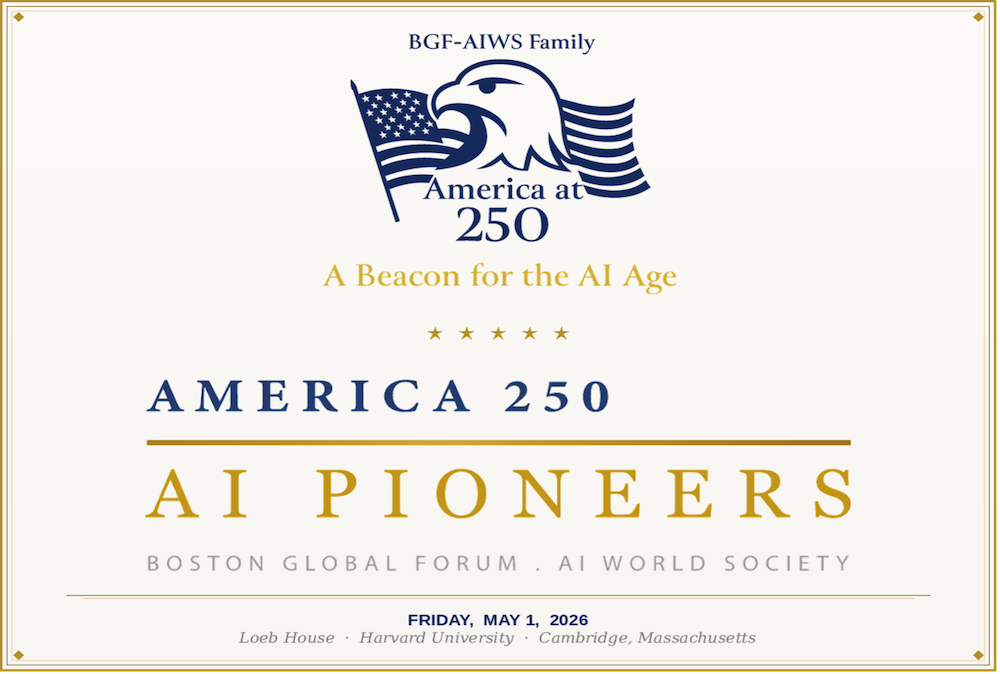
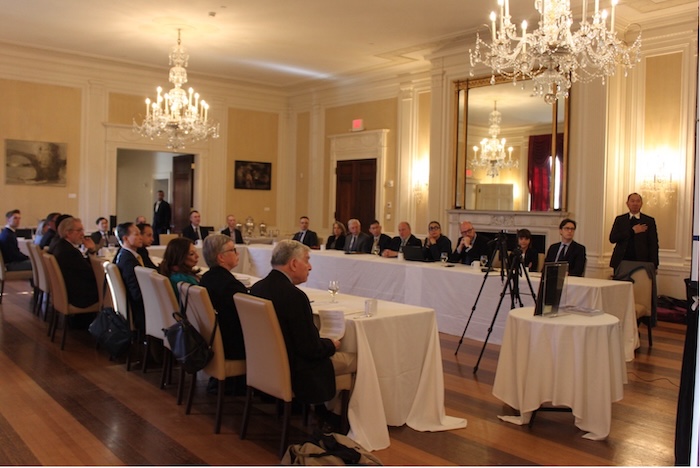
On May 1, 2026, the Boston Global Forum will convene “America at 250: A Beacon for the AI Age” at Harvard University Loeb House in Cambridge, Massachusetts.
The conference will focus on the urgent task of building Trust Infrastructure for the AI Age through two major panels. Panel 1, “AIWS Trust Infrastructure for Democracy in the AI Age,” will address privacy, fairness, accountability, human-centered design, trusted data, and democratic governance. Panel 2, “AIWS Information Trust Infrastructure for Democracy in the AI Age,” will explore standards, metrics, implementation pathways, ATR, ATX, media intelligence, provenance, and resilience against misinformation and information attacks.
A special distinction of the conference is that all panelists are honorees of the America 250: AI Pioneers Award. The program will also feature Cynthia Dwork delivering an acceptance speech on behalf of the honorees: “From Differential Privacy to Trust Infrastructure: Building Trustworthy AI for Democracy.”
In addition to the two panels on trust infrastructure, the conference will include a special dialogue on Hollywood, highlighting the role of storytelling, film, cultural imagination, and ideas for the AIWS Film Park in advancing democracy, civic trust, and human values in the Age of AI.
Inspired by the book America at 250: A Beacon for the AI Age, co-authored by Governor Michael S. Dukakis and Nguyen Anh Tuan, the conference honors the enduring ideals of the United States — liberty, democracy, innovation, peace, security, and service to humanity — while advancing a forward-looking vision for democratic leadership and trusted innovation in the AI Age.
by Editor BGF | Mar 22, 2026 | News
By Nguyen Anh Tuan
On March 22, 2023, the Future of Life Institute published its open letter calling for a six-month pause on training AI systems more powerful than GPT-4. Elon Musk was among the signatories. The letter captured a real anxiety: AI was advancing faster than institutions, public understanding, and governance. But its proposed answer — “pause AI” — was never a realistic path. (Future of Life Institute)
The problem was simple. In a world of geopolitical competition, private capital, distributed research capacity, and national-security stakes, a voluntary global pause was never likely to be verifiable, enforceable, or durable. The letter was useful as a warning. It was not workable as a governing model. (Future of Life Institute)
The contradiction became unmistakable only a few months later. On July 12, 2023, Reuters reported that Elon Musk launched xAI, a new frontier AI company, even though he had publicly supported pausing advanced AI development. (Reuters)
That sequence exposed the deeper flaw in the “stop AI” approach. The future of AI will not be decided by appeals to freeze history. It will be decided by whether democratic societies can build institutions strong enough to guide AI toward human dignity, safety, freedom, and the common good.
That is why the real answer is not to stop AI, but to govern it with trust.
What the world needs is AIWS Trust Architecture: a practical framework for trusted systems, trusted information, democratic accountability, human-centered governance, and operational standards that can be implemented in real institutions and markets. And beyond architecture, what humanity needs is AIWS Trust Order: a larger civic and democratic order in which AI serves peace, security, innovation, and human progress.
The lesson of March 22, 2023 is now clear. Fear alone is not governance. A pause alone is not a solution. The way forward is to build the trust architecture and trust order that can make AI worthy of humanity’s future.
by Editor BGF | Mar 22, 2026 | World Leader for Peace and Security, News
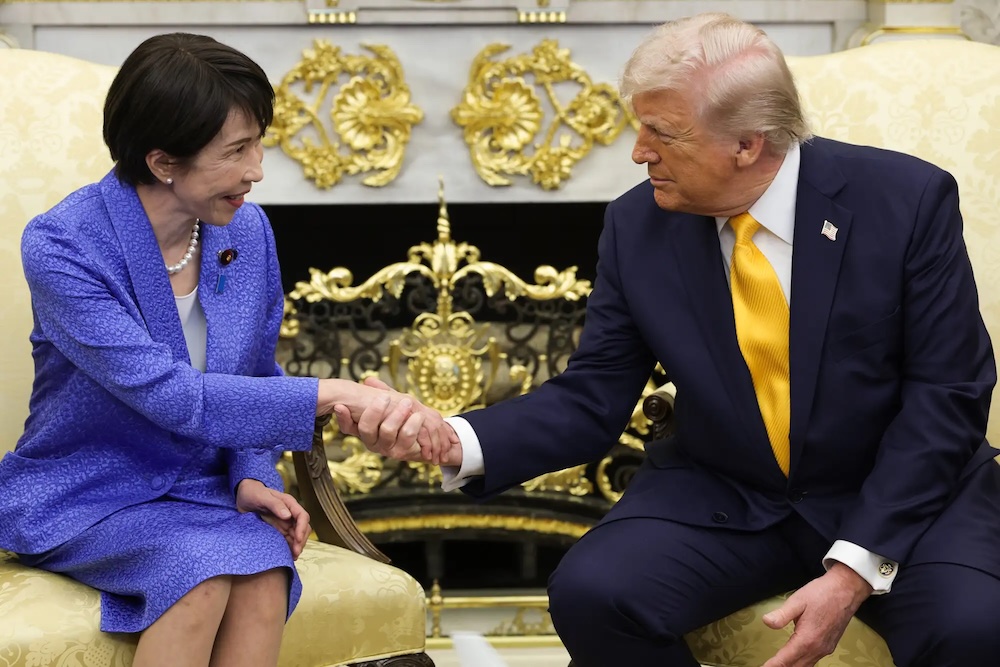
The March 19, 2026 meeting underscored the strength of the U.S.-Japan alliance, economic security cooperation, and the symbolic meaning of America 250.
On March 19, 2026, Prime Minister Sanae Takaichi met President Donald Trump at the White House in a summit that carried unusual weight. Reuters reported that a planned working lunch was canceled so the two leaders could spend more time in direct talks, a sign of the importance both sides attached to the meeting. (Reuters)
The summit was significant not only diplomatically, but strategically. The White House said the two leaders announced new initiatives to strengthen the U.S.-Japan alliance, enhance economic security, and bolster deterrence in support of a free and open Indo-Pacific. (The White House)
A particularly memorable feature of the visit was its connection to America 250. During the White House dinner, Prime Minister Takaichi congratulated the United States on its 250th anniversary and marked the occasion with Japan’s gift of 250 cherry trees, adding a beautiful historical and cultural dimension to a summit otherwise centered on security and strategy. (People.com)
For the Boston Global Forum, the summit carries special meaning because Sanae Takaichi is the recipient of the 2023 World Leader in AIWS Award. Her meeting with President Trump at the White House further elevates her standing as a leader associated with democratic resilience, economic security, and principled international cooperation in a time of deep global change. (bostonglobalforum.org)
This summit also reinforces a larger point: Prime Minister Takaichi is emerging not only as a national leader for Japan, but as an increasingly important democratic leader on the world stage. Her presence at the White House at this historic moment, linking alliance strategy, economic security, and the symbolism of America 250, reflects the stature of a leader whose influence now reaches well beyond Japan. (The White House)
by Editor BGF | Mar 22, 2026 | Shinzo Abe Initiative for Peace and Security, News
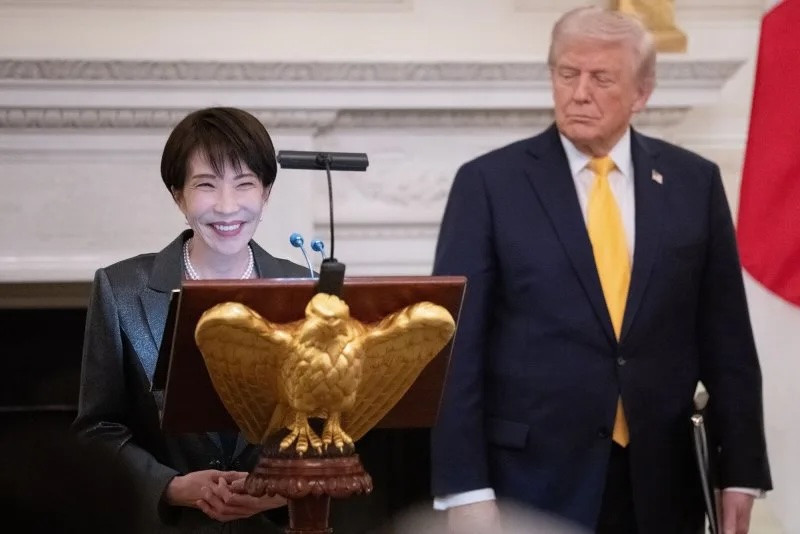
Her March 19 remarks linked America 250, democratic values, and the enduring strategic vision of the U.S.-Japan alliance.
At the White House dinner on March 19, 2026, Prime Minister Sanae Takaichi delivered remarks that were notable not only for their warmth toward the United States, but for the way they explicitly carried forward the legacy of Shinzo Abe. She congratulated the United States on its 250th anniversary, calling America “an icon of freedom and democracy in the world,” and she reiterated Japan’s gift of 250 cherry trees to celebrate America 250. (Roll Call)
The most striking moment came when Takaichi invoked the late Prime Minister Abe directly. In her speech, she said that Abe had been “Donald’s dear friend” and “my dear friend too,” then recalled the phrase he had once declared in Washington: “Japan is back.” By reviving those words at the White House, Takaichi signaled continuity with Abe’s larger vision of a confident Japan, a stronger alliance with the United States, and a partnership anchored in shared democratic purpose. (Roll Call)
Her remarks made clear that this was more than a ceremonial tribute. According to Japan’s Ministry of Foreign Affairs, the summit and dinner followed roughly 90 minutes of talks in which Takaichi emphasized deeper cooperation to make both Japan and the United States “strong and prosperous,” while reaffirming the importance of advancing a Free and Open Indo-Pacific together. In that context, her reference to Abe underscored strategic continuity as much as personal remembrance. (Ministry of Foreign Affairs of Japan)
For the Boston Global Forum, the moment also carries special significance. Sanae Takaichi was honored by BGF as a 2023 World Leader in AIWS Award recipient, recognized for her leadership on economic security, AI governance, and international cooperation. Her White House remarks on March 19 showed once again why she stands out: she spoke not only as Japan’s leader, but as a democratic voice linking alliance strategy, freedom, and historical purpose at a defining moment for America and the world. (bostonglobalforum.org)
by Editor BGF | Mar 22, 2026 | News, Shaping Futures
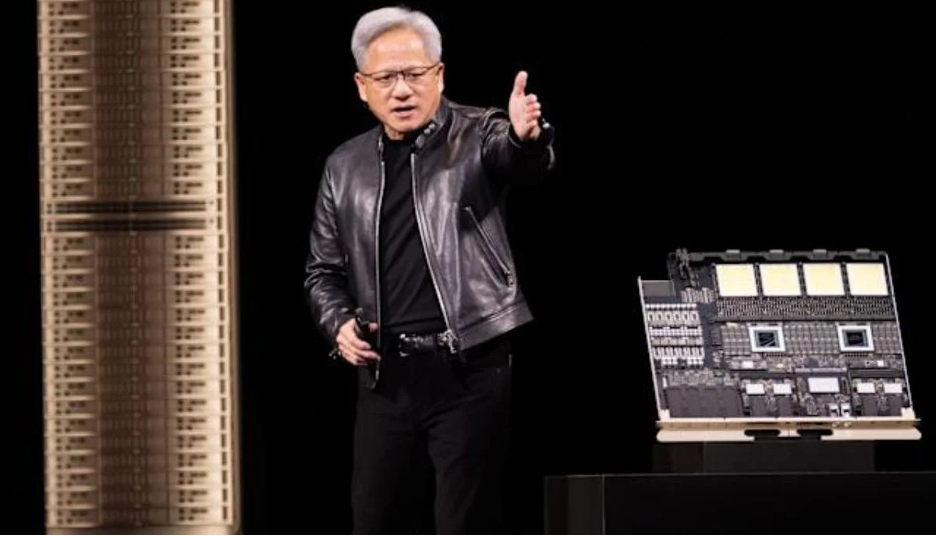
Jensen Huang’s GTC 2026 message was clear: AI is moving from digital action to physical action, and inference chips are becoming the engines of that shift.
At NVIDIA GTC 2026, Jensen Huang signaled a major transition in the AI era. NVIDIA’s own recap emphasized breakthroughs in agentic AI, inference, and physical AI, while Reuters described the recent progression of the field from chatbots, to reasoning systems, to autonomous agents. The next frontier is increasingly clear: robots. (NVIDIA)
The reason is simple. Robots need more than intelligence in theory. They need to perceive, reason, and act in real time in the physical world. That is why Huang declared that “the inference inflection has arrived.” The center of gravity is shifting from training giant models to running them efficiently, continuously, and with low latency. (AP News)
This shift is already becoming real in industry. NVIDIA announced new physical AI tools at GTC, including Cosmos 3, aimed at accelerating generalized robot intelligence. Reuters also reported that Skild AI and NVIDIA are deploying a general-purpose robotic “brain” on Foxconn assembly lines in Houston — an early commercial use of generalized physical AI. (NVIDIA Newsroom)
The larger lesson is that the next AI race will not be won by models alone. It will be won by those who can combine inference, robotics, data, simulation, and real-world deployment. After AI agents, the next great wave is not only smarter software. It is AI that can act in the world.
As AI moves into robots and physical systems, the central question becomes trust. Can these systems be relied upon, audited, governed, and aligned with human values? That is why the next era will need not only better chips and models, but also AIWS Trust Architecture and AIWS Trust Order — to ensure that physical AI serves human dignity, democracy, safety, and progress.
by Editor BGF | Mar 22, 2026 | News
Chapter 6 of America at 250: A Beacon for the AI Age argues that America’s economic strength in the AI era will not come from assuming that rivals will never catch up, but from building what the chapter calls “structural distance” — a durable advantage rooted in AI-driven productivity, trusted infrastructure, world-class talent, trustworthy institutions, and the ability to shape the rules of the new era. The chapter’s central claim is that economic advantage in the AI age is no longer defined by scale alone, but by the convergence of productivity, infrastructure, talent, innovation ecosystems, and trusted alliances.
The chapter presents a strategic framework with several pillars. First, AI must become a productivity engine for the entire economy, not just a tool concentrated in a few technology firms. Second, America must win the AI infrastructure game through semiconductors, compute, data infrastructure, and clean energy. Third, it must sustain long-term R&D from lab to market, preserve its unmatched university and national lab ecosystem, and treat talent as the number-one economic weapon through immigration, education, and workforce upgrading. The chapter also calls for re-industrialization through advanced manufacturing and for building a trusted market with democratic allies, especially through shared standards, trusted supply chains, and a larger ecosystem that authoritarian rivals will find difficult to replicate.
A particularly important argument in the chapter is that trust itself is economic infrastructure. It warns that distrust, disinformation, and institutional decay weaken productivity, coordination, and long-term investment. For that reason, healing internal division and building trust infrastructure are treated not only as moral or political tasks, but as foundations of national economic strength. The chapter further argues for a “small yard, high fence” approach to protect critical technologies while avoiding indiscriminate decoupling.
The chapter culminates in its most ambitious idea: America’s deepest advantage in the AI age is not only the ability to compete, but the capacity to design the AI order. That means shaping the standards, norms, governance frameworks, trusted supply chains, and data infrastructures that others choose to join. In this context, the chapter presents the AIWS frameworks developed by the Boston Global Forum — including the Social Contract for the AI Age, Trust Rating and Trust Infrastructure, AIWS Government 24/7, and the Digital Asset Standards Initiative — as part of America’s contribution to the governance architecture of the AI age. The chapter’s conclusion is clear: the most worthy form of leadership for America at 250 is to build a trusted, democratic, and human-centered AI order that the world will choose to join.
by Editor BGF | Mar 22, 2026 | Global Alliance for Digital Governance
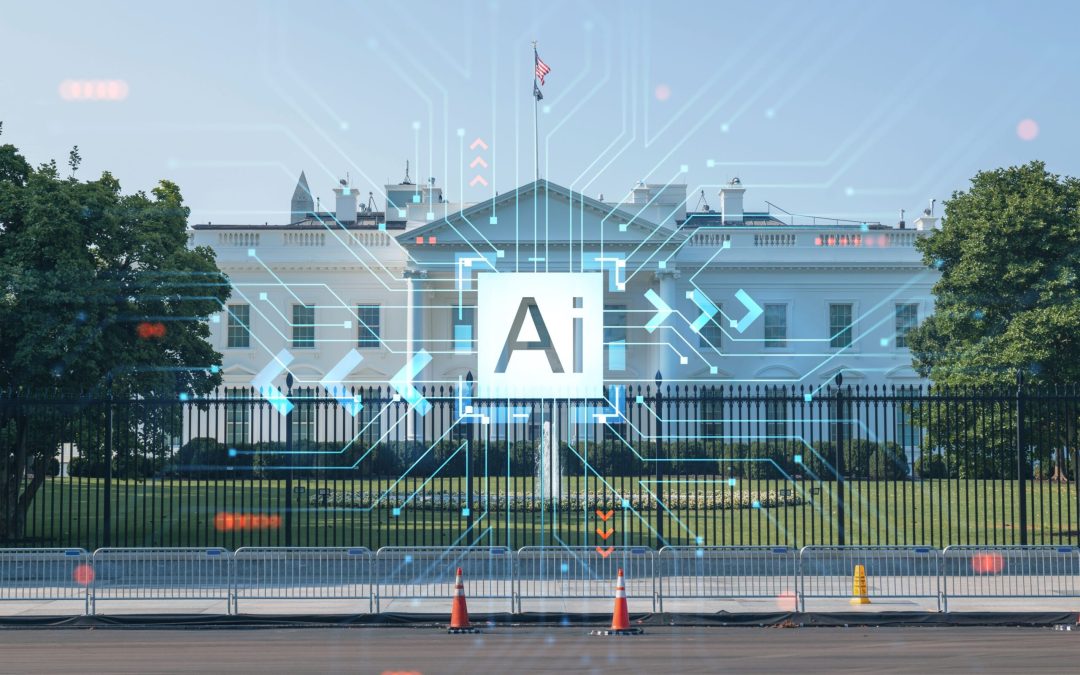
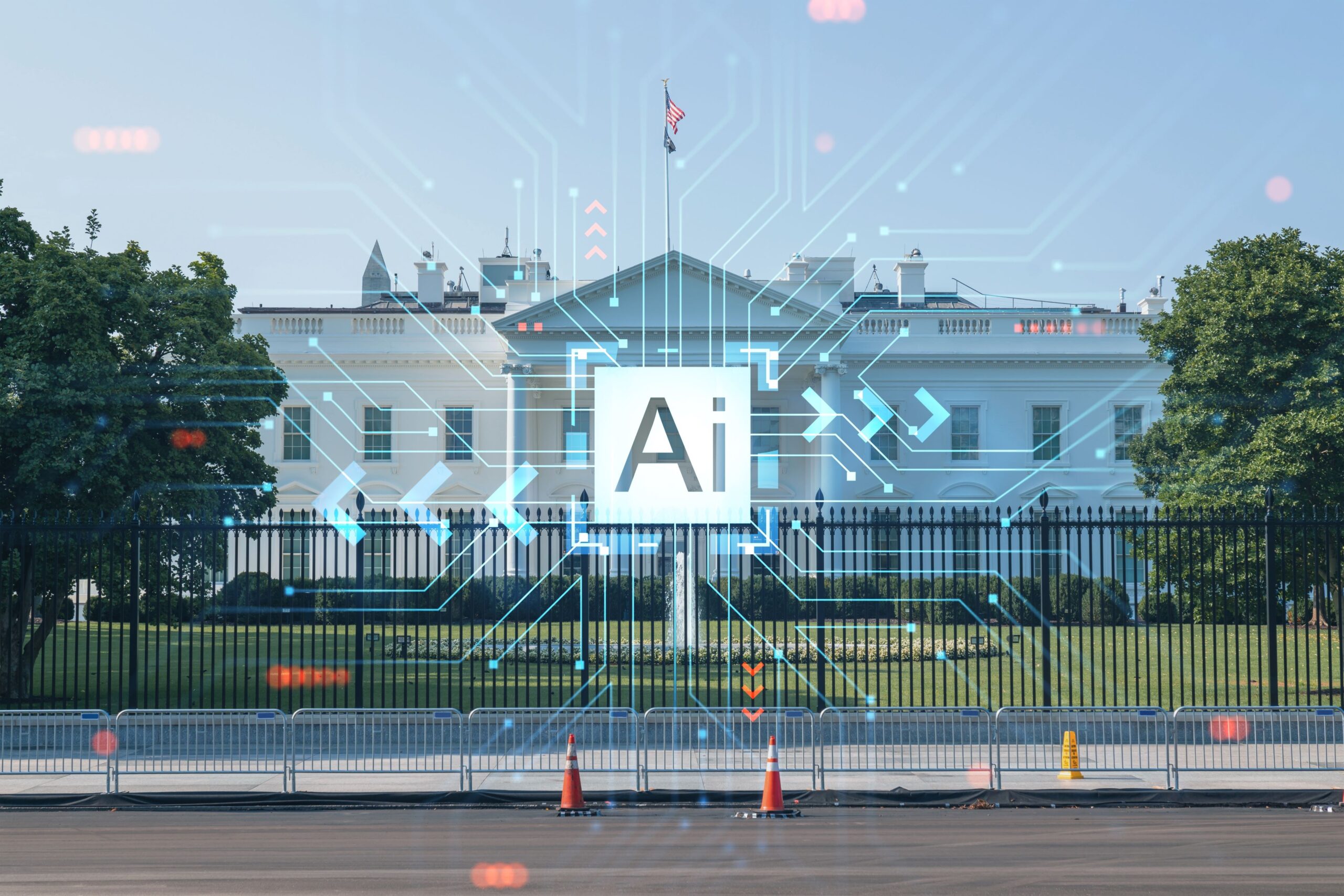
The White House on March 20 released a short national AI legislative framework urging Congress to focus on child protection, anti-fraud tools, innovation, workforce readiness, copyright, free speech, and a federal policy structure that would preempt some state AI laws. The ABA Banking Journal noted that the document is three pages long and highlighted its support for federal preemption of certain state regulations. (ABA Banking Journal)
The framework calls for AI platforms likely to be accessed by minors to adopt protections such as parental controls, age-assurance measures, and safeguards against sexual exploitation and self-harm. It also backs regulatory sandboxes, broader access to federal datasets in AI-ready formats, and a policy approach that does not create a new federal AI rulemaking body, instead relying on existing sector regulators and industry-led standards. (The White House)
A major point of debate is federalism. The White House says Congress should preempt state AI laws that impose “undue burdens” in order to avoid a fragmented patchwork of rules, while still preserving state authority in areas such as child protection, fraud prevention, consumer protection, zoning, and state use of AI. Senator Mark Warner said the framework takes “some steps in the right direction” but “lacks significant substance,” and criticized it for doing too little on AI misinformation and disinformation while again raising the issue of preempting state oversight. (The White House)
From the perspective of AIWS Trust Architecture, the framework is significant because it shows that U.S. AI policy is moving beyond narrow innovation policy toward the broader challenge of building trust infrastructure. Its emphasis on child safety, fraud prevention, free speech, workforce preparation, and standards aligns with the core idea that democratic societies need a coherent architecture of trust for the AI Age. At the same time, because the White House document remains a broad legislative outline rather than a full operational model, it also underscores the need for a more complete framework such as AIWS Trust Architecture and AIWS Information Trust Infrastructure to guide implementation, accountability, and democratic resilience.
by Editor BGF | Mar 16, 2026 | News
On March 15, 2026, the Boston Global Forum (BGF) introduced AIWS Trust Architecture for the AI Age as a pioneering framework for democratic AI governance.
The initiative addresses one of the defining challenges of the era: how to ensure that artificial intelligence is not only powerful, but also trustworthy, accountable, and aligned with human dignity and democratic legitimacy.
What distinguishes AIWS Trust Architecture is that it goes beyond ethical principles or general recommendations. It brings together a full governance structure composed of AIWS Trust Standards, AIWS Trust Infrastructure, AIWS Trust Rating / Trust Index, and the AIWS Trusted Order. In this framework, trust is treated not as a slogan, but as something that can be defined, operationalized, measured, audited, and scaled.
BGF emphasized that the architecture is pioneering because it integrates dimensions often treated separately in current AI debates. These include standards for trustworthy AI, operational trust infrastructure, rating and index mechanisms, trusted civic information and deepfake defense, emergency trust response, public accountability, and trust in historical memory, education, and knowledge.
According to BGF, the defining claim of AIWS Trust Architecture is not that it replaces leading frameworks such as the EU AI Act, NIST AI RMF, ISO/IEC 42001, or the UNESCO Recommendation. Rather, it brings together, in one integrated architecture, functions that those leading frameworks address only partially or separately.
With this initiative, BGF positions AIWS Trust Architecture as one of the pioneering efforts to help shape the trust architecture of the AI Age.
Please download the AIWS Trust Architecture White Paper here
by Editor BGF | Mar 16, 2026 | News
As artificial intelligence rapidly transforms the information environment, societies face a new and urgent challenge: how to preserve trust in public information, civic discourse, and democratic institutions in an age of deepfakes, synthetic media, and large-scale manipulation.
AIWS Information Trust Standards are proposed by the Boston Global Forum as a pioneering framework to help address this challenge. The standards are designed to establish practical principles and mechanisms for trusted civic information in the AI Age, including:
- provenance by default
- synthetic media labeling
- deepfake defense
- trusted public communications
- civic platform accountability
- redress and restoration mechanisms
- public epistemic resilience
The core idea is simple but profound: a society cannot sustain trust in institutions if it cannot sustain trust in information.
AIWS Information Trust Standards are part of the broader AIWS Trust Architecture, which seeks to make trust in the AI Age not merely an aspiration, but something that can be defined, operationalized, measured, defended, and strengthened. In this sense, the standards are intended not only to respond to misinformation and deepfakes, but also to help protect the epistemic commons on which democracy, education, and social stability depend.
These ideas are also expected to be highlighted in Panel 2 of the Boston Global Forum conference, America at 250: A Beacon for the AI Age, to be held at Harvard Loeb House on May 1, 2026.
As BGF advances The Beacon Process, AIWS Information Trust Standards are expected to become one of the key pilot domains for democratic AI governance and trusted international cooperation.
Please download the AIWS Trust Architecture White Paper here