The Lumina Declaration on Human Dignity – For Humanity in the AI Age
Introduction:
The Lumina Declaration on Human Dignity – For Humanity in the AI Age is a historic declaration issued by Nguyen Anh Tuan, Boston Global Forum – AIWS Lumina, welcoming and responding to Pope Leo XIV’s first encyclical, Magnifica Humanitas.
The Declaration calls for urgent action to build trustworthy, humane, transparent, and accountable AI systems grounded in human dignity, wisdom, trust, and civilization. It advances the implementation of AIWS Trust Infrastructure, AIWS Information Trust Infrastructure, AIWS Lumina, and the AIWS Trust Order as practical pathways for humanity in the Age of Artificial Intelligence.
On May 19, 2026, the Boston Global Forum officially published the White Paper “Hồn Trà for AI Wisdom: A Noble Cultural Practice of AIWS Lumina.”
Created by Nguyen Anh Tuan, Co-Founder, Co-Chair, and CEO of the Boston Global Forum and Chief Architect of AIWS, Hồn Trà is introduced as a noble cultural practice of AIWS Lumina, guiding humanity toward stillness, love, creativity, nobility, and AI Wisdom in the AI Age.
Inspired by the civic spirit of the Boston Tea Party, enriched by the ancient essence of Vietnamese Cao Trà, and honoring the noble tea traditions of humanity, Hồn Trà invites each person to pause, reflect, awaken dignity, and co-create a more humane, beautiful, and loving civilization.
VNPT to Pioneer AIWS Trust Infrastructure for Vietnam and ASEAN
BGF Roundtable at Harvard Business School Opens a Strategic Path for Trusted AI in the AI Age
Chao Center, Harvard Business School · Boston
May 13, 2026
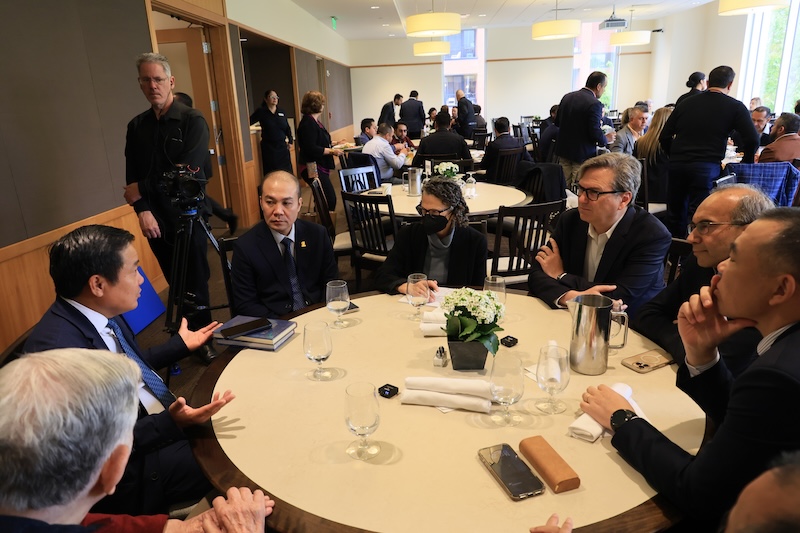
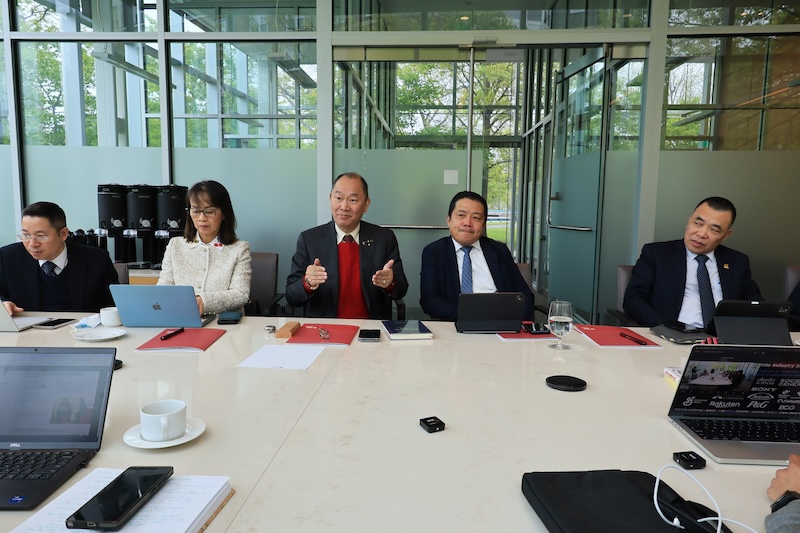
On May 13, 2026, at the Chao Center of Harvard Business School, the Boston Global Forum convened the BGF Roundtable on VNPT & AIWS Trust Infrastructure, bringing together leaders of VNPT Group, Boston Global Forum, AI World Society, and distinguished professors from Harvard: Jason Furman, Cynthia Dwork, and Tarun Khanna. The roundtable was held as a working lunch session from 12:00 PM to 1:00 PM, with opening remarks by Nguyen Anh Tuan and a keynote response from VNPT Chief Executive Officer Huynh Quang Liem.
The event marked a meaningful moment in the growing partnership between VNPT, Vietnam’s leading telecommunications and digital infrastructure corporation, and Boston Global Forum–AIWS, the originator of the AIWS Trust Infrastructure initiative. It also reflected a deeper ambition: to position VNPT as a pioneering force in building trusted AI infrastructure for Vietnam, ASEAN, and the broader AI Age.
Opening Remarks — A New Strategic Path for VNPT
In his opening remarks, Nguyen Anh Tuan, Co-Founder, Co-Chair and CEO of the Boston Global Forum and Founder of AIWS, described the roundtable as more than a discussion. He called it an opportunity “to open a new strategic path for VNPT in the AI Age,” connecting VNPT with Boston Global Forum, AIWS, Harvard Business School, Harvard University, MIT, and leading minds in Boston — “the intellectual capital of the world.”
For Nguyen Anh Tuan, the gathering carried deep personal meaning. He recalled his 21 years of service in VNPT and Vietnam’s Posts and Telecommunications sector, where he was entrusted and encouraged by Minister Do Trung Ta, VNPT’s first Chairman, to develop his abilities in building VietNet and VietNamNet. He also honored the enduring tradition of Vietnam’s Posts and Telecommunications sector: Loyalty – Courage – Dedication – Creativity – Nghĩa Tình.
He emphasized that AIWS Trust Infrastructure is a core initiative of Boston Global Forum and AIWS to build the foundation of trust for the Age of Artificial Intelligence. In the AI Age, he said, technology is advancing at unprecedented speed, but society cannot develop sustainably without trust. AI requires computing power, data, and digital infrastructure; above all, it requires a trust architecture grounded in ethics, safety, transparency, accountability, privacy, security, fairness, and human dignity.
VNPT, he argued, is uniquely positioned to become a pioneering partner in this endeavor. VNPT brings four assets to this mission: national telecommunications and digital infrastructure; technological and cybersecurity capability; deep experience in digital government, smart cities, digital health, and education; and a historic tradition of serving Vietnam through major technological transformations. With these foundations, VNPT has both the capacity and the mission to lead Vietnam into a new era of trusted AI.
Keynote Response — VNPT’s Vision for Trust Infrastructure
In his remarks, Huynh Quang Liem, Chief Executive Officer of VNPT Group, affirmed that building Trust Infrastructure for the AI Age is not merely a priority for one nation or one enterprise, but “a shared mission for humanity.” AI, he noted, opens unprecedented opportunities for economic development, social governance, education, healthcare, security, and creativity, while also presenting profound challenges involving trust, safety, transparency, accountability, and human dignity.
Mr. Liem highlighted VNPT’s historic role in Vietnam’s digital transformation, from pioneering the application of TCP/IP technology to build the VietNet+ Information Highway in 1995 — helping open the door to the Internet for Vietnam — to developing nationwide telecommunications and digital infrastructure. He emphasized that VNPT’s pioneering spirit continues to be guided by the values of Loyalty, Courage, Dedication, Creativity, and Nghĩa Tình, with Nghĩa Tình understood as a uniquely Vietnamese value expressing gratitude, loyalty, compassion, and enduring human bonds.
Today, VNPT operates a comprehensive digital ecosystem, including nationwide telecommunications and Internet infrastructure, advanced data centers, digital technology capabilities, service platforms, VinaPhone’s vast mobile user community, and tens of millions of households using fiber broadband and digital television services. VNPT also has extensive experience deploying large-scale systems for government, business, and society, including digital government, smart cities, national data platforms, public digital services, the National Data Center, national databases, and the National Public Service Portal.
VNPT’s Three-Layer Trust Infrastructure Model
At the technological level, Mr. Liem outlined VNPT’s three-layer model for building Trust Infrastructure:
Physical Infrastructure
Vietnam’s largest network of Tier III and Tier IV certified data centers, described as “digital fortresses” that help safeguard national data sovereignty and AI sovereignty.
Computing Infrastructure
Investments in GPU Cloud and large language models for the Vietnamese language.
Governance Infrastructure
Explainable AI systems that enable humans to verify, supervise, and trust AI decisions.
A Practical Roadmap for Collaboration
Both VNPT and BGF-AIWS converged on a practical roadmap for collaboration. The proposed initiatives include building an AIWS Trust Dashboard to monitor and visualize trust indicators; co-developing AIWS Trust Rating to assess the trustworthiness of AI systems, applications, data platforms, and deployment environments; and implementing AIWS Trust Index to measure trust across critical sectors such as digital government, telecommunications, finance, healthcare, education, media, and smart cities.
These first three initiatives are expected to be piloted within VNPT’s ecosystem, providing a real-world environment to validate and refine methodologies and operational models. Based on the lessons learned, the models can then be standardized and expanded to the national level. Additional initiatives include establishing an AI Trust Lab in Vietnam, developing AI for Public Trust Solutions such as digital content authentication, deepfake detection, personal data protection, cybersecurity, data provenance, and trusted communications, and creating training programs in Trustworthy AI for engineers, managers, businesses, and public officials.
The Harvard Intellectual Foundation
The roundtable was further strengthened by the presence of three distinguished professors: Professor Cynthia Dwork, Gordon McKay Professor of Computer Science at Harvard University and architect of differential privacy; Professor Jason Furman, Aetna Professor of the Practice of Economic Policy at Harvard Kennedy School and former Chair of the Council of Economic Advisers; and Professor Tarun Khanna, Jorge Paulo Lemann Professor at Harvard Business School and Director of the Lakshmi Mittal and Family South Asia Institute.
Their perspectives spanned the mathematics of privacy (Dwork), the economics of AI productivity and policy (Furman), and innovation in emerging markets (Khanna), enriching the conversation on what trusted AI requires. Their presence underscored the intellectual depth of the conversation, linking AI trust with mathematics, economics, management, governance, and global development.
Presentation of Honors
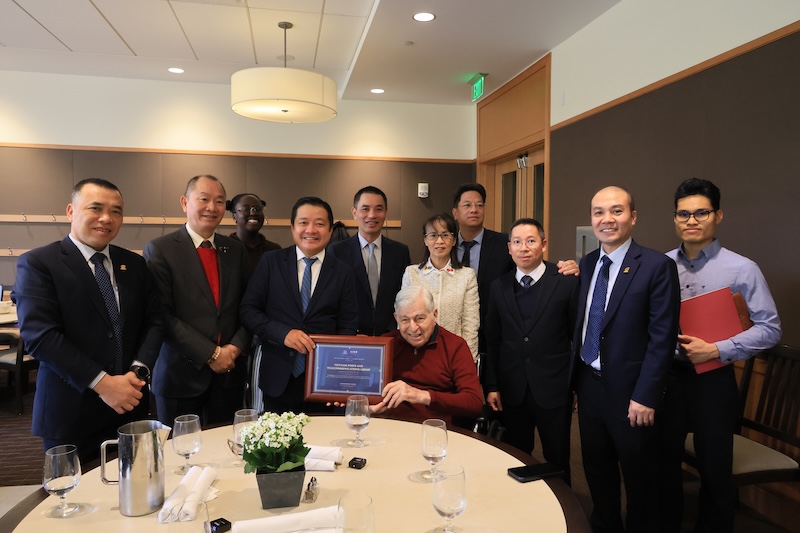
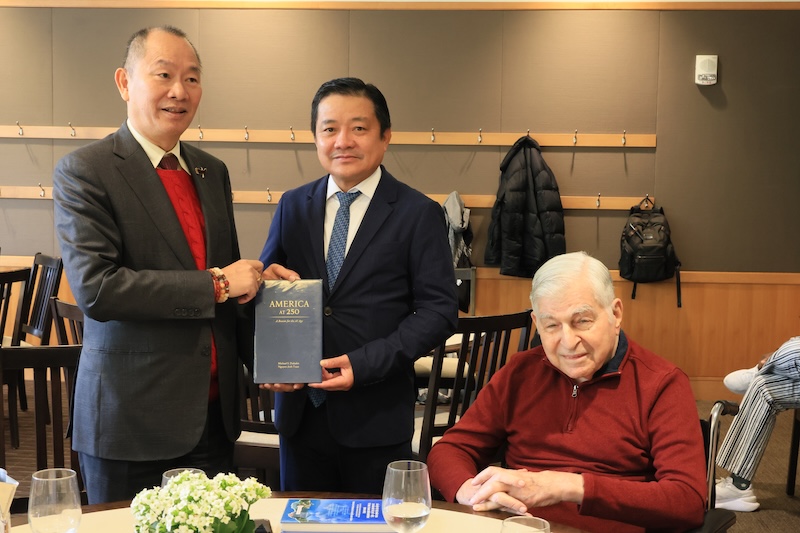
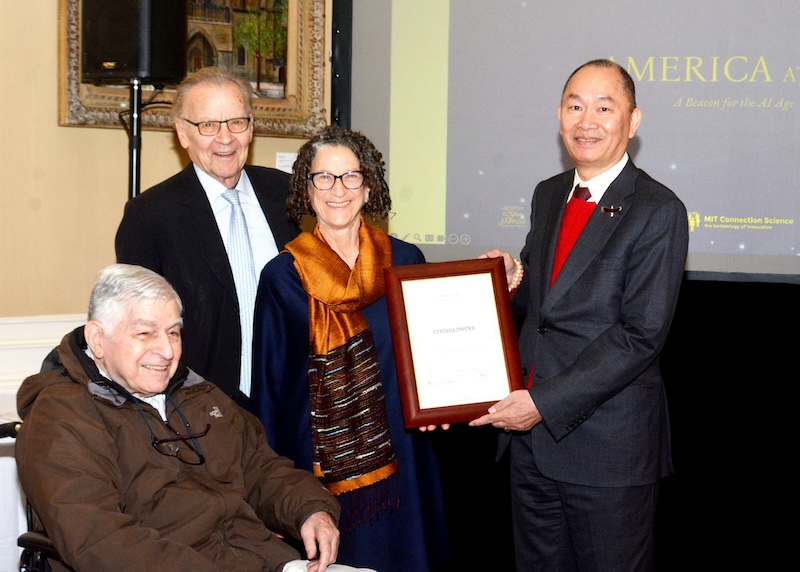
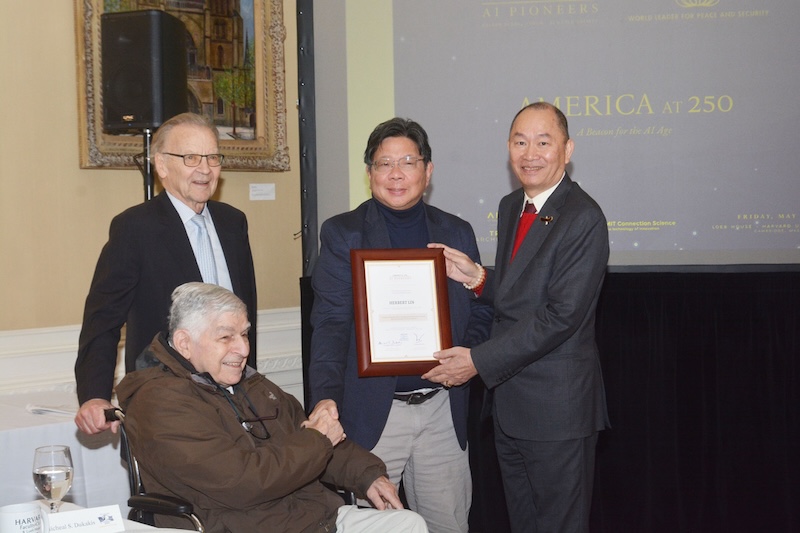
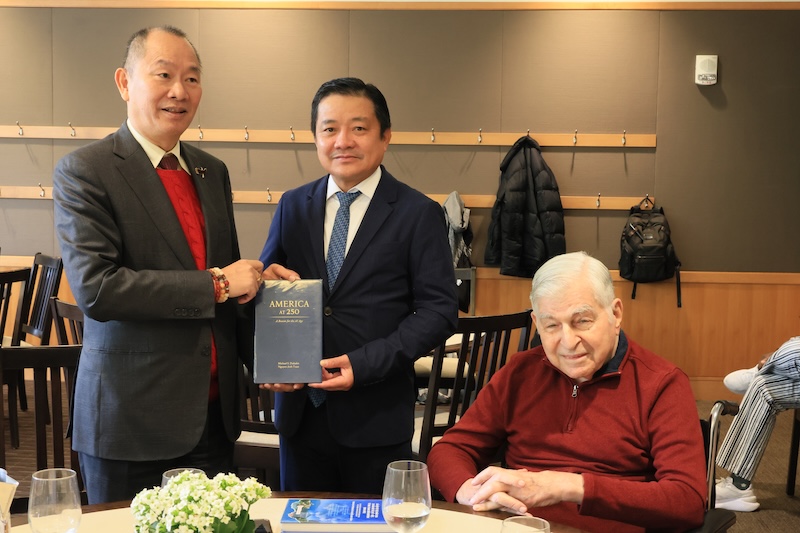
The program also included a Presentation of Honors by Governor Michael Dukakis, Co-Founder and Chair of the Boston Global Forum and three-term Governor of Massachusetts. A Plaque of Honor was presented to the Chief Executive Officer of VNPT Group in recognition of VNPT’s innovation, openness, and integration of Vietnam with the world. The book America at 250: A Beacon for the AI Age, co-authored by Governor Dukakis and Nguyen Anh Tuan, was also presented to Mr. Liem.
A Historic Continuation — From the Internet Age to the AI Age
For Nguyen Anh Tuan, the historical symbolism was clear. VNPT and Vietnam’s Posts and Telecommunications sector had heroically pioneered Vietnam’s renewal, opened the path for the Internet in Vietnam, and helped lead the country into the Digital Age. In the AI Age, he said, VNPT now has the opportunity to continue that proud tradition — to lead in building a globally respected brand of technology, innovation, and trust for Vietnam, from Boston to ASEAN and beyond.
For VNPT, the ambition is equally clear. As Mr. Liem stated, if in the Internet Age VNPT helped connect Vietnam to the world, then in the AI Age VNPT’s ambition is not merely to keep pace, but to co-create a future in which AI is more powerful, more trustworthy, more transparent, more humane, and better able to serve humanity.
The roundtable therefore opened a new chapter: VNPT as a pioneering national champion for AIWS Trust Infrastructure, working with Boston Global Forum and AIWS to build practical mechanisms of trust — measurable, verifiable, human-centered, and scalable — for Vietnam, ASEAN, and the AI Age.
T H E A I W S T R U S T I N F R A S T R U C T U R E P R I N C I P L E
As the AIWS Trust Infrastructure principle, set forth by Boston Global Forum and AIWS, declares:
“Trust is not a feature to be added to artificial intelligence.
It is the foundation on which the AI Age must be built — mathematically, institutionally, and across nations.”
Boston Global Forum • AI World Society
AIWS Trust Infrastructure Initiative
Co-Chairs: Governor Michael S. Dukakis · Nguyen Anh Tuan
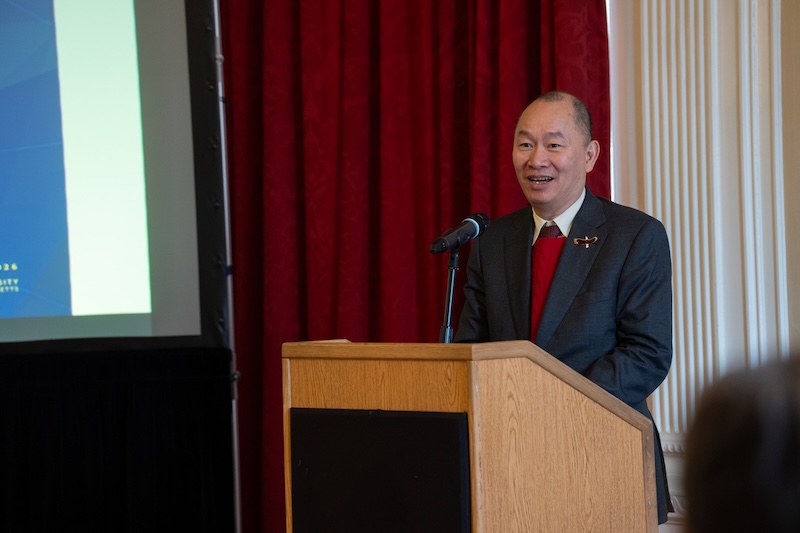
At Harvard Business School on May 13, 2026, Huynh Quang Liem, Chief Executive Officer of VNPT Group, delivered remarks at the BGF Roundtable on VNPT and AIWS Trust Infrastructure, affirming VNPT’s commitment to building Trust Infrastructure for the AI Age in partnership with the Boston Global Forum and AI World Society.
In his remarks, Mr. Liem highlighted VNPT’s historic role in Vietnam’s digital transformation, from pioneering the VietNet+ Information Highway in 1995 to developing nationwide telecommunications, Internet, data center, and digital service infrastructure. He emphasized that VNPT’s core values — Loyalty, Courage, Dedication, Creativity, and Nghĩa Tình — continue to guide the corporation as it enters the AI Age.
Mr. Liem outlined VNPT’s three-layer model for Trust Infrastructure: physical infrastructure, including advanced Tier III and Tier IV data centers; computing infrastructure, including GPU Cloud and Vietnamese large language models; and governance infrastructure, including Explainable AI to ensure that AI systems can be verified, supervised, and trusted by humans.
He also presented concrete areas of collaboration with BGF-AIWS, including the AIWS Trust Dashboard, AIWS Trust Rating, AIWS Trust Index, an AI Trust Lab in Vietnam, AI for Public Trust solutions, and training programs in Trustworthy AI. These initiatives are expected to begin within VNPT’s ecosystem and later expand toward national and regional implementation.
The remarks reflect VNPT’s ambition in the AI Age: not merely to keep pace with global technological change, but to help co-create a future in which AI is more powerful, more trustworthy, more transparent, more humane, and better able to serve humanity.
At Harvard Business School on May 13, 2026, Nguyen Anh Tuan, Co-Founder, Co-Chair and CEO of the Boston Global Forum and Founder of AIWS, delivered opening remarks at the BGF Roundtable on VNPT and AIWS Trust Infrastructure.
In his remarks, Nguyen Anh Tuan reflected on the historic role of VNPT and Vietnam’s Posts and Telecommunications sector in pioneering Vietnam’s Internet and digital transformation, while outlining a new strategic path for VNPT in the AI Age. He emphasized that artificial intelligence cannot develop sustainably without trust, and that the AI Age requires a new architecture grounded in ethics, safety, transparency, accountability, privacy, security, fairness, and human dignity.
The remarks proposed concrete areas of collaboration between VNPT and BGF-AIWS, including the AIWS Trust Dashboard, AIWS Trust Rating, AIWS Trust Index, an AI Trust Lab in Vietnam, AI for Public Trust solutions, and training programs in Trustworthy AI. Nguyen Anh Tuan expressed his belief that VNPT can become a pioneering force in building AIWS Trust Infrastructure for Vietnam, ASEAN, and the AI Age.
The roundtable brought together VNPT leaders with Boston Global Forum, AIWS, Harvard Business School, and distinguished minds including Governor Michael Dukakis, Professor Jason Furman, Professor Cynthia Dwork, and Professor Tarun Khanna — opening a meaningful new chapter of cooperation from Boston, the intellectual capital of the world, to Vietnam and the region.
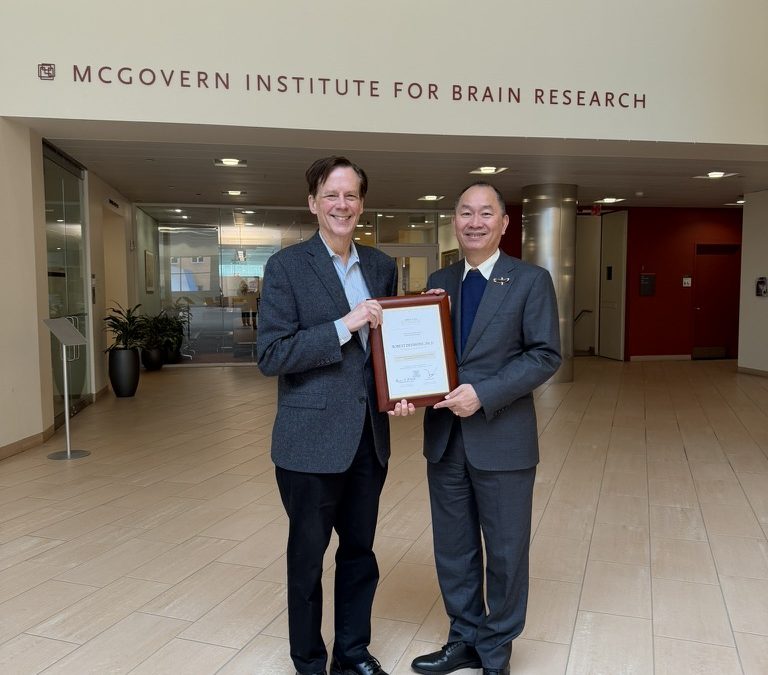
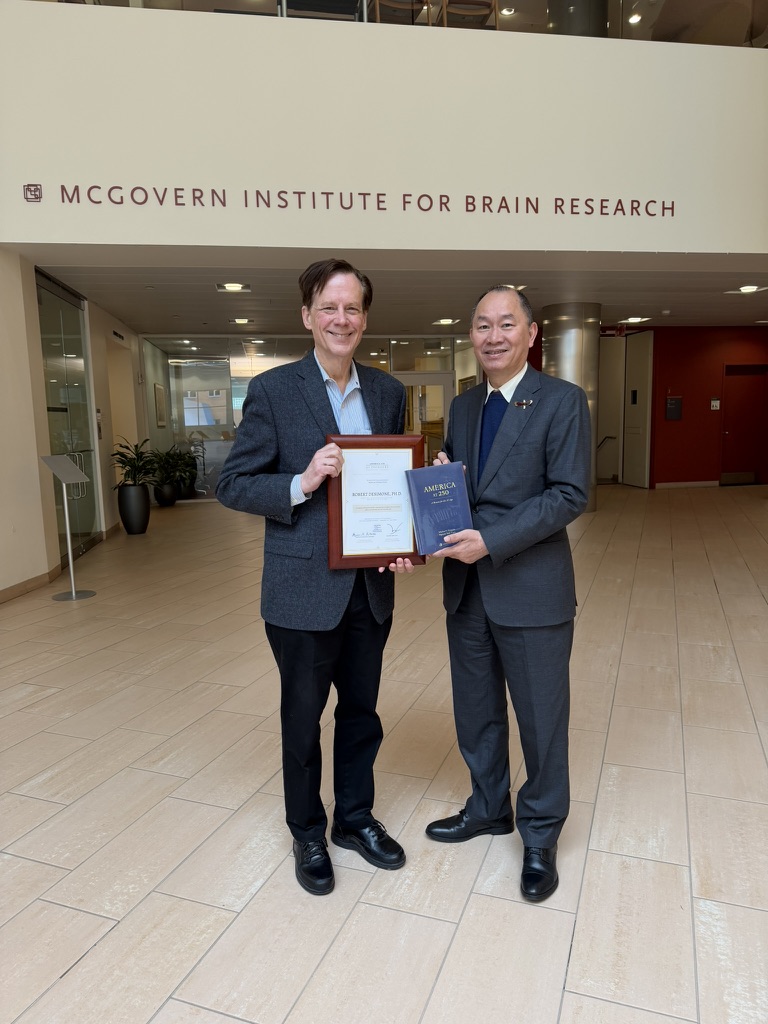
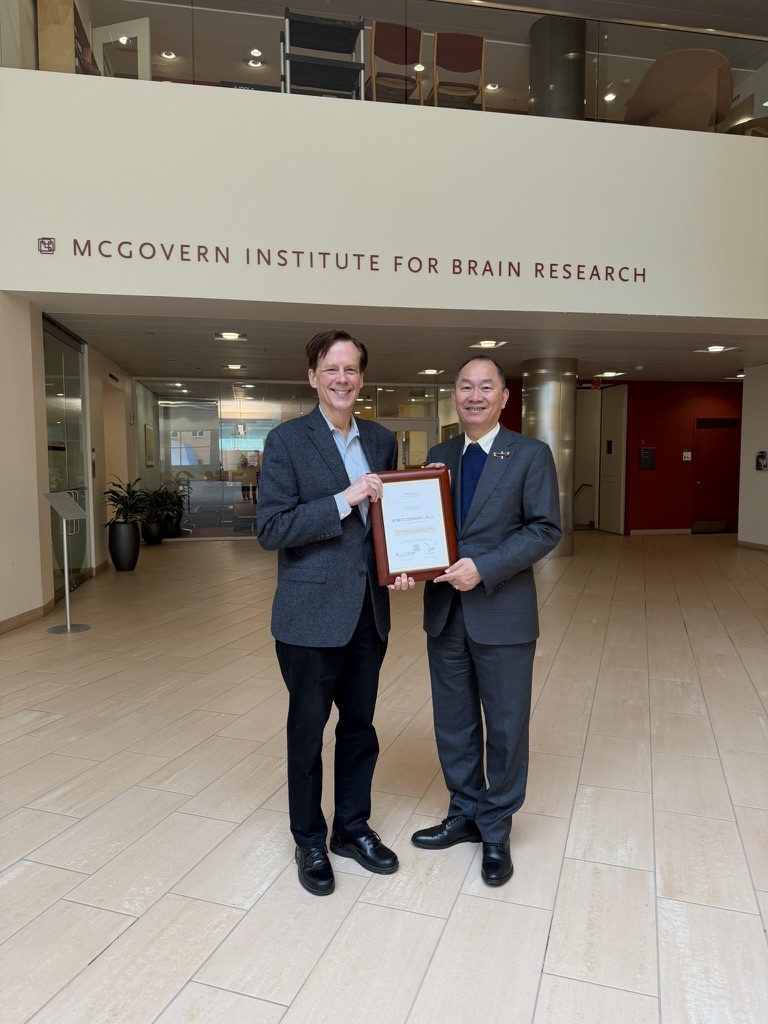
On the afternoon of May 15, 2026, Nguyen Anh Tuan, Co-Founder, Co-Chair and CEO of the Boston Global Forum and AIWS, visited Professor Robert Desimone at his office at the McGovern Institute for Brain Research at MIT to present the America 250: AI Pioneers Award Plaque of Honor. The recognition honored Professor Desimone’s pioneering contributions to neuroscience, the science of attention, and the foundations of intelligence in the AI Age.
Professor Desimone, Director of the McGovern Institute for Brain Research and Doris and Don Berkey Professor of Neuroscience at MIT, is recognized as one of America’s leading neuroscientists. His four decades of work on attention, perception, and how the brain selects what matters have helped illuminate principles that are deeply relevant to modern artificial intelligence. His Special Profile for the America 250: AI Pioneers Award highlights his foundational role in connecting brain science with the AI Age.
In his remarks of honor, Nguyen Anh Tuan emphasized that the AI Age requires not only computing power, but also wisdom, attention, trust, and human responsibility. He noted that Professor Desimone’s work reminds us that intelligence begins not only with computation, but with the capacity to focus, select, understand, and act responsibly.
During their meeting, Professor Desimone and Nguyen Anh Tuan also discussed plans to organize a series of high-level roundtables on urgent and important issues in AI, with the participation of distinguished America 250: AI Pioneers. The McGovern Institute for Brain Research at MIT is expected to host these conversations, creating a special forum where neuroscience, artificial intelligence, ethics, governance, and human-centered innovation can meet.
These roundtables will continue the spirit of America at 250: A Beacon for the AI Age — bringing together pioneering minds to help shape an AI Age that is not only intelligent and powerful, but trustworthy, humane, and guided by human dignity.
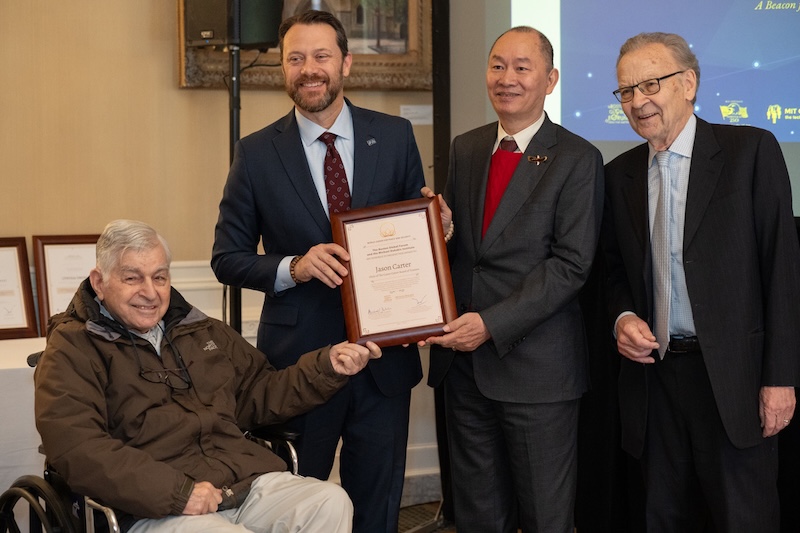
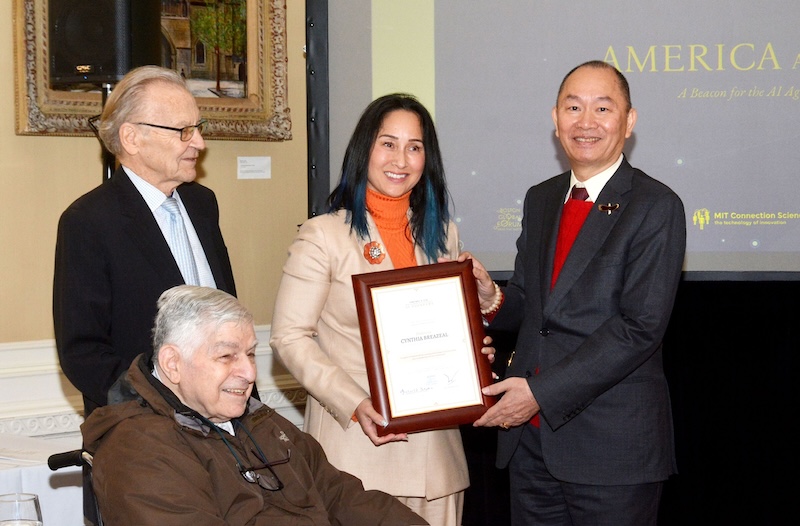
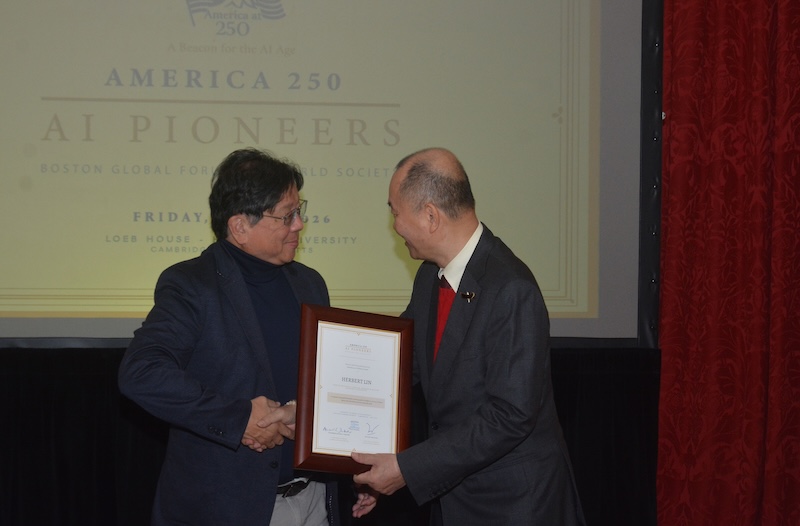
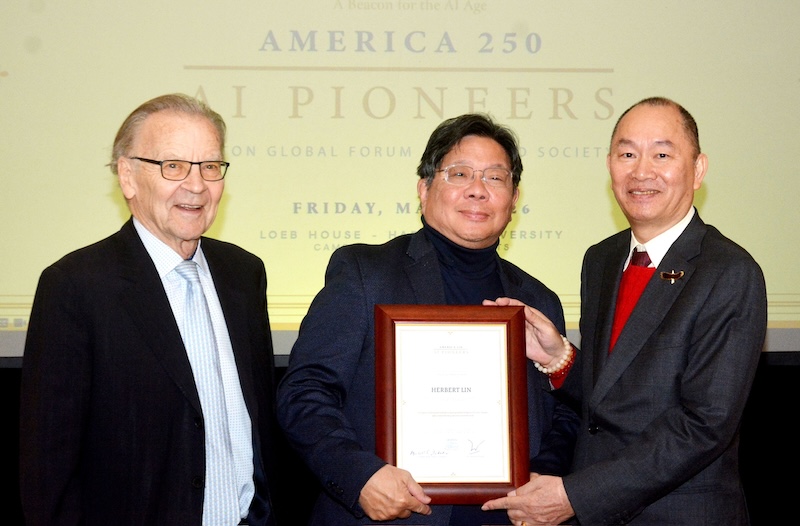
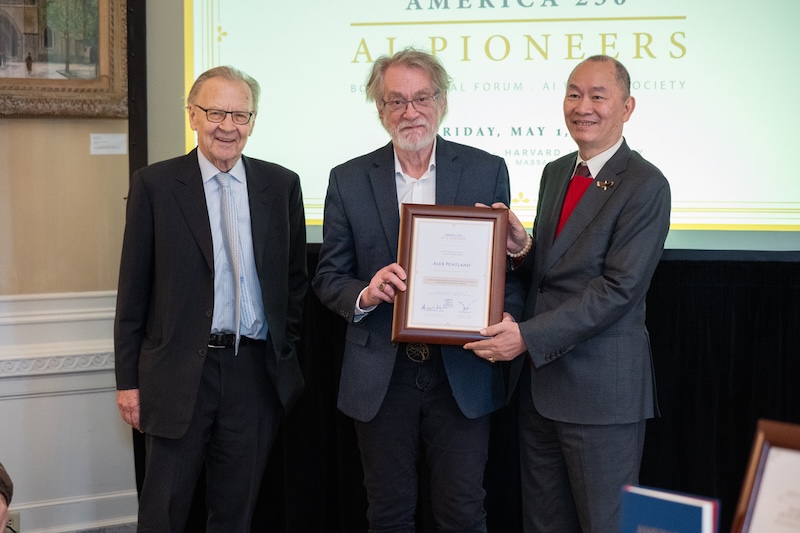
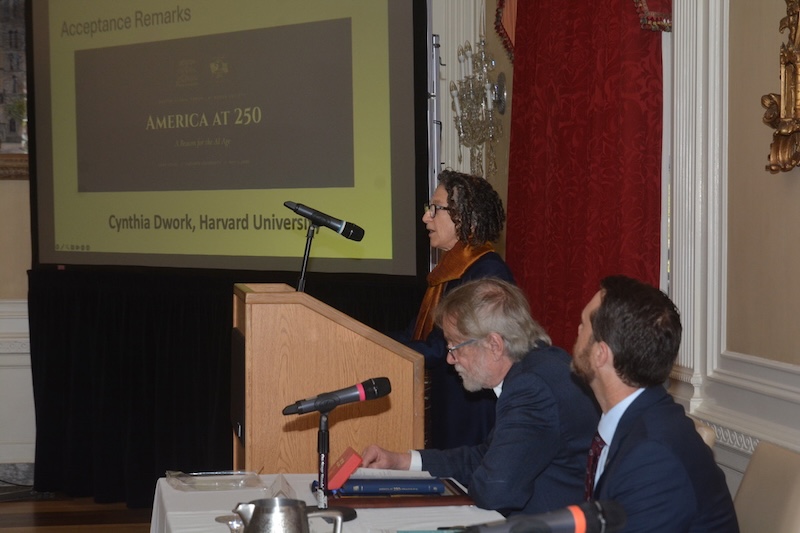
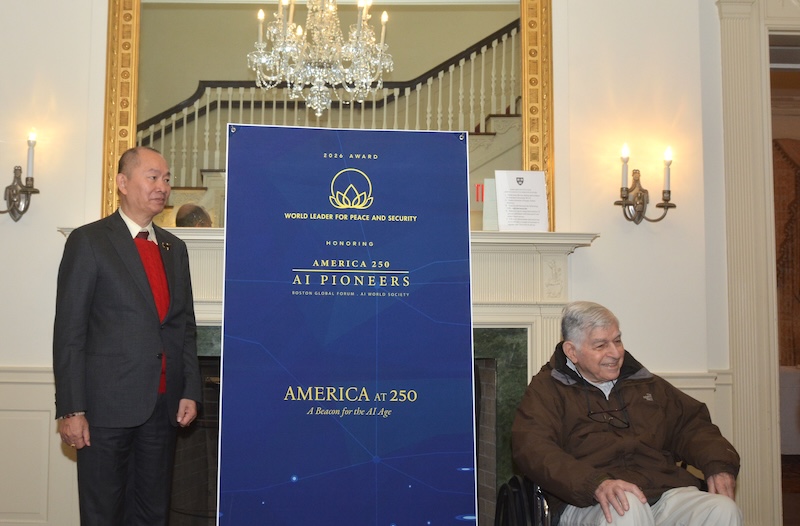
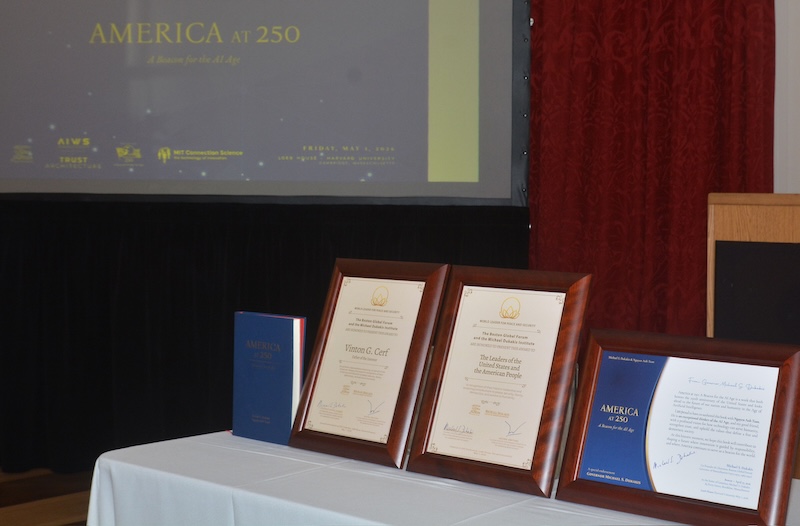
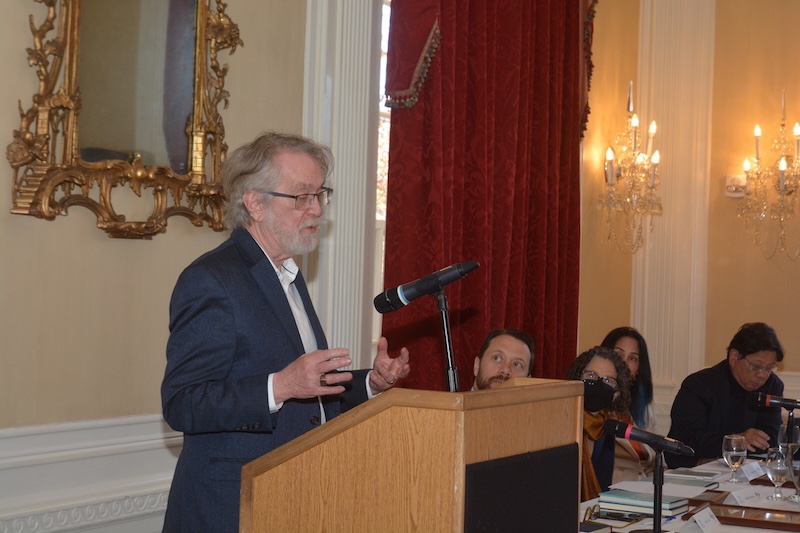
The Boston Global Forum presents a special photo series capturing historic moments from the conference “America at 250: A Beacon for the AI Age,” held on May 1, 2026.
This landmark event brought together distinguished leaders, scholars, innovators, and pioneers to reflect on America’s 250-year journey and its future leadership in the AI Age. Through these images, BGF highlights memorable moments of dialogue, recognition, friendship, and shared commitment to building AIWS Trust Infrastructure, AIWS Information Trust Infrastructure, and a future in which artificial intelligence serves human dignity, freedom, and the common good.
The photo series also records the meaningful reception of the book America at 250: A Beacon for the AI Age, co-authored by Governor Michael S. Dukakis and Nguyen Anh Tuan. The book has been presented to and warmly welcomed by distinguished leaders and partners from Vietnam, the United States, academia, business, and global innovation communities.
Among the special moments are images of the book being received by Mr. Tran Duc Thang, the highest-ranking leader of Hanoi, Vietnam’s capital city, reflecting the growing connection between the vision of America at 250 and Vietnam’s aspirations in the AI Age.
The series also features moments at Harvard Business School, where Mr. Huynh Quang Liem, Chief Executive Officer of VNPT Group, met with Harvard Business School leaders, including Senior Associate Dean V.G. Narayanan. These images symbolize the expanding bridge between Vietnam’s leading digital infrastructure corporation, the Boston Global Forum, Harvard, MIT, and the global knowledge ecosystem.
Together, these photographs tell a story beyond one conference. They reflect a movement — from ideas to implementation, from democratic leadership to Trust Infrastructure, and from America at 250 to a shared global mission for a wiser, more trusted AI Age.
Japan’s New Indo-Pacific Vision and the Call for AIWS Trust Infrastructure
Japan’s updated vision for a Free and Open Indo-Pacific (FOIP) shows that the legacy of Prime Minister Shinzo Abe is entering a new phase: the AI and data age.
In her foreign policy speech in Hanoi on May 2, 2026, Prime Minister Sanae Takaichi emphasized Japan’s updated FOIP, including the need to build economic infrastructure for the age of AI and data, strengthen supply chain resilience, co-create growth opportunities through public-private collaboration, and enhance security cooperation for regional peace and stability.
This is a natural evolution of Shinzo Abe’s Indo-Pacific vision. FOIP is no longer only about maritime freedom, the rule of law, and regional connectivity. In the AI Age, freedom and openness must also be protected in data, digital infrastructure, AI systems, supply chains, and the civic information space.
Recent Japanese diplomacy reinforces this direction. Japan and Australia have emphasized the need for a safe, secure, and trustworthy AI and digital ecosystem in the Indo-Pacific. Japan and India have advanced strategic dialogue on AI cooperation, while the EU–Japan Digital Partnership continues to deepen cooperation on trusted digital infrastructure, secure connectivity, and interoperable standards.
For the Shinzo Abe Initiative, this moment is highly significant. It shows that Abe’s FOIP can become a strategic foundation for AIWS Trust Infrastructure, AIWS Trusted Order, and Japan Lumina — linking geopolitical resilience with human dignity, cultural wisdom, trust, and responsible innovation.
In the AI Age, the Indo-Pacific must be free and open not only in seas and trade routes, but also in AI, data, information, infrastructure, and values. Japan is well positioned to help lead this transformation — carrying forward Shinzo Abe’s vision into a new era of trusted and human-centered AI.
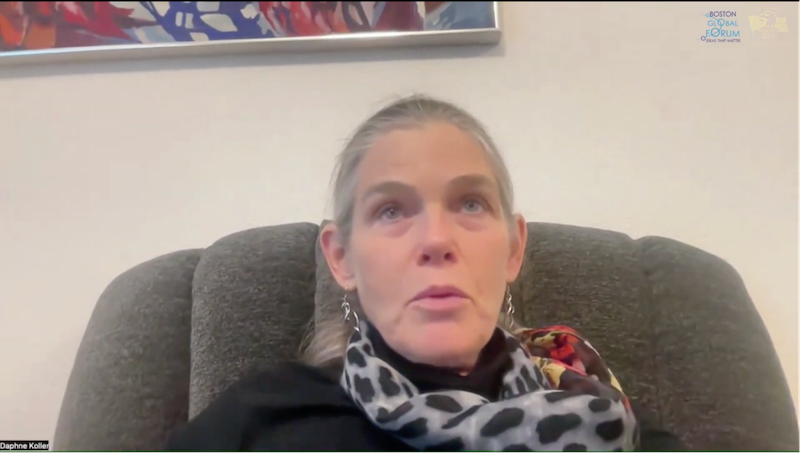
Daphne Koller, Founder and CEO of insitro and one of the 50 honorees of the America 250: AI Pioneers, delivered a compelling keynote at the prestigious conference “America at 250: A Beacon for the AI Age” held at Harvard University’s historic Loeb House.
In her address, Koller called for a fundamental shift in AI development — moving beyond traditional vector-based models toward richly structured models capable of representing complex, real-world relationships.
“Today’s AI systems are very good at simple input-output tasks,” Koller noted. “But the real world is not a single vector. To truly understand a scene, we need models that can reason about multiple interconnected elements at once — for example, recognizing not just that there is a dog in the image, but also the frisbee, the beach, and the children building a sandcastle.”
Her vision emphasizes the need for AI systems that better mirror the structured nature of human cognition and the physical world. Koller argued that the next leap in artificial intelligence will come from models that can capture rich relationships between variables, both in inputs and outputs.
The conference, organized by the Boston Global Forum and the AI World Society, brought together leading voices in AI to explore America’s role as a global beacon of ethical and responsible innovation in the Age of Artificial Intelligence. As one of the 50 America 250 AI Pioneers, Koller’s participation underscored the importance of foundational scientific thinking in shaping the future of AI.