by Editor | Feb 9, 2020 | News
The Electronic Privacy Information Center (EPIC) filed a petition with the Federal Trade Commission (FTC) today seeking regulations for the use of artificial intelligence (AI) technologies.
EPIC – a public interest group that focuses on data privacy issues – said it decided to file the FTC petition after filing complaints regarding the use of AI in employment screening, as well as the secret scoring of young athletes.
“The injuries caused to consumers by commercial AI use are substantial and frequently unavoidable,” EPIC wrote. “In assessing privacy-related injuries to consumers, the Commission typically focuses on the sensitivity of the personal data at issue, the relationship between the consumer and the business(es) engaged in the challenged practice, and the consumers’ knowledge of and agency over the practice,” the group said.
EPIC also pointed to sentiments of support at the FTC for updated regulations on AI use, including quoting FTC Commissioner Rebecca Kelly Slaughter as saying last month, “it is imperative for the FTC to take all action within its authority right now to protect consumers in this space.”
Additionally, EPIC took note of the Office of Management and Budget’s (OMB) Guidance for Regulation of AI, pointing out that it “applies to all Federal agencies,” while incorporating many aspects of the Organization for Economic Cooperation and Development (OECD) Principles on AI.
“Only by initiating a rulemaking on AI can the Federal Trade Commission preserve the rights of American consumers, defend American values, protect privacy, and promote civil rights,” EPIC wrote.
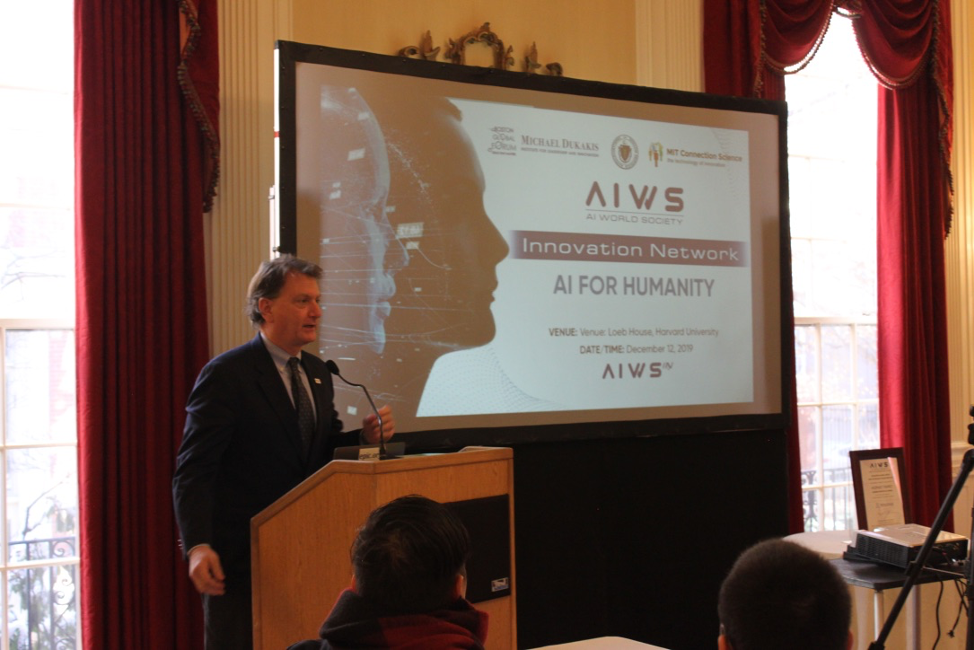
Electronic Privacy Information Center (EPIC) has been led by Marc Rotenberg (President and Executive Director of EPIC). He is also one of mentors and an important contributor to AI World Society Innovation Network (AIWS-IN), which is part of AIWS to identify, publish and promote principles for the virtuous application of AI in different domains including healthcare, education, transportation, national security, and other areas.
The original article can be found here.

by Editor | Feb 9, 2020 | News
One of the biggest challenges operations groups will face over the coming year will be learning how to support AI- and ML-based applications. On one hand, ops groups are in a good position to do this; they’re already heavily invested in testing, monitoring, version control, reproducibility, and automation. On the other hand, they will have to learn a lot about how AI applications work and what’s needed to support them. There’s a lot more to AI Operations than Kubernetes and Docker. The operations community has the right language, and that’s a great start; I do not mean that in a dismissive sense. But on inspection, AI stretches the meanings of those terms in important but unfamiliar directions.
Three things need to be understood about AI.
First, the behavior of an AI application depends on a model, which is built from source code and training data. A model isn’t source code, and it isn’t data; it’s an artifact built from the two. Source code is relatively less important compared to typical applications; the training data is what determines how the model behaves, and the training process is all about tweaking parameters in the application so that it delivers correct results most of the time.
Second, the behavior of AI systems changes over time. Unlike a web application, they aren’t strictly dependent on the source. Models almost certainly react to incoming data; that’s their point. They may be retrained automatically. They almost certainly grow stale over time: users change the way they behave (often, the model is responsible for that change) and grow outdated.
Last, and maybe most important: AI applications are, above all, probabilistic. Given the same inputs, they don’t necessarily return the same results each time. This has important implications for testing. We can do unit testing, integration testing, and acceptance testing—but we have to acknowledge that AI is not a world in which testing whether 2 == 1+1 counts for much. And conversely, if you need software with that kind of accuracy (for example, a billing application), you shouldn’t be using AI. In the last two decades, a tremendous amount of work has been done on testing and building test suites. Now, it looks like that’s just a start. How do we test software whose behavior is fundamentally probabilistic? We will need to learn.
To support and collaborate AI application and operation, Artificial Intelligence World Society Innovation Network (AIWS-IN) created AIWS Young Leaders program including Young Leaders and Experts from Australia, Austria, Belgium, Britain, Canada, Denmark, Estonia, France, Finland, Germany, Greece, India, Italy, Japan, Latvia, Netherlands, New Zealand, Norway, Poland, Portugal, Russia, Spain, Sweden, Switzerland, United States, and Vietnam.
The original article can be found here.

by Editor | Feb 9, 2020 | News
Companies specialising in artificial intelligence (AI) in healthcare are in “rude health” and are set for exponential growth over the next five years, according to a new report.
The report by adviser and broker finnCap outlines the companies that are employing AI to its best advantage and where its application should have a meaningful business benefit.
AI has potential applications across life sciences, including drug discovery, clinical trials and patient care, in addition to potential improvements in speed and efficiency of company operations.
Many trials are still unsuccessful because drugs fail to show efficacy and safety and AI is seen as a way of improving the chances of success by screening for various factors that could affect outcomes.
The global market was worth $2.1bn in 2018, with exponential growth to $36.1bn predicted by 2025, at a combined annual growth rate of 50.2%.
AI presents various new challenges, and the pharmaceutical industry has highlighted many technologies in the past that promised to drive productivity, but nothing has yet worked on a large scale.
Nevertheless, the authors believe that AI is likely to become a greater differentiator in the next 5-10 years and the report presents case studies and real-world examples of the benefits it could provide.
Regarding to AI impact for society and healthcare, the Michael Dukakis Institute for Leadership and Innovation (MDI) established the Artificial Intelligence World Society Innovation Network (AIWS-IN) for helping people achieve well-being and happiness, relieve them of resource constraints and arbitrary/inflexible rules and processes, and solve important issues, such as SDGs.
The original article can be found here
by Editor | Feb 2, 2020 | News
If there is one technology that has become the buzzword of this decade, it would be artificial intelligence (AI).
In the beginning of 2010s, consumer natural-language processing (NLP) allowed us to talk to our phones and control smart home appliances reliably. At the time, a lot of people expected NLP to explode in other domains, but it never really materialized, either because of poor implementations or a focus on other types of development.
However, over the next decade, we can expect to see NLP put to use in complex software to lower the barrier to entry. For example, customer relationship management (CRM) software, which is crucial for any business, is finding higher adoption among salespeople thanks to conversational AI. The application of AI in different software also helps in identifying repetitive tasks and automating them, thereby improving employee productivity.
The organizations that will be most successful using AI over the next decade are the ones implementing single-vendor technology platforms today. If data is scattered in applications using different data models, it’s going to be difficult to work with. But when all data is on a single platform, it’s much easier to feed it into a machine-learning algorithm. The more data that’s available, the more useful the predictions and machine-learning models are going to be.
Regarding to AI development and impact for our society, the Michael Dukakis Institute for Leadership and Innovation (MDI) established the Artificial Intelligence World Society Innovation Network (AIWS-IN) to monitor AI developments and uses by governments, corporations, and non-profit organizations to assess whether they comply with the norms and standards codified in the AIWS Social Contract 2020.
The original article can be found here.

by Editor | Feb 2, 2020 | News
Artificial intelligence (AI) has traditionally been deployed in the cloud, because AI algorithms crunch massive amounts of data and consume massive computing resources. But AI doesn’t only live in the cloud. In many situations, AI-based data crunching and decisions need to be made locally, on devices that are close to the edge of the network.
AI at the edge allows mission-critical and time-sensitive decisions to be made faster, more reliably and with greater security. The rush to push AI to the edge is being fueled by the rapid growth of smart devices at the edge of the network – smartphones, smart watches and sensors placed on machines and infrastructure. Earlier this month, Apple spent $200 million to acquire Xnor.ai, a Seattle-based AI startup focused on low-power machine learning software and hardware. Microsoft offers a comprehensive toolkit called Azure IoT Edge that allows AI workloads to be moved to the edge of the network.
Will AI continue to move to the edge? What are the benefits and drawbacks of AI at the edge versus AI in the cloud? To understand what the future holds for AI at the edge, it is useful to look back at the history of computing and how the pendulum has swung from centralized intelligence to decentralized intelligence across four paradigms of computing.
To support AI technology and application, Artificial Intelligence World Society Innovation Network (AIWS-IN) created AIWS Young Leaders program including Young Leaders and Experts from Australia, Austria, Belgium, Britain, Canada, Denmark, Estonia, France, Finland, Germany, Greece, India, Italy, Japan, Latvia, Netherlands, New Zealand, Norway, Poland, Portugal, Russia, Spain, Sweden, Switzerland, United States, and Vietnam.
The original article can be found here.