by Editor | May 25, 2020 | Uncategorized
Hosted by the Prosperity Collaborative, a newly formed coalition of World Bank, MIT, EY, New America, and the Michael Dukakis Institute
Public finance is not a typical frontline crisis management function. Yet in recent months, revenue management has been filling a critical role in managing the public sector response to the coronavirus pandemic. As governments provide their citizens with immediate economic relief from the pandemic, public finance officials have been taking on greatly expanded responsibilities such as administering payments and other benefits programs.
The Prosperity Collaborative’s inaugural online event shares strategies that can help tax bureaus manage the crisis and serve their constituents. The first online panel will focus on how tax administrations can remain resilient by transforming their missions and operationalizing relief programs. The second online panel will explore how innovative technology can help leaders in public finance build stronger, more effective institutions.
This event is hosted by the Prosperity Collaborative, a coalition of the World Bank, MIT, EY, the Digital Impact and Governance Initiative at New America, and the Boston Global Forum Michael Dukakis Institute for Leadership and Innovation. They bring together a diverse set of leading partners from the public sector, private sector, academia, and civil society to develop new open source technologies and digital public goods that will transform tax systems and enhance local capacity with an initial focus on emerging economies.
Time: May 27th at 8:45am ET.
Speakers:
Marcello Estevão, Global Director, Macroeconomics, Trade & Investment, World Bank
Chiara Bronchi, Global Practice Manager, Fiscal Policy & Sustainable Growth, World Bank
Kate Barton, Global Vice Chair – Tax, EY
Sandy Pentland, Professor, Connection Science, Massachusetts Institute of Technology
Tomicah Tillemann, Director, Digital Impact and Governance Initiative, New America
Jacky Wright, Chief Digital Officer, Microsoft
Jeff Saviano, Global Tax Innovation Leader, EY
Raul Felix Junquera-Varela, Global Lead on Domestic Resource Mobilization, World Bank
Jeffrey Cooper, Executive Industry Consultant, SAS Institute
by Editor | May 25, 2020 | News
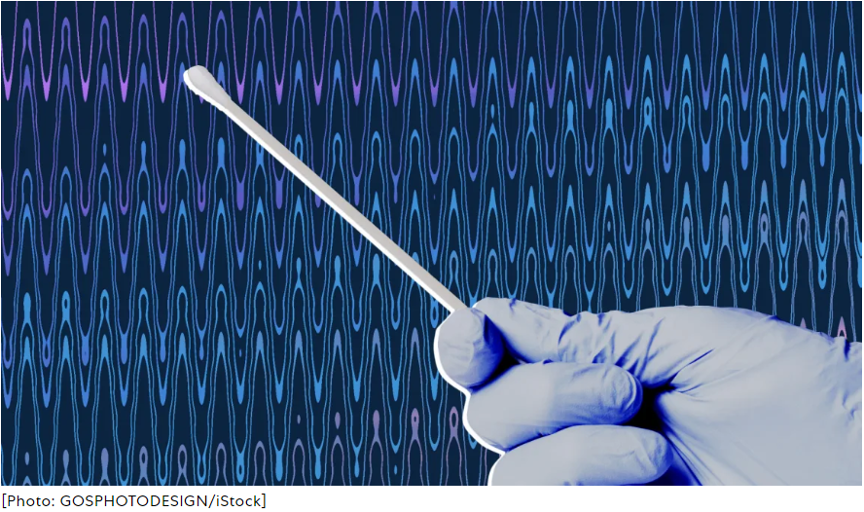
COVID-19 doesn’t create cookie-cutter infections. Some people have extremely mild cases while others find themselves fighting for their lives.
Clinicians are working with limited resources against a disease that is very hard to predict. Knowing which patients are most likely to develop severe cases could help guide clinicians during this pandemic.
We are two researchers at New York University that study predictive analytics and infectious diseases. In early January, we realized that it was very possible the new coronavirus in China was going to make its way to New York, and we wanted to develop a tool to help clinicians deal with the incoming surge of cases. We thought predictive analytics—a form of artificial intelligence—would be a good technology for this job.
In a general sense, this type of AI looks at existing data to find patterns and then uses those patterns to make predictions about the future. Using data from 53 COVID-19 cases in January and February, we developed a group of algorithms to determine which mildly ill patients were likely become severely ill.
Our experimental tool helped predict which people were going to get the most sick. In doing so, it also found some unexpected early clinical signs that predict severe cases of COVID-19.
The algorithms we designed were trained on a small data set and at this point are only a proof-of-concept tool, but with more data, we believe later versions could be extremely helpful to medical professionals.
The original article can be found here.
According to Artificial Intelligence World Society Innovation Network (AIWS.net), AI can be an important technology and a potential tool for COVID-19 prediction. In this effort, Michael Dukakis Institute for Leadership and Innovation (MDI) invites participation and collaboration with think tanks, universities, non-profits, firms, and other entities that share its commitment to the constructive and development of full-scale AI for world society.
by Editor | May 25, 2020 | News
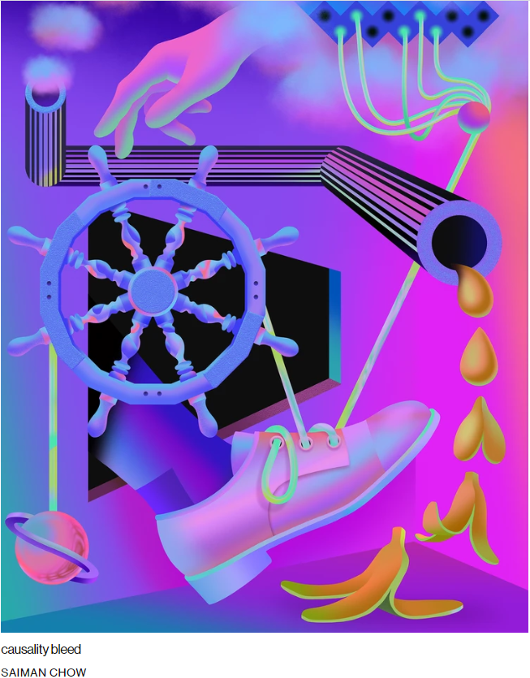
Artificial intelligence won’t be very smart if computers don’t grasp cause and effect. That’s something even humans have trouble with.
In less than a decade, computers have become extremely good at diagnosing diseases, translating languages, and transcribing speech. They can outplay humans at complicated strategy games, create photorealistic images, and suggest useful replies to your emails.
Yet despite these impressive achievements, artificial intelligence has glaring weaknesses.
Machine-learning systems can be duped or confounded by situations they haven’t seen before. A self-driving car gets flummoxed by a scenario that a human driver could handle easily. An AI system laboriously trained to carry out one task (identifying cats, say) has to be taught all over again to do something else (identifying dogs). In the process, it’s liable to lose some of the expertise it had in the original task.
Computer scientists call this problem “catastrophic forgetting.”
These shortcomings have something in common: they exist because AI systems don’t understand causation. They see that some events are associated with other events, but they don’t ascertain which things directly make other things happen. It’s as if you knew that the presence of clouds made rain likelier, but you didn’t know clouds caused rain.
The dream of endowing computers with causal reasoning drew Bareinboim from Brazil to the United States in 2008, after he completed a master’s in computer science at the Federal University of Rio de Janeiro. He jumped at an opportunity to study under Judea Pearl, a computer scientist and statistician at UCLA. Pearl, 83, is a giant—the giant—of causal inference, and his career helps illustrate why it’s hard to create AI that understands causality.
Pearl says AI can’t be truly intelligent until it has a rich understanding of cause and effect. Although causal reasoning wouldn’t be sufficient for an artificial general intelligence, it’s necessary, he says, because it would enable the introspection that is at the core of cognition. “What if” questions “are the building blocks of science, of moral attitudes, of free will, of consciousness,” Pearl told me.
You can’t draw Pearl into predicting how long it will take for computers to get powerful causal reasoning abilities. “I am not a futurist,” he says. But in any case, he thinks the first move should be to develop machine-learning tools that combine data with available scientific knowledge: “We have a lot of knowledge that resides in the human skull which is not utilized.”
The original article can be found here
Professor Judea Pearl is a pioneer on Causal Inference and AI, and his work was also recognized with a Turing Award in 2011. At this moment, Professor Pearl also contribute on Causal Inference for AI transparency, which is one of important AI World Society (AIWS.net) topics on AI Ethics from by Michael Dukakis Institute for Leadership and Innovation (MDI) and Boston Global Forum (BGF).
by Editor | May 17, 2020 | News
The WHO has been accused by U.S. and allies of turning a blind eye while China withheld information
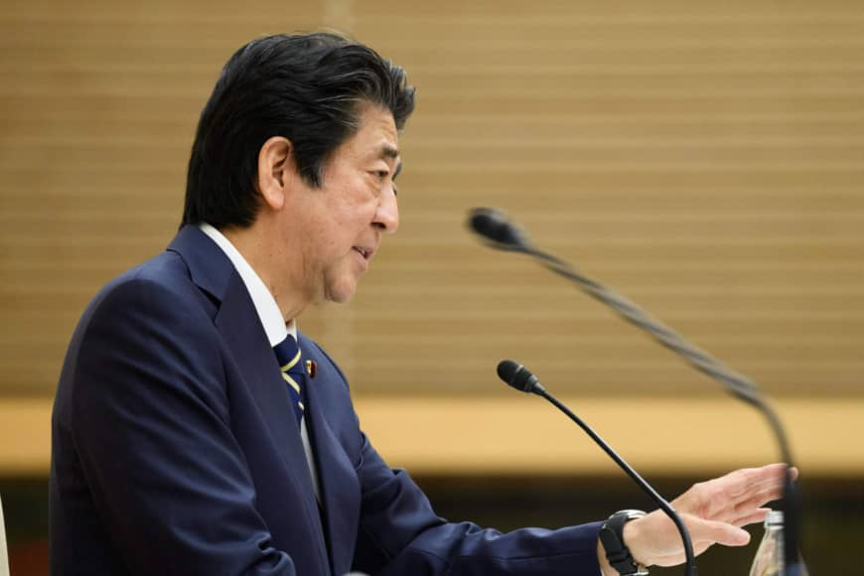
Japan will call for an investigation into the World Health Organization’s initial response to the coronavirus pandemic, Prime Minister Shinzo Abe has said.
“With the European Union, (Japan) will propose that a fair, independent and comprehensive verification be conducted,” Abe said on an internet program Friday May 15, 2020.
He said the proposal will be made at the WHO’s general assembly to begin Monday.
Foreign Minister Toshimitsu Motegi also said Friday that Japan is joining a chorus of calls for such an investigation, which should be conducted by an independent body.
“This disease has had a devastating impact on the entire world, and information must be shared between countries in a free, transparent and timely manner, lest we risk it spreading even more quickly,” Motegi said in a parliamentary session, in reference to COVID-19, the respiratory disease caused by the novel coronavirus.
“There’s a lot of discussion in the international community about precisely where the virus came from and the initial response,” he said. “There needs to be a thorough investigation, and it’s crucial that this be carried out by an independent body.”
The original article can be found here.
Japanese Prime Minister Shinzo Abe was honored with the World Leader for Peace and Security Award by the Boston Global Forum at Harvard University Faculty Club on Global Cybersecurity Day December 12, 2015.
by Editor | May 17, 2020 | Event Updates
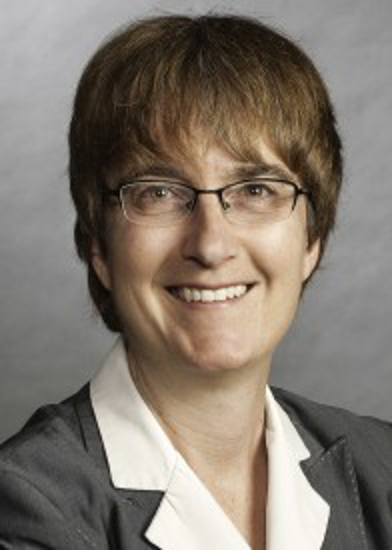
Professor Cheryl Misak will speak about life of Frank Ramsey at 10:00 am EST, June 6, 2020 on AIWS House, a part of the History of AI, at AIWS.net.
Frank Ramsey, a philosopher, economist, and mathematician, was one of the greatest minds of the last century.
Professor Judea Pearl, Mentor of AIWS.net, said: “Ramsey was definitely one of the clearest forerunners of subjective probabilities and the revival of Bayes statistics in the 20th century, which influenced the 1970-90 debate on how to represent uncertainty in AI systems.”
Cheryl Misak is a Professor of Philosophy and former Vice President and Provost at the University of Toronto.
She is the author numerous papers and five books: Cambridge Pragmatism: From Peirce and James to Ramsey and Wittgenstein (OUP 2016); The American Pragmatists (OUP 2013); Truth, Politics, Morality: Pragmatism and Deliberation (Routledge 2000); Verificationism: Its History and Prospects (Routledge 1995) and Truth and the End of Inquiry: A Peircean Account of Truth (OUP 1991).
She has published a biography of the great Cambridge philosopher, mathematician, and economist, Frank Ramsey, who died in 1930 at the age of 26. It was published in April, 2020 by Oxford University Press, under the title Frank Ramsey: A Sheer Excess of Powers.