
by Editor BGF | Nov 3, 2024 | News, Shaping Futures
The AI World Society (AIWS) is organizing high-level discussions on “The Convergence of AI Chips and Quantum Computing for a New Democracy – AIWS.” This program aims to explore how the integration of advanced technologies like AI chips and quantum computing can contribute to the development of a new democratic model that emphasizes innovation, security, and global cooperation.
Quantum Computing’s Potential to Solve Global Challenges
Quantum computing holds the promise of addressing some of the world’s most complex problems due to its ability to perform calculations at speeds unattainable by classical computers.
https://www.techtimes.com/articles/308077/20241101/how-quantum-computing-could-solve-worlds-biggest-problems.htm
Advancements in Quantum Computing and Machine Learning
The collaboration between companies like Quantum Machines and NVIDIA highlights significant progress in the field. As reported in “Quantum Machines and NVIDIA Use Machine Learning to Get Closer to an Error-Corrected Quantum Computer,” these organizations are leveraging machine learning to improve quantum error correction. This advancement is crucial because:
https://techcrunch.com/2024/11/02/quantum-machines-and-nvidia-use-machine-learning-to-get-closer-to-an-error-corrected-quantum-computer/
Transforming the Cryptocurrency Market with Quantum AI
The article “How Quantum AI is Transforming the Cryptocurrency Market” discusses the impact of quantum computing and AI on digital currencies:
- Enhanced Security: Quantum computing can both threaten current cryptographic methods and provide new, more secure encryption techniques.
- Efficient Transactions: Quantum algorithms can optimize transaction processing, reducing costs and increasing speed.
- Market Analysis: AI combined with quantum computing can analyze vast amounts of market data to predict trends and inform investment strategies.
https://breakingthelines.com/opinion/how-quantum-ai-is-transforming-the-cryptocurrency-market/
Implications for a New Democracy
The convergence of AI chips and quantum computing has profound implications for developing a New Democracy, as envisioned by AIWS:
- Enhanced Decision-Making: Governments can leverage these technologies for data-driven policy-making, leading to more effective governance.
- Cybersecurity: Improved encryption and security protocols protect democratic institutions from cyber threats.
- Economic Growth: Technological advancements stimulate innovation and competitiveness, contributing to a robust economy.
- Global Collaboration: Shared technological progress fosters international cooperation, promoting peace and mutual understanding.
The integration of AI chips and quantum computing represents a significant step toward addressing global challenges and enhancing democratic societies. By exploring these frontiers, AIWS is contributing to a vision of a New Democracy that harnesses technological advancements for the common good, ensuring that progress benefits everyone and upholds the principles of ethics and responsibility.
By focusing on these developments, AIWS and its partners aim to ensure that the convergence of AI and quantum computing technologies contributes positively to society and supports the establishment of a fair, secure, and prosperous global community.

by Editor BGF | Nov 3, 2024 | Global Alliance for Digital Governance
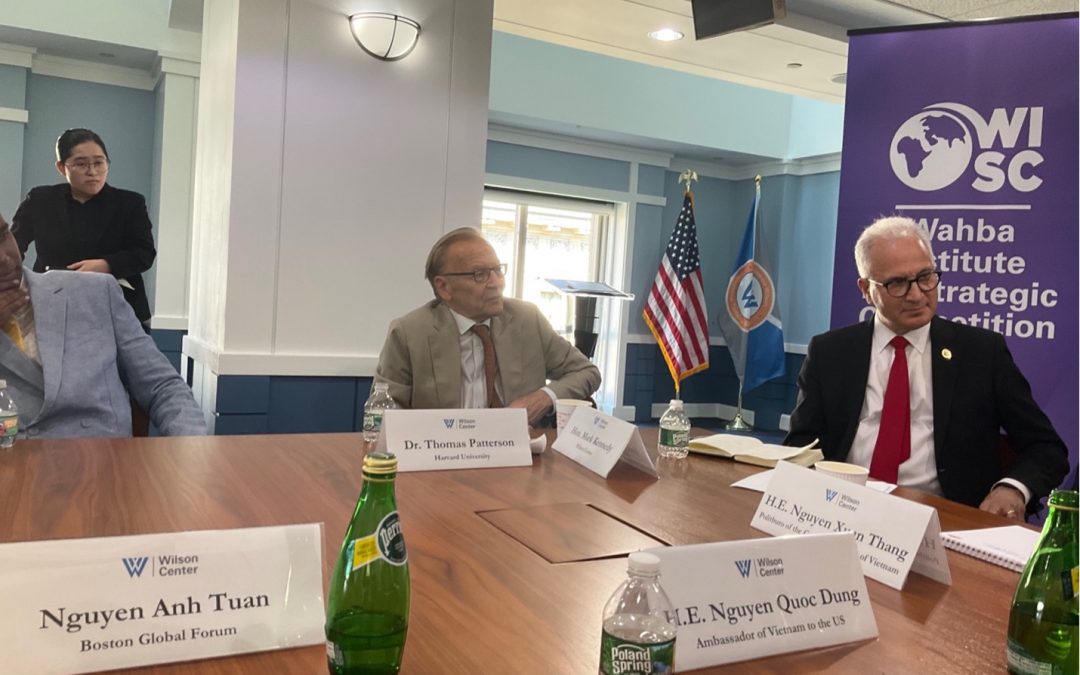
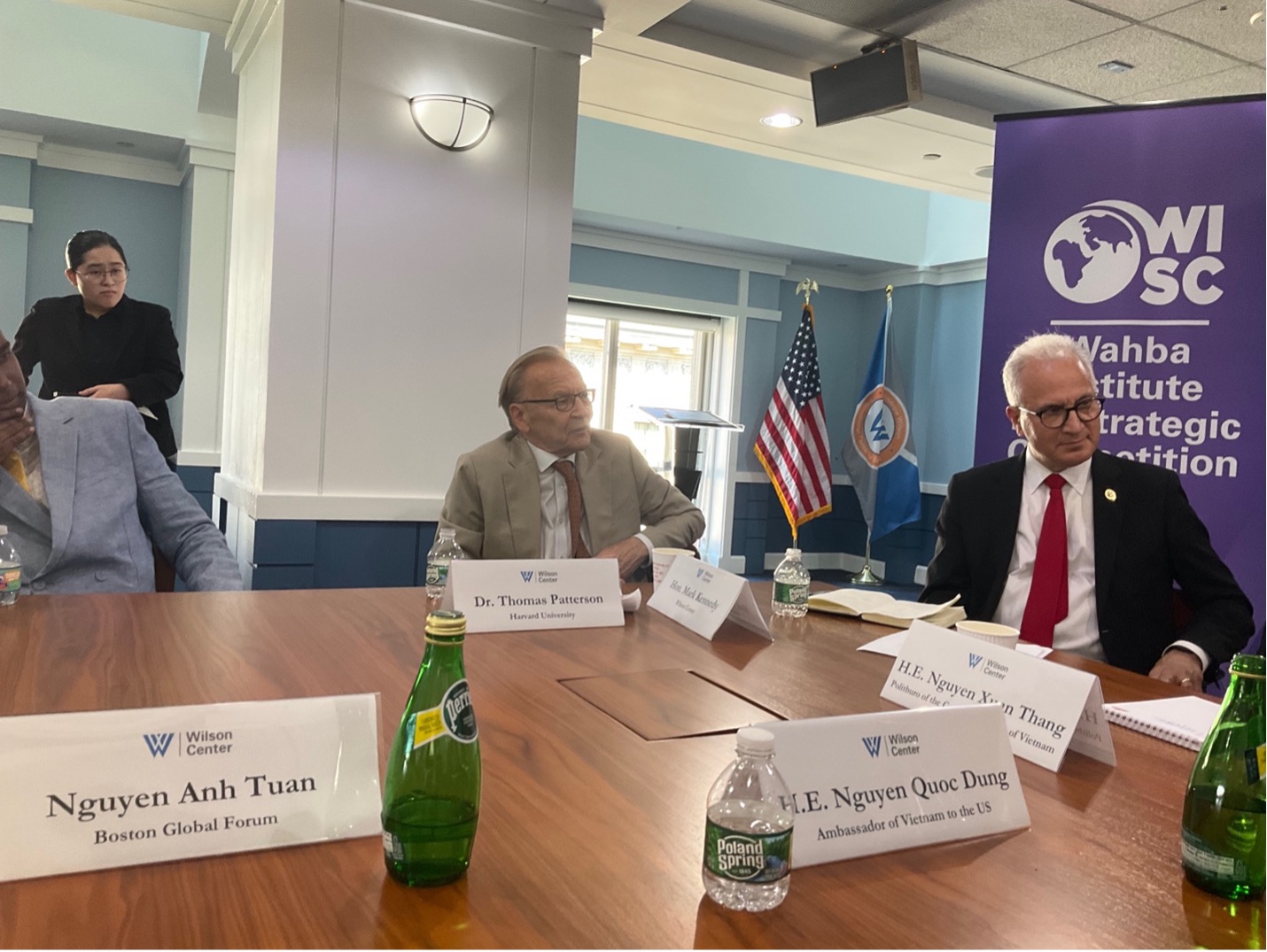
As part of its AI World Society (AIWS) initiative, the Boston Global Forum (BGF) is convening a significant discussion among distinguished leaders, policymakers, eminent thinkers, and business leaders. The goal is to explore strategies and solutions for leveraging artificial intelligence (AI) to strengthen democracy, gain an advantage over totalitarian systems in the AI landscape, and foster a new era of democracy characterized by opportunities, stability, growth, and cooperation among nations. The focus is on gaining a strategic advantage over dictatorial and totalitarian regimes that misuse AI technologies and engage in unfair competition in the AI economy.
BGF is glad to introduce the writing of the Honorable Mark Kennedy, Director of the Wahba Institute for Strategic Competition at the Wilson Center and a member of the BGF Board of Thinkers, on this topic:
“Advancing Both National Security and Economic Diplomacy in the Developing World”
The strategic competition between the US and the People’s Republic of China (PRC) is multifaceted. Actions taken to achieve a policy goal in one arena can have disadvantages relative to other strategic priorities.
This is the dilemma the US faces as it increases tariffs and restricts trade and outward investment to bolster economic and national security. The US must concurrently strengthen its engagement with emerging markets and developing economies (EMDEs) to counterbalance the PRC’s influence. Recent United Nations votes on Russia’s invasion of Ukraine highlight that the US cannot take EMDEs for granted. Strategic competition demands that the US seeks to advance economic diplomacy in the developing world amid necessary restrictions to preserve security.
Please see the full article at this link:
Advancing Both National Security and Economic Diplomacy in the Developing World

by Editor BGF | Oct 26, 2024 | News, Shaping Futures
OpenAI is disbanding its “AGI Readiness” team, which advised the company on OpenAI’s capacity to handle artificial intelligence that could potentially equal or surpass human intellect and the world’s readiness to manage such technology.
Miles Brundage, senior advisor for AGI Readiness, announced his departure from the company and wrote that he believes his research will be more impactful externally.
In May, OpenAI decided to disband its Superalignment team, which focused on technology to control and steer superintelligent AI, just one year after it announced the group.
https://www.cnbc.com/2024/10/24/openai-miles-brundage-agi-readiness.html
The AI World Society (AIWS) Model seeks to build a safer, better world with AI. We encourage and call upon companies to uphold their responsibility to humanity in creating and conducting business with AI applications. AGI represents significant progress in AI, and it requires our commitment to duty and responsibility toward humanity and our world.


by Editor BGF | Oct 26, 2024 | Shinzo Abe Initiative for Peace and Security, News
In his vision for a “free and open Indo-Pacific,” Prime Minister Shinzo Abe, 2015 World Leader for Peace and Security Award Recipient, redefined the geopolitical landscape, advocating for a democratic and cooperative approach to address rising challenges in Asia. Abe’s insight was groundbreaking, as he recognized the implications of China’s rapid economic growth and military expansion on regional stability and the American-led alliances across the Asia-Pacific. Perhaps his most enduring legacy lies in the powerful simplicity of his phrase, “a free and open Indo-Pacific.”
The Shinzo Abe Initiative created the “Indo-Pacific Spark,” aimed at advancing Abe’s vision through economic alliances, with a particular focus on the AI-driven economy, across the United States, Japan, Taiwan, India, and other Asia-Pacific democracies. This initiative addresses growing economic challenges, especially those driven by the AI economy, emanating from China. By fostering collaboration and innovation among like-minded nations, the Indo-Pacific Spark seeks to build an interconnected, new democratic, and resilient economy that champions open markets, fair competition, and robust technological cooperation.
In honoring Shinzo Abe’s legacy, the Indo-Pacific Spark represents more than just an economic strategy; it is a commitment to a new democratic, safe, and inclusive Indo-Pacific. Built on the foundations of Abe’s vision, this initiative will play a crucial role in shaping an AI World Society model where regional partnerships are strengthened, economic resilience is prioritized, and innovative democratic values flourish across the Indo-Pacific.

by Editor BGF | Oct 26, 2024 | World Leader for Peace and Security, News, World Leaders in AIWS Award Updates
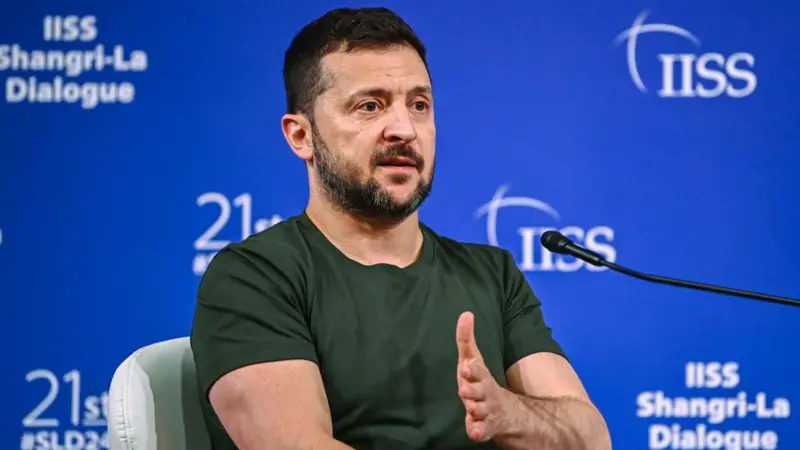
President Volodymyr Zelensky, the 2022 World Leader for Peace and Security Award recipient, who has courageously led Ukraine in its fight against the Russian invasion, has declined a visit from U.N. Secretary-General Antonio Guterres due to his recent participation in a summit in Russia, AFP reported on Oct. 25, citing an unnamed high-ranking source close to the Presidential Office.
Guterres attended the BRICS summit in Kazan on Oct. 23-24, despite criticism from Ukraine. Previously, the U.N. secretary-general had also declined an invitation from Kyiv to attend the global peace summit held in Switzerland this past summer. During the BRICS summit, Guterres called for peace in Ukraine, stating, “We need peace in Ukraine. A just peace in line with the UN Charter, international law, and General Assembly resolutions.”
https://www.bbc.com/news/articles/clyd4xg70ejo.amp
https://kyivindependent.com/zelensky-reportedly-rejects-un-secretarys-visit-to-ukraine-due-to-his-kazan-summit-participation/

by Editor BGF | Oct 26, 2024 | News
Israel launched airstrikes on Iranian military sites near Tehran and in western Iran in response to recent attacks attributed to Iran. According to Israeli sources, scores of jets targeted missile factories and other military facilities, specifically avoiding energy and nuclear sites. The U.S. was notified in advance, and President Biden expressed hope that these strikes might bring an end to the confrontation.
Iran reported that its air defenses responded to the assault but confirmed four fatalities and limited damage.
David Albright, a former U.N. nuclear weapons inspector, said low resolution commercial satellite imagery appeared to show that one Israeli strike hit the sprawling Parchin military complex near Tehran, damaging three buildings, including two where solid fuel was mixed for ballistic missile engines.
Source:
https://www.reuters.com/world/middle-east/explosions-heard-iran-syria-middle-east-braces-israeli-retaliation-2024-10-25/
https://apnews.com/article/israel-palestinians-hamas-war-lebanon-hezbollah-iran-news-10-26-2024-9c9f366c71c508e6dd0ee74cff8400d2


by Editor BGF | Oct 26, 2024 | Global Alliance for Digital Governance
On October 24, 2024, President Biden issued the first-ever National Security Memorandum (NSM) on Artificial Intelligence (AI). The NSM’s fundamental premise is that advances at the frontier of AI will have significant implications for national security and foreign policy in the near future. The NSM builds on key steps the President and Vice President have taken to drive the safe, secure, and trustworthy development of AI, including President Biden’s landmark Executive Order to ensure that America leads the way in seizing the promise and managing the risks of AI.
The NSM directs the U.S. Government to implement concrete and impactful steps to (1) ensure that the United States leads the world’s development of safe, secure, and trustworthy AI; (2) harness cutting-edge AI technologies to advance the U.S. Government’s national security mission; and (3) advance international consensus and governance around AI.
The NSM is designed to galvanize federal government adoption of AI to advance the national security mission, including by ensuring that such adoption reflects democratic values and protects human rights, civil rights, civil liberties and privacy. In addition, the NSM seeks to shape international norms around AI use to reflect those same democratic values, and directs actions to track and counter adversary development and use of AI for national security purposes.
Please read full here:
https://www.whitehouse.gov/briefing-room/statements-releases/2024/10/24/fact-sheet-biden-harris-administration-outlines-coordinated-approach-to-harness-power-of-ai-for-u-s-national-security/
The Boston Global Forum welcomes the National Security Memorandum on AI issued by President Biden and Vice President Harris. We recognize this memorandum as a significant advancement in aligning with the principles of the AI World Society (AIWS) Model, fostering responsible AI development for national security and global benefit.


by Editor BGF | Oct 26, 2024 | Event Updates, News
The Boston Global Forum (BGF) will host the conference “AIWS for New Democracy: Strategies for Democracy to Win in the AI Battle” at Harvard University’s historic Loeb House on November 25, 2024. This significant event aims to convene eminent thinkers, policymakers, and business leaders to formulate actionable strategies that promote democratic principles within the framework of the Artificial Intelligence World Society (AIWS) and to build a new democracy empowered by AI technologies.
The conference will feature a keynote address by Audrey Tang, Cyber Ambassador-at-Large of Taiwan and former Minister of Digital Affairs. Two additional distinguished speakers will join:
- Mark Kennedy, Director of The Wilson Center’s Wahba Institute for Strategic Competition and Member of the BGF Board of Thinkers
- Elisabeth Moreno, former French Minister for Gender Equality, Diversity, and Equal Opportunities and BGF Representative in Africa, Knowledge Platform Coordinator – France
Other confirmed distinguished speakers include:
- Alex ‘Sandy’ Pentland, MIT
- E. Yi-Jing Lin, Deputy Minister of Digital Affairs, Taiwan
This gathering promises to be a pivotal moment for discussions on how AI can be harnessed to strengthen democratic values and institutions worldwide

Hon. Elisabeth Moreno speaks at C20-G20 Summit India 2023

by Editor BGF | Oct 20, 2024 | News, Shaping Futures
First, Washington needs to start taking AGI seriously. The potential risks are too great to ignore. Even in a good scenario, AGI could upend economies and displace millions of jobs, requiring society to adapt. In a bad scenario, AGI could become uncontrollable.
Second, we must establish regulatory guardrails for powerful AI systems. Regulation should involve government transparency into what’s going on with the most powerful AI systems that are being created by tech companies. Government transparency will reduce the chances that society is caught flat-footed by a tech company developing AGI before anyone else is expecting. And mandated security measures are needed to prevent U.S. adversaries and other bad actors from stealing AGI systems from U.S. companies. These light-touch measures would be sensible even if AGI weren’t a possibility, but the prospect of AGI heightens their importance.
In a particularly concerning part of Saunders’ testimony, he said that during his time at OpenAI there were long stretches where he or hundreds of other employees would be able to “bypass access controls and steal the company’s most advanced AI systems, including GPT-4.” This lax attitude toward security is bad enough for U.S. competitiveness today, but it is an absolutely unacceptable way to treat systems on the path to AGI. The comments were another powerful reminder that tech companies cannot be trusted to self-regulate.
Finally, public engagement is essential. AGI isn’t just a technical issue; it’s a societal one. The public must be informed and involved in discussions about how AGI could impact all of our lives.
BGF has been pioneering the AI World Society (AIWS) since 2017.
Daniel Colson
https://time.com/7093792/ai-artificial-general-intelligence-risks/