by Editor BGF | Mar 30, 2022 | AIWS City and Rebuilding Ukraine
Boston, March 30, 2022
Today, Boston Global Forum and Michael Dukakis Institute honor President Zelensky and all Ukrainian people as the recipients of the World Leader for Peace and Security Award for 2022 for their courage and sacrifice for freedom and independence.
We are calling upon students, scholars, and all alumni and alumnus of all universities throughout the world to support the students in Ukraine. Like all Ukrainian citizens, students continue to be under attack from the Russian military. They need our concrete support to continue their education and live their lives in this new brutal reality. The Boston Global Forum (BGF) calls upon students across the world to connect with and help Ukrainian students. We call on scholars and professors of universities to advise and educate Ukrainian students in their efforts to rebuild Ukraine. The Boston Global Forum is creating a website to organize these connections: Ukraine.AIWS.city
The BGF is working with the Ukrainian Government, and organizations on the ground in Ukraine, to connect their students to this website. We invite students from all over to become friends of Ukraine, and to help them through our online resources. Students who contribute to these meaningful efforts will be recognized for their support.

Governor Michael Dukakis
Co-Founder and Chair
Boston Global Forum

Nguyen Anh Tuan
Co-founder and CEO
Boston Global Forum

by Editor BGF | Mar 10, 2022 | Papers & Reports, Publications

The Russian invasion of Ukraine throws into sharp focus many urgent global problems that have been neglected for decades, including cybersecurity, disinformation, trade disparities, and dependence on unreliable and environmentally damaging fossil fuels (“Hey Congress, blue and yellow ribbons won’t save Ukrainian lives,” Editorial, March 4). They are all related and all need immediate attention.
An overarching concern that touches on all of these challenges: artificial intelligence technology. This technology can make positive contributions to health care, commerce, and communications. However, in the wrong hands, AI can be used to distort reality, invade individuals’ personal space, and undermine democracy.
Through the Boston Global Forum and the Dukakis Institute, a global effort is underway to create an international accord on AI and digital rights. This accord would establish guardrails for the use and abuse of personal information to drive policy decisions that generate positive pressure and counteract efforts by malignant governments and private entities.
Dozens of heads of state and other world leaders are sharing ideas and recommending solutions to address growing concerns about AI. Without such protections, we are at the mercy of technologically savvy actors who can cause significant damage to our world.
Michael S. Dukakis
Cofounder and chairman
Nguyen Anh Tuan
Cofounder and CEO
Boston Global Forum
Boston
Dukakis is the former governor of Massachusetts. Tuan is director of the Michael Dukakis Institute for Leadership and Innovation.
https://www.bostonglobe.com/2022/03/10/opinion/ai-means-progress-can-do-harm-if-wrong-hands/

by Editor BGF | Feb 21, 2022 | Statements, AIWS City and Rebuilding Ukraine

Boston, 02/20/2022
We, the Boston Global Forum (BGF), an organization dedicated to promoting a more peaceful world through its World Leader for Peace and Security Award (its recipients have been Prime Minister Shinzo Abe, Chancellor Angela Merkel, UN Secretary-General Ban Ki-moon, President Toomas Hendrik Ilves, President Sauli Niinisto, President Vaira Vike-Freiberga, President Ursula von der Leyen, Riksdag Speaker Andreas Norlen), urgently call upon concerned parties to peacefully resolve the conflict between Russia and Ukraine in a way that upholds the rule of law and the sovereignty, territorial integrity, and legitimate security interests of both nations.
We urge Ukraine to pledge not to join the North Atlantic Treaty Organization (NATO) and not accept offensive military weapons on its soil. We urge Russia to pledge respect for the independence of Ukraine on land, air, sea, and cyberspace and to refrain from acts that threaten the territorial integrity of Ukraine and its people’s right to self-determination. We urge other nations to respect these commitments and refrain from acts disruptive thereof.
We urge the world community to respond to the current crisis by developing binding new international rules and instruments to safeguard the rights, interests, and integrity of countries that are too weak on their own to withstand aggressive hostile actions by more powerful countries. We, the Boston Global Forum, commit to assisting in the development of the new international rules and instruments and to advocating for their adoption.
Michael Dukakis, Co-founder and Chair, Boston Global Forum
Tuan Anh Nguyen, Co-founder and CEO, Boston Global Forum
Thomas Patterson, Co-founder, Boston Global Forum
by Editor BGF | Dec 23, 2021 | Uncategorized
by Editor BGF | Dec 21, 2021 | Publications

Governor Dukakis,
Excellencies,
Ladies and gentlemen,
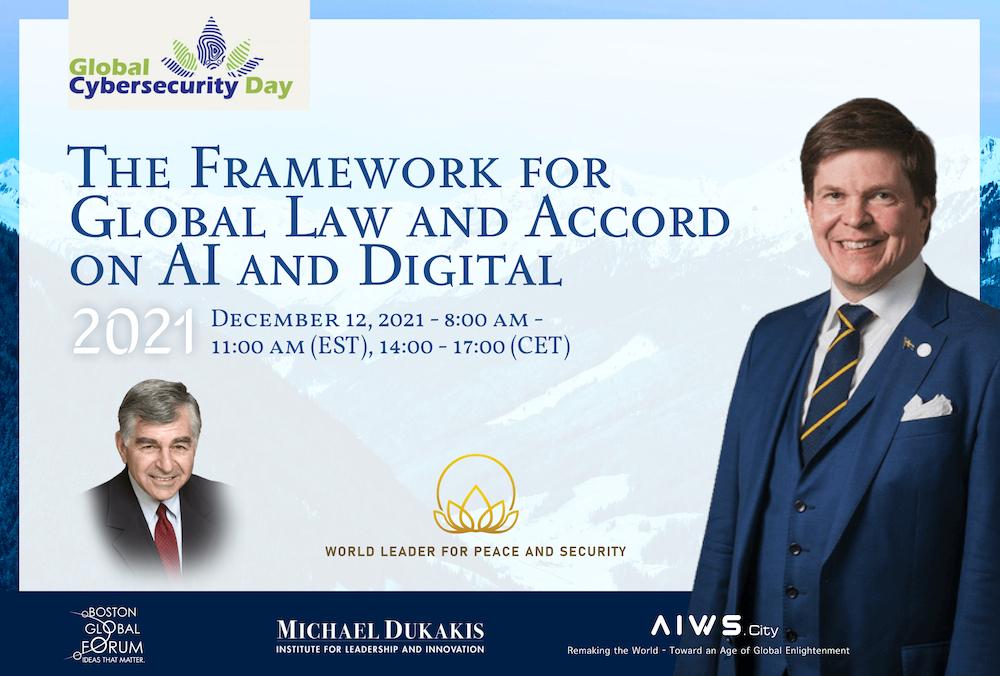
I want to start by thanking Governor Michael Dukakis and Boston Global Forum for selecting me for the World Leader for Peace and Security Award 2021. I am honoured and proud both for the award and for the opportunity to address you today. Your organisation plays an important role in working for a more peaceful and secure world, for instance by raising both the potentials and risks of artificial intelligence and other digital technologies. Your initiative on Global Law and Accord on AI and Digital is timely and important.
Tomorrow on December 13th we celebrate Lucia in Sweden. Lucia is an ancient mythical figure with a role as a bearer of light in the dark Swedish winters.
If there is one thing most people associate with Christmastime, it must be light. To me, light symbolises both hope and faith in the future; two things we truly need, both as individuals and as a society.
And I believe our need for light and hope is greater than it has been in a long time. The pandemic is not over, even if there might be light at the end of the tunnel, and we will forever carry with us the memories of all that we have lost and everyone we have lost.
***
Ladies and gentlemen,
I feel very humbled when I read the motivation of the award honouring me for my “efforts, in a turbulent political landscape, to enhance transparency, knowledge and public trust in the complicated processes of forming government in Sweden”. I would like to begin by elaborating a bit on this and its connection with global peace and security. I will then move on to talk about issues related to the theme of the symposium – “Global Law and Accord on AI and Digital”.

Firstly, let me say that I think it is of great significance that you have presented your distinguished award to a Speaker, a leader of a parliament. Often, in international politics, there is great focus on Governments and Presidents and you have previously honoured representatives of the executive branch in countries and organizations. It is of course very relevant to look for global leaders among heads of states and governments, but by highlighting also the importance of parliaments, I think you send an important signal. In that sense I proudly accept this award not only for myself but on behalf of all leaders of democratically elected parliaments.
Winston Churchill once said: “I am a child of the House of Commons”. I think that is a beautiful way of underscoring the importance of parliaments also for a famous head of government. Parliaments are at the heart of democracy. The Swedish constitution states that the Parliament is the foremost representative of the people in our democracy. Of course, in democratic countries also Governments and Presidents have democratic legitimacy, but there is a special bond between the Parliament and the people, forged not least through direct elections.
Secondly, I believe that democracy is a prerequisite for lasting global peace and security. Many of the tensions and conflicts we can see in the world today within countries and between countries originate from a lack of democracy – a lack of respect for freedom of speech, for minority rights, for rule of law and for other fundamental parts of a democratic society.
From that perspective I think that by giving the leader of a parliament your award, you recognize the importance parliaments have for democracy and the importance democracy has for global peace and security. For this, I truly commend you.
Moving on to the specific events you allude to in the motivation, we have in Sweden experienced an electoral period like no other. When a prime minister resigns and a new government is formed, it is in Sweden the task of the Speaker – not, as in most other countries, the Head of State – to prepare a proposal for a new prime minister who can gain sufficient support in the parliament. We have now had three such governmental formations since the last election in 2018.
This period started with a record-long process of formation of government in 2018-2019, a process that took a total of 134 days. This was followed by a government crisis in June to July this year, and then in November, I received the application from Prime Minister Stefan Löfven of the Social Democratic Party, to be discharged from office.
Thus, in November we had the third formation of government of this electoral period, and on 30 November, a new Government took office with Ms Magdalena Andersson from the same party as Prime Minister.
During these many twists and turns, I have worked hard to explain the processes to the Swedish people and demonstrate that the many formations of government have not meant a crisis for democracy.
Swedish democracy stands strong. All the actors taking part in these processes have used the various tools available to them in the parliamentary toolbox. Certain events may have been rather turbulent, but they are all a result of the rules of democracy. As a Speaker, I may not act in a partisan way and I have tried my very best to be a neutral broker and a representative of the Parliament as an institution, not of any particular party. In order to maintain public trust in the political processes I think it is important that there are representatives who are not embroiled in fights but who try to calm the situation. I am humbled and grateful that you, Governor Dukakis, and the BGF, have chosen to give me your award because of these efforts.
***
Ladies and gentlemen,
I think it is important to take note of the fact that since around 1980, we witnessed a positive trend with more and more states moving from authoritarian to democratic rule. However, since a few years back, that positive trend has been reversed, and a larger proportion of citizens on this planet are now living in authoritarian countries. It is clear that the pandemic has accentuated this negative trend.
It is alarming how leaders in different parts of the world are using the COVID-19 crisis for authoritarian purposes such as silencing independent media and obstructing the ability of civil society to make its voice heard.
Current developments with regard to the rule of law also require attention. Basically, the rule of law is a system that restricts arbitrary exercise of power, a system where laws are applied equally for all – I believe that a strong sense of this crucial principle is a prerequisite in sustaining basic rights and freedoms. I believe there is reason for concern in this regard.
Sweden supports efforts to defend and promote this principle and to improve the tools needed by the institutions and member states of the European Union to strengthen the rule of law, within the Union and globally.
For the rule of law to be a ruling principle, it also needs to be enforced by the legal system. Protecting the security and integrity of judges, prosecutors and civil servants must therefore be a key issue in any discussions on how to promote democracy.
Sweden is very active on the global stage to promote peace, security and democracy, and this is supported by both the Government and the Parliament.
***
Ladies and gentlemen,
The Boston Global Forum has worked a lot with important issues regarding AI and other matters relating to digitalisation. Let me now give som perspectives on those issues.
The pandemic has served as a catalyst for an accelerating digitalisation. Digitalisation and artificial intelligence raises questions that need to be addressed. When and how to share data and information is for instance a central question for all companies and government agencies working with data driven methods. It is now more important than ever that we all work for technology that is trustworthy, secure and human-centric.
I would like to mention a couple of examples of issues that are topical in Sweden and that concern rule of law and inclusivity, in a time when more and more of the activities of our public agencies are being digitalised.
The Swedish National Audit Office has examined whether automated decision-making by government agencies is effective and efficient, without jeopardising legal certainty in decision-making.
The overall conclusion is that automated decision-making by government agencies has led to increased effectiveness and efficiency and that fundamental legal certainty aspects have improved to some extent. However, there are shortcomings in the agencies’ processing of cases with a high risk of fraud and error. In addition, there is far too limited follow-up of the correctness of automated decisions. There is therefore a risk that resources for manual control and follow-up have too frequently been accorded too low a priority.
Another audit shows that the accessibility of government agencies has deteriorated in non-digital channels. Digitalisation of government agencies’ activities contributes to more efficient and improved service for citizens. But for many people, being able to access services by phone or by visiting in person is still important.
The audit shows that many public agencies have become less accessible in non-digital channels in the past ten years.
Agencies’ customer contacts in digital channels have increased significantly, but despite this, the number of phone calls has not decreased. Simpler cases are now often managed online, at the same time as more phone calls come from people needing guidance on how to use such online services.
The conclusion is that digitalisation of the public agencies’ services represents good management of central government resources. Nevertheless, the opportunity to contact agencies by phone and at a physical office is still important.
These are examples of questions that need to be taken into account in the continued digitalisation process.
***
Ladies and gentlemen,
Martin Luther King said “Only in the darkness can you see the stars”.
Right now, our need for hope and light is perhaps greater than usual, as well with regard to the pandemic as with regard to democracy. But we can all take comfort in the fact that the light will return to our societies. In the long run, light is always more powerful than darkness.
Democracy is facing challenges, but we all have to do our utmost to defend it. I am hopeful that we will succeed. Let us, together continue to develop our countries and the global society along a path built on the cornerstones of democracy.
Because in unsettled times, democracy is the beacon of light that can guide us through the darkness.
Thank you.
by Editor BGF | Dec 16, 2021 | Uncategorized

Boston, December 12, 2021
Welcome.
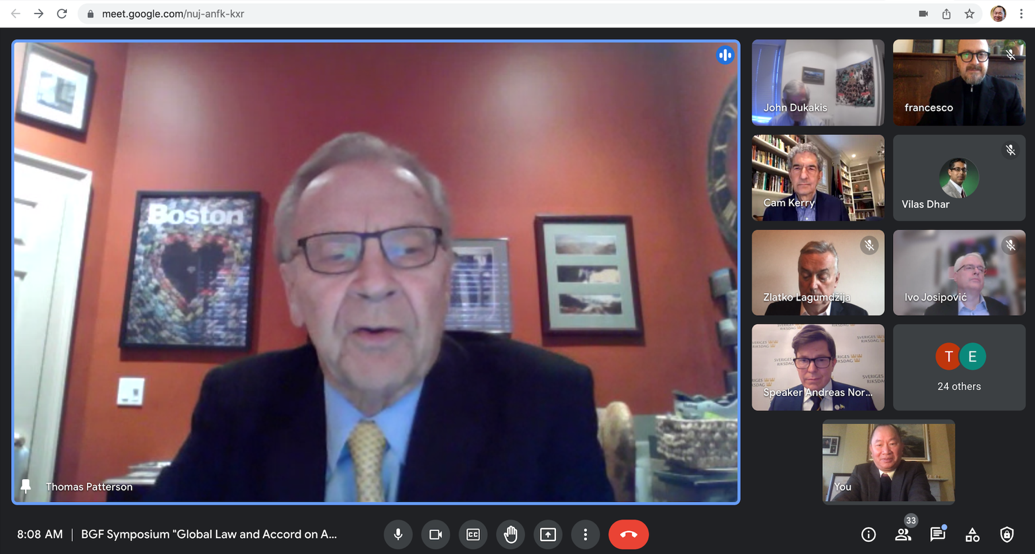
I’m Tom Patterson, co-founder of the Boston Global Forum.
It was on this day nine years ago that Mike Dukakis, John Quelch, Nguyen Anh Tuan, and I founded the Boston Global Forum. Every year since then, we’ve marked December 12th with a conference and a new initiative.
The 2015 conference, for example, marked the announcement and creation of Global Cybersecurity Day, a conference at which we recognized and honored Japanese Prime Minister Shinzo Abe, and German Chancellor Angela Merkel, and in the 2016 conference we recognized and honored UN Secretary General Ban Ki-Moon.
And December 12th is when we present our annual World Leader for Peace and Security Award. This year’s recipient is Andreas Norlen, Speaker of Sweden’s Riksdag – that nation’s national Parliament. Speaker Norlen is with us today.
Before introducing Boston Global Forum’s chairman, Mike Dukakis, I want to say a few words about some things that the Boston Global Forum has done during the past year.
We’ve been working closely with the Club de Madrid, which is the organization whose members are former presidents and prime ministers of democratic nations. Across several conferences, we’ve been looking at the challenges and opportunities presented by the digital revolution, and particularly by Artificial Intelligence.
Together, we’ve promoted the need for a new social contract, one that can advance AI’s potential for good while mitigating the threats that it poses. A social contract that would, for example, protect the right of individuals to their privacy and from exploitation by those who would use their personal data to manipulate their consumer or political choices. A social contract that would also prohibit governments from using AI as a tool for repressing dissent. The social contract would extend beyond what’s prohibited to what must be done to empower ordinary citizens, such as guarantees of digital literacy and access.
The agenda for today’s discussion is an extension of that work – the need for an International Accord on the use of AI and Digital.
The past year has also been marked by publication of the book, “Remaking the World: Toward an Age of Global Enlightenment.”
Edited by the Boston Global Forum’s CEO, Nguyen Anh Tuan, and including chapters by more than two dozen prominent leaders and thinkers, it was developed in collaboration with Ramu Damodaran, founding director of the United Nations Academic Impact Program.
The book is a visionary look forward to the year 2045, the centennial of the United Nations, and asks what must be done between now and then to fulfill the UN’s founding vision.
In a conference this past Thursday, the leaders of Vietnam’s Khánh Hòa Province pledged to implement many of the programs contained in the book, in order to create a model that can be emulated by governments elsewhere.
Finally, I’d like to give a special word of thanks to Tuan, who as those associated with this organization know, is its driving force.
Tuan is our organizer, our networker, and our leading thinker. Many of the initiatives that have marked the Boston Global Forum’s work these past nine years have come from the mind and dedication of Tuan. And most of you who are with us today were brought into the Boston Global Forum by Tuan’s efforts.
On behalf of everyone here, Tuan, I want to thank you for all that you do for the Boston Global Forum.
Let me now hand the floor over to Michael Dukakis, Boston Global Forum’s chairman. Mike has been part of the Boston Global Forum since its founding and has guided not only our December 12th conferences but the others that we hold each year.
Mike was three times elected as governor of Massachusetts, was the 1988 Democratic Party presidential nominee, and is currently Distinguished Professor Emeritus at Northeastern University.
Mike, the floor is yours.
by Editor BGF | Nov 16, 2021 | Publications
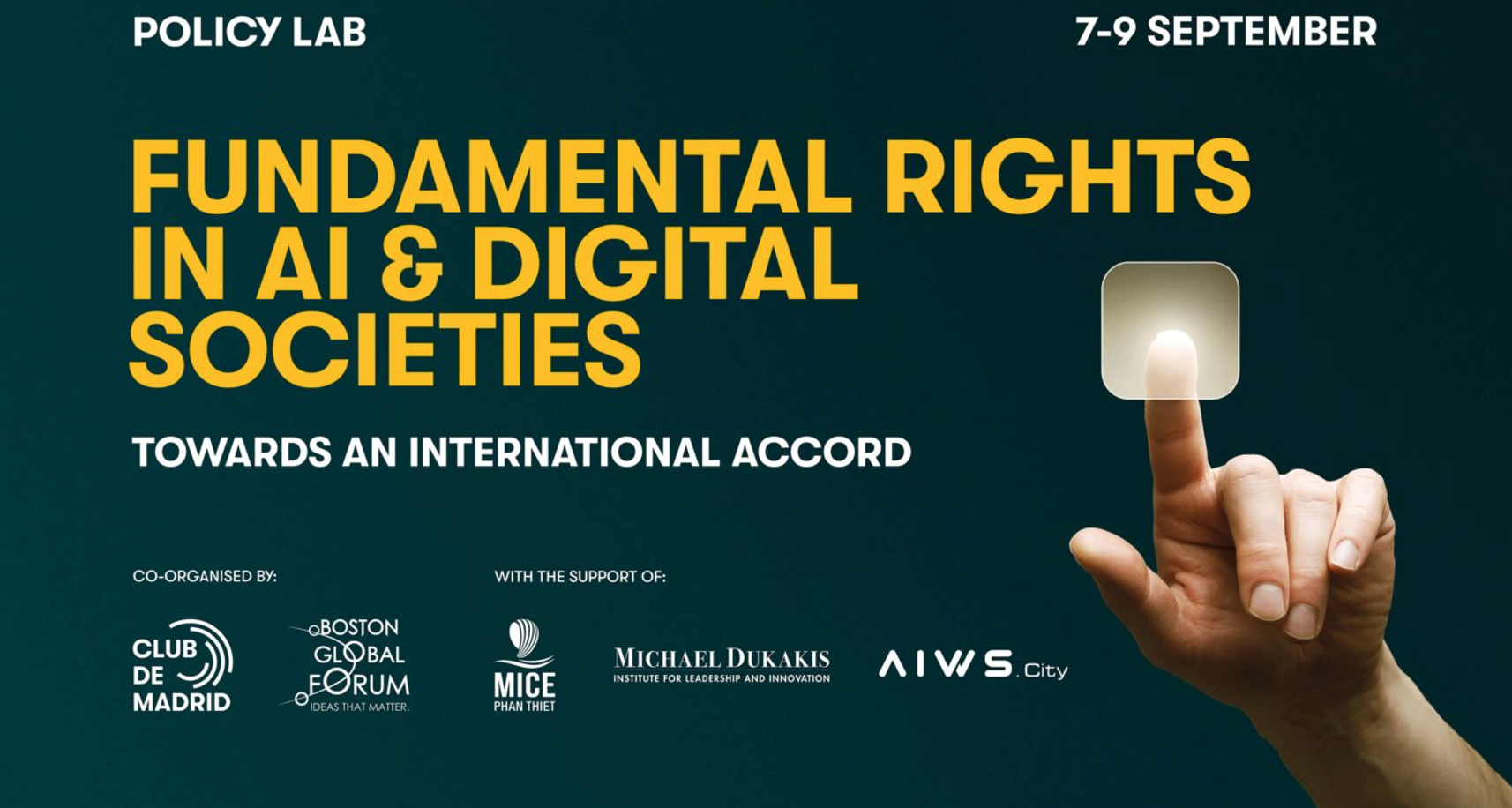
In this context, CdM in partnership with BGF organized a Policy Lab on Fundamental Rights in AI & Digital Societies: Towards an International Accord in September 2021. Multistakeholder discussions aimed to build consensus around a rights-based agenda for the global governance of AI and digital societies, focusing on the following topics:
● Opportunities and threats for fundamental rights in AI & digital societies.
● Transatlantic approaches to protect fundamental rights in AI & digital spaces.
● The elements & processes for an international legal framework to protect fundamental rights in AI & digital spaces
● The Concept, Principle and Ecosystem for Digital and AI Society – “Remaking the World, Toward an Age of Global Enlightenment”.
● The Global Alliance for Digital Governance
● A framework for a global law and accord on AI and digital tools
The Policy Lab followed the work initiated by both organizations on the implications of digital technologies and AI for democracy, global cooperation and multilateralism, with a particular focus on the Transatlantic space, and based on the progress of the AIWS Social Contract 2020 (Social Contract for the age of AI) and AIWS Innovation Network (AIWS.net).
The anchor of the discussions was a vision for a human-centered digital age. Policymakers around the world and at all levels of government are becoming more convinced of the need to ensure that digital technologies and AI serve the people. CdM and BGF partnered to narrow this gap between the digital and policy-making through a multi-stakeholder discussion that harnessed the political experience and insights of ten CdM Members, current political leaders, representatives from business, academia and other high-level experts.
Download the Final Report is here.
by Editor BGF | Sep 29, 2021 | Uncategorized
Distinguished leaders from Boston and Balkan regions to collaborate for Global Law on AI and Digital Rights

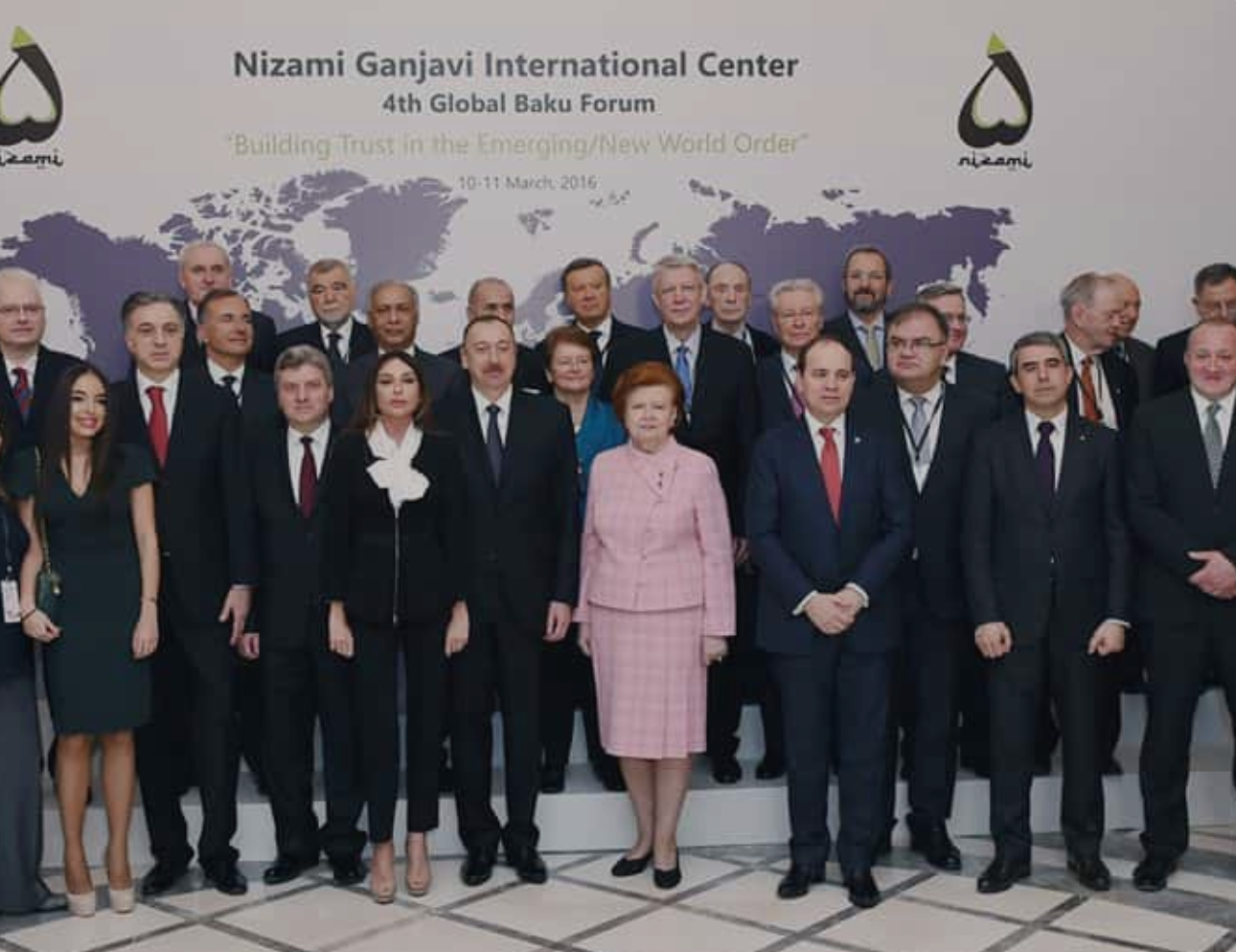
(Boston-Baku) September 29, 2021 – Two distinguished organizations from the Northeast United States and the Balkans, Boston Global Forum (BGF) and Nizami Ganjavi International Center (NGIC), today announced a collaboration to promote pioneering initiatives related to a Global Alliance for Digital Governance. The initiative, which was the subject of a recent Policy Lab online forum, also involves the United Nations Centennial Initiative, AI World Society (AIWS) and the Club de Madrid.
The joint announcement states that BGF will support NGIC’s Global Enlightenment Education Program in Baku, as well as a number of other initiatives.
BGF and NGIC will exchange resources to develop initiatives to solve complex and controversial issues in the world today and shape the future for “Remaking the World – Toward an Age of Global Enlightenment.”
Under the agreement, the BGF and NGIC will join in promoting the Global Alliance for Digital Governance (GADG), and NGIC will connect governments of Balkan and Middle East nations to support the Alliance. The two organizations will recommend speakers, promote conferences and forums, and publicize joint events.
Nguyen Anh Tuan, Co-Founder and CEO of the BGF, hailed the agreement and noted its impact on expanding the Alliance: “NGIC will bring a high level of engagement and distinguished leaders of the Balkans, contributing to the creation of a Global Law and Accord on AI and Digital Rights, and discuss the Accord at significant conferences that NGIC often organize in many cities as New York, Beijing, Riga, Athens, Andorra, Cairo, Sarajevo, Sofia, Brussels, Missions in Kiev, Tel-Aviv, Amman, Istanbul, Bucharest, which are attended by many head of states and government leaders.”
About the Boston Global Forum
The Boston Global Forum (BGF) offers a venue for leaders, strategists, thinkers and innovators to contribute to Remaking the World – Toward an Age of Global Enlightenment.
In 2019, the Boston Global Forum, in collaboration with the United Nations Academic Impact, launched the United Nations Centennial Initiative. It began with the release of a major work titled “Remaking the World – Toward an Age of Global Enlightenment”. More than twenty distinguished leaders, thinkers, strategists, and innovators put forth unprecedented approaches to the challenges that lay before the world. These contributors include President of the European Commission Ursula von der Leyen, Governor Michael Dukakis, Father of Internet Vint Cerf, Former US Secretary of Defense Ash Carter, Harvard University Professors Joseph Nye and Thomas Patterson, MIT Professors Nazli Choucri and Alex ‘Sandy’ Pentland, and MEP Eva Kaili.
The BGF introduced core concepts that are shaping groundbreaking international initiatives, most notably, the Social Contract for the AI Age, AI International Law and Accord, the Global Alliance for Digital Governance, the AI World Society (AIWS) Ecosystem, and the AIWS City.
About the Nizami Ganjavi International Center
– Nizami Ganjavi International Center (NGIC) is an international, non-political organization dedicated to the memory of the great Azerbaijani poet, Nizami Ganjavi and to the study and dissemination of his works with a mission to build a dialogue, understanding, mutual respect, tolerance between cultures and peoples for building functional and inclusive societies. Nizami Ganjavi International Center’s main mission is to promote Learning, Tolerance, Dialogue, Understanding and Shared Societies in a world in many ways today facing unprecedented challenges.
Board members of NGIC include the former presidents and prime ministers of the Balkan area and Northern European leaders from Finland, Latvia, Belgium, the United Nations, and distinguished figures from the U.S.
Contact:
∙ Nguyen Anh Tuan. Email: [email protected]. Phone: 617-286-6589 or Jim McManus: [email protected], 617-413-9232
by Editor BGF | Sep 23, 2021 | Uncategorized
On August 4, 2021, Forbes published the article:
Developing Coherent AI Infrastructure For Smart Cities by Annie Brown
https://www.forbes.com/sites/anniebrown/2021/08/04/developing-coherent-ai-infrastructure-for-smart-cities/?sh=6b4590a91d3f
Here are an excerpt of the article:
New Paths for Politics and Society
AI unlocks the capacity for data to be used in transformational ways, but it still requires guidelines. A growing body of AI specialists see the powerful potential of AI to play a role in both politics and society, if the right standards are in place.
It’s called the AI World Society (AIWS) and aims to build “A Better World With AI.” Composed of leaders from around the world, this body is attracting leaders from technology, world governments, and innovators who recognize AI’s key role in building a better tomorrow.
With representation at the UN, the G7 Summit, the AI International Accord Conference—and with a growing body of sponsored research and thought leadership—AIWS may provide much-needed guardrails to the ever-increasing supply of AI-powered tools, including smart cities.
AI has the potential to optimize life-saving, life-sustaining resources, including water, electricity, traffic, housing, and education. As the prevalence of AI tools increases, politicians and citizens alike must be empowered to understand and use technology.
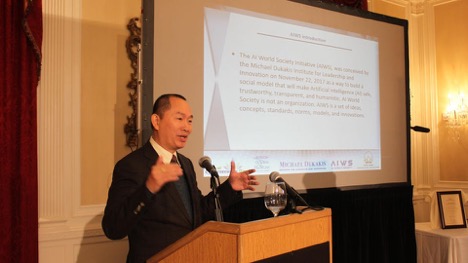
Two initiatives by AIWS that have sparked worldwide interest are the AIWS Ecosystem and AIWS City. Co-founder Tuan Nguyen, an esteemed mathematician, explains the concept of the AIWS Ecosystem in this way: “Many things function with a team of systems. AI makes it possible to need and use only one. Enhanced applications make it possible for people to become innovators.”

Tuan Nguyen, AIWS
Data scientists, technologists and other leaders are supporting a structure of models for facilitating a digital age. As an example of their activities, at the 2020 Riga Conference, leaders from AIWS relayed a new policy brief entitled “Social Contract for the Artificial Intelligence Age: Safety, Security, and Sustainability for the AI World.”
AIWS has a growing presence in Paris, Rome, Riga, Vienna, Munich, and now further west into the United States. This body could make it possible for every person to have access to AI tools that make their lives better and easier. In fact, it is their stated mission to provide support to urban environments, but also to rural areas, reducing inequality and connecting people to centralized tools and information.
The City of the Future
Emergency services, community improvements, infrastructure, and the very roads that convey vital goods could all be enhanced by AI-fueled technologies. Some of the simplest ideas have the potential to go the furthest. Dedicated leaders are committed to using AI in safe, thoughtful, and tested ways. Their shared goal? To improve the quality of life for every person in every community around the world.