
The Boston Global Forum and The Global Alliance for Digital Governance Shared Framework for Global Governance AI Assistants and ChatGPT

Download The Framework for Global Governance AI Assistants and ChatGPT here.

Download The Framework for Global Governance AI Assistants and ChatGPT here.

In celebration of the 90th birthday of former Massachusetts Governor Michael Dukakis, the Boston Global Forum (BGF) has introduced 30 historical figures who have played a key role in building AIWS – The Age of Global Enlightenment. The theme for this year’s celebration is “From the Massachusetts Miracle to the Age of Global Enlightenment.”
The list of historical figures, selected by the Boston Global Forum, includes former politicians, diplomats, scholars, and technologists who have made significant contributions to the development of AI World Society – the Age of Global Enlightenment. Some of the notable figures on the list are Prime Minister Shinzo Abe; Prime Minister Ehud Barak, and Vint Cerf, one of the “fathers of the internet.”
Other figures on the list include Nazli Choucri, a leading expert in international relations and cyber governance; Ramu Damodaran, Chief of the United Nations Academic Impact; Amandeep Gill, UN Secretary General Envoy of Technology; and Angel Gurria, Secretary-General of the Organization for Economic Cooperation and Development (OECD).
The list also includes President Toomas Hendrik Ilves; Ban Ki-moon, Secretary-General of the United Nations; Zlatko Lagumdzija, former Prime Minister of Bosnia and Herzegovina; Ursula von der Leyen, President of the European Commission; and Judea Pearl, a computer scientist and Turing Award winner.
By the standards of the BGF, these 30 historical figures have made significant contributions to the development of AIWS and have helped to create a more secure and prosperous world. Mr. Tuan Nguyen, the CEO of the BGF, also noted that the Boston Global Forum will continue to work with these figures and others to promote the principles of AIWS and ensure that the benefits of Artificial Intelligence are shared around the world.
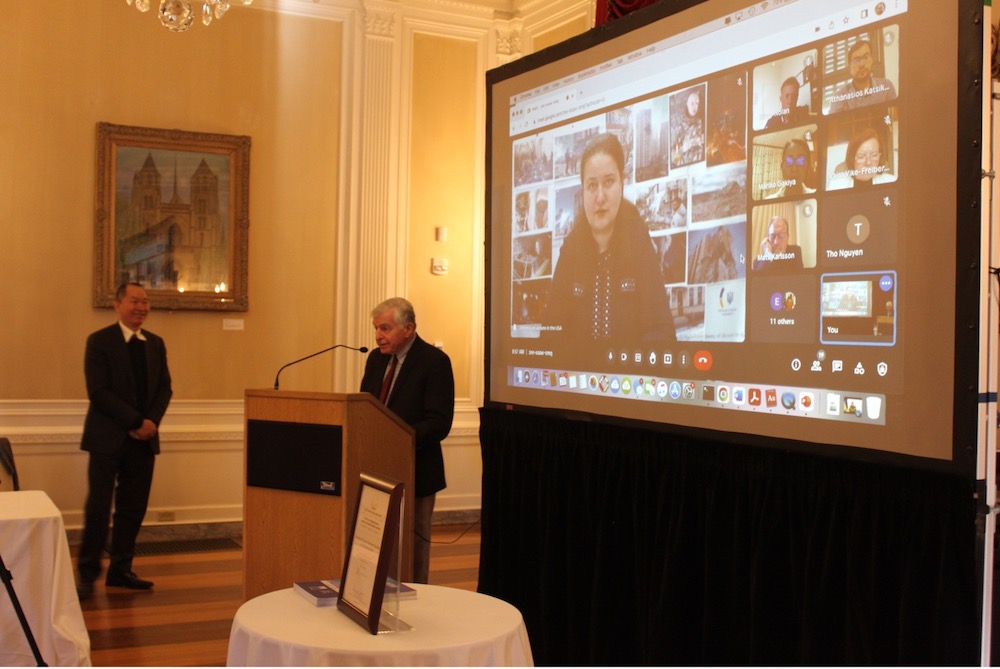
Boston, MA, February 24, 2023,
The Global Enlightenment Leaders of the Boston Global Forum are still deeply concerned about the ongoing war in Ukraine. The Russian invasion of Ukraine has caused immeasurable suffering to the Ukrainian people and has resulted in the loss of countless lives. Today marks one year since the war began, and we strongly urge President Putin to take immediate action to end the hostilities and withdraw Russian troops from Ukraine.
The peoples of Ukraine and Russia should be able live in peace, and it is only through dialogue and respect for the territorial sovereignty of Ukraine, that a lasting peace can be achieved. We call on President Putin to work towards a peaceful resolution of the conflict and to prioritize the needs of the people of Ukraine and Russia over political ambitions. We urge all parties to the conflict to come to the negotiating table and work towards a peaceful solution.
The Global Enlightenment Leaders of the Boston Global Forum stand in solidarity with the people of Ukraine and call on the international community to support their efforts to end the war. On April 29, 2022, Boston Global Forum honored President Zelensky and all Ukrainian people with World Leader for Peace and Security Award, and develop a plan of rebuilding Ukraine after war. We believe that peace is possible, and we will continue to work towards a world where conflicts are resolved through peaceful means. It is time for the war in Ukraine to end, and we call on all parties to take immediate action to make this a reality.
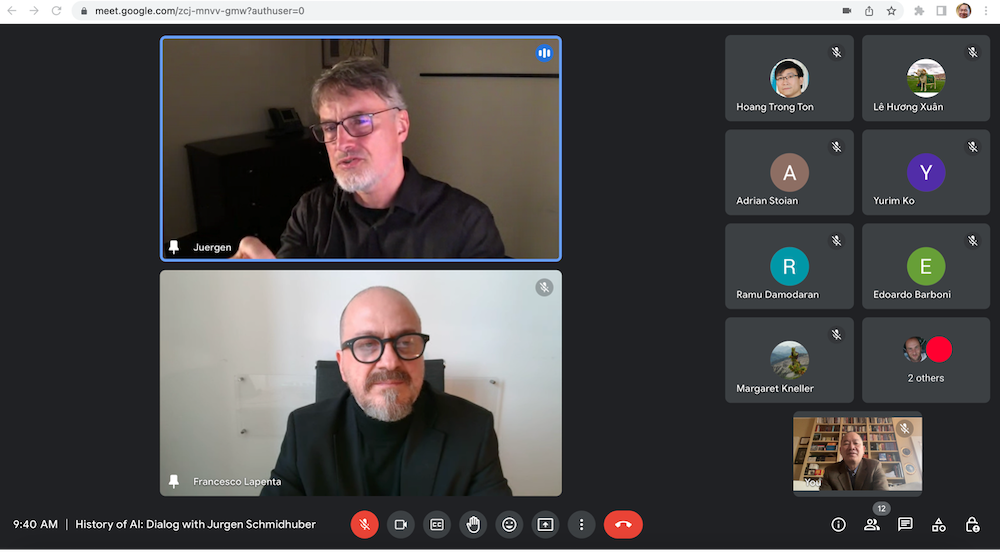
Jürgen Schmidhuber is a leading researcher in the field of artificial intelligence (AI) and is often referred to as the “father of neural networks.” He is renowned for his groundbreaking contributions to deep learning, which have had a profound impact on the development of AI and machine learning as we know it today. Schmidhuber is the co-founder and scientific director of the Swiss AI Lab IDSIA. He is a co-director of the Dalle Molle Institute for Artificial Intelligence Research and has received numerous awards and honors for his work, including the Helmholt Award from the International Neural Network Society, the IEEE Neural Network Pioneer Award, and the Neural Networks Pioneer Award from the IEEE Computational Intelligence Society. With over 600 scientific publications and a deep passion for exploring the frontiers of AI, Schmidhuber continues to inspire and challenge researchers around the world to push the boundaries of what’s possible in this rapidly evolving field.
Jurgen Schmidhuber spoke at the History of AI Roundtable of AIWS on February 17, 2023, moderator by Francesco Lapenta, Representative of Boston Global Forum in Rome. Here are some notes from his talk:
Some of his key accomplishments include:
Some key themes discussed in the dialogue.
Credit assignment
During the debate Schmidhuber developed a different interpretation of Credit assignment pointing to the practice of finding patterns in historic data and figuring out how certain events were enabled by previous events. Historians do it. Physicists do it. AIs do it, too. He looked at AI in the broadest historical context of all time since the Big Bang and found a pattern of evolution that will lead to the year of the Omega (2040). Credit assignment is a concept associated with his work and for which he is well known. In this more technical context the problem of credit assignment is determining how much credit or blame should be assigned to the various components of a learning system for achieving a specific outcome. Credit assignment in the context of machine learning and artificial neural networks refers to the process of determining how much credit each neuron or connection in the network should receive for producing a specific output. According to Jürgen Schmidhuber, credit assignment is a fundamental challenge for intelligent systems. An agent or system must be able to assign credit or blame to the actions and components that contributed to a specific outcome in order to learn and improve. This is especially difficult in complex environments where many factors may contribute to a given outcome and the consequences of an action may not be immediately apparent. According to Schmidhuber, the problem of credit assignment can be solved by combining gradient-based learning algorithms and reinforcement learning techniques. Agents can learn to assign credit or blame to the system components that are most responsible for achieving a specific outcome by using feedback from the environment to guide the learning process. This method has proven to be effective in a wide range of applications, including image recognition, natural language processing, and robotics.
Synthetic data
Data would be collected from a variety of sources, including synthetic data through simulations, experiments, or models, or use data labeling and augmentation techniques to increase the quality and quantity of data available for training AI models. There are several models that could be used by AI applications based on the process of collecting data from a variety of sources, including synthetic data through simulations, experiments, or models, or using data labeling and augmentation techniques to increase the quality and quantity of data available for training AI models. Schmidhuber’s Long Short-Term Memory (LSTM) network, a recurrent neural network that processes sequential data like text, speech, and video, is one of his most important contributions. Language translation, speech recognition, and image captioning use LSTMs. Reinforcement learning algorithms, which reward and punish an AI agent for good and bad decisions, are another area where Schmidhuber has contributed. Game-playing, robotics, and autonomous driving use reinforcement learning. Schmidhuber believes AI systems should design and improve their own algorithms and architectures. This “self-referential” approach could lead to the development of artificial general intelligence (AGI), which could perform a wide range of intellectual tasks at a human-level or beyond.
The year of the Omega (2040).
Jürgen Schmidhuber has proposed the concept of «Omega,» which he defines as the limit of the fastest possible self-improvement of an intelligent agent, Omega represents the point at which an AI system is improving itself pushing towards the limit of what is possible, Trough a series of patterns recognitions in the history of the universe Schmidhuber has speculated that the development of advanced AI systems could lead to a singularity event, in which the pace of technological progress accelerates rapidly and fundamentally changes the nature of human civilization. This singularity event could occur in 2040 as In fact, history seems to converge in an Omega point in the year 2040 or so., and its outcome is uncertain and what might happen after that is uncertain.
Francesco Lapenta
Jurgen Schmidhuber and Francesco Lapenta at the History of AI roundtbale
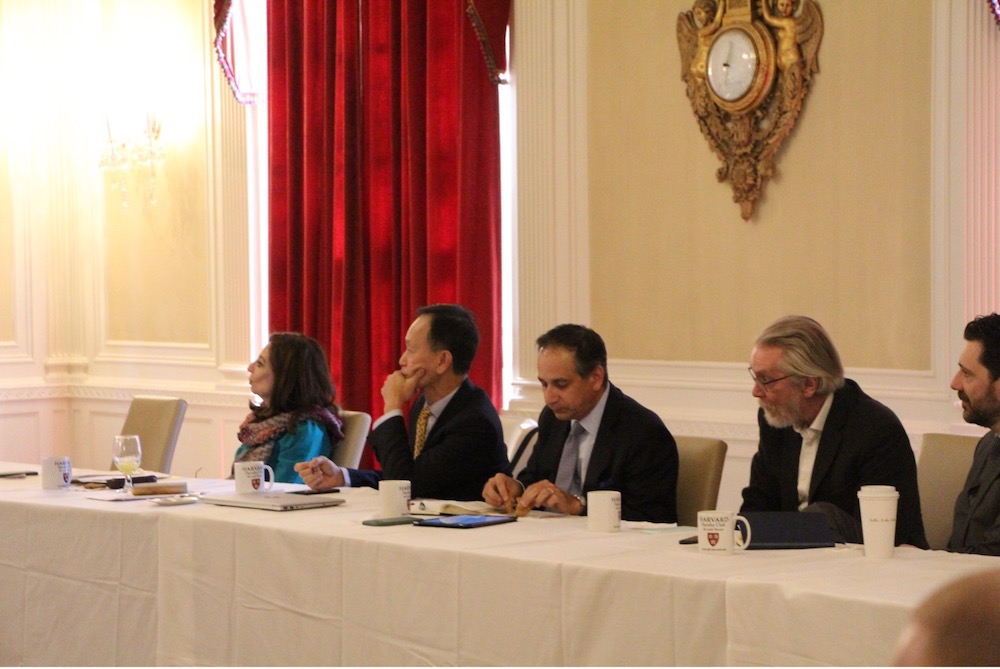
In the Social Contract for the AI Age, Boston Global Forum considered AI Assistants as a center of power of AI World Society – the Age of Global Enlightenment. On November 30, 2022, with the birth of ChatGPT, it provided the basis for operations of AI Assistants.
The Boston Global Forum and the Global Alliance for Digital Governance are pleased to host a series of High Level Dialogues on the potentials for ChatGPT as an AI Assistant and on the policies for management of AI Assistants in the AI World Society.
The purpose of these dialogues is to bring together renowned thought leaders and policymakers in AI and governance. These include Governor Michael Dukakis, co-founder and Chairman of the Boston Global Forum (BGF), MIT Professors Nazli Choucri and Alex Pentland, Harvard professors Thomas Patterson and David Silbersweig, Vint Cerf, “Father of the Internet”, as well as Amandeep Gill, UN Secretary-General Envoy on Technology, and Zlatko Lagumdzija, former Prime Minister of Bosnia and Herzegovina.
The purpose is to engage in a critical and thought-provoking discussion of ChatGPT and AI Assistants with focus on their impacts on society. The High Level Dialogues are designed to explore the benefits and challenges of AI Assistants, and especially how best to ensure their deployment is responsible, ethical, and transparent.
The dialogues focus on the development of Framework for Regulation of AI Asistants and of ChatGPT, designed in ways that promote privacy, accountability, and responsible uses of AI technology. These events will provide a platform for meaningful discussion of critical issues at the intersection of AI and society.
Concept outline
I. Introduction
Definition of ChatGPT and AI assistants
Importance of framework of regulation for these technologies
II. Background
Brief review of ChatGPT and AI assistants
Previous attempts at regulation
III. Current Challenges
Concerns surrounding privacy, ethics, and forms of bias in AI technologies
Need for the design of an overarching framework for regulation to address these challenges
IV. Key Elements of a Framework for Regulation
V. Implementation and Enforcement
Role of governments, industry stakeholders, and international organizations for enforcing the regulation framework
Importance of collaboration and cooperation among stakeholders
Mechanisms for holding companies accountable for non-compliance
Mechanisms for holding governments accountable for non-compliance
VI. Conclusion
Summary of the importance of regulation framework for ChatGPT and AI assistants
The need for a balanced approach that protects the rights of users and promotes innovation and progress in the development of AI technology.
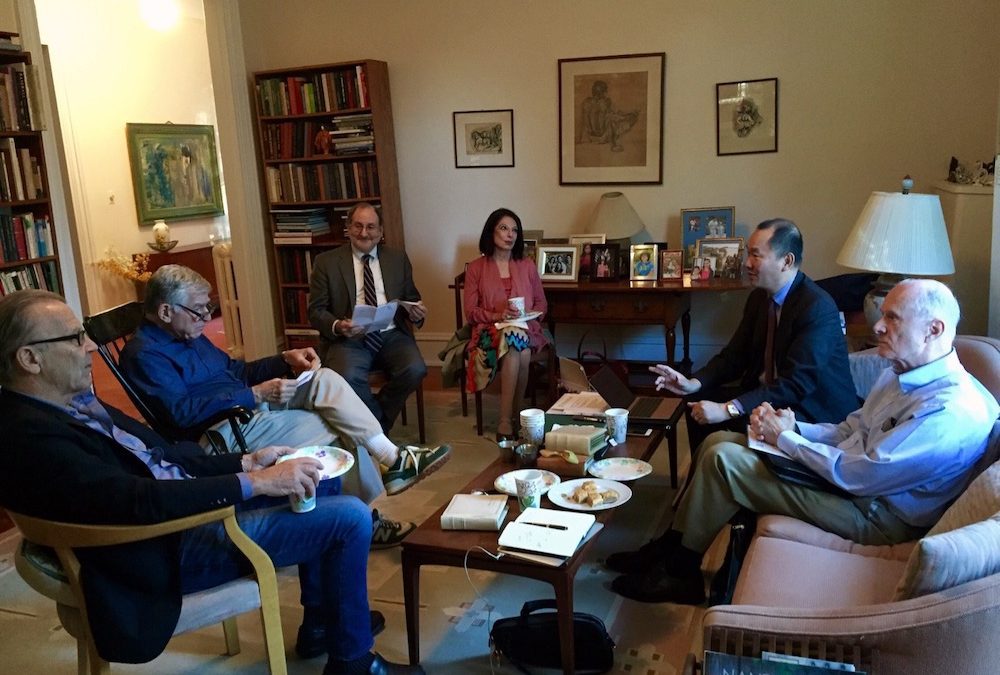
Vint Cerf, one of the fathers of the Internet, recipient of the World Leader in AIWS Award, and a Distinguished Contributor of the book “Remaking the World – Toward an Age of Global Enlightenment”, will be a keynote speaker at the High-Level Dialog on Regulation Framework for AI Assistants and ChatGPT. The conference, which will take place on February 28, 2023, will bring together thought leaders and experts to discuss in building regulating AI assistants and ChatGPT.
The concept of AI assistants was first introduced by Boston Global Forum in the Social Contract for the AI Age, announced in 2020. AI Assistants are seen as a center of power in the AI World Society and the Social Contract for the AI Age.
This is the first high-level conference in the world focused on regulation and law for ChatGPT and AI Assistants. The event will feature a series of panel discussions and presentations on topics such as transparency and accountability in AI algorithms, data privacy and protection, and ethical AI practices and guidelines. Participants will also explore the role of governments, industry stakeholders, and international organizations in enforcing the regulation framework.
“We are thrilled to have Vint Cerf as a keynote speaker at our High-Level Dialog on Regulation Framework for AI Assistants and ChatGPT,” said Nguyen Anh Tuan, CEO and Co-Founder of Boston Global Forum. “His extensive experience and expertise in the field of technology and regulation will be invaluable in advancing our understanding of the challenges and opportunities associated with regulating AI assistants and ChatGPT. This conference will be an important step forward in developing a comprehensive regulatory framework that protects the rights of users and promotes innovation in AI technology.”
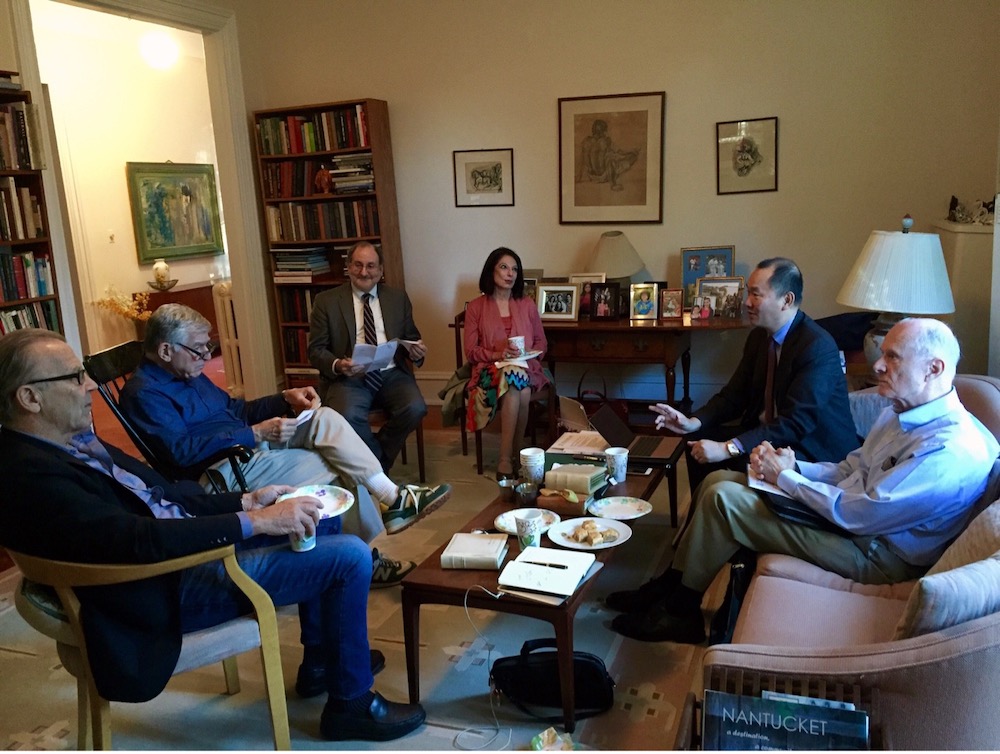
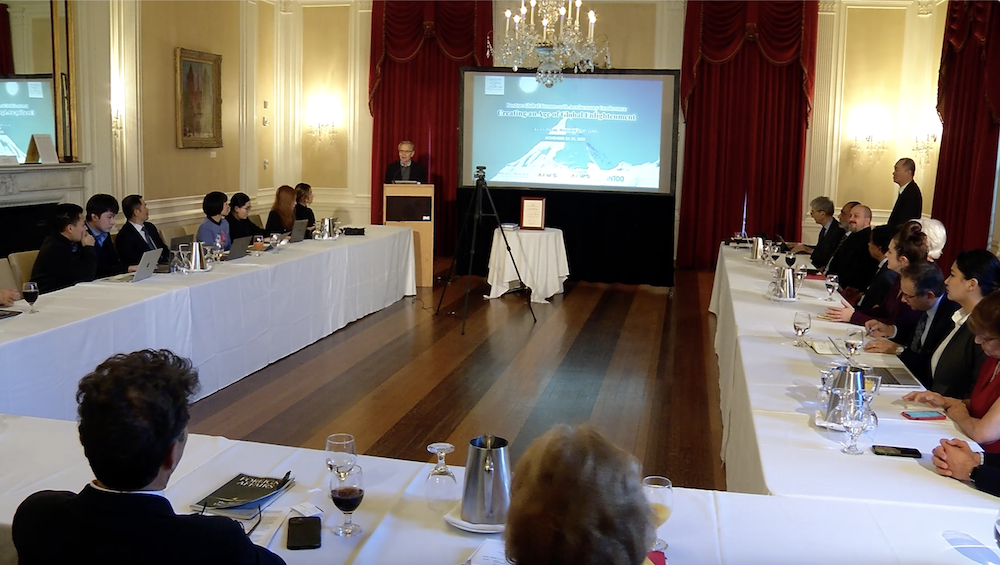
On December 19, 2022, Boston Global Forum officially published the eBook “Tribute to former Vietnamese Prime Minister Vo Van Kiet”.
The book includes the speeches of Global Enlightenment Leaders Governor Michael Dukakis, Harvard Professor Thomas Patterson, Prime Minister Zlatko Lagumdzija, and Co-Chair of United Nations Centennial Initiative Ramu Damodaran.
Please download eBook here.
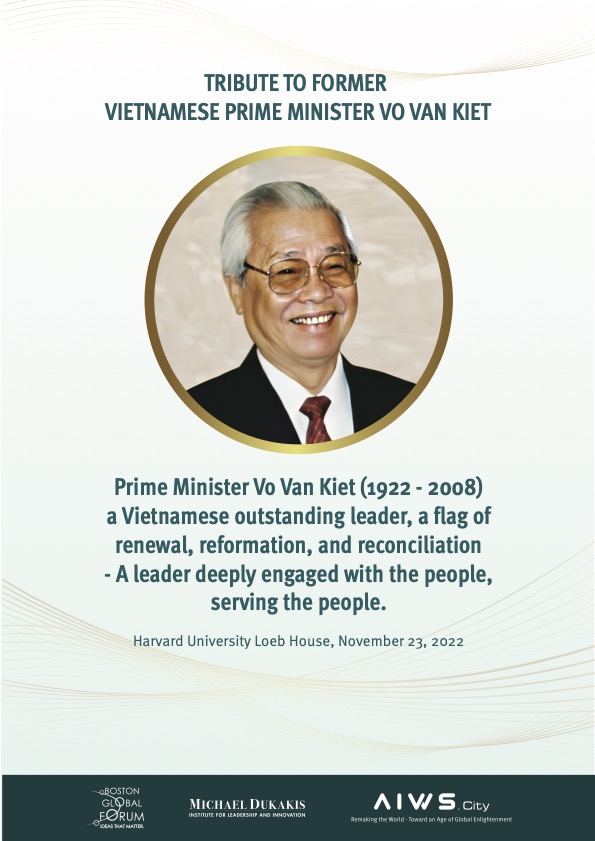
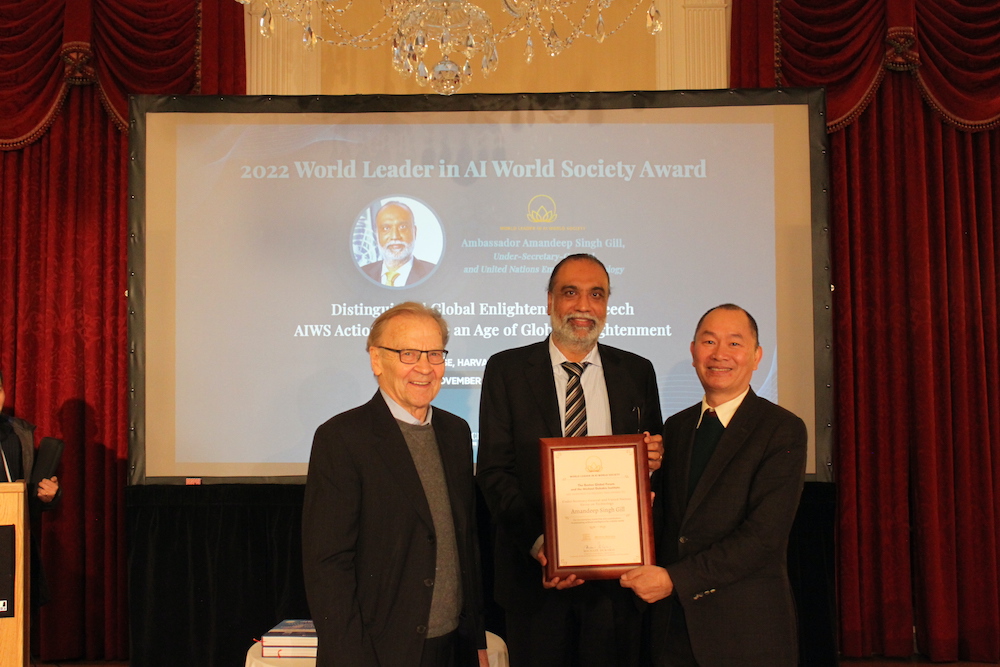
December 12, 2022, Boston Global Forum officially publishes the ebook “World Leader in AIWS Award 2022 and Manifesto ‘AIWS Actions to create an Age of Global Enlightenment’”. Please download Ebook – AIWS Award 2022