
by Editor BGF | Feb 12, 2025 | News
February 11, 2025
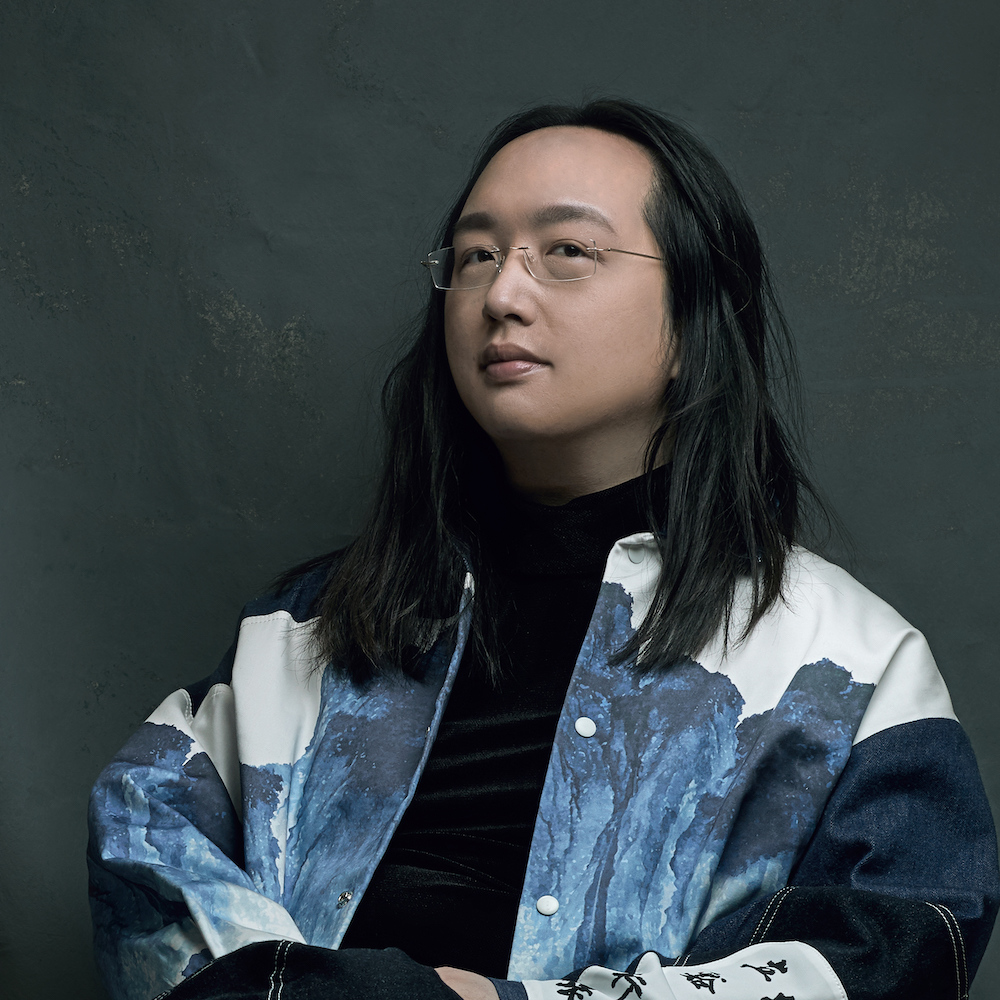
The Boston Global Forum (BGF) is proud to announce that the recipient of the 2025 World Leader in AI World Society (AIWS) Award is Audrey Tang, Taiwan’s Cyber Ambassador-at-Large and 1st Digital Minister (2016-2024). This prestigious award recognizes Tang’s remarkable contributions to advancing AI governance, innovation, and ethical applications that promote societal progress.
To honor Audrey Tang, BGF will organize a special Award Ceremony on April 22, 2025, at Harvard University’s Loeb House. This event will celebrate Tang’s exceptional leadership in shaping AI policies and fostering an inclusive, responsible, and innovative AI-driven world.
Each year, the Boston Global Forum presents two esteemed awards:
- World Leader for Peace and Security Award – Given to Heads of State, Governments, and International Organizations for their outstanding efforts in promoting global peace and security.
- World Leader in AI World Society (AIWS) Award – Conferred upon distinguished innovators and policymakers in AI who lead transformative advancements in AI governance and its application for social good.
The 2025 AIWS Award reflects BGF’s commitment to recognizing visionary leaders shaping the future of AI with responsibility, innovation, and ethical governance.
For more details on the award ceremony and Audrey Tang’s achievements, please visit BostonGlobalForum.org.
Media Contact:
Ramu Damodaran, BGF Executive Board Member
Email: [email protected]
Website: www.bostonglobalforum.org
by Editor BGF | Feb 9, 2025 | AI Action Summit, News
This pivotal session at the AI Action Summit Paris 2025 will explore the transformative potential of AIWS Government 24/7, a pioneering model designed to modernize governance with AI-driven, seamless public services operating 24/7. It will also introduce the “Creating a New Paris of Enlightenment” program, positioning France as a beacon of the AI Age—excelling in AI technology, economy, governance, and society while reviving its historical brilliance with a New Paris of Enlightenment.
Keynotes:
- “AIWS Government 24/7 and A New Paris of Enlightenment”
- “Creating A New Paris of Enlightenment”
- “Contribution of Enlightenment in Action Alliance (EAA) to AI Action Summit”
As a special tribute to President Emmanuel Macron and the people of France, “Creating A New Paris of Enlightenment” will position France as a global leader in the AI Age, reinforcing its commitment to technological advancement, ethical AI governance, and socio-economic progress.
Speakers:
- Mark Kennedy, Director, Wilson Center’s Wahba Institute for Strategic Competition
- Alex Pentland, MIT and Stanford Professor, Director of the MIT Connection Science
- Sharad Sharma, Co-founder of iSPIRT Foundation
- Nazli Choucri, MIT Professor of Political Science
- Thomas Patterson, Harvard Professor of Government and the Press
- Nguyen Anh Tuan, Co-founder, Co-chair, and CEO of Boston Global Forum
- Elisabeth Moreno, Former French Minister for Gender Equality, Diversity, and Equal Opportunities
- Yasuhide Nakayama, Former Japanese State Minister of Defense and Foreign Affairs
- Pedro Fernandes Lopes, Secretary of State for the Digital Economy, Cabo Verde
- Jean-Marc YACE, Mayor of Cocody City, Ivory Coast
- Yi-Jing Lin, Deputy Minister of Digital Affairs, Taiwan
- Sarosh Nagar, Harvard & University College London (UCL), Enlightenment in Action Alliance (EAA)
Time: 15:30 – 17:00, February 11, 2025, Paris time.
Venue: Salle des Actes
ENS, Paris PSL, 45 Rue d’Ulm, 75005 Paris, France
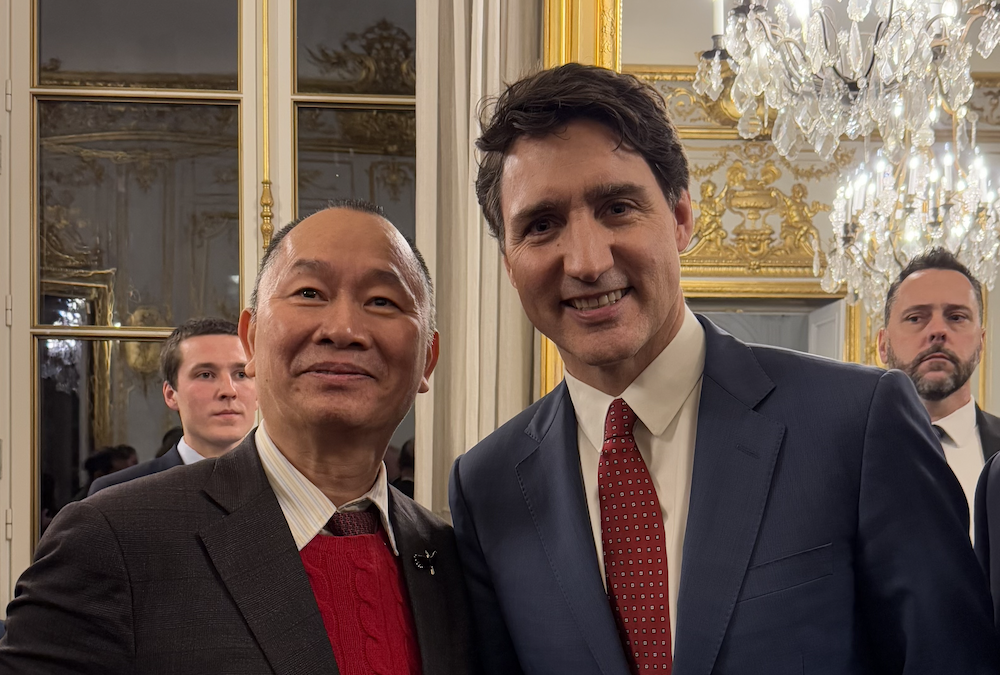
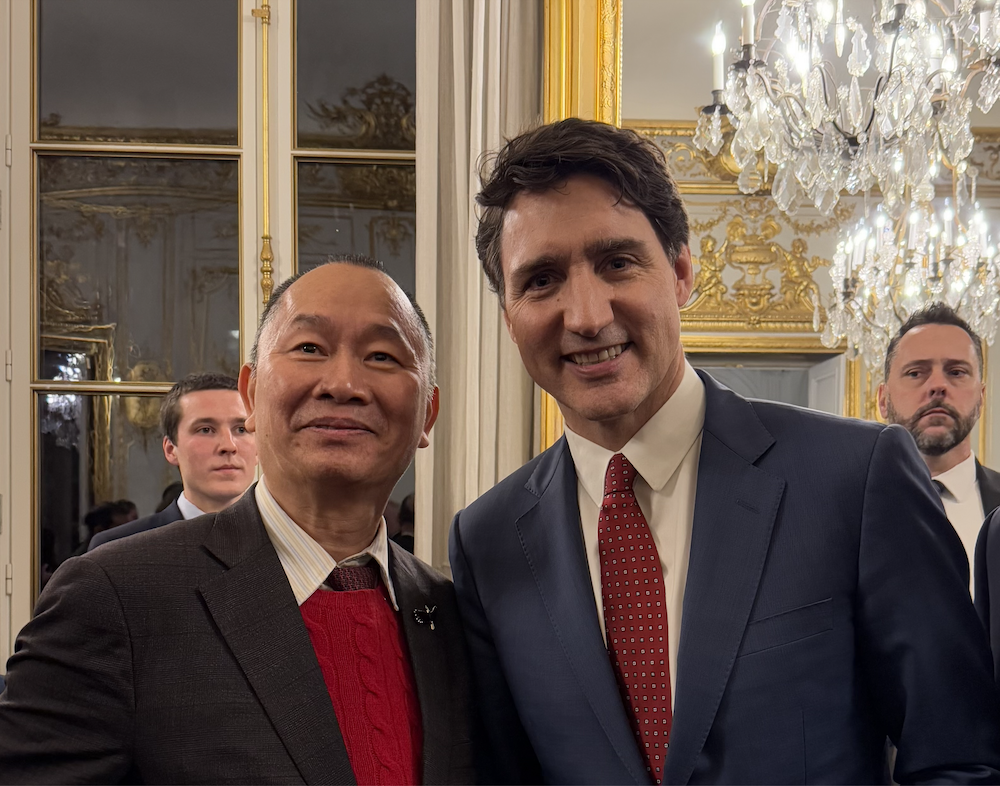 Co-Chair and CEO of BGF Nguyen Anh Tuan and Canadian Prime Minister Trudeau at AI Action Summit

by Editor BGF | Feb 9, 2025 | News
A federal judge paused the Trump administration’s efforts to drastically scale back the U.S. Agency for International Development, temporarily halting plans to put 2,200 employees on leave by midnight on Friday.
Shortly before those plans were set to take effect, U.S. District Judge Carl Nichols, a Trump appointee, issued a limited temporary restraining order blocking the government from putting USAID employees on leave and reinstating 500 staffers who had already been placed on administrative leave. The order also paused a directive recalling overseas USAID employees to the U.S.
The restraining order is in effect until next Friday, Feb. 14 at 11:59pm. Judge Nichols scheduled a hearing on Feb. 12.
Federal judge blocks Elon Musk’s DOGE access to critical Treasury payment system
A federal judge, citing a risk of “irreparable harm,” has temporarily restricted Elon Musk’s government efficiency team from accessing a critical Treasury Department payment system.
The judge’s order, issued early Saturday, temporarily halts access to a sensitive payment system that distributes Americans’ tax returns, Social Security benefits, disability payments and federal employees’ salaries.
US District Judge Paul Engelmayer ordered the destruction of any downloaded information from the payment system by anyone given access to it since January 20, citing “the risk that the new policy presents of the disclosure of sensitive and confidential information and the heightened risk that the systems in question will be more vulnerable than before to hacking.”
https://edition.cnn.com/2025/02/08/politics/elon-musk-doge-treasury-payment-system/index.html
https://www.nytimes.com/2025/02/07/us/politics/judge-will-freeze-elements-of-trump-plan-to-shut-down-usaid.html
https://www.npr.org/sections/goats-and-soda/2025/02/07/g-s1-47224/usaid-freeze-judge-trump

by Editor BGF | Feb 9, 2025 | World Leader for Peace and Security, News, World Leaders in AIWS Award Updates
Paris, February 10, 2025 – Nguyen Anh Tuan, Co-founder, Co-chair, and CEO of the Boston Global Forum (BGF), will deliver a special tribute to President Emmanuel Macron and the people of France at the AI Action Summit Paris 2025. The tribute, under the theme “Creating a New Paris of Enlightenment,” will celebrate France’s leadership in AI innovation and governance.
This initiative, spearheaded by BGF and the Enlightenment in Action Alliance (EAA), supports France’s implementation of Government 24/7, an AI-driven governance model that ensures seamless and efficient public services. It also aims to position France as a global leader in ethical AI development and a driving force in shaping the AI-powered future.
Keynotes from “Creating a New Paris of Enlightenment”
The summit will feature distinguished speakers presenting strategic AI-driven innovations and policies, including:
- “AIWS Government 24/7 and A New Paris of Enlightenment”
- “Creating A New Paris of Enlightenment”
Keynotes from EAA Contributions
The Enlightenment in Action Alliance (EAA), composed of outstanding students from top universities worldwide, will present its contributions to “Creating a New Paris of Enlightenment”, which include:
- Establishing an AIWS Cloud Laboratory to Accelerate Scientific Research
- Forming an AIWS International Data Library
- Launching AIWS AI for Rural Communities
- Blockchain-Based AI Remote Civil Services
- The AI National Cyber Defense Shield
- AI National Job Market Matching System
A Historic Moment in Global AI Collaboration
This tribute marks a historic milestone in global AI cooperation, cementing France’s leadership in the AI Age and its pivotal role in shaping the future of AI-driven governance and innovation. Through the collaborative efforts of BGF and EAA, the summit will emphasize the importance of ethical AI governance, innovative public service solutions, and France’s vision for a more inclusive and sustainable AI-driven world.


by Editor BGF | Feb 9, 2025 | News, Shaping Futures
On February 3, 2025, the National Institute of Advanced Industrial Science and Technology (AIST) signed a Memorandum of Understanding (MOU) with Intel Corporation (Intel) to strengthen their collaboration for the industrialization of quantum technology.
Through this partnership, AIST’s Quantum-AI Fusion Technology Business Development Global Research Center (G-QuAT) will integrate its evaluation testbed and device manufacturing capabilities with Intel’s cutting-edge semiconductor processes.
The goal is to realize a system with tens of thousands of qubits at an industrially viable level by the early 2030s. Specifically, the collaboration will focus on evaluating and optimizing materials and components essential for silicon quantum computer systems, developing implementation technologies, advancing refrigeration technology for large-scale quantum computers, integrating qubits, and developing cryogenic electronics for qubit control.
- AIST and Intel signed an MOU to strengthen collaboration on industrializing quantum technology, focusing on silicon quantum computers.
- The partnership integrates AIST’s G-QuAT research center capabilities with Intel’s established semiconductor processes to potentially develop a system with tens of thousands of qubits by the early 2030s.
- The collaboration will optimize materials, develop implementation and refrigeration technologies, integrate qubits, and create cryogenic electronics for large-scale quantum computing.
https://thequantuminsider.com/2025/02/07/aist-and-intel-strengthen-collaboration-for-industrialization-of-silicon-quantum-computers/
https://asia.nikkei.com/Business/Technology/Japan-lab-and-Intel-set-out-to-develop-next-gen-quantum-computer