
by Editor BGF | Nov 24, 2024 | News
Top telecom executives met with US national security officials at the White House on Friday November 22, 2024 as concerns mount over a long-running Chinese cyber-espionage campaign that has targeted some of the most senior US political figures in the country.
The hackers burrowed deep into some major US telecom providers to spy on phone calls and text messages and have proved difficult to kick out of some networks, people briefed on the matter said.
The meetings were a chance for telecom executives to advise the government on how it could boost its defenses against sophisticated hacks, according to the White House. The groups also shared intelligence on the operation with one another.
The hack is shaping up to be one of the biggest cyber and national security challenges facing the incoming Trump administration.
In another indicator of the growing concerns about the cyber-espionage campaign, an all-senators classified briefing is scheduled for December 4, after Congress returns from recess next month, according to a Senate aide.
Please see full here: https://www.cnn.com/2024/11/23/politics/chinese-cyber-espionage-telecom-execs/index.html
and: https://www.reuters.com/technology/cybersecurity/white-house-officials-meet-with-telecoms-execs-suspected-china-hack-2024-11-23/

by Editor BGF | Nov 24, 2024 | Papers & Reports, Publications
Mark Kennedy’s speech at the BGF Conference “AIWS – New Democracy”
Harvard University Loeb House, November 25, 2024
During my first year in Congress in 2001, I faced a vote on whether to maintain Normal Trade Relations with the People’s Republic of China (PRC). I shared the belief of many at that time that democracy and capitalism were on the march and that digital technologies would empower citizens and consumers to help both spread across the planet. We believed then that the internet would empower citizens to hold their governments accountable. It was inconceivable that innovation could flourish in an environment of restricted access to information like in the PRC. We hoped that greater engagement with China would integrate them into the rules-based international order. With this view of the future, I voted to continue China’s trade status.
Oops.
The passage of time has revealed three realities. First, technology has undermined democracy and empowered authoritarian regimes. Second, the PRC is intent on undermining the rules based global order. Third, closed societies like the PRC can advance technology.
In 2017, the PRC issued an artificial intelligence (AI) development plan seeking to establish China as the world leader in AI by 2030. In August of 2021, China surprised the US by testing a new hypersonic missile that circled the globe and then maneuvered to its target with its guidance and maneuvering likely using AI. This threat to the US homeland was enabled in significant part by American technology. Even so, it demonstrated how the PRC’s unwavering focus and immense government resources can achieve ambitious technology goals.
Inflection Point
The US is at an inflection point. Depending on our response, we will either retain our edge in AI and other technologies that underwrites our economic leadership and our military superiority or surrender it to an ascendant China at great risk to our future prosperity and national security.
A congressionally mandated bipartisan commission led by Eric Schmidt, former CEO of Google, and former Deputy Secretary of Defense Robert Work concluded in 2021:
“America is not prepared to defend or compete in the AI era. This is the tough reality we must face. And it is this reality that demands comprehensive, whole-of-nation action…to defend against AI threats, responsibly employ AI for national security, and win the broader technology competition for the sake of our prosperity, security, and welfare… China’s plans, resources, and progress should concern all Americans. It is an AI peer in many areas and an AI leader in some applications. We take seriously China’s ambition to surpass the United States as the world’s AI leader within a decade.”
America’s actions to preserve our leadership in AI should match the scale of impact on our way of life if we lose our tech edge. Here are ten steps that America urgently must take to preserve its leadership in AI.
AI’s rate of adoption will be determined by people’s acceptance of the technology as much as by the pace the technology advances. In Edelman’s annual survey, global trust in AI companies fell to 53% from 61% five years ago. Trust in the US dropped more – by 15 percentage points and to a lower level, with only 35% trusting AI companies. AI must be implemented in a way that Americans trust and the world trusts more than that offered by competitors.
Earning trust begins with raising the level of society’s understanding of AI’s importance to US competitiveness and the risks of letting the PRC take the lead in AI. Education institutions must better prepare the workforce for the future. The safety net must efficiently address any job dislocations. Governments should leverage AI to deliver better public services, not to undermine civil rights. To the extent possible, companies and governments should put control into the hands of the users.
America should implement balanced regulations that encourage innovation while addressing risks like algorithmic bias and misinformation. Overly restrictive regulations risk allowing the PRC to gain the lead, giving autocracies an edge over democracies.
- Invest in America’s Capabilities
Sanctions to limit access to US technology has limits. Overcoming US sanctions on the company since 2017 and more recent advanced chip restrictions, Huawei’s new chip is allowing it to gain smartphone market share from Apple. The US must sprint to stay ahead.
Research. Concerned that the PRC is approaching the US in total research spending, the Chips and Science Act passed in 2022 authorized a significant increase in research support. Yet Congress is failing to appropriate the level of research funding authorized. Fully funding the authorized research spending is essential for the US to retain its innovative edge, including dramatically increasing funding to spur discovery in foundational and applied AI technologies.
Talent. The PRC graduates twice the number of Science, Technology, Engineering and Math (STEM) PhDs as the US. With the US ranking near the bottom in the percentage of graduates pursuing STEM fields, it has long relied on attracting the world’s best and brightest. Visas for Chinese students and academics have fallen by two-thirds since peaking in 2015. A recent surge in students from India is taking up some of the slack. It is important that policies and a welcoming environment continue to attract the global AI talent essential to US tech leadership while investing more in STEM education for American students.
Compute Advantage. More powerful semiconductors give America a critical AI advantage today. To keep ahead, America must gain a decisive lead in emerging technologies that promise faster and greener compute power like optical computing (using laser light waves), neuromorphic computing (modeled after systems in the human brain) and quantum computing (using subatomic particles).
Innovative Ecosystem. Creating an ecosystem where AI can thrive requires access to high-quality, diverse datasets that safeguard privacy and cybersecurity. Collaborations between tech companies, academia, and government accelerate AI breakthroughs. A vibrant venture capital market that fosters AI-focused startups is another American advantage it must maintain.
Not wanting to sell rope that may be used to hang it, the US implemented export controls for advanced semiconductors and chip-manufacturing equipment in October 2022. Bifurcating technology markets comes at a cost, but security must take priority.
Last August, the government implemented outbound investment restrictions on technologies with important security implications–semiconductors, AI, and quantum computing.
Access to restricted AI chips is still allowed through cloud-based services and advanced AI models. The US should apply restrictions in both categories, doing so in a way that preserves security while also ensuring global tech leadership.
The difficulty in implementing restrictions was evident in the mysterious appearance of TSMC tech in Huawei’s recent chips. Effective restrictions must evolve as technologies advance and workarounds are discovered. Since “More than nine-tenths of the time it takes an AI model to respond to a user query is spent shuttling data back and forth between logic and memory chips” restrictions on high-bandwidth memory (HBM) chips should be considered.
- Don’t Allow Things or People to be Manipulated
Things. The PRC’s Cybersecurity and National Intelligence laws compel companies to allow the government to secretly access data. The PRC’s recent tech crackdown reflects an even tighter control of private companies. These actions raise concerns about the ability of the PRC to spy or disrupt. This has motivated limitations on Huawei telecom equipment, port cranes, and software on vehicles. Further restrictions are being proposed for small drones and LiDAR sensors. The PRC is implementing its own restrictions.
The US needs to comprehensively survey the landscape and address all vulnerabilities where a competitor could access and control America’s things. The US needs to pay more attention to nations it might rely on to mobilize against PRC aggression. If PRC President Xi Jinping knows that Huawei’s heavy presence in the Philippines allows it access to detect US intent and complicate US action, it limits the deterrence impact of the expanded US military presence there.
People. The US is also rightly concerned about outside powers seeking to influence American public opinion whether it be through deep fakes or the algorithms of social media platforms. This is the logic behind the forced sale or ban of TikTok. The US needs to comprehensively address all platforms that present similar risks.
- Eliminate Dependencies in Tech Supply Chain
While continued trade ties between the US and the PRC helps deter aggression, Xi Jinping could be tempted to act if he perceived the US as so dependent for critical supplies on the PRC that America would be hamstrung if conflict arose.
This has led the US government to intensify its focus on supply chains and subsidize domestic semiconductor production. To achieve true resilience the US must do more to cultivate diversified supply sources for needed goods and services by working with other countries to develop authentically separate supply chains. This is particularly true for rare earth elements and ingredients essential for tech manufacturing.
- Market to Most Nations Possible
Restricting the PRC’s access of advanced chips will intensify its efforts to enhance its own semiconductor supply chain. Western chip equipment companies “are already seeing declines in revenue as they are forced to leave the Chinese market.” America risks losing it global market leadership that funds the research necessary to keep a tech lead if it does not proactively seek to include as many nations as possible in its tech ecosystem. The PRC is aggressively advancing its own AI exports with initiatives like the Digital Silk Road. The PRC will be happy to add as a customer any country the US excludes. Tech restrictions must seek to preserve security while permitting selling technology to the greatest number of nations possible.
The Gulf countries are an example of the choices America faces. They are offering huge subsidies and cheap energy to grow an AI industry. Saudi Arabia has committed to spend $100 billion on AI to keep up with its neighbor, the UAE. America has concerns sharing its most cutting-edge technologies given human rights concerns and their deep academic and business connections with the PRC. Yet America doesn’t want them to unambiguously join the PRC camp if denied access to US technology. The government’s balancing is reflected in Microsoft’s collaboration with the Saudi Data and AI Authority to advance innovation in the Kingdom’s Generative AI sector. These decisions must be carefully weighed and continuously monitored.
In the age of AI, those with the most data are advantaged. China’s data is generally not available to the US, while China can access many non-sensitive US data sets. America’s openness is its strength, but careful consideration must be given as to which datasets should be restricted.
Huawei has a 35% to 40% market share of equipment outside of North America. Is it finding opportunities to intercept data to be used for AI training without the owners’ knowledge? This is easiest to imagine where it offers its equipment as a managed service. There are similar concerns with the rapid expansion of Chinese cloud providers in Southeast Asia and Latin America. Chinese subsidies give it an edge. Data localization requirements and price sensitivity hamper US cloud providers. US must do more to promote trusted and secure data strategies.
The digital yuan, China’s central bank digital currency, is designed with the capacity to collect data on its users and transactions. This adds urgency to the contest over payment systems.
Global standards will either support AI systems that empower citizens or control them. The PRC has long sought to influence global standard setting bodies like the International Telecommunication Union. America must work closely with private industries and allies to ensure that international bodies set technical standards for AI that align with its values.
Alignment on Tech Restrictions. Actions on limiting access by revisionist powers to technology will only work if allies with similar technologies don’t circumvent such restrictions. That is why the US has worked closely with Japan and the Netherlands in crafting restrictions on advanced chips and chip-making equipment. It would be impossible to effectively restrict high-bandwidth memory (HBM) chips without the collaboration of South Korean producers Samsung and SK Hynix. Aligning actions among nations is hard, particularly with significant commercial interests at stake. Staying aligned with allies and partners will be both more important and more difficult as the AI race progresses.
Innovating Together. Innovation productivity is fueled by iterative collaboration among those who specialize in a specific field. It is vital that the US and its allies tighten research collaboration to maintain an aggregate lead in critical technologies. US scientists currently collaborate twice as much with Chinese partners as they do with those from Europe. Yet Europe has much to offer. For example, the EU is a strong competitor to China in all quantum technologies, including post-quantum cryptography, where the US lags China. The US would also benefit from more proactively pooling resources, talent, and innovation for AI advancements with European and Asian allies.
- Stay ahead on Defense AI Applications
AI is transforming warfare as shown by Ukraine’s success with AI driven drones. Both the PRC and the US are investing heavily in AI-driven military applications. The applications of AI are pervasive across the military – empowering autonomous vehicles on land, sea and air; digesting data from satellites, drones and other sensors to detect objects, spot anomalies and identify threats; responding to cybersecurity threats in real time; optimizing battlefield strategies; improving logistics; delivering virtual training and simulation; pinpointing targeting; engaging in offensive and defensive electronic warfare; facilitating human-machine teaming; permitting more flexible orbital warfare.
President Joe Biden recently released a National Security Memorandum on Artificial Intelligence. It “unequivocally states” the government should use AI only in ways that “align with democratic values,” and “specifically requires agencies to monitor the risk AI systems can pose when it comes to privacy, discrimination and human rights”. Providing clear guardrails can help accelerate adoption of AI in the defense and intelligence communities.
Yet arduous procurement systems, political forces resisting efforts to drop legacy systems and delays due to repeated continuing resolutions slows the US military’s implementation of AI-powered systems it needs to stay ahead. The PRC benefits from building its military capabilities anew. It is critical that the US finds ways to integrate new technologies quicker and better than the PRC.
Close
US actions to secure AI leadership are too ad hoc. Success requires a plan that comprehensively addresses the above action steps and authorizes a streamlined interagency effort. Governance should address real risks addressing AI bias, privacy and safety. But the US must also stay full speed ahead. While keeping a close eye on the risks of AI, it is important to ensure that governance efforts don’t disadvantage the US.
Another vote I took during the spring of 2001 was to stop debating the design of the World War II Memorial, now on our nation’s mall, and proceed with its construction. Only by taking the necessary steps to win the AI race can US strength deter aggression and avoid adding any more memorials to our national mall.


by Editor BGF | Nov 24, 2024 | Papers & Reports, Publications
Boston Global Forum, November 23, 2024
Abstract
The “AI World Society – New Democracy” is a comprehensive special report that envisions the transformative potential of artificial intelligence (AI) in reshaping democratic societies for the digital age. Building upon the AI World Society (AIWS) principles and the model based on the Social Contract for the AI Age, as well as the initiatives presented at the BGF-G7 Summit 2018 and AIWS-G7 Summit 2019, and elaborated in the book “Remaking the World – Toward an Age of Global Enlightenment”, this report outlines a framework for integrating AI ethically and effectively across key sectors, including governance, economy, education, healthcare, and culture. It emphasizes the importance of upholding democratic values, human rights, and ethical standards in the development and deployment of AI technologies.
A special practice to this vision is the designing and development of Boston Areti AI (BAI), a pioneering AI agent designed to assist government leaders in making informed, smart, optimal, ethical, and compassionate decisions. BAI embodies the AIWS principles by providing personalized support to leaders in their thinking, actions, decision-making, and personal well- being.
Furthermore, the report contributes strategies and solutions for New Democracies to effectively compete with authoritarian regimes in the global AI landscape, particularly in the AI-driven economy. By empowering democratic societies with ethical AI tools and frameworks, the report aims to strengthen their position in the international arena, promoting a model of AI development that prioritizes human rights, transparency, and societal well-being over control and coercion.
We invite scholars, policymakers, technologists, and citizens to contribute to this ongoing work. The complete report will be officially announced and discussed at the Boston Global Forum Conference on April 22, 2025, at Harvard University Loeb House. Your insights and participation are crucial in shaping a future where AI serves as a force for good in strengthening democracy and enhancing the quality of life for all.
AIWS Government: Reforming and Innovating Governance
The AIWS Government model represents a transformative approach to governance, leveraging AI technologies to address the challenges faced by traditional political systems. It aims to create government structures that are efficient, transparent, and responsive to the needs of citizens. By integrating AI into governmental operations, the AIWS Government seeks to enhance service delivery, improve policy-making processes, and foster greater citizen engagement.
Key Features of AIWS Government
- 24/7 Operations with AI Assistance
-
- Shift-Based Model: Implementing a three-shift system supported by AI allows government services to be accessible at all times, ensuring that citizens can receive assistance whenever they need it.
- AI Support: AI-powered chatbots and virtual assistants handle routine inquiries, providing instant support and information.
2. AI-Driven Policy Making
- Big Data Analytics: Utilizing vast datasets to make informed, evidence-based
- Real-Time Adaptation: AI tools enable policies to be adjusted in real-time based on current data and trends.
- Predictive Insights: Anticipating future challenges and opportunities through AI
3. Enhancing Transparency and Accountability
- AI and Blockchain Integration: Providing secure and transparent transactions, ensuring data integrity.
- Open Data Initiatives: Encouraging citizen participation by making government data accessible and understandable.
- Citizen Feedback Mechanisms: AI analyzes public input to improve services and policies.
4. Smart Governance Models
- Automation of Routine Tasks: AI handles administrative functions, allowing staff to focus on complex issues.
- Resource Optimization: Efficient allocation of resources based on AI
- Interdepartmental Coordination: AI facilitates communication and collaboration across government agencies.
5. Citizen Engagement and Participation
- AI-Powered Platforms: Facilitating public consultations, virtual town halls, and personalized communication.
- Personalized Services: Tailoring government services to individual citizen
- Inclusive Access: Ensuring services are accessible to all, including those with disabilities or in remote areas.
Benefits of AIWS Government
- Increased Efficiency: Streamlined processes and AI automation reduce delays and operational costs.
- Enhanced Accessibility: Services are available to all citizens, regardless of location or
- Improved Decision-Making: Data-driven insights lead to more effective and impactful
- Greater Transparency: Open data and clear communication build public
- Ethical Governance: Adherence to AIWS ethical standards ensures that AI is used responsibly and for the public good.
Boston Areti AI (BAI): A Pioneering Program for AIWS-New Democracy
Boston Areti AI (BAI) is an advanced artificial intelligence agent developed under the AIWS framework by the Boston Global Forum (BGF). Named after the Greek word “Areti,” meaning “virtue,” BAI embodies the principles of ethical AI, aiming to assist government leaders in their professional roles and personal lives.
How BAI Assists Government Leaders
- Enhancing Thinking and Strategic Planning
- Comprehensive Analysis: BAI processes extensive data to provide leaders with deep insights into current events, policy impacts, and global trends.
- Insight Generation: Identifies patterns and offers innovative perspectives to stimulate strategic thinking.
- Scenario Planning: Simulates potential outcomes of decisions, helping leaders anticipate future challenges and make optimal choices.
2. Supporting Actions and Implementation
- Actionable Recommendations: Translates decisions into practical implementation plans.
- Resource Optimization: Advises on effective allocation of resources to maximize impact.
- Monitoring and Feedback: Tracks progress and provides real-time updates for
3. Enhancing Decision-Making Processes
- Data-Driven Support: Offers evidence-based insights and predictive analytics to inform decisions.
- Cross-Sector Analysis: Integrates information from various sectors for a holistic
- Collaborative Tools: Facilitates consensus-building and stakeholder
4. Supporting Personal Lives and Well-being
- Work-Life Balance: Assists with time management and stress reduction
- Continuous Learning: Recommends educational resources and provides constructive feedback for personal development.
- Ethical and Emotional Support: Offers a confidential space for exploring ideas and navigating ethical dilemmas.
5. Personalization and Adaptability
- Tailored Interaction: Adapts to individual preferences and communication styles for effective collaboration.
- Adaptive Learning: Learns from interactions to provide more aligned assistance over time.
- Security and Privacy: Ensures confidentiality and compliance with data protection regulations, safeguarding sensitive information.
BAI’s Role in AIWS-New Democracy
BAI serves as a practical embodiment of the AIWS principles, demonstrating how AI can be integrated into governance to promote ethical decision-making, enhance efficiency, and improve citizen satisfaction. By directly supporting leaders, BAI contributes to:
· Ethical Leadership
- Encouraging decisions that uphold human rights, democratic values, and ethical
- Providing moral reasoning and ethical analysis to guide
· Effective Governance
- Enhancing the government’s ability to respond to citizen needs promptly and
- Streamlining policy implementation and service delivery through intelligent
· Personal Well-being of Leaders
- Supporting the mental and emotional health of leaders, enabling them to perform at their best.
- Offering tools for stress management, work-life balance, and personal
· Innovation in Public Services
- Introducing advanced technologies to improve service delivery and policy
- Fostering a culture of continuous improvement and innovation within
Conclusion
The “AI World Society – New Democracy” report outlines a visionary framework for integrating AI into democratic societies in a manner that is ethical, effective, and aligned with the core values of democracy and human rights. By adopting models like AIWS Government and leveraging technologies such as Boston Areti AI (BAI), democratic nations can enhance their governance structures, compete effectively in the global AI economy, and offer a compelling alternative to authoritarian approaches.
The report provides strategies and solutions for New Democracies to effectively compete with authoritarian regimes in the global AI landscape, particularly in the AI-driven economy. By empowering democratic societies with ethical AI tools and frameworks, we aim to strengthen their position in the international arena, promoting a model of AI development that prioritizes human rights, transparency, and societal well-being.
We encourage all interested parties to join us in this endeavor. Your contributions will help shape policies and practices that ensure AI serves as a tool for positive transformation, fostering societies that are more just, prosperous, and aligned with the principles of the AI World Society.
Save the Date: Please join us for the official announcement and discussion of the complete report at the Boston Global Forum Conference on April 22, 2025, at Harvard University Loeb House. Together, we can work towards a future where technology and humanity thrive in harmony.
For Contributions and Inquiries:
If you have insights, research, or ideas that you would like to contribute to the report, please reach out to the Boston Global Forum at [email protected]. Your participation is invaluable in shaping a future where AI strengthens democracy and enhances the quality of life for all.
References
- AI World Society (AIWS) Model
- Social Contract for the AI Age
- BGF-G7 Summit 2018 Initiative
- AIWS-G7 Summit 2019 Initiative
- “Remaking the World – Toward an Age of Global Enlightenment

by Editor BGF | Nov 17, 2024 | News
Date: November 25, 2024
Time: 8:15 AM – 12:00 PM
Venue: Harvard University Loeb House, 17 Quincy Street, Cambridge, MA 02138
Agenda
8:15 AM – 8:30 AM
Guest Arrival and Networking
8:30 AM – 8:40 AM
Welcome Remarks
- Thomas Patterson, Professor of Government and the Press, Harvard Kennedy School; Co-founder, Boston Global Forum
8:40 AM – 9:00 AM
Ceremony of the 2024 BGF World Leader for Peace and Security Award
- Honoring: French President Emmanuel Macron
- Remarks of Honor:
-
- Governor Michael Dukakis, Co-founder and Chairman, Boston Global Forum
-
- French President Emmanuel Macron
-
- Hon. Élisabeth Moreno, Former French Minister; Representative of BGF in Africa
- Topic: “AIWS for New Democracy”
9:00 AM – 10:30 AM
Keynote Speech and Discussion
-
- Audrey Tang, Cyber Ambassador-at-Large, Former Minister of Digital Affairs, Taiwan
- Topic: “AIWS and Taiwan: AI for Democracy”
- Discussion with Audrey Tang:
-
- Bruce Schneier, Lecturer in Public Policy, Harvard Kennedy School
- Prof. Nazli Choucri, Professor of Political Science, MIT
-
- Thomas Patterson, Professor of Government and the Press, Harvard Kennedy School
10:30 AM – 10:40 AM
Short Break
- Light refreshments provided.
10:40 AM – 11:50 AM
Panel Discussion: “AIWS for New Democracy: Strategies for Democracy to Win in the AI Battle”
-
- Thomas Patterson, Professor of Government and the Press, Harvard Kennedy School
-
- Prof. Alex ‘Sandy’ Pentland, Professor, MIT Media Lab
- Hon. Mark Kennedy, Director, Wilson Center’s Wahba Institute for Strategic Competition
- Dr. Yi-Jing Lin, Deputy Minister of Digital Affairs, Taiwan
- Prof. Daniela Rus, Director of CSAIL, MIT
-
- Strategies for implementing AIWS (AI World Society) principles in democratic societies.
- Overcoming challenges posed by authoritarian regimes misusing AI.
- Building international cooperation for AI governance.
- The role of AI in economic growth and job creation within democracies.
11:50 AM – 12:00 PM
Closing Remarks
- Nguyen Anh Tuan, Co-chair and CEO of the Boston Global Forum
12:00 PM
Networking and Event Conclusion
- Opportunity for final networking.
- Event concludes.


by Editor BGF | Nov 17, 2024 | News
Mark Kennedy, Director of The Wilson Center’s Wahba Institute for Strategic Competition and Member of the BGF Board of Thinkers, comments on President Biden and President Xi Jinping’s meeting at the APEC Summit in Peru. Here are his key messages:
- Importance of U.S.-China Communication: Despite the political transition in the United States, it’s crucial for the current administration to maintain open lines of communication with China. President Biden’s meeting with Chinese President Xi Jinping at the APEC summit in Peru signals to the world that both nations are continuing diplomatic engagement.
- Transition of Power and International Perception: The recent election results, with President Trump set to take office in 67 days, have impacted President Biden’s ability to project confidence internationally. However, it’s important to demonstrate that the U.S. government remains functional and attentive to global affairs during this transition period.
- Trump’s Appointees and Future Policy: China’s leadership is observing the incoming administration’s appointments, noting that the selections for Secretary of State and National Security Advisor are considered “China hawks.” This suggests a potentially tougher U.S. stance toward China in the future.
- Global Concerns Over U.S. Policy Shifts: Other countries, particularly in Europe, are closely watching the U.S. to understand how the new administration’s policies might affect international relations, including positions on issues like Ukraine.
- China’s Expanding Influence in Latin America: China is increasing its presence in the Western Hemisphere, exemplified by the construction of a $1.3 billion mega port in Peru, where the summit is taking place. This is part of a broader strategy that has led China to become the top trading partner with many South American countries, surpassing the U.S.
- Strategic Competition and Trade: The United States needs to pay more attention to trade relationships and infrastructure investments, such as ports, to maintain its influence. As China expands its global trade network, it’s essential for the U.S. to ensure that other countries continue to view it as a preferred trading partner.
- Need for Vigilance: Mark Kennedy emphasizes that the U.S. should be concerned about China’s growing global influence and take proactive steps to address strategic competition, especially in trade and economic partnerships.
For more details, please refer to the full discussion here.


by Editor BGF | Nov 17, 2024 | News, World Leaders in AIWS Award Updates
Amma, the 2023 World Leader for Peace and Security Award recipient, prayed for world peace during Diwali celebrations in Amritapuri in November 2024.
- Thousands of flames filled the main hall during the evening arati as devotees circled clay lamps in devotion, with Amma joyfully returning the flame.
- Amma called for prayers for global peace as the gathering chanted “Lokah Samastah Sukhino Bhavantu”—May all beings everywhere be happy and free.
“There are many wars happening around the world today. Let us all sincerely pray for universal peace and harmony,” Amma said. For three minutes, the gathering chanted in unison “Lokah Samastah Sukhino Bhavantu”—May all beings everywhere be happy and free.
Simultaneously, Amma waved sparklers in large, gentle circles with a radiant smile on her face. This expression of her motherly love inspired all to imagine a universal family of peace joined through unity in diversity—a family where each one contributes to the global light of happiness in their own small way.
See the full story here.



by Editor BGF | Nov 17, 2024 | Shinzo Abe Initiative for Peace and Security, News
Japan is grappling with a labor shortage due to low birth rates and an aging population, prompting recent governments to bring in more foreign workers. Under the leadership of the late Prime Minister Shinzo Abe, significant immigration reforms were introduced between 2012 and 2020, aiming to alleviate these challenges by increasing the foreign workforce. However, despite these efforts, the government has continued to uphold the long-standing status quo of not having a formal immigration policy, mainly to balance business interests and nationalist sentiments.
Despite these limitations, Abe’s tenure saw a notable increase in Japan’s foreign population, driven by the expanded use of activity-based visas, which restrict workers to specific sectors. Although new activity-based visas, such as Specified Skilled Worker (SSW) and Highly Skilled Professional (HSP), offer some benefits like the possibility of permanent residency, most foreign workers still come through restrictive visas as technical interns or working students. Overall, Japan’s immigration system continues to rely on the old “side-door” pathways from the 1990s to admit foreign workers, especially those who are low-skilled.
See the full story:
Opening Borders for Workers: Abe’s Profound Influence on Japan’s Immigration Regime

by Editor BGF | Nov 17, 2024 | News, Shaping Futures
IBM has announced the launch of its most advanced quantum computers to date, marking a significant milestone in the pursuit of quantum advantage. The new systems, including the IBM Quantum Heron—the company’s first qubit chip with a new design—promise to accelerate the development of quantum computing applications across various industries. These advancements are expected to unlock new scientific value and pave the way for breakthroughs in fields such as artificial intelligence, cryptography, and complex system modeling.
In light of these groundbreaking developments, the Boston Global Forum (BGF) has invited esteemed guests, thought leaders, and innovators to their High-Level Discussion on “The Convergence of AI Chips and Quantum Computing for a New Democracy – AIWS.” This gathering is dedicated to exploring the frontiers of technology and its profound impact on the fabric of our global society.
The event will adopt a flexible format, beginning with meetings and discussions starting on November 3, 2024. The dialogue will continue on November 25, 2024, at the BGF Conference at Harvard University’s Loeb House. Subsequent discussions with distinguished leaders and innovators will culminate in a Special Report to be presented at the BGF Conference “Strategies for Democracy to Win in the AI Battle” in late April 2025. This report aims to contribute to building the AI World Society (AIWS) economic model.
For more information on IBM’s latest quantum computing advancements, you can read the full announcement here.

by Editor BGF | Nov 17, 2024 | Global Alliance for Digital Governance
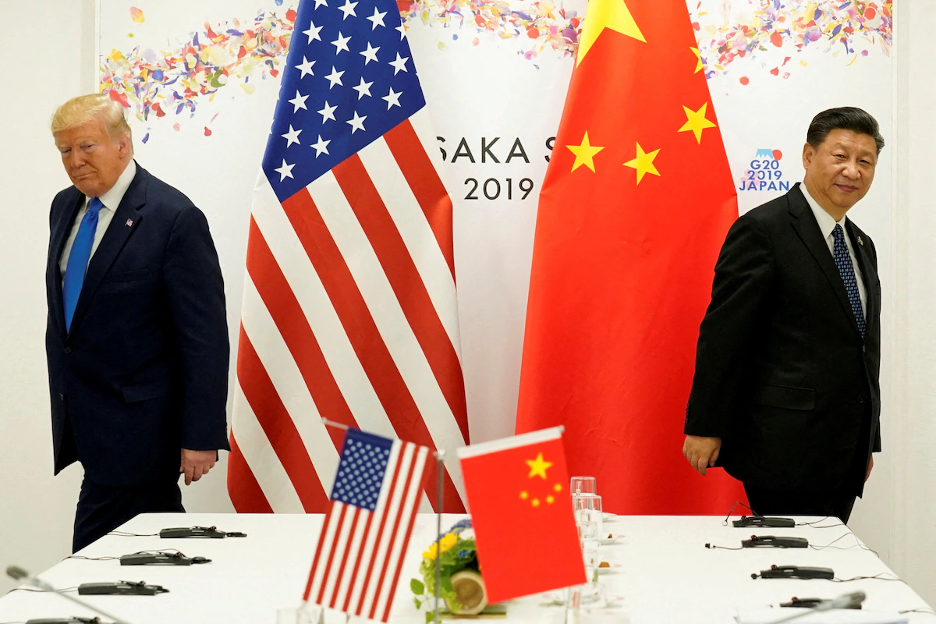
Former officials say the incoming president will expand tech controls on China, as the rivalry with Beijing promises to loom large for his administration.
The containment policy set in the first Trump administration and continued under President Biden is expected to get a harder edge, according to former officials.
Donald Trump launched a technological war against China during his first presidency. His next administration faces a much harder task: finishing it.
Former officials say the incoming administration is expected to expand and deepen measures to hobble China’s technological development, using tariffs as a bulwark and export controls as a slashing blade. They say Republican officials poised for senior positions will be less patient than their Biden administration counterparts in negotiating with China and will seek to move fast, even at the expense of breaking things.
The Boston Global Forum (BGF) looks forward to policies from President Trump and his new cabinet to help democracies win against China in the AI battle. BGF is discussing “How Democracies Win in the AI Battle and AI Economy,” a collaboration between the Wilson Center and the Boston Global Forum.
See the full story here: Trump set to deepen tech Cold War with China