
by Editor | Jun 13, 2021 | News
Moving into a new age of technological advancements brings promising potential to world society as Artificial Intelligence becomes a public good used to promote the better well-being of all people. But alongside the opportunities Artificial Intelligence and other technologies have to offer, we also face a threat from private and public entities who aim to exploit the use of these advancements abusing the rights of individuals and the rule of law. AI technologies raise concerns about security, privacy, and fairness in a democratic society.
This phenomenon is not just something we envision in the coming future, but already a practice today both in the public and private sphere.
In order to protect the rights, privacy, and security of all people, a monitoring system must be implemented to supervise actions that violate the rights and security of individuals in democratic values and keep abusers accountable for their actions. A monitor system is of great importance to create a safe environment where there is trust that private and public entities do not take control of personal data through the use of AI for their own means.
Those that misuse their power must face the penalties that come with non-compliance to the norms, standards, common values, and international laws as outlined in the Social Contract for the AI Age and Artificial Intelligence International Accords (AIIA).
Already, Freedom House and other organizations are in place to monitor policies and behaviors in other spheres, but they lack formal authority. The Michael Dukakis Institute can provide a monitoring system to the best of its ability, they must be well structured, staffed, and funded to ensure legitimacy and authority on their assessments and judgments.
The time to implement and support a monitoring system is now as entities already have the capability to infringe on the lives of millions in the world. The cooperation of governments, big corporations, and civil society is of most importance in this time of evolving advancements. Through the implementation of a monitoring system, we can ensure that fundamental human rights, the rule of law, and Social Contract for the AI Age, AI International Accord will be protected in the international community.

by Editor | Jun 3, 2021 | News
Professor Thomas Patterson, Harvard Kennedy School, President of AIWS University wrote one of the many chapters in the book “Remaking the World – the Age of Global Enlightenment”. Here are some sections from his writing:
“Such concerns lead us to conclude that there is a need for a new social contract, one fitted to the AI age and that seeks to maximize the benefits of AI and minimize its exploitation. Without such guidelines, AI entails significant risks to the wellbeing of individuals and nations.
By definition, a social contract is based on the rights and interests of individuals, and what governments and other entities must do and are prohibited from doing to safeguard those rights and interests. Social contract theory begins with the assumption that the power arrangement that individuals would willingly accept is one where they do not know in advance their position in society, whether they will be among its advantaged or disadvantaged members. Reasoning from that assumption, John Locke, one of the first social contract theorists, posited a society that protected life, liberty, and property through lawful restraints on those in power.”
“There should also be an independent organization that would create a system for monitoring governments and firms for their compliance with an AI International Accord (AIIA). Freedom House and other such organizations exist to monitor policies and behaviors in other spheres. These organizations lack formal authority but have the standing to call out noncompliant actors and to identify areas where progress is being made, and where additional progress is most needed. In the case of AIIA, any such organization would have to be structured, staffed, and funded in ways that confer authority and legitimacy on its assessments and judgments. Support for and endorsement of its mission by like-minded nations would also be critical to its success.”
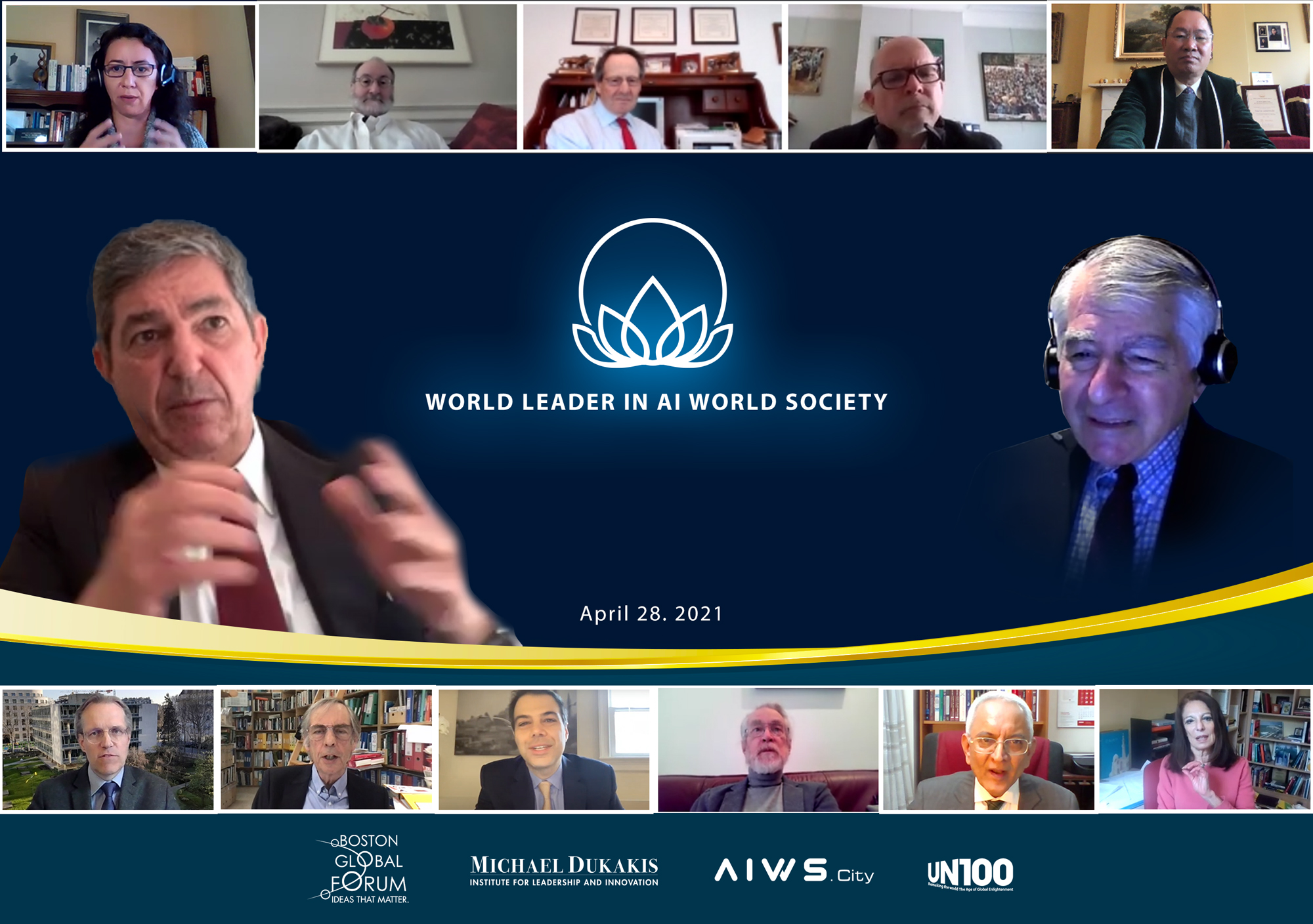
by Editor BGF | Apr 30, 2021 | AIWS and the Age of Global Enlightenment

On April 28, 2021, Boston Global Forum hosted the AIWS Award and AI International Accord Roundtable where Ambassador Stavros Lambrinidis was awarded the 2021 World Leader in AI World Society (AIWS) and joined with fellow leaders in innovation to discuss the future of AI as we emerge into the Age of Digital and AI. This roundtable follows after Governor Michael Dukakis’ call in 2018 for an international accord on Artificial Intelligence in 2018.
Chaired by Governor Michael Dukakis, Co-Founder and Chairman of the Boston Global Forum, and Nguyen Anh Tuan, CEO of the Boston Global Forum, this discussion addressed the relevance of AI in world society as it impacts our fundamental human rights today. With the increasing adoption of AI globally, our rights to privacy, dignity, and freedom are all at stake.
Our speakers brought notable dialogue to the discussions:
Ambassador Stavros Lambrinidis: “It is our aspiration to create machine that are able to do more and more of our own thinking, selections and decision making. And if that’s our aspiration, we must also take care to ensure that those machines do not make the same mistakes that we humans have been prone to make”.
Ambassador Stavros Lambrinidis raised that “Exploring a social contract for the AI Age, a Framework to ensure an AI ‘Bill of Rights’ in the digital age, is fundamental in international relations today. And in this work, our relationship with the United States is paramount.”
Nazli Choucri presented the Framework for AI International Accord: “As we move on, it’s our responsibility to leave some kind of regulatory framework before the younger generation that has not had the cold war experience, the World War I, the World War II, etc. experience. If we can just organize for them a framing of discourse, it would be a major contribution. That would be considered our generation’s contribution.”
P.S. Raghavan stated that Framework for AI International Accord was: “An excellent comprehensive paper which captures the intricacies of the issues and also the breath of the challenges”
Magnus Magnusson: “Diversity must be integrated in every single step of the AI lifecycle; from creation of algorithms to the collection of data, down to the numerous applications of AI in every aspect in today’s society: healthcare, education, transportation and so forth. This is the only way to ensure all voices will contribute to the development towards policies and frameworks for AI”
Paul Nemitz: “We should be ambitious in our work and see in terms of what we aim for.”
Conversations expressed the need for an AI International Accords to support this new reality of AI as well as facilitate international cooperation regarding this innovative development.
Speakers in the talks included:
- Ambassador Stavros Lambrinidis, Ambassador of the European Union to the United States
- Stratos Efthymiou, Consul General of Greece in Boston
- Ambassador P.S Raghavan, Former Chairman of the National Security Advisory Board, India
- Nazli Choucri, Professor at MIT, AIWS City’s Board of Leaders
- Magnus Magnusson, UNESCO Director for Partnerships and Outreach
- Paul Nemitz, Principal Advisor of European Commission
The AIWS Award and AI International Accord Roundtable provided great insight into AI governance and discussions will be considered in further conversations on the AI International Accords, which is part of AI World Society (AIWS). AIWS is a doctrine and model for remaking the world towards the Age of Global Enlightenment.
by Editor | Jan 17, 2021 | News
Big companies, especially tech companies, have very powerful and profound political influence in the world today. The Social Contract for the AI Age demonstrated the need to balance powers of companies.
To practice and apply the Social Contract for the AI Age, Michael Dukakis Institute and Boston Global Forum founded the Monitoring Big Tech Companies Initiative. Professor Nazli Choucri, MIT Professor in cyber politics and Board Member of Michael Dukakis Institute, is one of the leaders of this initiative.
This initiative connects and collaborates with organizations, governments, and companies to collect data on how big tech companies meet the standards of the Social Contract for the AI Age — how they abuse their power to violate democratic values, and how they compromise with governments to undermine democratic values and standards of Social Contract for the AI Age. Merve Hickok, Founder of AI Ethicist, is one of the contributors of this project.
The project will start collecting data and information from February 1, 2021.
The Michael Dukakis Institute and Boston Global Forum call on individual and organizations to contribute and collaborate in this initiative to maintain and enhance democratic values.
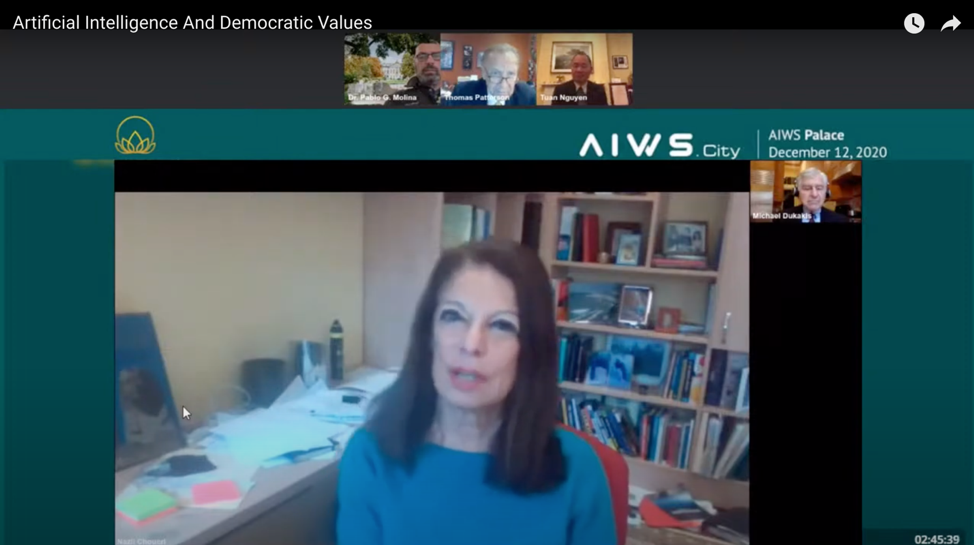
Professor Nazli Choucri presented first concepts of AI International Accord at Boston Global Forum Conference December 12, 2020.

Merve Hickok spoke at Boston Global Forum Conference December 12, 2020.

by Editor | Dec 30, 2020 | News
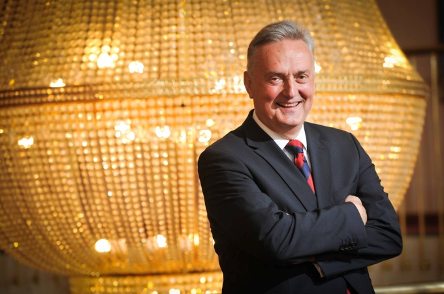
30.12.2020. Zlatko Lagumdzija
The History of AI event of 2020 – The Social Contract for the AI Age
Zlatko Lagumdzija
Former Prime Minister of Bosnia and Herzegovina
Member of World Leadership Alliance-Club de Madrid
Member of the History of AI Board
Social Contract for the AI Age can be named as the History of AI event of 2020 since it is offering transformative tools and means for creating complex elements and goals of great mosaic reflecting different perspectives in search for our prosperous and shared future.
Development of AI that is impacting our life and work with magnitudes bigger than any human invention in history is a clear sign of necessity and importance of a pioneering act such as the first Social Contract in the Internet and AI Age.
Fruits of Renaissance and Age of Enlightenment have been enjoyed by people because of great thinkers like Thomas Hobbes and Jean Jacques Rousseau who created the Social Contract concept as the leading doctrine of political legitimacy and platform for peace, security and democracy centuries ago.
Social Contract for the AI Age, as agreement among all stakeholders of society to work together for social benefit, is a comprehensive and impactful call to leaders to show wisdom and leadership using science and technology fruits in order to move our planet in the right direction.
Since September creation and adoption by 10 signatories coming from different backgrounds and experiences, under umbrella of the Boston Global Forum and AI World Society (AIWS), it has been endorsed, supported and called for implementation by the World Leadership Alliance – Club de Madrid and a long line of stakeholders from governments, academic, civil society and business leaders from various parts of the globe.
Social Contract for the AI Age is a pioneering, meaningful and impactful document since it is defining the purpose, vision and values that can be met by tools and means like AI is offering.
That is why Social Contract for the AI Age can help us to shape societies for a common purpose through transformative vision that transcends the technological features of AI and seeks to provide foundations for a progressive, new, better, and more prosperous society.

by Editor | Dec 21, 2020 | News
On December 19, 2020, Governor Michael Dukakis lead the publication of the Quad Roundtable Report.
The role of the Social Contract for the AI Age in such a situation is to eliminate all negative risks and enhance all benefits such technological advancement could bring, protect democratic values, and maintain peace and security in the world.
First, it is necessary to mend not only the differences amongst the Western allies, such as different views of interests, social perceptions, and the role of the Western alliance in the United States, but also to reestablish US international leadership.
Second, the common interest of the Quad is an open Indo-Pacific region.
Third, while addressing possibilities and challenges brought about by artificial intelligence, US leadership must consider the interconnectivity of different types of interests in the Indo-Pacific region. The Quad have role to ask China respect its neighbours and do not create tensions in the Indo-Pacific region, China needs to respect democracy in Hong Kong, and the Quad have solutions to solve threats from China.
Norms, standards, and democratic values from the Social Contract for the AI Age is a fundamental for the Quad Group in maintaining world peace and security, and recognizing threats from nations and regimes that undermine these values.
Authors of the Report are Dr. Sandis Šrāders, Fellow, Baltic Defence College and Board Member, Latvian Transatlantic Organization, Professor Nazli Choucri, MIT, the Boston Global Forum’s Board Member, Nguyen Anh Tuan, CEO of the Boston Global Forum, Ambassador P.S Raghavan, Chairman of the National Security Advisory Board of India.
The Quad Roundtable at the Riga Conference 2020 is very successful. The next Quad Roundtable will be organized on the AIWS Palace at AIWS City.
Ambassador P.S Raghavan, Chair of National Security Advisory Board, India:
I warmly welcome the initiative of the Boston Global Forum to launch discussions between representatives of the US, India, Japan and Australia on the Quad dialogue of the four countries. The Quad Roundtable highlighted the perspectives of each of the countries on the Quad, shaped by its geography, historical experiences, economic circumstances and political aspirations.

by Editor BGF | Dec 18, 2020 | Publications

Click here: AISCI-2020

by Editor BGF | Dec 16, 2020 | News
In a Policy Lab organized on 16-18 September, the former heads of State and Government that that are Members of Club de Madrid joined experts from top universities convened by the Boston Global Forum, as well as other government representatives to present global policies for a better management of digital technologies and Artificial Intelligence
Club de Madrid and the Boston Global Forum just released the Final Report of the Policy Lab ‘Transatlantic Approaches on Digital Governance: A New Social Contract in the Age of Artificial Intelligence’, calling for members of World Leadership Alliance-Club de Madrid and world leaders to support, endorse and work for the implementation of the Social Contract for the AI Age. Among the central features of the Social Contract for the AI Age are the following:
- Defining a new TCP/IP (the platform for communication among internet users), that is, a set of norms, values and standards specifically designed as connections among governments for enabling and supporting international relations – including between governments, between companies, between companies and government.
- Communities must have control over their data, given that data literacy at all levels of society is the basis for an intelligent, thoughtful society.
- All governments should promote the Democratic Alliance for Digital Governance.
In terms of policymaking, Club de Madrid and the Boston Global Forum’s proposed SocialContract for the Digital Age involves:

by Editor | Dec 10, 2020 | Publications
On December 9, 2020, the World Leadership Alliance-Club de Madrid endorsed and called on world leaders to endorse the Social Contract for the AI Age. They officially published the Report
Transatlantic Approaches on Digital Governance:
A New Social Contract in the Age of Artificial Intelligence
Final Report
Virtual Policy Lab, 16-18 September, 2020