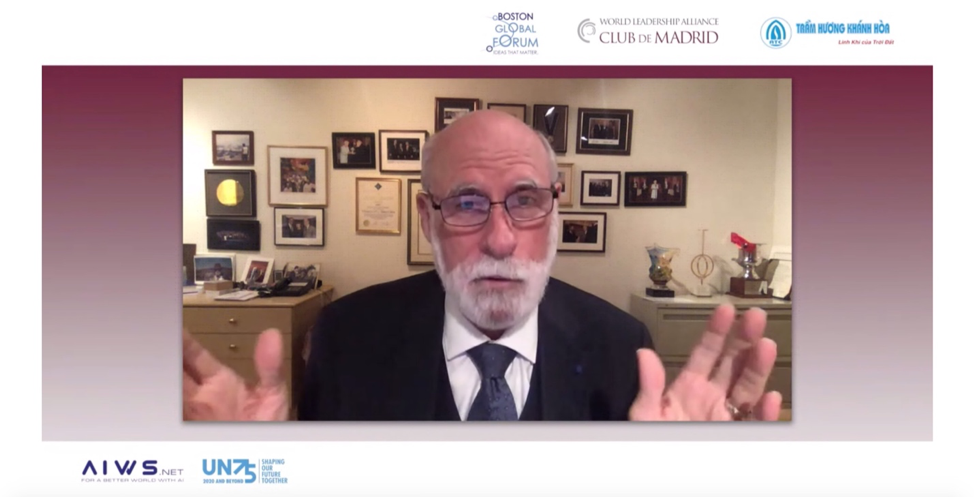
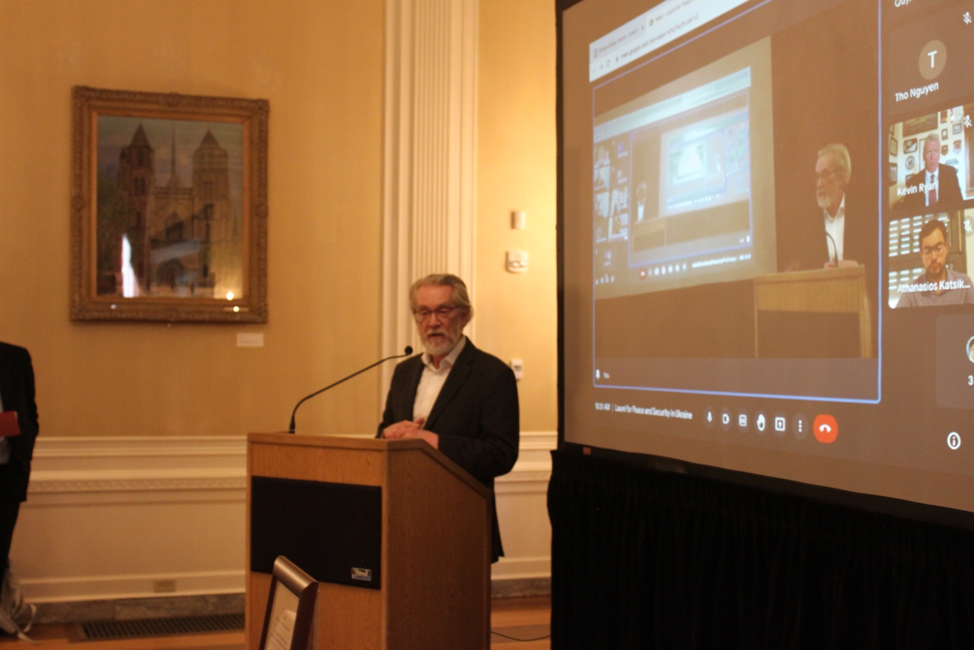
From 27 to 29 of April, 2020, at Harvard University and MIT, the World Leadership Alliance – Club de Madrid (WLA-CdM) in partnership with the Boston Global Forum (BGF) is organizing a Transatlantic and multi-stakeholder dialogue on global challenges and policy solutions in the context of the need to create a new social contract on digital technologies and Artificial Intelligence (AI).
Over the years, Transatlantic relations have been characterized by close cooperation and continuous work for common interests and values. This cooperation has been essential to enhance the multilateralism system, considering the shared principles from both sides on democracy, rule of law, and fairness.
By comparing American and European approaches in the creation of a new social contract on AI and digital governance, under the critical eye of former democratic Heads of State or Government, this policy dialogue will stimulate new thinking and bring out ideas from representatives of governments, academic institutions and think tanks, tech companies, and civil society, from both regions.
At the same time, the discussion will generate a space to encourage and strengthen Transatlantic cooperation on the new social contract of digital governance in the framework of needed reforms of the multilateral system. Special attention will be focused to engage technological companies as key stakeholders of digital governance, while protecting democratic mandate for public policy-makers.
This special event is sponsored and supported by Tram Huong Khanh Hoa.
On January 27, 2023, the BGF High Level Meeting will discuss “Infrastructure for a Data Economy – Fundamental of the Global Enlightenment Economy.”
Before this special meeting, BGF invited distinguished scholars and innovators to discuss about Data exchange platforms and evaluating data.
AIWS Global Enlightenment Economy is a proposed economic system in which data and artificial intelligence is the backbone of the economy, and human-AI cooperation is the key driver of economic growth and development. In an AIWS economy, AI would be used to optimize production, distribution, and consumption of goods and services, leading to increased efficiency and productivity. AI could also be used to address issues such as unemployment, income inequality, and environmental sustainability. Human workers would be trained to work alongside AI systems and would be able to perform tasks that require creativity, empathy, and other uniquely human abilities, becoming innovators in the process. The goal of an AIWS economy would be to improve the overall well-being of society while also addressing the challenges posed by rapid technological advancements and increasing automation.
There are many platforms available for exchanging data, depending on the type of data and the purpose of the exchange. BGF will work with stakeholders to develop Global Enlightenment Economy on their platforms for every citizen can become an innovator:
Cloud storage services, such as Dropbox, Google Drive, and Microsoft OneDrive, which allow users to store and share files in the cloud.
Data marketplaces, such as Data.gov and Kaggle, which provide access to publicly available datasets for research and analysis.
Data integration and management platforms, such as Talend and Informatica, which allow organizations to integrate and manage data from multiple sources.
Collaboration and project management tools, such as Asana and Trello, which allow teams to share and track data related to specific projects.
Data visualization tools, such as Tableau and Power BI, which allow users to create interactive visualizations of data.
The Global Alliance for Digital Governance will work to evaluate data in a data economy to ensure the quality and integrity of the data being exchanged. There are several factors to consider when evaluating data, including:
Completeness: Are all the necessary data elements present and accounted for?
Accuracy: Are the data elements correct and free of errors?
Timeliness: Is the data up-to-date and relevant?
Consistency: Are the data elements consistent across different sources and datasets?
Validity: Does the data conform to the established rules and constraints?
Uniqueness: Are the data elements distinct and not duplicated in other datasets?
Accessibility: Is the data in a format that can be easily accessed and used by the intended audience?
Trustworthiness: Is the data reliable, credible, and from a reputable source?
It is important to evaluate data as a part of data governance to ensure that it meets the required standards of the Social Contract for the AI Age and can be used for decision making and other purposes. Additionally, companies and organizations should have a data management plan in place to handle the data, which includes data quality and data governance.
The Quad Roundtable is a special side event of the Riga Conference 2020, Session Quad Roundtable” theQuad Group, AIWS Social Contract and solutions for world peace and security”, co-organized by the Latvian Transatlantic Organization (LATO) and the Boston Global Forum.
Time and date: 2:30 pm – 4:00 pm (Riga time), November 12, 2020 , Virtual Roundtable.
Speakers:
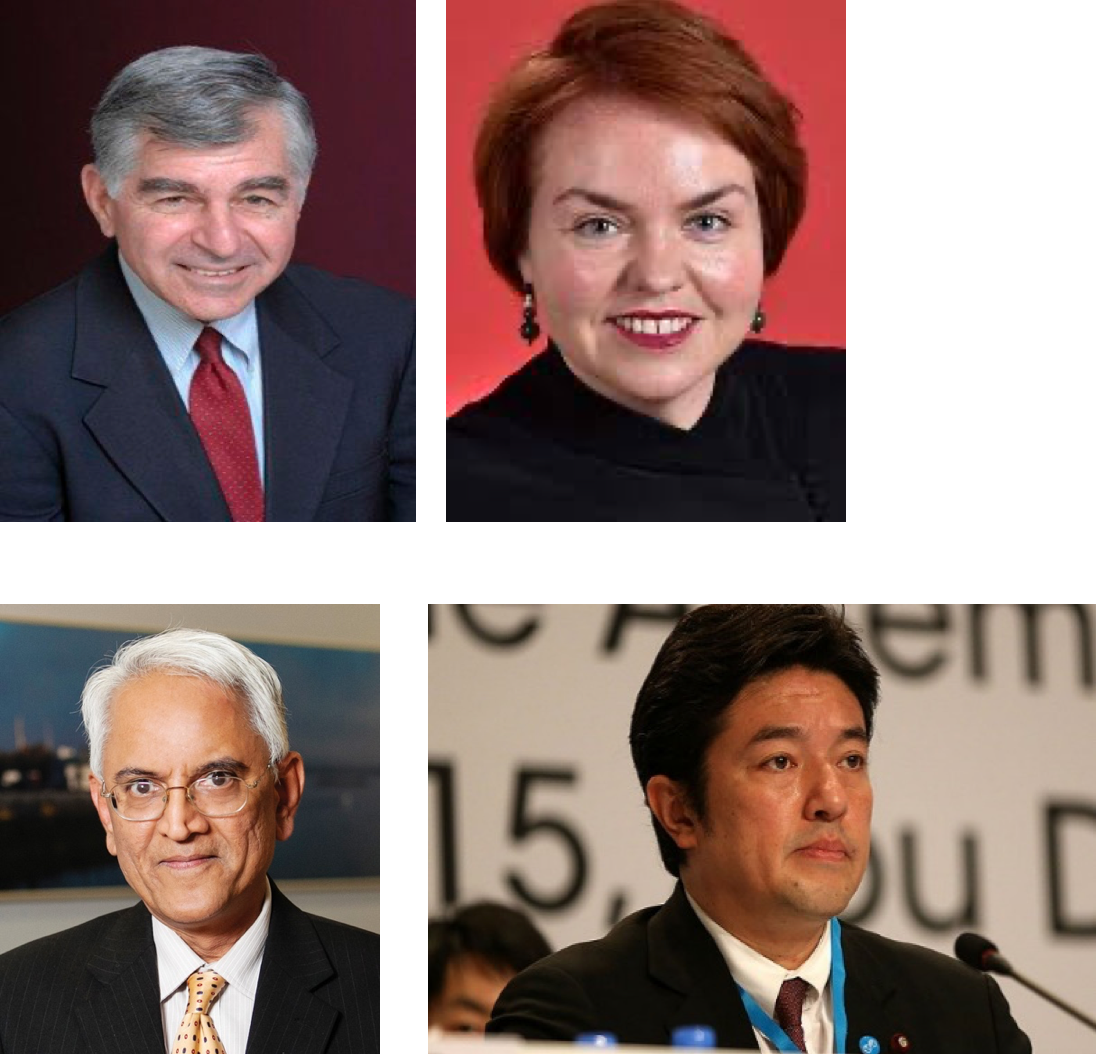
Governor Michael Dukakis, Chairman of the Boston Global Forum (US),
Defense State Minister Yasuhide Nakayama (Japan),
Senator Kimberley Kitching, Chair of Foreign Affair, Defence and Trade Reference Committee (Australia),
Ambassador P.S Raghavan, Chairman of the National Security Advisory Board (India)
On 16-18, September, the World Leadership Alliance-Club de Madrid and the Boston Global Forum co-organized the Policy Lab “Transatlantic Approaches on Digital Governance: A New Social Contract in the Age of AI”, in which presidents, prime ministers, distinguished thinkers, and scholars discussed the Social Contract for the AI Age, and saw it as significant standards for world politics and economy in the 21st century.
How can the Quad Group (US, Japan, Australia and India) support and maintain peace and security? What is the role of each member?
How can the Quad contribute to peace and security in the European, Atlantic, and Baltic regions?
How can democratic governments support and use the Social Contract for the AI Age as standards for international relations and for peace and security?
How can democratic governments recognize and implement the Social Contract for the AI Age?
Co-chairs of the Inter-Parliamentary Alliance on China (IPAC) – eg. Sir Iain Duncan Smith, Senator Kimberley Kitching, MEP Miriam Lexmann – will speak and dialog with political leaders and distinguished thinkers to build new alliances and new global economic...
Subject: Enhancing Cybersecurity in the AI World Society
Place: Loeb House, Harvard University, 17 Quincy street, Cambridge, MA
Date/Time: December 12, 2019, 8:30 AM – 12:00 PM
Agenda
8:30 AM – Opening Remarks by Governor Michael Dukakis, Co-founder and Chair of the Boston Global Forum
Recognition of President Vaira Vike-Freiberga, President of Latvia (1999-2007) and current President of the World Leadership Alliance – Club de Madrid. President Vike-Freiberga is the recipient of this year’s BGF World Leader for Peace and Security Award
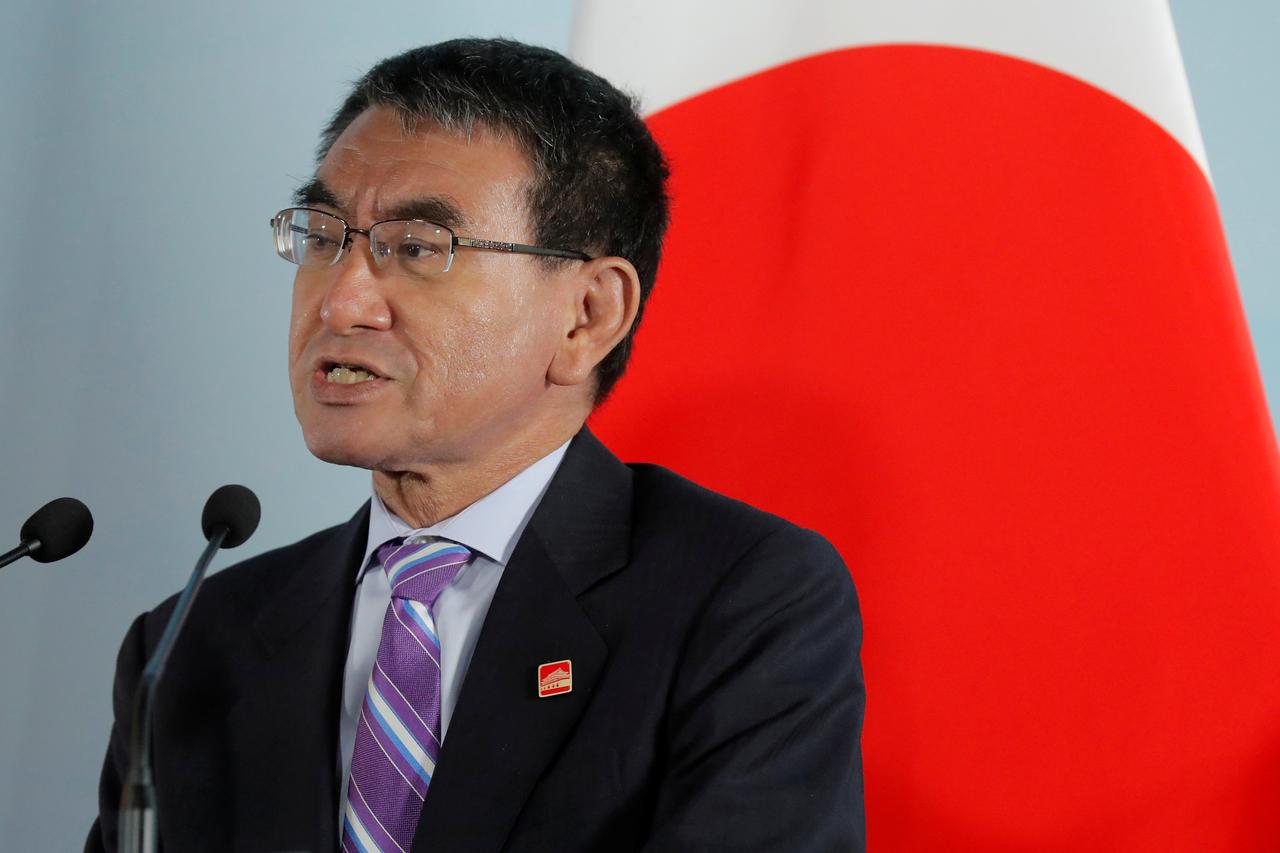
Presentation by Mr.Taro Kono, Currently Minister of Defense and Former Japanese Foreign Affair Minister: On a Vison for Ensuring Trusted Data for use by the Japanese Government
Presentation by Professor Alex Sandy Pentland, Professor and Director of MIT’s Human Dynamics Laboratory and the MIT Media Lab Entrepreneurship Program: On Building an AI World Society of Trusted Data
Presentation by Professor Nazli Choucri, Professor of Political Science at MIT: On the Drafting for the Cybersafety of the AI World Society Social Contract 2020.
10:10 AM: Roundtable Discussion, Moderated by Governor Michael Dukakis
11:45 AM: Presentation by Ms. Rebecca Leeper, Computer Ethics and Data Policy Advocator, researcher into emerging technologies and their international security implications at the United Nations in Geneva, Switzerland: On AI World Society Innovation Network and Activities.
11:55 AM:Closing Remarks, by Governor Michael Dukakis
In the Social Contract for the AI Age, Boston Global Forum considered AI Assistants as a center of power of AI World Society – the Age of Global Enlightenment. On November 30, 2022, birth of ChatGPT, it realized AI Assistants.
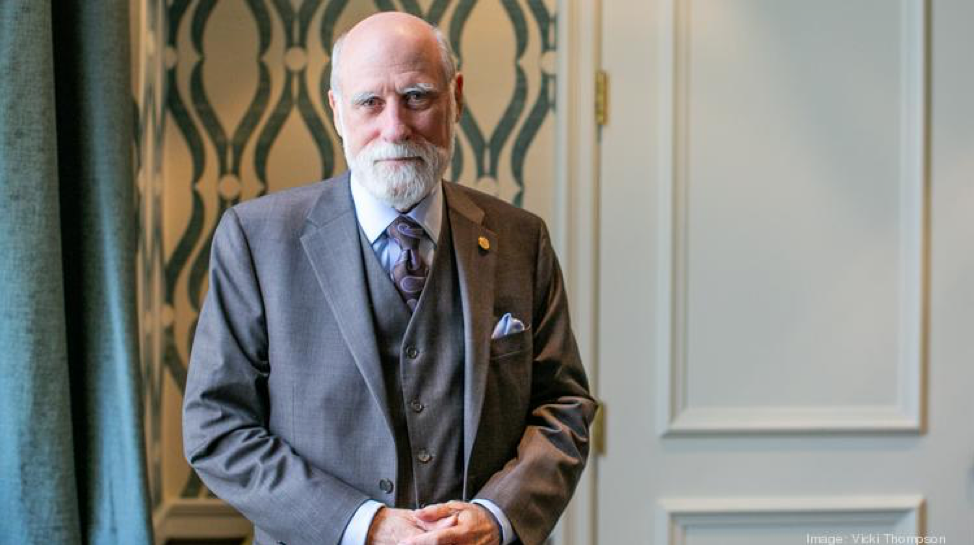
The Boston Global Forum and the Global Alliance for Digital Governance are delighted to host a series of High Level Dialogues on ChatGPT as an AI Assistant and the policies for AI Assistants in the AI World Society. The purpose of these dialogues is to bring together renowned leaders, experts, and policymakers in the fields of artificial intelligence and governance, such as Governor Michael Dukakis, Co-founder and Chairman of the Boston Global Forum (BGF), MIT professors Alex Pentland, Nazli Choucri, Harvard professors Thomas Patterson, David Silbersweig, father of the Internet Vint Cerf, UN Secretary-General’s Envoy on Technology Amandeep Gill, former Prime Minister of Bosnia and Herzegovina Zlatko Lagumdzija, leaders of OpenAI, Nguyen Anh Tuan, CEO of BGF, Bao Tran, Representative of BGF in Silicon Valley, and representatives from the governments of the US, Japan, India, Europe, Canada, Australia, and South Korea, to engage in a critical and thought-provoking discussion about ChatGPT and AI Assistants and their impact on society.
These High Level Dialogues will delve into the benefits and challenges of AI Assistants, and how to ensure their deployment is responsible, ethical, and transparent. The discussions will also focus on the development of policies that promote privacy, accountability, and the responsible use of AI technology. This important event will provide a platform for meaningful discourse on the crucial issues at the intersection of AI and society and help shape a sustainable future for AI technology. We invite you to join us for this exciting and timely event.
These Dialogues are one in the series of BGF events “90th birthday of Michael Dukakis: From the Massachusetts Miracle to the Age of Global Enlightenment.”
8:30 AM: Welcome and Introduction by Governor Michael Dukakis, Co-founder and Chairman of the Boston Global Forum (BGF)
Keynote Speech by Vint Cerf, Father of the Internet
About ChatGPT and AI Assistant, MIT professor Alex Pentland
Q&A
The first version of Regulation Framework for AI Assistants and ChatGPT, MIT professor Nazli Choucri, and Zlatko Lagumdzija, former Prime Minister of Bosnia and Herzegovina
Panel Discussion on the Regulation Framework for AI Assistants and ChatGPT
Panelists:
Governor Michael Dukakis, Chair of the Boston Global Forum
Martha Minow, Harvard professor, former Dean of Harvard Law School
Ruth L. Okediji, Professor at Harvard Law School, Co-Director of the Berkman Klein Center.
Margaret Hagan, Executive Director of the Legal Design Lab and a lecturer at Stanford Law School and the Stanford Institute of Design
Prof. dr. Caroline Nevejan, Chief Science Officer, City of Amsterdam
David Silbersweig, professor of Harvard Medical School
Thomas Patterson, Harvard professor, BGF’s Board Member
Nam Pham, Former Assistant Secretary, Massachusetts Government
Francesco Lapenta, Representative of BGF in Rome
Shyamal Sharma, Visiting Research Scholar at Brandeis University and Founder of Relational Society
Bao Tran, Founder of PowerPatent, a generative AI legaltech company
John Clippinger, AI Activist
Moderator: Michael Dukakis, Chair of the BGF and Nguyen Anh Tuan, CEO of the BGF
Closing Remarks by Nguyen Anh Tuan, CEO of the BGF
The Framework of Global Laws and Accord on AI and Digital and Global Alliance for Digital Governance were introduced and discussed at the conference “Law and Governance in the Age of AI”, co-organized by Vietnam National University (VNU) and IFI on October 21, 2021.
Scholars of the School of Law, Vietnam National University were pleased to contribute to the initiative of Boston Global Forum, to build the Age of Global Enlightenment.
Presentation
Keynote on Social Contract on the Age of AI and Review on the Book “Remaking the World Toward an Age of Global Enlightenment”
Moderator:
Mr. Nguyễn Anh Tuấn, CEO of The Boston Global Forum (BGF), co-founder of the AIWS City (AIWS.city); Founder, CEO, and Editor-in-Chief of VietNamNet (1997-2011)
Fundamentals of International Law on AI and Digital
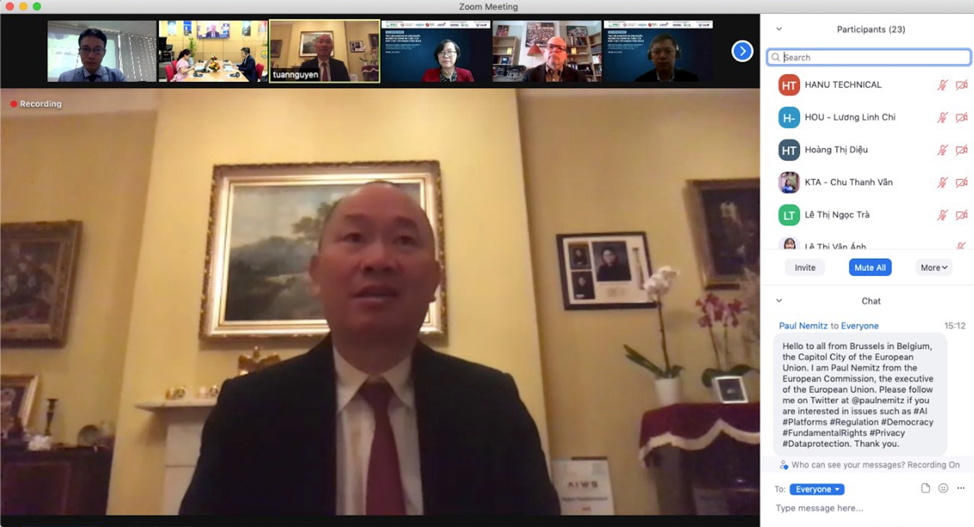
Mr. Paul Nemitz, Principal Advisor in the Directorate General for Justice and Consumers, European Commission
Law and governance: a comparative Study on Asian national policies and Strategies
Mr. Đặng Minh Tuấn, Deputy Head of the Constitutional and Administrative Law Department, School of Law, VNU
The Use of AI in Civil Justice System: Perspectives and Challenges for Access to Justice
Mrs. Nguyễn Thị Bích Thảo, Deputy Head of Civil Law Department, School of Law, VNU
The social credit system in china: a state governance system and its adverse impact on human rights
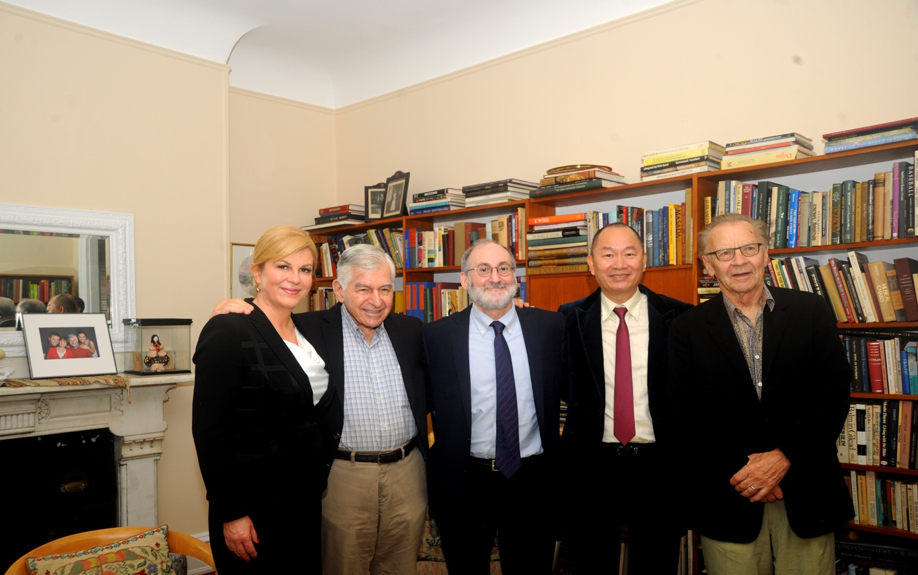
On September 24, President of Croatia (2015-2020) Kolinda Grabar-Kitarovic, member of Nizami Ganjavi International Center, visited and discussed with Governor Michael Dukakis and leaders of the Boston Global Forum. President Grabar-Kitarović expressed enthusiasm that...
On November 15, 3:00 pm – 4:30 pm, PST, at Stanford University, Boston Global Forum CEO Nguyen Anh Tuan and MIT professor and Stanford Visiting Scholar Alex Pentland, BGF Board Member, will discuss with Stanford scholars and Silicon Valley business leaders about “AI World Society actions to create the Global Enlightenment Age”.
The United Nations established the Global Digital Compact, Roadmap for Digital Cooperation, and the Summit of the Future in September 2023, under leadership of the Envoy on Technology of UN Secretary General Amandeep Gill and his office.
The Boston Global Forum and UN Academic Impact established the United Nations Centennial Initiative, its fundamental is AI World Society (AIWS) and the book “Remaking the World – Toward an Age of Global Enlightenment” (AI International Accord, the Social Contract for the AI Age, etc.). Awareness of need to consolidate actions urgently, BGF and World leadership Alliance – Club de Madrid established the Global Alliance for Digital Governance (GADG) to coordinate global resources for actions for this mission.
Working with Technology Envoy Amandeep Gill, BGF collaborate and support programs of the United Nations such as the Global Digital Compact, Roadmap for Digital Cooperation and Summit of the Future of United Nations by the United Nations Centennial Initiative and GADG, special actions for a peaceful, secure and prosperous world.
In this meeting, participants also will discuss about products and services of Silicon Valley for the Global Enlightenment Age, and how Silicon Valley business leaders can contribute to the United Nations Centennial Initiative through the Global Enlightenment Club.