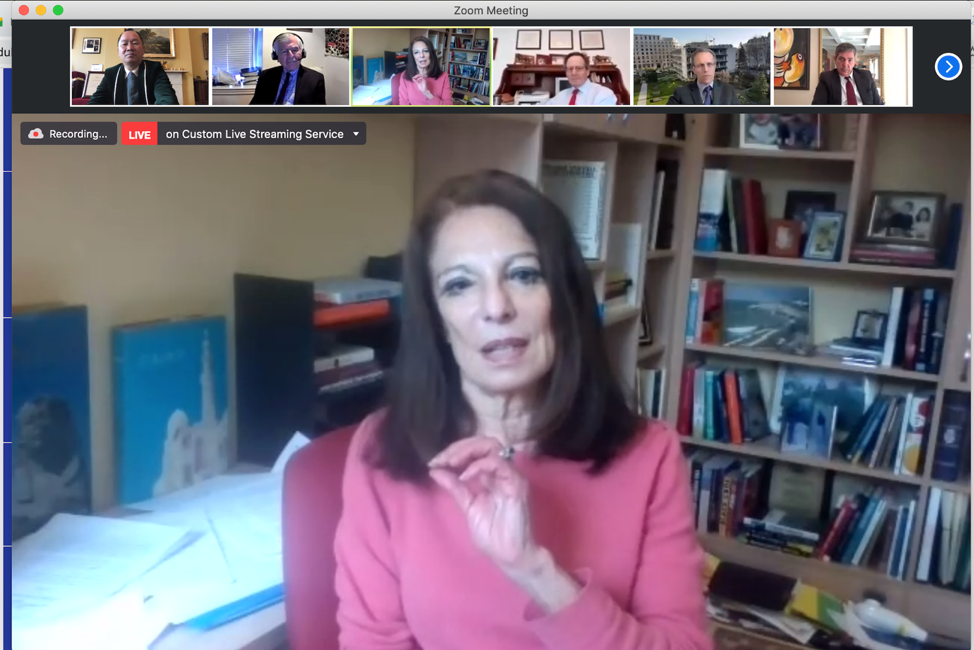
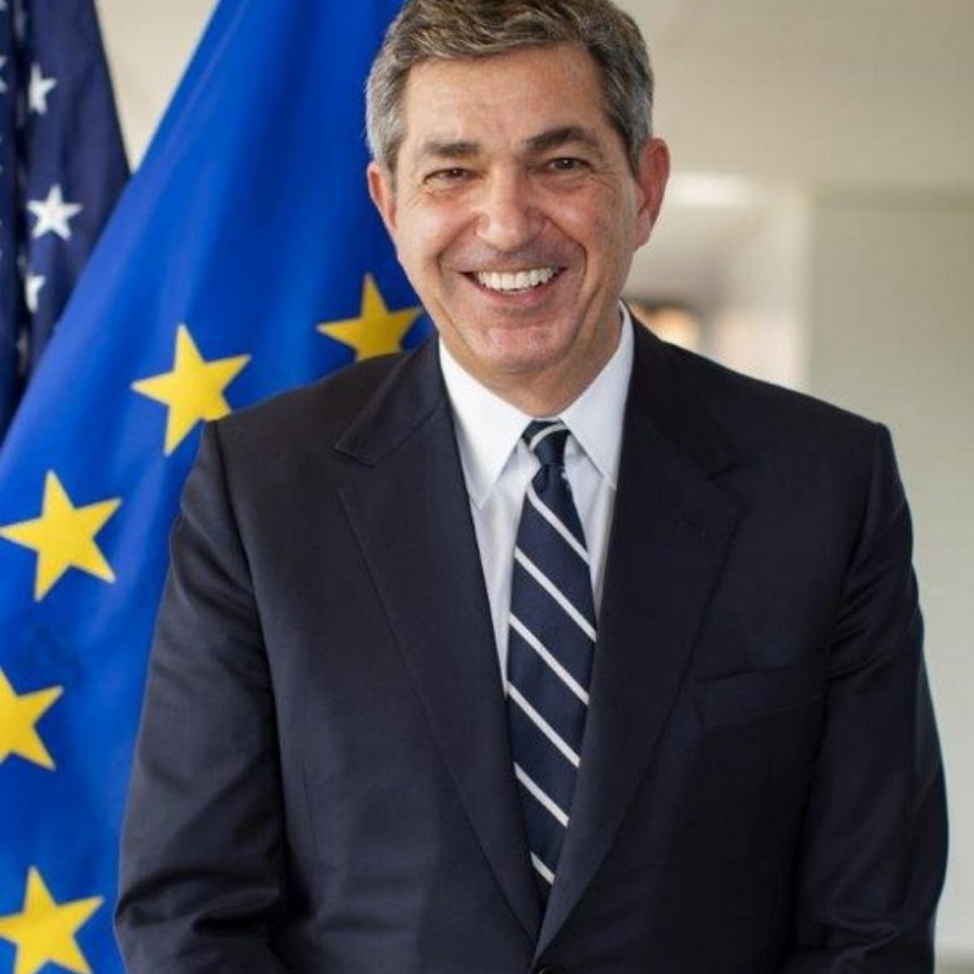
The Framework for AI International Accord version 1.0, which was presented by Professor Nazli Choucri at the AI International Accord Panel on April 28, 2021 follow the ceremony to honor the European Union Ambassador to the US Stavros Lambrinidis World Leader in AI World Society (AIWS) Award.
Below is the Framework for AI International Accord version 1.0, which will be presented by Professor Nazli Choucri at the AI International Accord Panel on April 28, 2021.
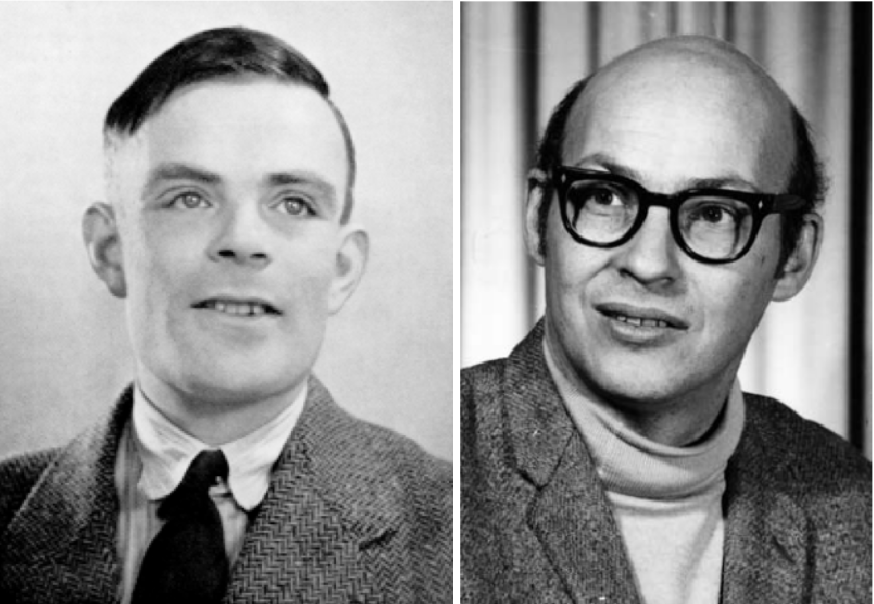
If you have questions about Turing and Minsky life and AI they will respond: a special AI program prepared by Querlo and the History of AI House at AIWS City makes this possible, even though they died!
MICHELANGELO AI is an educational tool available to all who want to know something about the art, life, and thought of the greatest Renaissance artist.
For Francesco Rulli, CEO of Querlo LLC: “This is a dream come true. Exploiting the potential of personalized Artificial Intelligence, we have been able to capture Michelangelo’s ‘spirit’, offering everyone the chance to interact personally with this master artist of the Renaissance and to know and contribute to the Florence Cathedral Foundation’s work in restoring and preserving its heritage.
Francesco Rulli discussed applying this technology in AIWS History of AI House and AIWS University. AIWS City and Querlo will collaborate to develop applications based on Querlo for education and innovation.
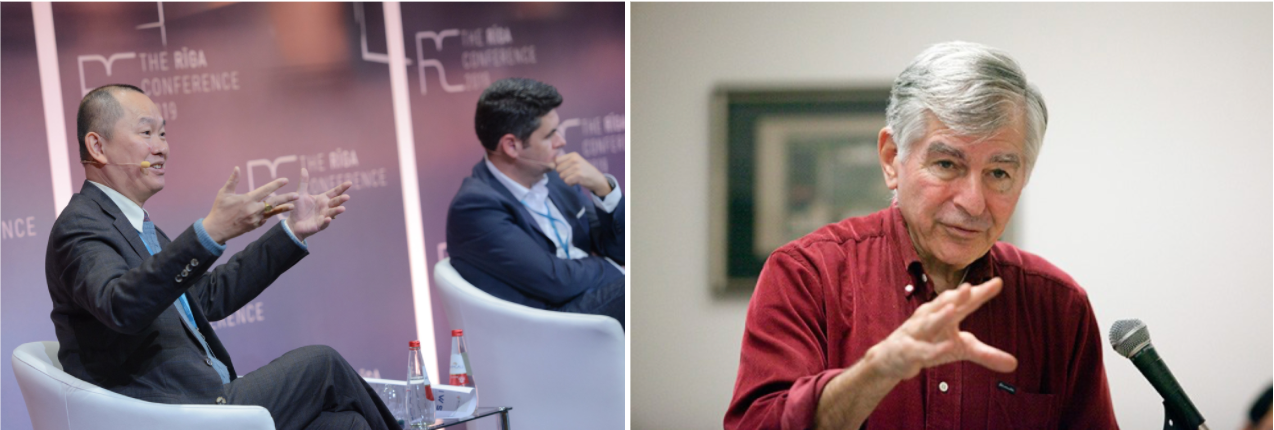
On April 15, 2021, Governor Michael Dukakis and Mr. Nguyen Anh Tuan, co-founders of AI World Society, gave a distinguished lecture to students of AIWS Leadership Master Program at Saint Petersburg Electrotechnical University ETU”LETI”.
Governor Dukakis shared his politics and leadership life and encourage young leaders to contribute toward world peace and security and to listen each other. He answered questions from students, including those about the relationship between USA and Russia.
Nguyen Anh Tuan spoke about “Becoming a global charismatic leader in the and Digital and AI Age”, his keynotes:
A leader needs a doctrine, which can bring equality of opportunities to every citizen in the world; there need to make the world smarter, quicker, more effective, and more humane.
In the Digital and AI Age, AIWS can become a doctrine for this, contributing toward the United Nations Centennial initiative, remaking the world – the Age of Global Enlightenment.
Mr. Nguyen encourages students to become leader in the AI and Digital Age; one does not need to become a prime ministers or billionaires, but rather good ethics, morals, honesty, sincerity, and innovative thinking.
“Disputed Territories and World Peace” will consist of a series of speeches and discussions by leading intellectuals from various fields of specialization. The second event will be held following the series on September last year. China’s revised Maritime Police Law, which violates international law, went into effect on February 1.
Chinese Maritime Police vessels have long harassed and surprisingly recently driven away Japanese fishing boats operating peacefully in Japan’s waters and now they are armed and permitted to use force. With recent situations where freedom and democracy are challenged, it is important that democratic countries unite and commit to global security and peace.
Date: April 21, 2021, Wednesday
Time: 21:00 – 23:00 JST / 08:00 – 10:00 EDT
Venue: Imperial Hotel (speakers gathering)
On-line: Google Meet
Introduction, Ms. Nobue Mita, representative of Boston Global Forum Japan
Opening remarks, Mr. Tuan Anh Nguyen, CEO of BGF
Senkaku Islands Issue
Moderator: Ambassador Ichiro Fujisaki, president of Nakasone Peace Institute, former Ambassador of Japan to the United States, president of The America-Japan Society
*At the beginning of the conference: Speech (5 speaker)
*Q&A (Question from audiences)
Closing Remarks: Ms. Nobue Mita, representative of BGF Japan
Speakers:
Ichiro Fujisaki (moderator)
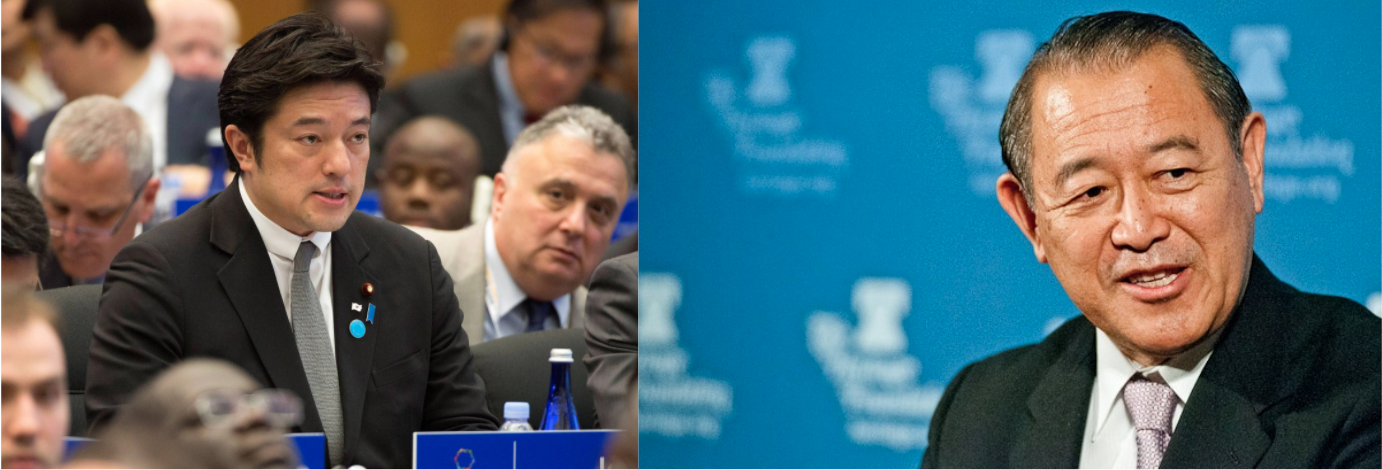
Shunji Yanai, Judge in the International Tribunal for the Law of the Sea (ITLS)
Yasuhide Nakayama, State Minister of Defense; Japanese politician representing the Liberal Democratic Party (LDP); Former State Minister for Foreign Affairs; Chairman of the Foreign Affairs Committee.
Nobukatsu Kanehara, Professor of Doshisha University in Kyoto; Former assistant chief cabinet secretary to PM. Abe; Former deputy secretary-general of the National Security Secretariat; Former diplomat.
Robert D. Eldridge, Ph.D.; President, The Eldridge Think Tank; Former Deputy Assistant Chief of Staff, G-7; Government and External Affairs, Marine Corps Installations Pacific, Okinawa, Japan; Former Associate Professor, Osaka University School of International Public Policy.
Participants:
Mr. Tsuneo Watanabe, Fellow of Sasagawa Peace Foundation, Adjunct fellow of CSIS, Former senior fellow of Tokyo Foundation.
Minister Theo Peters, Minister Plenipotentiary, Embassy of the Kingdom of the Netherlands Tokyo.
Ms. Margaret Hsiang, Political Military Unit Chief, U.S. Embassy Tokyo.
Mr. Shin Okabe, Editorial Writer, Former London bureau chief.
Mr. Peter Landers, Wall Street Journal, Tokyo bureau chief.
Prof. Koichi Hamada, Father of Abenomics, former economic adviser to Japan’s Prime Minister Shinzo Abe, Emeritus Professor from Yale University.
The Boston Global Forum building the framework for an AI International Accord. On April 28, the AI International Accord Panel with the attendance of Ambassador Stavros Lambrinidis; Gabriela Ramos, the Assistant Director-General for the Social and Human Sciences of UNESCO; and Governor Michael Dukakis, Co-founder and Chairman of the Boston Global Forum.
The EU is considering a partial AI ban that will be formally announced April 21.
The proposed ban is the first of its kind
Europe’s legislative body will likely focus on “high risk” AI systems and could fine companies up to €20m or 4% of revenue if they don’t comply.
“High risk” refers to things like mass surveillance and social credit scores that can impact safety and privacy. AI for things like manufacturing and energy would likely be good to go.
The regulations include:
A surveillance banson AI systems that track people indiscriminately
A ban on social credit scores that track individual behaviors, impact hiring and judiciary decisions, and rate trustworthiness
Bias prevention measures like human oversight in testing datasets
AI notifications that would be sent to people when interacting with AI systems
The catch: Experts say the rules are vague and leave room for loopholes.
The rules also come as AI investment in the US is hotter than ever:
The National Security Commission on Artificial Intelligence recently called for $32Bin annual nonmilitary federal spending on AI research
Already in 2021, 442 US VC deals with AI startups were wortha combined $11.65B
US companies could likely be subject to the EU’s new rules. Though the draft could change come April 21, we have a feeling few companies will be big fans.
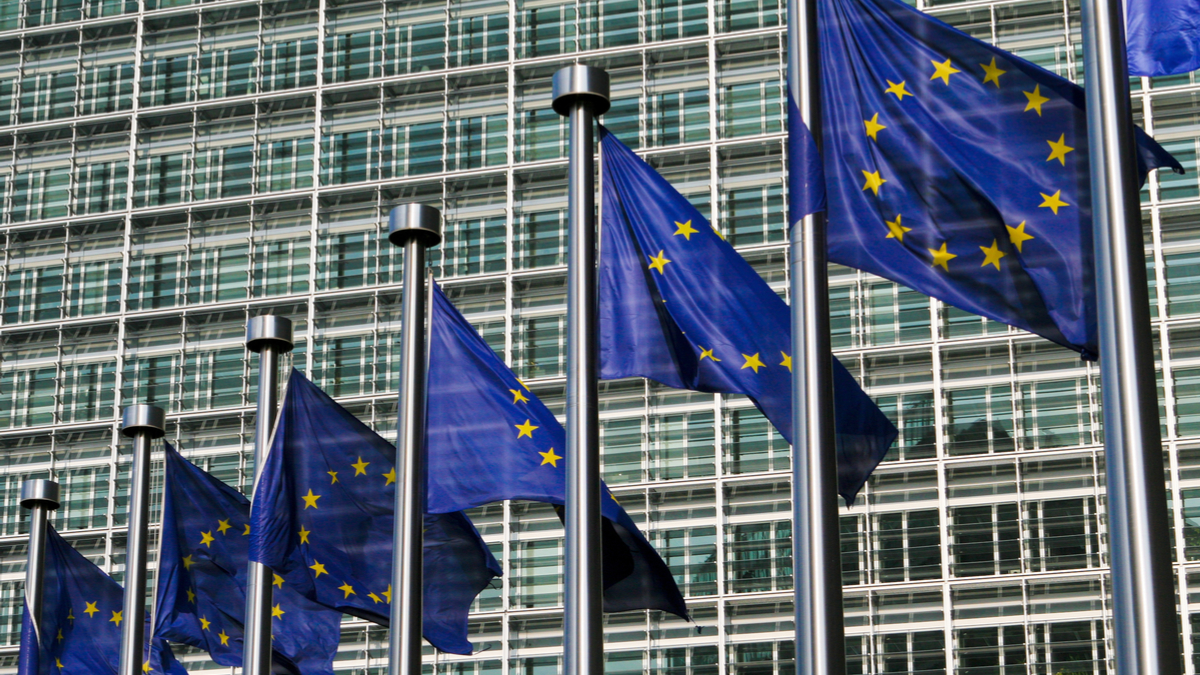
2021 has marked a renewal of the transatlantic relationship, with greater collaboration and alignment called on by both sides of the Atlantic on digital trade, artificial intelligence (AI) and cybersecurity. EU Ambassador to the US Stavros Lambrinidis made it clear that Europe’s leadership in digital needs to build on international cooperation.
A transatlantic partnership, he stressed, is how Europe can level the playing field, by incentivising domestic innovation, and advancing markets vis-à-vis competitors.
“Europe wants to be a player in digital, and to run as fast as anyone else. This is only possible with extremely close EU-US cooperation.”
Father of the Internet, Vice President and Chief Internet Evangelist of Google, Vint Cerf, 2019 World Leader in AIWS Award, Member of AIWS City’s Board of Leaders will speak at:
Executive Roundtable: Vision for the AI Age through 2045
Our distinguished panel and co-authors will debate and present a vision of an all-digital virtual city based on trusted open data. This presentation will summarize the standards and research developed by these experts and delivered in a series of reports to the United Nations on behalf of the AI World Society of the Boston Global Forum. The series of reports have been published and presented to the U.N. in the last year and half, and includes specific plans covering:
Social Contract for the AI Age
People Centered Economy
Trustworthy Economy
Intellectual Society, a Thoughtful Civil Society, and
AI Government
AIWS Values and Rewards
Moderator: Thomas Patterson, PhD, Research Director, The Michael Dukakis Institute for Leadership and Innovation; Professor of Government and the Press, Harvard Kennedy School; President, AIWS University
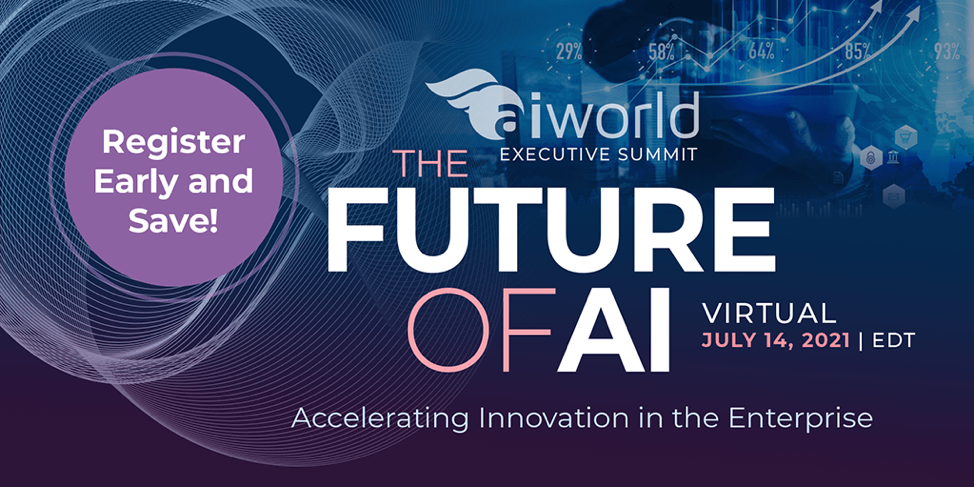
AIWS City is a Strategic Alliance Sponsor of the AI World Executive Summit 2021.
For the past few years, AI technology advances and its implementation in the enterprise has been accelerating at a breathtaking pace. At least 85% of organizations are either using AI or evaluating it in production across almost all business functions. The AI World Executive Summit: The Future of AI will help keep you ahead of the curve and focus on how the best and brightest enterprises are truly innovating and achieving high-performance results from AI. Learn more and register now: aiworld.com/future-of-ai.
On April 15, 2021, the United Nations Centennial – Boston Global Forum and United Nations Academic Impact Initiative will launch the oficial website of the Initiative at the meeting of leaders of the Initiative at https://UN100.net and https://UN2045.org and will introduce the book “Remaking the world – the Second Age of Enlightenment” by the Initiative.
The United Nations Centennial was launched in 2019 by the United Nations Academic Impact in partnership with The Boston Global Forum.
The UN Centennial programs host roundtable discussions, conferences, new concepts, solutions, think pieces, and reflections as we look ahead to the global landscape in 2045—the United Nations Centennial year.
This initiative will examine issues impacting technology, including artificial intelligence, cybersecurity, diplomacy, warfare, and other pressing concerns. Our goal is to look to the future and the role the United Nations will continue to play in making our world more peaceful, democratic, prosperous and universally secure.
In short, the mission of UN Centennial Initiative: Remaking the world – The Second Age of Enlightenment.
The website UN100.net has 7 sections:
About
Introduction
Chairspersons’ perspective (letters’ Board of Leaders)
Board of Leaders
Connect with Us
The United Nations Centennial News
The United Nations Centennial Roundtables, Symposia