by Editor | Apr 11, 2021 | Event Updates
The Prize honors original contributions to shaping a new and better world through Artificial Intelligence, Digital. Eligibility for the Prize is limited to preeminent individuals who have contributed substantial and innovative ideas, practices, or solutions for addressing major challenges, opportunities, and threats posed by the Digital and AI Age, and that make the world safer, more peaceful, and more humane.
Sponsored companies, foundations and organized by the Artificial Intelligence World Society (AIWS), the Prize is presented annually, accompanied by a lecture presented by the Prize recipient on January 9 annual.
The United Nations Centennial Initiative recognizes the Prize and Lecture as part of the United Nations Centennial Initiative, which looks toward the UN’s centennial year.
Sponsor and Donor: Companies, foundations.
Organizer: Artificial Intelligence World Society (AIWS), Boston, Massachusetts, USA
Prize: 10,000 AIWS Rewards, exchangeable value of $100,000 USD by cash, products, serives.
Location: Online: Vint Cerf House of AIWS City and offline: one place of Harvard, MIT or distinguished places.
Advisory Organizations: The United Nations Academic Impact, Club de Madrid, Boston Global Forum, Michael Dukakis Institute.
Prize Selection Committee: Governor Michael Dukakis, Co-founder of AI World Society, Co-Chair of United Nations Centennial Initiative, Vint Cerf, Father of Internet, Vice President and Chief Internet Evangelist of Google, Ramu Damodaran, Chief of United Nations Academic Impact and Editor in Chief of the United Nations Chronicle Magazine, Professor Thomas Patterson, Harvard Kennedy School, and distinguished thinkers and leaders.
On April 15, 2021 at the meeting of leaders of the United Nations Centennial – Boston Global Forum and United Nations Academic Impact initiative, will choose a name of the prize.
by Editor | Apr 4, 2021 | AIWS and the Age of Global Enlightenment
The Vint Cerf House will include these sections:
- Inventing the Internet
- At Google
- The Internet today and tomorrow
- People Centered-Economy at AIWS City and Vint Cerf in AI and Digital Age
- Library
Data and documents include:
- Historical photos, pictures, videos, films, objects, articles.
- Vint Cerf’s quotes
- News stories about Vint Cerf.
- Books about and by Vint Cerf
- Correspondence from and to Vint Cerf
- Speeches and talks of Vint Cerf
- Lectures of Vint Cerf
- Merits, Honors, and Awards
- Family and friends
- Research about Vint Cerf and about his achievements.

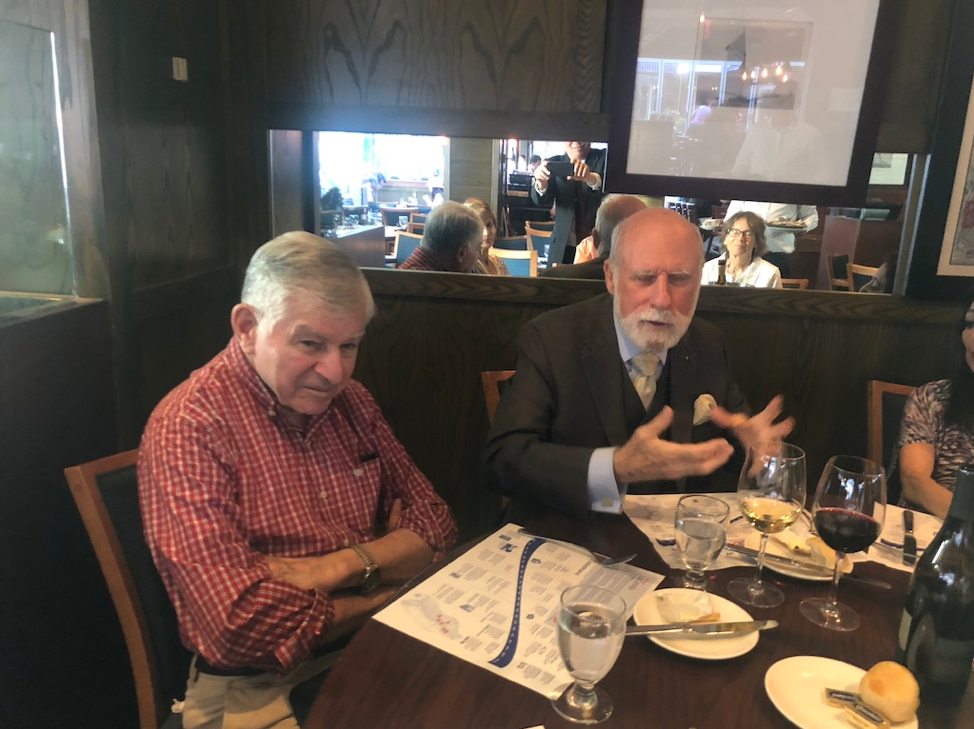
Governor Michael Dukakis and Vint Cerf in 2019
by Editor | Apr 4, 2021 | News
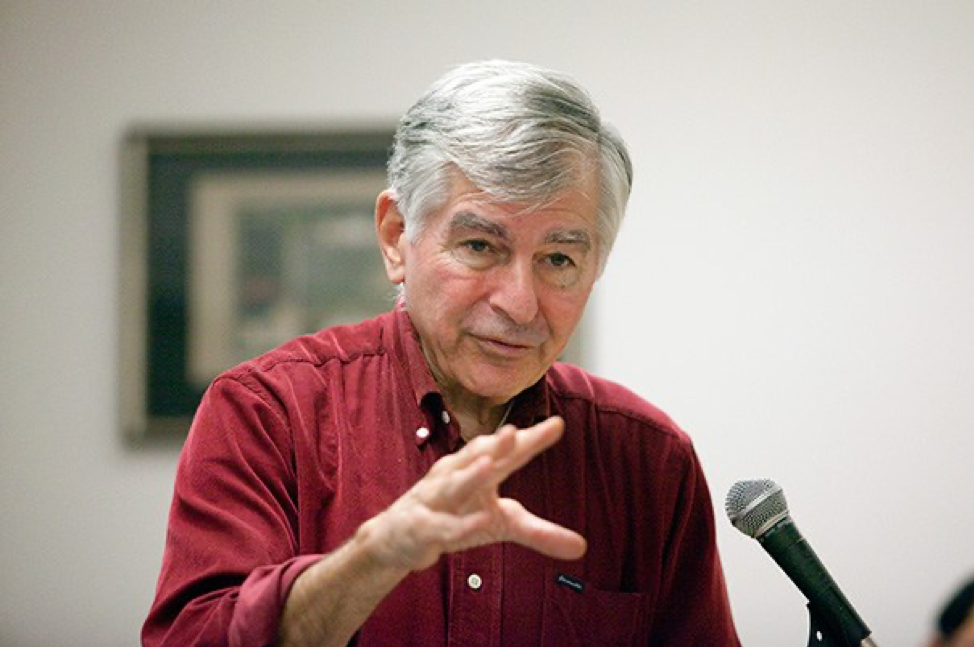
On April 15, 2021, Governor Michael Dukakis, co-founder and Chairman of the Boston Global Forum, co-founder of AI World Society (AIWS), will present the lecture “How to become a charismatic leader in the AI Age.” This lecture is a part of the AIWS Leadership Master Program at Saint Petersburg Electrotechnical University (ETU ”LETI”).
Together with Governor Michael Dukakis, Mr. Nguyen Anh Tuan, CEO of the Boston Global Forum, co-founder of AIWS, will highlight to students visions of AIWS and how to inspire global citizens and leaders to contribute and support the Social Contract for the AI Age, AI International Accord.
Social Contract for the AI Age as “TCP/IP” to connect governments. World Leadership Alliance-Club de Madrid launched the report and press release call leaders, governments endorse and apply this Social Contract. This is the first Social Contract in the age of AI, Internet, and Digital. The framework for AI International Accord (AIIA) is a follow-up of the Social Contract for the AI Age. The framework is designed to build the AI World Society (AIWS) and to meet the goals of the United Nations Centennial Initiative — as articulated by the United Nations Academic Impact and the Boston Global Forum.
by Editor | Apr 4, 2021 | Event Updates
The United Nations Academic Impact, Boston Global Forum, and Michael Dukakis Institute will
organize the UN Centennial Roundtable “AI International Accord” on April 28. This roundtable will address:
1. Fundamentals of the framework for AI International Accord,
2. Processs to build AIIA
3. Mechanisms to implement AIIA, and
4. Supports of governments, international organizations, and companies and firms to acknowledge, buttress, and enable this international accord.
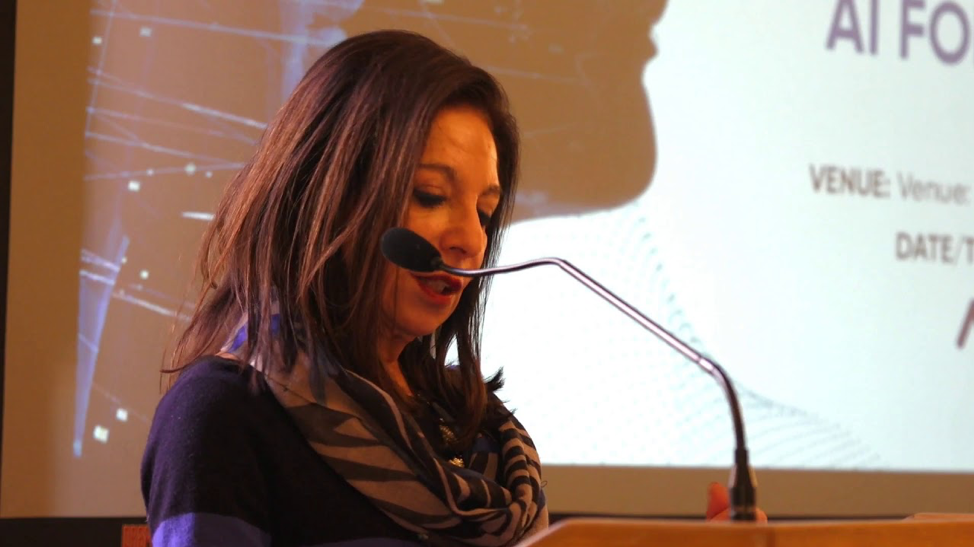
Professor Nazli Choucri, MIT, Member of AIWS City’s Board of Leaders, will present the Framework for AI International Accord v1.0 at the UN Centennial Roundtable.
In 2018, Governor Michael Dukakis called for an international accord for AI and, over the last several years, there has been steady progress toward this goal. The Boston Global Forum put forward the Social Contract for the AI Age and AI World Society initiative.
On December 12, 2020, at the Boston Global Forum and Michael Dukakis Institute Ceremony to honor EU Commission President von der Leyen as World Leader for Peace and Security Award, and introduce the AI International Accord Initiative, she called for an EU-US Transatlantic Accord on AI. She emphasized “global standards aligned with our values: Human rights, and pluralism, inclusion and the protection of privacy.” Then at the Munich Security Conference in February, President Biden called for AI rules that “lift people up.” It was a powerful statement.
by Editor | Apr 4, 2021 | News
AIWS introduces the article by Shatrughna Sinha Deputy, Consul General of India, New York, on the Fletcher Forum of World Affairs to discuss. Below are some key messages of his article:
As countries look towards developing new frameworks of cooperation in global digital governance, there are also some apprehensions. A genuine fear about AI is that capital-rich countries will benefit more, and labor-rich countries will suffer as jobs shift towards automation. It is true that developed countries have an advantage, as innovation tends to benefit countries that have an abundance of intellectual capital. Some of the biggest companies in the world today either operate on digital platforms or deal in digital technologies. While the innovators and investors have made huge profits and those with high skills have benefitted, there is a crisis at the lower-skill end of the spectrum. Until the time when low-skilled labor in advanced countries shifts to higher skills required in the new world technology industry, wages are likely to stagnate. This is likely to amplify inequities in developed societies as well.
…..
CAN INDO-U.S. TECHNOLOGY COLLABORATION EMERGE AS A MODEL FOR THE WORLD?
Technology cooperation between India and the United States could be a great example of how countries from the Global South can collaborate with advanced countries in the development of data-driven technologies. Both countries have worked closely on multilateral platforms on confidence building measures, capacity building, and norm-setting in cyberspace. India and the United States signed a Cyber Framework in August 2016 and have since had multiple consultations on digital technologies and cyberspace.17This framework of cooperation has led to cooperation in the fields of law enforcement, capacity building, computer emergency response cooperation as well as cooperation in the field of testing and standards. Both countries have also worked closely on multilateral platforms on norms of state behavior and confidence building measures in the cyber sphere.18 The complementarities between the two countries are obvious. While the United States is the most advanced cyber power, India is the largest digital democracy in the world. The technology industry in the United States is powered by the talent and hard work of Indian engineers.
At the same time, India’s IT services industry is reliant on U.S. clients. The booming digital platform economy in India has attracted significant investments from American behemoths like Walmart and Facebook. The strong base for this cyber-cooperation is provided by the shared values of freedom and democracy.
The full article can be read and downloaded here.
by Editor | Mar 28, 2021 | News
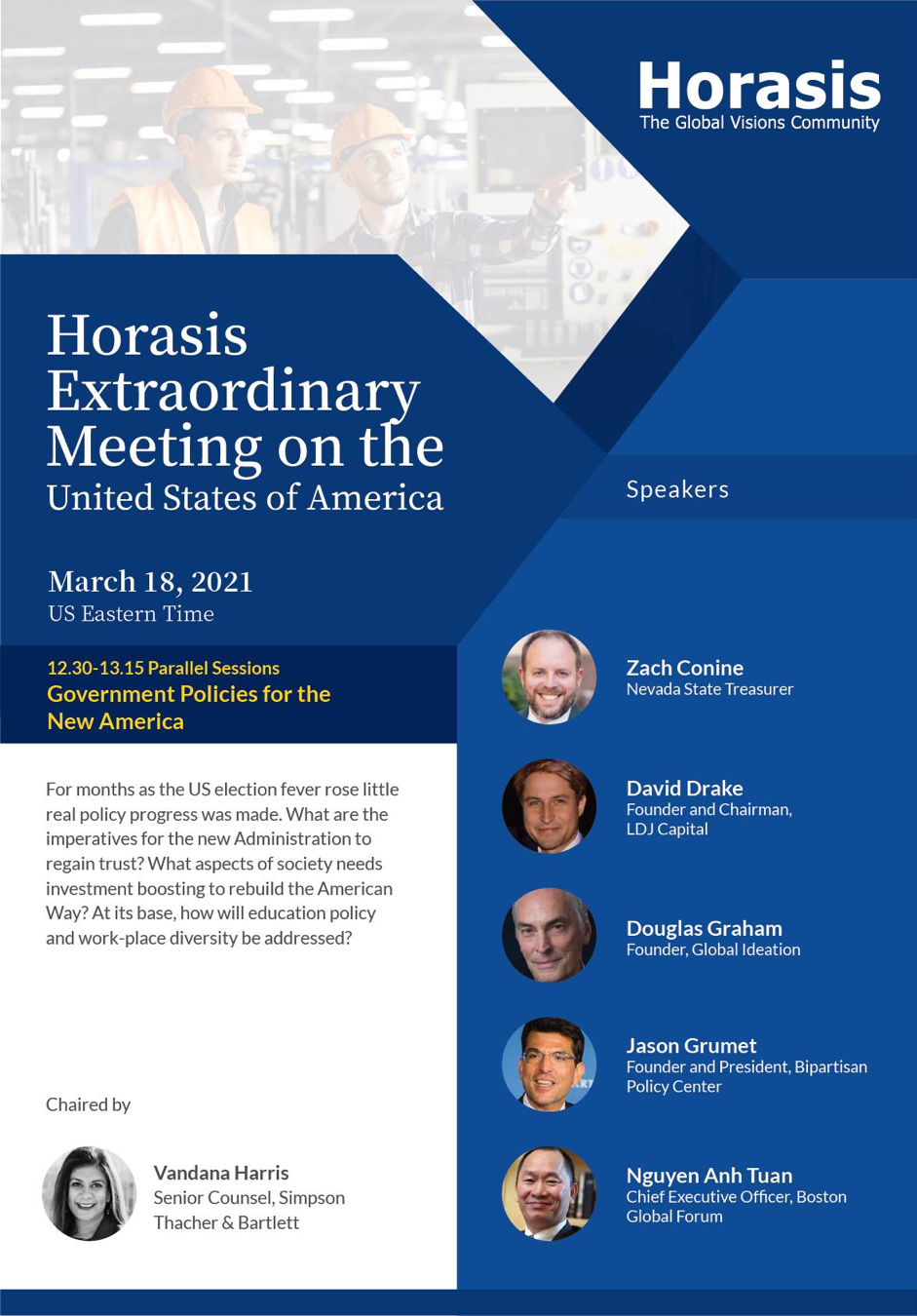
On March 18, 2021, Mr. Nguyen Anh Tuan, co-founder and CEO of the Boston Global Forum and of AIWS City spoke at the session “Government Policies for the New America” of the Horasis Extraordinary Meeting on the United States of America.
For months as the US election fever rose little real policy progress was made. What are the imperatives for the new Administration to regain trust? What aspects of society needs investment boosting to rebuild the American Way? At its base, how will education policy and work-place diversity be addressed?
Panelists:
- Zach Conine, Nevada State Treasurer, USA
- David Drake, Founder and Chairman, LDJ Capital, USA
- Douglas Graham, Founder, Global Ideation, USA
- Jason Grumet, Founder and President, Bipartisan Policy Center, USA
- Nguyen Anh Tuan, Chief Executive Officer, Boston Global Forum, USA
Chaired by Vandana Harris,Senior Counsel, Simpson Thacher & Bartlett, USA
Mr. Tuan called for equality of opportunities between the US and Western Europe with China and the Chinese market, saying that governments should include the Chinese government in applying the standards and norms of Social Contract for the AI Age. As an answer to the question “What is the American Way?”, he said, with solid foundation and fundamental matters, the US should lead in “Remaking the world – the Second Age of Enlightenment” as mission of AI World Society.
Mr. Tuan also said the US should do 3 things to compete with China: be quicker, smarter, and more effective in politics, economy, business, and society.


by Editor | Mar 28, 2021 | News
On March 26, 2021, the United Nations Academic Impact and Boston Global Forum renamed the “United Nations 2045 Initiative” to “United Nations Centennial Initiative” and have chosen its logo as well.
The United Nations Centennial was launched in 2019 by the United Nations Academic Impact in partnership with The Boston Global Forum.
The UN Centennial programs host roundtable discussions, conferences, new concepts, solutions, think pieces, and reflections as we look ahead to the global landscape in 2045—the United Nations Centennial year.
This initiative will examine issues impacting technology, including artificial intelligence, cybersecurity, diplomacy, warfare, and other pressing concerns. Our goal is to look to the future and the role the United Nations will continue to play in making our world more peaceful, democratic, prosperous and universally secure.
The Boston Global Forum contributes AI World Society initiative to the United Nations Centennial.
The mission of UN Centennial Initiative and AI World Society: Remaking the world – The Second Age of Enlightenment.

by Editor | Mar 21, 2021 | Event Updates
Combined AIWS City and NovaWorld Phan Thiet to build A Distinguished City to Honor the United Nations’ First Century
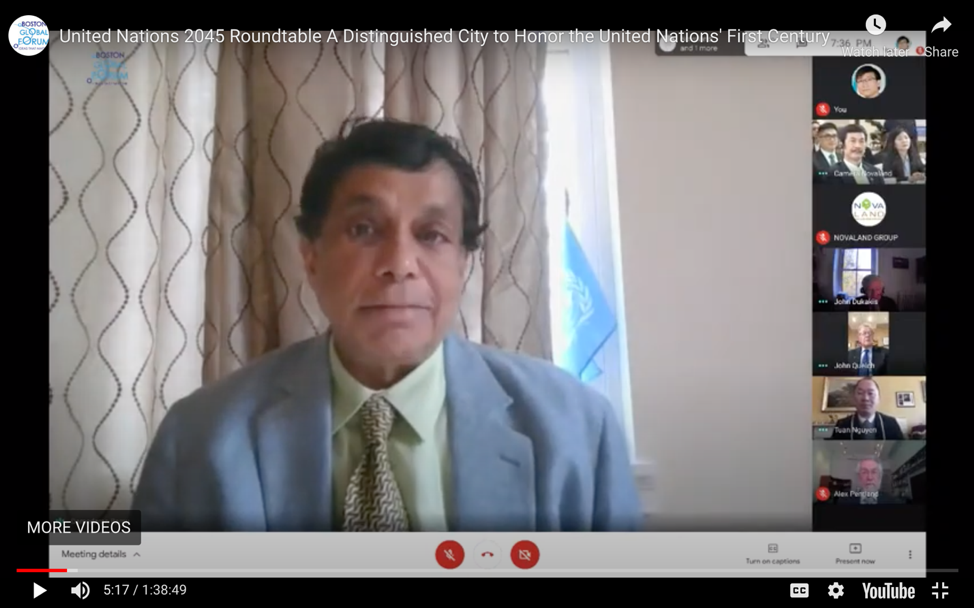
The United Nations Academic Impact and Boston Global Forum have co-organized the United Nations 2045 Roundtable: A Distinguished City to Honor the United Nations’ First Century.
8:30 -10:00 EDT/19:30 – 21:00 ICT, March 17, 2021
Video: http://bostonglobalforum.org/bgf2022/news-and-events/united-nations-2045-roundtable-a-distinguished-city-to-honor-the-united-nations-first-century/
Chair: Mr. Ramu Damodaran, chief of the United Nations Academic Impact and editor-in-chief of United Nations Chronicle Magazine.
Speakers/Panelists:
Kamal Malhotra, the United Nations Resident Coordinator in Vietnam
Michael Dukakis, three-term governor of Massachusetts
Nguyen Trung Khanh, Chairman of Vietnam National Administration of Tourism
Le Tuan Phong, governor of Binh Thuan province, Vietnam
Thomas Patterson, Harvard University
Alex Pentland, MIT
John Quelch, University of Miami
Bui Thanh Nhon, chairman of Nova Group, Vietnam
Speakers discussed a sophisticated pioneer model: a combination of the virtual, digital AIWS City and a real city of Phan Thiet – NovaWorld Phan Thiet.
Bui Thanh Nhon, Chairman of Nova Group said, “The city of Phan Thiet will be the place for the World Leadership Alliance-Club de Madrid and the Michael Dukakis Institute to hold important annual events that gather presidents, prime ministers, and top thinkers from around the world, most especially in 2022, which will be marked by the theme of Building a New Economy for the world in the digital and artificial intelligence era.
Thanks to the partnership with the Michael Dukakis Institute, NovaWorld Phan Thiet, will serve as the venue to announce new achievements in the history of artificial intelligence and the digital economy.”
Governor Michael Dukakis said, “The AIWS City will create new values as AIWS Rewards and presents AIWS Awards to honor new ideas, initiatives, and solutions by thinkers and creators in an effort to build a civilized, prosperous, peaceful, and happy world. We are glad to collaborate with NovaWorld Phan Thiet, World Leadership Alliance Club de Madrid to organize significant events, notably the Conference in Phan Thiet in 2022 – a foundation to contribute to building Phan Thiet as the significant Meetings, Incentives, Conferences, and Exhibitions destination in the world.”
Ramu Damodaran, Chief of the United Nations Academic Impact, Chair of the United Nations 2045 Roundtable welcomed the AIWS City-NovaWorld Phan Thiet as an initiative to honor the United Nations’ First Century.

by Editor | Mar 14, 2021 | News
On Friday, March 12, Marc Rotenberg, Director of Center for AI and Digital Policy at Michael Dukakis Insitute, gave a lecture at ETU-AIWS Leadership Master Program. This is a collaboration between AIWS University at AIWS City and Saint Petersburg Electronical University (ETU”LETI”).
He presented a perspective of International law in the AI and digital fields.
The homework for students is to find solutions to convince governments in joining international community to build international law in the AI and Digital realms.
Here is the link to Mr. Rotenberg’s lecture.