by Editor | Mar 14, 2021 | Event Updates
There are honored Vietnamese leaders that will join the United Nations 2045 Roundtable “A Distinguished City to honor the United Nations’ First Century” at 8:30 am – 10:00 am EDT, March 17, 2021, including:
Mr. Le Tuan Phong, Governor Binh Thuan; Mr. Vu Hai Quan, Chancellor of Vietnam National University at Ho Chi Minh City; Mr. Duong Anh Duc, Vice Chairman of Government of Ho Chi Minh City; Mr. Nguyen Trung Khanh, Chairman of Vietnam National Agency of Tourism; and Mr. Bui Thanh Nhon, Chairman of Nova Group.
Mr. Ramu Damodaran, Chief of the United Nations Academic Impact and Editor in Chief of the United Nations Chronicle Magazine, will give opening remarks, then panelists will speak and discuss about combining AIWS City Phan Thiet and NovaWorld Phan Thiet, making it a Distinguished City to honor the United Nations at 2045.
Mr. Kamal Malhotra, UN Resident Coordinator in Vietnam, will speak on “The United Nations and development of Vietnam.”
Governor Michael Dukakis will share his experiences as Governor of Massachusetts, while Professor Thomas Patterson will present the unique and pioneering of AIWS City.
Professor Alex Sandy Pentland will present applications of his new visions about economy and finance in AIWS City.
Governor Le Tuan Phong, Chairman Bui Thanh Nhon, and leaders of Vietnam will present about Phan Thiet and NovaWorld Phan Thiet.
Then Professor John Quelch will speak how to turn the combination of AIWS City and Phan Thiet into a global brand.
by Editor | Mar 7, 2021 | News
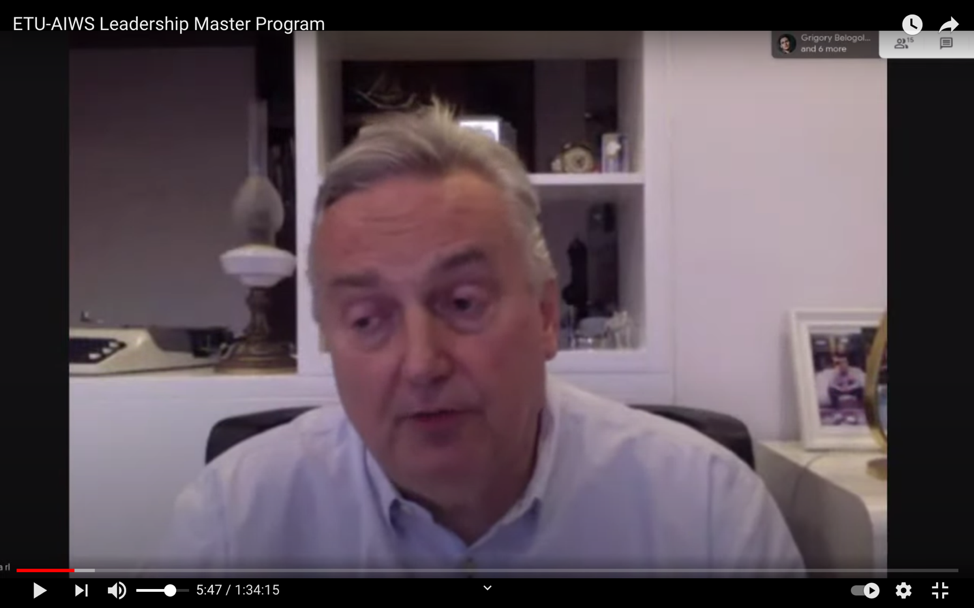
On March 6, 2021, students of the AIWS Leadership Master Degree Program at Saint Petersburg Electronical University (ETU”LETI”) were taught by Professor Zlatko Lagumdzija, former Prime Minister of Bosnia and Herzegovina, with the topic “Building an International Accord on Artificial Intelligence.” He introduced the Social Contract for the AI Age as fundamental for Framework of the AI International Accord.
The homework of students is finding solutions to convince leaders and governments on consensus the Framework for the AI International Accord.
This lecture is hosted by AIWS University at AIWS City.
Link: https://www.youtube.com/watch?v=1zwpCO0WkU0
by Editor | Mar 7, 2021 | News
AIWS City will bring to NovaWorld Phan Thiet a rich set of activities designed to highlight intellectual and creative talent and progress. Together, AIWS City and NovaWorld Phan Thiet will serve as a model for sustainable development and high standards, embodying the ideals that marked the founding of the United Nations and that will sustain it as it moves toward its centennial year.
Speakers:
Kamal Malhotra, UN Resident Coordinator in Vietnam: “The United Nations and the Symbolic Importance of NovaWorld Phan Thiet and AIWS City.”
Governor Michael Dukakis, Co-founder and Chair of the Boston Global Forum (BGF): “Imagining the City of the Future.”.
Governor Le Tuan Phong, Binh Thuan, Viet Nam: “Responsible Development of Binh Thuan Province and Phan Thiet City.”
Professor Thomas Patterson, Co-founder of the BGF: “AIWS City as Concept and Reality.”
Professor Alex Pentland, Member of the AIWS City Board of Leaders: “Application of New Economic and Financial Ideas to AIWS City”
Chairman Bui Thanh Nhon, Nova Group: “NovaWorld Phan Thiet as a World Model.”
Professor John Quelch, Co-founder of the Boston Global Forum: “AIWS City supports NovaWorld Phan Thiet into a Global Brand.”
by Editor | Mar 7, 2021 | News
Politico published the article “China wants to dominate AI. The U.S. and Europe need each other to tame it” on March 02, 2021, with a cameo from MDI and CAIDP:
“Strategically, both the U.S. and the EU are concerned about China, so they need a tech policy that acknowledges a very aggressive position that China has taken in AI,” said Marc Rotenberg, director of the Center on AI and Digital Policy at the Michael Dukakis Institute, a technology and leadership think tank in Boston.
Rep. Robin Kelly (D-Ill.), who has championed a U.S. national strategy on AI, asked her European counterparts during testimony to be “narrow and flexible” while pushing ahead with their “desire to be the first to write regulations.” The U.S. and Europe need to stand together as China seeks to write the global playbook, she added.
“Nations that do not share our commitment to democratic values are racing to be the leaders in AI and set the rules for the world,” Kelly said. “We cannot allow this to happen.”
by Editor | Mar 7, 2021 | Event Updates
Co-organizers: The United Nations Academic Impact and Boston Global Forum
8:30 -10:00 EDT/19:30 – 21:00 ICT, March 17, 2021
Moderator: Mr. Ramu Damodaran, chief of the United Nations Academic Impact and editor-in-chief of United Nations Chronicle Magazine.
Speakers/Panelists:
Bui Thanh Nhon, chairman of Nova Group, Vietnam
Kamal Malhotra, the United Nations Resident Coordinator in Vietnam
Michael Dukakis, three-term governor of Massachusetts
Le Tuan Phong, governor of Binh Thuan province, Viet Nam
Thomas Patterson, Harvard University
Alex Pentland, MIT
John Quelch, University of Miami
AIWS City
AIWS City is a digital virtual city founded on principles stated in “Social Contract for the AI Age”, “People Centered Economy”, “Trustworthy Economy”, “Intellectual Society”, and “AI-Government.”
AIWS City was introduced on 08/21/2020 at the United Nations 2045 Roundtable, co-organized by the United Nations Academic Impact and the Boston Global Forum.
The AIWS City Board of Leaders are: Governor Michael Dukakis, Chairman of the Boston Global Forum; Nguyen Anh Tuan, CEO of the Boston Global Forum; Professor Alex Pentland of MIT; Vint Cerf, Chief Internet Evangelist of Google; former Latvian and Club de Madrid President Vaira Vike-Freiberga; former Prime Minister of Bosnia and Herzegovina Zlatko Lagumdzija; Professor Nazli Choucri of MIT, Professor David Silbersweig of Harvard University; Professor Thomas Patterson of Harvard University; and Marc Rotenberg, Director of Center for AI and Digital Policy at Michael Dukakis Institute.
AIWS City includes distinguished world leaders, inventors, and innovators, as well as faculty from universities such as Harvard, MIT, Stanford, Princeton, Yale, Columbia, UC-Berkeley, Carnegie Mellon, Oxford, and Cambridge.
Location – NovaWorld Phan Thiet
Although virtual in concept, AIWS City will have a physical location – Phan Thiet, Vietnam. It is known for its white sand beaches, temperate climate, and proximity to an international airport and port of call. Less than 100 miles from Ho Chi Minh City, Phan Thiet was historically a place of the Champa people and the enlightened Champa culture, remnants of which still exist in the area.
Phan Thiet is emerging as a worldwide destination. At Phan Thiet, Novaland Group is creating a “World Beach City” for vacationers that will also be an international hub for world leaders, creators, innovators, and scholars.
AIWS City will bring to NovaWorld Phan Thiet a rich set of activities designed to highlight intellectual and creative talent and progress. Together, AIWS City and NovaWorld Phan Thiet will serve as a model for sustainable development and high standards, embodying the ideals that marked the founding of the United Nations and that will sustain it as it moves toward its centennial year.
by Editor | Feb 28, 2021 | News
As usual this year, Michael Dukakis Institute sponsors the AI World Executive Summit July 14, 2021. The AI World Society City (AIWS City) of Michael Dukakis Institute will be a strategic alliance partner of this event.
This year’s AI World Executive Summit: The Future of AI will help keep people ahead of the curve and focus on how the best and brightest enterprises are truly innovating and achieving high-performance results from AI.
There is a special session at AI World Executive Summit – “AIWS City, a city for 100 years of the United Nations”
Speakers: Vint Cerf, father of Internet; Governor Michael Dukakis; Mr. Ramu Damodaran, Chief of the United Nations Academic Impact, Editor in Chief of United Nations Chronicle Magazine; Professor Thomas Patterson, Harvard Kennedy School; Professor John Quelch, Harvard Business School; and Mr. Bui Thanh Nhon, Chairman of Novaland.
Read more about the Summit here.
by Editor | Feb 28, 2021 | News
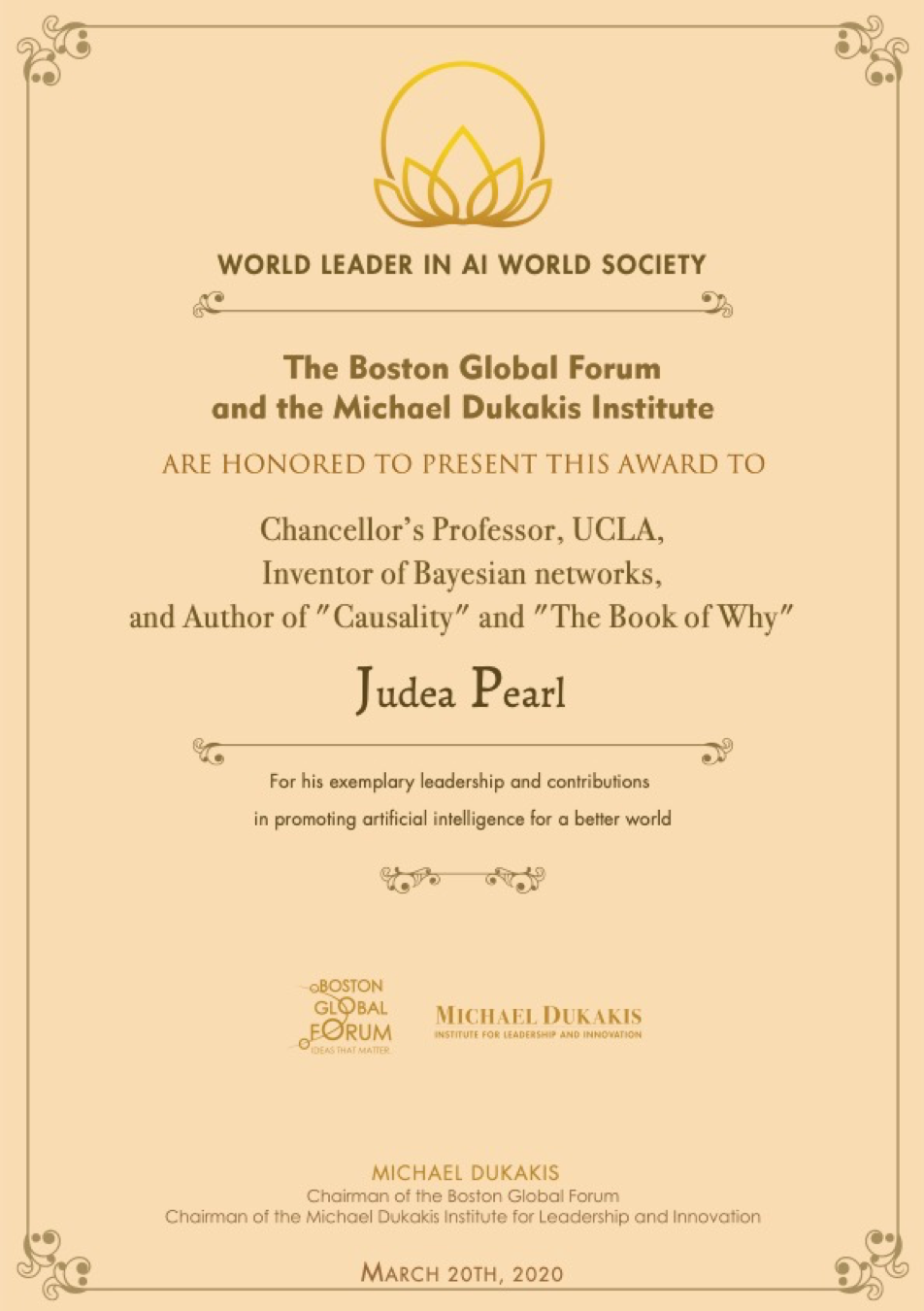
Now, leaders of the Boston Global Forum (BGF) and AIWS Innovation Network (AIWS.net) are nominating persons to honor World Leader in AI World Society Award 2021. The first recipient was Angel Gurria, Secretary General of OECD for 2018, the second recipient was father of Internet Vint Cerf for 2019, and the third and most recent recipient was Professor Judea Pearl, UCLA, for 2020.
The World Leader in AI World Society Award 2021 will be presented at the Quad Roundtable on AI International Accord in late April 2021.
World Leader in AI World Society is a part of AIWS.net. Winners of this award will become a member of board of leaders of AIWS.net, the network of more than 100,000 professors, scholars, innovators, and experts of top universities across the world.
by Editor | Feb 28, 2021 | Event Updates
On 9:00 EST/15:00 CET/17:00 MSK, Saturday, March 6, 2021, the co-author of the Social Contract for the AI Age, Member of the History of AI Board, Prime Minister Zlatko Lagumdzija, will teach AIWS Leadership Master Degree Program. This program is a part of the cooperation between Saint Petersburg Electrotechnical University ETU “LETI” and AIWS University of Michael Dukakis Institute for Leadership and Innovation. He will speak about building AI International Accord, and its challenges and obstacles. Students will be attending to learn the process to build the framework of AI International Accord and practice how to convince governments accept the framework.
Professor Dr. Zlatko Lagumdžija was Prime Minister, Acting Prime Minister, twice Deputy Prime Minister, twice Minister of Foreign Affairs, and a Member of the Parliament and the leader of the largest multi-ethnic political party in Bosnia and Herzegovina between 1992 and 2015. Member of Club de Madrid-The World Leadership Alliance and World Academy of Arts and Sciences. Founder of the Shared Societies and Values Foundation Sarajevo. Since 1989, Dr. Lagumdžija is professor of Management and Information Technologies at University of Sarajevo, and visiting professor of different universities in Europe, Asia and America. Member of numerous International Boards and Missions. Ambassador for Dialogue among Cultures and Civilizations of ISESCO.
by Editor | Feb 21, 2021 | News
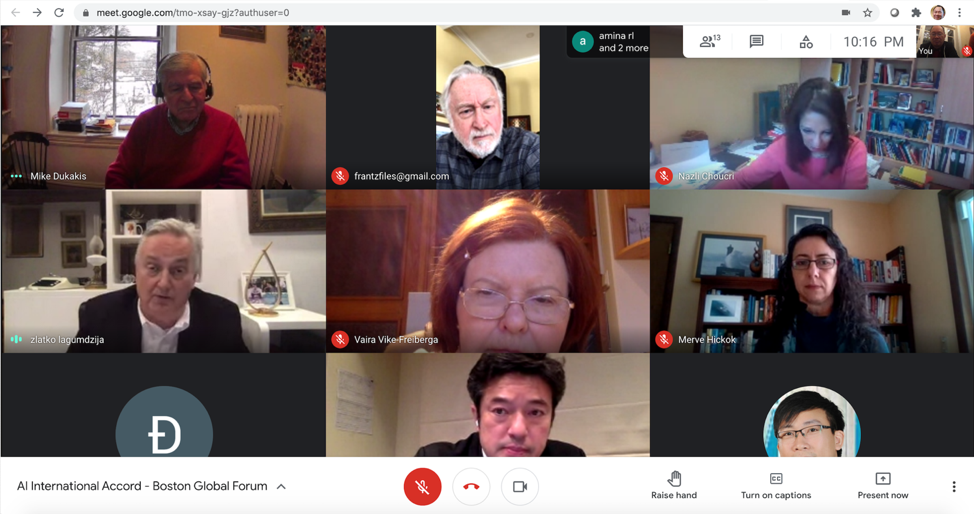
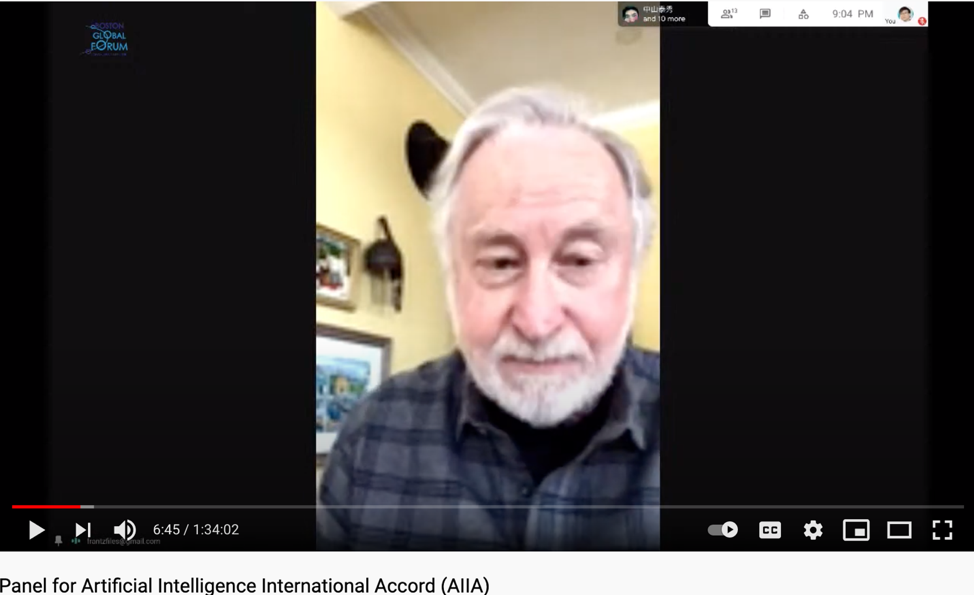
As the place to host online significant and prestigious events, on February 19, 2021, the AIWS Palace at AIWS City hosted its first Panel for AI International Intelligence (AIIA).
The preeminent speakers present were Governor Michael Dukakis; former Latvian and Club de Madrid President Vaira Vike-Freiberga; former Prime Minister of Bosnia-Herzegovina, Zlatko Lagumdzija; Japanese State Minister Yasuhide Nakayama; Professor Nazli Choucri, MIT; Merve Hitkok, the founder of AIEthicist and one of 100 Brilliant Women in AI Ethics 2021; and Andrew W. Wyckoff, the Director of the OECD’s Directorate for Science, Technology and Innovation (STI).
The moderator of the Panel for AI International Accord was Douglas Frantz, a Pulitzer Prize-winning journalist, author, and former Deputy Secretary-General of the OECD. Frantz served as Assistant Secretary of State for Public Affairs in the Obama administration.