by Editor | Sep 22, 2019 | News
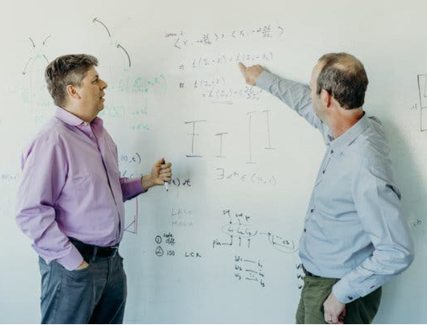
Four years ago, more than 700 computer scientists competed in a contest to build artificial intelligence (AI) that could pass an eighth-grade science test. There was $80,000 in prize money on the line.
They all flunked. Even the most sophisticated system couldn’t do better than 60 percent on the test. AI couldn’t match the language and logic skills that students are expected to have when they enter high school. But on Wednesday, the Allen Institute for Artificial Intelligence, a prominent lab in Seattle, unveiled a new system that passed the test with room to spare. It correctly answered more than 90 percent of the questions on an eighth-grade science test and more than 80 percent on a 12th-grade exam.
The Allen Institute built their Aristo system on top of the Bert technology. They fed Bert a wide range of questions and answers. In time, it learned to answer similar questions on its own. Systems like Bert — called “language models” — now drive a wide range of research projects, including conversational systems and tools designed to identify false news. With more data and more computing power researchers believe the technology will continue to improve.
The original article can be found here.
According to Michael Dukakis Institute for Leadership and Innovation (MDI), AI is an important tool to support society but AI is also needed to develop in ethical ways to support transparency and respect human values. It could help people to relieve resource constraints and solve important issues, such as SDGs.
by Editor | Sep 22, 2019 | News
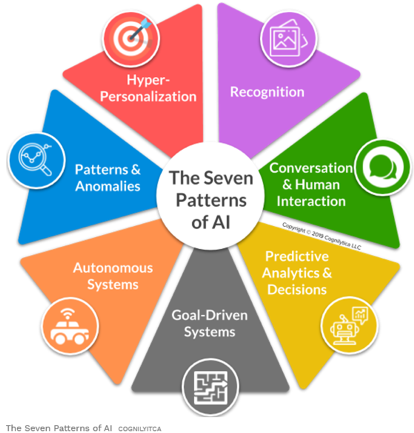
From autonomous vehicles, predictive analytics applications, facial recognition, to chatbots, virtual assistants, cognitive automation, and fraud detection, the use cases for Artificial Intelligence (AI) are many. However, regardless of the application of AI, there is commonality to all these applications. Those who have implemented hundreds or even thousands of AI projects realize that despite all this diversity in application, AI use cases fall into one or more of seven common patterns. The seven patterns are: hyperpersonalization, autonomous systems, predictive analytics and decision support, conversational/human interactions, patterns and anomalies, recognition systems, and goal-driven systems. Any customized approach to AI is going to require its own programming and pattern, but no matter what combination these trends are used in, they all follow their own pretty standard set of rules. These seven patterns are then applied individually or in various combinations depending on the specific solution to which AI Is being applied.
The original article can be found here.
While AI is still in the early majority phase of adoption, it’s clear that the identification and use of these patterns will help organizations realize their AI project goals more quickly, with less re-inventing of the wheel, and with much better chances of success. These patterns of AI applications are also supported by AI World Society (AIWS), which always promote AI technology by collaborating among corporations, think tanks, universities, non-profits, and other entities that share its commitment to the constructive and development of AI.
by Editor | Sep 29, 2019 | News
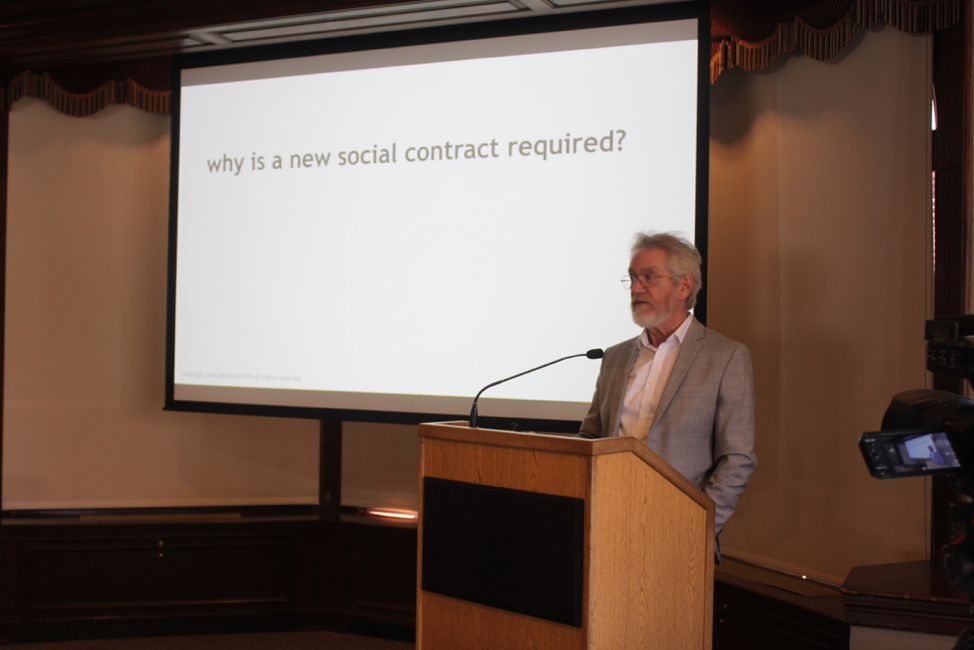
Professor Alex Sandy Pentland presented some of the first concepts for the Social Contract 2020 at the AI World Society Conference on September 23, 2019 at Harvard University Faculty Club.
Here is a link to his presentation.
The structures of presentation include:
Data, along with Labor and Capital, is now the foundation of our society.
Social Contract 2020:
- Ownership Rights and Security
- Governance and Social Fabric: Transparency, Responsibility
- Digital Economy and Social Structure: Sustainability & Jobs
- Collective Action in Changing World
by Editor | Sep 15, 2019 | News
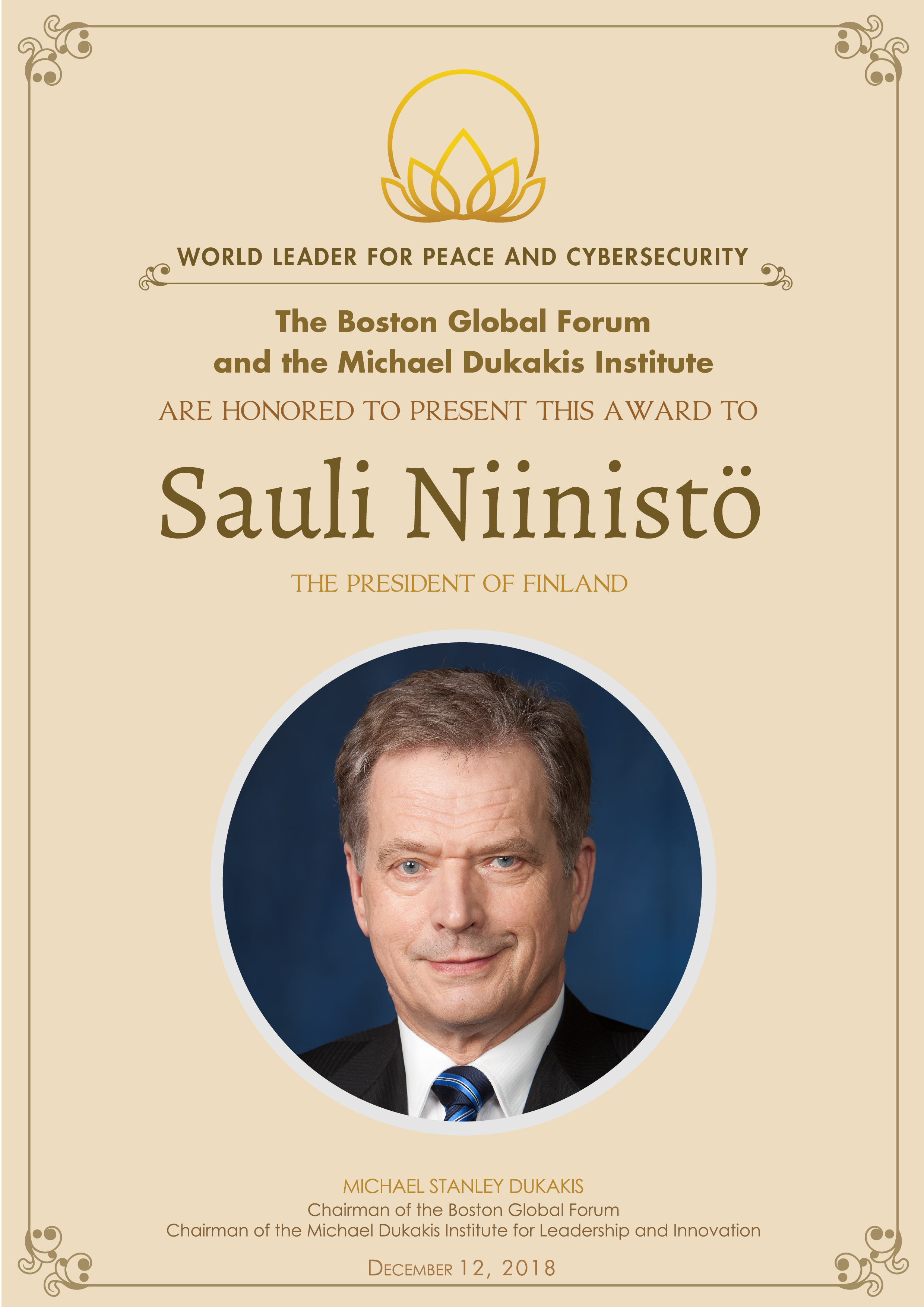
Here is a part of the speech by the President Sauli Niinistö, who was honored as World Leader for Peace and Cybersecurity 2018 on Global Cybersecurity Day December 12, 2018 at Loeb House, Harvard University, by the Boston Global Forum and Michael Dukakis Institute for Leadership and Innovation.
“Constitution is an impressive appellation and may sound alien in everyday speech, yet it has a profound impact on our daily lives.
I approach the topic in terms of two themes, trust and social inclusion. While neither of these are strictly speaking legal concepts, they still reflect the spirit of the laws regarding our social arrangements.
All social life is based on trust, the assumption that each and everyone acts in a manner that may be reasonably expected.
The fundamental rights recorded in the Finnish Constitution created a sound basis for assessing such “reasonable expectation”.
Often, the thinking stops at the notion that fundamental rights are something that society must guarantee and the citizens enjoy. However, citizens too are duty-bound to respect the fundamental rights of others. If the rights of the fellow-man are not upheld, very little is left of one’s own rights.
The Constitution expressly states that nature and its biodiversity, the environment and the national heritage are the responsibility of everyone. It means all of us.
Individuals are also called upon to assume responsibility for their own security. The Constitution includes a provision on the right to social security stipulating that “those who cannot obtain the means necessary for a life of dignity have the right to receive indispensable subsistence and care.” The Constitution goes on to say, quite rightly, that specific laws are to be enacted to provide support in special situations and guarantee adequate social and health services for all. But as I see it, it also presupposes that every individual makes a genuine effort using his or her best endeavours, each according to his or her ability and capacity.
However, the highest expectations are pinned on those who exercise public powers, that is, all of us in this room, the authorities. It means that we are called upon to uphold the Constitution which “guarantees the inviolability of human dignity and the freedom and rights of the individual and promotes justice in society”.
The foundation set out one hundred years ago in our Constitution Act have remained firm in both difficult and positive times. To put it briefly: Trust and responsibility – these are the concepts that our Constitution still rests on.”
by Editor | Sep 15, 2019 | News
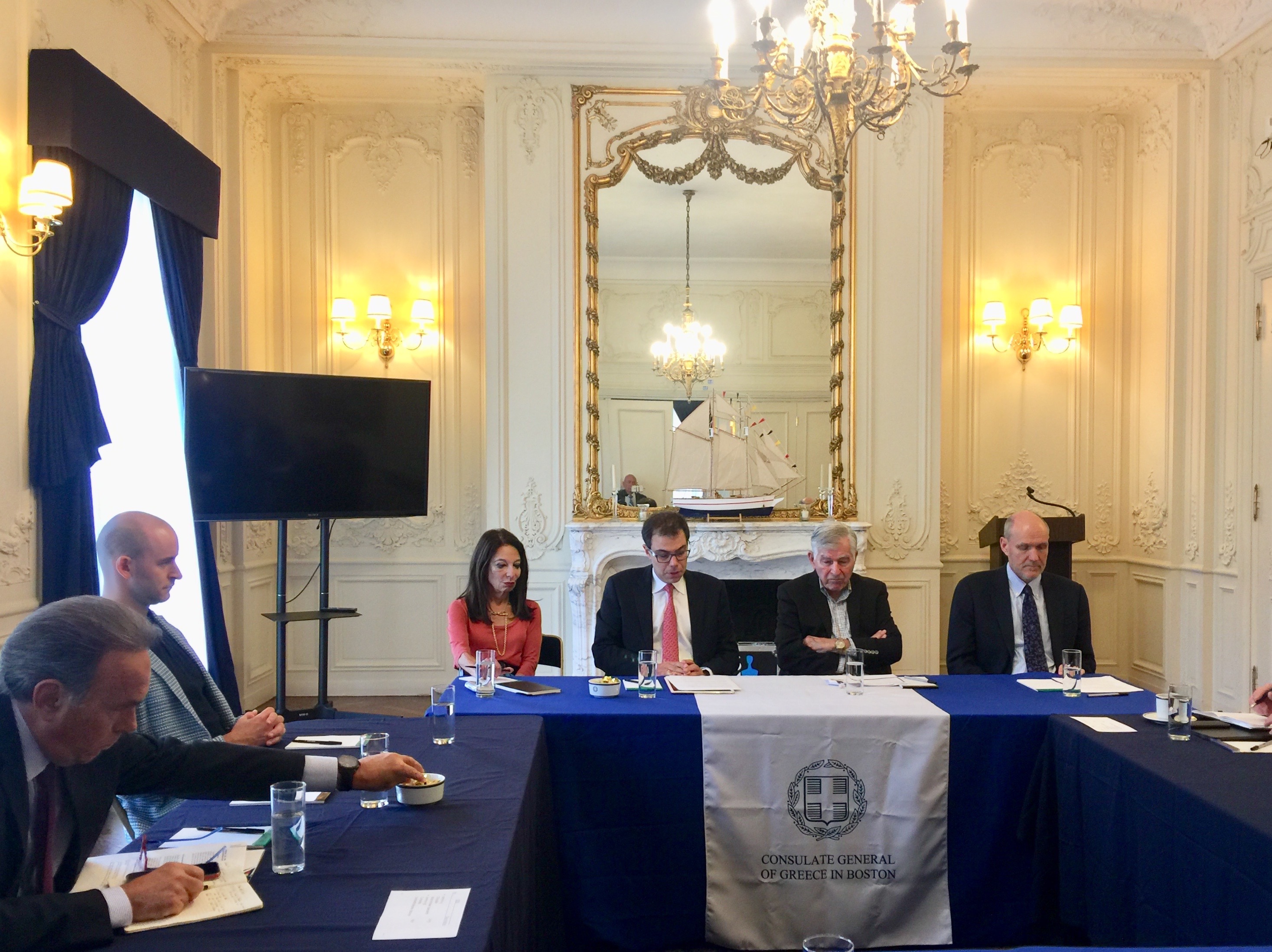
On World Reconciliation Day September 9, 2019, the Roundtable “Framework for Peace and Security in the 21st Century” was co-hosted by Consulate General of Greece in Boston and co-chaired by Governor Michael Dukakis, Co-founder and Chairman of the Boston Global Forum, and Consul General of Greece in Boston, Stratos Efthymiou.
Thought leaders, such as Professor Stephen Walt, Harvard Kennedy School; Professor Nazli Choucri, MIT; Professor Thomas Patterson, Harvard Kennedy School; Professor Constantine Arvanitopoulos, former Minister of Education and Culture of Greece, the Karamanlis Chair at the Fletcher School of Law and Diplomacy, Tufts University; Professor Christo Wilson, Northeastern University, Harvard Law School, Michael Dukakis Leadership Fellow; Professor Thomas Creely, Naval War College; Barry Nolan, Adviser of US Congress; and Nguyen Anh Tuan, Co-founder and CEO of the Boston Global Forum; attended the event.
After opening remarks by Consul General Stratos Efthymiou and leading talks by Governor Dukakis and Professor Stephen Walt, participants discussed the threats and challenges to peace and security and contribute ideas and solutions to solve them to build a framework in the 21st century. One of most challenging opposition to peace and security is dictatorship and totalitarianism of China. Democracy, openness, transparency, accountability, responsibility, international laws, norms. decentralization of power, promotion of citizens, and civic societies are very important for peace and security, and the world today need a new social contract, a new model to meet the rapidly changing society, which contains deep-applied AI and is connected by Internet.
AI World Society Model and The Social Contract 2020 are considered as parts of the Framework. The Boston Global Forum will continue discussing with thought leaders around the world and will officially launch the Framework for Peace and Security in 21st Century in Spring 2020 at Harvard University.