
by Editor | Jan 12, 2020 | News
Japanese Prime Minister Shinzo Abe on Sunday sought cooperation from Saudi Arabia to ensure stability in the Middle East amid heightened U.S.-Iran tensions.
In his meeting with Prince Faisal bin Farhan, who serves as foreign minister, Abe said he is “deeply worried” about the Middle East situation and Tokyo is aiming to help reduce the tensions through diplomatic efforts.
Abe also explained Japan’s planned dispatch of a Self-Defense Forces destroyer and patrol planes to the region to safeguard commercial shipping, according to the Foreign Ministry.
In response, the Saudi foreign minister hailed the decision, saying that it is the responsibility of “all countries concerned” to secure safe navigation, the ministry said.
Abe also held talks with Saudi King Salman ahead of his meeting with Crown Prince Mohammed bin Salman later Sunday.
The Boston Global Forum presented Prime Minister Shinzo Abe with the Award of World Leader for Peace, and Security on Global Cybersecurity Day December 12, 2015 at Harvard University Faculty Club.
The original article can be found here.
by Editor | Jan 12, 2020 | News
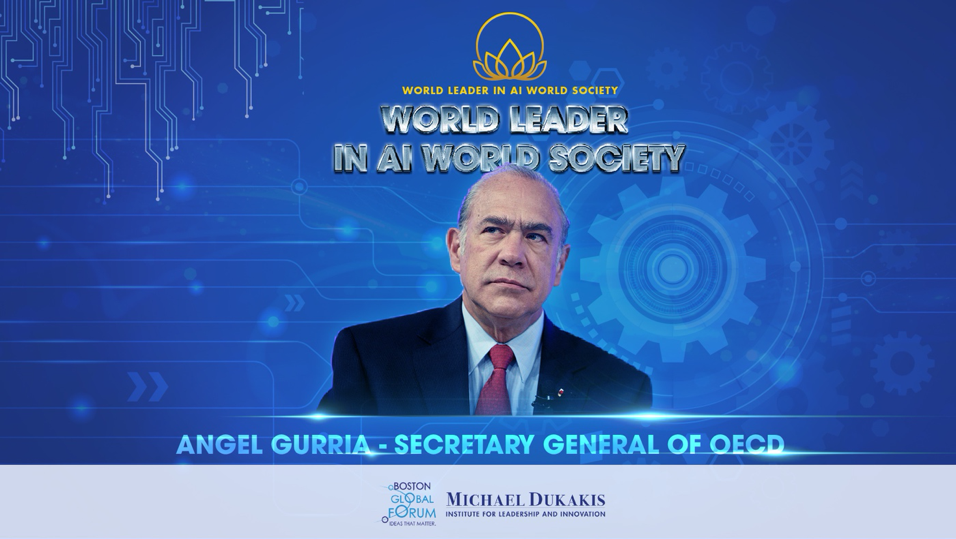
Now, leaders of BGF and AIWS Innovation Network (AIWS-IN) are nominating to honor World Leader in AI World Society Award 2020. The first winner was Angel Gurria, Secretary General of OECD for 2018, and the second winner was father of Internet Vint Cerf for 2019.
The World Leader in AI World Society Award 2020 will be presented at the conference co-organized by World Leadership Alliance-Club de Madrid and the Boston Global Forum, at Harvard University from April 28-29, 2020.
World Leader in AI World Society is a part of AIWS-IN. Winners of this award will become a member of board of leaders of AIWS-IN, the network of more than 100,000 professors, scholars, innvators, experts of top universities in the world.
Link: https://aiws.world/world-leaders-in-aiws/

by Editor | Jan 12, 2020 | News
Leaders and experts of EY, MIT, World Bank, the Boston Global Forum, and New America are discussing with each other to establish the Alliance for Prosperity.
An Alliance is taking shape between private and public stakeholders that aims to support transforming tax systems in developing countries through data science and technology innovations.
The founding members of the Alliance are: Boston Global Forum, EY, MIT Connection Science, New America and the World Bank. Over time, the Alliance will add other members that who can contribute to its mission. With countries in the lead fordire need of solution deployment of solutions on the ground, the Alliance will promote initiatives that contribute to: raising additional revenue, curbing corruption, and increasing fairness and taxpayer trust.
The Alliance will pursue a wide range of activities to getachieve buy-in, solution development, capability to deploy, and funding of data science and technology innovations. This requires raising awareness among stakeholders including decision -makers in developing countries, taxpayers and developers of technology solutions. Awareness needs to result in well-defined demand for approaches solutions that can change fundamental tax outomes. Alliance partners have own capacity to develop and deploy such solutions but a key activity will be to bring country demand to a wider group of developers, with as a core requirement that softwares Solutions should endeavor to lower barriers to adoption by adhering to governance principles that foster transparency and consistency: contributing to ‘free or open- source libraries or other intellectual property transfer, promoting ’ interoperabilityle, and and utilizing open standards / transparentprotocols where appropriate. Revenue administrations, ministries of finance and other key stakeholders need to be willing and ready for new solutions, which requires workforce development and addressing of institutional political economy bottlenecks. Finally, the Alliance will work with funders to secure financial resources for larger-scale projects and sustain the work of the Alliance.
The Alliance will initiate its work in 2020 with a launch in January 2020 at the World Economic Forum (WEF) in Davos.
This initiative as a model of AI-Government, a part of AI World Society Concepts.
by Editor | Jan 12, 2020 | News
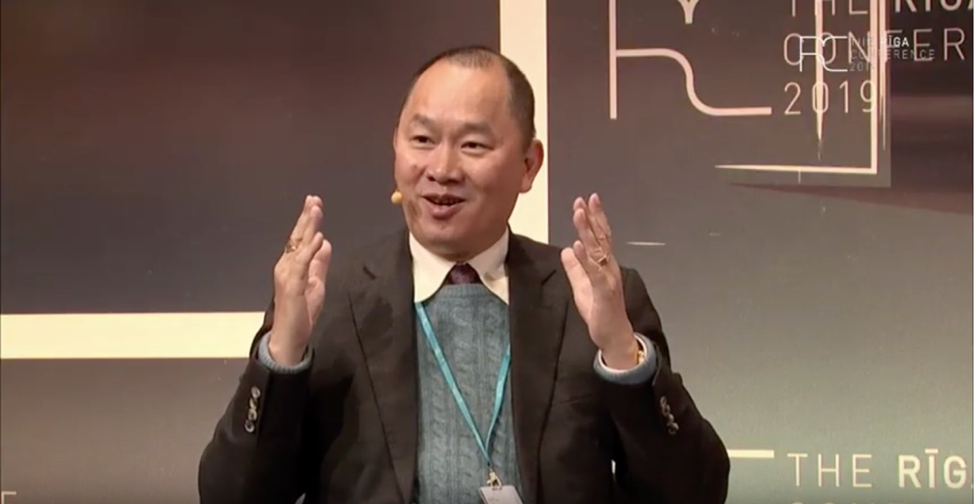
With the theme “Innovating Decisive Leadership through Times of Disruption”, Horasis Global Meeting will be organized from 28-31 March 2020 in Cascais, Portugal.
Co-hosts:
City of Cascais
Government of Portugal
President José Manuel Barroso, Vice Chairman, Goldman Sachs International; Former President, European Commission, Portugal, is the co-chair of the event.
Mr. Nguyen Anh Tuan, CEO of the Boston Global Forum, will be chair of the session The Progress on Global Commitments. He will present benefit and advantages from AIWS Innovation Network, a network of more than 100,000 professors, scholars, innovators, experts of top universities such as Harvard, MIT, Stanford, Princeton, Yale, Carnegie Mellon, Stanford, Cambridge, Oxford, etc., as Uber model of intellectual. There are topics linked to AI will be presented and discussed at Horasis Global Meeting, as well as many leaders of governments, distinguished scholars of universities, and business leaders who will join the event.

by Editor | Jan 12, 2020 | News
Take the camera trap, a pretty common technique used to study wildlife habits and biodiversity — and one that has been supported by an array of big-name tech companies. Except what researcher has the time or bandwidth to analyze thousands, let alone millions, of images? Enter systems such as Wildlife Insights, a collaboration between Google Earth and seven organizations, led by Conservation International.
Wildlife Insights is, quite simply, the largest database of public camera-trap images in the world — it includes 4.5 million photos that have been analyzed and mapped with AI for characteristics such as country, year, species and so forth. Scientists can use it to upload their own trap photos, visualize territories and gather insights about species health.
Here’s the jaw-dropper: This AI-endowed database can analyze 3.6 million photos in an hour, compared with the 300 to 1,000 images that you or I can handle. Depending on the species, the accuracy of identification is between 80 and 98.6 percent. Plus, the system automatically discounts shots where no animals are present: no more blanks.
The net effect: faster analysis, faster insights. And let’s be frank, the rapidity with which global temperatures are rising, and habitats and unique species are disappearing, demands that the sustainability community move much faster than it has to make decisions and take action. If 2019 told us anything, it was that we are running out of time to act on climate change. Indeed, almost three-quarters of business decision-makers believe AI will be instrumental in driving solutions that improve environmental sustainability, according to research published last year by Intel.
At the same time, we are certainly right to be cautious about the potential side effects of AI. That theme comes through loud and clear in five AI predictions published by IBM in mid-December. Two resonate with me the most: first, the idea that AI will be instrumental in building trust and ensuring that data is governed in ways that are secure and reliable; and second, that before we get too excited about all the cool things AI might be able to do, we need to make sure that it doesn’t exacerbate the problem. That means spending more time focused on ways to make the data centers behind AI applications less energy-intensive and less-impactful from a materials standpoint.
From an ethical standpoint, I also have two big concerns: first, that sufficient energy is put into ensuring that the data behind the AI predictions we will come to rely on more heavily isn’t flawed or biased. That means spending time to make sure a diverse set of human perspectives are represented and that the numbers are right in the first place. And second, we must view these systems as part of the overall solution, not replacements for human workers.
Regarding to AI Ethics, AI World Society (AIWS) initiated and promoted to design AIWS Ethics framework within four components including transparency, regulation, promotion and implementation for constructive use of AI.
The original article can be found here.