by Editor | May 4, 2020 | News
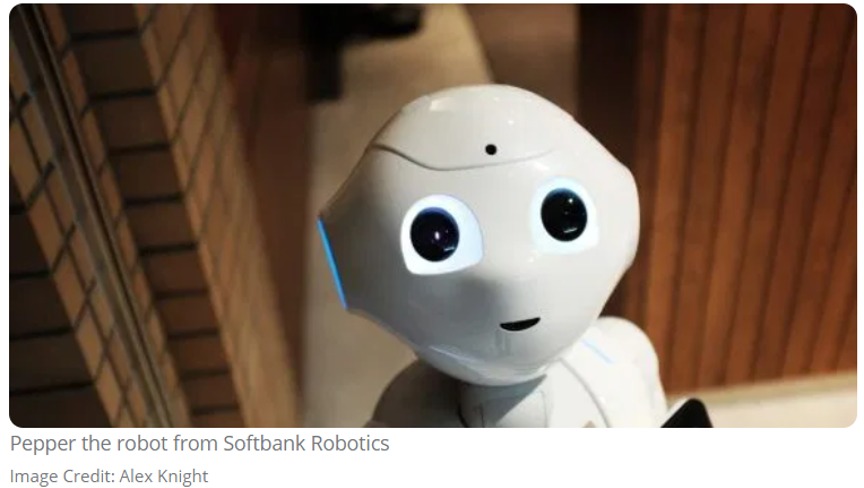
In a pair of papers accepted to the International Conference on Learning Representations (ICLR) 2020, MIT researchers investigated new ways to motivate software agents to explore their environment and pruning algorithms to make AI apps run faster. Taken together, the twin approaches could foster the development of autonomous industrial, commercial, and home machines that require less computation but are simultaneously more capable than products currently in the wild. (Think an inventory-checking robot built atop a Raspberry Pi that swiftly learns to navigate grocery store isles, for instance.)
One team created a meta-learning algorithm that generated 52,000 exploration algorithms, or algorithms that drive agents to widely explore their surroundings. Two they identified were entirely new and resulted in exploration that improved learning in a range of simulated tasks — from landing a moon rover and raising a robotic arm to moving an ant-like robot.
In the second of the two studies, an MIT team describes a framework that reliably compresses models so that they’re able to run on resource-constrained devices. While the researchers admit that they don’t understand why it works as well as it does, they claim it’s easier and faster to implement than other compression methods, including those that are considered state of the art.
The original article can be found here.
To support AI application in the world society, Artificial Intelligence World Society Innovation Network (AIWS.net) created AIWS Young Leaders program including some MIT Researchers, as well as Young Leaders and Experts from Australia, Austria, Belgium, Britain, Canada, Denmark, Estonia, France, Finland, Germany, Greece, India, Italy, Japan, Latvia, Netherlands, New Zealand, Norway, Poland, Portugal, Russia, Spain, Sweden, Switzerland, United States, and Vietnam.

by Editor | May 4, 2020 | News
As researchers pursued the inevitable AGI in machines, there has been a renewed interest in the idea of causality in models. There are significant implications to applying machine learning to problems of causal inference in fields such as healthcare, economics and education.
Here are a few top works that acknowledge the challenges and offer solutions to the causal inference in machines:
- The Seven Tools Of Causal Inference
- A Causal Bayesian Networks Viewpoint on Fairness
- Causal Inference And The Data-fusion Problem
- Reinforcement Knowledge Graph Reasoning for Explainable Recommendation
- Double/Debiased Machine Learning for Treatment and Causal Parameters
- Causal Regularization
- Unbiased Scene Graph Generation
In the paper “The Seven Tools Of Causal Inference”, Judea Pearl who has championed the notion of causal inference in machines, argues that causal reasoning is an indispensable component of human thought that should be formalized and algorithimitized towards achieving human-level machine intelligence. Pearl, in this paper, analyses some of the challenges in the form of a three-level hierarchy, and shows that inference to different levels requires a causal model of one’s environment. He has also described seven cognitive tasks that require tools from those two levels of inference.
The original article can be found here.
In the field of causal reasoning, Professor Judea Pearl is a pioneer for developing a theory of causal and counterfactual inference based on structural models. In 2020, Professor Pearl is also awarded as World Leader in AI World Society (AIWS.net) by Michael Dukakis Institute for Leadership and Innovation (MDI) and Boston Global Forum (BGF). In the future, Professor Judea will also contribute to Causal Inference for AI transparency, which is one of important AIWS topics on AI Ethics.

by Editor | Apr 26, 2020 | Event Updates

EY (Ernst & Young), MIT Connection Science, Michael Dukakis Institute, World Bank, and New America are partners to establish The Prosperity Collaborative to advance practical solutions in the financial crisis from the COVID-19 pandemic. The COVID-19 pandemic constitutes a serious challenge for most countries, particularly those with weak health and social protection systems, and feeble response capacities overall. Governments will have to reprioritize development, service delivery, and administrative activities in order to appropriately – and urgently – allocate financial resources to serve its citizens basic needs. Many countries face fiscal space constraints given these urgent needs.
Revenues are expected to decline faster than GDP. The COVID-19 pandemic and resulting economic slowdown is lowering government revenues. The impact on revenues will likely exceed the hit on economic growth as the fiscal multiplier during economic downturns has exceeded 1 historically. The resulting decline in the revenue-to-GDP ratio reflects: (1) the tendency of some tax bases to decline faster than GDP in the face of an economic downturn (profits, capital gains, excises, and imports tend to decline faster than GDP during a recession); (2) a decline in commodity prices and related revenues; and (3) possible discretionary changes in tax policy in response to the crisis, such as lowering of tax rates, inducing capital and labor investments through tax credits and incentives, or further increasing tax allowances deductions. In the present circumstances, revenue performance may be further harmed by the likelihood of a reduction in taxpayers’ compliance, and the inability of tax administrations to maintain business continuity.
A public-private partnership is needed to advance practical solutions in this crisis. No single institution has the capabilities, capacity and legitimacy to develop and implement solutions to optimize tax administration effectiveness amidst this unprecedented crisis. A public-private partnership can overcome these hurdles by: (1) leveraging the knowledge of policy, technology and taxation residing with leading edge organizations from the private sector, academia, and think /action tanks to discover and deploy practical solutions and navigate the rapidly evolving landscape; (2) devising a strategy to help tax administrations continue operating remotely; (3) combining the legitimacy of an international institution, the private sector, civil society, and national governments to set the necessary principles and standards; and (4) mobilizing the necessary resources to get the job done.

by Editor | Apr 26, 2020 | News
“What we need now is critical thinking. We have brains. God gave us brains. We shouldbe using them. Critical thinking is hard work.”
On April 22, 2020, Vint Cerf, Vice President and Chief Evangelist of Google, Father of the Internet, and World Leader in AIWS Award recipient, shared his perspectives on “Pandemic geopolitics and recovery post-COVID” as part of a live video discussion moderated by David Bray, Atlantic Council GeoTech Center Director, on the role of the tech, data, and leadership in the global response to and recovery from COVID-19.

by Editor | Apr 26, 2020 | News
Blockchain and artificial intelligence (AI) solve different tasks, but they can work together to improve many processes in the financial services industry, from customer service to loan application reviews and payment processing.
Adopting AI and blockchain technologies can make your financial sector smarter and help it to perform more effectively. Blockchains can provide transparency and data aggregation; they also enforce contract terms. Meanwhile, AI can automate decision-making and improve internal bank processes.
AI and blockchain technology can revolutionize critical processes in the financial services industry. However, these technologies have to be carefully calibrated and integrated with existing operations. The low level of dependence between blockchain and AI technologies is helpful, as you can begin by introducing only one of these technologies to your banking processes. This will allow you to focus on the most important things, such as creating a clear road map, developing an MVP and introducing your product to the market faster than your competitors.
The original article can be found here.
To support AI application in the world society including financial services, Artificial Intelligence World Society Innovation Network (AIWS.net) created AIWS Young Leaders program including Young Leaders and Experts from Australia, Austria, Belgium, Britain, Canada, Denmark, Estonia, France, Finland, Germany, Greece, India, Italy, Japan, Latvia, Netherlands, New Zealand, Norway, Poland, Portugal, Russia, Spain, Sweden, Switzerland, United States, and Vietnam.