by Editor | Oct 9, 2020 | News
In the State of AI Report 2020, Benaich and Hogarth outdid themselves. While the structure and themes of the report remain mostly intact, its size has grown by nearly 30%. This is a lot, especially considering their 2019 AI report was already a 136 slide long journey on all things AI.
The State of AI Report 2020 is 177 slides long, and it covers technology breakthroughs and their capabilities, supply, demand, and concentration of talent working in the field, large platforms, financing, and areas of application for AI-driven innovation today and tomorrow, special sections on the politics of AI, and predictions for AI.
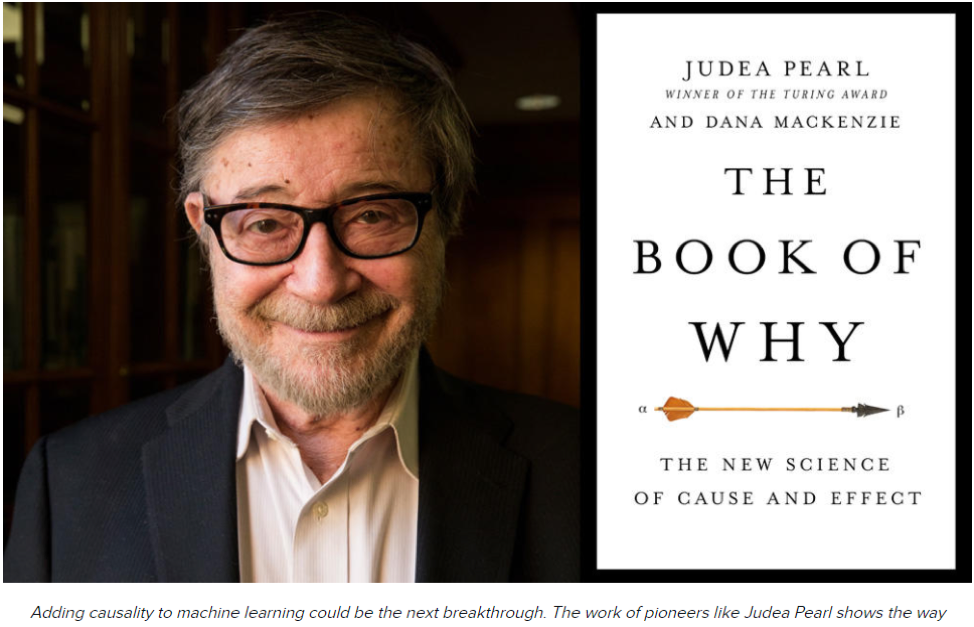
Some researchers, Benaich and Hogarth noted, feel that progress in mature areas of machine learning is stagnant. Others call for advancing causal reasoning and claim that adding this element to machine learning approaches could overcome barriers.
Causality, Hogarth said, is arguably at the heart of much of human progress. From an epistemological perspective, causal reasoning has given us the scientific method, and it’s at the heart of all of our best world models. So the work that people like Judea Pearl have pioneered to bring causality to machine learning is exciting. It feels like the biggest potential disruption to the general trend of larger and larger correlation driven models.
The original article can be found here.
Regarding to AI and Causality, Professor Judea Pearl is a pioneer for developing a theory of causal and counterfactual inference based on structural models. In 2011, Professor Pearl won the Turing Award, computer science’s highest honor, for “fundamental contributions to artificial intelligence through the development of a calculus of probabilistic and causal reasoning.” In 2020, Professor Pearl is also awarded as World Leader in AI World Society (AIWS.net) by Michael Dukakis Institute for Leadership and Innovation (MDI) and Boston Global Forum (BGF). At this moment, Professor Judea also contributes to Causal Inference for AI transparency, which is one of important AIWS.net topics on AI Ethics.

by Editor | Oct 3, 2020 | News
If you are considering using artificial intelligence (AI) to mature your foundational IT and data capabilities, how do you separate hype from reality?
Whether you are exploring the promises of AI for your business or still wondering when you will see truly transformative results, here are five industry trends that will help realize AI’s untapped potential.
For most of us, deep learning systems are essentially incomprehensible. Using millions of data points as input and the correlating data as output, their internal logic can generally not be interpreted using plain language.
However, if automated systems are to assist in making critical decisions such as which operations and processes to use and we cannot understand how these decisions are made, how can we identify and address errors? This lack of common sense (a term first defined in the context of AI by John McCarthy in the 50s), has limited the application of AI in the real world to date. We need a clearer, less complicated AI system that better relates to the world and to people.
The original article can be found here.
Regarding to explainable AI and Causality, Professor Judea Pearl is a pioneer for developing a theory of causal and counterfactual inference based on structural models. In 2011, Professor Pearl won the Turing Award, computer science’s highest honor, for “fundamental contributions to artificial intelligence through the development of a calculus of probabilistic and causal reasoning.” In 2020, Professor Pearl is also awarded as World Leader in AI World Society (AIWS.net) by Michael Dukakis Institute for Leadership and Innovation (MDI) and Boston Global Forum (BGF). At this moment, Professor Judea also contributes to Causal Inference for AI transparency, which is one of important AIWS.net topics on AI Ethics.
by Editor | Oct 3, 2020 | Event Updates
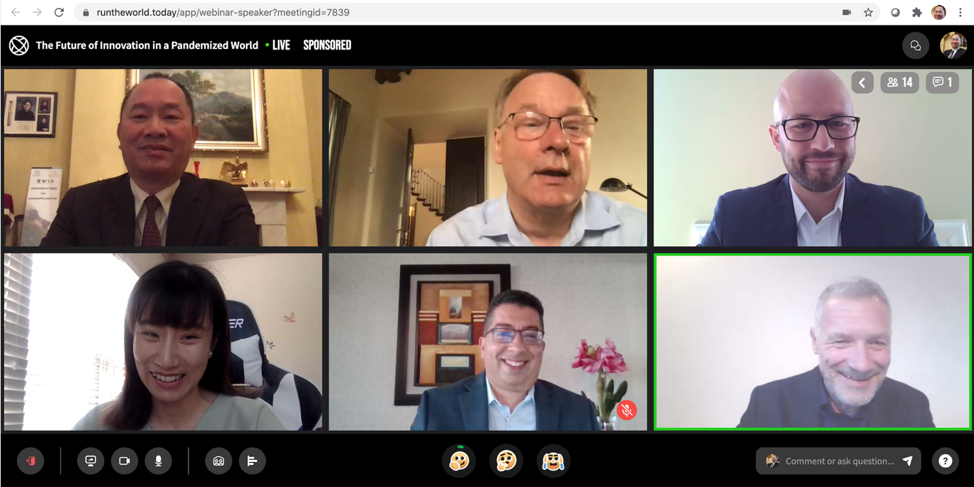
Horasis organize Horasis Extraordinary Meeting Virtual Event, October 1, 2020 06.30-23.00 Central European Summer Time.
The Horasis Extraordinary Meeting is the world’s foremost gathering of business leaders who interact with key government officials and eminent thought leaders. Under the theme Unite. Inspire. Create, 500 of the most senior members of the Horasis Visions Community gathered virtually to overcome the profound economic, political and social disruptions caused by Covid-19. The Horasis Extraordinary Meeting offers the conceptual backbone and action platform to advance the recovery – envisioning and implementing novel business models, new political cooperation and deep social cohesion.
Antonio Guterres, Secretary-General, United Nations, presented a keynote speech. There are presidents, prime ministers who are speakers.
Mr. Nguyen Anh Tuan, CEO of the Boston Global Forum, was a speaker at the Horasis Extraordinary Meeting. He spoke about the Social Contract for the AI Age and AIWS City at the Panel “The Future of Innovation in a Pandemized World”.
by Editor | Oct 3, 2020 | News
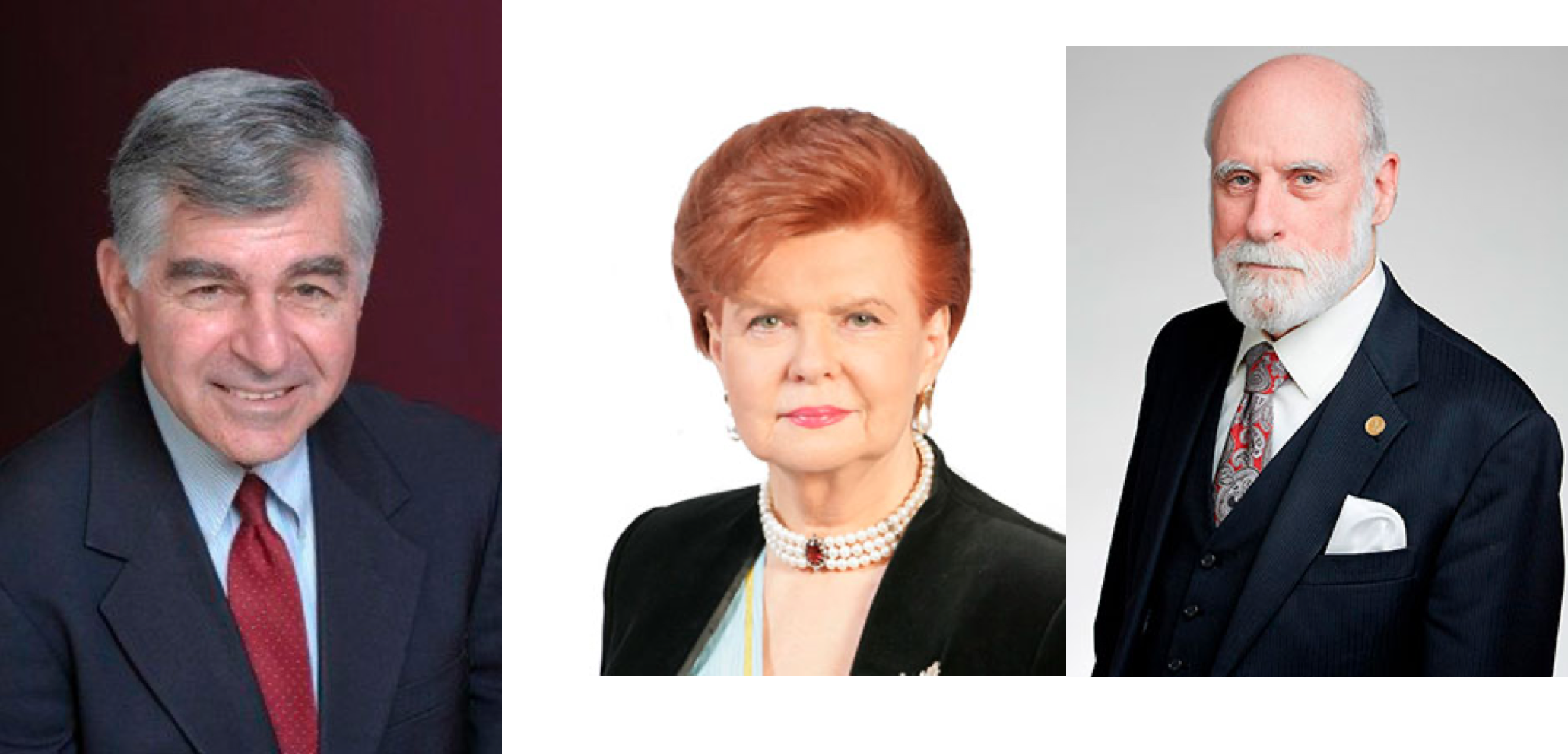
Governor Michael Dukakis, Co-founder and Chairman of the Boston Global Forum, Father of the Internet Vint Cerf, World Leader in AIWS Award recipient, and President Vaira Vike-Freiberga, World Leader for Peace and Security Award recipient, will have virtual digital honored houses at AIWS City. AIWS City is an all-digital, virtual, kind, intelligent, and innovative ecosystem for work and life named “the AI World Society City” (the AIWS City), domain name: AIWS.city.
As a pragmatic vision, AIWS City is to be based on AIWS Value in order to create a good Ecosystem of the People Centered Economy – “all people can create value for each other”.
In this context, AIWS puts forth the concept of AIWS Value as follows:
AIWS Value:
- traditional value (products, services, data, innovation, creativities, etc.) X
- social values (contributions).
We consider this as a multiplicative not an additive function. This enables a situation where society recognize traditional and social values and can exchange them for AIWS Reward as a digital currency.
by Editor | Sep 27, 2020 | News
Dear Friends,
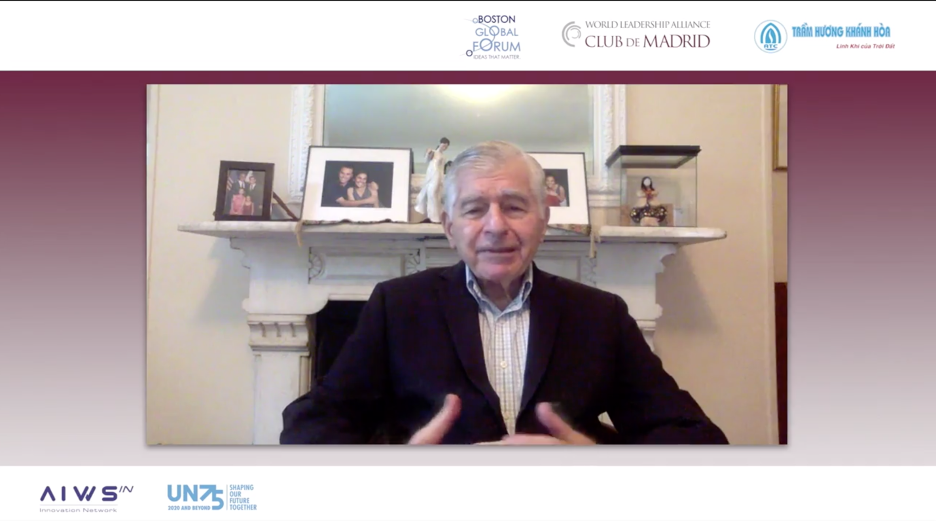
Last week the Boston Global Forum (BGF) and the World Leadership Alliance-Club de Madrid (WLA-CdM) organized a policy lab on Translatlantic Approaches to Digital Governance: Social Contract for the AI Age. The event featured several panels on the growing importance of AI and digital policy. It is clear that the process of “digitalization” is accelerating. Countries are now confronting new challenges, as well as new opportunities.
Advances in AI raise policy issues that must be assessed. We must now focus through dialogue, tolerance, learning and understanding on key principles and practices for an agreement among members of society for shared social benefit. And we believe it is vitally important that democratic leaders make clear our support for fundamental rights and the rule of law in this Age of AI. We want to ensure that AI supports sustainable development, inclusion, fairness and accountability.
Our next step is to build public support for the Social Contract for the Age of AI. This global declaration sets out a human-centric approach for the governance of AI. The Social Contract is the outcome of a collaboration over the last several years between the BGF and the CdM/WLA.
We are asking you to join us, as signatories, in support of this initiative. Over the next several months, we will reach out to innovators, thinkers, advocates, and other world leaders. Our aim is to build support for the Social Contract and to educate the public about the many issues we will confront in the years ahead. We are also developing monitoring mechanisms so that we can begin to assess national progress toward the goals that we have set out.
You will find more information about the Social Contract for the Age of AI here. If you would like to endorse, please contact Tuan Nguyen, director of the Michael Dukakis Institute.
Thank you for your continued interest in this work.
Sincerely,
Governor Michael Dukakis, Boston Global Forum, and
President Vaira Vīķe-Freiberga, Latvia and World Leadership Alliance-Club de Madrid