As the US and others struggle to confront AI-driven disinformation, Taiwan’s resilience has become its latest key export
Taiwan, widely considered one of the world’s most targeted democracies for foreign disinformation, made headlines last week as it was tapped to lead a new coalition formed by the International Foundation for Electoral Systems (IFES). Convening policymakers and industry experts, the Artificial Intelligence Advisory Group on Elections (AI AGE) will build bridges between democratic governance and AI expertise to address the challenges and opportunities that AI presents in the conduct of free and fair elections.
Taiwan’s invitation was no courtesy. On the contrary, it has become a laboratory for democratic resilience in the AI age. At a time when those in the pay of authoritarian regimes look to undermine our elections through increasingly sophisticated disinformation campaigns, Taiwan’s playbook is seen as not just effective, but essential.
THE WORLD IS TAKING NOTE
As its peers scramble to address the risks posed by AI, Taiwan has become a sought-after voice in global AI governance. In effect, it has already lived the future others fear, emerging stronger on the other side of AI-fueled disinformation by harnessing the technology’s potential.
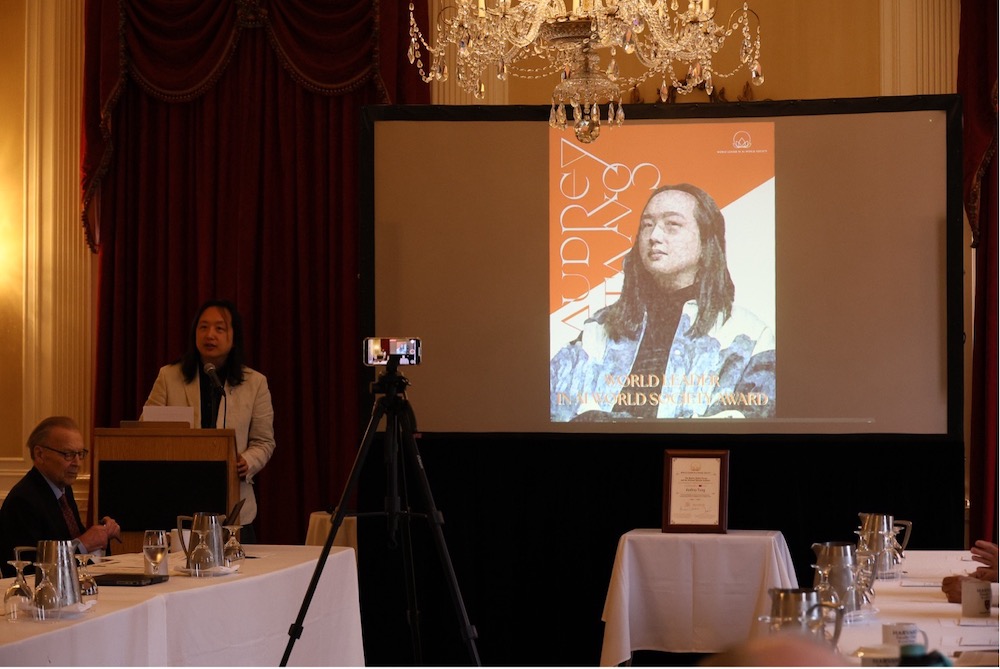
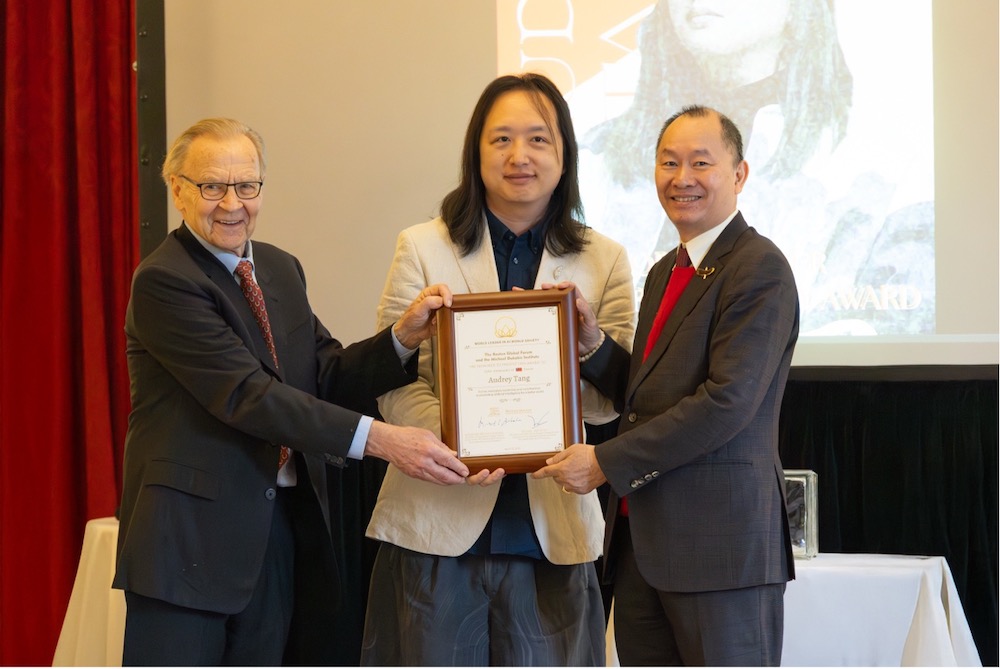
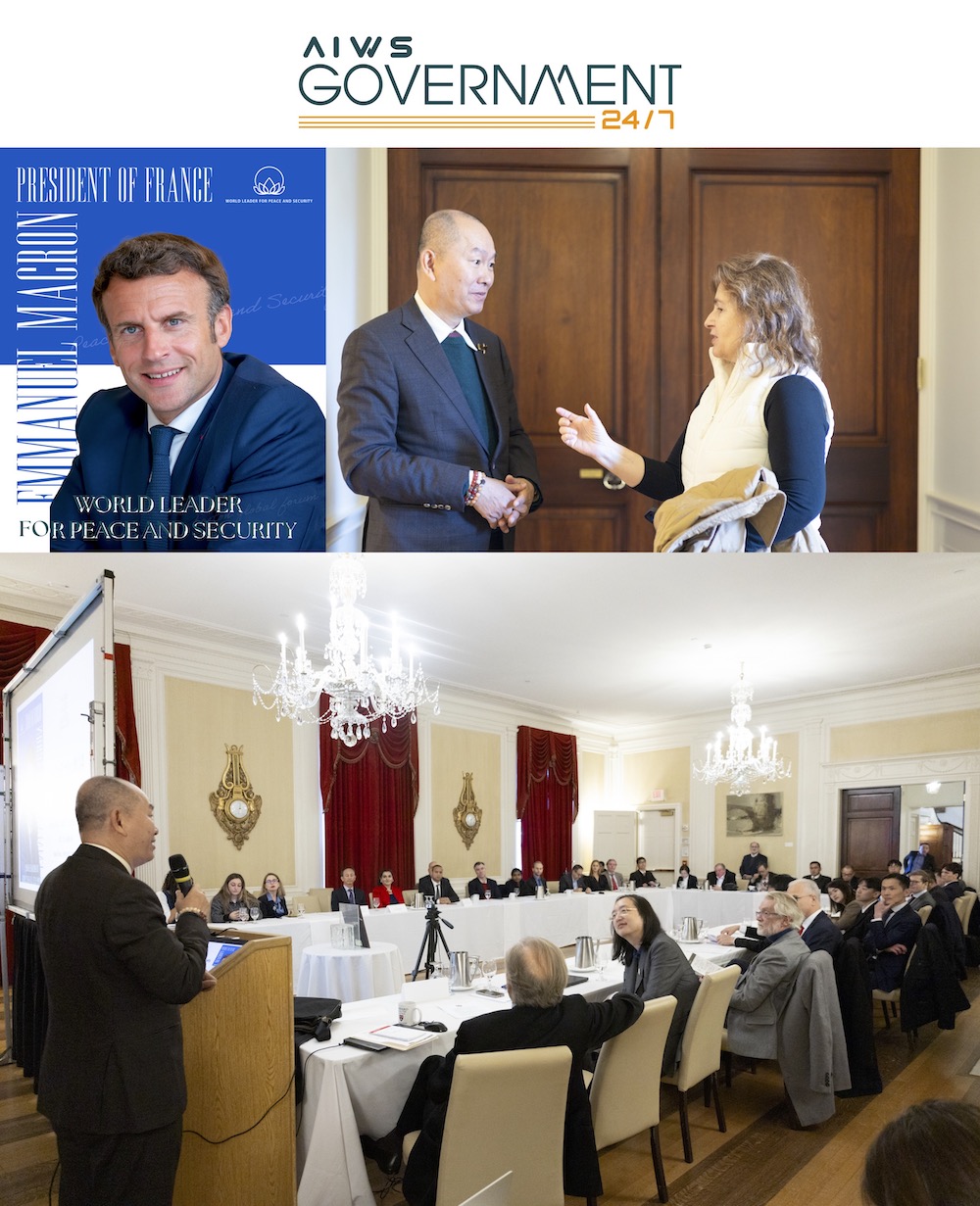
Leading the charge is Taiwan’s Cyber Ambassador Audrey Tang (唐鳳), who served as Taiwan’s first digital affairs minister, 2025 World Leader in AIWS Award recipient. A headliner at Munich’s Cyber Security Conference and last month’s AI Expo for National Competitiveness in Washington, Tang’s calendar is but one indicator of the importance of Taiwan’s latest key export: its model for digital democracy.
Its invitation to AI AGE offers Taiwan a chance to impart its hard-won lessons, presenting more than 145 countries advised by IFES (including the US) with opportunities to adopt its best practices. The group’s only member from East Asia, Tang’s remarks at its unveiling emphasized that Taiwan’s inclusion was a reflection of the world’s growing appreciation for its government’s approach to AI. It is “crucial that AI is trained to serve the greater good, while unlocking our collective wisdom and building a more accountable and participatory digital society,” Tang said.
Please see full here: https://www.taipeitimes.com/News/feat/archives/2025/06/26/2003839259
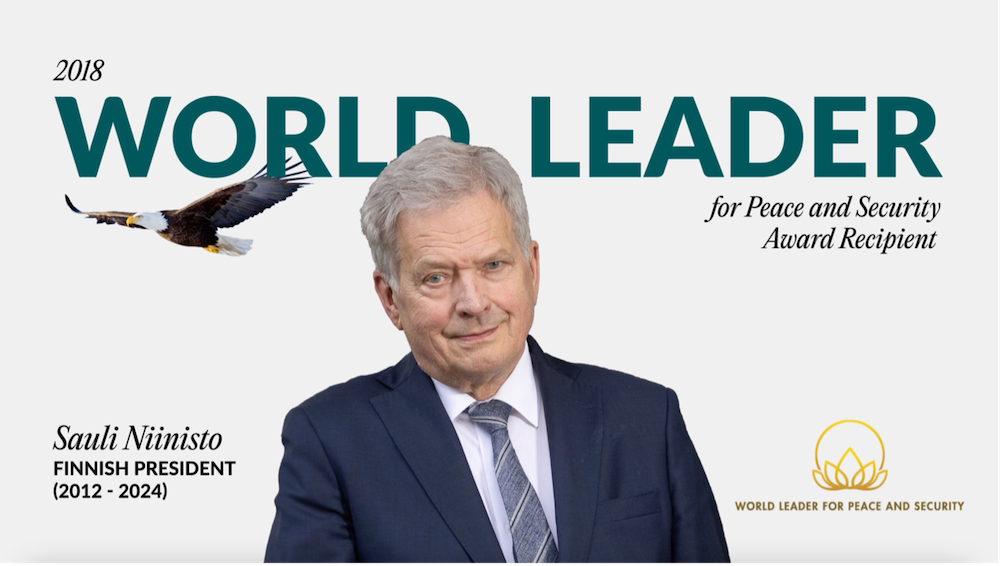
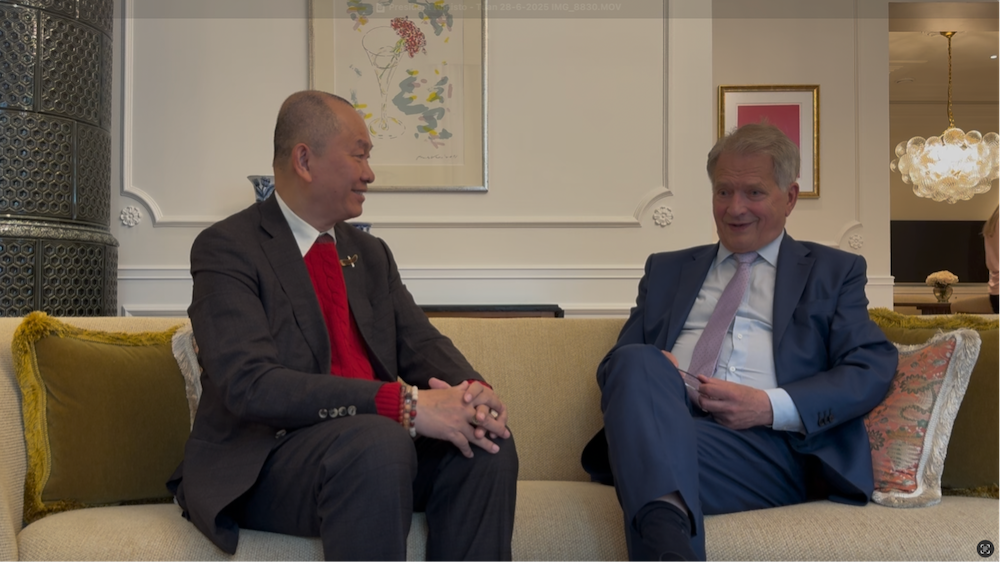
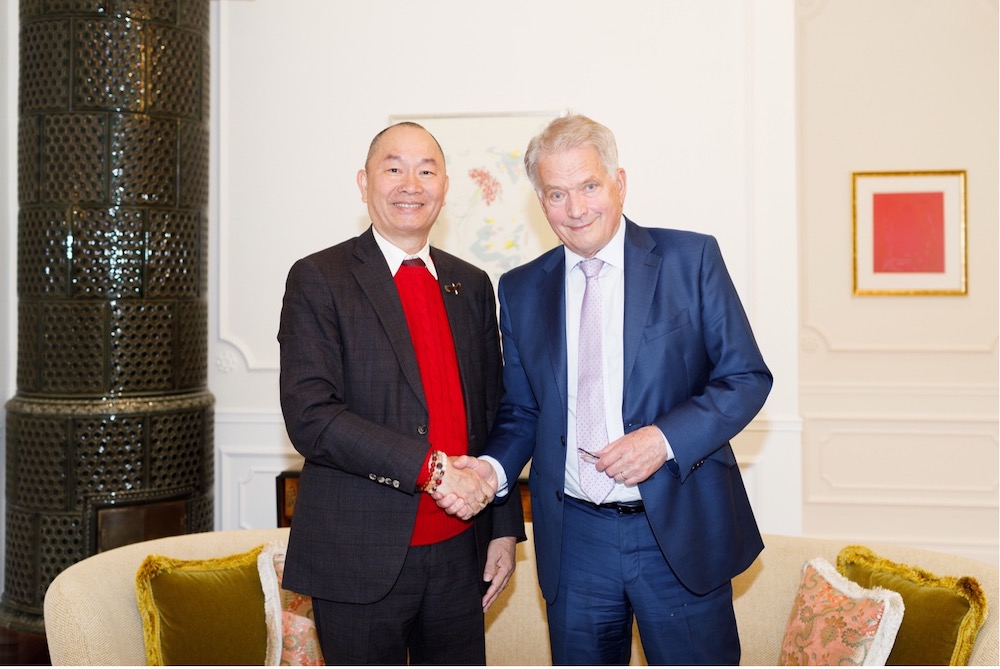
During a significant meeting this afternoon, June 28, 2025, at Hotel Kämp in Helsinki, Mr. Nguyen Anh Tuan, Co-Chair and CEO of the Boston Global Forum (BGF), presented Finnish President Sauli Niinistö (2012–2024) with a special e-card as a token of appreciation for his exemplary leadership. This e-card celebrates Niinistö’s receipt of the 2018 World Leader for Peace and Security Award, recognizing his pivotal role in promoting global peace and cybersecurity, notably through founding the European Centre of Excellence for Countering Hybrid Threats.
Featuring Esteemed Singer Bach Tra
The e-card features a heartfelt performance by Bach Tra, appointed as Ambassador for AIWS Music for Humanity, a 2025 initiative promoting peace, security, compassion, and humanity through AI-enhanced music. Bach Tra, a distinguished singer, contributes her rendition of words from the popular Vietnamese song “Spring, Spring, a small Spring to dedicate quietly to the World”, a piece symbolizing renewal and hope. This musical tribute reflects Niinistö’s legacy of resilience and diplomacy, aligning with the humanistic values of the AIWS Film Park series, where his narrative film is being developed.
Presentation at the Meeting
The e-card was personally presented to President Niinistö during his discussion with Mr. Tuan, marking a cultural highlight of their collaboration. The digital gift, accessible via the link, combines Niinistö’s award recognition with Bach Tra’s artistic expression, encapsulating AIWS’s mission to integrate technology and humanity. Mr. Tuan noted, “This e-card honors President Niinistö’s enduring impact, blending his leadership with the universal language of music to inspire a peaceful future.”
On July 4, 2025, a landmark discussion will officially launch the vibrant AIWS Music for Humanity Movement. Bridging continents and cultures, this inaugural discussion will connect leaders and artists across diverse locations, including Boston, Nha Trang, Tokyo, Lake Como, Paris, and Tromsø (Northern Norway).
At the heart of this global conversation will be Governor Michael Dukakis and Mr. Nguyen Anh Tuan, alongside an esteemed group of musicians and newly appointed Ambassadors for the AIWS Music for Humanity. Their collective dialogue will lay the groundwork for the upcoming AIWS Music for Humanity Forum, exploring how the universal language of music, amplified by the ethical advancements of AI, can foster peace, compassion, and understanding in our world. One key topic for discussion will be precisely how the AIWS Music for Humanity will contribute to shaping a better world in the AI Age. This session marks a pivotal step in harnessing artistic expression to advance the human-centered vision of the AI World Society.
The Boston Global Forum and its AIWS Asset Board, in their official session held on June 17, 2025, unanimously decided to establish and issue AIWS World Leader Tokens—a new class of esteemed digital assets that preserve and honor the enduring legacies of global leaders who have made exceptional contributions to peace, security, democracy, and human-centered innovation in the age of Artificial Intelligence.
The session was conducted online, connecting participants across Fairmont Le Château Frontenac (Quebec), Boston, Paris, New York, and Tokyo.
AIWS World Leader Tokens will serve as authentic digital representations of landmark speeches, policies, initiatives, writings, and symbolic moments associated with recipients of the World Leader for Peace and Security Award, the World Leader in AIWS Award, and other distinguished recognitions. These tokens will be curated, verified, and governed under the ethical principles of the AI World Society (AIWS).
The decision was made by the AIWS Asset Board, composed of:
Members of the Boston Global Forum (BGF) Board,
Chair: Governor Michael Dukakis, Chairman and Co-founder of the Boston Global Forum,
Co-founders of the Boston Plurality Summit:
Elisabeth Moreno, Former Minister of France; Chairwoman of Ring Capital
Yasuhide Nakayama, Former State Minister of Defense, Japan
Audrey Tang, Former Digital Minister of Taiwan
Glen Weyl, Founder of the Plurality Institute and Co-initiator of RadicalxChange
Together, this distinguished board will ensure that AIWS World Leader Tokens reflect authenticity, ethical integrity, and historical significance, while also providing a new platform for global citizens to engage with, exchange, and preserve the ideals these leaders represent.
The issuance of AIWS World Leader Tokens marks a pioneering step in developing the AIWS Digital Asset Ecosystem, as part of the broader AIWS City and AIWS Bank initiatives. These tokens will be made available through the AIWS Bank, where they can be viewed, exchanged, and valued using AIWS Rewards—promoting a new economy grounded in enlightenment, ethics, and enduring legacy.
This afternoon, June 28, 2025, at Hotel Kämp in Helsinki, President Sauli Väinämö Niinistö (2012–2024) met Mr. Nguyen Anh Tuan, Co-Chair and CEO of the Boston Global Forum (BGF), in a friendly atmosphere to discuss a narrative film for the AIWS Film Park series. The film will honor Niinistö’s receipt of the 2018 World Leader for Peace and Security Award, reflecting his leadership in building a technologically advanced and resilient Finland. His vision of “Every Citizen an Innovator”, an economic concept introduced in the book “Remaking the World – Toward an Age of Global Enlightenment” (2021), will shape the film’s narrative.
Niinistö’s Perspective on Innovation
President Niinistö emphasized Finland’s unique innovation ethos, where its 5.5 million citizens prioritize quality over quantity—a principle he highlighted in his 2012 speech at the Korea-Finland Economic Council. This has propelled Finland to the world’s top 10 most innovative nations, driven by seamless public-private cooperation, such as university technology parks. He credited the OECD’s PISA surveys, where Finland’s education system excels, for fostering a population skilled in creative problem-solving, a model he sees aligning with AIWS University and AIWS Government 24/7.
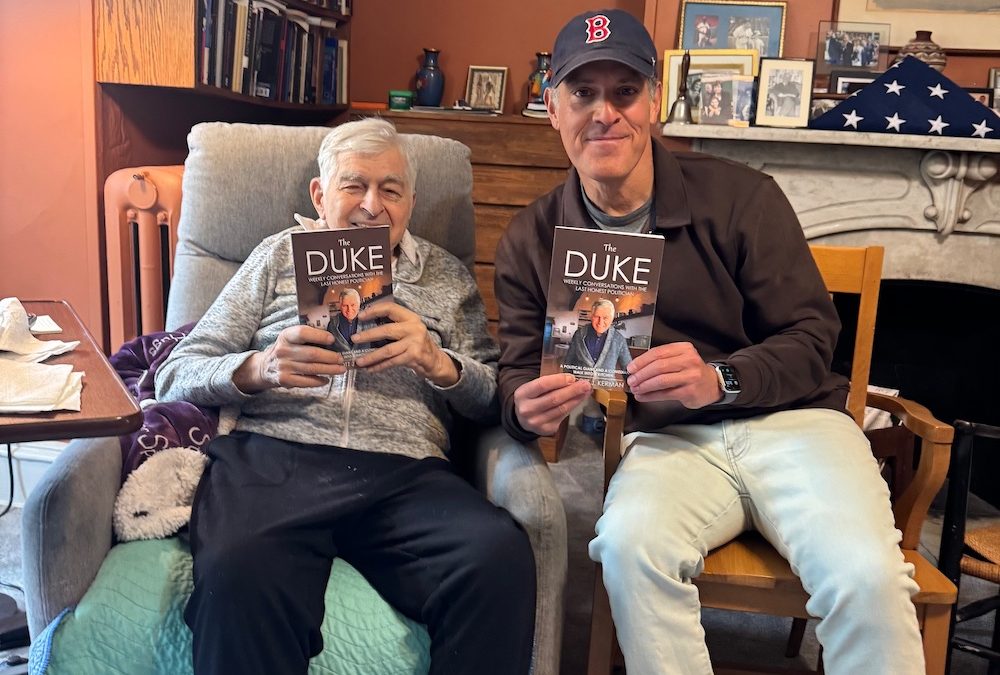
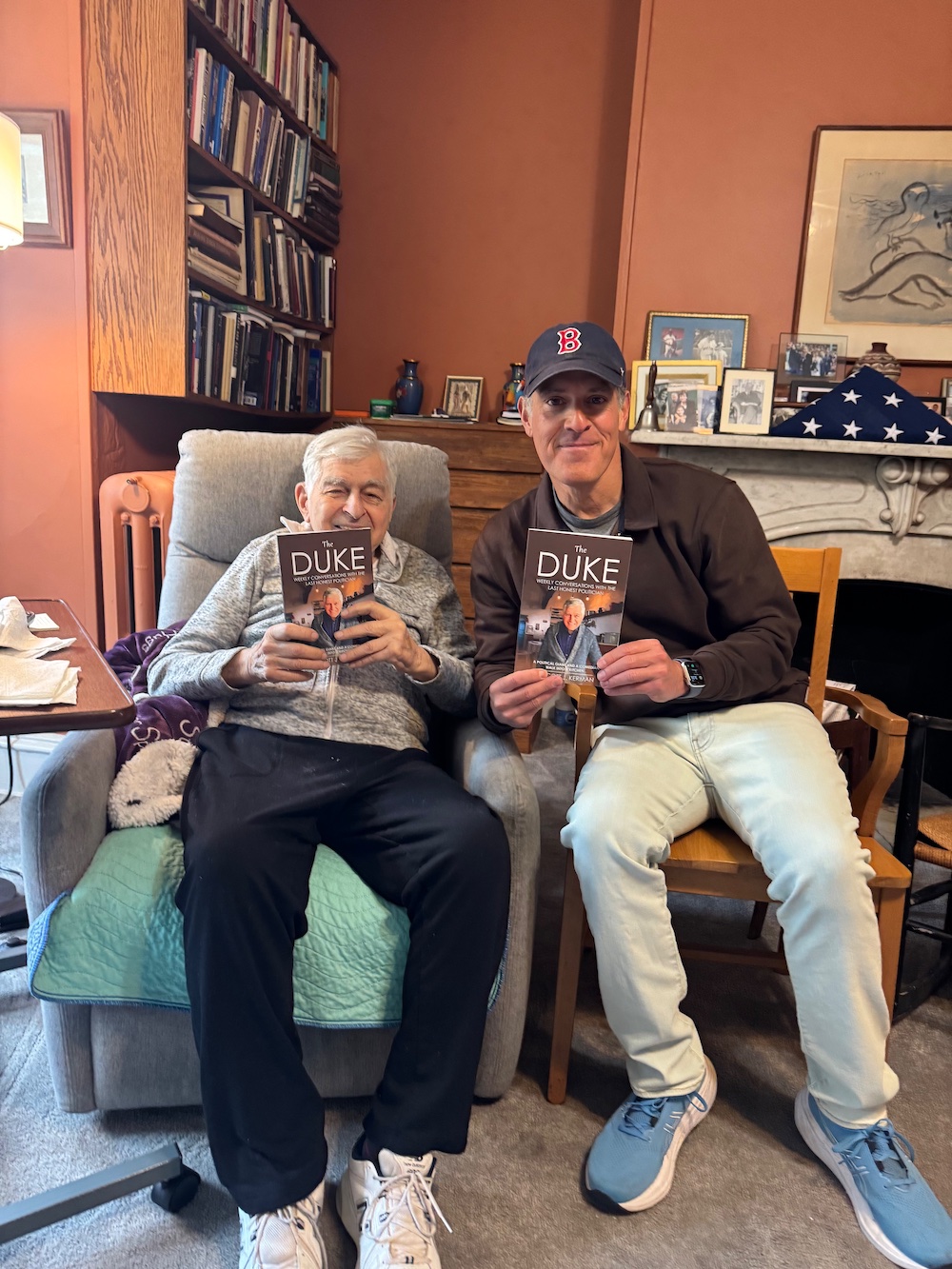
“The Duke: Weekly Conversations with the Last Honest Politician,” by writer Scott Kerman, offers readers a unique and intimate glimpse into the mind and career of former Massachusetts Gov. Michael Dukakis, Co-founder and Co-Chair of the Boston Global Forum. The title itself immediately positions Dukakis as a rare and principled individual, suggesting that the book delves into candid discussions that reveal the core values and unwavering commitment that defined his public life.
Through a series of weekly conversations, Kerman explores not only the major political events and decisions that shaped Dukakis’s journey, but also the personal philosophies, ethical dilemmas, and everyday reflections that underscore the claim of being “the last honest politician.” Most piercingly, the book sees Dukakis reflect on the blunders that doomed his 1988 presidential campaign—some of which still haunt him. This book promises to be a compelling narrative for anyone interested in political ethics, leadership, and the enduring challenge of maintaining integrity in public service, providing a thoughtful and revealing portrait through ongoing dialogue.
This week, the AIWS History of AI section proudly features a new milestone in the preservation of global leadership legacies in the AI era:
the introduction of AIWS World Leader Tokens—authentic digital assets honoring recipients of the World Leader for Peace and Security Award and the World Leader in AIWS Award.
The World Leader for Peace and Security Award, presented by the Boston Global Forum (BGF), recognizes heads of state and global leaders who have made historic contributions to world peace, international security, and the defense of democratic values.
The World Leader in AIWS Award honors pioneering individuals whose leadership and vision have shaped the ethical development and governance of Artificial Intelligence in alignment with the values of the AI World Society (AIWS).
These tokens represent landmark speeches, visionary policies, and defining moments that have shaped global peace, AI governance, democracy, and innovation. Verified and curated by the AIWS Asset Board, they are part of the growing AIWS Digital Asset Ecosystem and reflect the core values of ethics, transparency, and humanity.
These legacies will be preserved and presented as AIWS World Leader Tokens on the official platform AIWS.city—ensuring that the wisdom and contributions of great leaders continue to inspire future generations in the AI Age.
By performing deep learning at the speed of light, this chip could give edge devices new capabilities for real-time data analysis.
As more connected devices demand an increasing amount of bandwidth for tasks like teleworking and cloud computing, it will become extremely challenging to manage the finite amount of wireless spectrum available for all users to share.
Engineers are employing artificial intelligence to dynamically manage the available wireless spectrum, with an eye toward reducing latency and boosting performance. But most AI methods for classifying and processing wireless signals are power-hungry and can’t operate in real-time.
Now, MIT researchers have developed a novel AI hardware accelerator that is specifically designed for wireless signal processing. Their optical processor performs machine-learning computations at the speed of light, classifying wireless signals in a matter of nanoseconds.
The photonic chip is about 100 times faster than the best digital alternative, while converging to about 95 percent accuracy in signal classification. The new hardware accelerator is also scalable and flexible, so it could be used for a variety of high-performance computing applications. At the same time, it is smaller, lighter, cheaper, and more energy-efficient than digital AI hardware accelerators.
The device could be especially useful in future 6G wireless applications, such as cognitive radios that optimize data rates by adapting wireless modulation formats to the changing wireless environment.
Credit: Sampson Wilcox, Research Laboratory of Electronics, Courtesy of MIT
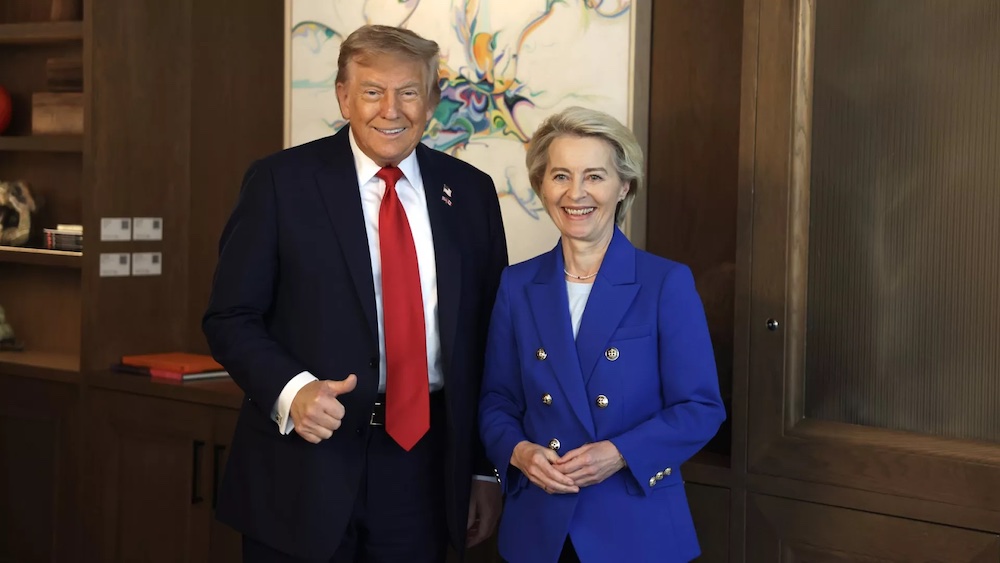
KANANASKIS, Alberta — European Commission President Ursula von der Leyen, 2020 World Leader for Peace and Security Award recipient, on Monday June 16, 2025 tried to find common ground with Donald Trump by criticizing China’s export restrictions on raw materials used for cars, batteries and wind turbines.
During a session on the global economy at the G7 summit in Kananaskis, Canada, von der Leyen slammed Beijing for disrupting global trade by deploying subsidies to boost its own companies, according to an EU readout of the event. The chief of the EU executive accused China of “weaponizing” its leading position in producing and refining critical raw materials, and of ignoring global trade rules to undercut competitors.
“When we focus our attention on tariffs between partners, it diverts our energy from the real challenge — one that threatens us all,” von der Leyen said in a pointed comment aimed squarely at Trump, who sat near her at the G7 roundtable.
“On this point, Donald is right — there is a serious problem,” von der Leyen added, encouraging the U.S. president to join forces with his allies to address China’s trade imbalances, rather than impose tariffs on his allies.