by Admin | Nov 18, 2013 | Event Updates
BGF Conference has started with the introduction of Mr. Tuan Nguyen, editor-in-chief of Boston Global Forum:
“Welcome. I’m Tuan Nguyen, editor-in-chief of Boston Global Forum. We’re delighted you have joined us for our on-line conference on improving minimal global standards for worker safety and rights. The leader of the conference will be Governor Michael Dukakis, the chairman of Boston Global Forum. Mike is a three-term governor of Massachusetts, was the Democratic Party’s 1988 presidential nominee, and is currently on the faculties of UCLA and Northeastern University. He also heads the Dukakis Center, located at Northeastern.
I present to you Michael Dukakis”.
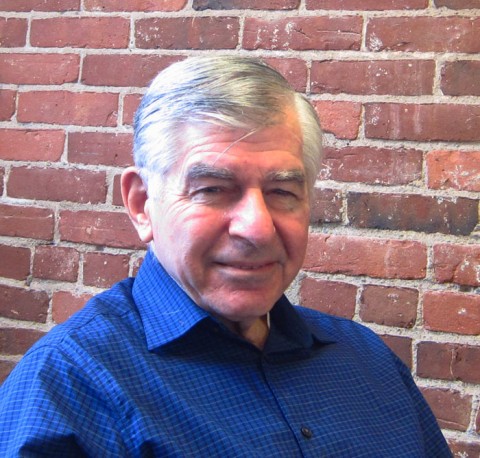
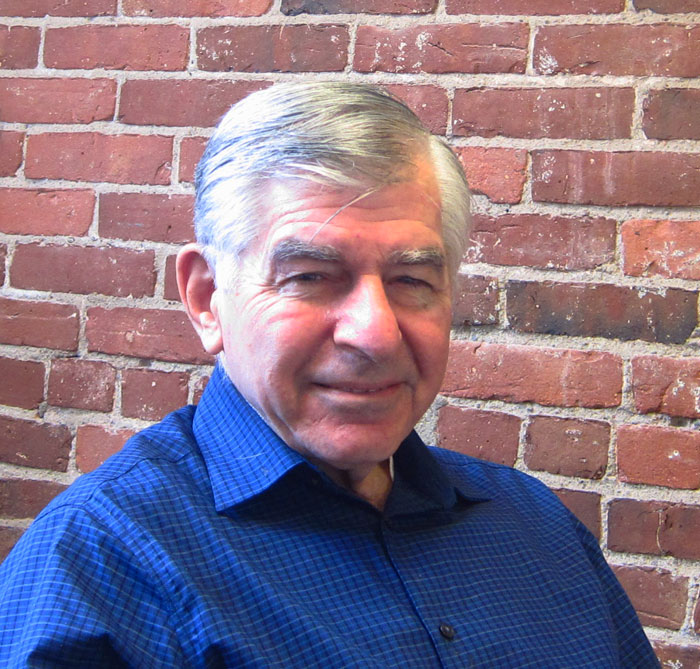
Mr. Michael Dukakis, Chairman of Boston Global Forum.
In his turn, Mr. Michael Dukakis has given out some opening remarks:
“Thanks Tuan and thank you all. Welcome all of you to this unique and very special conference which really launches the work of the Boston Global Forum and I just want to take a couple of minutes to tell you a little bit about the Forum and what we hope to achieve. Obviously, to express our appreciation towards all of you to joining us at this pretty early hour in the morning at least in the East Coast of the United States. The idea behind this was Tuan Nguyen’s, a remarkable person in his own right, who took part in the internet development in Vietnam and has spent a good deal of his time in the Boston area. He started the idea of creating this Forum, which would on the one hand, tap into the intellectual horsepower of the Boston area, and on the other hand reach out to you from many parts of the U.S and all over the world to deal with the specific international issues. It is his idea and we’re very grateful for Tuan and the wonderful collaborative team that you meet in the course of the discussion today to launch this. And thanks Prof. John Quelch who will moderate our discussion, who decided our issue of the year would be this important issue of international worker safety and health. Our hope is that we will have a good and lively discussion, to which many of you know we have well over 100 people who are now part of the conference this morning. A very special thanks, especially to my side and my colleagues from the government, both nationally and in Massachusetts. And we hope that, as a result of our discussion this morning, we can proceed to involve more and more people who are deeply interested in this issue. We hope to have a set of recommendations circulating to you and see if we can have a real impact in this very important public policy area. So thank you again all of you who join us and now I want to turn the discussion over to Prof. John Quelch of the Harvard Business School, who first suggested this topic and our opening issue. And we are very grateful for John to do that. We will run for about 90 minutes, and again, we are grateful to all of you to be part of this. So, John, it’s all yours”.
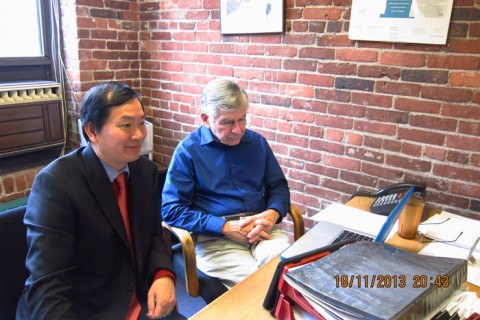
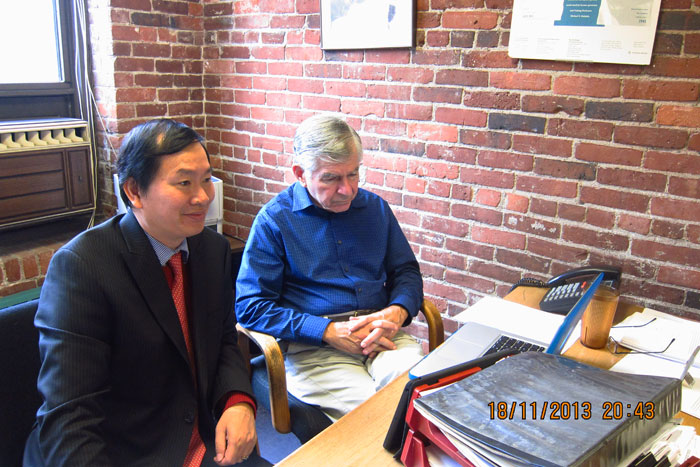
From left to right: BGF’s editor in chief Tuan Nguyen and chairman Michael Dukakis in the Conference room.
by Admin | Nov 18, 2013 | Highlights
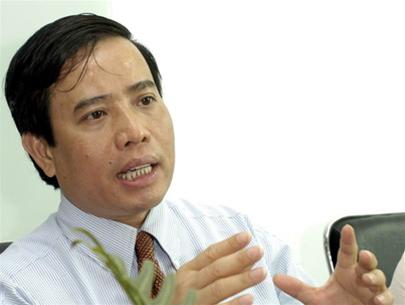
Dr. Vu Minh Khuong, Assistant Professor, Lee Kuan Yew School of Public Policy, National University of Singapore has sent BGF his comments and question as following:
Comment: “React” or “reform” is an important indicator when one assesses how far a nation can go in turning a severe disaster such as the Rana Plaza factory collapse into a powerful driver for change and transformation. While the “react” approach may lead to some punishment, review, and revision, its effects are not fundamental and lasting.
In contrast, the “reform” approach foster all the stakeholders, including governments, businesses, workers unions, workers, and MNCs to work together to forge out a strategy that will enable Bangladesh to become a competitive place for garment industry, not only in labor costs but also in working conditions. This strategy should address the fundamentals and particularly emphasize the efforts to benchmark Bangladesh against the comparable countries in Asia (such as Sri Lanka, Vietnam, and China) and to learn from world best practices.
Question: In your observations, the efforts made by the Bangladeshi government, the Bangladeshi garment industry, and MNCs have likely followed which approach, “react” or “reform”?

by Admin | Nov 18, 2013 | Highlights
Here are a couple of questions from Arnold Zack, Mediator/Professor at Harvard Law School:
I realize the focus of the Accord has been on factory safety which obviously impacts employees, but the greater problem is the workplace conditions of factory workers (wages, unpaid overtime, illegally long hours, punishment for unionizing, etc). Given the endemic corruption of the Bangladeshi government what avenues would you recommend for providing better wages and working conditions for its garment factory workers? Do you see the ILO amenable to undertaking the monitoring?
The practice of brands pulling business from a country when they suffer bad publicity from contractors oppressing workers, victimizes the workers once again and not the factory owner or the unscrupulous government officials. Is there a way of protecting the exploited workers in such situations to assure the factories continue with improved working conditions for their employees?
The EU Accord provides a binding robust program of worker protection including the right to unionize. Do you see the weaker voluntary American brand counterpart being strengthened or making our brands more accountable?

by Admin | Nov 18, 2013 | Highlights
BGF is pleased to introduce here some comments from World Bank, sent by Timothy G. Evans, Director of Health, Nutrition and Population in a letter:
“We at the World Bank share your concerns about international occupational safety and health standards. The World Bank is concerned about the many and formidable challenges facing workers. Such challenges can only be addressed through constructive partnerships among various actors, thus, we share your commitment to promoting widespread dialogue. If such are available, we would appreciate receiving the proceedings from the conference. Please accept our best wishes for a successful event.”
_______________________________________
BGF would like to introduce below comments of Mr. Chaovalit Ekabut, President of Siam Cement Group, Thailand:
- Work standard and practice should be audited by a third party (similar to accounting).
- MNCs shall used outsource services only from those audited.
- Recognition for good examples.
_______________________________________
Ms. Deborah Leipziger (Adjunct Faculty member at the Simmons School of Management): What can socially responsible investors do to put pressure on brands to improve working conditions in Bangladesh?
_______________________________________
From Europe, Mr. Roland Schatz, Founder and CEO of Media Tenor International has sent us following questions:
1. Why does Quelch think, that the MNC’s are not responsible? Modern Supply-Chain-Management is no longer accepting the delegation of responsibility?
2. The Reputation damage to European corporates seems to be higher than to US – why?
3. What has to be changed on the level of UN PRI in order to have the concept of Sustainability being understood as material to C-Suites in the West?
by Admin | Nov 17, 2013 | News
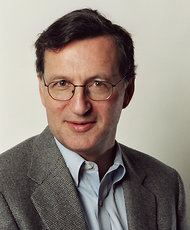
Steven Greenhouse, labor and workplace journalist at The New York Times
by Admin | Nov 17, 2013 | Highlights
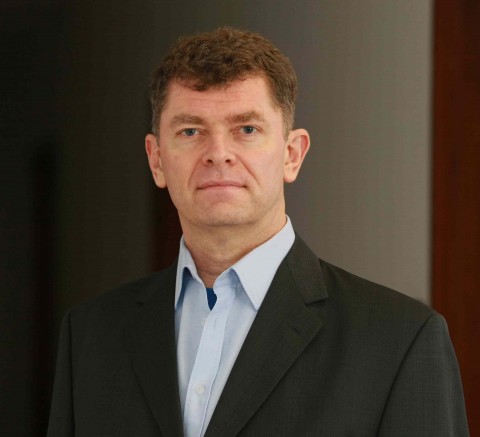 Some comments and questions from Mr. Mike Thompson, Professor of Management Practice, China Europe International Business School:
Primark sent food aid to 1300 families within a week of the building collapse and have developed software to help the medical and vulnerability assessment of everyone affected. The other 27 brands involved have refused to support their compensation scheme. Why is Primark (ABF) unique amongst the 28 brands involved in continuing to pay wages to families and other benefits?
__________________________________________
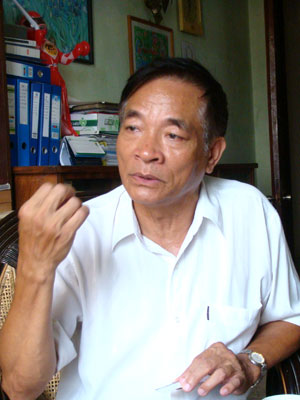
From Vietnam, Mr. Bui Duc Lai, Assistant to Chairman of Vietnam National Assembly shares his comments as following:
I highly appreciate good intentions and eruditeness of Boston Global Forum (BGF) and Governor Dukakis in choosing the topic. However, I am wondering if there are common solutions to improving minimal standards for workers from countries having different political systems and cultural values? If yes, which solution(s) could be considered as the most effective? How will BGF participate in realizing them?
__________________________________________

Here are some thoughts from professor Eli Pollak of Chemical Physics Department, Weizmann Institute of Science, Israel:
After having read the correspondence and the reports re the Rana Plaza tragedy in Bangladesh and the impossible working conditions my thoughts go as follows:
- The question of the pay received by the workers is something we, the outside public should not touch. Demanding higher pay might be counter-productive, the companies would only leave Bangladesh and then one has created even more misery then there is today.
- In the same vein attempting to interfere in working hours, medical insurance and such is also problematic.
- To create real change one always needs money which is always hard to come by with.
Under these circumstances it would seem to me that the best that one could hope for is to create an independent fund which undertake reviewing the physical plant conditions in all of Bangladesh and then using this to push the companies towards creating change. This has the advantage that:
- The amount of funds the companies would have to spend would hopefully be negligible to their overall expenses, so that it would not create pressure to move out of Bangladesh.
- It is in the companies interest to prevent such tragedies from happening – they cost a lot of money and the good name of the companies is harmed.
- This means that the companies involved should be convinced to cough up the necessary funding needed for such an external review.
If as a result some infrastructure is improved then we have done something to alleviate the misery of these poor people.
RELATED NEWS:
View full list of Questions and discussion
by Admin | Nov 13, 2013 | Event Updates
 7:30-7:35 Opening Remarks by Governor Dukakis
7:35-8:15 Moderated Discussion (Analysis) by Prof John Quelch
8:15-8:25 Mid-point Summary by Bob Kuttner
8:25-8:55 Moderated Discussion (Next Steps) by Prof John Quelch
8:55-9:00 Closing Comments by Governor Dukakis
by Admin | Nov 13, 2013 | Event Updates
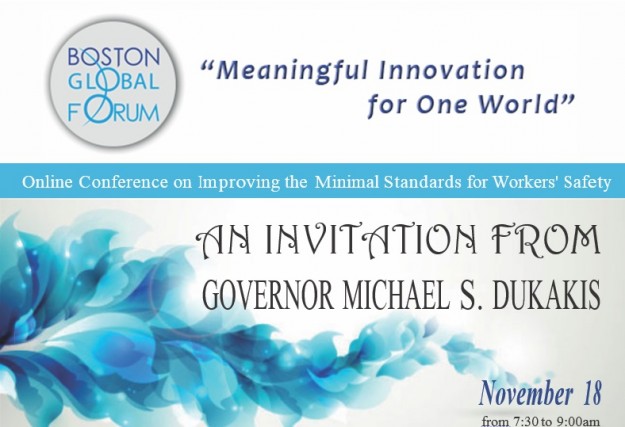
Dear Friends,
We all recall the Rana Plaza tragedy on April 24, 2013. Over 1,000 Bangladesh workers died in a workplace that did not meet minimal standards for worker safety and dignity. As Chairman of the Boston Global Forum, I write to inform you of an Online Conference on Improving the Minimal Standards for Workers’ Safety. The conference will take place on Monday November 18 from 7:30 to 9:00am EST (to accommodate participants from Asia).
During the 90 minutes, we’ll discuss why the Rana Plaza tragedy occurred and what needs to be done to improve workplace conditions for workers in Bangladesh and elsewhere. Our online discussion will be moderated by Professor John Quelch of the Harvard Business School who recently completed two case studies on the Rana Plaza tragedy. Professor Quelch will be joined on-line by myself and by longtime journalist and labor expert Robert Kuttner, founding co-editor of the American Prospect magazine. Also participating will be a select group of individuals from the fields of public affairs, business, labor, and civil society.
More information about the conference can be found at www.bostonglobalforum.org. You can view the conference through the same website at 7:30 am (EST) on Monday, November 18. After the event, we will post on our website a video of the conference for those unable to see it live.
Best regards
Michael S. Dukakis
Chairman, Boston Global Forum
by Admin | Nov 13, 2013 | News
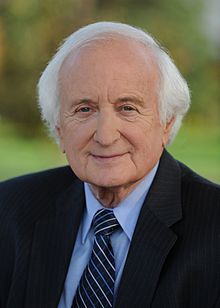
Congressman of Michigan