by Admin | Dec 12, 2016 | Event Updates, Global Cyber Security Day
On 2016 Global Cybersecurity Day, our speakers and discussants not only talked about the issue of cybersecurity but they also discussed about idea related to the newly launched organization: Global Citizenship Education Network (GCEN), which is presented by Professor Thomas Patterson – Co-Founder, the Boston Global Forum
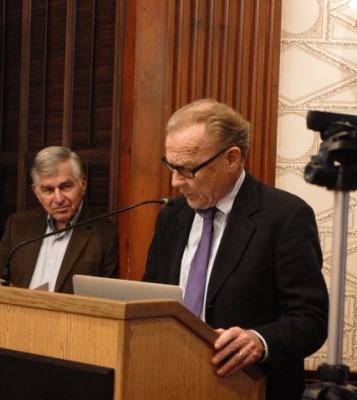
In his presentation, Professor Patterson mentioned about UNESCO first initiative of Global Citizen and each organization’s part in creating GCEN. As of December 11, 2016, “UCLA is designated as site of The UNESCO Chair in Global Learning and Global Citizenship Education” and Boston Global Forum (BGF) had become the official partner of UNESCO-UCLA in Global Citizenship Education.
As a partner, BGF will help administer GCEN in the segments of GC Scorecard, GC Network Website and GC Education & Incentive Program. Professor Patterson significantly described the process of becoming a Global Citizen and long life with Global Citizen Scorecard. He also demonstrated BGF’s strategy on developing GCEN in the future.
Please see his full presentation below.
Global Citizenship Scorecard & Global Citizenship Education Network
by Admin | Jun 12, 2015 | Event Updates
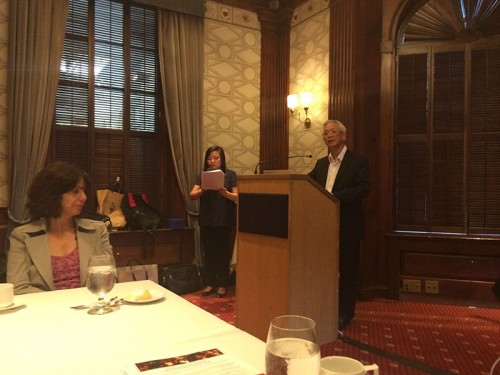
Dear Professor Governor Michael Dukakis, Co-founder and Chairman of Boston Global Forum
Ladies and Gentlemen,
Upon my happy and proud visit to Harvard University and Boston Global Forum (BGF), I am overwhelmed by the nostalgia of my eventful youth, especially the time when I was a lecture at the University of Nha Trang.
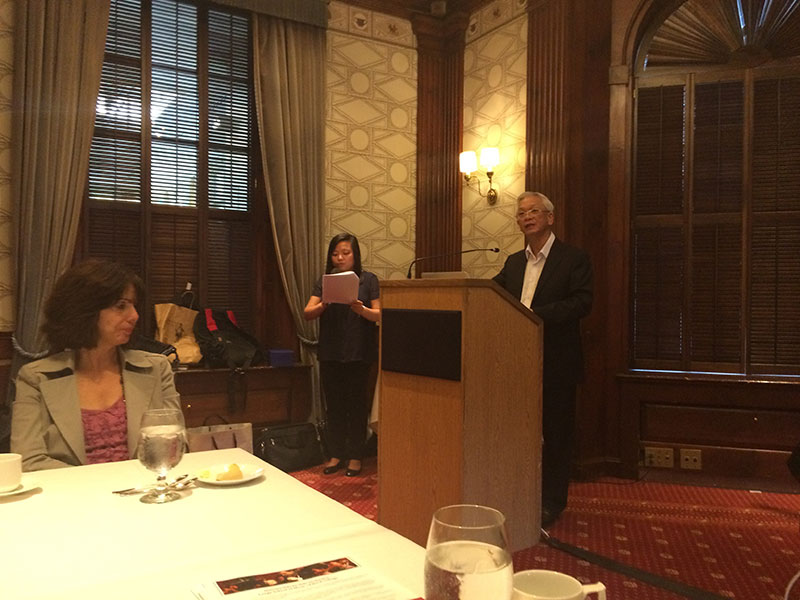
Today, thanked to Boston Global Forum, I am pleased and honored to present to you the honorable speech at Harvard Faculty Club.
First and foremost, I’d like to wish good health to Professor Governor Michael Dukakis, Co-founder and Chairman of BGF, all the professors and all of you.
I was born and grew up in Nha Trang, one of the most amazing cities in Vietnam, where nature and humans harmonize beautifully. I still remember and enjoy the great feeling of waking up to the rising sun and sea breeze. Nha Trang is the nucleus of Khanh Hoa province and known for Cam Ranh Bay, which is one of the best deep-water bays in the world, where former president Ho Chi Minh paid a visit after his declaration of the Socialist Republic of Vietnam. In addition, Khanh Hoa also poses Van Phong Bay as an untouched beauty waiting patiently for friends from all over the world to visit.
In a city that is know for Agar Wood and Bird’s Nest, the two items represent health, luck and growth for each individual, family and the city as the whole. Deeply associated with the history and culture, Agar Wood and Bird’s Nest are widely depicted in literature.
Khánh Hòa the land of agarwood
Let the lovers return to the high mountain and vast ocean
Bird’s nest is as valued as agarwood, the two wrapped together represent the pure spirit and a faithful heart of Khanh Hoa people. The music was also long engraved in the lives of people here since ancient times. Khanh Son music instrument that’s made of stone fascinates the audience. Its 12 stones are shaped in different sizes to create different sounds, making a perfect fit to the music scales of the stone-made Ndut Lieng Krak currently treasured in Paris.
Nha Trang, Khanh Hoa, is known for not only its scenic sights such as Silkworm and Ebony islands, but also rich cuisine highlighted by Edible Bird’s nest and a wide variety of seafood. It is the favor of Mother Nature that sets the foundation for a distinct culture of altruism, kindness, passion and drive to be on the same pace with the rapid development seen across the globe. Such a culture is the decisive and telling factor in the development of Nha Trang, especially in the area of Information Technology and Innovation.
When the closed-door economy and policy was still active in Vietnam years ago, there was no Internet connection. Radio and television equipment was rudimentary and largely under-developed. Nha Trang TQT Enterprise was then the leading broadcagar woodion that provided Internet connection to the whole country. Despite a severe lack of information, materials and facilities, Nguyen Anh Tuan successfully established Teltic Informatics Center and Vietnet network, which brought Internet services to the country, 2 years before the government officially sanctioned Internet services. Along with your colleagues at Harvard and Professor Governor Michael Dukakis, Nguyen Anh Tuan co-founded Boston Global Forum, which ultimately led to a sweet and beautiful bond between Nha Trang and Boston today
In terms of research potential, none can rival Nha Trang in Vietnam. The city poses an ideal mix of climate, soil and natural landscapes that is well suited for studies and leisure. It is such an ideal mix that attracts famous scientists to Nha Trang, as can be attested by buildings that still resemble hallmarks of French architecture from the 20th century.
Alexandre Yersin, a famous French scientist, once said :
“I cannot leave Nha Trang for anywhere else. Only here can I feel free and peaceful inside my soul”
Right in Nha Trang since 1895, Dr. Yersin and his colleagues have successfully prepared serum treatment of plague curing dangerous pandemic. Then he continues to succeed in the study of drug treatment against malaria, a dangerous disease that is very common in the tropical areas. In 57 years of scientific research activities from 1886 until his death in 1943, Yersin completed 50 works in the field of medicine and agriculture. He founded Nha Trang Pasteur Institute, the first branch of the Pasteur Institute in abroad that specializes in studying animal diseases and training veterinary professionals for the whole Indochina.
Nha Trang is voted as as one of the most beautiful bays in the world with gorgeous landscapes and a wide variety of 1,5000 creatures. Hence, the city is an ideal research ground for oceanographers from over the world. Built in 1922, Nha Trang Oceanography Institute is the oldest of its kind in Southeast Asia with the biggest collection of marine artifacts. There have been more than 1,100 research studies conducted here in the field of biology, physical oceanography and marine environmental ecology, as part of a program to foster marine economy in Vietnam and neighboring countries.
It is the dream of all Nh atrang citizens and the ambition of the city’s people’s committee to build Nha Trang as an economic stronghold, and a technology and innovation hub in Southeast Asia. I believed that Professor Michael Dukakis, Professor Thomas Patterson and Professor John Quelch all visited the city and had pleasant experience there.
I believe that only by cultivating the creativity potential in each citizen and developing an economy fueled by innovation and nurturing strategic relationships with organizations such as BGF, will Vietnam be able to catch up with developed countries and grow in the future.
As the Chairman of Khanh Hoa province and a true Nha Trang citizen, I wish nothing more than to oversee Nha Trang’s journey to become a technology and innovation hub with distinct cultural identities in Vietnam and Southeast Asia in the future
To achieve that goal, Nha Trang must attract the leading scholars, technologists, artists and innovators from all over the globe.
Nha Trang will be the launching platform where leading technology firms from the US. can introduce their world class products and services to all consumers and customers in the world. We more than welcome your presence and skills to our city.
In the past, I was fortunate to visit Boston, Massachusetts, a special city with numerous historical hallmarks of the American Revolutionary War and Concord, the so-called birthplace of the American nation. The city houses top-notch universities and institutions in the world such as Harvard, MIT, Boston College, Boston University, Tuft, to name a few. It’s also the hometown of some of the greatest presidents in the history of America including John Adams, John Quincy Adams and John Fitzgerald Kennedy. Not only did Boston witness the advent of some of the most influential individuals who changed the world forever, particularly Bill Gates of Microsoft and Mark Zuckerberg of Facebook, but it’s also a captivating and gorgeous city with cultural and artistic values that can be attested with the presence of Boston Symphony Orchestra, Boston Museum of Fine Arts, Red Sox, Patriots, Celtic and Bruins.
Boston is the city that Nha Trang wishes to learn from and look up to on its own journey to become an innovation and technology hub of Southeast Asia. 2015 marks the 20th anniversary of US-Vietnam relation. I expect the cooperation between Nha Trang and Boston to be the symbolic highlight of such a relation due to the two cities’ similarities. From the historical perspective, our Uncle Ho, after sailing away from Vietnam in his attempt to find a way to save the country, landed in Boston, the first city where he lived in the US.
Today, I present to you my vision and passion to build Nha Trang as The Pearl of Vietnam, in the same way as Venice is to Italy. The 4-kilometer-square Peace and Innovation Village in Nha Trang is developed to be a technology, innovation and culture center, following the same model in Boston. This village is a perfect place to introduce to our friends in the world the typical cultural values of Nha Trang including the well-known Agar Wood Additionally, Van Phong Bay is emerging as a new special economic zone with Cam Ranh as the provider of marine and aviation logistics services. Our people in Nha Trang will represent the new generation of Nha Trang citizens with knowledge, humanity, honesty, loyalty, diligence, compassion, friendliness and initiative to help others.
To be able to accomplish that goal, we need your support. We especially hope that BGF is a channel through which cultural values of Boston, scholars, innovators and businessmen alike can get to know more about our city
I’d like to express my deep gratitude to Professor Governor Michael Dukakis, an exemplary model of leadership with honesty, knowledge and commitment to the growth of societies. We look forward to learning from you.
Once again, I wish all of you today great health and all the best and success to Boston Global Forum
Thank you…