by Editor | Jun 22, 2020 | News
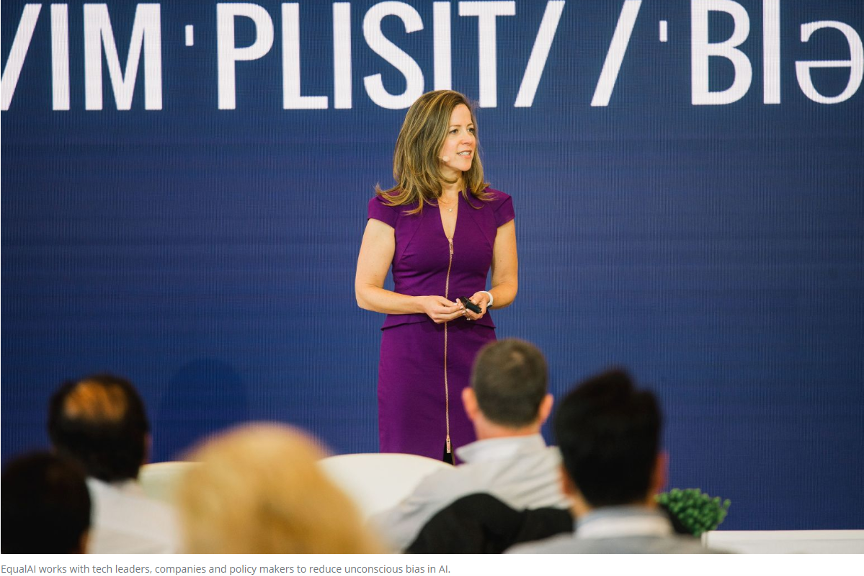
During the COVID-19 pandemic, artificial intelligence (AI) has become a trusted ally and partner in our daily lives. While there are countless benefits of AI, embedded bias could be determining who keeps their job, what news we see – even who lives or dies – without our even knowing it.
AI-based technology is enabling us to stay connected to our communities, order essential supplies and perform our jobs while adhering to stay-at-home orders. It ensures we’re entertained by using algorithms to compare our past Netflix viewings to recommend our next binge watch. AI even enables robots to answer the call for contactless food delivery to our homes and deliver personal protective equipment (PPE) to hospitals without exposing supply workers to the virus.
These developments have saved and enhanced lives during the pandemic. However, even in the best of times, the sharpest minds at the most sophisticated companies struggle to ensure their use of AI is neither discriminatory nor inequitable. For instance, the most advanced AI facial recognition programs often fail to identify persons of color, as recently addressed by the large tech companies, including Amazon, Microsoft and IBM in the laudable decision to take these programs used by law enforcement off the shelf for at least the next year. Further risks can be seen most prominently in our current use of AI to facilitate review of online media content, employment decisions, and healthcare opportunities.
The original article can be found here.
According to Artificial Intelligence World Society Innovation Network (AIWS.net), AI can be an important technology and a potential tool for COVID-19 prediction. Regarding to AI Ethics, AIWS.net initiated and promoted to design AIWS Ethics framework within four components including transparency, regulation, promotion and implementation for constructive use of AI for avoiding bias and discrimination.
by Editor | Jun 21, 2020 | News
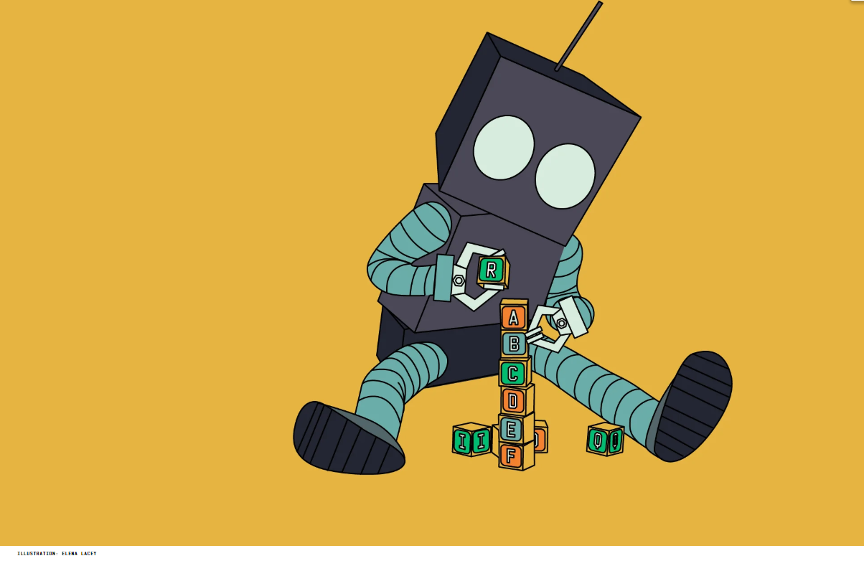
A cognitive psychologist at Harvard, has spent her career testing the world’s most sophisticated learning system—the mind of a baby.
Gurgling infants might seem like no match for artificial intelligence. They are terrible at labeling images, hopeless at mining text, and awful at videogames. Then again, babies can do things beyond the reach of any AI. By just a few months old, they’ve begun to grasp the foundations of language, such as grammar. They’ve started to understand how the physical world works, how to adapt to unfamiliar situations.
Yet even experts like Spelke don’t understand precisely how babies—or adults, for that matter—learn. That gap points to a puzzle at the heart of modern artificial intelligence: We’re not sure what to aim for.
It isn’t yet clear how humans solve these problems, but Spelke’s work offers a few clues. For one thing, it suggests that humans are born with an innate ability to quickly learn certain things, like what a smile means or what happens when you drop something. It also suggests we learn a lot from each other. One recent experiment showed that 3-month-olds appear puzzled when someone grabs a ball in an inefficient way, suggesting that they already appreciate that people cause changes in their environment. Even the most sophisticated and powerful AI systems on the market can’t grasp such concepts. A self-driving car, for instance, cannot intuit from common sense what will happen if a truck spills its load.
Josh Tenenbaum, a professor in MIT’s Center for Brains, Minds & Machines, works closely with Spelke and uses insights from cognitive science as inspiration for his programs. He says much of modern AI misses the bigger picture, likening it to a Victorian-era satire about a two-dimensional world inhabited by simple geometrical people. “We’re sort of exploring Flatland—only some dimensions of basic intelligence,” he says. Tenenbaum believes that, just as evolution has given the human brain certain capabilities, AI programs will need a basic understanding of physics and psychology in order to acquire and use knowledge as efficiently as a baby. And to apply this knowledge to new situations, he says, they’ll need to learn in new ways—for example, by drawing causal inferences rather than simply finding patterns. “At some point—you know, if you’re intelligent—you realize maybe there’s something else out there,” he says.
The original article can be found here.
It is useful to note that AI and causal inference has been contributed by professor Judea Pearl, who is awarded Turing Award 2011. In 2020, Professor Pearl is also awarded as World Leader in AI World Society (AIWS.net) by Michael Dukakis Institute for Leadership and Innovation (MDI) and Boston Global Forum (BGF). At this moment, Professor Judea Pearl also contribute on Causal Inference for AI transparency, which is one of important AIWS.net topics on AI Ethics.
by Editor | Jun 15, 2020 | News
Cerf received his master’s and Ph.D. in computer science from UCLA in the early 1970s. He is the co-designer of the TCP/IP protocols and the architecture of the internet – both of which govern how computers connect to each other and the wider internet. Among his many recognitions, he has received the U.S. Presidential Medal of Freedom, the A.M. Turing Award, the Charles Stark Draper Prize in Engineering, the Queen Elizabeth Prize for Engineering, World Leader in AI World Society Award. For many years, Cerf has been a vice president and Chief Internet Evangelist for Google.
Cerf congratulated this year’s graduates and those celebrating their reunions. He also acknowledged the challenges presented by the COVID-19 pandemic. For Cerf, who tested positive for the virus in early March, it was a personal ordeal. The experience, he said, helped him recognize the drastic ways in which COVID-19 has interfered with the infrastructure of our society.
He said: “The Internet has proven to be a resilient and scalable infrastructure, open to evolving new functionality and applications. Preserving its values and protecting against its abuse is a challenge for our times.”
The best detector of misinformation and disinformation, he remined, is critical thinking.
The original article can be found here.
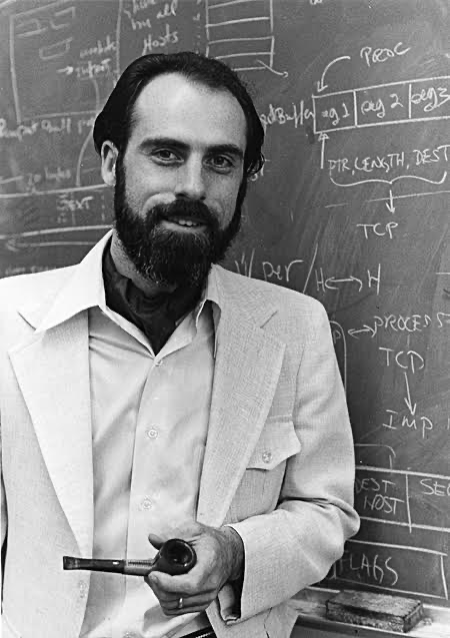
TCP/IP and Internet are recognized as historical achievements and Vint Cerf is a historical figure of AI. As a historical figure of the History of AI, as well as a Mentor of AIWS.net, Vint Cerf presented the History of AI his picture at Stanford 1974 when he created TCP/IP.
You can see the AI Chronicle here.
by Editor | Jun 15, 2020 | Event Updates
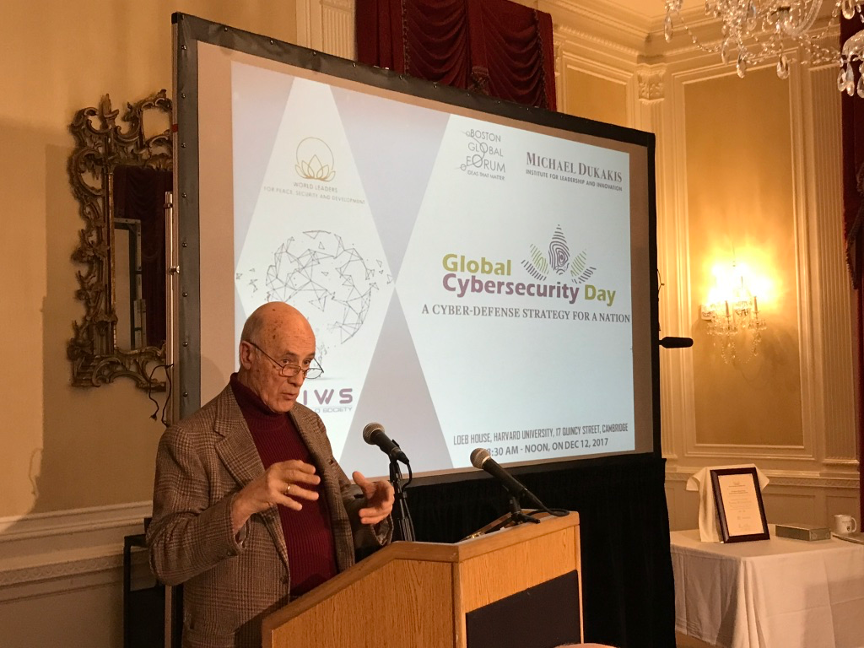
Following the success of AIWS Roundtable: A New Social Contract in the Age of AI on May 12, 2020, with great discussion by former presidents, prime ministers, and distinguished thinkers about the Social Contract 2020, to continue discussing solutions to implement this Social Contract, the World Leadership Alliance-Club de Madrid and the Boston Global Forum co-organize the Online AIWS Roundtable: New Alliance, New Order, New Democracy to discuss about Democratic Alliance on Digital Governance, as a part of the Social Contract 2020, A New Social Contract in the Age of AI.
Governor Michael Dukakis will moderate distinguished thinkers of Harvard and MIT such as Professors Joseph Nye, Thomas Patterson, Nazli Choucri, David Silbersweig, Dick Vietor, Alex Pentland, and from Japan such as Ambassador Ichiro Fujisaki, Professor Koichi Hamada, discussing with current and former presidents and prime ministers who are members of WLA-Club de Madrid and Co-chairs of Inter-Parliamentary Alliance on China.
Time: 8:30 am-11:30 am, EDT, July 1, 2020

by Editor | Jun 15, 2020 | News
On May 12, 2020 at the online AIWS Roundtable, co-organized by World Leadership Alliance-Club de Madrid (WLA-CdM) and the Boston Global Forum (BGF), Former President of Latvia Vaira Vike-Freiberga, and Former Prime Minister Valdis Birkavs discussed the Social Contract 2020, a New Social Contract in the Age of AI. Here is the video of their discussion.