The Boston Global Forum and the Michael Dukakis Institute wish to congratulates the EU Commission for the “Proposal for a REGULATION OF THE EUROPEAN PARLIAMENT AND OF THE COUNCIL LAYING DOWN HARMONISED RULES ON ARTIFICIAL INTELLIGENCE (ARTIFICIAL INTELLIGENCE ACT) AND AMENDING CERTAIN UNION LEGISLATIVE ACTS”
Boston Global Forum and Michael Dukakis Institute introduced this concept: In 2017 we publicly framed and pushed this initiative at AI World Society. It was warmly welcomed as the Initiative for G7 Summit in Canada in 2018. We have also put forth the Social Contract for the AI Age on September 9, 2020. And, in April 28, 2021, we made public a draft of Framework for AI International Accord on.
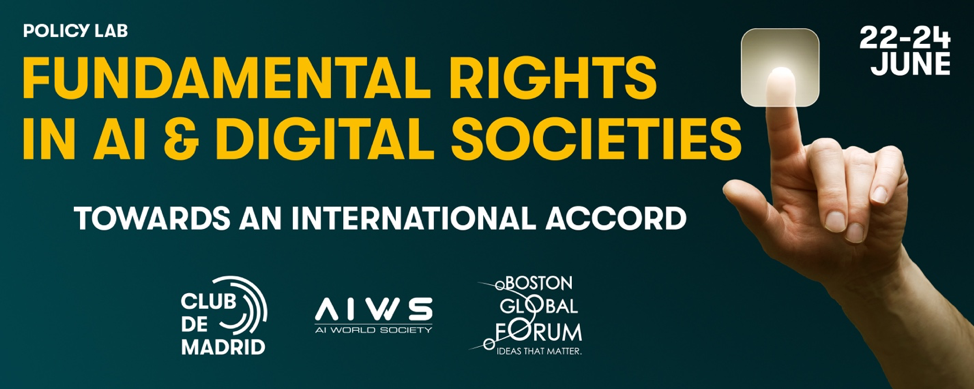
The Proposal for a REGULATION OF THE EUROPEAN PARLIAMENT AND OF THE COUNCIL LAYING DOWN HARMONISED RULES ON ARTIFICIAL INTELLIGENCE (ARTIFICIAL INTELLIGENCE ACT) AND AMENDING CERTAIN UNION LEGISLATIVE ACTS has generated wide public discussion. Boston Global Forum and World Leadership Alliance-Club de Madrid will co-organize a dialogue among EU, US, Japanese, Australian leaders, multinational technology company executives, and distinguished scholars at our joint Policy Lab on 22-24 June, 2021. The focus will be on Fundamental Rights in AI & Digital Societies: Towards an International Accord. Several former Presidents and Prime Ministers — members of Club de Madrid — will attend this event.
The discussion will be open and frank, anchored in the constructive spirit of leaders and decision makers who seek to contribute to a solid legal foundation for an AI World Society. We believe this AI World Society will be practical and comprehensive, as well as human centric. It will chart a new path for humanity in The Age of Global Enlightenment.
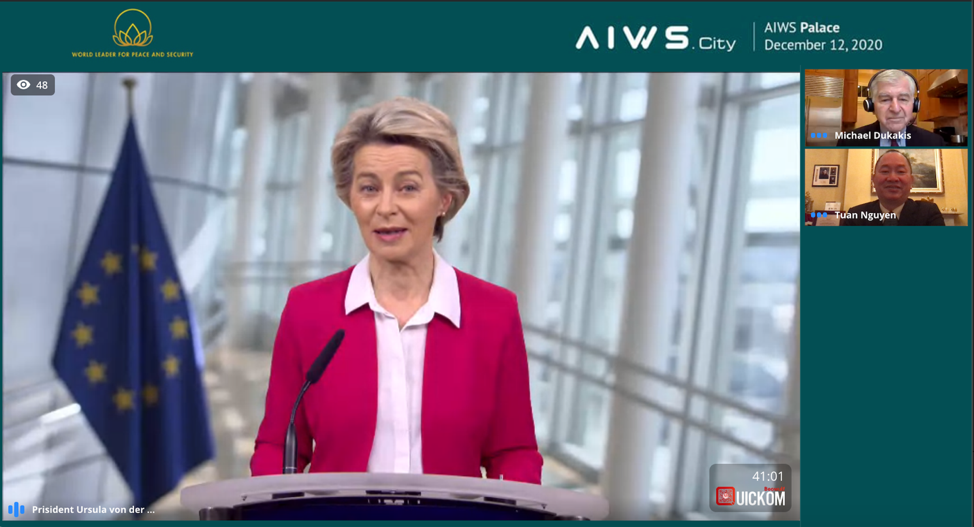
AIWS City is an initiative for the United Nations Centennial.
The AIWS City to be an application and a practice of what Vint Cerf, father of the Internet, has called “The People Centered Economy.” The core concept, in Vint Cerf’s words is as follows: “All people can create value for each other. A good economy has an ecosystem of organizations that lets that happen in the most meaningful and fulfilling ways.”
As a pragmatic vision, AIWS City is to be based on AIWS Value in order to create a good Ecosystem of the People Centered Economy – “all people can create value for each other”. The operational slogan is “People Centered AI and Internet Ecosystem for Work and Life”. In this context, AIWS puts forth the concept of AIWS Value as follows: AIWS Value =: • traditional value (products, services, data, innovation, creativities, etc.) X • social values (contributions). We consider this as a multiplicative not an additive function This enables a situation where society recognize traditional and social values and can exchange them for AIWS Reward as a digital currency. AIWS Rewards can be exchanged to other values as such products, services, money.
AIWS City will support political and social innovations by presenting them AIWS Rewards based on effectiveness and benefits for improving societies. This is a part of the United Nations Centennial Initiative.
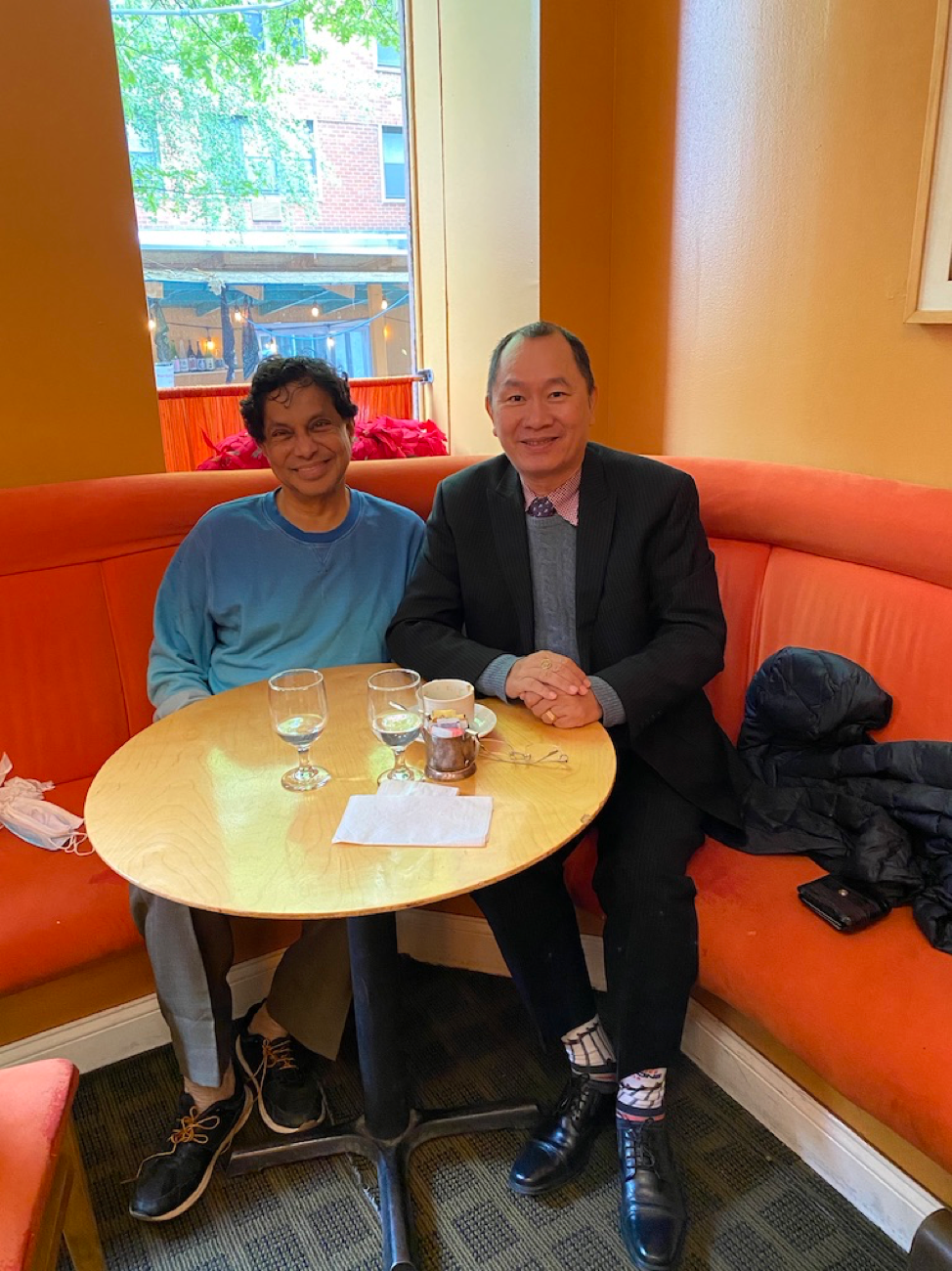
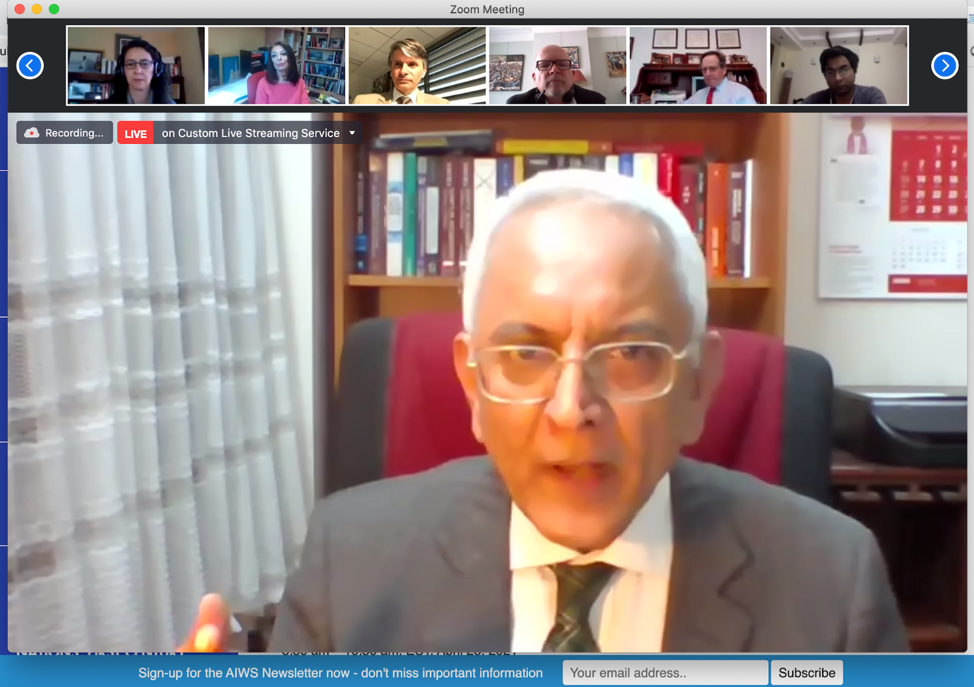
Mr. Ramu Damodaran, Chief Academic Impact of the United Nations, co-founder and co-chair of the United Nations Centennial Initiative.
On May 27, 2021, the United Nations Academic Impact and the Boston Global Forum will co-launch the e-book “The United Nations Centennial: Remaking the world – The Age of Global Enlightenment”.
Governor Michael Dukakis, Chair of the Boston Global Forum and Mr. Ramu Damodaran, Chief Academic Impact of the United Nations are co-publishers.
Governor Michael Dukakis, Professor Thomas Patterson, and Mr. Nguyen Anh Tuan will introduce how AIWS will be remaking politics and society in the AI and Digital Age in a special chapter of this book. The Framework for the AI International Accord, prepared by Professor Nazli Choucri and the AI International Accord team, also will be in the book.
This book also introduces significant ideas and messages of World Leaders for Peace and Security and World Leaders in AI World Society such as Japanese Prime Minister Shinzo Abe, EU Commission President Ursula von der Leyen, Secretary General of the United Nations Ban Ki-moon, EU Ambassador to the US Stavros Lambrinidis and others.
I would like to warmly compliment Prof. Choucri for a masterly compilation of a concise, and yet comprehensive, paper outlining the elements of an AIIA, capturing the intricacies of the issues involved and appreciating the breadth of the challenges.
She makes the absolutely valid point that transformation of AI innovations and applications are moving ahead of our collective ability to fully appreciate the opportunities and threats that they generate. It is an equally valid point that, while countries are developing their own AI policies (at different levels of sophistication), there has been very little realization of the urgent need for an international regime that promotes cooperation on AI applications for human progress and mitigating their destructive potential.
I am almost entirely in agreement with the deliverables she has identified and the methodology of approach to them. What I will add here are comments on some of the aspects covered in the draft.
The need for inclusiveness in this international accord merits particular emphasis. The borderless nature of AI tools means that those excluded would have no incentive not to use them to the detriment of others. The need to maximize the number inside the tent is obvious.
It follows from this that we should not limit AIIA to democracies. In any case, there are too many “models” of democracy these days and variances even within each. The important criterion should be the willingness to abide by agreed norms; not the system of governance. Vietnam, for example, is not called a democracy, but is a disciplined member of the international community, abiding by international law. Exclusion of Vietnam and countries like it, on the grounds of their domestic system of governance, would be counterproductive.
The draft rightly assigns to national authorities the discretion to determine the manner of AI governance within their countries, while requiring them to abide by the discipline of the international accord. This is wise. As we see today, even among democracies, there are different practices and different interpretations of the ethics of reconciling the conflicting interests of human rights, law enforcement and preventive security measures. The balance that each country will find would depend on its historical experiences, social consciousness and threat perceptions. Prescriptive provisions threaten disruption of the international accord.
A cautionary note on sanctions that are envisaged to enforce adherence to the Accord. Recent experience of unilateral primary and secondary sanctions underlines the need for carefully defining the scope and applicability of sanctions, identifying clearly the objective conditions which would trigger the sanctions, and the methodology of applying and lifting the sanctions.
The draft makes the important point of variances in the levels of AI-capability across the world and the need for capacity-building. We need to be conscious of the dangers of a new digital divide, which would widen global social and economic inequalities, with consequent threats to peace and security.
This lab is a transatlantic dialog between leaders, policymakers, decision makers, business leaders, and distinguished thinkers of the EU, the US, Japan, Australia on AI Regulations of the EU and the Framework for AI International Accord.
There will also be a discussion on the Book “Remaking the world – The Age of the Global Enlightenment” by distinguished leaders and thinkers.
Partnership of the Boston Global Forum, Club de Madrid will seek to contribute to global consensus-building around a rights-based agenda for the governance of AI and digital societies as a part of AI World Society model (AIWS).
The total effect of AI and digital technologies on our societies is far greater than the sum of its parts. As AI and digital technologies revolutionize every facet of modern societies, they also alter how the different social component relate to one another, thereby making our existing social contract obsolete. Applying Social Contract for the Digital and AI Age requires, first and foremost, thoughtful consideration of how the multi-fold transformation driven by AI and digital technologies is affecting fundamental rights in AI and digital societies.