by Editor | Jan 7, 2021 | Publications
The Quad Report
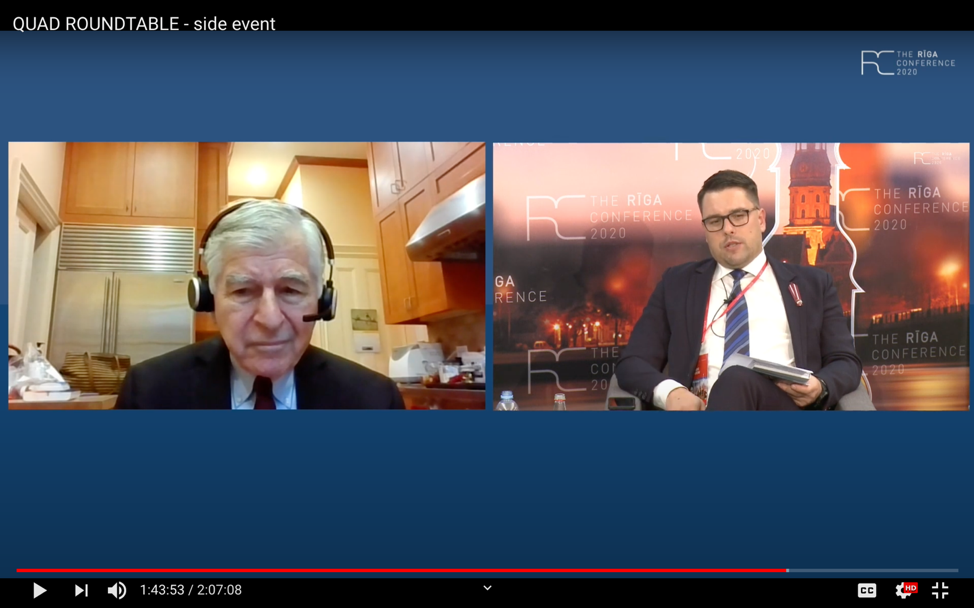
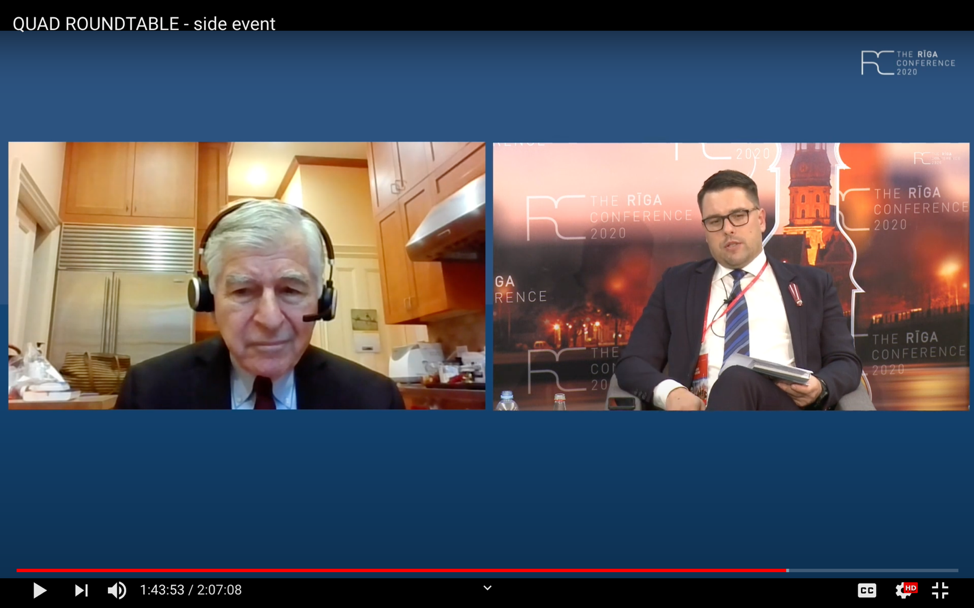
The Quad Roundtable at the Riga Conference 2020
The Quad Group, AIWS Social Contract, and World Peace and Security
can be read in full and downloaded here.
by Editor | Jan 7, 2021 | News
A PDF of the Report can be found here.
BOSTON, January 7, 2021: Leaders from Australia, India, Japan, and the United States have proposed a blueprint for tackling the major challenges confronting the incoming Biden administration and other world leaders in a post-Trump era. The proposals were developed by the Quadrilateral Initiative, which was started by Japanese Prime Minister Shinzo Abe to review and address global issue.
The four countries, known informally as the Quad, address shared goals within a framework of cooperation, diplomacy, and democratic values. Senior officials from the countries met in mid-November on the sidelines of the Riga Conference 2020, which drew the president and vice president of the European Commission, the secretary general of NATO, the presidents of the Baltic countries and defense ministers from the Canada, France, Japan and the United Kingdom as well as the Baltic nations.
The Quad session was organized by the Latvian Transatlantic Organization and the Boston Global Forum. Speakers included former Massachusetts Governor Michael Dukakis, chairman of the Boston Global Forum; Defense State Minister Yasuhide Nakayama of Japan; Senator Kimberly Kitching, chair of the Australian Senate Foreign Affairs, Defense and Trade References Committee; and Ambassador P.S. Raghavan, chairman of India’s National Security Advisory Board.
The special report prepared by the Quad identified five challenges confronting the global community as a new administration takes over in Washington and global leaders work to mend differences among Western allies and shape the new arena for competition and cooperation in fields like artificial intelligence and cybersecurity. The main challenges in the report are:
- The interests of the United States should be realigned with its Western allies to open the door for peace, stability, and long-term prosperity. Cooperation should be renewed on global issues like climate change and humanitarian assistance.
- The objective of the Quad is to promote openness, transparency, and inclusion across the Indo-Pacific region. The foundation for this objective rests on broadening cooperation and improving adherence to the rule of law among the many nations of the region.
- The enormous potential of artificial intelligence should be harnessed for the benefit of every nation and every person, rather than restricted to a handful of countries and tech titans. The promotion of inclusion and democracy through AI should be encouraged and attempts to use AI to support authoritarian regimes should be blocked. The Quad concluded that supporting standards and democratic values reflected in the Social Contract for the AI Age is essential to countering threats from AI and enhancing its common good.
- The Quad and its allies should enable China to recognize the global responsibilities that accompany its position as an AI and economic powerhouse. Rather than confronting China, the Western alliance should exercise its responsibility to ensure that China respects its neighbors and the democratic imperative for Hong Kong.
- The surge of 5G technologies will expand the impact of artificial intelligence in ways that could either improve global cooperation or devolve into unhealthy competition. Democratic values should guide the use of AI and big data for the common good rather than the good of the few.
Along with its work in the Indo-Pacific region, the Quad proposes creating an agreement like the Helsinki Accord to meet the challenges and capture the full benefits of artificial intelligence. The new accord could be drafted in Riga and take advantage of cyber and communications expertise of the Baltic countries.
by Editor | Jan 3, 2021 | News
On December 31, 2020, the AI World Society announced the History of AI 2020 Awards. The HAI Awards recognize people and achievements in the AI world that are pioneering, meaningful, and influential.
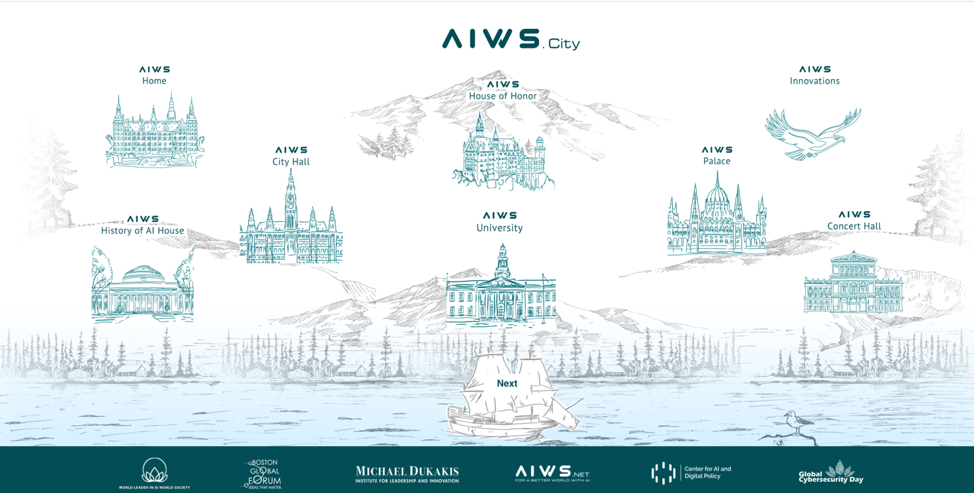
The History of AI 2020 Awards will be featured at the AI World Society City. The AI World Society (AIWS) City, established in collaboration with the World Leadership Alliance – Club de Madrid, and the United Nations Academic Impact, is a virtual digital city dedicated to the principle of the Social Contract for the AI Age.
On January 9, 2021, AI World Society will officially launch the frontpage of AIWS City at AIWS.city.

by Editor | Dec 31, 2020 | News
RELEASE: December 31, 2020
1200 EST / 1800 CET
AI World Society Announces
History of AI 2020 Awards
BOSTON – The AI World Society today announced the History of AI 2020 Awards. The HAI Awards recognize people and achievements in the AI world that are pioneering, meaningful, and influential.
The History of AI 2020 Awards for Achievement go to:
AlphaFold – the solution to a 50-year-old grand challenge in biology, developed by DeepMind. “This breakthrough demonstrates the impact AI can have on scientific discovery and its potential to dramatically accelerate progress in some of the most fundamental fields that explain and shape our world.”
“Artificial Intelligence and Democratic Values” – the first comparative study of AI policies and practices sets out a methodology to promote AI that is trustworthy and human-centric. Professor Mireille Hildebrandt called the report “a trove of materials to enable mutual learning strategies.” Gabriela Zanfir-Fortuna said the report is a “vital resource for global policymakers . . . comprehensive and incredibly valuable.”
Deep Understanding – a concept pioneered by Professor Judea Pearl for the development of AI systems that could minimize the creation of large data sets. Deep understanding challenges the common view that meaningful AI requires intensive data collection.
GPT-3 – a natural language program that produces news articles and technical manuals, creative essays, and computer code often difficult to distinguish from human output. GPT-3 also raises challenging ethical questions about machine-generated text.
Social Contract for the AI Age – a framework for a new social contract to ensure peace, security, and democracy in the modern era. The World Leadership Alliance-Club de Madrid, the largest association of former Presidents and Prime Ministers of democratic governments, have endorsed the Social Contract.
The History of AI 2020 Awards to Individuals go to:
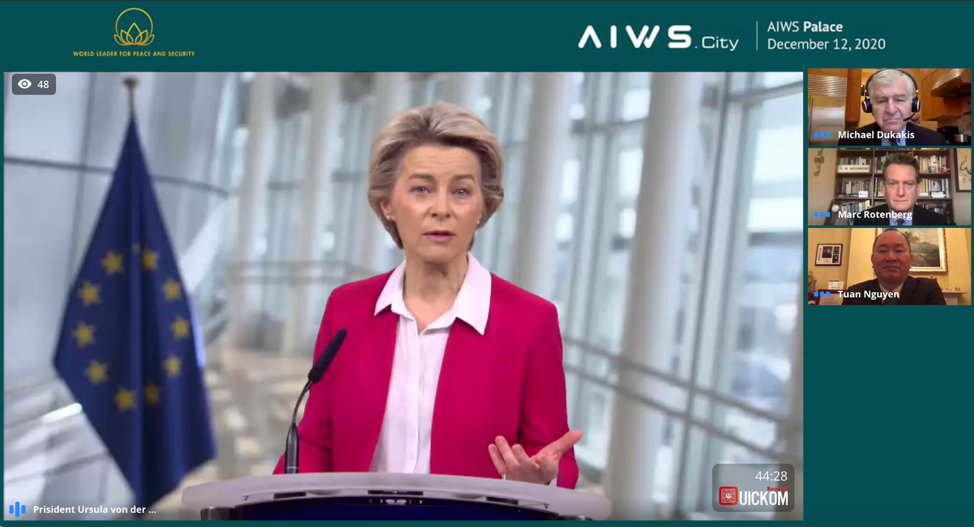
President Ursula von der Leyen – The incoming President of the European Commission, von der Leyen has led efforts to establish a regulatory framework for AI, opposed black box algorithms, and called for a Transatlantic Agreement on Artificial Intelligence, based on democratic values, including “human rights, pluralism, inclusion, and the protection of privacy.”
Joy Boulawamini – a Ghanaian-American computer scientist and digital activist based at the MIT Media Lab, Buolawamini founded the Algorithmic Justice League to challenge bias in AI systems. In 2020, her research helped persuade Amazon, IBM, and Microsoft to suspend facial recognition technology, one the most controversial applications of AI.
The History of AI 2020 Awards will be featured at the AI World Society City. The AI World Society (AIWS) City, established in collaboration with the World Leadership Alliance – Club de Madrid, and the United Nations Academic Impact, is a virtual digital city dedicated to the principle of the Social Contract for the AI Age.
CONTACT
Nguyen Anh Tuan, Co-Founder, AI World Society: [email protected]
Press Secretary Dick Pirozzolo: [email protected] / +1 617 959 4613
by Editor | Dec 30, 2020 | News
NOMINATION
History of AI 2020
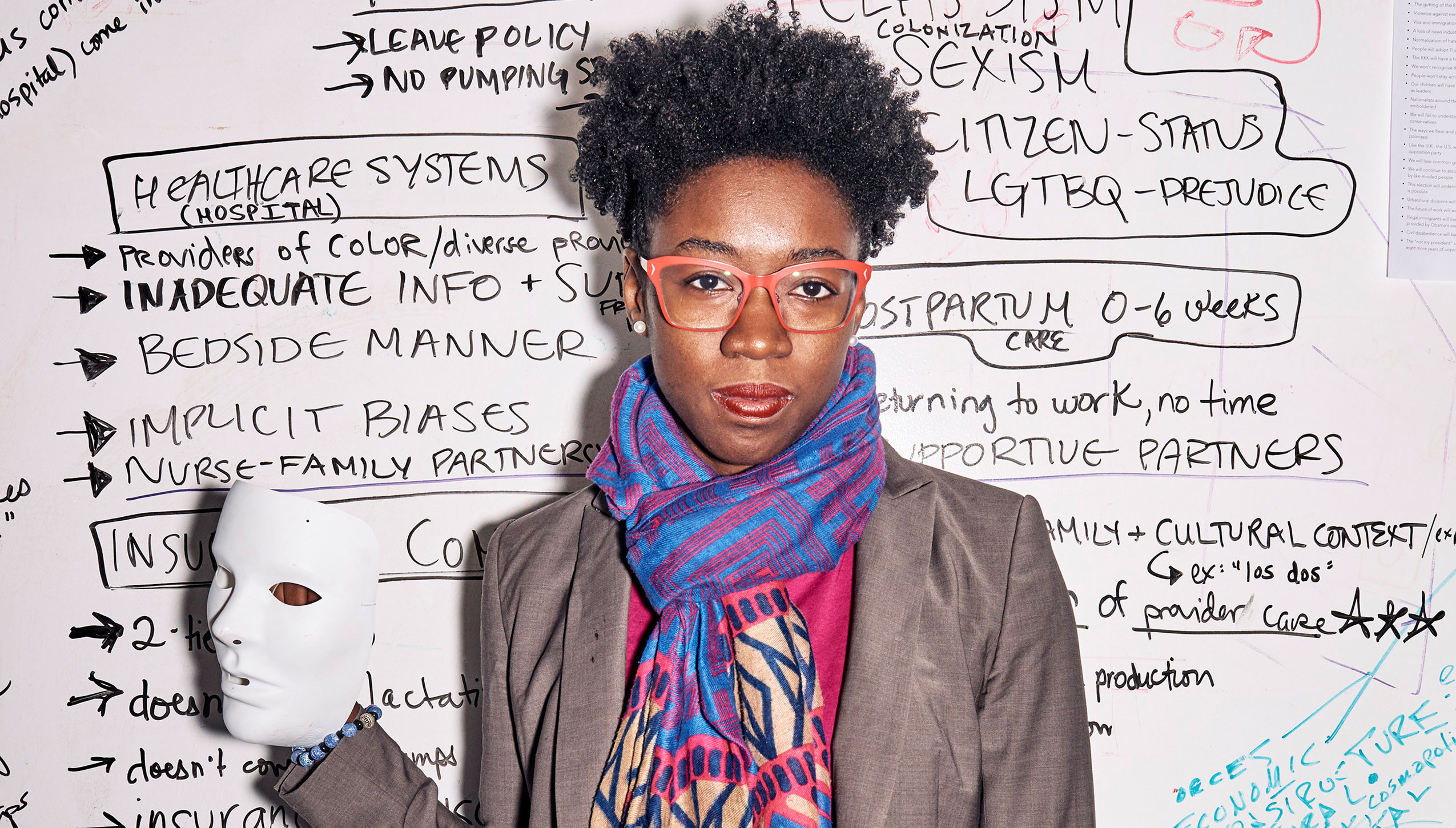
Joy Buolamwini
Joy Adowaa Buolamwini is a Ghanaian-American computer scientist and digital activist based at the MIT Media Lab. She founded the Algorithmic Justice League, an organisation that looks to challenge bias in decision making software.
In 2020, Buolamwini was on the front lines of campaigns in the United States and around the world to stop bias in AI systems. Her research helped persuade Amazon, IBM, and Microsoft to put a hold on facial recognition technology. Her 2020 TED Talk on algorithmic bias has over 1 million views. She was featured in the documentary film Coded Bias that premiered at
the 2020 Sundance Film Festival, that explores how algorithms encode and propagate bias.
Joy Buolamwini has testified before Congress about the dangers of facial recognition and she has called for a complete ban of police use of face surveillance. Her MIT thesis uncovered large racial and gender bias in AI services. Her research has been covered in over 40 countries, and as a renowned international speaker she has championed the need for algorithmic justice at the World Economic Forum and the United Nations. She serves on the Global Tech Panel convened by the vice president of European Commission to advise world leaders and technology executives on ways to reduce the harms of A.I.
As a creative science communicator, she has written op-eds on the impact of artificial intelligence for publications such as TIME Magazine and New York Times. Her spoken word visual audit “AI, Ain’t I A Woman?” shows AI failures on the faces of iconic women like Oprah Winfrey, Michelle Obama, and Serena Williams as well as the Coded Gaze short have been part of exhibitions ranging from the Museum of Fine Arts, Boston to the Barbican Centre, UK.
A Rhodes Scholar and Fulbright Fellow, she holds two masters degrees from Oxford University and MIT; and a bachelor’s degree in Computer Science from the Georgia Institute of Technology. Fortune Magazine named her to their 2019 list of world’s greatest leaders describing her as “the conscience of the A.I. Revolution.”
A brilliant researcher, a highly effective advocate, a creative communicator, Joy Boulamwini should be recognized for HAI 2020.
Marc Rotenberg