Boston Global Forum Statement Date: April 12, 2025
The recent tariff policy announced by President Donald Trump and members of his Cabinet marks an important decision in U.S. economic and strategic policy. It underscores the growing importance of alliances and economic partnerships between the United States and key democratic nations in the Indo-Pacific and transatlantic regions.
As highlighted by President Trump and the U.S. Secretary of the Treasury, the strengthening of economic ties with Japan, India, Vietnam, and South Korea reflects a broader vision of cooperative resilience among like-minded democracies. This presents a timely opportunity to form a new economic alliance that includes the United States, Japan, India, Vietnam, South Korea, the European Union, and the United Kingdom—nations that share common values, uphold the rule of law, and face shared challenges and threats.
The Boston Global Forum is prepared to convene high-level discussions to help shape a rules-based economic framework grounded in transparency, innovation, fairness, and mutual benefit. This vision aligns with the principles of the AI World Society (AIWS) and the Social Contract for the AI Age.
Such an alliance will strengthen trust among its members and provide a strong counterbalance to strategic threats. It will also lay the foundation for a new era of economic cooperation, technological advancement, and democratic stability in the Age of AI.
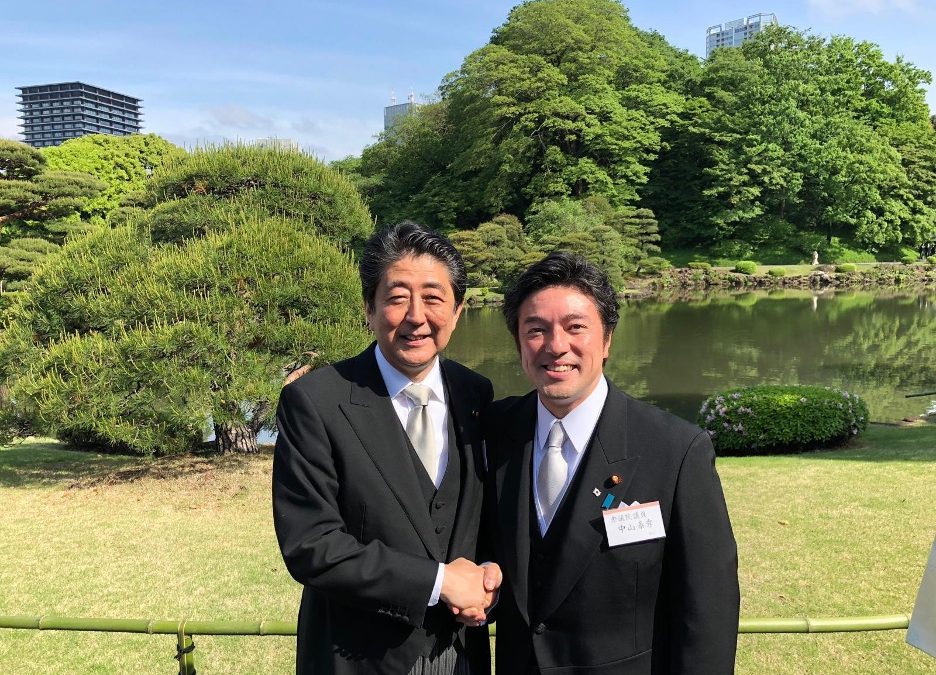
From the enduring Indo-Pacific vision championed by Prime Minister Shinzo Abe—recipient of the World Leader for Peace and Security Award—emerges a bold new initiative to forge a New Economic Alliance among trusted partners. This initiative builds upon Abe’s strategic framework, uniting countries such as the United States, Japan, India, South Korea, and Vietnam in a rules-based, transparent, and innovation-driven economic collaboration.
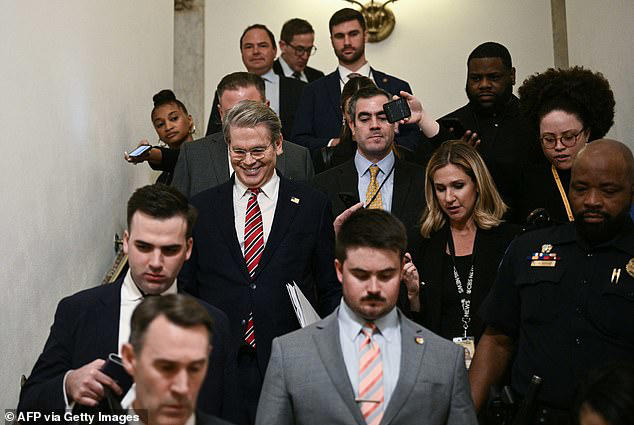
In recent remarks at the American Bankers Association, U.S. Treasury Secretary Scott Bessent emphasized the urgency of confronting global economic threats and reducing dependence on authoritarian systems. His call for coordinated trade strategies among Indo-Pacific democracies—particularly the U.S., Japan, India, Vietnam, and South Korea—marks a significant step toward realizing Abe’s vision of an interconnected and resilient regional framework.
The proposed New Economic Alliance is not only about trade—it is about trust, technological cooperation, and shared democratic values. As AI and digital infrastructure reshape the future of governance and the global economy, this alliance can become a pillar of stability and prosperity in an increasingly volatile world.
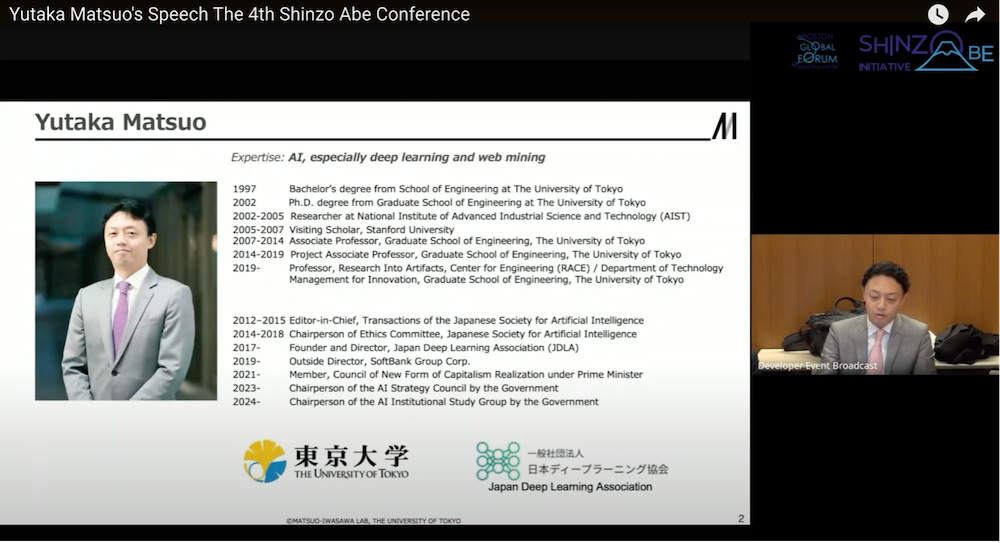
At the 4th Shinzo Abe Conference, Professor Yutaka Matsuo—renowned AI expert, Chairperson of the Japan Deep Learning Association, member of Japan’s AI Strategy Council, and External Board Director at SoftBank Group Corp.—delivered an insightful presentation on the role of advanced AI and robotics in enabling Government 24/7 systems.
He emphasized that despite the growing capabilities of AI, the internal workings of large-scale neural networks remain partially mysterious, but research is gradually revealing their structures and mechanisms.
Professor Matsuo then transitioned to robotics, sharing Japan’s progress in developing intelligent, responsive robots. By integrating LLMs, robots can now translate human instructions into smooth, actionable commands—demonstrated through robots that can perform household tasks like folding laundry and assembling boxes. He referenced pioneering work such as Pi Zero by Physicalai and recent breakthroughs by Google in robotic manipulation.
To support the development of robotic foundation models, Professor Matsuo introduced the newly launched IOA – AI Robot Association, which will lead Japan’s efforts to build an open, global platform for sharing robotic data and accelerating innovation. This initiative aims to power AI-enabled systems that support continuous, intelligent public services—key to realizing the vision of Government 24/7.
He concluded by underscoring the critical role of AI and robotics in addressing societal challenges such as labor shortages, and called for international collaboration to advance trustworthy, inclusive AI for governance and public good.
In the Age of AI, financial institutions face growing public scrutiny and trust deficits rooted in concerns over transparency, fairness, ethical behavior, and human dignity. To address these challenges and shape a more trustworthy and inclusive financial system, the AI World Society (AIWS) proposes the following contributions as part of the Boston Finance Accord for AI Governance 24/7:
Promote Transparent and Ethical AI Governance:
AIWS will develop and encourage adoption of AIWS Ethical Standards for Financial AI Systems to ensure fairness, explainability, and transparency in AI-driven financial decision-making. Through partnerships with regulatory agencies and financial leaders, AIWS will support the implementation of AI auditing mechanisms and explainable AI (XAI) frameworks that align with democratic values and human rights.
Develop Human-Centric Digital Finance Platforms:
Inspired by the AIWS Government 24/7 model, AIWS advocates for financial platforms that prioritize citizen engagement, empathy, and accessibility. Broad listening methodologies—enabling inclusive, participatory dialogue—will be incorporated into the design and delivery of financial services to rebuild public confidence and responsiveness.
Build Trust Frameworks and AI Ethics Scorecards:
AIWS will design and promote a Trustworthiness Scorecard for AI in Finance, enabling institutions to benchmark their performance in areas such as ethical integrity, transparency, data responsibility, and user-centered service. This initiative aims to reinforce institutional accountability while fostering trust among users and the wider public.
Facilitate Multi-Stakeholder Deliberation Forums:
To democratize the shaping of AI in finance, AIWS will convene deliberative forums—both physical and virtual—bringing together citizens, technologists, policymakers, and industry leaders. These AI-assisted citizen assemblies will help co-create regulatory frameworks and platform governance practices grounded in public values.
Champion Democratic Finance in the AI Economy:
AIWS will advocate for a new model of Democratic Finance, where financial institutions are guided by principles of inclusivity, social responsibility, and sustainability. A proposed AIWS Democratic Finance Charter will serve as a voluntary commitment for institutions that align financial growth with human-centered and equitable development.
Advance AI and Financial Literacy for All:
Recognizing the need for greater public understanding of finance and AI, AIWS will partner with educational institutions and media to develop open-access resources that promote digital and financial literacy. These efforts will demystify AI, empower informed choices, and reduce inequality in access to financial tools and knowledge.
Recognize Ethical Leadership and Best Practices:
To elevate role models and innovations, AIWS will launch an annual AIWS Ethical Finance Leadership Prize. This recognition will honor financial leaders and organizations that demonstrate outstanding commitment to transparency, fairness, and public service in the deployment of AI technologies.
Minister Elisabeth Moreno, Former French Minister and Representative of the Boston Global Forum (BGF) for France and Africa, will visit Boston from April 18 to 22, 2025, for a high-level engagement to advance the global initiative “Powering Progress 24/7: Finance as a Force for Good.” This initiative is a foundational pillar of the AI World Society (AIWS) Government 24/7 framework, promoting ethical, AI-powered financial systems for global development and democratic resilience.
The highlight of her visit will be a keynote address at the BGF Conference at Harvard University’s Loeb House on April 22. In this address, Minister Moreno will present a bold vision for leveraging finance and AI in service of humanity—outlining pathways for governments and institutions to embrace finance as a tool for ethical governance, inclusive growth, and global peace.
Trip Highlights Include:
Keynote Address at the BGF Conference
Minister Moreno will deliver the featured speech under the theme “Powering Progress 24/7: Finance as a Force for Good,” offering concrete strategies for implementing AI-driven financial governance that serves society effectively and equitably.
Strategic Dialogues with Distinguished Leaders and Thinkers
Governor Michael Dukakis, Co-Founder and Chairman of BGF
Professor Tarun Khanna, Harvard Business School, expert on emerging markets
Professor Alex Pentland, MIT, pioneer in data science and AI ethics
Engagement with Future Leaders
Minister Moreno will meet with outstanding students from the Enlightenment in Action Alliance (EAA) at Harvard University, inspiring the next generation of ethical innovators and policymakers.
Support for the AIWS Film Park
Discussions will explore how ethical finance and AI can support creative industries, particularly through the AIWS Film Park, a visionary BGF initiative to revolutionize global filmmaking.
Co-founding the Boston Finance Accord for AI Governance 24/7 (BFA-AI 24/7)
Minister Moreno will co-found this international accord alongside a distinguished group of leaders.
BGF Roundtable on a New Economic Alliance
The visit will also feature a strategic discussion on building a New Economic Alliance among democratic partners—including the United States, Japan, India, Vietnam, South Korea, the EU, and the UK—to reinforce economic security and values-based cooperation in the AI era.
Publication of BGF Special Edition
A commemorative report titled “Powering Progress 24/7: Finance as a Force for Good – Boston Trip of Minister Elisabeth Moreno” will be released, highlighting her vision, contributions, and global impact.
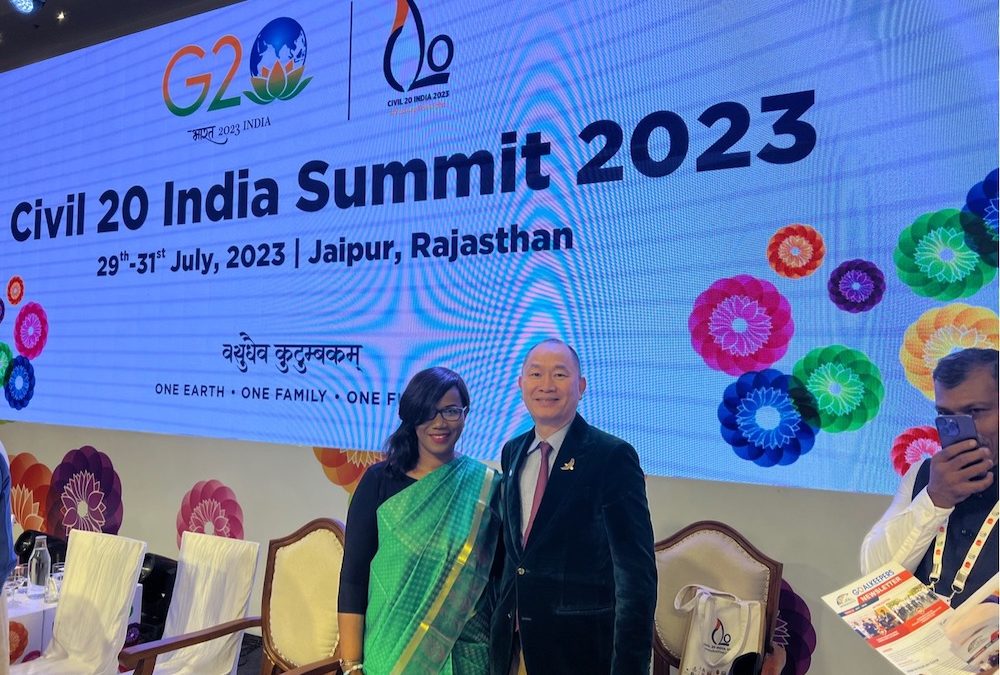
Minister Elisabeth Moreno and Nguyen Anh Tuan at C20-G20 Summit 2023 in India
The Fifth Generation Computer Systems (FGCS; Japanese: 第五世代コンピュータ, romanized: daigosedai konpyūta) was a 10-year initiative launched in 1982 by Japan’s Ministry of International Trade and Industry (MITI) to develop computers based on massively parallel computing and logic programming. The project aimed to create an “epoch-making computer” with supercomputer-like performance and to establish a platform for future advancements in artificial intelligence. Although FGCS was ahead of its time, its ambitious goals ultimately led to commercial failure. However, on a theoretical level, the project significantly contributed to the development of concurrent logic programming.
The term “fifth generation” was chosen to emphasize the system’s advanced nature. In the history of computing hardware, there had been four prior “generations” of computers: the first generation utilized vacuum tubes; the second, transistors and diodes; the third, integrated circuits; and the fourth, microprocessors. While earlier generations focused on increasing the number of logic elements within a single CPU, it was widely believed at the time that the fifth generation would achieve enhanced performance through the use of massive numbers of CPUs.
In this strategic policy piece, Hon. Mark Kennedy underscores Southeast Asia’s growing importance as a linchpin in the global competition for technological leadership and supply chain resilience. He argues that countries like Vietnam, Malaysia, and Singapore are becoming critical partners for the United States and its allies in advancing semiconductor innovation, AI development, and economic diversification—thereby reducing dependence on China and fortifying democratic influence in the Indo-Pacific.
Kennedy highlights Vietnam’s aggressive push to become a regional semiconductor hub, as well as the broader regional momentum in Malaysia, Singapore, and beyond. With $235 billion in foreign direct investment (FDI) in 2024, Southeast Asia is outpacing China and attracting strategic interest from both the U.S. and Europe. The region’s digital economy is projected to reach $2 trillion by 2030, offering massive potential for aligned U.S. investment in cloud infrastructure, AI, and digital governance.
However, Kennedy warns that the U.S. risks losing ground. Without joining binding trade frameworks like CPTPP and RCEP, and with proposals like the AI Dispersion Framework potentially hampering U.S. companies, Washington could cede influence to authoritarian tech powers like China. He calls for a more pragmatic, tiered export control regime that balances national security with Southeast Asian development, enabling secure, responsible tech growth across the region.
To succeed, Kennedy recommends:
Upgrading the tech ecosystem from assembly to advanced R&D and chip design.
Strengthening IP and data governance.
Investing in talent and infrastructure.
Encouraging AI applications in diverse sectors and languages.
Supporting trusted, cost-effective legacy chip production in Southeast Asia and nearby allies like Mexico.
Ultimately, Kennedy positions Southeast Asia as a decisive front in shaping a democratic, open, and innovation-driven digital order. The U.S. must act with urgency and precision—not to contain AI, but to build trusted technology partnerships that advance security, prosperity, and freedom in the Indo-Pacific.
BGF Conference: Boston Finance Accord for AI Governance 24/7 Date: Tuesday, April 22, 2025 Venue: Harvard University Loeb House, Cambridge, MA Time: 8:00 AM – 12:00 PM EDT
The Boston Global Forum (BGF), founded in 2012 by Michael Dukakis, Nguyen Anh Tuan, Thomas Patterson, and John Quelch, with the guidance of its distinguished Board of Directors—Governor Michael Dukakis (Chairman), Nguyen Anh Tuan (CEO), Professor Thomas Patterson, Professor John Quelch, Professor Nazli Choucri, Professor Alex Pentland, and Professor David Silbersweig—leads ethical AI governance through the AI World Society (AIWS) Initiative (2017) and AIWS Government 24/7, a vision of continuous, AI-driven public service. Building on the Tokyo Accord (March 28, 2025, Tokyo) and the AI Action Summit (February 10-11, 2025, Paris), the BGF Conference on April 22, 2025, at Harvard University’s Loeb House launches the Boston Finance Accord for AI Governance 24/7. Leveraging Boston’s financial and academic strengths—particularly the contributions of distinguished professors from Harvard Business School (HBS) and MIT Sloan—this accord aims to establish secure, scalable funding mechanisms for real-time governance, honoring Shinzo Abe’s legacy.
Objectives
Award Recognition: Honor Audrey Tang with the 2025 World Leader in AIWS Award for her transparent governance innovations.
Financial Accord Development: Define the Boston Finance Accord, setting standards for a secure, scalable financial platform to support AIWS Government 24/7.
Global Dissemination: Share outcomes with world leaders, reinforcing US-Japan collaboration.
Key Themes
Finance-Driven AI Governance: Secure platforms (e.g., blockchain, real-time systems) to fund 24/7 services.
Boston’s Leadership: Uniting Fidelity, HBS, and MIT as a global model.
Ethical Standards: Transparency and equity, inspired by Tang’s systems.
Speakers
Ministers Minoru Kiuchi, Audrey Tang, Elisabeth Moreno, professors of Harvard Business School, MIT Sloan, Softbank.
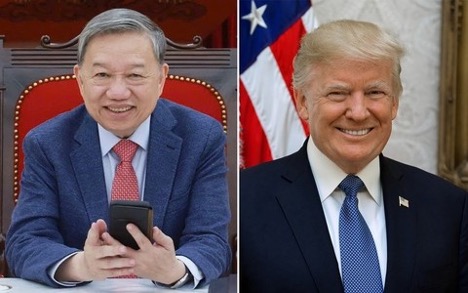
HANOI, April 4 (Reuters) – U.S. President Donald Trump and Vietnam’s leader To Lam agreed on Friday to discuss a deal to remove tariffs, both leaders said after a phone call that Trump said was “very productive”, as Hanoi escalated its campaign to dodge duties of 46%.
Days before Trump’s announcement on reciprocal tariffs that hit Vietnam hard, the country had already cut several duties as part of a series of concessions to the U.S., which also included pledges to buy more American goods such as planes and agriculture products.
“Just had a very productive call with To Lam, General Secretary of the Communist Party of Vietnam, who told me that Vietnam wants to cut their Tariffs down to ZERO if they are able to make an agreement with the U.S.”, Trump wrote on his Truth social platform.
“I thanked him on behalf of our Country, and said I look forward to a meeting in the near future,” Trump added.
Lam confirmed the call and the pledge to cut tariffs on U.S. goods. “At the same time (Lam) proposed that the U.S. apply similar tax rates to goods imported from Vietnam,” read a report on Vietnam’s government portal published shortly after Trump’s post.
The two leaders agreed they will continue talking “to soon sign a bilateral agreement” on tariffs, the Vietnamese government said, adding Trump accepted an invitation to visit Vietnam soon.