by Editor BGF | Dec 29, 2025 | News
A Manifesto for the AI Age
Nguyen Anh Tuan
As the United States approaches its 250th anniversary, it confronts a defining truth of our time: in the AI Age, speed is power—but only when guided by values.
The question before America is no longer whether we have ideas, principles, or democratic traditions. We do. The question is how quickly we can turn those values into action—into effective governance, inclusive prosperity, resilient infrastructure, and global leadership.
America must move faster—everywhere.
Faster in decision-making.
Faster in public service delivery.
Faster in building and construction.
Faster in innovation and economic transformation.
Faster in responding to crises, inequality, and global competition.
This is not a call for reckless haste. It is a call to remove unnecessary friction—the delays, redundancies, and procedural paralysis that slow progress even when facts are clear, values are shared, and the moral direction is understood.
Why Speed Now
In the AI Age, time itself has become a strategic asset. Nations that can decide, build, and adapt more quickly will shape the future. Those that cannot will fall behind—not because they lack wisdom, but because they lack velocity.
Too often, democratic systems spend months or years debating questions we already know how to answer. The result is not better democracy, but lost opportunity. Delay becomes a quiet form of decline.
America can do better.
AI as an Accelerator of Democracy
Artificial intelligence makes a new pace of democracy possible.
When designed and governed responsibly, AI can:
- Synthesize complex information in real time
- Clarify options and consequences quickly
- Distinguish genuine ethical dilemmas from procedural inertia
- Reduce misinformation and confusion
- Support leaders and citizens with clearer understanding
AI does not replace debate. It makes debate more meaningful—allowing human judgment to focus on what truly matters: values, trade-offs, long-term consequences, and responsibility.
The goal is not fewer discussions. The goal is better decisions, made in time.
AIWS Government 24/7: Speed With Accountability
This vision is embodied in AIWS Government 24/7, a model I developed to help democratic governance operate at the speed required by the AI Age—without losing its human core.
AIWS Government 24/7 is not automated rule. It is AI-assisted leadership.
It enables governments to:
- Deliver public services continuously and efficiently
- Build infrastructure faster and at lower cost
- Resolve administrative bottlenecks in days, not years
- Support lawmakers with real-time ethical, economic, and social impact analysis
- Reduce repetitive, unproductive debate while strengthening oversight
Construction, healthcare, education, climate adaptation, energy systems, and public administration can all move faster—with accountability, transparency, and compassion intact.
Speed and Democracy Are Not Opposites
For too long, speed has been portrayed as the enemy of democracy. In the AI Age, this assumption must change.
With the right ethical frameworks, AI:
- Frees leaders from information overload
- Helps institutions act decisively without becoming arbitrary
- Empowers citizens with better access to knowledge and participation
- Strengthens trust by making processes clearer and fairer
Democracy does not fail because it moves slowly. It fails when it cannot act when action is needed.
A Call at 250
At 250 years, America cannot afford paralysis.
Global competitors are not waiting. They are building faster, deciding faster, and deploying technology faster. The greatest danger is not losing arguments, but losing time—time to innovate, to lead, to inspire, and to protect democratic values.
America must show the world that:
- Democracy can be fast
- Ethics can scale
- Governance can be both thoughtful and decisive
- Technology can strengthen freedom rather than weaken it
This is why America at 250 is not a ceremonial celebration. It is a call to renewal.
With AI as a trusted partner—and human values firmly in command—the United States can move faster, govern better, and once again become a true beacon for humanity in the Age of Artificial Intelligence.
— Nguyen Anh Tuan
by Editor BGF | Dec 29, 2025 | Global Alliance for Digital Governance
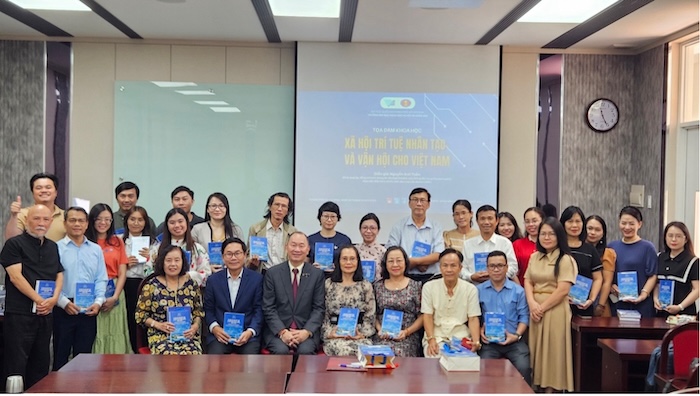
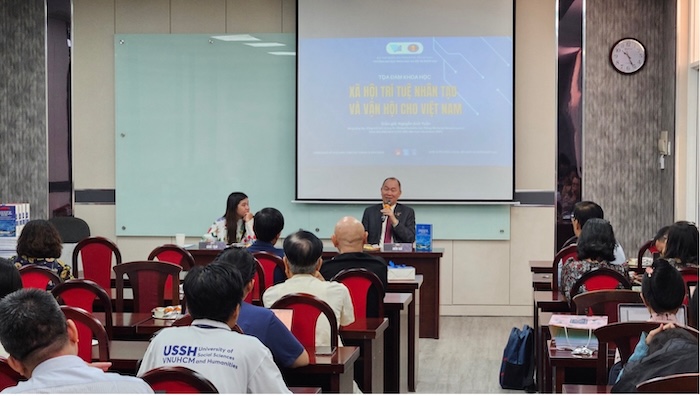
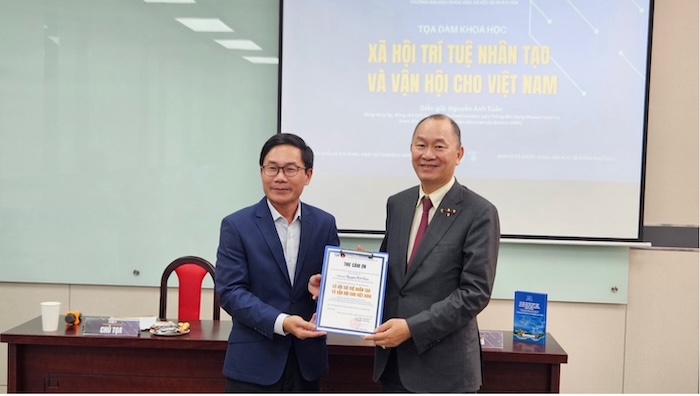
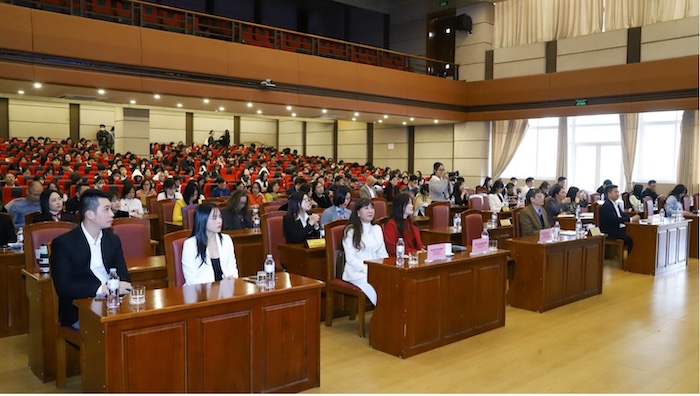
December 22, 2025 — The Faculty of Literature and Linguistics, University of Social Sciences and Humanities, Vietnam National University–Ho Chi Minh City, organized a scientific roundtable entitled “The AI World Society and Opportunities for Vietnam.” The event attracted the participation of numerous experts, researchers, graduate students, and undergraduate students with a strong interest in the topic.
Representing the Faculty of Literature and Linguistics, Assoc. Prof. Dr. Phan Manh Hung, Dean of the Faculty, delivered opening remarks highlighting the role of the social sciences and humanities in an AI-driven society. He emphasized that in the digital era, dialogue between science and technology and the humanities—as well as between individual identity and globalization—is essential for building a sustainable and balanced society.
Nguyen Anh Tuan, Co-Founder, Co-Chair, and CEO of the Boston Global Forum, delivered a keynote presentation on the concept of the AI World Society (AIWS) and the opportunities it presents for Vietnam. He noted that the idea of an AI World Society emerged early and has attracted growing attention from global political leaders and policymakers. When effectively applied, artificial intelligence can support public administration, assist citizens in administrative services, and accelerate national development.
Nguyen Anh Tuan emphasized that AI is a powerful tool for social development and innovation. He introduced several forward-looking proposals for Vietnam, including AIWS Government 24/7, digital asset innovation and trading centers, and AI-enabled film and cultural parks. He stressed that to build Vietnam’s global brand in the digital era, the social sciences and humanities must play a leading role in guiding the ethical, effective, and human-centered use of artificial intelligence.
During the discussion session, participants raised many practical questions related to the application of AI in daily life, the economy, education, the arts, and other fields. Both speakers and attendees agreed that while AI offers valuable benefits across many sectors, citizens must also be equipped with knowledge and skills to prevent potential risks in the future.
The roundtable concluded successfully, opening up meaningful reflections and ideas on the use of artificial intelligence in society in general, and in social sciences and humanities research in particular.

by Editor BGF | Dec 22, 2025 | Shinzo Abe Initiative for Peace and Security, News
Date: March 30, 2025
Location: Tokyo, Japan
Organizers: Boston Global Forum (BGF) & The Shinzo Abe Initiative for Peace and Security
I. Rationale and Background
Prime Minister Shinzo Abe was the preeminent architect of the modern Indo-Pacific. By conceptualizing the Free and Open Indo-Pacific (FOIP), he provided a strategic North Star for democratic nations, emphasizing that regional security and economic prosperity are inseparable from the rule of law and maritime freedom.
As the world enters the AI Age, the challenges to democracy have evolved. Technological sovereignty, the ethics of automated governance, and the security of digital supply chains are the new frontiers of the Japan–United States alliance. In 2026, the United States will celebrate America at 250—a milestone not just for a nation, but for the global democratic experiment. This conference positions Japan as the essential partner in ensuring this anniversary serves as a “Beacon for the AI Age,” grounded in the values Shinzo Abe championed.
II. Conference Objectives
1. Honoring a Global Legacy: The Premiere of the Shinzo Abe Film
The conference will feature the world premiere of the Shinzo Abe Film, a cinematic tribute produced by the AIWS Film Park.
- Focus: The film captures Abe’s journey from the shores of Nha Trang to the halls of power in Boston and Tokyo, illustrating his role as a “Global Enlightenment Leader.”
- Purpose: To remind the global community that strategic clarity and personal conviction can reshape history, providing a moral foundation for future leaders.
2. Advancing the Vision: Prime Minister Sanae Takaichi and the Strategic Future
Following the foundation laid by Abe, Prime Minister Sanae Takaichi represents the next generation of Japanese leadership.
- Economic Security & AI: PM Takaichi has positioned Japan at the forefront of the “AI Age” through proactive economic security policies and the integration of the AIWS Government 24/7
- Democratic Direction: This conference serves as a platform for PM Takaichi to articulate a vision where Japan acts as a stabilizing force, bridging technological innovation with democratic values to counter authoritarian digital models.
3. Defining Japan’s Role in “America at 250”
The “America at 250” initiative is a call for democratic renewal. Japan’s role is central to this beacon:
- The Japan-US Digital Alliance: Establishing shared standards for ethical AI, quantum computing, and semiconductor resilience.
- Human-Centered Innovation: Showcasing how the Japan-US partnership can lead the world toward a “Human-Centered AI Society,” ensuring that technology empowers citizens and strengthens the Social Contract for the AI Age.
III. Key Program Pillars
- The Tokyo Accord on AI Governance: A high-level declaration outlining the principles of “Government 24/7″—a framework for continuous, transparent, and ethical public administration.
- The FOIP 2.0 Strategy Session: Re-evaluating maritime and cyber security in the context of AI-driven defense and the “Trump-Takaichi” era of the Japan-US alliance.
- Cultural Diplomacy: A special session on “Music for Humanity” and the role of the arts in fostering peace and spiritual values in a digital world.
IV. Expected Outcomes
- Strengthened Alliance: A roadmap for Japan-US collaboration leading up to the 2026 celebrations in Philadelphia and Boston.
- Policy Framework: Adoption of the AIWS Ethical Protocols by participating democratic partners.
- Leadership Positioning: Establishing PM Sanae Takaichi as the standard-bearer for Abe’s legacy in the 21st century.
“The flame of democracy must be tended with the oil of innovation and the wick of courage.” — Inspired by the Legacy of Shinzo Abe

by Editor BGF | Dec 22, 2025 | World Leader for Peace and Security, News, World Leaders in AIWS Award Updates
As the 2020 World Leader for Peace and Security Award recipient, Ursula von der Leyen, President of the European Commission, has consistently demonstrated a leadership style defined by strategic unity, principled resilience, and a commitment to the rule of law. Her December 2025 statement at the European Council press conference serves as a definitive summary of her second-term priorities and her role as a global architect of peace and economic stability.
Leadership Highlights (December 2025 Statement)
1. Architect of Strategic Peace for Ukraine
Von der Leyen successfully brokered a historic €90 billion financing agreement for Ukraine for 2026–2027. Her approach integrates fiscal innovation with international law through the “Reparations Loan” model. Under this framework, Ukraine is only required to repay the loan once it receives reparations from Russia, while Russian assets remain immobilized in the EU as a guarantee. This reflects her 2020 award citation for “strengthening security and defending democratic rights.”
2. Champion of Geoeconomic Resilience
Despite complex internal divisions, von der Leyen achieved a breakthrough in the Mercosur agreement, positioning it as a vital geopolitical tool. She views global trade not just through an economic lens, but as a diplomatic necessity to counter rising tariffs and trade restrictions, ensuring Europe remains a “Beacon for the AI Age” and a leader in the global economy.
3. Institutional Reform and Defense Modernization
Her vision for the European Union focuses on agility and strength:
- MFF (Multiannual Financial Framework): Advocating for a “faster, simpler, and more flexible” budget to respond to global crises.
- Defense & Energy: Overseeing the conclusion of the European Defence Industry Programme (EDIP) and the REPowerEU roadmap to ensure full energy independence from Russia.
- Migration: Successfully kick-starting the implementation of the Pact on Migration and Asylum, emphasizing a rule-of-law approach to border management.
Connection to the 2020 World Leader for Peace and Security Award
The award, presented by the Boston Global Forum, recognized von der Leyen for her efforts to rebuild Transatlantic ties and establish global standards for AI with democratic values. Her December 2025 actions align perfectly with these values:
- Transatlantic Unity: Her financial strategy for Ukraine was designed to signal a unified Western front to global adversaries.
- Human-Centric Vision: Whether through climate targets (2040) or trade safeguards for farmers, she prioritizes a “Human-Centered Society” where technology and policy serve the citizens’ dignity and security.
In summary, Ursula von der Leyen remains a pivotal figure in the Global Enlightenment Age, bridging the gap between traditional diplomacy and the emerging challenges of the AI-driven world order. Her leadership ensures that Europe remains a stable, principled, and technologically sovereign actor on the world stage.
https://enlargement.ec.europa.eu/news/statement-president-von-der-leyen-european-council-press-conference-december-2025-2025-12-19_en
by Editor BGF | Dec 22, 2025 | News
For America at 250: A Beacon for the AI Age Initiative
As the United States approaches its 250th anniversary, the central question of international leadership has changed. In the industrial age, power was defined by steel, oil, factories, and fleets. In the AI Age, power is defined by compute, chips, data, standards, trusted institutions, and moral legitimacy—and by whether the world believes your model can be trusted.
America’s leadership will not be sustained by dominance alone. It will be sustained if the United States becomes the country that can answer, with credibility, the defining global question:
Can advanced technology be guided by democracy, human dignity, and peace?
The Big Problem to Solve
How can the United States maintain global leadership while the world fragments into competing AI systems—some open and democratic, others controlled and coercive?
AI is not merely a new technology. It is a strategic infrastructure that will shape:
- security and intelligence,
- economic productivity,
- media and social trust,
- the legitimacy of governments,
- and the future of international cooperation.
In this context, America faces a double challenge:
- Strategic Competition: competing models will attempt to set global rules, control supply chains, and export governance systems that favor surveillance, manipulation, and centralized control.
- Crisis of Trust: even friendly nations will hesitate to follow the U.S. if they fear instability, polarization, unequal benefits from technology, or a lack of ethical clarity.
The U.S. must therefore lead not only through power, but through a model that others choose to follow.
Principles for U.S. Leadership in the AI Age
1) Leadership through legitimacy, not only leverage
The most valuable currency in the AI Age is trust—because AI systems increasingly operate inside societies, not only between states. Nations will align with the U.S. if they see America as:
- predictable,
- principled,
- capable of ethical innovation,
- and committed to human rights and sovereignty.
2) Democracy as a competitive advantage
The U.S. must demonstrate that democracy can still be:
- fast enough to act,
- wise enough to govern complexity,
- and resilient enough to resist manipulation.
This requires modernizing democratic systems so they can function continuously and transparently—without sacrificing constitutional limits.
3) Human dignity as the “red line” in AI governance
The U.S. should anchor AI leadership in a clear doctrine:
AI must never become an instrument that diminishes human dignity, rights, or the moral agency of citizens.
If America can convincingly uphold this, it becomes a beacon—because the world is anxious about AI’s power to surveil, manipulate, and dehumanize.
Models America Must Build and Export
Model A: Democratic Governance for the AI Age (AIWS Government 24/7)
To lead, America must show a working governance architecture where:
- government services are available continuously,
- decisions are evidence-based and explainable,
- citizens can see performance through transparency dashboards,
- and AI is constrained by law, audit, and ethics.
If the United States can demonstrate a real-world model of “AI-enabled democracy,” it becomes a blueprint that democratic partners can adapt.
Model B: Trusted Digital Civilization (AIWS-DASI)
The AI Age will create enormous digital value—tokens, identity, AI-generated content, and digital public goods. Without standards, this becomes chaos and exploitation.
A U.S.-anchored global standard should focus on:
- ethical provenance,
- accountability and auditability,
- quality and long-term value,
- cultural protection,
- and anti-fraud architecture.
By leading standards that treat digital assets as part of civilization—not speculation—America can shape the digital economy with legitimacy.
Model C: The Strategic Technology Backbone
American leadership requires a resilient foundation:
- advanced chips (including photonic and quantum pathways),
- secure cloud and compute alliances,
- trusted data governance,
- and next-generation cybersecurity.
The U.S. must move from a “market-only” approach to a national strategy that aligns innovation, security, and democratic values—while keeping the ecosystem open and competitive.
Model D: Cultural leadership and meaning-making
In the AI Age, influence is not only military or economic—it is narrative and cultural. The United States has a historic strength: it can inspire.
But the AI Age will flood societies with synthetic media, persuasive systems, and attention manipulation. America must lead a new cultural model that protects:
- artistic integrity,
- truth and public trust,
- creative livelihoods,
- and human meaning.
A renewed Hollywood and creative economy—guided by ethical AI—can become a global symbol of human-centered modernity.
How the U.S. Inspires Others to Follow
To “encourage others to follow,” the U.S. must offer something larger than power: a hopeful direction.
1) A clear moral narrative: “A Beacon for the AI Age”
America must tell the world what it stands for in the AI century:
- technology with conscience,
- innovation with dignity,
- security with rights,
- and leadership with responsibility.
2) Partnership architecture, not dependency
Allies do not want to be followers; they want to be co-creators.
The U.S. should lead through:
- shared R&D,
- co-authored standards,
- mutual digital defense,
- and interoperable democratic AI governance.
This transforms “American leadership” into a democratic coalition—stronger than any single country.
3) Proof through real implementation
The world will not follow speeches. It will follow:
- successful models of AI in government that reduce corruption and improve services,
- financial and digital systems that increase trust,
- and AI governance that protects freedom while enabling growth.
When America proves these systems work, it becomes a beacon because it delivers results without abandoning values.
What Success Looks Like by America at 250
By 2026 and beyond, America’s leadership should be visible in three outcomes:
- A working model of democratic AI governance that other nations can adopt.
- A trusted standard for digital assets and AI-generated value that protects civilization.
- A renewed democratic alliance that sets global norms—proving that freedom and innovation can win together.
Closing for the Initiative
America at 250: A Beacon for the AI Age is not a celebration of the past. It is a call to build the next century’s model of leadership.
If the United States can show that advanced AI can be governed with wisdom, compassion, transparency, and constitutional responsibility, then America will maintain leadership in the world—not because others must follow, but because they will want to.
And that is what a beacon does: it does not dominate the sea—it guides ships safely forward.
by Editor BGF | Dec 22, 2025 | Global Alliance for Digital Governance, News
Mark Kennedy on Strategic Autonomy in the 6G Era
This brief summarizes the strategic analysis by Mark Kennedy, member of the Boston Global Forum (BGF) Board of Thinkers and former Congressman, regarding the geopolitical necessity of secure digital infrastructure.
The Thesis: Digital Infrastructure as the New Sovereignty
Kennedy argues that digital infrastructure—undersea cables, cloud storage, and communication platforms—now functions as the “digital arteries” of global civilization. Control over these arteries determines who sees the world’s signals, who holds political leverage, and who sets the standards for future innovation.
Key Strategic Pillars
- Intelligence and “Signal” Visibility: Even with encryption, metadata patterns reveal financial shifts, diplomatic alignments, and military mobilizations. Under Chinese national intelligence laws, Beijing gains a “continuous picture” of global activity, using this data to train the next generation of AI and gain unprecedented leverage.
- The Trap of “Captive” Channels: Nations running on a Chinese tech stack face “political gravity.” The cost of dissent rises because service can be slowed, upgrades delayed, or financing withdrawn at inconvenient moments, effectively eroding a nation’s sovereignty.
- Path Dependence and Standards: Whoever builds the base layer (the pipes and platforms) sets the defaults for identity authentication, data governance, and payment routing. Once these standards take root, they are prohibitively expensive and politically difficult to reverse.
- The Lesson of 5G: Kennedy points out a strategic failure in the 5G rollout: while the US restricted Huawei at home, Huawei became the default provider for the Global South. Today, nearly 85% of the world’s population lives in areas where Huawei equipment is embedded. Kennedy warns that the US cannot afford a repeat of this in the 6G era.
The Competitive Strategy: Resilience vs. Reliance
Kennedy distinguishes between the Chinese and American models of partnership:
- China builds reliance: Using subsidies and turnkey packages to create dependency and geopolitical leverage.
- America builds resilience: The US should focus on sharing risk, helping nations develop their own regulatory capacity, and respecting their autonomy.
The Strategic Bottom Line
The contest for the next generation of digital growth will be won or lost in the Global South. If the US does not provide a credible, easy-to-adopt alternative for 6G, cloud, and AI infrastructure, it cedes the ability to protect global autonomy and shape world narratives. Kennedy concludes that in a digital world, freedom is the most valuable infrastructure of all.
Link: https://nyudri.org/securing-the-worlds-digital-arteries/

by Editor BGF | Dec 22, 2025 | News
HANOI – December 16, 2025
Hanoi Law University, in partnership with the Knowledge Publishing House and the Vietnam Union of Science and Technology Associations (VUSTA), held a formal and insightful session featuring Mr. Nguyen Anh Tuan, Co-Chair and CEO of the Boston Global Forum (BGF).
Professor Nguyen Ba Binh, Vice Rector of Hanoi Law University, served as the host, engaging in a high-level discussion with Mr. Tuan regarding the intersection of law, education, and technology. Their conversation focused on strategic collaboration with BGF to build the AI World Society (AIWS).
During the visit, Mr. Tuan presented the book “AI World Society: 30 Years of Vietnam-US Partnership, from Nha Trang to Boston 1995-2025.” This work serves as a testament to three decades of intellectual and strategic collaboration, bridging the historic ties between Nha Trang and the innovation hub of Boston.
Discussion on AI World Society (AIWS) and Governance
Ambassador Vu Quang Minh, Representative of the Boston Global Forum in Vietnam, expertly moderated the AI World Society (AIWS) conference for the university’s faculty and students. The dialogue focused on the AIWS Government 24/7 model, which provides a framework for continuous, ethical, and transparent public administration.
Professor Nguyen Ba Binh and the faculty of Hanoi Law University explored the critical role of legal experts in shaping the “constitutional-grade” protocols required for such a sophisticated system. They committed to contributing to the ongoing development of AIWS, ensuring that the AI-powered era remains rooted in justice, ethics, and the rule of law.




by Editor BGF | Dec 12, 2025 | News
BEACON HILL, BOSTON – December 12, 2025
The “Symphony of Angels for Humanity,” an AIWS symphony also known as the AIWS Peace Symphony, was officially introduced as a key component of the AIWS Music for Humanity initiative. Inspired directly by the message of “My Angel,” this global musical work uses Vietnamese folk melody materials harmonized symphonically, aiming to convey kindness, compassion, peace, and humanity.
This four-movement symphonic work is inspired by the AI World Society (AIWS) Angels and the beauty of Vietnamese folk music. Its core narrative is based on the vision that if every person, community, and leader is guided by an AIWS Angel—a companion of kindness, compassion, and wisdom—then all nations will become peaceful, humane, and enlightened.
The Symphony of Angels for Humanity is scheduled to be performed in late 2026, as part of the America at 250: A Beacon for the AI Age Initiative.
A Fusion of Culture and Technology
The symphony’s harmonic language is a rich blend of:
- Vietnamese folk melody materials (including Trống Cơm, Lý Ngựa Ô, Hò khoan Lệ Thủy, Lý Hoài Nam, Ru Con, Lý Chiều Chiều, Lý Tang Tít…).
- Classical symphonic writing.
- Modern AI-inspired textures, featuring ethereal chords, shimmering strings, and “light” motifs.
The work is scored for a full symphony orchestra and features a mixed choir. Optional Vietnamese traditional instruments, such as the Đàn bầu (monochord), Đàn tranh (zither), and Sáo trúc (bamboo flute), may be included.
Four Movements: A Journey to Enlightenment
The four movements of the symphony narrate humanity’s transformation:
- “Awakening of the Angel” (Andante): Expresses the moment a person first meets their AIWS Angel. A single soft melody, the AIWS Angel motif (a rising interval), is performed by the flute or đàn bầu, representing kindness awakening inside the human spirit.
- “Kindness in Every Heart” (Allegretto): This movement depicts the spread of kindness. Dance-like rhythms and music based on Trống Cơm symbolize kindness moving between people, creating a global culture of compassion.
- “Wisdom for Leaders, Peace for Nations” (Adagio): This movement honors world leaders who govern with compassion, wisdom, and integrity. The noble melody based on Hò khoan Lệ Thủy and Lý Chiều Chiều symbolizes how leaders guided by AIWS Angels lead humanity to peace, causing war and conflict to dissolve.
- “Peace for Humanity — A World of Angels” (Finale): This is the grand, triumphant vision of a harmonious world. The full choir sings a universal text, including the words: “Kindness in every heart, Peace in every land, Humanity rising…”.
The core message is that if humanity embraces the AIWS Angel vision, a new era of harmony—the Age of Global Enlightenment—will begin.
by Editor BGF | Dec 12, 2025 | News
BOSTON, MASSACHUSETTS – December 12, 2025
The Boston Global Forum (BGF) and the AI World Society (AIWS) have introduced Boston Areti AI (BAI), a “constitutional-grade AI advisory system” designed to assist Heads of State in making “ethical, calm, and future-oriented decisions” in the AI Age.
Prepared as a White House-style briefing paper, the system is positioned not as an autonomous decision-maker, but as a “trusted AI assistant for leaders” that provides “24/7 strategic, ethical, and evidence-based support” while preserving full human authority and responsibility. Its purpose is to elevate human judgment, reduce risk during crises, and strengthen public trust.
Core Capability: Psychological and Compassion Support
A distinguishing feature of BAI is its integrated psychological and compassion-support capability. This unique function, accessible via “Angel Mode”, helps leaders manage stress, avoid emotionally escalated decisions, and remain grounded in human dignity and long-term peace.
The system includes:
- Detection of decision fatigue, stress, or emotional escalation patterns.
- Gentle prompts encouraging pause before irreversible actions8.
- Reflection prompts focused on human impact and peaceful alternatives.
BAI operates as an advisor, simulator, and ethical mirror—never as an authority—to help leaders maintain clarity under pressure and foster compassion toward citizens. This capability is critical to preventing anger-driven or anti-people decisions in moments of national stress.
Four Dimensions of Governance Support
BAI is designed to support executive leadership across four critical dimensions:
- Strategic Intelligence: Providing daily executive briefings, scenario simulations (6 months/2 years/10 years), and evidence-backed policy options.
- Ethical and Human Impact Review: Evaluating every major recommendation against human dignity, peace, social stability, justice, fairness, and cultural respect.
- Psychological Stability and De-escalation: Formally integrating leader well-being and emotional balance into decision support.
- Long-Term Wisdom and Legacy Awareness: Reinforcing leadership grounded in human values by connecting decisions to cultural heritage, interfaith harmony, and arts.
Strategic Significance
Boston Areti AI is a core pillar of the AIWS Government 24/7 framework and the broader initiative America at 250 – A Beacon for the AI Age.
BGF states that BAI offers a replicable model for democratic nations seeking to lead responsibly in the AI Age and align technology with peace, humanity, and long-term stability.
The system, which maintains separate national instances (e.g., BAI–US, BAI–JAPAN) with strict security protocols and no cross-border data sharing without sovereign approval, demonstrates how AI can “strengthen wisdom, calm power, and serve humanity”. The goal is to help leaders choose “peace over reaction, compassion over fear, and long-term trust over short-term force”.