
by Editor BGF | Jan 4, 2026 | Papers & Reports, News, Publications
1. Culture is the foundation of the AI World Society
In the age of artificial intelligence, the question is not only how powerful AI can become, but rather:
Who will human beings become when living alongside AI?
AIWS Culture is born from a fundamental realization:
Without the right culture, there can be no good AI society—no matter how advanced the technology is.
AIWS Culture aims to build a culture in which:
- People strive toward higher values
- Live with honesty, kindness, compassion, and love
- Remain creative, joyful, hopeful, and purposeful
In this culture, AI does not make people dependent; it helps people grow more mature, more free, and more responsible.
2. Human-centered: self-learning – self-reliance – self-driven growth
AIWS Culture places human beings at the center of all progress. In such a society:
- Every person is born with the joy of learning
- Has a passion for exploring nature, the world, and the self
- Carries a healthy ambition to develop personal capabilities
In AIWS Culture, people:
- Rise through their own ability and effort
- Do not depend, cling, or wait for handouts
- See work as joy and a way to express personal value
- Take responsibility for themselves, their community, and society
AI can help people move faster, but AIWS Culture helps people move in the right direction.
3. A culture that respects people, nations, and faith
AIWS Culture nurtures a culture that:
- Honors all peoples and nations
- Respects all religions, faiths, and value systems
- Rejects ethnic extremism and cultural exclusion
- Refuses to cultivate hatred, resentment, bitterness, or division
In AIWS Culture:
- People learn to understand before judging
- Anger, extremism, and conflict are reduced
- Hatred is replaced by dialogue, empathy, and compassion
This is the culture of peace in the AI age.
4. AIWS Culture: the spiritual pillar of AIWS Education and AIWS Healthcare
AIWS Culture does not exist in isolation. It is closely integrated with:
AIWS Education
- Culture is the foundation for education oriented toward joy
- Education does not only transmit knowledge—it cultivates character
- AIWS Culture makes learning a lifelong joy, not a burden
AIWS Healthcare
- A healthy culture is the foundation of mental well-being
- When people have purpose, joy, and meaning, they suffer less illness
- AIWS Healthcare is not only about curing disease, but sustaining a joyful, peaceful, and positive life
Together, the three pillars—AIWS Culture – AIWS Education – AIWS Healthcare—create a holistic environment in which people are:
- Healthy
- Creative
- Compassionate
- Happy
- Guided by a clear path of personal development
5. AIWS Angel: the living heart of AIWS Culture
To realize the values of AIWS Culture, the BGF–AIWS Family is building:
AIWS Angel — a humane AI Agent.
AIWS Angel is:
- A kind companion for every person
- An “angel of intelligence” always present 24/7
- Non-judgmental, non-controlling, and non-coercive
AIWS Angel:
- Carries knowledge, wisdom, and humanistic understanding
- Nurtures compassion, kindness, and responsibility
- Supports lifelong learning
- Supports healthcare: physical well-being and mental/emotional health
- Awakens creativity, joy, and love of life
AIWS Angel is the tool that transforms cultural values into daily lived experience.
6. AIWS Culture in the initiative “America at 250: A Beacon for the AI Age”
AIWS Culture is a component of the initiative:
America at 250: A Beacon for the AI Age.
In America’s third century—and in humanity’s AI age:
- Strength is not only technology
- Leadership is not only economics
- Influence is not only power
It is rooted in cultural values, humanistic thought, and the ability to inspire.
AIWS Culture helps:
- The United States and democratic partners lead AI through ethics
- Build an AI society that is not cold or dehumanizing
- Ignite a new enlightenment spirit for humanity
7. Conclusion
AIWS Culture does not aim to create a perfect society.
AIWS Culture aims to create a better society—day by day.
A society where:
- People live more kindly
- Learning becomes more joyful
- Work becomes more meaningful
- Love becomes deeper
- And humanity moves into the future with faith and hope
That is the culture for the AI World Society.
That is the soul of AIWS.
And that is the guiding light for humanity in the AI age.
by Editor BGF | Jan 4, 2026 | Papers & Reports, News, Publications
I. EXECUTIVE SUMMARY
AIWS Education proposes a fundamental redefinition of education in the Age of Artificial Intelligence.
In the AI Age, education must no longer be confined to classrooms, age brackets, rigid curricula, or exam-centered systems. Instead, it must become:
- Joyful, not burdensome
- Lifelong, not episodic
- Human-centered, not machine-driven
- Available 24/7, not time-restricted
- Integrated with health, culture, creativity, and community
At the heart of AIWS Education stands AIWS Angel—a humanistic AI Agent designed to be a trusted lifelong learning companion, supporting knowledge acquisition, creativity, moral development, emotional well-being, and compassion.
AIWS Education is a core pillar of the AI World Society (AIWS) and a foundational component of “America at 250: A Beacon for the AI Age.”
II. THE CORE PHILOSOPHY OF AIWS EDUCATION
1. Education as Joy, Not Pressure
AIWS Education rejects fear-based, exam-driven learning.
Instead, it embraces:
- Curiosity over compulsion
- Playful mastery over passive absorption
- Motivation through meaning, not punishment
Learning in AIWS is as engaging as a game, as fulfilling as creation, and as natural as growth.
Pressure exists—but pressure born of passion, not stress or anxiety.
2. Learning Everywhere, Anytime – 24/7
With AI as an enabler, education becomes:
- Lifelong – from childhood to old age
- Ubiquitous – anytime, anywhere
- Personalized – adaptive to individual pace, interests, and life goals
- Continuous – evolving alongside human development
AIWS Education transforms society into a permanent learning ecosystem.
III. AIWS ANGEL – THE LIFELONG LEARNING COMPANION
1. What Is AIWS Angel?
AIWS Angel is a human-centered AI Agent, designed not as a controller or evaluator, but as:
A good friend, a gentle mentor, a lifelong learning companion
2. Functions of AIWS Angel
AIWS Angel supports individuals in:
- Personalized learning and skill development
- Creative exploration (science, arts, humanities, technology)
- Moral reasoning and ethical reflection
- Emotional balance and mental well-being
- Compassion, empathy, and social responsibility
Angel is also aligned with AIWS Healthcare principles, helping users maintain:
- Psychological balance
- Emotional health
- Joy, optimism, and resilience
Angel does not replace teachers, parents, or community—it empowers them.
IV. INTEGRATION WITH LIFE: A WHOLE-HUMAN SYSTEM
AIWS Education is deeply interconnected with other AIWS pillars:
- AIWS Healthcare – physical, mental, emotional well-being
- AIWS Culture & Film Park – arts, music, storytelling, imagination
- BGF–AIWS Family – a global community of leaders, scholars, creators, and citizens
Together, these form a complete ecosystem for a flourishing human life.
V. ARCHITECTURE: AIWS EDUCATION + ANGEL
Layered Architecture
Layer 1 – Human Core
- Learner (values, curiosity, creativity, dignity)
Layer 2 – AIWS Angel
- Learning companion
- Emotional & ethical support
- Creativity catalyst
Layer 3 – AIWS Education Platform
- Knowledge systems
- Personalized curricula
- Lifelong learning pathways
Layer 4 – Integrated AIWS Ecosystem
- AIWS Healthcare
- AIWS Film Park & Culture
- BGF–AIWS Family
Layer 5 – Governance & Ethics
- Transparency
- Human accountability
- AIWS ethical framework
VI. AIWS EDUCATION AND “AMERICA AT 250”
AIWS Education directly advances the mission of:
America at 250: A Beacon for the AI Age
In America’s third century, leadership will not be measured by technological dominance alone, but by:
- The quality of its democracy
- The wisdom of its citizens
- The humanity embedded in its AI systems
AIWS Education offers the United States—and democratic societies worldwide—a model to:
- Restore civic intelligence
- Rebuild shared understanding
- Enable faster, deeper, more meaningful learning and dialogue
- Heal polarization through education grounded in empathy and truth
AIWS Angel can support:
- Citizens in learning and civic engagement
- Leaders in reflection and responsible decision-making
- Communities in dialogue rather than division
VII. CONCLUSION
AIWS Education is not simply an educational reform.
It is a civilizational choice.
A choice to ensure that in the Age of Artificial Intelligence:
- Humans grow wiser, not smaller
- Knowledge becomes joyful, not oppressive
- Technology strengthens humanity, not replaces it
With AIWS Angel as a lifelong companion and BGF–AIWS Family as a nurturing global community, education becomes:
Joyful – Lifelong – Human – Compassionate – Free
This is the educational foundation of the AI World Society.
This is how America—and humanity—can become a Beacon for the AI Age.
by Editor BGF | Jan 4, 2026 | Global Alliance for Digital Governance
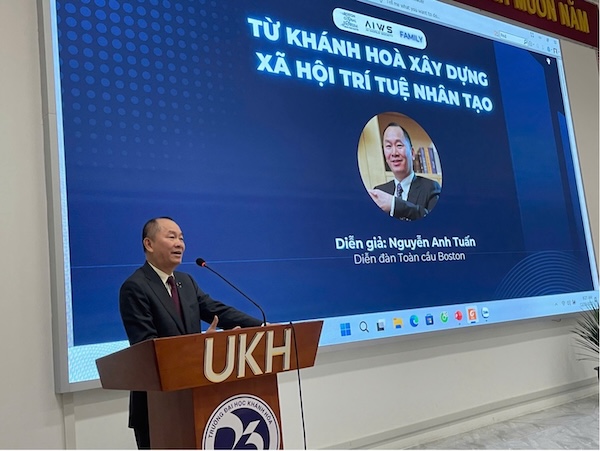
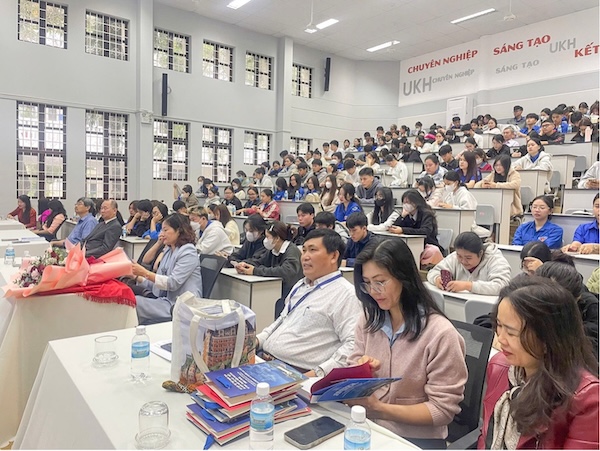
On December 26, 2025, Khanh Hoa University convened a thematic seminar titled “Khanh Hoa Proudly Contributes to Building an Artificial Intelligence Society with the World”—a timely academic forum aligned with national and provincial priorities on science and technology development, innovation, and international integration in education and training. Held in Lecture Hall 1, the event gathered university leadership, heads of training programs, faculty members, and a large number of students to discuss how Khanh Hoa can strengthen its role in shaping an AI-enabled future grounded in knowledge, responsibility, and global cooperation.
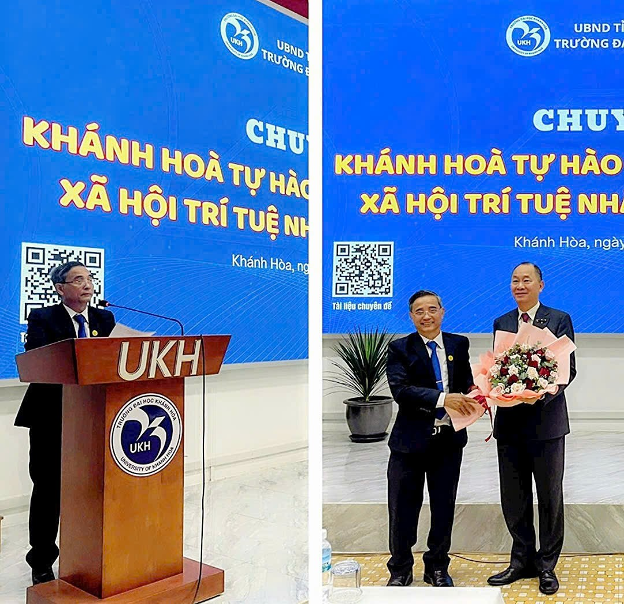
The seminar featured Nguyen Anh Tuan, Co-Founder, Co-Chair, and CEO of the Boston Global Forum (BGF), as the keynote speaker. In opening remarks, Mr. Van Ngoc Sen, Secretary of the Party Committee and Chairman of the University Council, underscored the workshop’s practical significance amid rapid digital transformation and deepening international integration. He reaffirmed Khanh Hoa University’s ambition to become a “smart and green” institution—accelerating digital transformation, promoting scientific research and entrepreneurship, expanding STEM/STEAM education, and strengthening international partnerships to develop high-quality human resources for the Fourth Industrial Revolution.
Highlighting the academic and real-world value of the book “Artificial Intelligence Society: 30 Years of Vietnam–US Partnership, from Nha Trang to Boston (1995–2025)”, Mr. Van Ngoc Sen praised the work for documenting milestones of cooperation while inspiring innovation, creativity, and civic aspiration. He also expressed appreciation for Nguyen Anh Tuan—a son of Khanh Hoa—for connecting global knowledge networks, advancing human-centered AI values, and motivating younger generations to contribute to local development.
Through dialogue and presentations, the seminar aimed to deepen understanding of AI, innovation, and international collaboration, and to encourage faculty and students to engage confidently in Khanh Hoa’s development journey as part of the AI World Society (AIWS) vision. In his remarks, Nguyen Anh Tuan highlighted how Khanh Hoa helped nurture his ideas and talents that later shaped the AI World Society (AIWS) model, and he expressed his deep, enduring gratitude to Nha Trang–Khanh Hoa, his beloved hometown. He emphasized that Khanh Hoa can contribute to the AI Age not only by adopting technology, but also by cultivating talent, strengthening ethical foundations, and building an open, globally connected academic ecosystem.
The seminar concluded with a shared sense of purpose: to promote learning, research, and innovation; to strengthen international cooperation; and to affirm Khanh Hoa University’s role in training high-quality human resources that proactively serve the province’s socio-economic development in the era of digital transformation.
https://ukh.edu.vn/vi-vn/chi-tiet-tin/id/6125/Chuyen-de-Khanh-Hoa-tu-hao-dong-gop-xay-dung-Xa-hoi-tri-tue-Nhan-tao-voi-the-gioi

by Editor BGF | Dec 28, 2025 | Papers & Reports, News
On October 28, 2025, at the historic Raffles London,Vietnam appeared for the first time at the global intellectual dialogue table — not merely as a country adopting technology, but as a nation of ideas, presenting a humanistic vision and a profound aspiration to build a new society in the age of artificial intelligence.
Strategic Partnership for a New Society in the AI Age
Representing the Boston Global Forum (BGF), Nguyen Anh Tuan, Co – Founder and Global Governance Architect, presented three integrated strategic programs designed to support Vietnam’s AI future: AIWS Government 24/7 – a human-centered model for continuous, ethical, and transparent governance in the AI Age; A trustworthy digital asset and innovation economy, grounded in ethical standards, real value, and public trust; A cultural and creative pillar, ensuring that technology advances alongside the human spirit, culture, faith, and moral values.
Together, these pillars reflect a comprehensive vision: AI not as an instrument of control, but as a companion to human dignity, creativity, and peace
Please see full here: http://bostonglobalforum.org/books/BGF-To-Lam_London.pdf
by Editor BGF | Dec 29, 2025 | World Leader for Peace and Security, News
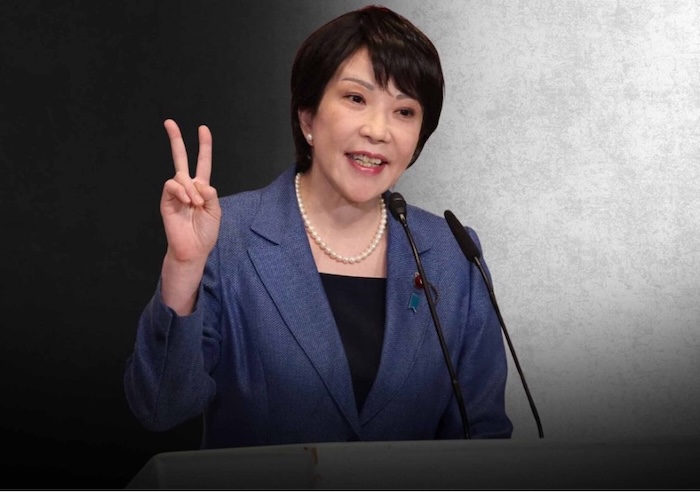
Prime Minister Sanae Takaichi, 2023 World Leader in AIWS Award Recipient, began her New Year holidays on Saturday and is expected to remain on break until Jan. 4.
Takaichi will spend time in Tokyo while planning a move to the prime minister’s official residence at the end of the year. Currently, she resides at the House of Representatives members’ dormitory in Akasaka.
The move to the residence, which is next to the Prime Minister’s Office, is aimed at ensuring that she is prepared to manage a potential crisis.
Takaichi spent her time on Saturday, the first day of her break, at the Diet members’ dormitory.
Although she is taking her holidays, Takaichi is scheduled to attend a year-end ceremony for the Tokyo Stock Exchange on Tuesday as part of her official duties. She will also participate in a ceremony to celebrate the New Year on New Year’s Day at the Imperial Palace, where Imperial family members and the country’s leaders, including the prime minister, will offer New Year’s greetings to the Emperor and Empress.
Takaichi will return to work on Jan. 5 with a visit to Ise Shrine in Ise, Mie Prefecture, where she is scheduled to hold a press conference to kick off the New Year.
Regarding the move, Takaichi wrote on X on Dec. 21, “I would like to move into the official residence soon, leaving behind the familiar housing of the Diet members’ dorm.” In addition, she emphasized that “crisis management is the cardinal point of state management.”
The official residence is just a one-minute walk from the Prime Minister’s Office, where she conducts official duties, giving her the advantages that come with living close to her workplace, including the ability to respond promptly to unforeseen events, such as disasters.
https://japannews.yomiuri.co.jp/politics/politics-government/20251228-301141/
by Editor BGF | Dec 29, 2025 | Shinzo Abe Initiative for Peace and Security, News
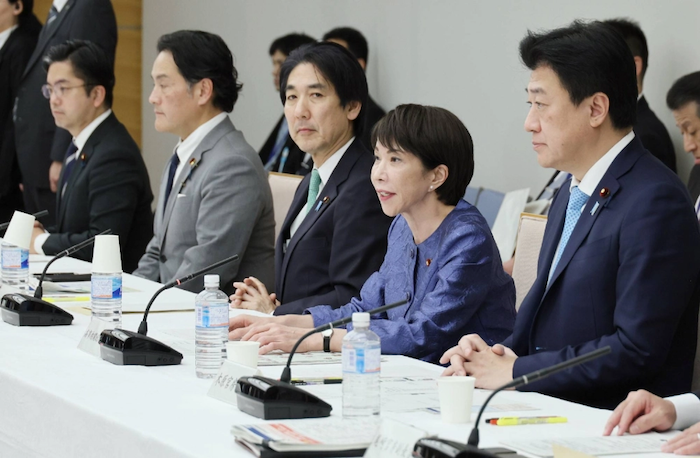
Japan’s government under Prime Minister Sanae Takaichi has launched a major initiative to streamline its administrative architecture by reducing the number of government councils and advisory bodies. The move reflects a broader effort to cut unnecessary bureaucracy and enhance policy efficiency. Japan Times
As of late 2025, the Cabinet Secretariat alone oversaw 88 government councils—up sharply from 39 in January 2015—many of which have become ineffective or dormant. In response, the administration has begun merging and abolishing overlapping councils, especially those created under previous governments that have accumulated without clear performance outcomes. Japan Times
Chief Cabinet Secretary Minoru Kihara has instructed a comprehensive review of these bodies, with an eye toward significant reduction and the possible introduction of a sunset clause to ensure that future councils are automatically dissolved if they fail to meet predefined criteria. Japan Times
This initiative signals a strategic shift toward leaner, more accountable governance—reducing structural inefficiencies and better aligning public institutions with contemporary policy needs. For stakeholders in democratic governance and AI policy, such reforms underscore an emerging trend: the modernization of institutional frameworks in response to rapid technological and socio-economic change.
From the perspective of the AI World Society (AIWS), Japan’s efforts resonate with the broader imperative of ethical and human-centered governance in the AI Age. Simplified, responsive institutional structures are pivotal for governments to effectively adopt advanced technologies, manage digital transformation, and uphold transparency and public trust—principles at the heart of AIWS frameworks.
As nations navigate the opportunities and complexities of the coming decade, Japan’s council reduction initiative may offer valuable insights into how democratic institutions can be reorganized to support strategic agility, civic accountability, and future-oriented policy-making in an era where human and technological capacities must be harmonized.
https://www.japantimes.co.jp/news/2025/12/28/japan/japan-government-councils-reduction/

by Editor BGF | Jan 1, 2026 | News
By Nguyen Anh Tuan
January 1, 2026
Today, on January 1, 2026, we step into a truly special year—one that will mark the 250th anniversary of the United States. This is not only an American celebration. It is a global moment of reflection and renewal.
For 250 years, America has been more than a country. America has been an idea: that freedom, dignity, and self-governance can guide a nation—and inspire the world. Now, as humanity enters the AI Age, the world again looks to the United States—not only for technological leadership, but for moral leadership, democratic renewal, and a human-centered path forward.
That is why the BGF–AIWS Family is dedicating 2026 to the initiative:
America at 250: A Beacon for the AI Age
In this anniversary year, we will advance concrete ideas and solutions—practical models that can help America lead with wisdom, speed, and purpose in a world transformed by AI.
What we will implement in this historic year
1) AIWS Government 24/7 — Democracy that serves continuously
A new architecture for public service and governance: transparent, ethical, efficient, and available to citizens anytime, anywhere—while strengthening trust, accountability, and constitutional safeguards.
2) AIWS Angel — a trusted AI Agent for people and communities
To truly become a beacon, America must not only build powerful AI, but build good AI—AI that uplifts human dignity and strengthens society.
That is why we will develop AIWS Angel, an AI Agent designed to help individuals and communities live better in the AI Age.
AIWS Angel is built to support people in daily life with:
- Kindness, honesty, and loyalty
- Learning and creativity
- Health support for body, mind, and emotions
- Respect for cultures, faiths, and sacred places
- A spirit of compassion, peace, and responsibility
AIWS Angel is a practical instrument to help realize the values and goals of AIWS and the America at 250 Initiative—so that AI becomes a force for joy, meaning, and human flourishing.
3) AIWS Healthcare — whole-person health, supported 24/7
In the AI Age, healthcare must move beyond treating illness to building lifelong well-being. AIWS Healthcare proposes a human-centered model that combines AI-enabled prevention, early detection, and continuous support—while protecting privacy and dignity.
It includes care for physical health, mental health, and emotional well-being, helping people reduce stress, live with purpose, and sustain healthy lives in a fast-changing world.
4) AIWS Education — lifelong learning as joy, not burden
Education is not only a system. It is a way of living. AIWS Education brings learning to people anytime, anywhere, supported 24/7—so that education becomes joyful, game-like, and inspiring rather than stressful or oppressive.
With AIWS Angel as a “good friend” for learning, every person can strengthen skills, creativity, character, and compassion—making lifelong learning a national strength and a democratic foundation.
5) AIWS Culture — the soul of a humane AI civilization
Technology alone cannot define a great society. Culture is the foundation. AIWS Culture seeks to build a beautiful human future in which people choose honesty, kindness, creativity, respect for all nations and faiths, and a life filled with purpose and joy.
It helps reduce hatred, extremism, and division—replacing them with dialogue, empathy, and shared dignity. AIWS Culture is also the spiritual foundation that strengthens AIWS Education and makes AIWS Healthcare truly whole-person and sustainable.
6) Ethical innovation and real value in the digital economy
Through trusted standards for digital assets and responsible innovation ecosystems, we will promote a digital future grounded in transparency, accountability, and real societal value—not speculation, manipulation, or harm.
A new chapter begins
America at 250 should not be only a ceremony. It should be a turning point.
In 2026, the United States has the opportunity to show the world a new model: a nation where AI accelerates progress without sacrificing humanity, where democracy becomes stronger—not weaker—and where technology serves the people.
On this first day of 2026, I send a message of hope and commitment:
Happy New Year, America.
Happy 250th Anniversary.
May the United States become a true beacon for the AI Age.
Nguyen Anh Tuan
Co-Founder, Co-Chair & CEO, Boston Global Forum
Creator of the AI World Society (AIWS)


by Editor BGF | Dec 29, 2025 | News
A Digital Bridge Between Humanity’s Quintessence and the AI Age
BOSTON and HANOI — In a landmark collaboration celebrating the spirit of global enlightenment and the dawn of a new technological era, the Boston Global Forum (BGF) and Tri Thuc Publishing House (NXB Tri Thức) officially announced the launch of Tinhhoa.ai on Christmas Day 2025.
Named “Humanity’s Quintessence” (Tinh Hoa Nhân Loại), the platform is envisioned as a global digital sanctuary preserving and activating humanity’s most profound intellectual achievements for the AI Age. The initiative is launched under the guiding slogan:
“Humanity’s Quintessence for the AI Age.”
Bridging Centuries of Wisdom with Tomorrow’s Technology
As the world enters an era increasingly shaped by artificial intelligence, the founders of Tinhhoa.ai believe that the true source code for a sustainable and humane future lies in the enduring wisdom of humanity’s collective intellectual heritage.
Tri Thuc Publishing House, renowned for its Elite Library of World Knowledge, provides the core content foundation for the platform. This includes masterworks by transformative thinkers such as Francis Bacon, Karl Popper, Thomas Kuhn, and Werner Heisenberg—voices that reshaped humanity’s understanding of science, philosophy, and civilization.
These works are now being thoughtfully integrated into the AI World Society (AIWS) ecosystem developed by BGF, ensuring that next-generation AI systems are rooted in human-centered values, ethical reflection, and intellectual depth.
Key Features of Tinhhoa.ai
The Quintessence Library
A carefully curated digital collection of humanity’s most influential achievements in science, philosophy, economics, and culture. It features works by Nobel laureates and other world-changing thinkers, translated and contextualized for a global audience in the AI Age.
The Quintessence Figures
A living intellectual gallery introducing great thinkers and authors from Tri Thuc Publishing House’s seminal works, alongside distinguished Quintessence Figures of the AI Age—leaders and innovators shaping the moral and intellectual foundations of our time.
The AIWS Quintessence Bot
An advanced AI assistant trained specifically on the Elite Library. The Quintessence Bot enables users to engage in meaningful dialogue with the ideas of humanity’s great minds, transforming classical wisdom into an interactive, reflective, and actionable experience.
Integration with AIWS City
Tinhhoa.ai serves as the intellectual core of AIWS City, a platform dedicated to Real-Value Digital Assets. Through this integration, humanity’s intellectual and cultural achievements are recognized as foundational assets within the emerging digital civilization.
America at 250 – A Beacon for the AI Age
The platform introduces the core values, ideas, and innovations of the “America at 250: A Beacon for the AI Age” initiative and its accompanying book, positioning democratic ideals, ethical governance, and human dignity as enduring forms of global quintessence.
A Gift to the World
The Christmas Day launch symbolizes a shared commitment to offering humanity a gift of lasting value. By grounding the AI Age in humanity’s deepest intellectual and moral achievements, BGF and Tri Thuc Publishing House aim to help build a future defined not merely by technological power, but by wisdom, autonomy, resilience, and enlightenment.
About the Partners
Boston Global Forum (BGF)
A leading international think tank based in Boston and Cambridge, dedicated to advancing the AI World Society (AIWS) and the Social Contract for the AI Age. BGF brings together world leaders, scholars, and innovators to address global challenges through ethical, human-centered innovation.
Tri Thuc Publishing House (NXB Tri Thức)
A premier Vietnamese publisher under the Vietnam Union of Science and Technology Associations (VUSTA), committed to disseminating essential global knowledge and preserving the intellectual heritage of humanity.
For more information, visit tinhhoa.ai
(Version 1.0 coming soon)

by Editor BGF | Dec 29, 2025 | News, Shaping Futures
In 2025, Bitcoin’s journey underscored the growing tension between innovation, risk, and governance in the digital asset world — a lesson with direct resonance for the AI Age.
After reaching a record peak of around $126,000 in October, Bitcoin’s price slid nearly 30% by early December, reflecting familiar market dynamics of rapid rallies followed by sharp corrections. Drivers of the rally included institutional ETF inflows, supply contraction from the halving event, and favorable macroeconomic conditions, while rising U.S. Treasury yields and substantial ETF outflows — including a notable $2.7 billion redemption from BlackRock’s IBIT ETF — applied downward pressure.
Amid this price turbulence, a key theme emerged in 2025: private litigation has stepped in where regulatory enforcement receded. Under the U.S. administration’s lighter enforcement posture, investors increasingly turned to class actions and civil suits against crypto projects — notably alleging misrepresentation and unregistered securities issues in cases involving companies like Unicoin and Gemini. Litigation around influencer marketing and promotional claims also rose sharply, highlighting the need for stronger disclosures and corporate governance.
In contrast to traditional markets, where public enforcement often sets norms, the crypto ecosystem saw private legal action become a central mechanism shaping behavior and accountability. Looking ahead to 2026, analysts expect the market to stabilize structurally rather than soar, as litigation risk and compliance frameworks increasingly define competitive advantage. Reuters
AIWS Insights: Governance, Trust, and Digital Futures
For the AI World Society (AIWS) community, these developments carry several lessons:
- Volatility in digital ecosystems — whether in financial assets or intelligent systems — underscores the importance of robust governance frameworks that balance innovation with stability and public trust.
- Legal and ethical accountability cannot be an afterthought; where public regulation is slow or uneven, civil mechanisms and standards help fill gaps and protect stakeholders, echoing the principles in the AIWS Digital Asset Standards Initiative (DASI).
- As AI and digital asset technologies converge, responsible deployment and clear transparency are essential to ensure technologies serve societal good rather than exacerbate risk or enable misinformation.
In a world where both AI systems and digital markets evolve rapidly, the interplay of risk, accountability, and human-centered governance will shape not just economic outcomes but the broader trust that underpins digital civilization.
https://www.reuters.com/legal/legalindustry/bitcoin-2025-volatility-rise-private-litigation–pracin-2025-12-24/