by Editor BGF | Jun 2, 2025 | World Leader for Peace and Security, News, World Leaders in AIWS Award Updates
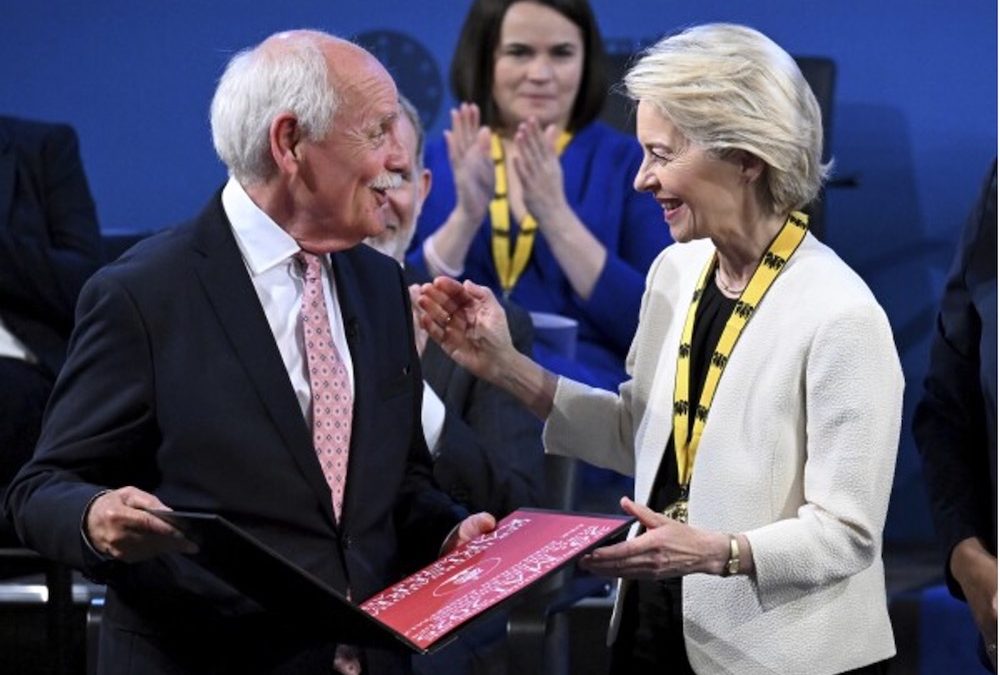
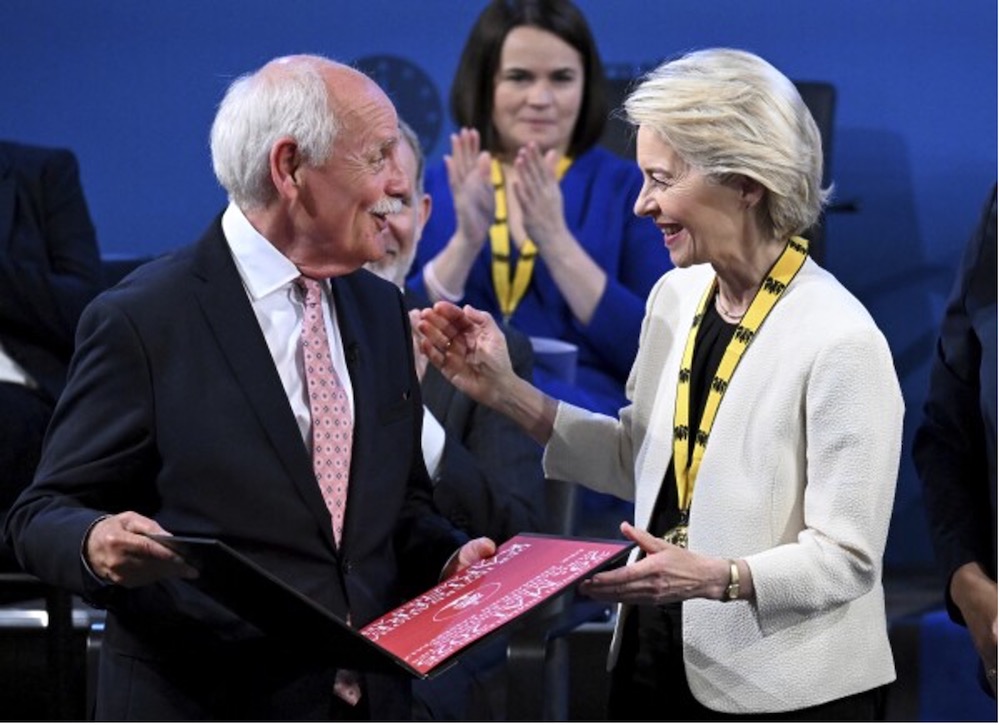
European Commission President Ursula von der Leyen, 2020 World Leader for Peace and Security Award recipient, received the International Charlemagne Prize, an annual award for contributions to European unity, on Thursday as the 27-nation bloc confronts Russia’s war against Ukraine and security issues across the continent.
The European Union’s most high-profile political figure, von der Leyen was called “the embodiment of the European spirit” by King Felipe VI of Spain during Thursday’s ceremony in Aachen, Germany.
Last year, European Parliament lawmakers reelected her to a second five-year term as president of the EU’s powerful executive arm.
The commission proposes legislation for the EU’s 27 member countries — and its 450 million people — and ensures that the rules governing the world’s biggest trading bloc are respected. It’s made up of a College of Commissioners with a range of portfolios similar to those of government ministers, including agriculture, economic, competition, security and migration policy.
https://apnews.com/article/von-der-leyen-international-charlemagne-prize-europe-94c0960aa89bb598464157789e1e7d43
by Editor BGF | Jun 2, 2025 | Global Alliance for Digital Governance
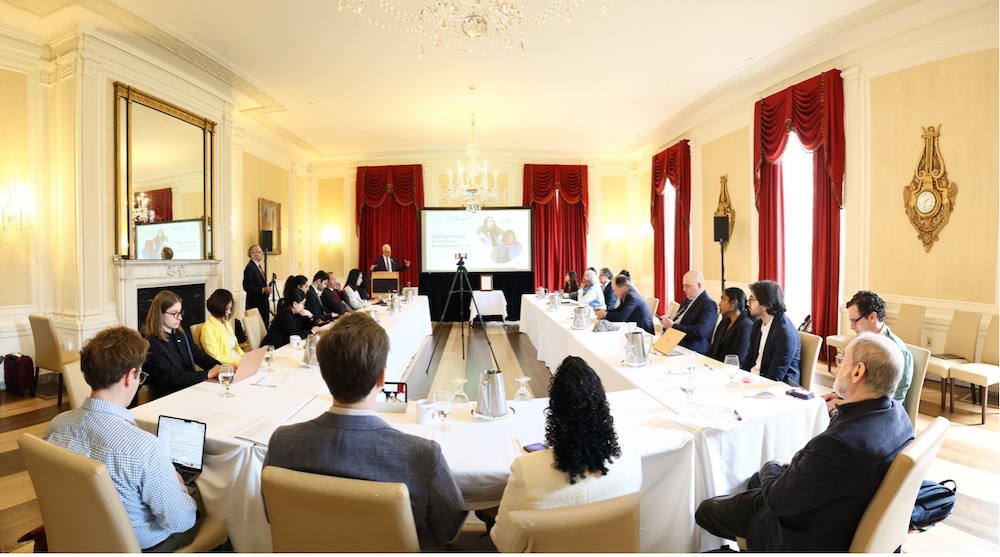
The AIWS Global Blockchain Network (AGBN) serves as the backbone of the AIWS Bank and Finance Ecosystem, transforming global finance with a decentralized, AI-optimized blockchain infrastructure. Launched on May 26, 2025, under the Boston Global Forum (BGF), AGBN aligns with the Boston Finance Accord’s 24/7 AI Governance Vision (April 22, 2025), delivering ethical, transparent, and continuous financial services. Its goal is to span 30 countries by 2028, processing $5 trillion annually by 2030, and providing blockchain-verified digital identities for 500 million unbanked users. Leveraging Hyperledger Fabric, Polkadot interoperability, and a Universal Transaction Layer (UTL), AGBN automates 100 million daily smart contract transactions and ensures carbon-neutral operations by 2027, setting a new benchmark for financial inclusion and efficiency. These innovations will be explored at the Boston Plurality Summit Online on June 9, 2025.
by Editor BGF | May 26, 2025 | News
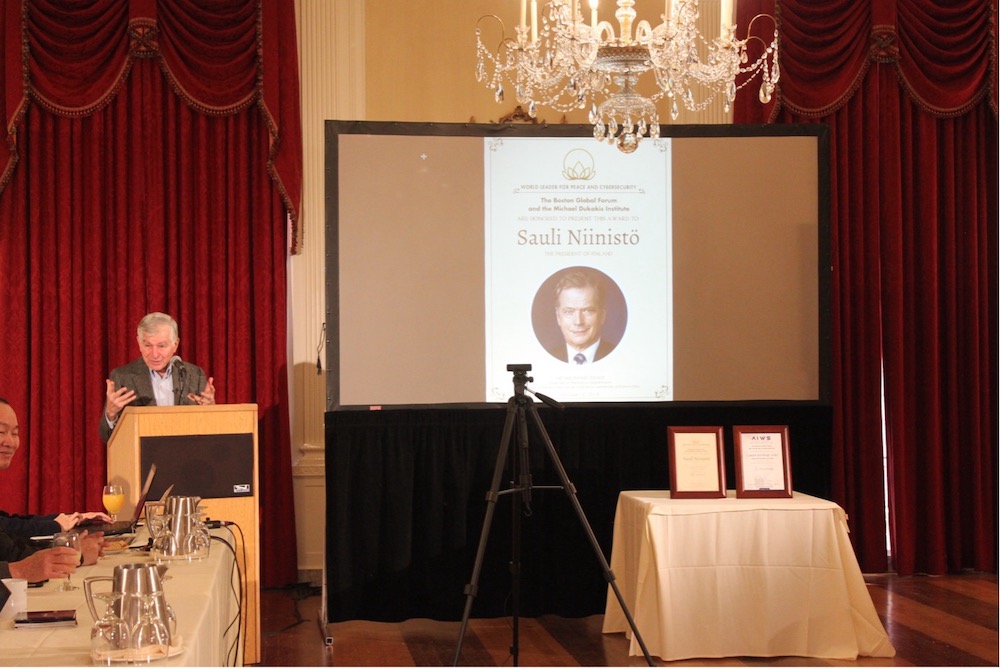
May 27, 2025, 10:00 AM EDT, Boston, MA
Good morning, distinguished guests, colleagues, and friends from around the world,
It is with immense pride and optimism that I stand before you today, on behalf of the Michael Dukakis Institute, the Boston Global Forum, and AI World Society, to announce the launch of the AIWS Bank and Finance Ecosystem—a transformative initiative that marks a new era in global finance, rooted in ethical AI, blockchain innovation, and a deep commitment to humanity.
For decades, we at the Boston Global Forum have worked tirelessly to harness technology for the greater good. From the Social Contract for the AI Age to the AIWS Cinema Summit: Top 100, our mission has been to unite humanity through innovation that is compassionate, transparent, and equitable. Today, we take a monumental step forward with the AIWS Bank and Finance Ecosystem, a global standard financial ecosystem that surpasses existing models in digital and AI-driven finance.
This ecosystem is built on five pioneering components, enhanced by cutting-edge bank features:
- The AIWS AI-Finance Platform (AIFP), which uses quantum AI to ensure financial access for the underserved by 2029. Its blockchain platform meets the standards of top banks, and it introduces open banking APIs, allowing seamless integration with third-party fintechs for personalized financial products, alongside AI-driven virtual assistants for 24/7 customer support.
- The AIWS Global Blockchain Network (AGBN), a decentralized network spanning countries worldwide by 2028. The AGBN meets top blockchain standards and offers embedded finance solutions, integrating financial services into non-financial platforms like AIWS City, with real-time transaction monitoring via AI.
- The AIWS Ethical Finance Charter (AEFC), which ensures fairness in AI decisions and mandates carbon-neutral crypto operations by 2027, embodying our principles of transparency and equity, and now includes green banking initiatives with eco-friendly loans and biodiversity credits.
- The AIWS Digital Asset and Crypto Hub (ADACH), a marketplace for Bitcoin, CBDCs, and NFTs, enhanced by tokenized securities for social impact investments.
- The AIWS Investor and Innovation Network (AIIN), connecting global investors with projects, now featuring a platformization model where partners co-create financial and non-financial services, reducing development cycles significantly.
I am particularly proud to remind everyone of the Boston Finance Accord for AI Governance 24/7, a cornerstone of our work at BGF, which ensures that AI in finance operates with ethical oversight around the clock. The AIWS Bank fully integrates this accord, ensuring that every transaction, decision, and innovation aligns with our commitment to ethical governance, protecting users worldwide while fostering trust and inclusion.
Our leadership team, co-chaired by myself and Nguyen Anh Tuan, with many others, alongside our colleagues at BGF, AIWS, and the Boston Finance Accord for AI Governance 24/7. Together, we will steer this ecosystem to establish AIWS Bank as the foremost leader in digital and AI-driven finance.
We invite you to join us at the AIWS Cinema Summit: Top 100 on January 9, 2026, in Boston and Nha Trang, to witness our progress and explore partnership opportunities. This is not just a financial ecosystem—it is a movement to ensure that technology serves humanity with compassion, integrity, and innovation.
Thank you for joining us on this historic day. Together, let us build a future where finance unites us all.

by Editor BGF | May 26, 2025 | World Leader for Peace and Security, News, World Leaders in AIWS Award Updates
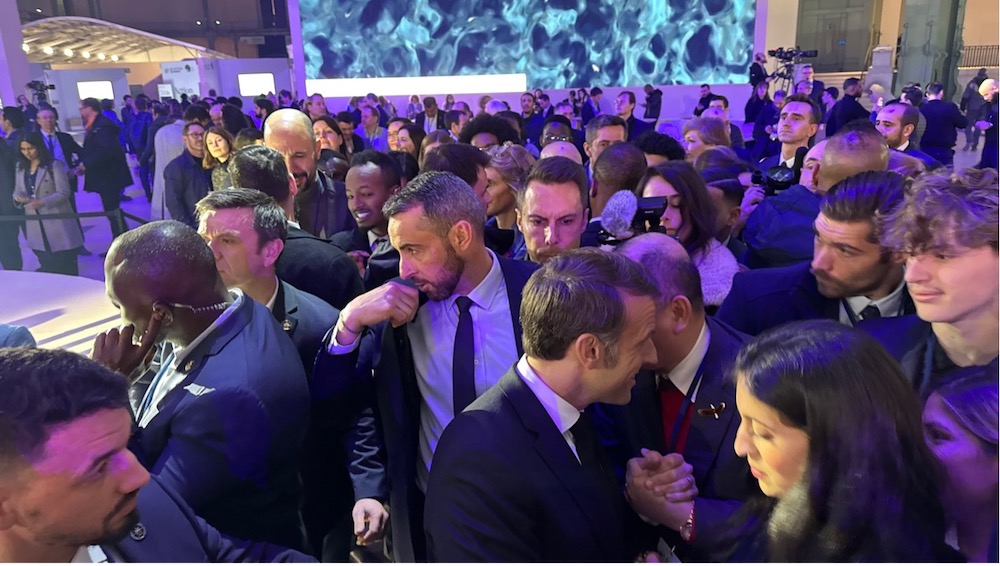
French President Emmanuel Macron said on Sunday that he hoped to strike deals for France in areas such as defence, energy and tech innovation, as he arrived in Vietnam for the start of a roughly week-long trip in Asia.
Macron arrived in Hanoi on Sunday, marking the first trip to Vietnam by a French president in nearly a decade.
After Vietnam, Macron will then go to Indonesia and finish up in Singapore, where he will speak at the annual Shangri-La Dialogue, Asia’s top defence conference.
The Boston Global Forum (BGF) honored President Emmanuel Macron with the 2024 World Leader for Peace and Security Award and presented a special tribute titled “Creating a New Paris of Enlightenment” to President Macron and the people of France—a strategic initiative to position France at the forefront of the AI era—at the AI Action Summit in Paris, held on February 10–11, 2025.
https://www.reuters.com/world/asia-pacific/french-president-macron-hopes-defence-energy-tech-deals-he-starts-asia-trip-2025-05-25/


by Editor BGF | May 26, 2025 | News
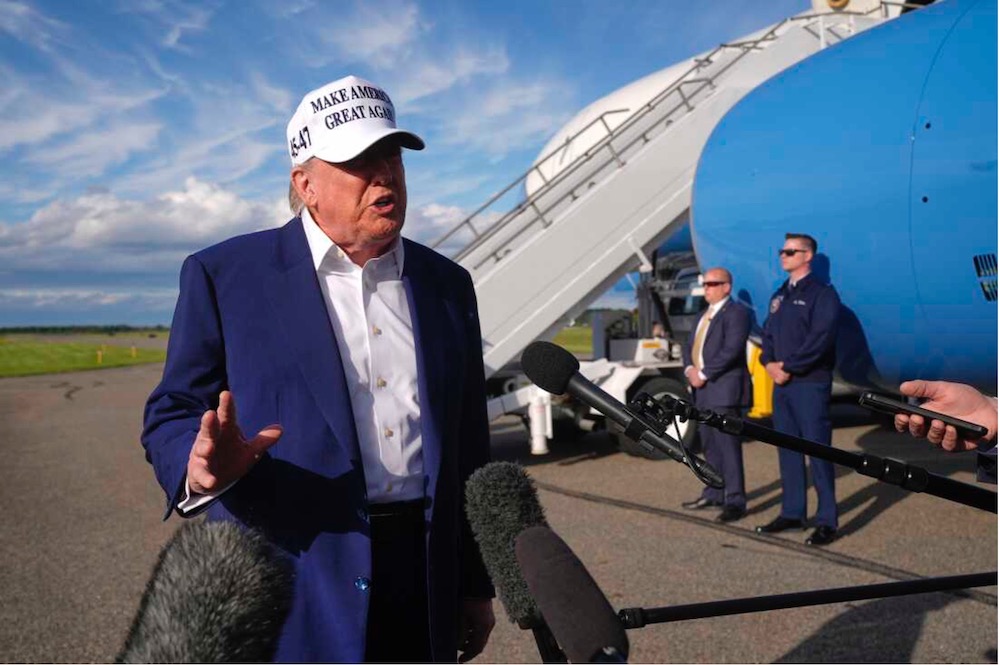
President Donald Trump said Sunday that the U.S. will delay implementation of a 50% tariff on goods from the European Union from June 1 until July 9 to buy time for negotiations with the bloc.
That agreement came after a call Sunday with Ursula von der Leyen, the president of the European Commission, who had told Trump that she “wants to get down to serious negotiations,” according to the U.S. president’s retelling.
“I told anybody that would listen, they have to do that,” Trump told reporters on Sunday in Morristown, New Jersey, as he prepared to return to Washington. Von der Leyen, Trump said, vowed to “rapidly get together and see if we can work something out.”
In a social media post Friday, Trump had threatened to impose the 50% tariff on EU goods, complaining that the 27-member bloc had been “very difficult to deal with” on trade and that negotiations were “going nowhere.” Those tariffs would have kicked in starting June 1.
https://apnews.com/article/donald-trump-trade-tariffs-european-union-f335ba9aa9d0b36cfe483f6f045c9b01
by Editor BGF | May 26, 2025 | Shinzo Abe Initiative for Peace and Security, News
Nation’s quiet adoption of tech-enabled participation can show a new way forward
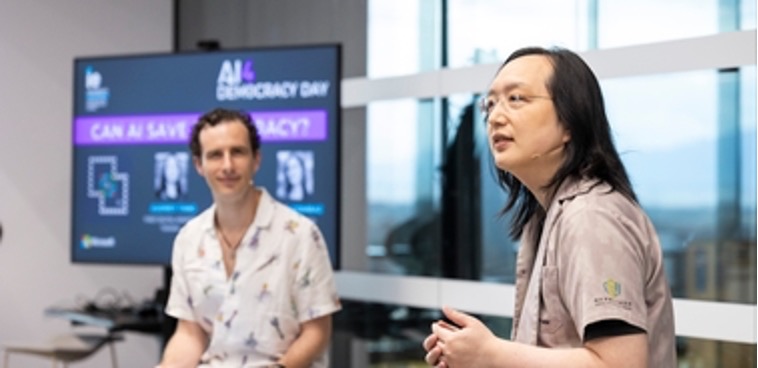
- Glen Weyl is founder of the RadicalxChange Foundation and the Plurality Institute. Audrey Tang is Taiwan’s cyber-ambassador and the former first minister of digital affairs of Taiwan. Weyl and Tang co-authored the newly released in Japanese book “Plurality: The Future of Collaborative Technology and Democracy.”
The global order is undergoing its most profound transformation since the end of World War II. A retreat by the U.S. from its traditional role as a champion of liberal democracy and international cooperation, combined with disruptive economic realignments and the rapid rise of artificial intelligence, signals a seismic shift.
https://asia.nikkei.com/Opinion/Japan-can-be-a-beacon-of-pluralistic-innovation-and-democratic-renewal

by Editor BGF | May 26, 2025 | News, Shaping Futures
This new machine-learning model can match corresponding audio and visual data, which could someday help robots interact in the real world.
“We are building AI systems that can process the world like humans do, in terms of having both audio and visual information coming in at once and being able to seamlessly process both modalities. Looking forward, if we can integrate this audio-visual technology into some of the tools we use on a daily basis, like large language models, it could open up a lot of new applications,” says Andrew Rouditchenko, an MIT graduate student and co-author of a paper on this research.
A new approach developed by researchers from MIT and elsewhere improves an AI model’s ability to learn in this same fashion. This could be useful in applications such as journalism and film production, where the model could help with curating multimodal content through automatic video and audio retrieval.
https://news.mit.edu/2025/ai-learns-how-vision-and-sound-are-connected-without-human-intervention-0522
by Editor BGF | May 26, 2025 | News
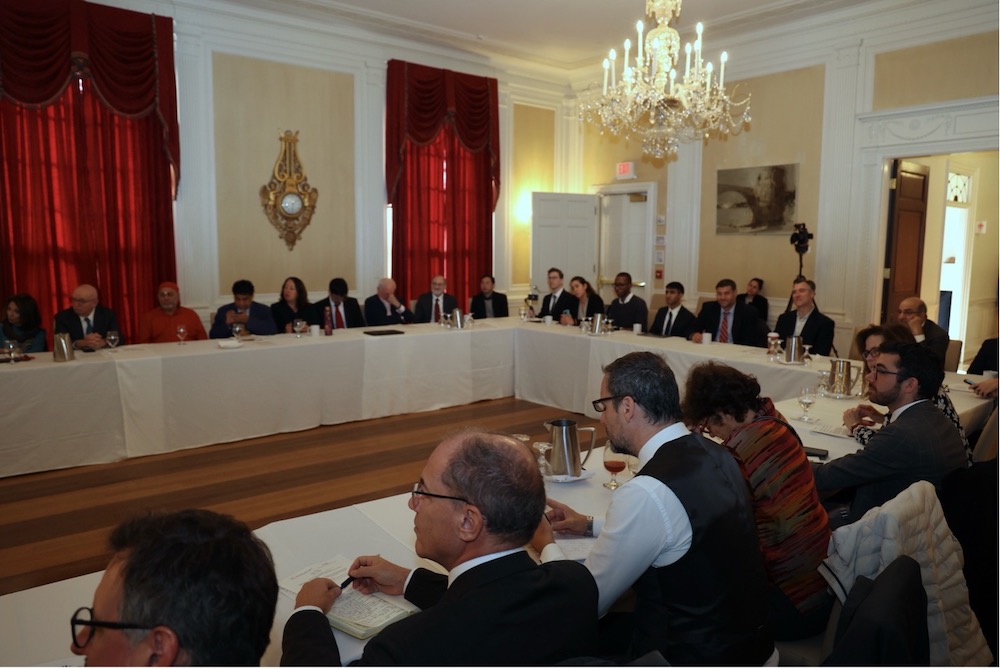
Launched on May 27, 2025, under Governor Michael Dukakis and Nguyen Anh Tuan of the Boston Global Forum (BGF), the AIWS Bank and Finance Ecosystem Model marks a historic leap in AI-driven banking. Rooted in the Boston Finance Accord’s 24/7 AI Governance Vision (April 22, 2025), it redefines finance with ethical AI and blockchain. Key components include the AIWS AI-Finance Platform (quantum AI for Bitcoin predictions), Global Blockchain Network (Universal Transaction Layer), Ethical Finance Charter (99% fair with Social Impact Score), Digital Asset Hub (Cultural Asset Tokenization Exchange), and Investor Network (AI-Driven Impact Predictor). Pioneering features like the Universal Financial Passport (streamlining global access), Predictive Charity Engine (automating aid), and Quantum-Powered Wealth Redistribution Model (reducing inequality) set a new standard, aiming to serve 1billion users by 2030.
by Editor BGF | May 26, 2025 | Global Alliance for Digital Governance
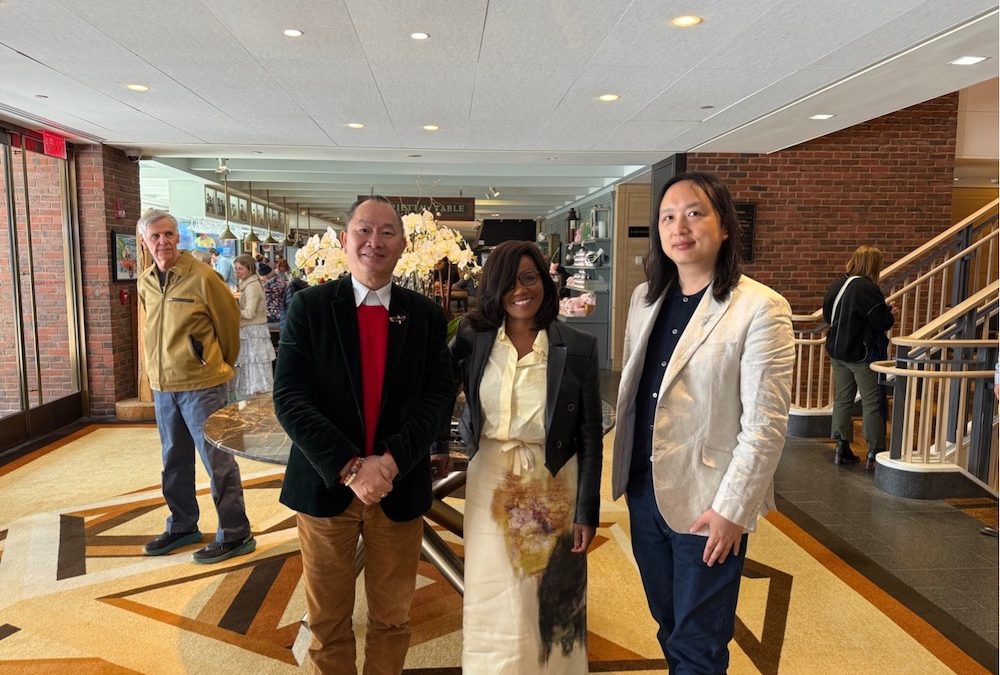
A transformative financial initiative is taking shape in Boston, driven by the upcoming Boston Plurality Summit on June 9, 2025, at 8:00 AM EDT. The summit will explore “Pioneering Bank and Finance Ecosystem Model for the Boston Finance Accord’s 24/7 AI Governance Vision,” redefining banking with ethical AI and continuous governance.
Launched on April 22, 2025, at Harvard University’s Loeb House by the Boston Global Forum (BGF), the Boston Finance Accord sets a global standard for AI-driven finance, emphasizing 24/7 operations, transparency, and citizen empowerment. This vision has inspired the AIWS Bank model, led by BGF Co-Chairs Governor Michael Dukakis and Nguyen Anh Tuan.
AIWS Bank features cutting-edge components: the AIWS AI-Finance Platform (AIFP) for predictive analytics, the AIWS Global Blockchain Network (AGBN) for zero-latency payments, the AIWS Digital Asset and Crypto Hub (ADACH) with a Cultural Asset Tokenization Exchange (CATE) for AIWS Top 100 films, the AIWS Ethical Finance Charter (AEFC) with a Social Impact Score (SIS), and the AIWS Investor and Innovation Network (AIIN) with an AI-Driven Impact Investment Predictor (IIP). A new highlight is the AIWS Universal Financial Passport (UFP), streamlining financial access.
The June 9 summit will feature luminaries including Elisabeth Moreno (Chairwoman, Ring Capital), Yasuhide Nakayama (Board Member, Chartered Group), E. Glen Weyl (economist), Audrey Tang (Taiwan’s Digital Minister), Nguyen Anh Tuan, and Koji Fusa (GVE), discussing alignment with the Accord’s 24/7 governance model.
“AIWS Bank is a movement to harness AI and blockchain for humanity,” said Nguyen Anh Tuan. “With the Accord as our guide, we’re building an ethical, inclusive financial future.”