Representative of the Boston Global Forum for France and Africa
The 4th Shinzo Abe Conference
The Okura Tokyo, March 28, 2025
Ladies and gentlemen,
Distinguished guests,
Dear partners and friends from across the globe,
It is both an honor and a responsibility to speak to you today—as the representative of the Boston Global Forum for France and Africa—on this historic occasion, at the heart of Tokyo, at the close of the 4th Shinzo Abe Conference.
Although I join you from a distance, my voice carries with it the aspirations of two continents—Europe and Africa—united by a shared belief: that technology must serve people, not the other way around.
Prime Minister Shinzo Abe understood this better than most.
He envisioned a hope-driven economy, where innovation was not just a tool for growth—but a catalyst for stability, dignity, and democratic resilience.
Today, we gather to build on his legacy through the bold vision of Government 24/7: AI and Finance Platforms.
This is not just about digitizing public services.
It is about reimagining governance.
It is about creating governments that are responsive, resilient, and relentlessly human.
Because no citizen should ever be told:
“Come back tomorrow.”
Not when their rights, their health, or their future is at stake.
And certainly not when technology allows us to respond instantly, equitably, and transparently.
The AIWS Government 24/7 platform embodies this vision:
A public finance system that never sleeps—designed to empower governments and uplift citizens.
A platform where AI supports tax services, benefits distribution, fraud detection, and even personalized financial planning—not just for the privileged few, but for every citizen, including those historically excluded.
As a woman who was born in Africa, raised in Europe, and who has served in the highest levels of government and business, I can tell you this:
Digital transformation without inclusion is just another form of exclusion.
We cannot build Government 24/7 unless we build trust 24/7.
Trust in AI.
Trust in institutions.
Trust in one another.
That is why ethics must be the backbone of this transformation:
Transparency, so that every decision is open and auditable.
Accountability, so that algorithms do not replace judgment, but assist it.
Equity, so that even the most vulnerable—on every continent—are not left behind.
And sustainability, because our financial systems must serve future generations, not just quarterly results.
This is especially urgent for Africa, a continent full of youth, energy, and untapped potential.
AI and finance platforms can unlock unprecedented opportunities—but only if we design them to be inclusive by default.
And as we design the future, let us not forget the lessons of the past.
It was once said—by Nobel laureate Henry Kissinger:
“Who controls the food supply controls the people; who controls the energy can control whole continents; who controls money can control the world.”
But today, we must go beyond control.
In an era of AI and global interdependence, the question is no longer who controls— but rather, who takes responsibility.
Responsibility to empower, not dominate.
To serve, not surveil.
To unite, not divide.
Because the true power of technology lies not in what it can do, but in what we choose to do with it.
As Shinzo Abe once said:
“The future is not something we enter. It is something we create.”
Let us create it—together—with courage, clarity, and care.
Let us build a Government 24/7 that reflects not only the power of AI, but the best of our humanity.
Distinguished guests, honorable leaders, and dear friends,
As we draw this remarkable day to a close, I am filled with gratitude and inspiration. The 4th Shinzo Abe Conference has been a profound gathering—a testament to the enduring legacy of a great leader, Shinzo Abe, and a powerful step forward in our shared journey toward a more peaceful, secure, and prosperous world. I want to thank each of you—government leaders, scholars, innovators, and students—for your thoughtful contributions, your insightful discussions, and your unwavering commitment to the ideals we hold dear.
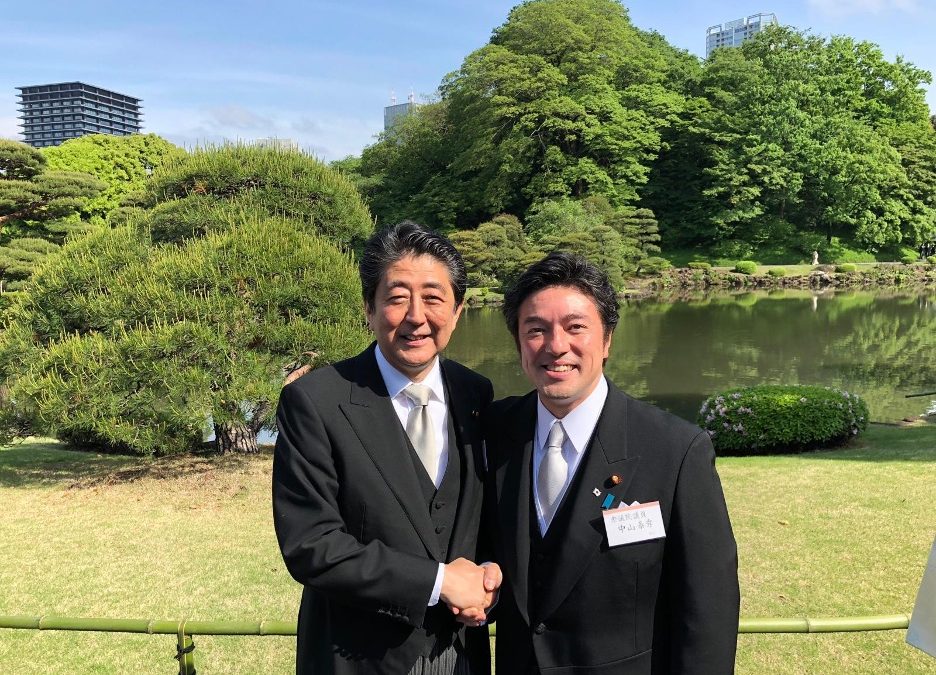
I also want to express my heartfelt appreciation to Yasuhide Nakayama, Representative of BGF in Japan and Taiwan, who set up a great program for me to visit and discuss with Japanese government leaders, business leaders, distinguished scholars, and outstanding students. It has truly been an amazing Japan trip for me, one that has deepened my understanding of Japan’s vital role in our global mission and strengthened the bonds between our nations.
Today, we have celebrated the realization of the AI World Society—AIWS—and its transformative vision of AIWS Government 24/7. We have explored how this framework can redefine governance, making it responsive, transparent, and accessible 24 hours a day, 7 days a week, empowering citizens to shape their societies in real time. Through our discussions, we have seen how AI, digital tools, and quantum computing can serve as partners in this endeavor, ensuring that governments not only meet the needs of their people but also contribute to global peace and stability, just as Shinzo Abe envisioned.
A highlight of this conference has been the unveiling of the Tokyo Accord for Government 24/7: AI and Finance Platforms, which includes the groundbreaking Abe Financial AI Protocol. This accord is more than a document—it is a commitment to harness AI and finance platforms for the betterment of governance and society, rooted in Abe’s vision of strength, compassion, and foresight. The Abe Financial AI Protocol, with its focus on transparency, fraud detection, and sustainable economic growth, positions Japan as a global leader in ethical AI and financial reform. I am deeply grateful to Minister Minoru Kiuchi, Yasuhide Nakayama, and all our distinguished participants—Kano Takehiro, Matsuo Yutaka, Elisabeth Moreno, Alex Pentland, Audrey Tang, Yano Kazuo, and Governor Michael Dukakis—for your leadership and insights that have shaped this historic moment.
Our discussions today have also laid the foundation for the next steps in our journey. The outcomes of this conference will be brought to the BGF Conference at Harvard University Loeb House on April 22, 2025, where we will build on the Tokyo Accord to develop the Boston Finance Framework for Governance 24/7. This framework will further advance our shared vision for AI-driven governance and global enlightenment, ensuring that the momentum we have created here in Tokyo continues to inspire and shape the future. I look forward to seeing many of you there as we continue this important work together.
As I reflect on today, I am reminded of Shinzo Abe’s words and actions—his dedication to peace, his passion for innovation, and his belief in the power of collaboration. He showed us that true leadership is about building bridges, not walls; about serving humanity with humility and vision. Let us honor his living legacy by carrying forward the spirit of this conference—by working together to make AIWS Government 24/7 a reality, not just in Japan, but across the world. Let us create a future where every citizen’s voice is heard, where technology serves the greater good, and where peace and prosperity are shared by all. We will take action together, and our next conferences will be geared toward actionable outcomes, ensuring that our shared vision translates into tangible impact for societies worldwide.
I leave you with a heartfelt thank you for your partnership and a renewed call to action. Let us continue this journey with the same courage, determination, and hope that Shinzo Abe embodied. Together, we can build a world that reflects his dream—a world where governance is a force for unity, innovation, and peace, every hour of every day.
Thank you, and I look forward to our continued collaboration.
Remarks by Nguyen Anh Tuan, Co-Chair and CEO of the Boston Global Forum, at the 4th Shinzo Abe Conference, Tokyo, March 28, 2025
Good morning, distinguished guests, honorable leaders, and friends.
It is a profound privilege to stand before you today at the 4th Shinzo Abe Conference in Tokyo. I am so moved with this gathering amid the beauty of the Cherry Blossom season, a fitting tribute to a remarkable legacy. I bring warm greetings from Governor Michael Dukakis and the Boston Global Forum, and I am deeply honored to join you in person to advance a shared vision for a better world.
I would also like to extend a special welcome to Minister Minoru Kiuchi, Japan’s Minister of State for Science and Technology Policy, whose leadership in driving innovation and technological progress is invaluable to our discussions today. Your presence, Minister Kiuchi, underscores Japan’s pivotal role in shaping the future we are building together.
Today, we celebrate the realization of the AI World Society—AIWS—a concept that has grown from an idea into a transformative force. At its heart lies one of its most vital components: AIWS Government 24/7. This framework represents a bold step forward in how we govern, leveraging artificial intelligence to create systems that are responsive, efficient, and humane—available to citizens around the clock. AIWS Government 24/7 is designed to serve citizens 24 hours a day, 7 days a week, ensuring that government is always accessible, whether for addressing urgent needs, delivering services, or providing information. More than that, it empowers citizens to contribute directly to governance—through feedback, ideas, and participation—making it a system truly of the citizens, for the citizens, by the citizens. With AI as a partner, citizens can propose policies, monitor progress, and shape decisions, ensuring that government reflects their voices and aspirations in real time.
We gather here to honor a great leader and wonderful friend of the Boston Global Forum, Shinzo Abe, whose legacy inspires us all. Prime Minister Abe made Japan strong—not just for its own people, but as a contributor to global peace and security. His leadership built a robust government that served the Japanese people with dedication and elevated Japan’s role on the world stage. His commitment to innovation and stability laid the foundation for the ideas we discuss today, and Minister Kiuchi’s work in science and technology continues to build on that legacy, driving Japan toward a future where technology serves humanity. Shinzo Abe was recognized as the World Leader for Peace and Security, and this conference continues to honor him with that distinction. I feel deeply that Shinzo Abe is still alive with us—he is here with us today, accompanying us through the spirit of AIWS Government 24/7, a vision that embodies his ideals of service, strength, and peace.
The world today stands at a crossroads. Governments must reform to meet the challenges of a rapidly changing landscape—technological, economic, and social. This need for transformation is why we introduced AIWS Government 24/7. This initiative was first announced on November 25, 2024, at Harvard University’s Loeb House during a ceremony to honor President Emmanuel Macron with the 2024 World Leader for Peace and Security Award. It was further presented and discussed at the AI Action Summit in Paris, where it emerged as a key component of “Creating a New Paris of Enlightenment”—a special tribute to President Macron and the people of France on February 11, 2025. Now, we bring this vision to Tokyo, building on Shinzo Abe’s legacy.
AIWS Government 24/7 offers Japan an opportunity to become even stronger, more effective, and more humane. By embracing this model, Japan can lead the way in continuous governance—ensuring that its systems not only serve its citizens but also contribute to a more peaceful and secure world, just as Prime Minister Abe envisioned. Imagine a government that never sleeps: citizens can access services at any hour, report issues instantly, and see their contributions shape policy—all facilitated by AI, digital tools, and quantum computing. This is a government where every voice matters, where citizens are not just recipients but active builders of their society.
Today, we will focus on a critical topic: “Government 24/7: AI and Finance Platforms.” We are constructing a finance platform that will innovate and reform financial systems using AI, digital tools, and quantum computing. A cornerstone of this effort is the Abe Financial AI Protocol, which leverages machine learning to ensure transparency, detect fraud, and promote sustainable economic growth in real time. This platform ensures efficiency, resilience, and ethical advancement, integrating seamlessly with continuous governance. Building on Shinzo Abe’s legacy of innovation and stability, this framework positions Japan as a global leader in ethical AI and economic progress.
And now, I am thrilled to announce a landmark moment. Here at the 4th Shinzo Abe Conference, we will discuss and unveil the “Tokyo Accord for Government 24/7: AI and Finance Platforms,” which includes the Abe Financial AI Protocol as a key component. This accord represents a commitment to harness AI and finance platforms for the betterment of governance and society. It is a call to action—rooted in Abe’s vision—to create systems that serve humanity with strength, compassion, and foresight. Together, with leaders like Minister Kiuchi guiding the way in science and technology, we will explore its principles and chart the path forward.
The discussions and outcomes of the 4th Shinzo Abe Conference will be brought to and are fundamental for the BGF Conference at Harvard University Loeb House on April 22, 2025. There, we will build on the Tokyo Accord, further advancing our shared vision for AI-driven governance and global enlightenment, ensuring that the momentum we create here in Tokyo continues to inspire and shape the future: Boston Finance Framework for Governance 24/7.
Shinzo Abe showed us what strong leadership can achieve. Let us honor him by building on his foundation—making Japan a beacon of innovation and humanity through AIWS Government 24/7 and the Tokyo Accord. I invite you all—government leaders, scholars, innovators, and students—to join us in this endeavor. Together, we can realize a future that reflects his dream: a world of peace, security, and shared prosperity, where citizens are at the heart of governance every hour of every day, and where Shinzo Abe’s spirit continues to guide us.
Today, the world stands at the beginning of an era unlike any before―a time of tremendous technological change. Among these changes, artificial intelligence (AI) is already transforming how our economies and societies function, and the financial world is no exception.
We must guide this transformation so that it leads to prosperity and safety for all people. The proposal I present today―the Abe Financial AI Protocol―is a framework inspired by the vision and values of the late Prime Minister Shinzo Abe. It provides direction for how financial systems should operate in the age of AI.
Prime Minister Abe always based his policies on universal values: freedom, democracy, the rule of law, and human dignity. The Abe Financial AI Protocol is also built on these principles. It aims to create a financial system that is open and secure, where trust and transparency support innovation. This protocol reflects the idea of “Society 5.0”― a society where technology serves people―and embraces the concept of “Data Free Flow with Trust (DFFT),” which Japan has championed on the global stage.
With these frameworks, we seek to make sure AI brings benefits to many, while protecting human rights and dignity.
Prime Minister Abe often said, “Without economic revitalization, there can be neither national prosperity nor national security.” This belief is at the heart of the economic strategy behind this protocol. By using financial technologies (fintech) and AI, we can drive economic growth, improve financial services, and create new industries. In doing so, we can once again revitalize Japan’s economy and tackle long-term challenges such as our aging population. These efforts carry forward the spirit of Abenomics―a policy focused on inclusive growth that reaches all citizens.
At the same time, innovation must always go hand-in-hand with safety and security. In the financial world, the misuse of AI can pose serious threats―from destabilizing the economy to disrupting daily life.
We must protect society against AI-driven financial crimes, cyberattacks on infrastructure, and the harmful use of new technologies. Just as Prime Minister Abe strengthened Japan’s national security under the idea of “Proactive Contribution to Peace,” this protocol places great importance on defending our financial systems in the AI era. We must update legal frameworks, ensure transparency in algorithms, and give our regulators and law enforcement the tools they need to keep us safe.
In addition, allow me to speak from the perspective of a politician. Japan once achieved remarkable postwar recovery and high economic growth as a nation built on “processing trade.”
With few natural resources, Japan’s greatest asset has always been its people. Under a fixed exchange rate of 360 yen to the US dollar, our country leveraged human talent and technological skill to open new markets and compete on the global stage.
Today, however, we face a new set of challenges―population decline, a low birthrate, and an aging society. We must not cling to past successes, but instead develop new strategies for sustainable growth. The keys to this will be greater productivity and stronger international technological cooperation.
In particular, we should pay close attention to Israel, a nation involved in some form with roughly 70% of the world’s startups. Their strength lies in creating “0 to 1” innovations―groundbreaking ideas that are then absorbed by Silicon Valley and global tech giants like GAFA (Google, Apple, Facebook, and Amazon), leading to worldwide success.
Japan, too, must import such deep technologies from Israel and other innovative ecosystems, refine and commercialize them at home, and export them to the world as “Made in Japan” products. In this way, we can rebuild ourselves as a 21st-century processing trade nation. Japan has the discernment―the “mind’s eye”―to distinguish what is genuine. With this, we can form partnerships with global startups and implement a national strategy focused on enhancing productivity.
Just yesterday, I received a presentation from the Dean of the School of Science and Engineering at Waseda University and several student entrepreneurs. I strongly felt that Japan’s younger generation is filled with promise. The technologies they are creating―from zero to one―will surely be commercialized and implemented in society very soon. And yet, I couldn’t help but think how unfortunate it would be to waste the time between now and then.
We must also learn from the world, bring in the best ideas, and work together with countries and organizations that can offer synergy.
Let us not be distracted by political conflicts. Instead, let us keep our focus on what truly matters. Let us set clear national goals and build a new future―together.
In closing, I would like to express my heartfelt gratitude to all of you who have gathered here today and to everyone who actively participated in our discussions. I offer my deepest respect and appreciation to Governor Michael Dukakis and Mr. Nguyen Anh Tuan for their outstanding leadership of the Boston Global Forum and their tireless efforts in organizing this event. I also extend my sincere thanks to Ms. Nobue Mita, Special Assistant to the Chairman of the Boston Global Forum, for her invaluable support in advancing this protocol and in preparing this important conference.
Opening Remarks of Governor Michael Dukakis at the 4th Shinzo Abe Conference, March 28, 2025
Good morning, distinguished guests, friends, and colleagues. It is an honor to address you today at the 4th Shinzo Abe Conference. I regret that I cannot join you in person in Tokyo, but I am with you in spirit, and I am delighted that Nguyen Anh Tuan, Co-Chair and CEO of the Boston Global Forum, is there to represent us and engage with you directly. I would also like to extend a warm greeting to Minoru Kiuchi, Japan’s Minister of State for Science and Technology Policy, who joins us as a distinguished speaker today. Your leadership in advancing science and technology is vital to the conversations we are having here, and we are grateful for your presence.
We gather today to celebrate the legacy of a truly remarkable leader, Shinzo Abe. Prime Minister Abe was not only a visionary statesman but also a great friend of the Boston Global Forum. His dedication to peace, security, and global cooperation earned him the prestigious World Leader for Peace and Security Award—an honor that reflects his extraordinary contributions to making our world a better place. His leadership continues to inspire us, and this conference stands as a testament to his enduring impact.
Today, we find ourselves at a pivotal moment. The world is changing rapidly, driven by the transformative power of artificial intelligence. This revolution touches every aspect of our lives—how we work, how we connect, how we govern. With such profound change comes a critical responsibility for governments to adapt, to reform, and to reimagine how we serve our citizens. Our mission is clear: to harness these advancements to make our people happier, our societies more peaceful, and our world safer. This is not just an opportunity—it is an urgent necessity.
At this very important moment, we must commit to building a better world together. One promising solution lies in the concept of the AI World Society Government 24/7—an innovative framework that leverages AI to enhance governance, ensuring it is responsive, transparent, and accessible around the clock. This vision aligns with the values Shinzo Abe championed: progress, stability, and a deep commitment to the well-being of all. I invite you—leaders, thinkers, and innovators—to join us in building AIWS Government 24/7, a model for the future that can reshape how we lead and serve.
While I cannot be with you in Tokyo, I am thrilled that Nguyen Anh Tuan will carry this message forward. His presence at this conference highlights a significant trip to Japan, which began on March 24, 2025, during which he has engaged with government leaders, business visionaries, distinguished scholars, and outstanding students, as well as participated in key political events. The mission of his trip is to advance the AIWS and Shinzo Abe Initiative, fostering deeper connections between Japan and the United States, and amplifying Japan’s vital role on the global stage through the AIWS Government 24/7 initiative.
Let us seize this moment to honor Shinzo Abe’s legacy—not just with words, but with action. Together, we can forge a future that reflects his vision: a world of peace, security, and shared prosperity. I am confident that, with your leadership and collaboration—including the insights of Minister Kiuchi and so many others here—we will succeed. Thank you for your dedication, your ideas, and your partnership. Let us move forward with purpose and unity to create the future our citizens deserve.
The 4th Shinzo Abe Conference, held at The Okura Tokyo and hosted by the Boston Global Forum (BGF) under the theme “Government 24/7: AI and Finance Platforms,” will conclude with the groundbreaking Tokyo Accord for Government 24/7: AI and Finance Platforms. “Government 24/7: AI and Finance Platforms” envisions a future where artificial intelligence (AI) powers a platform to assist government work and serve citizens 24 hours a day, 7 days a week, while a finance platform, also operating 24/7, supports public services and citizens. This finance platform will innovate and reform financial systems using AI, digital tools, and quantum computing, ensuring efficiency and resilience. Building on Shinzo Abe’s legacy of innovation and stability, this pioneering framework harnesses AI platforms for continuous governance and integrates financial systems, positioning Japan as a leader in ethical AI and economic advancement.
Speakers (by Alphabet):
Dukakis, Michael, Former Governor of Massachusetts, Co-Founder and Co-Chair of Boston Global Forum
Jonen, Tsukasa, Economic Commentator
Kanehara, Nobukatsu, Executive Director, The Sasakawa Peace Foundation; Professor, Doshisha University; The Inaugural Deputy Secretary-General of the National Security Secretariat
Kano, Takehiro, Ambassador Extraordinary and Plenipotentiary, Permanent Delegate of Japan to UNESCO
Kiuchi, Minoru, Minister of State for Science and Technology Policy
Matsuo, Yutaka, Professor from Tokyo University (AI)
Moreno, Elisabeth, Former French Minister, Representative of BGF France and Africa
Nakayama, Yasuhide, Representative of BGF Japan and Taiwan; Former State Minister of Defense, Former State Minister of Foreign Affairs
Nguyen, Tuan, BGF Co-Chair and CEO
Pentland, Alex, MIT and Stanford Professor
Poort, Joris, CEO, Rescale
Tang, Audrey, The First Minister for Digital Affairs, Republic of China
Yano, Kazuo, Fellow of Hitachi, Ltd. (AI)
Agenda
Date: March 28, 2025, 9:30 AM – 12:00 PM (Japan Time) Venue: The Okura Tokyo, 2-10-4, 6F, Toranomon, Minato-ku, Tokyo, Japan Language: English
Moderator: Soichiro Chiba, Chairman of Thousandleaf, Y7/Y20 Chairman
9:30 AM – Start
Introduction
Nobue Mita, Special Assistant to the Chairman of Boston Global Forum (BGF)
Opening Remarks:
Honoring Abe’s Vision: Powering a Peaceful World with Government 24/7
Governor Michael Dukakis, Co-Founder and Co-Chair of Boston Global Forum
Shinzo Abe’s Living Legacy: AIWS Government 24/7 for a Peaceful World
Nguyen Anh Tuan, Co-Chair and CEO of Boston Global Forum (BGF)
9:50 AM – Keynote Speech
“Japan and AIWS Government 24/7”
Minoru Kiuchi, Minister of State for Science and Technology Policy, Japan
10:00 AM – Presentations
“Leveraging AI Platforms for AIWS Government 24/7”
Kazuo Yano, Fellow, Hitachi, Ltd. (AI Expert)
“Building AI Agents for Government 24/7”
Joris Poort, CEO, Rescale
“AI and Government 24/7″
Yutaka Matsuo, Professor, University of Tokyo
“UNESCO’s Perspective on Government 24/7”
Takehiro Kano, Ambassador Extraordinary and Plenipotentiary, Permanent Delegate of Japan to UNESCO
“Taiwan’s View on AIWS Government 24/7 Platforms”
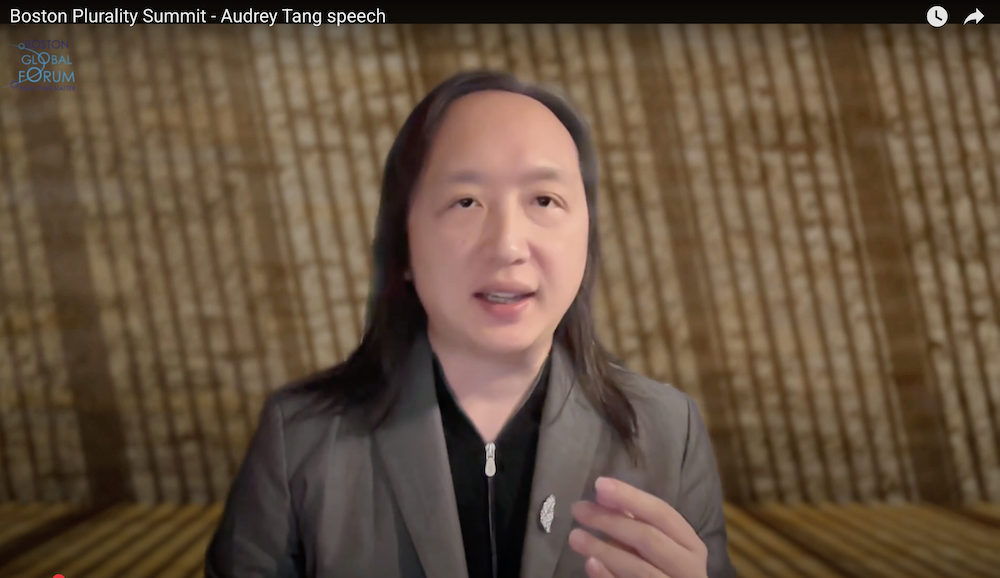
Audrey Tang, The First Minister for Digital Affairs, Republic of China (Online)
“AI Guardians for Government 24/7”
Nobukatsu Kanehara, Executive Director, Sasakawa Peace Foundation; Professor, Doshisha University
“Data-Driven Finance: Powering Government 24/7 with Trust and Transparency”
Alex Pentland, MIT and Stanford Professor
Building a Finance Platformfor Government 24/7,
Elisabeth Moreno, Former French Minister, Representative of BGF France and Africa
“The Abe Financial AI Protocol: A Platform for Fraud Detection, Fiscal Transparency, and Sustainable Growth”
Yasuhide Nakayama, Representative of BGF Japan and Taiwan; Former State Minister of Defense and Foreign Affairs
“The Financial Role in Government 24/7 Platforms”
Soichiro Chiba, Chairman, Thousandleaf; Y7/Y20 Chairman
10:50 AM – Break
11:00 AM – Discussion
11:55 AM – Announcement
“Tokyo Accord for Government 24/7: AI and Finance Platforms”
Nguyen Anh Tuan, Yasuhide Nakayama, Speakers of the Event, the Enlightenment in Action Alliance (EAA) and Nobue Mita
The Boston Global Forum (BGF) is honored to introduce two distinguished leaders among those attending and speaking at the 4th Shinzo Abe Conference: Japanese Minister of State for Science and Technology Policy Minoru Kiuchi and BGF Co-Chair and CEO Nguyen Anh Tuan, highlighted by distinguished writers in this official publication of the 4th Shinzo Abe Conference.
Minister Minoru Kiuchi: Bridging Innovation and Governance at the 4th Shinzo Abe Conference – An Official Spotlight
Minoru Kiuchi serves as Japan’s Minister of State for Science and Technology Policy in the Ishiba Cabinet, a position he assumed on October 1, 2024, under Prime Minister Shigeru Ishiba. A veteran member of the Liberal Democratic Party (LDP) and the House of Representatives, Kiuchi represents Shizuoka Prefecture’s 7th District, having been elected seven times since 2003. With a distinguished career spanning diplomacy and politics, he brings a wealth of experience to his current portfolio, which also includes responsibilities for Economic Security, the “Cool Japan” Strategy, Intellectual Property Strategy, and Space Policy.
Nguyen Anh Tuan, Architect of AI Innovation and Global Enlightenment
Nguyen Anh Tuan is a visionary leader and innovator who has used his deep understanding of global technology, media, and governance to look forward to a world governed by a social contract of promise and possibility. He serves as the Co-Chair and CEO of the Boston Global Forum (BGF), co-founded in 2012 with former Massachusetts Governor Michael Dukakis.
BGF has emerged as a “think and do” tank dedicated to fostering peace, security, and innovation through international collaboration, particularly at the intersection of artificial intelligence (AI), cybersecurity, political exchange, and cultural exchange. It is a mission Tuan personifies; in other capacities he is a Distinguished Member of the Wilson Center’s Institute for Strategic Competition Steering Committee, co-founder of the Michael Dukakis Institute for Leadership and Innovation (MDI) and of the AI World Society (AIWS) Initiative, launched with Governor Dukakis in 2017, to advance ethical AI development. His AIWS Government 24/7 Initiative—envisioning AI-driven governance with governments serving citizens 24/7—earned him the title of Person of the Year 2018 from Vietnam National Television (VTV). In January 2025, Nguyen Anh Tuan was honored with the UNGSII Award at Davos, recognizing his outstanding leadership and contributions to advancing the Sustainable Development Goals (SDGs) through AI innovation.
US President Donald Trump has held what he described as a “very good” hour-long phone call with his Ukrainian counterpart Volodymyr Zelensky, a day after speaking to Russia’s President Vladimir Putin.
Zelensky said afterwards that he believed that “lasting peace can be achieved this year” under Trump’s leadership.
Possible US ownership of Ukraine’s nuclear power plants was also discussed, the White House said, though this has been ruled out by Zelensky.
The tone of the call seems to be in contrast to Zelensky’s visit to the White House last month, in which the two leaders – along with US Vice-President JD Vance.
Wednesday marked the first time the two men have spoken since that Oval Office meeting – although since then, their teams have met in Saudi Arabia and negotiated a proposed 30-day ceasefire.
While it is backed by Ukraine and the US, Putin rejected the proposal for a widespread pause in the conflict during his phone call with the US president on Tuesday.
As submitted to the Office of Science and Technology Policy in response to a Request For Information asking for input for their upcoming US AI Action Plan
Action Steps to Strengthen US AI Leadership and Economic Competitiveness
Invest in AI Talent Pipeline– China graduates twicethe number of Science, Technology, Engineering, and Math (STEM) PhDs as the US. With the US ranking near the bottom in the percentage of graduates pursuing STEM fields, it has long relied on attracting the world’s best and brightest. Visas for Chinese students and academics have fallen by two-thirds since peaking in 2015. A recent surge in students from India is taking up some of the slack. It is important that policies and a welcoming environment continue to attract the global AI talent essential to US tech leadership while also investing more in STEM education for American students.
Provide Access to High-Performance Compute Power– Establish a national AI compute network to support research universities. Increase domestic semiconductor production and high-performance computing (HPC) resources to support AI research and private-sector innovation. Gain a decisive lead in emerging technologies that promise faster and greener compute power, such as optical computing (using laser light waves), neuromorphic computing (modeled after systems in the human brain), and quantum computing (using subatomic particles).
Secure Data– Secure access to unbiased, high-quality data for US AI researchers. Consider which datasets should be restricted from strategic competitors. Counter China’s growing control over the data flowing through global telecommunications (Huawei, ZTE) and logistics (LOGINK) software, while promoting secure, US-aligned alternatives.
Fund Research– Fully fund research as authorized in the CHIPS and Science Act, prioritizing AI and other technologies that will shape tomorrow like quantum, biotech and nanotechnology. According to the Organization for Economic Cooperation and Development (OECD), China recently overtook the US in research funding at universities and government entities. Unless funding trends are reversed China will soon overtake the US in total research funding. The US must ensure American institutions remain the world’s AI research hubs.
Invest in AI for Economic Competitiveness– Support AI-driven innovation across key industries (healthcare, manufacturing, energy, finance) by incentivizing AI adoption in small businesses and expanding AI-driven workforce training programs. The goal should be for AI to enhance productivity and job creation to ensure continued opportunities for American workers.
Action Steps to Address AI’s Societal Risks
Strengthen AI Transparent Government Use– Promote AI usage to provide 24/7 government services in a transparent manner, enhancing the availability and ease of accessing government services while maintaining trust and accountability.
Combat AI-Powered Disinformation While Preserving Free Speech –Work with AI firms to advance voluntary content labeling, misinformation detection, and deepfake protections—without empowering censorship frameworks that could restrict political discourse.
Please see full here: https://bostonglobalforum.org/publication/14916/