by Editor BGF | Sep 29, 2025 | News
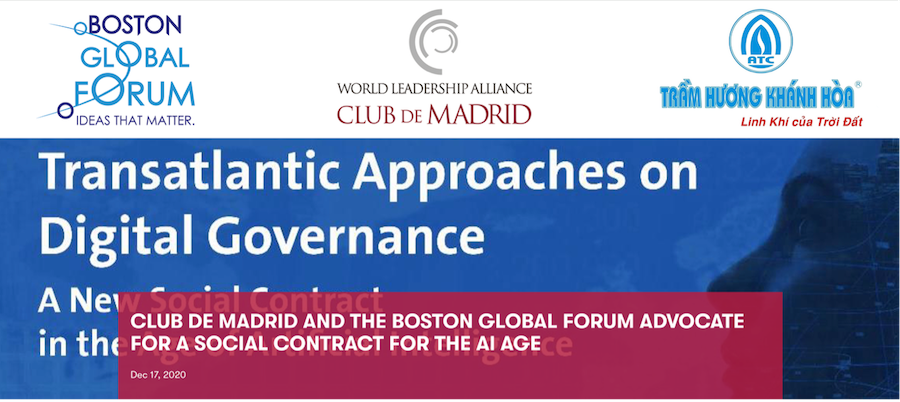
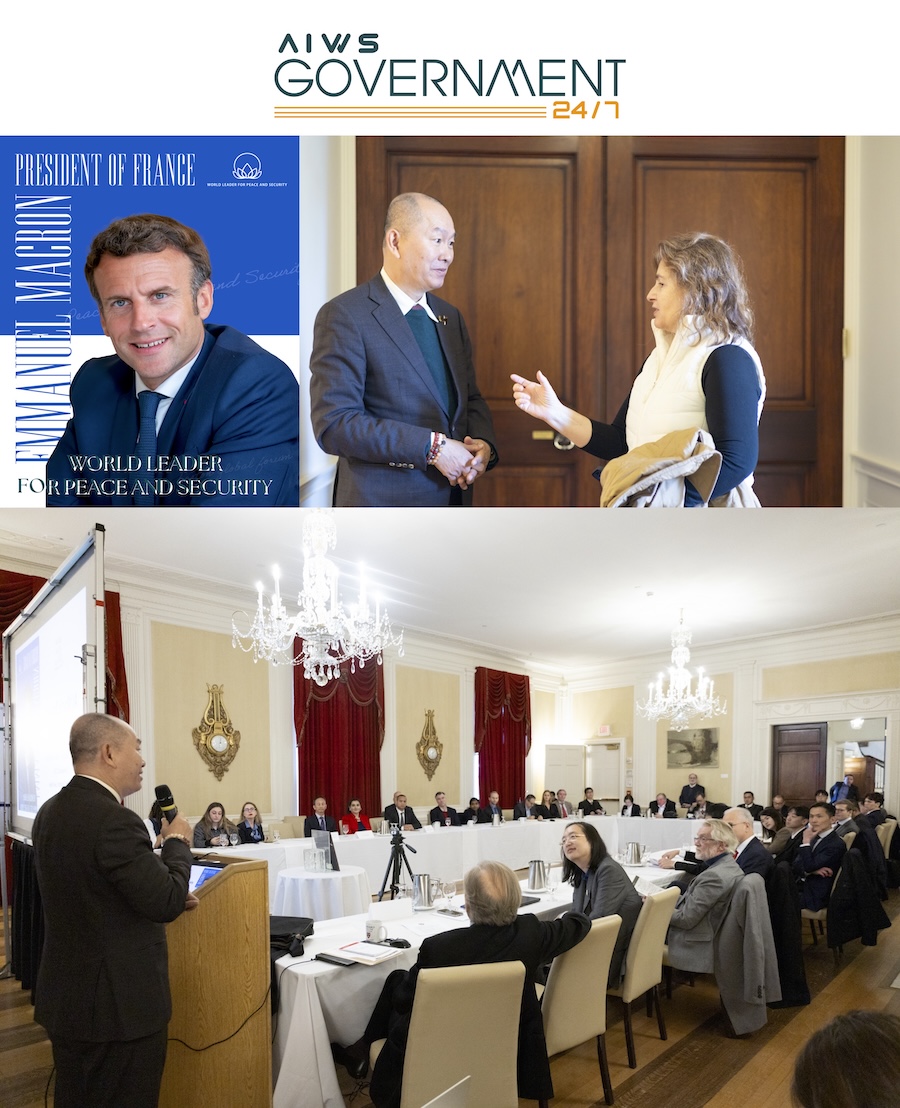
At the Boston Global Forum – Club de Madrid Conference (September 2020), world leaders and policy innovators launched the Social Contract for the AI Age.
Significance:
- One of the earliest comprehensive frameworks linking AI governance with democratic values.
- Called for ethics, accountability, transparency, and inclusiveness in the design and deployment of AI.
- Positioned AI as a force for peace, human dignity, and equality rather than division or exploitation.
- Became the foundation for later initiatives such as AIWS Government 24/7, the Boston Finance Accord for AI Governance 24/7, and the Abe AI Finance Protocol.
Global Impact:
- Shaped early international discussions on democratic AI governance.
- Provided intellectual groundwork for alliances and frameworks championed by BGF and its partners.
- Its relevance was strongly reaffirmed at the 80th United Nations General Assembly (UNGA80) in 2025, where leaders issued renewed calls for urgent action on democratic AI governance.
🔗 World Leaders Call for Urgent Action on Democratic AI Governance at UNGA80
by Editor BGF | Sep 29, 2025 | Shinzo Abe Initiative for Peace and Security, News
From Harmony to Humanity
A Seventeen-Article Constitution for the AI Era
Inspired by the Principles of Prince Shōtoku (604 AD)
I. Executive Summary
Artificial Intelligence (AI) is transforming every aspect of human life. It holds immense promise but also grave risks to human dignity, democracy, and peace. This proposal offers a human-centered governance framework inspired by one of the oldest ethical constitutions in the world: Japan’s Seventeen-Article Constitution, authored by Prince Shōtoku in the year 604 AD.
Rooted in the timeless principles of harmony, propriety, public good, and deliberation, this modern adaptation lays out 17 guiding articles for the responsible development and use of AI. It is not a set of rigid laws, but a moral compass designed to help us stay human in an increasingly technological world.
This document is addressed to international policymakers, corporate leaders, academics, and citizens who care deeply about ensuring that AI serves all of humanity.
II. Historical Context: Wisdom from a Distant Past
In the early 7th century, Japan was a fractured society. Feudal clans competed for power. Political instability and internal conflict threatened the future of the emerging nation. In this environment, Prince Shōtoku crafted a visionary ethical framework—the Seventeen-Article Constitution.
Though not a legal code, it provided moral and administrative guidance to leaders and officials. It introduced:
- The supremacy of harmony (wa) as a political and social value
- The importance of ethical governance and spiritual respect
- Early forms of meritocracy and bureaucratic professionalism
- A deep commitment to deliberation over autocracy
This was more than Japanese political reform. It was an early example of humanist thinking in statecraft—centuries ahead of its time.
⸻
III. The Original Seventeen Articles (604 AD)
Each of the following articles is presented with a plain-language explanation:
- Value harmony above all. Cooperation is the foundation of a strong nation.
- Respect the Three Treasures: Buddha, Dharma, Sangha. Let spiritual ethics guide governance.
- Follow the emperor’s will with sincerity. Maintain unity under legitimate authority.
- Uphold propriety. Officials must act with discipline and humility.
- Forgive, and correct your own faults. Reconciliation is more powerful than revenge.
- Appoint officials based on merit. Leadership must reflect ability, not birthright.
- Avoid disputes. Arguments breed chaos and weaken governance.
- Work diligently. Laziness in duty is a danger to society.
- Adopt good ideas; reform bad practices. Be flexible and principled.
- Be united in national matters. Important decisions require consensus.
- Reward virtue; punish wrongdoing. Justice must be consistent and fair.
- Care for the people. Officials must govern with empathy and responsibility.
- Discourage evil; encourage good. A moral state is a stable one.
- Do not be jealous of colleagues. Internal strife undermines collective progress.
- Put public interest before personal gain. Selflessness builds trust.
- Consider the seasons when taxing labor. Respect the rhythms of people’s lives.
- Deliberate together. No one should decide alone.
IV. A Modern Constitution for the Age of AI (2025 AD)
Preamble: Inspired by Shōtoku’s principles, and recognizing the power and risks of AI, we propose these 17 articles as a global framework for ethical, inclusive, and human-centered AI governance.
- Promote harmony and shared human flourishing.
- Ensure that humans retain final authority and accountability.
- Uphold the rule of law and protect fundamental rights.
- Require transparency, explainability, and public trust.
- Take responsibility for harms and correct mistakes.
- Assign duties based on capability and ethics.
- Prevent conflict through cooperation and alignment.
- Maintain diligent oversight and continuous monitoring.
- Foster continuous learning and adaptive improvement.
- Base high-risk decisions on deliberation and consent.
- Encourage ethical innovation; penalize abuse.
- Safeguard vulnerable populations and promote inclusion.
- Forbid exploitative, militarized, or authoritarian use.
- Promote fairness and prevent monopoly control.
- Prioritize the public good above all other interests.
- Ensure environmental and generational sustainability.
- Create grievance mechanisms and democratic oversight.
V. Implementation Guidelines
- For governments: Codify these principles in AI legislation and regulatory oversight bodies.
- For companies: Build internal review boards, redress systems, and safety protocols.
- For researchers: Publish audit reports and assess social impacts.
- For international forums: Align national standards and foster interoperability
VI.Closing Message
When Prince Shōtoku wrote these words over a millennium ago, he could not have imagined the digital world of today. But he understood something eternal:
“No matter the era, governance must be rooted in respect, wisdom, and the common good.”
AI must not lead us into division or domination. It must be led by us—wisely, humbly, and together.
Let us reawaken the human spirit in our technologies.
Let us build not just smart machines, but a more just, inclusive, and harmonious world.
Let this Seventeen-Article Constitution for the AI Age be our guide.
by Editor BGF | Sep 29, 2025 | World Leader for Peace and Security, News, World Leaders in AIWS Award Updates
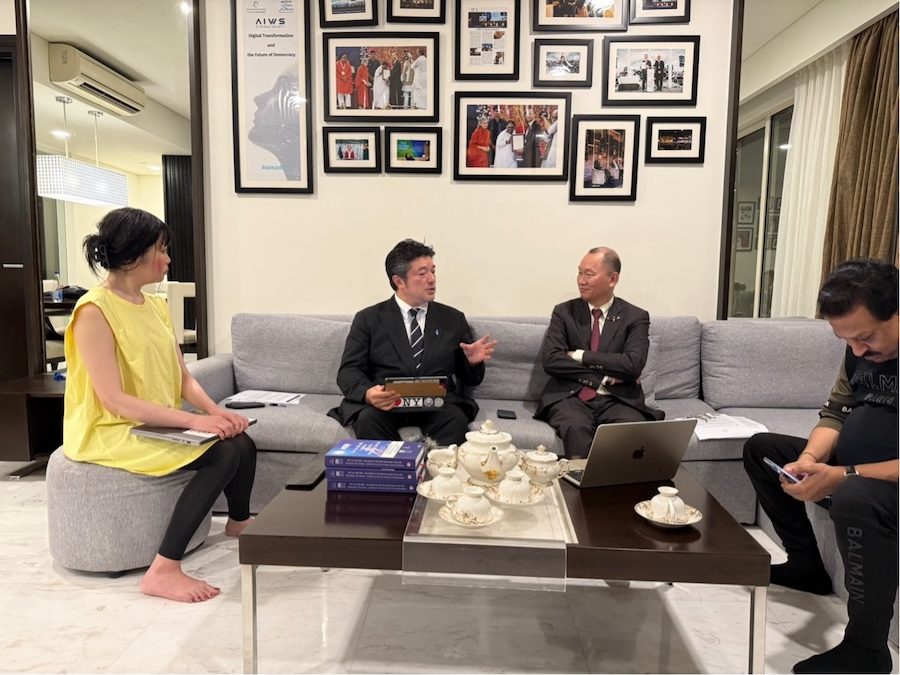
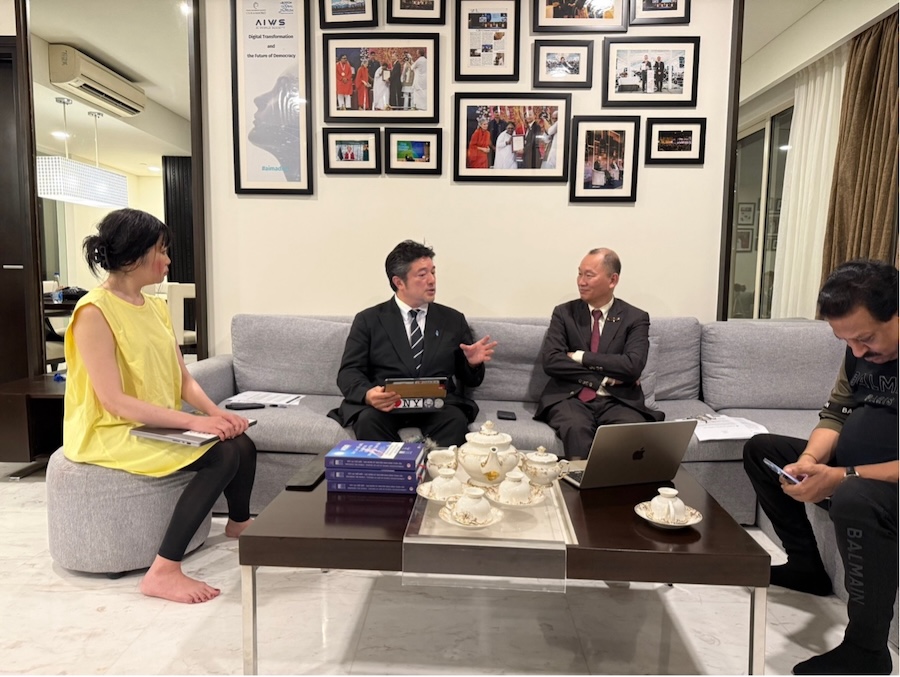
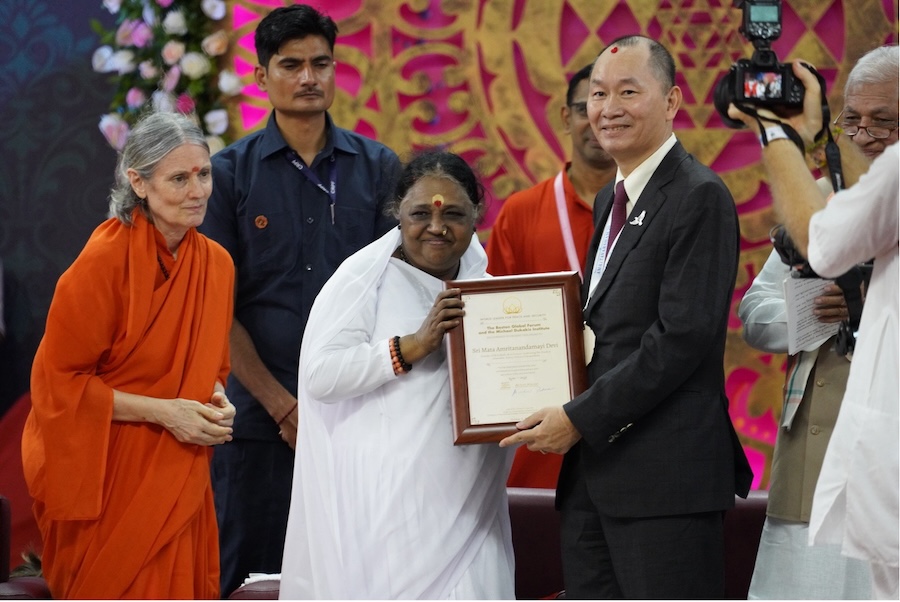
A new study published in Humanities and Social Sciences Communications (Nature) explores the meaning of Bhāvanā within Integrated Amrita Meditation®-35 (IAM®-35), a practice developed by Satguru Sri Mata Amritanandamayi Devi (Amma), 2023 World Leader for Peace and Security Award recipient, nature.com.
The paper, “Defining Bhāvanā through the PAL framework: grounded theory insights from long-term IAM®-35 practitioners”, examines how 27 experienced meditators describe their lived experience of Bhāvanā, an ancient contemplative principle meaning “bringing into being.”
Using grounded theory, the researchers propose the PAL framework, identifying:
- Prerequisites for practice
- Aspects of the meditation process
- Levels of Bhāvanā experience
Findings show that Bhāvanā is an immersive process integrating awareness, memory, and multisensory engagement. Practitioners reported transformative experiences of personal and spiritual unity, bridging ancient contemplative traditions with modern experiential insights.
This contribution builds on Amma’s decades of work integrating compassion, ethics, and meditation into practical frameworks for well-being and peace. It also resonates with the broader movement for democratic AI and digital governance, where BGF and world leaders stress the role of ethics and human dignity in shaping the future.
🔗 Read the full article in Nature
https://www.nature.com/articles/s41599-025-05783-y
by Editor BGF | Sep 29, 2025 | News
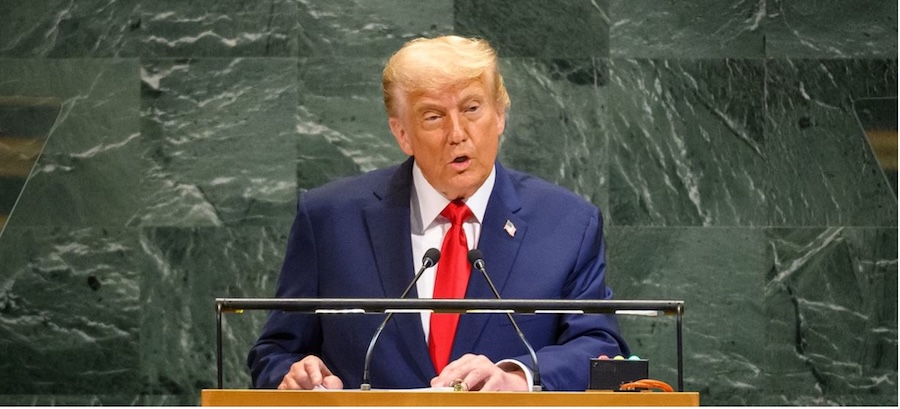
New York, September 2025 — At the United Nations General Assembly, President Donald Trump expressed strong confidence in Ukraine’s ability to defeat Russia and reclaim its occupied territory. In a meeting with Ukrainian President Volodymyr Zelenskyy, 2022 World Leader for Peace and Security Award Recipient, Trump emphasized that the United States trusts and supports Ukraine in its fight for victory.
Following the meeting, Zelenskyy said Trump showed deep understanding of the battlefield situation and “has faith in Ukraine.” He added that Trump’s support strengthens Ukraine’s resolve and its belief that full liberation of Ukrainian land is possible.
In his UNGA remarks, Trump praised Ukraine’s resilience, reaffirmed America’s backing for Kyiv, and urged NATO allies to step up their commitments, including stronger defensive actions to counter Russian aggression.
This marks a notable shift in Trump’s approach: whereas earlier he had suggested more cautious or transactional dealings with the conflict, his words at UNGA signaled a clear endorsement of Ukraine’s determination to win.
Observers note that President Trump’s support carries both symbolic and strategic weight, potentially reshaping U.S.–Ukraine relations and NATO’s collective stance. The global community will now watch closely to see how his words translate into policy and action in the months ahead.
by Editor BGF | Sep 28, 2025 | Global Alliance for Digital Governance
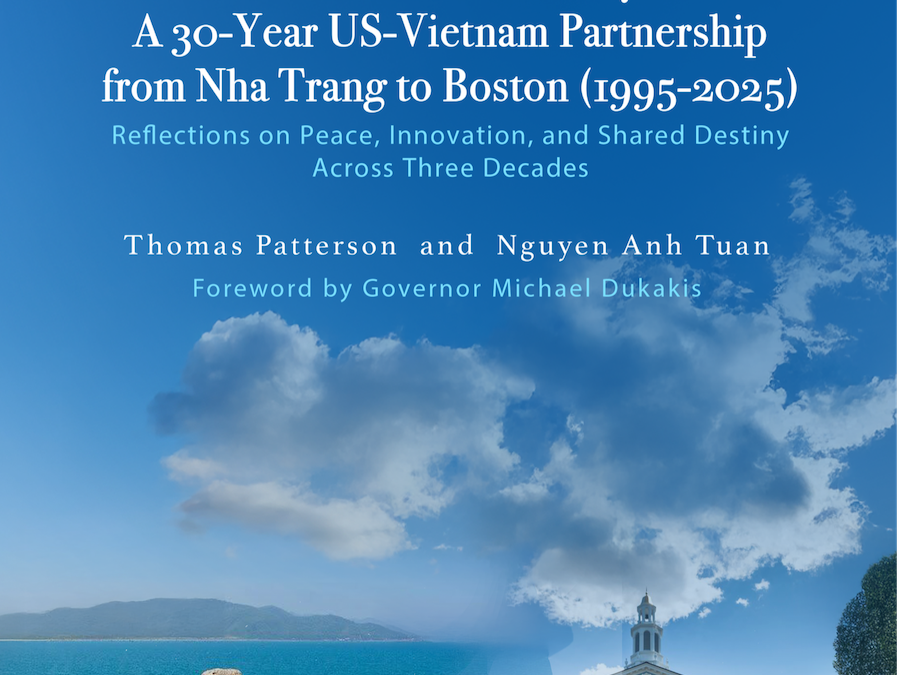
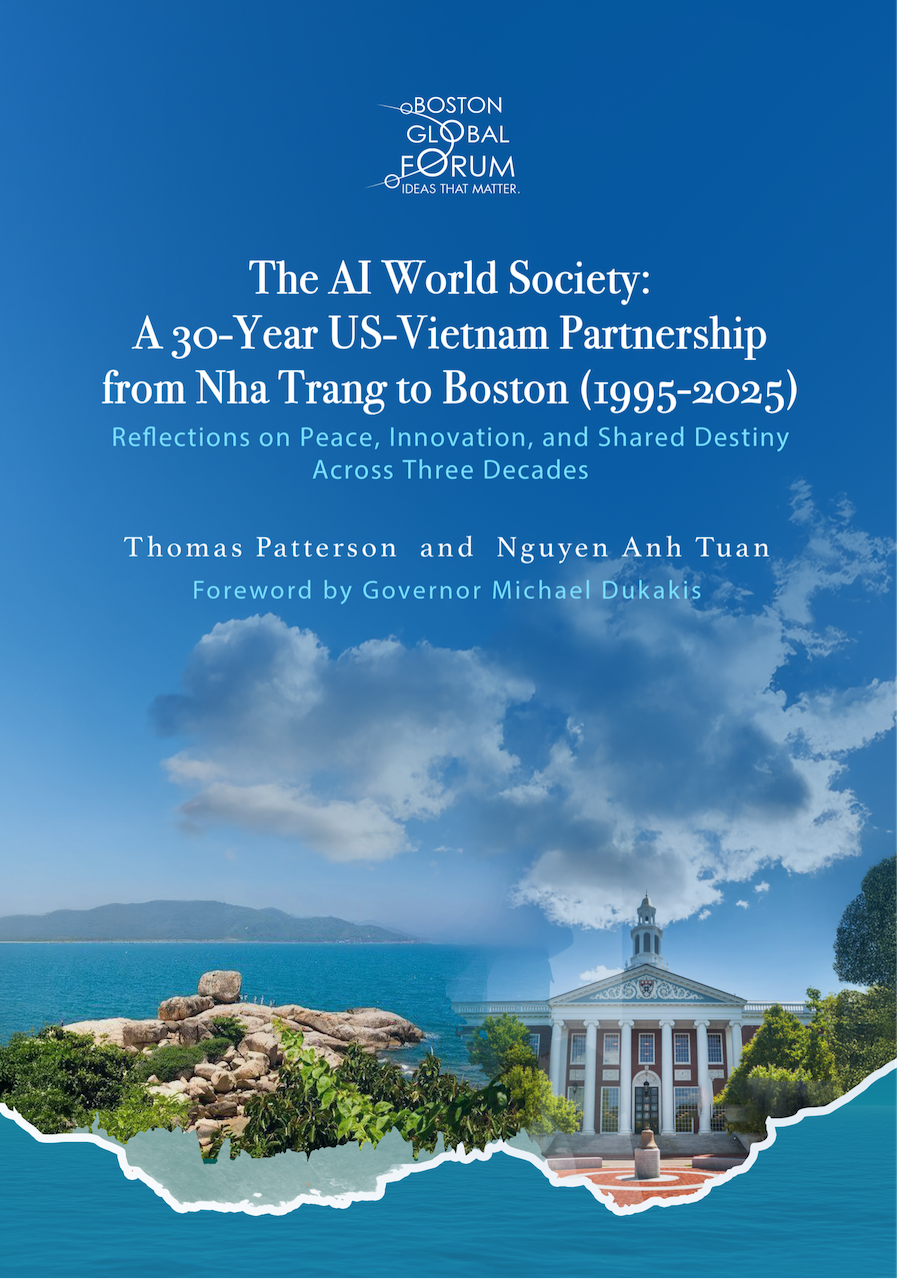
“The AI World Society: A 30-Year US–Vietnam Partnership from Nha Trang to Boston (1995–2025)”
By Nguyen Anh Tuan and Professor Thomas Patterson (Harvard University), and the Necessity of a Meeting between President Donald Trump and Chief of the Communist Party of Vietnam To Lam
The book The AI World Society: A 30-Year US–Vietnam Partnership from Nha Trang to Boston (1995–2025), co-authored by Nguyen Anh Tuan and Harvard Professor Thomas Patterson, reflects on three decades of evolving relations between the United States and Vietnam. It highlights milestones in cooperation, challenges confronted, and the promise of a shared future in the Age of Artificial Intelligence and global digital transformation.
The book underscores a pivotal truth: the Vietnam–US relationship is built not only on strategic alignment but also on people-to-people trust. At the 80th United Nations General Assembly, President Luong Cuong emphasized that “by promoting the responsible development of advanced technologies, Vietnam is linking its domestic modernization with global concerns about ethics, inclusiveness, and security in AI.” At multilateral forums, Vietnam has consistently called for narrowing the digital divide and fostering cooperative approaches to science for the common good of humanity.
The volume also documents critical moments in the partnership. It stresses the importance of direct and frank dialogue at the highest level, recalling the need for a White House meeting between Chief of the Communist Party of Vietnam, To Lam, and President Donald Trump during Trump’s presidency. Such a meeting was essential to openly address obstacles, threats, and dangers facing Vietnam–US relations, as well as to chart new pathways for trust and cooperation.
In 2024 at Columbia University, Mr. To Lam further clarified Vietnam’s perspective: “Viet Nam’s development path cannot separate from the common trend of the world and human civilization. We will continue to accelerate the process of reform, opening up, and comprehensive and extensive international integration.”
At UNGA80, President Luong Cuong reiterated this vision: “By promoting the responsible development of advanced technologies, Vietnam is linking its domestic modernization with global concerns about ethics, inclusiveness, and security in AI.” This perspective places Vietnam at the heart of international conversations on ethical technology governance, showing how AI can become a bridge for peace, democracy, and human dignity.
Honorable Mark Kennedy: “Marking three decades since the normalization of U.S.–Vietnam relations, we celebrate not only reconciliation but the strategic foresight it represents. In a time of intensifying competition in the Indo-Pacific, the partnership between Washington and Hanoi underscores how former adversaries can become trusted partners in advancing regional stability, resilient supply chains, and a free and open order. The U.S.–Vietnam story is proof that bold leadership can transform history’s divides into tomorrow’s strengths.”
Looking ahead, the book points to an important opportunity: President Donald Trump should welcome Mr. To Lam in Washington in October 2025. Such a meeting would reaffirm mutual respect and shared interests, while opening new doors for collaboration in security, economic development, and governance in the digital and AI era.
Published by Tri Thuc Publishing House, the book represents an important contribution to the intellectual and diplomatic dialogue shaping the future of US–Vietnam relations.
by Editor BGF | Oct 12, 2025 | Global Alliance for Digital Governance
By Vibhav Kant Upadhyay
For more than a century, the dominant model of global development has been rooted in exploitation — of resources, of people, and of nature itself. This approach, while accelerating material growth for a few, has left behind a deeply imbalanced world, scarred by inequality, environmental degradation, and fragile socio-economic foundations.
Today, with the developed nations comprising barely five percent of the world’s population, the true danger lies not in their past choices but in the possibility that the remaining ninety-five percent might attempt to follow the same destructive path. Should that happen, humanity risks not only ecological collapse but also an era of geopolitical instability as nations compete for dwindling resources.
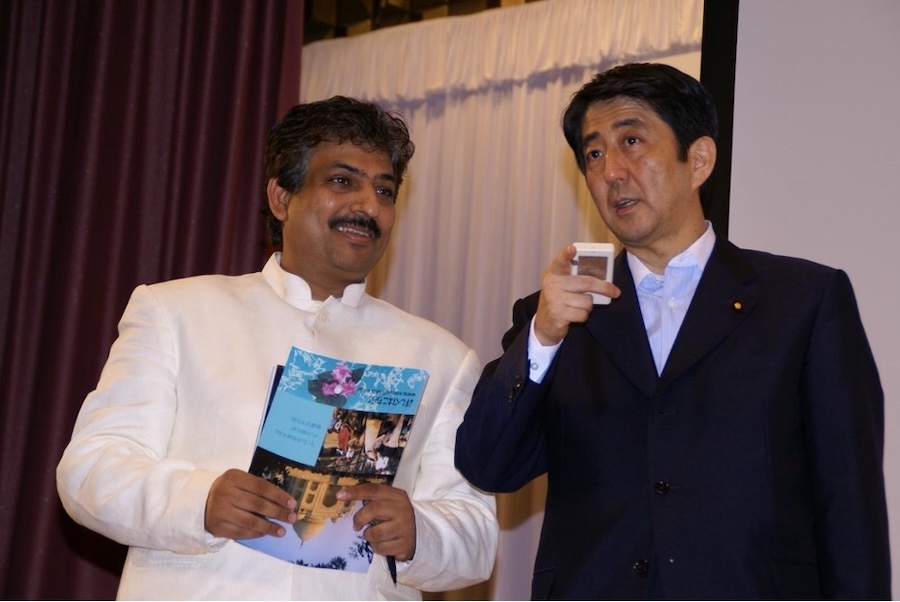
The Alternative Development Model (ADM) was conceived as an answer to this global crisis — a visionary framework that redefines growth from exploitation to empowerment, from short-term gain to long-term harmony. ADM establishes a new socio-economic paradigm where sustainability, inclusion, and human dignity replace extraction, inequality, and environmental loss as the cornerstones of progress.
At its core, ADM is guided by three interdependent pillars:
- Empowerment: Building systems where every individual and community contributes meaningfully to progress.
- Equity: Ensuring fair access to resources, opportunities, and outcomes.
- Sustainability: Advancing human prosperity without compromising the planet or future generations.
The ADM framework operationalizes these principles through dynamic mechanisms — EES (Energy Efficiency, Environmental Responsibility & Sustainability), RME (Relationship, Mechanism & Execution), and ISP (Ideology, Systems & Product) — together forming the Development Operating System for a balanced and resilient society.
ADM and the AI World Society (AIWS): Building a New Era of Ethical Development
The Boston Global Forum (BGF) and its AI World Society (AIWS) Initiative share with ADM a common mission: to reshape the world’s future through ethics, compassion, and human-centered innovation. While ADM lays the foundation for a global transformation in socio-economic systems, AIWS extends that transformation into the digital and technological domains — ensuring that Artificial Intelligence and advanced technologies serve humanity, democracy, and peace.
Together, ADM and AIWS form complementary pillars of a new civilization model — one that merges the wisdom of sustainable development with the ethics of intelligent innovation. Their combined philosophy envisions a 21st century in which technology, governance, and economics are recalibrated to elevate human consciousness and restore equilibrium between progress and purpose.
Please see full here: https://bostonglobalforum.org/publication/alternative-development-model-recalibrating-the-world-from-exploitation-to-empowerment/
by Editor BGF | Oct 12, 2025 | Papers & Reports, Publications
Written by Vibhav Kant Upadhyay
A New Paradigm
For over a century, the world’s development journey has been driven by the exploitation of resources, of people, and of nature. The result is an unbalanced world marked by inequality, environmental degradation, and fragile socio-economic systems.
The developed countries, constituting only 5 percent of the world’s population, followed a route to development that was most conveniently available to them at the time. The real threat today is the inclination of the remaining 95 percent to follow the same model.
If that happens, the planet faces not only catastrophic environmental collapse but also deep geopolitical instability as nations compete for increasingly scarce resources.
ADM was born as an answer to this crisis- a visionary framework that shifts global growth from exploitation to empowerment, creating balance between aspiration and sustainability.
Core Philosophy
ADM rests on three interdependent pillars:
Empowerment: Building systems where every individual and community contributes meaningfully to progress.
Equity: Ensuring fair and inclusive access to resources, opportunities, and outcomes.
Sustainability: Advancing human prosperity without depleting the natural environment or compromising future generations.
The ADM Framework
ADM integrates ideology, strategy, and execution through three dynamic components:
EES (Energy Efficiency, Environmental Responsibility & Sustainability): Creating responsible systems that optimize energy and resources.
RME (Relationship, Mechanism, Execution): Building deep cross-border, multi-sector collaboration to advance shared goals.
ISP (Ideology, Systems & Product): Translating ADM principles into tangible, scalable initiatives across industries.
These pillars collectively form the Development Operating System for a balanced nation, achieving equilibrium among growth, inclusivity, and sustainability.
ADM INITIATIVES
National Electric Vehicle Initiative (NEVI) Redefining Mobility for the People
NEVI envisions an alternative transportation model that is environmentally sustainable, economically viable, and energy-efficient. It promotes the adoption of electric vehicles across passenger, commercial, and public transport segments, making clean mobility accessible to all. With integrated planning and strategic technology partnerships, NEVI is paving the way for a carbon-neutral transportation ecosystem that is both affordable and inclusive.
Alternative Education Ecosystem (AEE) Reimagining Education for the Future
The AEE initiative transforms education into a more equitable and technology-driven system. By combining digital innovation with ADM’s empowerment philosophy, it ensures every learner has access to quality education and lifelong learning opportunities. This model supports self-learning, inclusivity, and skill empowerment, preparing the next generation to thrive in a rapidly evolving global landscape.
Delhi–Mumbai Industrial Corridor (DMIC)
Balanced Industrial Growth and Regional Empowerment
DMIC is one of ADM’s landmark successes, conceived to create a high-speed, high-capacity industrial corridor connecting Delhi and Mumbai. Beyond infrastructure, its purpose is to balance regional development, spread employment opportunities, and bridge urban-rural disparities.
Varanasi–Kyoto Initiative (VAKYO)
Cultural Diplomacy through Sustainable Urbanism
VAKYO unites the heritage cities of Varanasi and Kyoto to create a model of smart, sustainable, and culturally sensitive urban development. Inspired by Kyoto’s transformation, it aims to evolve Varanasi into a Smart Heritage City while preserving its cultural legacy and embracing modern sustainability practices. This initiative showcases how culture and sustainability can coexist, linking tradition, innovation, and global collaboration.
THE GLOBAL MOVEMENT FOR CHANGE
ADM is not merely a development model. It is a philosophy for the 21st century, one that challenges the exploitative status quo and empowers nations to design their own sustainable futures.
By prioritizing human empowerment, environmental accountability, and equitable growth, ADM envisions a world where development uplifts all.

by Editor BGF | Sep 21, 2025 | News, Shaping Futures
At the United Nations General Assembly Science Summit 2025, experts, policymakers, and innovators came together to explore how artificial intelligence is reshaping our world. The discussions emphasized both the transformative opportunities and the urgent ethical challenges posed by AI. From breakthroughs in healthcare and climate resilience to debates on governance, equity, and global cooperation, the summit offered a forward-looking roadmap for how AI can be harnessed for the common good.
For the Boston Global Forum (BGF) and AI World Society (AIWS), the Science Summit’s insights resonate with our mission to ensure AI serves humanity with ethics, responsibility, and democratic values. Events like this reinforce the importance of frameworks such as AIWS Government 24/7 and the Boston Finance Accord in guiding AI’s integration into society.
🔗 Forbes – The UNGA Science Summit 2025 Offered A Glimpse on the Future of AI
https://www.forbes.com/sites/corneliawalther/2025/09/20/the-unga-science-summit-2025-offered-a-glimpse-on-the-future-of-ai/
by Editor BGF | Sep 21, 2025 | Shinzo Abe Initiative for Peace and Security, News
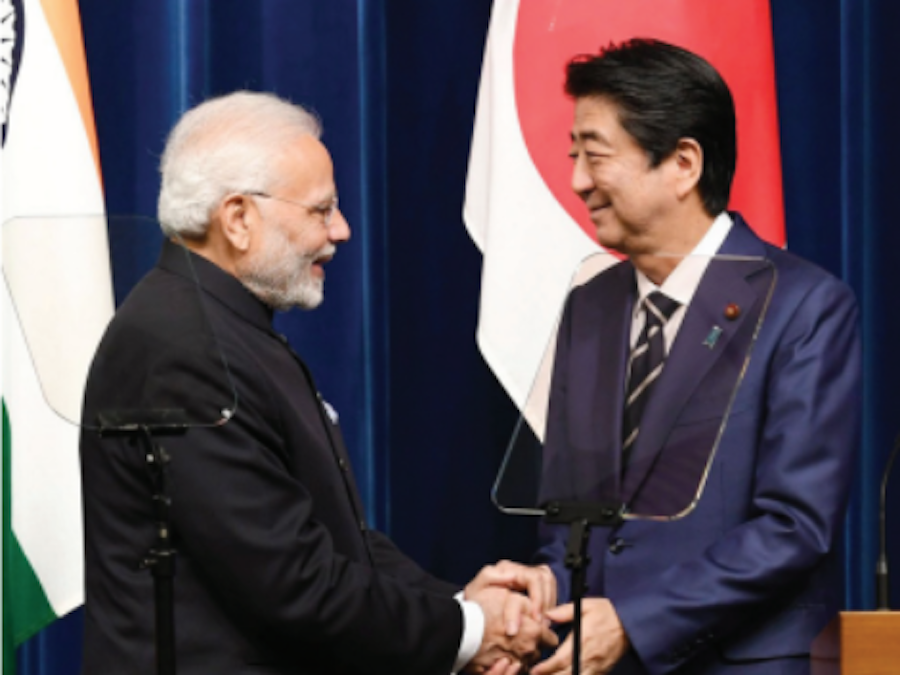
A new analysis highlights how India–Japan relations have deepened under Prime Minister Narendra Modi, building on the strategic vision of Prime Minister Shinzo Abe, who first introduced the concepts of the Indo-Pacific and the Quad in his historic 2007 “Confluence of the Two Seas” speech in New Delhi.
For Abe, India was indispensable to creating a democratic security network spanning the Pacific and Indian Oceans—an idea that remains central today as both countries strengthen defense cooperation, maritime security, and infrastructure projects to balance China’s rise.
The Shinzo Abe Initiative of BGF–AIWS honors this enduring vision: connecting India, Japan, and fellow democracies in safeguarding a Free and Open Indo-Pacific. Under Modi’s leadership, India’s rise as a maritime and strategic power continues to validate Abe’s foresight, reinforcing why his legacy remains a guiding light for the region and the world.
This legacy will also be brought to life through the Shinzo Abe Film, a project of the BGF–AIWS Film Park, which will highlight Abe’s contributions to peace, democracy, and Indo-Pacific cooperation—ensuring that future generations understand and carry forward his vision.
🔗 In Modi era: India-Japan Ties and the Security of the Indo-Pacific – Sunday Guardian Livehttps://sundayguardianlive.com/national/pm-modi-news-in-modi-era-india-japan-ties-and-the-security-of-the-indo-pacific-140180/