
by Editor BGF | Apr 26, 2026 | News
Boston Global Forum
Harvard University Loeb House
17 Quincy Street, Cambridge, Massachusetts
May 1, 2026 | 8:30 AM – 2:00 PM
Program Agenda
8:15 – 8:30 AM
Registration and Welcome Coffee
Celebrating the 250th Anniversary of the United States and Honor Presentations
8:30 – 8:40 AM
Opening Remarks Thomas E. Patterson
8:40 – 8:50 AM
Presentation of the Book America at 250: A Beacon for the AI Age
Introduction to AIWS Trust Infrastructure Nguyen Anh Tuan
Vision, framework, and implementation pathway for trust in the AI Age
8:50 – 9:10 AM
Presentation of the 2026 World Leader for Peace and Security Award Honoring the Leaders of the United States and the American People
Remarks by: Governor Michael S. Dukakis; Nguyen Anh Tuan; Thomas E. Patterson
Remarks delivered by Thomas E. Patterson on behalf of Governor Michael S. Dukakis, Nguyen Anh Tuan, and Thomas E. Patterson
Symbolic Representatives Receiving the Award: Jason Carter, representing the moral leadership legacy of America through President Jimmy Carter; Vint Cerf, representing the creativity, innovation, and civic spirit of the American people in the digital age
Special Remarks: Jason Carter — America as a Moral Beacon: Continuing the Carter Legacy of Peace, Human Rights, and Trusted Innovation in the Age of AI; Vint Cerf (by video) — Building Information Trust for the AI Age
9:10 – 9:30 AM
Recognition of America 250: AI Pioneers Presented by Nguyen Anh Tuan
Recipients in person: Cynthia Dwork; Alex Pentland; Regina Barzilay; Cynthia Breazeal; Herbert Lin
Acceptance Speech by Cynthia Dwork On behalf of the Honorees of America 250: AI Pioneers
From Differential Privacy to Trust Infrastructure: Building Trustworthy AI for Democracy
Main Panel
9:30 – 11:00 AM
AIWS Trust Infrastructure for the AI Age
Co-Moderators: Thomas E. Patterson and Alex Pentland
Alex Pentland – AI Pioneers — Building Human-Centered Trust Infrastructure for the AI Age
Herbert Lin – AI Pioneers — From Influence Operations to Information Trust: Building Resilience in the AI Age
Regina Barzilay – AI Pioneers — Trustworthy AI in Healthcare and High-Stakes Human Systems
Cynthia Breazeal – AI Pioneers — Human-Centered AI and Social Trust in the Age of Intelligent Systems
Daphne Koller – AI Pioneers (by video) — From Probabilistic AI to Trusted Information Ecosystems
Q&A
11:00 – 11:15 AM
Coffee Break
Beacon Declaration and Beacon Process
11:15 – 11:55 AM
Beacon Declaration and Beacon Process
Founding AIWS Trust Infrastructure and AIWS Lumina
Presented by Ramu Damodaran
Commitments to Accompany and Implement the Beacon Declaration
Yasuhide Nakayama (by video) — Member of the National Diet of Japan; Director, LDP Global South
Vu Dang Vinh (by video) — Vietnam Report
Roland Schatz — Media Tenor
Bui Ngoc Duc — Dat Xanh
Commitments to Accompany and Advance AIWS Lumina
Le Hoa (by video) — Cao Tra Muc Nhan
Special Video from Nha Trang in Tribute to America 250
Thu Pham
11:55 AM – 12:00 PM
Concluding Remarks — Nguyen Anh Tuan
12:30 – 2:00 PM
Luncheon Dialogue: Storytelling, Democracy, and America at 250
Hollywood, Civic Imagination, and the Future of Freedom in the AI Age
Harvard Faculty Club
Moderator: Gita Pullapilly
Panelists: Jason Carter; Don Lee
This special luncheon dialogue will explore how storytelling, film, and cultural leadership can sustain democratic values, deepen civic imagination, and strengthen public trust in an era shaped by artificial intelligence. The discussion will also explore the emerging concept and criteria of Films for Humanity in the Age of AI within the vision of AIWS Film Park, including the kinds of films and storytelling that should be encouraged in the AI Age: works that affirm human dignity, strengthen empathy, promote truth and responsibility, inspire reconciliation, and contribute to the cultural foundations of freedom and democratic life.
Concept Note
On the occasion of the 250th anniversary of the United States of America, the Boston Global Forum will convene the conference America at 250: A Beacon for the AI Age at Harvard University’s Loeb House on May 1, 2026. The conference honors the enduring ideals of America — liberty, democracy, innovation, peace, security, and service to humanity — while looking ahead to how America can continue to serve as a beacon of trusted, human-centered leadership in the Age of Artificial Intelligence.
Grounded in the spirit of the book America at 250: A Beacon for the AI Age, co-authored by Governor Michael S. Dukakis and Nguyen Anh Tuan, the conference brings together honor presentations, AI pioneer recognition, expert discussion, the Beacon Declaration and Beacon Process, and a luncheon dialogue on storytelling and democratic culture. It advances two important pillars for the AI Age: AIWS Trust Infrastructure and AIWS Lumina.
The conference has five main purposes:
- to celebrate America at 250 through the ideas and vision of the book;
- to present AIWS Trust Infrastructure as a practical framework for trust in the AI Age;
- to honor the leaders of the United States, the American people, and America 250: AI Pioneers;
- to launch a call to action and an implementation pathway through the Beacon Declaration and Beacon Process;
- and to highlight the role of storytelling, culture, and AIWS Lumina in sustaining democratic civilization in the AI Age.
A central feature of the conference is the presentation of the 2026 World Leader for Peace and Security Award, offered in honor of the leaders of the United States and the American people. The award will be received by Jason Carter and Vint Cerf as symbolic representatives. The conference will also recognize America 250: AI Pioneers, honoring distinguished pioneers whose work has helped shape the AI Age in service of humanity.
The main panel, AIWS Trust Infrastructure for the AI Age, co-moderated by Thomas E. Patterson and Alex Pentland, will feature leading honorees of America 250: AI Pioneers and explore trustworthy AI systems, trusted information, institutional resilience, healthcare, and human-centered design. The morning program will culminate in the Beacon Declaration and Beacon Process: Founding AIWS Trust Infrastructure and AIWS Lumina, followed by commitments from key partners to accompany and implement the vision.
A special luncheon dialogue on Storytelling, Democracy, and America at 250 will explore how film, narrative, and cultural leadership can strengthen freedom, dignity, empathy, and public trust in an era shaped by AI. In this way, the conference serves both as a tribute and as a call to action: to help shape a future in which trust, culture, and human responsibility remain at the center of the AI Age.
by Editor BGF | Apr 26, 2026 | Papers & Reports, News, Publications
Boston, April 27, 2026
By Michael S. Dukakis and Nguyen Anh Tuan
At this historic moment, as the United States marks 250 years of nationhood, one truth stands before us with special clarity: the future will be shaped not only by nations, but by the pioneers who define the moral direction of an age.
That is why America 250: AI Pioneers matters so deeply.
These pioneers are not simply honorees of a commemorative milestone. They are among the most important builders of the world now emerging. They are scientists, thinkers, creators, and leaders whose work is expanding the frontier of artificial intelligence and, with it, the frontier of human possibility.
But their significance is greater still.
In an age when AI is rapidly reshaping healthcare, education, communication, governance, science, security, and culture, the world does not need technical achievement alone. It needs leadership of mind, leadership of conscience, and leadership of imagination. It needs men and women capable not only of invention, but of helping civilization rise to meet the consequences of invention.
That is the higher mission of the America 250: AI Pioneers.
Their mission is not merely to make AI more powerful.
It is to help make the AI Age more trustworthy.
More humane.
More creative.
More noble.
The defining question of this era is not simply what AI can do. The defining question is what humanity will become through it.
Will intelligence without wisdom deepen disorder?
Will power without trust erode freedom?
Will progress without moral purpose diminish the human spirit?
Or can we build an age in which technological brilliance is matched by responsibility, human dignity, and civilizational depth?
We believe that answer depends, in no small measure, on whether we recognize and rally around the right people now.
The work of these pioneers must not remain confined to laboratories, institutions, or isolated achievement. Their ideas should help shape public life. Their discoveries should inform policy. Their moral seriousness should strengthen institutions. Their creativity should inspire culture. Their example should awaken the next generation.
In this, the BGF–AIWS Family has a special responsibility.
We must do more than honor the America 250: AI Pioneers. We must stand with them. We must support them. We must help connect their work to greater partnerships, greater public purpose, and greater resources, so that the values they create may serve humanity more broadly, more deeply, and more meaningfully.
If their intelligence, imagination, and courage are supported at the scale they deserve, they can help elevate not only technology, but civilization itself.
To make that possible, humanity must build two great foundations at the same time.
The first is AIWS Trust Infrastructure.
Trust Infrastructure is a practical architecture for the AI Age. It is the framework through which governments, institutions, businesses, information systems, and AI applications can operate with transparency, accountability, safety, responsibility, and respect for human dignity. It is a commitment to ensure that AI is built on trust, serves trust, and strengthens trust among human beings.
The second is AIWS Lumina.
If Trust Infrastructure helps secure the foundations of institutions, Lumina helps illuminate the spirit of civilization. AIWS Lumina is a global cultural architecture for the AI Age, grounded in Love, Creativity, and Nobility. It reminds us that the future cannot be shaped by systems and algorithms alone. It must also be guided by beauty, reflection, inspiration, and the noble qualities that elevate human life.
Together, Trust Infrastructure and Lumina express a complete vision for the future.
One builds trust.
The other brings light.
One strengthens institutions.
The other strengthens the human spirit.
And together, they can help humanity rise.
In this effort, the America 250: AI Pioneers are not alone. They are joined by the World Leaders for Peace and Security — heads of state, prime ministers, leaders of international organizations, and spiritual leaders whose exceptional contributions to peace, security, human dignity, and ethical innovation have helped guide the world through moments of danger, transformation, and hope. They are joined also by the World Leaders in AIWS — outstanding creators and exceptional leaders whose work has helped advance an AI civilization that is creative, compassionate, and noble.
Together, these communities form a rare convergence of strengths the world urgently needs: the brilliance of pioneers, the wisdom of leaders, the power of moral example, and the courage to build a future worthy of humanity.
That is why America at 250 must become more than a commemoration. It must become a call.
A call to stand with the pioneers who can help guide this age.
A call to strengthen their work with trust, culture, partnership, and support.
A call to build institutions worthy of intelligence.
A call to build a civilization worthy of the human spirit.
If America, at 250, can help unite these forces, then it can once again offer the world something of lasting historic importance.
Not merely innovation.
Not merely power.
But direction.
Meaning.
Trust.
Light.
Then the Age of AI can become more than an age of acceleration.
It can become an age of human elevation.
That is the call before us.
That is the responsibility of our generation.
And that is the future we must build together.
by Editor BGF | Apr 26, 2026 | World Leader for Peace and Security, News, World Leaders in AIWS Award Updates
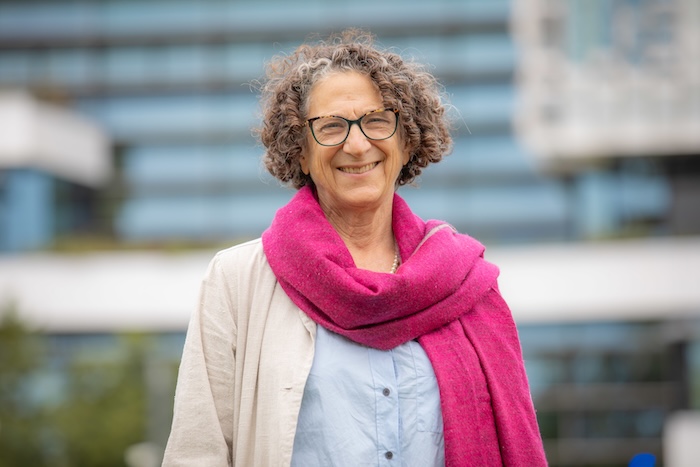
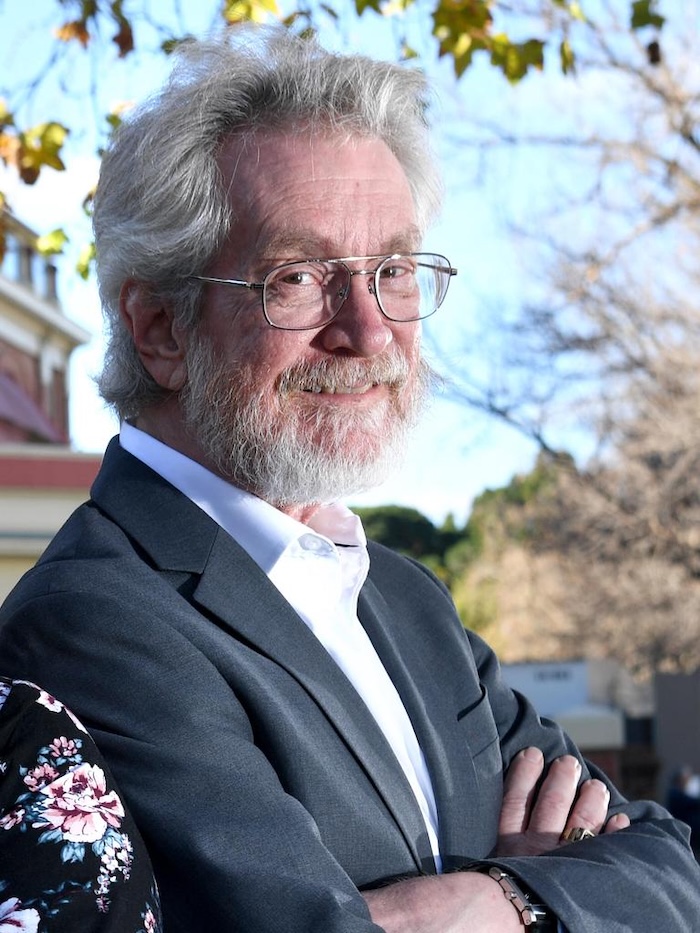
As the Boston Global Forum honors America 250: AI Pioneers, two names stand out with particular significance for the future of humanity in the Age of Artificial Intelligence: Cynthia Dwork and Alex Pentland.
They represent two essential dimensions of the AI Age that must come together if civilization is to rise rather than fragment.
Cynthia Dwork represents the moral and scientific foundations of trust — privacy, fairness, accountability, and the rigorous principles needed to ensure that intelligence serves human dignity. Her pioneering work has helped define how we think about trustworthy systems in a world increasingly shaped by data, algorithms, and AI. She reminds us that technological power must be matched by ethical seriousness, and that the future of AI depends not only on capability, but on whether human beings can trust the systems they build.
Alex Pentland represents the architecture of a human-centered society in the AI Age — the design of systems, institutions, and social structures that can place people, communities, and human flourishing at the center of technological transformation. His work has opened powerful new ways of thinking about data, behavior, networks, and real-world systems, helping to show how AI and digital intelligence can serve society in practical, humane, and forward-looking ways.
Together, Cynthia Dwork and Alex Pentland illuminate a profound truth: the future of AI cannot be shaped by technical achievement alone. It must be shaped by both trust and human-centered design. It must be grounded in principles that protect dignity, while also opening pathways for creativity, cooperation, and shared progress.
That is why they are so important to the vision of America 250: A Beacon for the AI Age.
At a time when artificial intelligence is reshaping healthcare, education, communication, governance, science, security, and culture, the world needs more than innovation. It needs pioneers who can help guide humanity through the promises and dangers of this transformation. It needs pioneers who can help ensure that AI becomes not only more powerful, but also more trustworthy, more humane, and more worthy of civilization.
In this sense, Cynthia Dwork and Alex Pentland are more than distinguished honorees. They are among the builders of the future.
Their work speaks directly to the larger mission of the Boston Global Forum and the AI World Society: to help advance AIWS Trust Infrastructure and AIWS Lumina — a future in which institutions are more trustworthy, society is more human-centered, and civilization is more compassionate, creative, and noble.
By honoring these two extraordinary pioneers, BGF also affirms a larger truth: the AI Age will be judged not only by what intelligence can achieve, but by what kind of humanity it helps us become.
That is why the contributions of Cynthia Dwork and Alex Pentland matter so deeply.
They help show the way toward an AI Age with trust.
An AI Age with human dignity.
An AI Age with creative social purpose.
And an AI Age worthy of humanity’s highest aspirations.
Download the full Special Profile of Cynthia Dwork: https://bostonglobalforum.org/wp-content/uploads/Cynthia_Dwork_Special_Profile-CD-27-4.pdf
Download the full Special Profile of Alex Pentland: https://bostonglobalforum.org/wp-content/uploads/Alex_Pentland_Special_Profile.pdf
by Editor BGF | Apr 26, 2026 | News, Shaping Futures
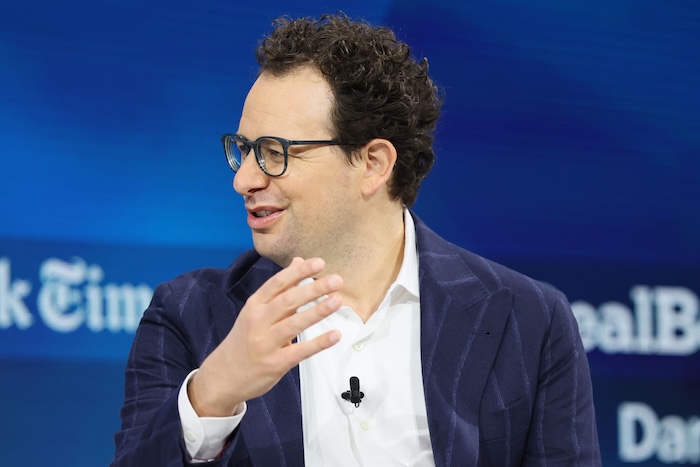
Google’s plan to invest up to $40 billion in Anthropic marks one of the most significant AI developments of the week. The deal begins with a $10 billion cash investment, with another $30 billion tied to performance milestones, valuing Anthropic at around $350 billion. (Reuters)
This is more than a financial transaction. It signals a new AI era in which frontier AI companies are becoming strategic infrastructure partners for Big Tech, cloud providers, governments, and global enterprises. Anthropic is no longer only a model company; it is becoming part of the core AI operating layer for business, coding, agents, and trusted digital systems.
Together with Amazon’s expanded investment and Anthropic’s massive cloud commitments, this development shows that the AI race is shifting from model competition to infrastructure competition: compute, cloud, chips, data centers, energy, agent platforms, and trust systems.
For BGF and AIWS, this moment reinforces the urgency of AIWS Trust Infrastructure, AIWS Information Trust Infrastructure, AIWS Trust Rating, and AIWS Trusted Order. As AI companies become civilization-scale infrastructure, society needs trusted standards to ensure that AI remains safe, transparent, accountable, human-centered, and aligned with peace, democracy, and human dignity.
by Editor BGF | Apr 26, 2026 | Global Alliance for Digital Governance, Papers & Reports, Publications
The Boston Global Forum and AI World Society introduce the report “Mythos and the Path to AIWS Trust Infrastructure in the Age of Frontier Cyber AI” as a timely case study for America at 250: A Beacon for the AI Age.
The report examines the emergence of frontier cyber-capable AI through the case of Claude Mythos Preview and Project Glasswing, highlighting a new reality: AI systems are no longer only tools for productivity or creativity; they are becoming powerful infrastructures with direct impact on cybersecurity, national security, critical software systems, and democratic society.
The report argues that this new era requires more than innovation. It requires trust-by-design standards, controlled access, vendor security, continuous monitoring, auditability, incident response, and democratic accountability. These are the foundations of AIWS Trust Infrastructure, AIWS Information Trust Infrastructure, AIWS Trust Rating, and the broader AIWS Trusted Order.
At America’s 250th anniversary, this report calls for a new partnership among governments, frontier AI developers, critical infrastructure operators, civil society, and democratic citizens to ensure that powerful AI serves peace, security, democracy, and humanity.
Download the full report here: https://bostonglobalforum.org/wp-content/uploads/BGF-Mythos-Report.pdf

by Editor BGF | Apr 26, 2026 | Papers & Reports, Publications
A Global Cultural Architecture for the AI Age
Boston, April 26, 2026
Boston Global Forum is pleased to officially launch the AIWS Lumina White Paper — a foundational document presenting AIWS Lumina as a global cultural architecture for the Age of Artificial Intelligence.
If AIWS Trust Infrastructure helps build a foundation of trust for institutions, systems, and AI applications, then AIWS Lumina helps illuminate the spiritual and civilizational life of humanity in this new era. Lumina affirms that the AI Age cannot be guided only by technology, policy, and computational power; it must also be illuminated by Love, Creativity, and Nobility.
This White Paper is intended to define clearly the philosophy, structure, standards, symbols, annual rhythm, signature rituals, AIWS Citizen model, Lumina Platform, governance, and implementation pathway of AIWS Lumina. It is not simply an ordinary cultural initiative, but an effort to shape a civilizational architecture for humanity in the AI Age.
AIWS Lumina is founded on the belief that humanity’s future will be determined not only by how powerful intelligence becomes, but also by what human beings choose to honor, what they choose to create, and to what higher level they choose to rise. This White Paper is therefore an invitation: to help build an AI Age in which humanity becomes more compassionate, more creative, and more noble.
Please see the full White Paper in the attached file and download it here: https://bostonglobalforum.org/wp-content/uploads/AIWS_Lumina_White_Paper_26-4-2026.pdf

by Editor BGF | Apr 25, 2026 | Papers & Reports, Publications
Assessment report and proposals from a BGF–AIWS perspective
Boston, April 22, 2026
1. Overall Assessment
SusHi Tech Tokyo 2026 stands out as a major strategic platform rather than a conventional startup event. Organized around the idea of “Sustainable High City Tech Tokyo,” it presents Tokyo not only as a market for innovation, but as a city seeking to shape the future of sustainable urban civilization through technology, startups, investment, and public leadership. Its official positioning as Asia’s largest innovation conference, together with its scale of 700 exhibiting startups, 10,000 business meetings, and 60,000 participants, gives it significant regional stature and global signaling power.
What makes SusHi Tech Tokyo especially distinctive is that it is city-centered, future-facing, and multi-layered at the same time. The official structure highlights four thematic domains—AI, Robotics, Resilience, and Entertainment—showing that Tokyo does not define innovation narrowly. It sees future cities as places where technological capability must be linked to social well-being, public systems, cultural vitality, and long-term sustainability. This gives SusHi Tech Tokyo a broader civilizational tone than many startup conferences that focus primarily on venture capital and product scaling.
2. Distinctive Values and Stature of SusHi Tech Tokyo 2026
The first distinctive value of SusHi Tech Tokyo 2026 is its integration of innovation with urban purpose. The official framing repeatedly returns to global urban challenges—environmental protection, disaster prevention, financial growth, and the future of city life. Tokyo is not presenting innovation merely as commercial opportunity; it is presenting innovation as a method for shaping a sustainable society. This gives the event public meaning and strategic seriousness.
The second distinctive value is Tokyo’s ability to combine scale with ecosystem design. The official program is not limited to sessions and exhibitions at Tokyo Big Sight. It extends into citywide official events and side experiences: Tokyo Innovation NIGHTs at Tokyo Innovation Base, invitation-only networking at Tennozu, mobility experiences at Miraikan, AI/Robotics/Resilience/Entertainment meetups, investor nights, startup matching programs, and youth-oriented initiatives such as TIB KIDS and WASABI. This ecosystem approach makes SusHi Tech Tokyo feel like a living innovation city rather than a single conference venue.
The third distinctive value is the way the event blends advanced technology with Tokyo’s identity and Japanese cultural energy. Official event descriptions deliberately combine innovation, EdoTokyo fusion, Japanese food and beverages, modern reinterpretations of traditional arts, and popcultural performance. This means SusHi Tech Tokyo is not only a technology platform. It is also a demonstration of Japan’s soft power: its ability to connect precision, craftsmanship, social order, aesthetic discipline, and future-oriented imagination.
The fourth distinctive value is strategic positioning. By convening startups, investors, corporates, public leaders, and city networks from around the world, SusHi Tech Tokyo offers Tokyo a platform to shape regional and international discourse about sustainable cities. It therefore has significance beyond event branding. It contributes to Tokyo’s long-term position as a node where policy, capital, technology, and urban experimentation can meet.
3. Why SusHi Tech Tokyo Matters for 2027
SusHi Tech Tokyo 2027 offers an important opening for Japan to move from being a respected technology nation to being a recognized leader in the next layer of AI-era civilization: trust, governance, and culture. The next phase of global competition in AI will not be defined only by who has better models, more capital, or more hardware. It will also be defined by who can design trust into systems, institutions, and public life. This is where BGF and AIWS can make a meaningful contribution.
From a BGF–AIWS perspective, Tokyo is well suited to host and help advance two complementary ideas in 2027. The first is AIWS Trust Infrastructure, leading toward AIWS Trust Order. The second is AIWS Lumina in Tokyo as one of the seven cities in the global cultural constellation. Together, these two contributions would allow Japan to lead not only in technology and innovation, but also in trust architecture and cultural leadership for the AI Age.
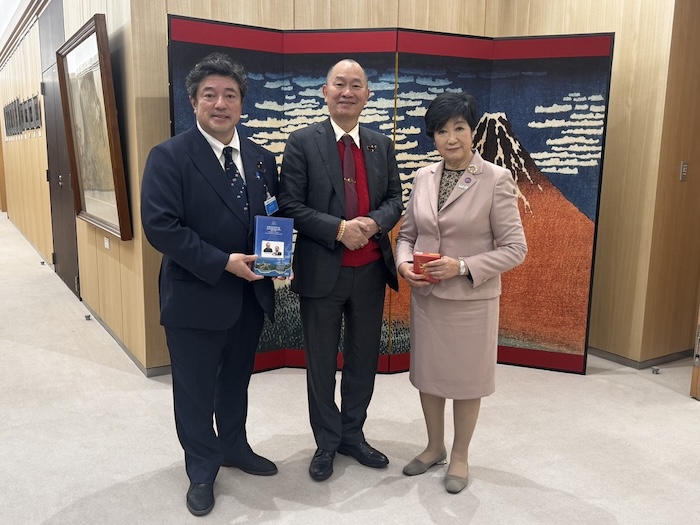
During the meeting with Governor Yuriko Koike at her office on March 31, Nguyen Anh Tuan, together with Yasuhide Nakayama, the Boston Global Forum’s Representative in Japan and Taiwan, presented these ideas and proposed that Tokyo adopt them as strategic initiatives for SusHi Tech Tokyo 2027, enabling Japan to play a pioneering role in advancing AIWS Trust Infrastructure, AIWS Trust Order, and AIWS Lumina in the AI Age.
4. Contribution 1: AIWS Trust Infrastructure and the Path to AIWS Trust Order
BGF–AIWS can contribute to SusHi Tech Tokyo 2027 by introducing a strategic dialogue and implementation pathway around AIWS Trust Infrastructure. This framework would emphasize that the future of AI requires not only capability, but trust-by-design: safety, transparency, accountability, privacy, human dignity, resilience, and ongoing public legitimacy. In practical terms, a Tokyo track could include a roundtable or summit segment on trusted AI systems, trustworthy urban platforms, and trust standards for AI deployment in city life.
From this foundation, SusHi Tech Tokyo 2027 could become a place where Japan helps articulate a larger concept: AIWS Trust Order. Trust Order means that AI-era society cannot remain governed only by technological acceleration or market logic. It needs trusted rules, trusted infrastructures, and trusted relationships among governments, enterprises, researchers, and citizens. Tokyo is especially suited to this role because Japan carries a reputation for discipline, quality, reliability, and long-term thinking. If SusHi Tech Tokyo embraces the trust dimension, Japan could become a visible pioneer of trusted innovation in Asia and beyond.
5. Contribution 2: AIWS Lumina in Tokyo
BGF–AIWS can also contribute to SusHi Tech Tokyo 2027 by proposing Tokyo as one of the seven host cities of AIWS Lumina: The Cultural Lights of the AI Age. Within the Lumina constellation, Tokyo would represent a light of harmony, aesthetics, restraint, and human-centered refinement. This aligns naturally with the Japanese traditions of Wa, Ma, and Wabi-sabi, and with Tokyo’s own position as a city where technological sophistication coexists with social order and cultural form.
A Tokyo Lumina event could be framed around the theme “Wa × AIWS: Harmony in the AI Age.” It would allow SusHi Tech Tokyo to expand from innovation and startup connectivity into a deeper question: how should civilization shape AI? Through this contribution, Tokyo would not only host innovation actors; it would help host a cultural architecture for the AI Age. That would be a major distinction. It would place Japan at the forefront of efforts to ensure that AI is not only powerful and useful, but also beautiful in spirit, human-centered, and worthy of trust.
6. Strategic Value for Japan
If these two contributions are advanced through SusHi Tech Tokyo 2027, Japan could occupy a unique leadership position. It could be seen as a country that helps connect three domains that are often treated separately: innovation, trust, and culture. Many countries can host startup conferences. Fewer can credibly convene dialogue on trusted AI infrastructure. Fewer still can link trusted innovation to cultural form, public meaning, and a civilizational ethos. Japan can do this.
This path would also activate Japan’s own strengths: its reputation for reliability; its tradition of craftsmanship and precision; its social emphasis on order, respect, and harmony; and its capacity to translate long civilizational inheritances into modern institutions. Through SusHi Tech Tokyo 2027, Japan could present to the world not only new technologies, but a deeper model of what future-oriented society should look like.
7. Conclusion
SusHi Tech Tokyo 2026 already demonstrated significant value and stature as a global innovation platform rooted in Tokyo’s city strategy and Japan’s distinctive strengths. Its scale, ecosystem design, and blend of technology with urban purpose make it one of the most important innovation conferences in Asia. Looking ahead, SusHi Tech Tokyo 2027 offers an exceptional opportunity for BGF–AIWS contribution.
By introducing AIWS Trust Infrastructure and the path toward AIWS Trust Order, and by coordinating with Tokyo to implement AIWS Lumina as one of the seven global cities, BGF– AIWS can help SusHi Tech Tokyo evolve from a major innovation conference into a more consequential platform for the AI Age. In that next stage, Japan would be able to demonstrate leadership not only in innovation, but in trust, culture, and the shaping of a better AI society for humanity.
Source Note
Prepared with reference to the official SusHi Tech Tokyo 2026 website and official events pages of the Tokyo Metropolitan Government-backed conference.
Key official references include event dates, scale, thematic domains, and official side-event descriptions.
Download The Sushi Tech 2027 – BGF Report are here: https://bostonglobalforum.org/wp-content/uploads/Sushi-Tech-2027-BGF-Report.pdf
by Editor BGF | Apr 19, 2026 | News
The America at 250 Conference brings together distinguished leaders, scholars, innovators, and AI pioneers whose work has shaped democracy, public life, science, technology, and the future of humanity. At this historic moment marking the 250th anniversary of the United States, these speakers represent not only excellence in their fields, but also a shared commitment to trust, human dignity, democratic values, and responsible leadership in the Age of Artificial Intelligence.
Together, their voices help frame a forward-looking dialogue on how America and the democratic world can lead with wisdom, innovation, and responsibility in shaping the AI Age.
Governor Michael S. Dukakis
Governor Michael S. Dukakis is one of America’s most respected public leaders, known for his lifelong commitment to democratic governance, public service, and civic responsibility. As co-author of America at 250: A Beacon for the AI Age, his remarks bring historical depth, moral clarity, and public leadership to the conference.
Jason Carter
Jason Carter serves as the symbolic representative receiving the 2026 World Leader for Peace and Security Award on behalf of the leaders of the United States. His special remarks, “America as a Moral Beacon: Continuing the Carter Legacy of Peace, Human Rights, and Trusted Innovation in the Age of AI,” connect the ethical tradition of American leadership with the challenges of the AI Age.
Vint Cerf
Vint Cerf serves as the symbolic representative receiving the 2026 World Leader for Peace and Security Award on behalf of the American people. A pioneering figure of the digital age, he brings exceptional authority to the conference through his remarks on “Building Information Trust Infrastructure for the AI Age.”
Cynthia Dwork
A pioneering scholar in computer science and one of the foundational figures behind differential privacy, Cynthia Dwork delivers the acceptance speech on behalf of the honorees of America at 250: AI Pioneers. Her remarks, “From Differential Privacy to Trust Infrastructure: Building Trustworthy AI for Democracy,” highlight the deep connection between technical rigor and democratic trust.
Regina Barzilay
Regina Barzilay is a leading voice in the application of AI to healthcare and high-stakes human systems. In Panel 1, she speaks on “Trustworthy AI in Healthcare and High-Stakes Human Systems,” bringing an essential perspective on how trust must be built where human lives are directly affected.
Cynthia Breazeal
A pioneer in human-centered AI and social robotics, Cynthia Breazeal has helped define how intelligent systems can interact with people in ways that strengthen connection and social trust. In Panel 1, she speaks on “Human-Centered AI and Social Trust in the Age of Intelligent Systems.”
Alex Pentland
Alex Pentland is one of the world’s most influential thinkers on human-centered technology, social systems, and data-driven trust. In Panel 1, he speaks on “Building Human-Centered Trust Infrastructure for the AI Age,” offering a major perspective on how trust can be designed into systems, institutions, and civic life.
Daphne Koller
Daphne Koller, joining by video, is one of the most accomplished pioneers in artificial intelligence, machine learning, education, and AI-driven health innovation. Her remarks, “From Probabilistic AI to Trusted Information Infrastructure,” offer a powerful perspective on trustworthy information systems and human-centered AI.
Herbert Lin
Herbert Lin brings deep expertise on the intersection of technology, national security, and information integrity. In Panel 2, he speaks on “From Influence Operations to Information Trust Infrastructure: Building Resilience in the AI Age,” addressing the urgent need for democratic resilience in an era of manipulation and misinformation.
Sherry Turkle
A renowned scholar of technology and human relationships, Sherry Turkle has spent decades examining how digital systems affect conversation, empathy, identity, and trust. In Panel 2, she speaks on “Human Relationships, Conversation, and Trust in the Age of AI,” bringing a vital human and cultural dimension to the conference.
Thomas E. Patterson
A distinguished scholar of American politics, media, and democracy, Thomas E. Patterson brings longstanding intellectual leadership on the institutions and values that sustain democratic society. He delivers the Opening Remarks and serves as Moderator of Panel 1, “AIWS Trust Infrastructure for the AI Age,” helping set the tone for the conference’s central discussion on trust, governance, and democratic responsibility.
Nguyen Anh Tuan
Nguyen Anh Tuan, Co-Founder, Co-Chair, and CEO of the Boston Global Forum, is a visionary thinker at the intersection of technology, governance, and human values. He presents the book America at 250: A Beacon for the AI Age, introduces the vision and implementation pathway of the AIWS Trust Architecture, and leads the recognition of the America at 250: AI Pioneers.
Roland Schatz
A leading figure in media intelligence and international public communication analysis, Roland Schatz serves as Moderator of Panel 2, “AIWS Information Trust Infrastructure for the AI Age.” He brings a global perspective to the challenge of building trusted information systems in a world shaped by AI and media disruption.
Ramu Damodaran
With deep international experience in diplomacy, multilateral dialogue, and global governance, Ramu Damodaran presents the Beacon Declaration and Beacon Process. His role helps place the founding of the AIWS Trust Infrastructure and the AIWS Information Trust Infrastructure in a broader international and civilizational context.
Yasuhide Nakayama
Yasuhide Nakayama, Member of the National Diet of Japan and Director, LDP Global South, brings an important democratic and international voice to the conference. His commitment to accompany and help implement the Beacon Declaration reflects the growing importance of cooperation among democratic nations in shaping trust, governance, and responsibility for the AI Age.

by Editor BGF | Apr 19, 2026 | News
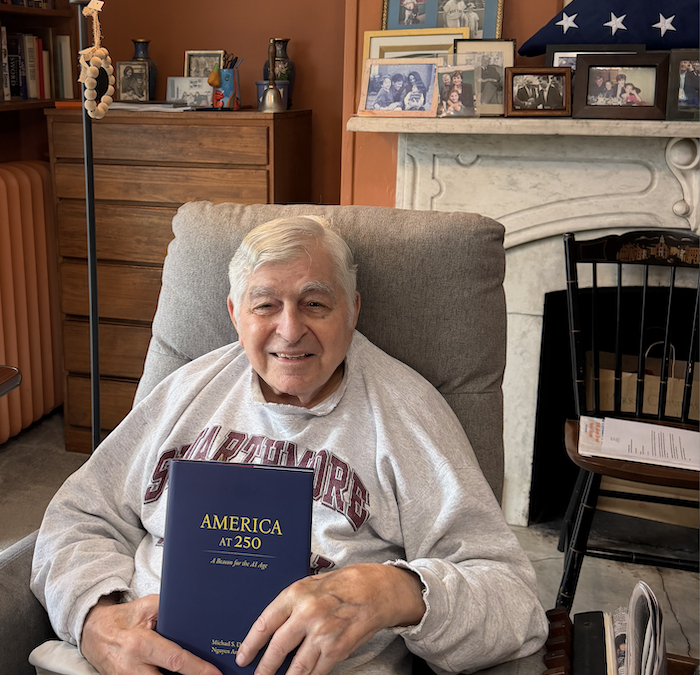
The chapter on AIWS Education is one of the most distinctive and forward-looking parts of America at 250: A Beacon for the AI Age, because it does not discuss education merely as a policy sector. Instead, it redefines education as a vital foundation for democracy and for human development in the Age of AI.
The first special feature of this chapter is that it looks beyond the traditional model of schools, classrooms, age brackets, and examinations. AIWS Education is presented as an ecosystem of joyful lifelong learning — learning that is joyful, lifelong, human-centered, and available 24/7 throughout the whole of life. This is a profoundly new way of thinking: in the Age of AI, education is no longer a stage of preparation for life, but an inseparable part of life itself.
The second special feature is that the chapter connects education with human dignity, joy in living, mental well-being, culture, creativity, and community. It does not treat education merely as an instrument for producing workforce skills, but as a pathway for helping human beings develop in a whole and balanced way, preserve their identity, strengthen their capacity for judgment, and live responsibly in a world increasingly shaped by AI.
The third distinctive contribution is the introduction of AIWS Angel as a new figure and a new architecture for education in the AI Age. AIWS Angel is not imagined as a machine that replaces the teacher, but as a humanistic AI Agent that accompanies each learner, supports personalized learning, nurtures inspiration, expands knowledge, and helps every individual grow according to their own rhythm, circumstances, and aspirations. This is one of the chapter’s most original contributions: bringing AI into education not to mechanize human beings, but to liberate human potential.
Another important point is that the chapter on AIWS Education does not stand alone. It is closely connected to the book’s broader vision of America at 250. If the United States is to remain a beacon for the AI Age, it cannot lead only in technology; it must also lead in preparing human beings for the new era. For that reason, AIWS Education is presented as a strategic answer: if democracy is to remain strong, if the economy is to remain creative, and if society is to remain trustworthy, then a new form of education appropriate to the AI Age must be built first.
In other words, what makes this chapter so special is that it does not merely propose educational reform; it proposes a new philosophy of education for AI civilization. It is education for humanity, for democracy, for the joy of learning, for creativity, and for the ability of every person to continue developing throughout life. That is what makes the chapter on AIWS Education one of the most humane, profound, and distinctive chapters in America at 250: A Beacon for the AI Age.