by Admin | Aug 27, 2013 | Highlights
Why Did Bangladesh Stocks Rise 30 Percent After the Building Collapse?
By Nathaniel Williams for www.elliottwave.com
According to conventional wisdom, stock markets fall after bad news. And if any event ever qualified as “bad news,” it would be Bangladesh’s building collapse in late April. If you recall, an eight-story industrial building collapsed just one day after inspectors discovered cracks in the building and ordered an evacuation. Many garment workers were forced to return to work, and more than 1,100 died in the collapse. It was one of the worst industrial accidents in history.
By all accounts, Bangladesh’s Dhaka General Index should have plummeted. But that’s not what happened. Just one week after the horrific tragedy, the index began to rise — leading to a 30% surge in less than three months.
Could you have anticipated this seemingly unconventional market move? Yes, with the right tools.
And EWI’s Asian-Pacific Financial Forecast used those tools to stay ahead of the trend the entire way. Editor Mark Galasiewski (pronounced ‘gala-shev-ski’) studied the Dhaka General Index’s Elliott wave pattern mere days after the accident. He told his readers in the May 3, 2013, issue (emphasis added):
“The Dhaka General Index advanced in five waves … to a high in 2010. Since then it has fallen in five waves and is now approaching the end of the decline.”
In Elliott wave parlance, a completed five-wave move means a trend has run its course, so Galasiewski knew to expect a correction.But what about the Bangladesh tragedy? It took on a completely different significance to the stock market trend when viewed from an Elliott wave perspective. Here’s why: Bangladesh’s social mood (as reflected in the Dhaka General Index) had been falling for more than two years since the 2010 high, so it was deeply entrenched in a bear market. Galasiewski reminded his readers of Robert Prechter’s observation in the Nov. 2007 Elliott Wave Theorist that “commercial and industrial fatalities have tended to increase during bear market periods and recede in bull markets.” That issue of The Theorist also noted:
“Perhaps there is something about negative mood periods that can cause a lapse of judgment on the part of company managers and employees, potentially leading them into dangerous situations. Or perhaps the economic contractions that accompany negative mood periods force companies to attempt to do more with fewer resources, potentially raising the risks to employees.”
After this terrible tragedy, things could hardly get any worse. Social mood had no where to go but up. And if social mood were to improve, so to would stocks, though this was of little comfort to those who were affected by the tragedy.
The Asian-Pacific Financial Forecast’s analysis was spot-on, as this updated chart shows. Prices in the Dhaka General Index rebounded the next trading day and rose 30% in less than three months. (Not every forecast works out so well, but five waves completed in one direction do usually signal a change in trend.)
by Admin | Aug 27, 2013 | Highlights
In response to the worst factory disaster in Bangladesh’s history, the country will start surveys of over 2000 factories on September 15, 2013. The Daily Star has the story.
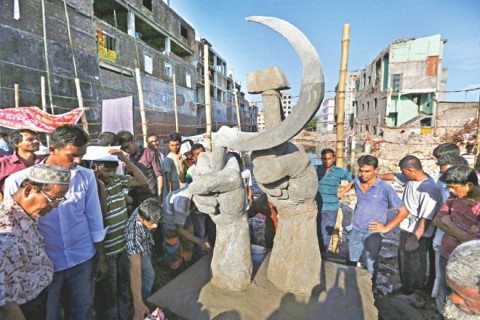
Activists and the relatives of missing garment workers gather on August 2 in front of a sculpture made by members of labour organisations at the site of collapsed Rana Plaza in Savar. Photo: REUTERS/FILE
Factory Survey Starts on September 15
Thirty expert panels led by Bangladesh University of Engineering and Technology will start inspection of garment factories from September 15 to check structural flaws and ensure worker safety, a government official said yesterday.
The teams will inspect around 2,000 garment factory buildings in three months under a tripartite agreement between the government, trade unions and the International Labour Organisation, Labour and Employment Secretary Mikail Shipar said.
The inspection teams have already been formed with experts from other universities, the ILO, donor agencies, trade unions, Bangladesh Employers’ Federation, Bangladesh Garment Manufacturers and Exporters Association, and Bangladesh Knitwear Manufacturers and Exporters Association.
The tripartite agreement was signed in two phases on February 20 and July 25 after two deadly factory accidents — Tazreen Fashions fire on November 24 last year and Rana Plaza collapse on April 24.
“We will inspect the buildings, which were not included on the lists of IndustriALL and North American Alliance, to avoid repetition,” Shipar said. IndustriALL — a global trade union, and North American Alliance — a platform of 20 US-based retailers and brands for worker safety in Bangladesh, will separately inspect 800 and 1,200 factories. IndustriALL will inspect the factories under an accord signed by 85 retailers and brands, mostly European.
However, Shipar could not say when IndustriALL and North American Alliance will start the inspection. Buet will train the inspection teams from August 28, the secretary said, adding: “We will also prepare a checklist and a guideline for factory inspection on September 7.”
The labour and employment ministry has already recruited four inspectors and will appoint 72 more by October, Shipar said.
A process is underway to appoint 128 inspectors in November, he added.
Sekender Ali, a professor at Buet, said more than 200 factories will not come under the tripartite inspection as those have already been visited by experts after the Rana Plaza collapse. However, Ali is unsure whether these 200 factories will be inspected by IndustriALL and the North American Alliance.
Roy Ramesh Chandra, general secretary of IndustriALL Bangladesh Council, said they received 57 applications for the post of chief executive officer to conduct the inspection.
“We will appoint both global and local CEOs soon to start our function,” he said.
IndustriALL will open an office in Dhaka and the 85 retailers and brands will pay $12.5 million each in the next five years for the inspection and as compensation to workers. The North American Alliance has already appointed former US under-secretary of state Ellen Tauscher as the independent chair of its board of directors to start the inspection.
by Admin | Aug 22, 2013 | Papers & Reports, Highlights
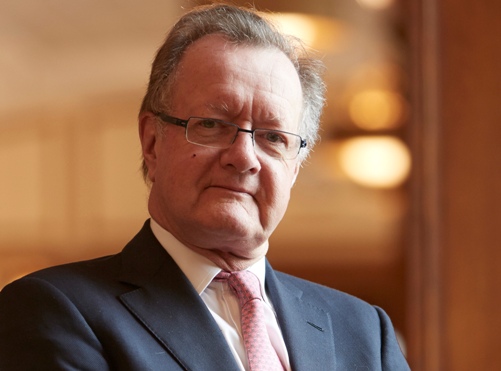
Charles Edward Wilson Professor of Business Administration at the Harvard Business School, John A. Quelch, has several years of industry and academic experience in leadership, corporate accountability and management. Professor Quelch holds a joint appointment at Harvard School of Public Health as Professor in Health Policy and Management and is also a fellow of the Harvard China Fund, a member of the Harvard China Advisory Board and is an associate in research at the Fairbank Center for Chinese Studies. But in addition to his various esteemed roles, John Quelch is also a dedicated Co-Founder and member of the Board of Directors of the Boston Global Forum (BGF). In this interview, Professor Quelch speaks to BGF to describe the pressing need to address worker safety issues and his vision of how Boston Global Forum can do just that.
John A. Quelch
BGF: You’ve traveled and lived in several parts of the world. What drew you to an idea of a forum in Boston? And how do you see a small group of people in Boston making a difference to such large global issues?
Professor Quelch: Boston is a global intellectual hub with thousands of national and international thinkers and scholars in distinguished universities like Harvard and MIT, famous multidisciplinary hospitals and hundreds of public and private sector enterprises. Second, Boston has a large capacity for people, from diverse private and public sector disciplines and experiences, to dialogue on issues. We invariably find that the most important issues of the day, those that are also the most difficult to solve, bridge the public and private sectors and demand collaboration, partnership and dialogue to be resolved. Governor Dukakis suggested differentiating the Boston Global Forum by focusing on one issue each year. So, instead of being a mile wide and an inch deep, we attempt to focus on one particular issue of current and long-lasting significance and one that, given the benefit of heightened visibility through open discussion, could lead to improvement or resolution of the issue. We hope that these discussions will generate recommendations that can guide those associated with policy-making in the private and public sectors.
There are not many researchers focused on this year’s issue- Minimal Standards for Worker Safety- compared to global warming, for example. Worker safety in emerging economies is not something that captures the headlines each day yet it’s very important to the lives of millions of people around the world.
BGF: In prior meetings you have mentioned that the issue of worker safety has been on your mind for a while and that the Bangladesh collapse was “an unfortunate catalyst.” Why were you thinking about worker safety and what made you consider it a pressing issue?
Professor Quelch: I used to be on the board of Reebok, the athletic footwear company, for 12 years before it was taken over by Adidas. During the 1990s, there was concern over conditions at plants in the Far East, where sub-contractors of Nike, Reebok and other footwear manufacturers made very expensive sneakers. A very small portion of the value captured actually went to the workers who made the sneakers. In fairness, the companies responded to the pressure and set up procedures for auditing the working conditions in the factories of the sub-contractors. However, improvements that are made in one industry or one product category don’t necessarily spill over to other product categories where fabrication may be easier or cheaper or more labor intensive, or where the countries involved are very poor. The efforts made by the footwear manufacturers did not apparently spill over to the manufacture of apparel. Beyond the top brands, there are many factories that making cheap apparel for price-sensitive consumers around the world and selling that apparel through private label channels or unbranded channels. There is more reputation risk to a strong brand name if a factory has poor worker safety conditions, but so much of the apparel that is sold is unbranded, compared to footwear.
BGF: My next question is inspired by your latest book Greater Good, how marketing practices can make for better democracy. Based on media reports, the Bangladesh government appears to be too corrupt to make a significant difference to the garment industry even with international pressure. From your understanding, how can international pressure make a positive impact if the government is so corrupt?
Professor Quelch: There are two ways to make a difference. First, consumers have considerable power if they wish to exert it. So one approach is to make consumers more aware of the products that they’re purchasing, where those products come from and the conditions of the workers who make those products. You might call this a ‘pull strategy’. You focus on informing and motivating the end consumer to pull and create a demand for quality and minimum worker safety conditions as a prerequisite for purchase. There are precedents for international labeling or international certification approaches that provide consumers with that information at the point of sale and can inform them as to whether or not that garment is a fair trade garment, where fair trade could be defined as worker safety compliance.
The second avenue is a ‘push’ approach that involves Western governments. Many Western politicians take a serious interest in international worker safety. They can call out the Bangladesh government if it is not doing what is necessary and potentially persuade those firms who contract with Bangladesh sub-contractors to move their business elsewhere to Cambodia or Pakistan, or to other countries that might be willing to comply with and enforce higher worker safety standards in return for securing that business.
BGF: How do you see Boston Global Forum developing and growing and what other issues do you see it addressing in the coming years?
Professor Quelch: BGF will evolve step-by-step. A lot depends upon whether we are seen to make a difference on the issue of the year for 2013. Our goal is to add value by bringing people together in a forum where they have an opportunity to debate alternative approaches to addressing the issue. In the end we’re going to have to demonstrate that we have an impact beyond merely being a talking shop because that’s really not a sufficient point of differentiation.
I personally hope that emanating from our discussions will be a greater involvement of US private businesses or the US government either unilaterally or through international organizations to bring to the emerging economies worker safety standards that are closer to those that American workers enjoy. The US has a responsibility as a leader in the free world, not just as a leader in military or foreign affairs problem-solving, but also as a leader in terms of the values that should guide responsible capitalism. We have the ability to help develop capacity for a fair capitalist model in emerging economies. At the moment, in many parts of the world, the capitalist model of the West is discredited and many point to China as offering a better model for young emerging economies. The US must regain the moral high ground in terms of setting good standards not only for Americans but also for workers around the world. Most American consumers would support this approach even if it cost them a few pennies more at the cash register. When you think about the quantity of apparel that is discarded in the US every week, it isn’t as though people are short of money to buy t-shirts. If it costs a few pennies more to bring a better quality of life to the people who make those products, I think a vast majority of Americans would be open to making that kind of an investment.
BGF has to achieve some demonstrable positive impact on lives of the people that we are focused on. I’m sure that if we are seen to do a good job on this initial issue then there will be a stream of other issues that people will want to propose for similar discussion and follow through.
by Admin | Aug 21, 2013 | Highlights
Interestingly, the fire and collapse in Bangladesh’s garment factories in the last year, have not initiated a relocation of supply chain production for major apparel retailers. In this Reuters story, the sad truth that led to compromised safety standards, still seems to prevail- Cost is still King.
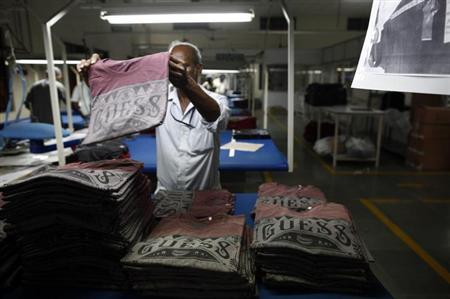
An employee sorts newly finished T-shirts at the Estee garment factory in Tirupur in Tamil Nadu June 19, 2013. Credit-REUTERS/Mansi Thapliyal
(Reuters) – With knitwear exports of over $2 billion a year, India’s garment manufacturing hub Tirupur has earned the nickname “Dollar City,” but its allure for price-conscious global retailers obsessed by discounts of as little as one U.S. cent pales before Bangladesh.
Indian and Southeast Asian apparel manufacturers had hoped the orders would come flooding in, after the deadly collapse of a Bangladesh garment factory complex this year galvanised global brands such as Hennes & Mauritz AB (H&M) (HMb.ST) to consider relocating production.
But several industry organisations and factories contacted by Reuters in Vietnam, Cambodia, Indonesia, Sri Lanka and India – Asia’s top apparel makers outside China – said international retailers were not beating a path to their door just yet. When it comes to price, Bangladesh is king.
“The reason Bangladesh went from zero to hero in the garment sector is because there is no country with such low labour and other costs,” said Arvind Singhal, chairman of India-based retail consultancy Technopak Advisors.
“No buyer is in a hurry to move from Bangladesh because Western retailers are stressed about passing any retail price increases to customers,” he said. “Currently, there is no substitute for Bangladesh, where manufacturers even risk operating from rickety structures to cap costs.”
Wal-Mart Stores Inc (WMT.N) has stood by its Bangladesh production, saying the South Asian nation remains an important sourcing market. H&M also said its quest for alternative manufacturers was not at the expense of Bangladesh.
“We are not reducing our purchases from Bangladesh. We aspire to have long-term relations with our suppliers,” H&M spokeswoman Elin Hallerby said. “We are always looking at new production capacity to support our continuous expansion.”
The latest data from Bangladesh highlights its enduring appeal: garment exports in June rose 26 percent year-on-year to $2.2 billion.
COST IS KING
More than four million people, mostly women, work in Bangladesh’s clothing sector, making it the second-largest global apparel exporter behind China.
The world’s biggest fashion retailers, Inditex SA (ITX.MC) and H&M, as well as Wal-Mart, Gap Inc (GPS.N) and JC Penney Company Inc (JCP.N) are a few of the brands manufacturing there.
The $21 billion-a-year industry has been built on low wages, government subsidies and tax concessions from Western countries. But the collapse of the Rana Plaza factory complex outside Dhaka in April raised concerns about safety loopholes. The disaster, one of the world’s worst industrial accidents, killed 1,132 people.
The collapse prompted global brands to consider tapping regional alternatives.
Indonesian textile firm Sri Rejeki Isman PT (Sritex) (SRIL.JK), which makes clothing for Zara, H&M and other brands, said it was in talks with H&M about taking over an as yet unspecified amount of Bangladesh-sourced production. H&M declined to comment.
But as large factory owners across the region discovered, translating talks into orders is difficult as, compared to Bangladesh, they are considered too expensive.
“Garments produced in Bangladesh have a very competitive price, around two-to-three times lower than in Vietnam,” said Nguyen Huu Toan, deputy director of SaiGon 2 Garment JSC, a Vietnam factory whose clients include British fashion retailers New Look and TopShop.
The cost disadvantage also impacts Sri Lanka’s $4 billion-a-year garment industry, and factory owners there say any shift in production from Bangladesh will be transient.
“We are much better than any other country in the region, but it is a temporary advantage,” said Tuly Cooray, the secretary-general of industry group Joint Apparel Association Forum. “At the end of the day, the price is going to matter.”
NOT CUT FROM THE SAME CLOTH
The economic slowdown in Europe and the United States has made retailers all the more keen to seek out the lowest-cost manufacturing centres to keep their store prices down.
N. Thirukkumaran, owner of Tirupur-based apparel maker Estee which racked up $8.3 million in sales last year, said he holds marathon haggling sessions with foreign customers demanding discounts as little as one cent per unit.
At least one U.S. retailer asked about moving production from Bangladesh, he said, but they have yet to place orders. Thirukkumaran would not name the brand, citing client confidentiality.
“There are positive signals from buyers, but they are still sceptical about price,” he added.
Monthly minimum salaries for garment sector workers in Bangladesh average around $38, far below the $100 average for Indian factory workers.
After the Rana Plaza collapse, the cabinet approved changes to the labour laws that pave the way for garment workers to create trade unions without the approval of factory owners.
The cabinet also formed a wage board to consider pay increases. But industry experts say Bangladesh has too much to lose by alienating global retailers, which means that for now, the low costs are here to stay.
“No other destination has what we have and that is skilled and cheap labour,” said Mohammad Mujibur Rahman, a Bangladeshi academic leading factory inspections.
“Foreign buyers realize this and nobody is in a hurry to move out … there might be a small trickle outside, but nothing significant that will hurt us.” (Additional reporting by Nandita Bose and Ruma Paul in DHAKA, Shihar Aneez in COLOMBO, Nguyen Phuong Linh in HANOI, Fathiya Dahrul in JAKARTA, Jessica Wohl in NEW YORK, Anna Ringstrom in STOCKHOLM; Writing by Miral Fahmy and John Chalmers; Editing by Ryan Woo)
by Admin | Aug 21, 2013 | Highlights
On August 20, 2013, the American alliance elected an Ellen O’ Kane Tauscher as the independent chair of its board of directors, and also welcomed three new members- Costco, Intradeco Apparel and Jordache Enterprises, bringing the total up to 20 retailers and apparel brands. Read more in this story from just-style.com.
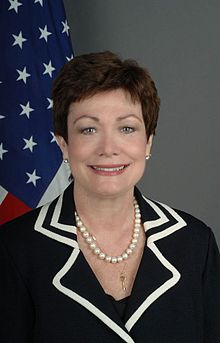
Ellen O’Kane Tauscher. Source- Wikimedia Commons
US: Bangladesh Safety Alliance Names Chair as Talks Begin
The group of leading retailers and brands who make up the North American Alliance for Bangladesh Worker Safety has named Ellen O’Kane Tauscher as the independent chair of its board of directors.
The Alliance also said it has been joined by three more companies – Costco, Intradeco Apparel and Jordache Enterprises – bringing the total to 20 apparel companies, retailers and brands.
With the new members, more than US$45m has been committed to administer the programmes developed by the Alliance over the next five years to help improve factory safety conditions for garment workers in Bangladesh.
A two-day board meeting is now underway in Chicago, where members will be briefed on progress toward several milestones taking place next month, including development of a common Fire and Building Safety Standard and Inspection Protocol, and the fire and safety training curriculum that will be given to factory managers and employees.
In September, the Alliance expects to announce the selection of its operating team, including the executive director for the programme.
Leading the board of directors, Tauscher is a seven-term member of Congress and has worked for the US Department of State. She was appointed by president Barack Obama as under-secretary of state for arms control and international affairs, serving in the role from 2009-2012.
When she returned to the private sector in 2012, she joined Baker Donelson Bearman, Caldwell & Berkowitz PC, in Washington DC as strategic advisor to clients in national security, defence, transportation, export control and energy policy areas.
“The respect Ellen has earned in Congress, the State Department, and the private sector will serve her well in the role as an independent leader and convener who can work with Alliance members and governments to pursue the critical safety mission and aggressive implementation schedule,” said Ambassador James Moriarty, an Alliance board member and former US Ambassador to Bangladesh.
The board also includes three other stakeholder representatives, including Mohammad Atiqul Islam, president of the Bangladesh Garment Manufacturing and Exporters Association (BGMEA); Randy Tucker, global leader of the fire protection and safety team at CCRD, a Houston-based engineering firm; and Muhammad Rumee Ali, managing director of enterprises at BRAC, the international NGO founded in Bangladesh.
Four Board members from Alliance companies include: Daniel Duty, vice president of global affairs for Target; Jay Jorgensen, senior vice president and global chief compliance officer forWal-Mart Stores Inc; Tom Nelson, vice president for global product procurement for VF Brands; and Bobbi Silten, senior vice president of global responsibility for Gap Inc and president of Gap Foundation.
Other retailers and brands that have signed up to the Alliance include: Canadian Tire Corporation; Carter’s; The Children’s Place Retail Stores; Gap; Hudson’s Bay Company; IFG; JC Penney; The Jones Group; Kohl’s Department Stores; LL Bean;