Message from the World Bank’s Timothy G. Evans – Director of Health, Nutrition and Population

Message from the World Bank’s Timothy G. Evans – Director of Health, Nutrition and Population

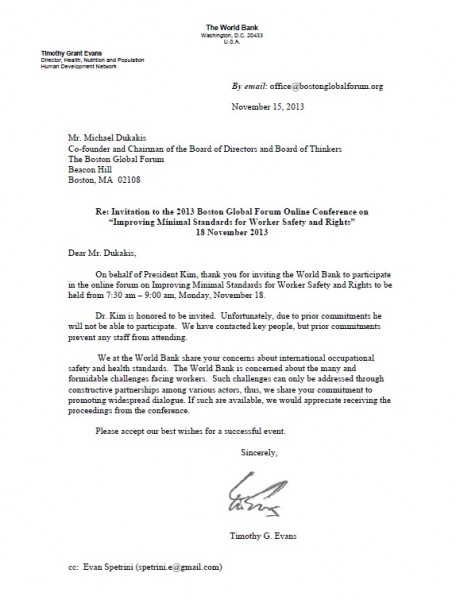
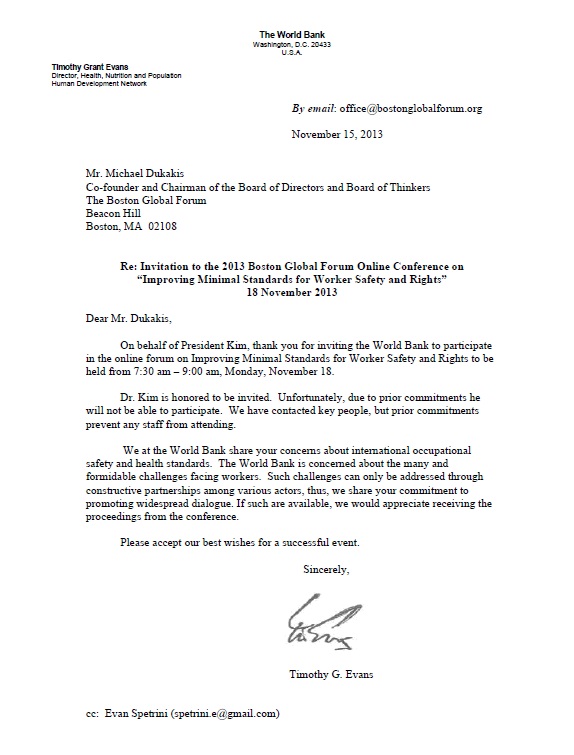
From the World Bank’s Timothy G. Evans – Director of Health, Nutrition and Population has sent us the following letter.

Letter from WB

Dear Mr. Dukakis,

On behalf of President Kim, thank you for inviting the World Bank to participate in the online forum on Improving Minimal Standards for Worker Safety and Rights to be held from 7:30 am – 9:00 am, Monday, November 18.

Dr. Kim is honored to be invited.  Unfortunately, due to prior commitments he will not be able to participate.  We have contacted key people, but prior commitments prevent any staff from attending.

We at the World Bank share your concerns about international occupational safety and health standards.  The World Bank is concerned about the many and formidable challenges facing workers.  Such challenges can only be addressed through constructive partnerships among various actors, thus, we share your commitment to promoting widespread dialogue. If such are available, we would appreciate receiving the proceedings from the conference.

Please accept our best wishes for a successful event.

Sincerely,

Timothy G. Evans

Director of Health, Nutrition and Population

BOSTON GLOBAL FORUM ANNOUNCES NOV. 18 CONFERENCE ON MINIMAL GLOBAL STANDARDS FOR WORKER SAFETY AND RIGHTS

BOSTON GLOBAL FORUM ANNOUNCES NOV. 18 CONFERENCE ON MINIMAL GLOBAL STANDARDS FOR WORKER SAFETY AND RIGHTS

Which is greater: the cost of corruption, or the cost of compassion?”

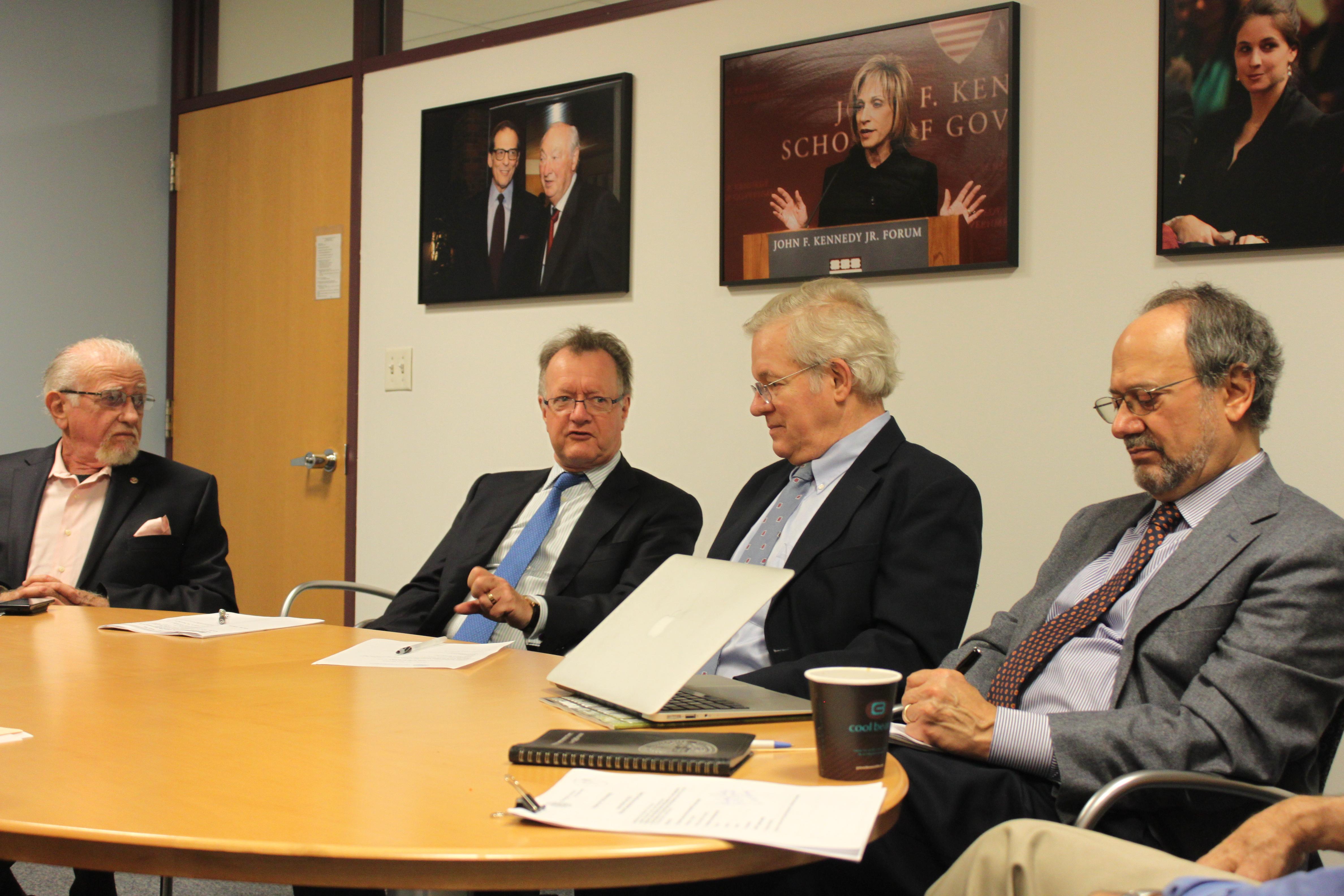
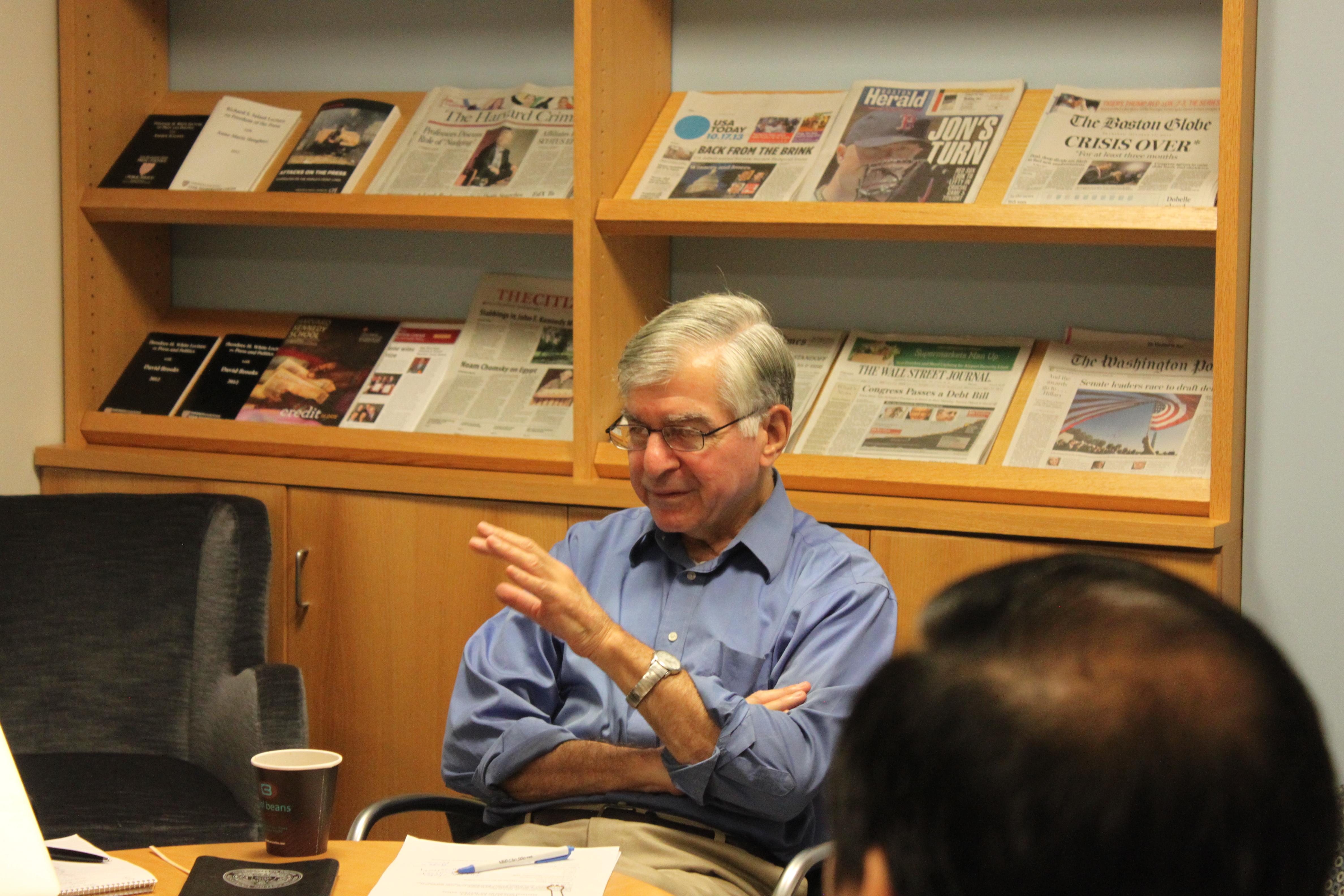
That was the question posed during a recent meeting of Boston Global Forum. Led by BGF Co-Founder and Chairman Michael S. Dukakis, attendees gathered to discuss the plight of the working poor worldwide, and determine paths of action to address the pandemic problem of worker safety.

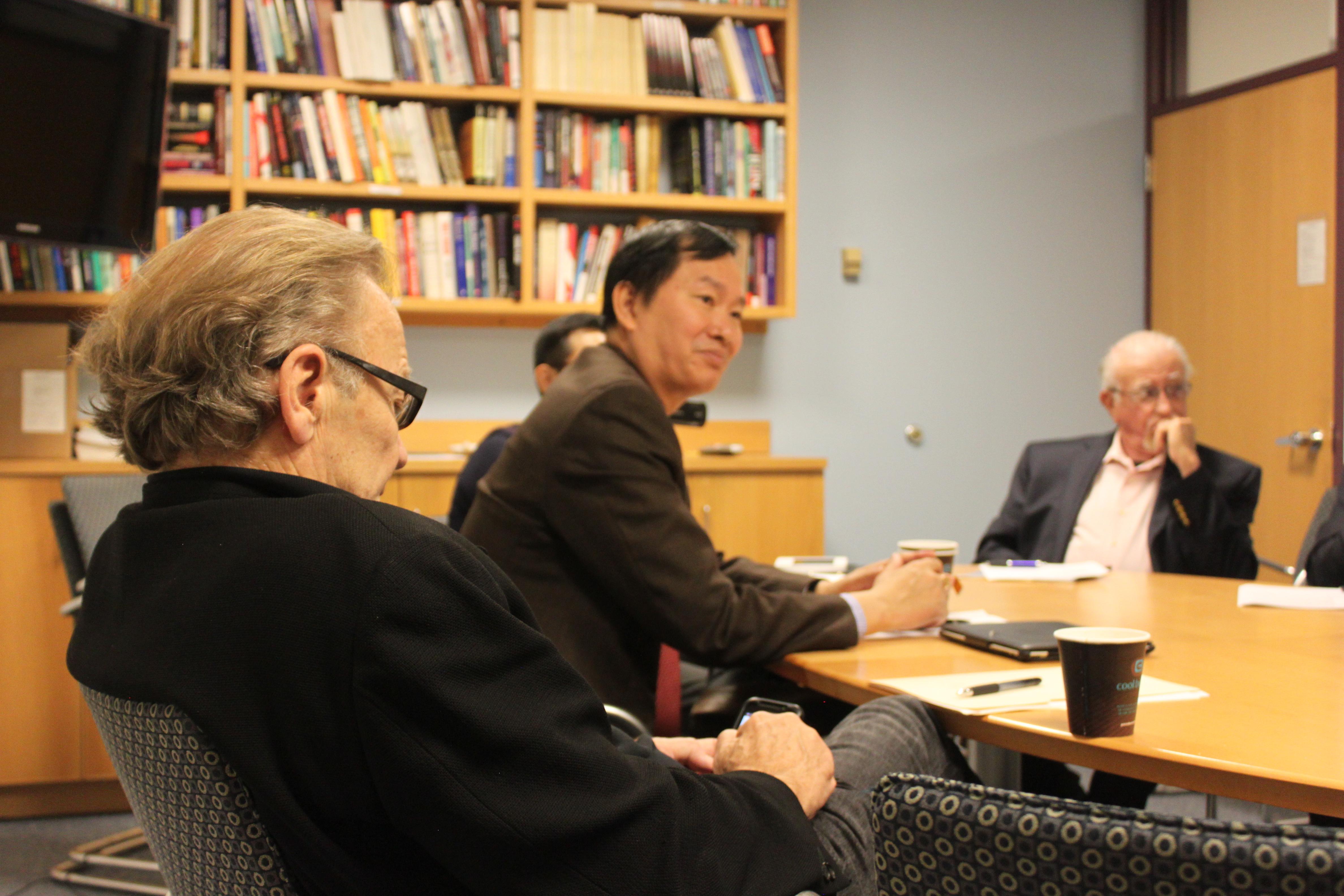
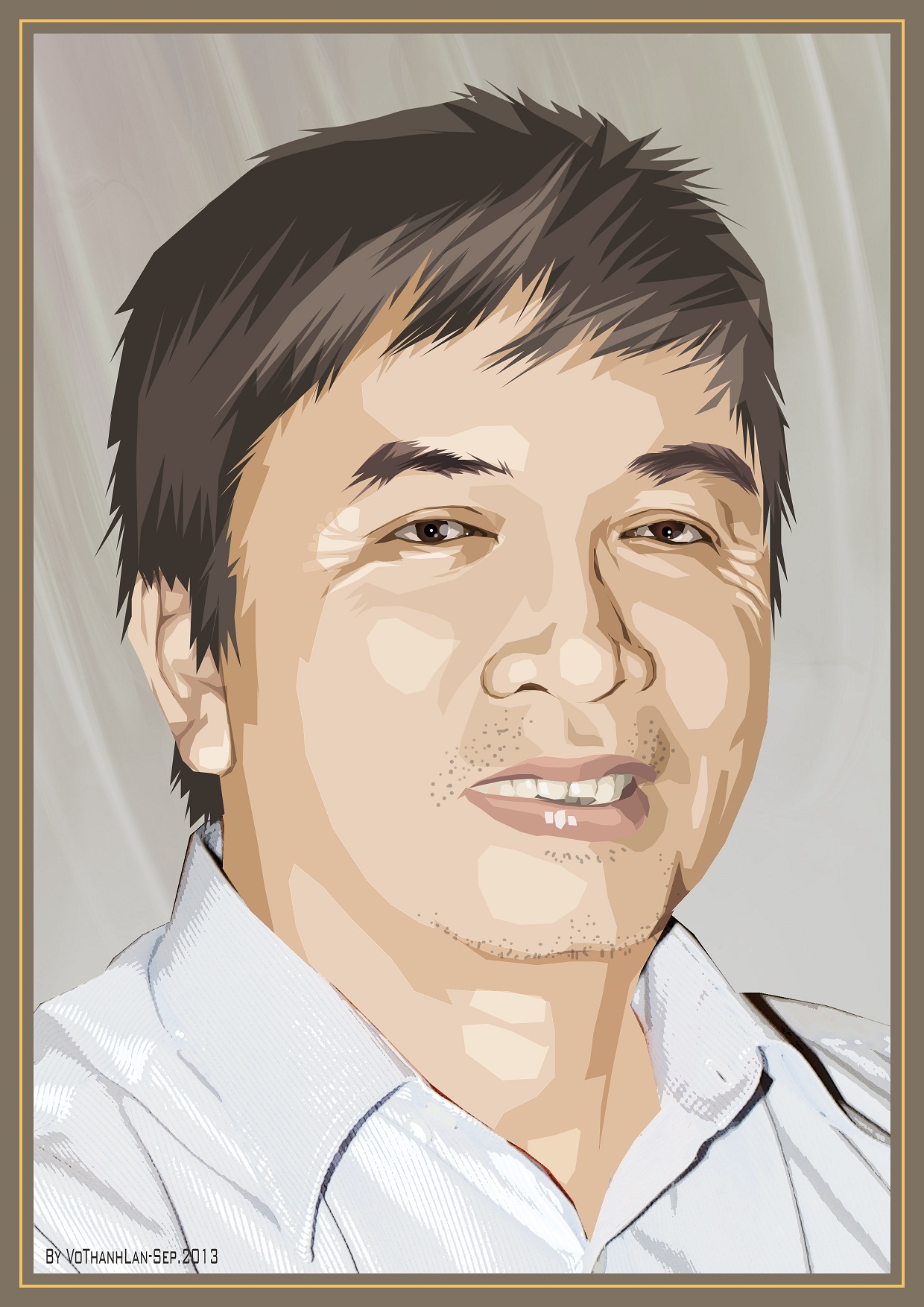
Mr. Tuan Nguyen, Editor-in-Chief of Boston Global Forum.

Mr. Tuan Nguyen, Editor-in-Chief of Boston Global Forum.

Global outcry reached a peak on April 24, 2013, when more than 1,000 garment workers in the Rana Plaza of Bangladesh – most of them women – were killed in a factory collapse. The building was just one of the country’s 5,000 factories, few of which are regulated, and the tragedy shone a spotlight on the need for workplace requirements as well as human dignity.

Bangladesh is pivotal to the international garment industry. While it is second only to China in the revenues generated from garment production, Bangladesh’s factory workers have little hope for economic growth, receiving just one-fifth of the wages Chinese garment workers receive. Despite this economic disparity, garment exports from Bangladesh are expected to triple between 2005 and 2010, and triple again by 2020.

Declaring minimal standards for worker safety as the 2013 Issue of the Year, the Boston Global Forum will host a conference on minimal global standards for worker safety on Nov. 18th from 7:30-9 a.m. The web-based seminar will air early to allow individuals from Asia to participate. The conference will bring together leaders in public policy, business, organized labor, civil society and the media, as well as providing participants the opportunity to provide their own viewpoints.


Chairman Dukakis posed a thought-provoking point during the meet

Chairman Dukakis posed a thought-provoking point during the meeting.

Dukakis stressed the importance of not only providing a forum for people to discuss issues of worker rights, but also bringing together leaders from multiple fields connected to international production and business. “We have an enormous opportunity here,” Dukakis said. “If we can bring in good people and develop a growing group who have significant experience dealing with this, we can really make some sense (of this issue).”

Tuan Nguyen, Co-Founder and Editor-in-Chief of the Boston Global Forum, focused on diversifying the conference’s audience between the U.S. and Asia. “It’s very important, and the online conference will help many people contribute, moderate, and even interact across online and social media,” he said.

Professor John Quelch of the Harvard Business School addresses the meeting.

Professor John Quelch of the Harvard Business School addresses the meeting.

Robert Kuttner, Co-Founder and Co-Editor in Chief of The American Prospect magazine, said, “what drives (this situation) is these desperately poor countries eager to attract lots of jobs in apparel. There are hundreds of millions of people who desperately need these jobs. Even though these jobs are dismal by American standards, defenders of the low standards will say, well, they’re better than what was there before. It incubates an industry that you hope will be the first rung on the ladder of better industries.” Therefore, Kuttner said, it might behoove the conference to address not only workers’ safety, but also worker and labor rights.

Dukakis agreed, adding that the American public would be shocked to learn just how much of a difference a few pennies could make in the lives of workers. In most cases, he said, “we’re talking about a nickel (per purchase). I think the American people would respond to that.”

John Quelch, Professor of Harvard Business School, pointed out that another crucial factor of international relations was corruption.“There can be very sharply enforced rules, and still money is going under the table into somebody’s pocket,” he said. “But I’m really convinced, when looking at the economics of this issue, is that the cost of compassion is less than the cost of corruption, in terms of the retail price effect.” Still, Professor Quelch said, “the volume of production in Bangladesh is so enormous that it’s a (crucial) part of the world’s supply.”

Ultimately, meeting attendees decided to reach out to leaders across multiple fields, including public policy, journalism, civil society, business, and organized labor. The Online Conference on Minimal Global Standards for Worker Safety will be broadcast on Boston Global Forum at 7:30 a.m. Nov. 18th Boston time.

Another Possible Solution: The Trans-Pacific Partnership (TPP)

Another Possible Solution: The Trans-Pacific Partnership (TPP)

Frequent readers of our posts may have followed our developments on understanding the Cambodian model and whether it is implementable in other parts of the world. On another front, Mr. Nguyen Van Phu, Managing Editor of the Saigon Economic Times, explains the two schools of thoughts in Vietnam regarding the controversial TPP agreement. In his blog post to the Financial Times on October 10th, 2013, Mr. Phu describes how the TPP is being used by advocates as a way to enforce better labor standards for domestic workers.

Interested parties can access the original blog post from the Financial Times here.

Guest post: TPP is a remedy but of a different kind

Nguyen-Van-Phu

Activists in Vietnam fight tenaciously for many things. They’ve advocated land ownership for farmers, equal footing for the state-owned and private sectors and the suspension of a costly bauxite project that is neither financially viable nor environmentally friendly. And yet, they have never raised their voices against the dark sides of free trade agreements as have their peers in other developing countries.

Granted, the Trans-Pacific Partnership (TPP), a comprehensive free trade agreement that Vietnam is negotiating with 11 other countries including the US, will bring Vietnam some obvious benefits. However, these activists also understand very well the negative aspects of joining this “high standard” trade agreement at a time when their country is at the bottom of the global value chain. They know that local farmers will be exposed to new competition with their richer and heavily-subsidised counterparts; that Vietnam will get stuck with low-wage, environmentally costly labour-intensive industries like textiles and garments where local manufacturers can’t move beyond subcontracting jobs; and, most of all, that stricter intellectual property rights will likely translate into more expensive drugs for the Vietnamese people.

Not only have Vietnam’s liberals kept their mouths shut about these issues, they have tried to sell the TPP to the people as something inevitable, a remedy for all economic woes.

The reason is simple: these liberals want to use the requirements imposed by the TPP on its members as leverage on the government to implement much-needed reforms. They hope that once within the TPP framework, Vietnam’s government will have no option but to abide by transparency in policy-making, cease giving preferential treatment to state-owned companies, open government procurement to the private sector and pay more attention to environmental requirements… In short, do those things that their government is supposed to do but does not.

These omissions are seen especially in the case of Vietnamese workers’ well-being. Vietnam is a “socialist” country where workers are supposed to be the leading political and economic force. Ironically, however, it is the “capitalist” US that is putting pressure on Vietnam to protect workers’ interests by setting up independent labour unions. It is exactly such TPP requirements that induce many Vietnamese liberals to give their strong support to joining the trade agreement.

Among the requirements that the US will impose in return for greater access to its market, especially for Vietnamese textiles and footwear, is better treatment of workers. In a stark reality check, US Representative George Miller, a Democrat from California, has written to US Trade Representative Michael Froman questioning whether Vietnam can comply with its TPP commitments because, Miller wrote, there is evidence that export industry workers in Vietnam are “routinely denied basic labor standards.”

Froman’s written reply is also to the point: “By including Vietnam in the TPP negotiations, we have [a] mechanism to improve adherence to labor rights and working conditions in Vietnam that would not exist otherwise.”

The proposed TPP text would apply the International Labour Organization’s principles of freedom of association and the right to collective bargaining, as well as the elimination of all forms of forced labour, child labour and gender discrimination.

People may ask if Vietnamese workers aren’t protected by their government and point to an extensive network of labour unions. The sad fact, however, is that the labour unions are mostly for show. They are used as instrument of state control, and union representatives are more like officials than workers’ representatives. They are normally the ones who prevent workers from going on a strike, rather than organizing it.

A recent scandal involving four public utilities companies in Ho Chi Minh City is so far the strongest evidence of this collusion. The directors of these state-owned companies draw salaries ranging from $100,000 to $130,000 annually in a country where the per capita income is just $1,500. How could they pay themselves such high salaries? They resorted to the very basic trick of “exploiting” their own workers: instead of signing on workers as full-time employees who would enjoy full wages and benefits, they hired them as seasonal workers who were paid as little as $250 to $350 a month.

Arguably, if the workers had an independent labour union, such a scandal would not have happened. If the labour union representatives at these companies did not receive perks from the directors, they would not keep their mouths shut as they did in this case.

Such scandals make people in Vietnam wonder if it is a blessing in disguise that the US seems to be really pushing for better working conditions. Foreign investors, including those from the US, seem to like the way labour unions in Vietnam operate now. The Vietnam Chamber of Commerce and Industry, which represents domestic enterprises, has complained that “Vietnam is not ready for such high requirements on labour standards and implementation, which would increase costs for entrepreneurs, risk workers’ unemployment, and have high implementation costs.”

So whether liberals in Vietnam should regard the TPP as a remedy or just an irony, or even a double irony, remains to be seen.

Addressing Workers’ Condition in the World: A Conversation with Arnold Zack (Part 2)

Addressing Workers’ Condition in the World: A Conversation with Arnold Zack (Part 2)

Boston Global Forum (BGF) had another opportunity to speak with Arnold Zack, an Arbitrator and Mediator of over 5,000 Labor Management Disputes since 1957; former President of the Asian Development Bank Administrative Tribunal; designer of employment dispute resolution systems;; occasional consultant for the governments of the United States (Department of State, Peace Corps, Department of Labor, Department of Commerce), Australia, Cambodia, Greece, Israel, Italy, Philippines, and South Africa, as well as the International Labor Organization, International Monetary Fund, Inter-American Development Bank, and UN Development Program. He has also been a Member of Four Presidential Emergency Boards (chair of two). (Harvard Law School), and currently teaches at the Labor and Worklife Program at Harvard Law School.

zackSM

BGF: Following up on our previous conversation, I had an opportunity to sit down with Professor Kent Jones of Babson College, who described the situation in which Cambodia came to be an ideal location for the International Labor Organization, and their offspring, The Better Factories Cambodia, to come in and establish reasonably acceptable working standards. However, Professor Jones also warned that further replication of the model is not possible elsewhere. What is your opinion on this matter and what else do you think a group like Boston Global Forum can do to address this issue?

Arnold Zack: The Cambodian situation arose during a unique period of history and can probably not be replicated at the moment. However, there was a piece in the Wall Street Journal on Sept 23rd, 2013 reporting that Better Factories Cambodia is about to begin publicizing compliance of firms with 21 standards, including worker rights, fire safety and treatment of unions. Several international brands and firms (including Wal-Mart) have endorsed the program while the Cambodian government and the Garment Manufacturers Association have opposed it. Such a program would not be possible without independence from Cambodian control, and freedom from the corruption that plagues national government intervention in most efforts and improving worker conditions in Southeast Asia

As to what the Forum could do, I would love to see a replication in some other countries in South East Asia, ie. Bangladesh, Myanmar or Vietnam. Such replication would have to come from more powerful organizations, although the focus on Bangladesh at the present might make that a possibility. I am not sure if the ILO is looking to be involved, even though they have set up similar programs in Africa.

Right now, I think the real need is getting existing Codes of Conduct implemented in these countries, and not focusing on establishing new ones. The Codes themselves are meaningless and multitudinous. Local factories ignore them. Ideally, local governments would help enforce them as in the case of Brazil, where graft is not such a problem.  That is why international initiatives such as by the ILO are keys to advancement. I do not think the WTO is a player or wants to be. They are serious about enforcing intellectual property covenants and codes, but have clearly restrained themselves from involving in any social clauses or workplace codes.

Finally, I don’t think there is any route through the World Bank or the IMF. Having been involved with both organizations over the years (I led a survey team on reforming the Funds internal dispute resolution system), I can attest to their disinterest in social responsibility issues. Individual staff members might be interested but their focus is necessarily on dealing with financial and fiscal problems of governments and in gigantic infrastructure projects with no jurisdiction over workplace conditions.

Related article:

Addressing Workers’ Condition in the World: A Conversation with Arnold Zack (11 Sep 2013)

Despite what happened, Bangladeshi factory owners still abuse their workers

Despite what happened, Bangladeshi factory owners still abuse their workers

Even though safety standards have improved somewhat, Bangladeshi factory workers are still being abused due to wage and overtime violations carried out by their supervisors. Unfortunately, this situation is caused by the flawed monitoring activities by big brand names, including the Gap Inc. VF Corp., which owns The North Face, Wrangler and Nautica, and PVH Corp., which owns Tommy Hilfiger. Clearly, these multinationals need to step up their monitoring efforts as they recently all made pledges to crack down on poor working conditions in their subcontractors’ factories.

Shelly Banjo of the Wall Street Journal has the story.

Bangladesh Garment Factories Often Evade Monitoring

Safety Improves but Wage, Overtime Violations Remain Common

DHAKA, Bangladesh—Next Collections Ltd., one of more than two dozen factories owned by one of Bangladesh’s largest garment producers, tells buyers its workday runs from 8 a.m. to 6 p.m.

On a recent Saturday night, however, bright fluorescent lights flickered well past 10 p.m. as workers inside furiously stitched children’s skinny jeans bound for Gap Inc.’s Old Navy stores.

The company regularly keeps many of its 4,500 workers late—sometimes until 5 a.m.—to meet production targets set by retailers like Gap, VF Corp. and Tommy Hilfiger parent PVH Corp.  The workers themselves sometimes welcome the extra pay, but the practice apparently conflicts with the retailers’ stated policies and a Bangladeshi law that prohibits more than 10 hours of work a day, including two hours of overtime.
AM-BA543_BANGLA_DV_20131003111034Photo: Shelly Banjo/The Wall Street Journal
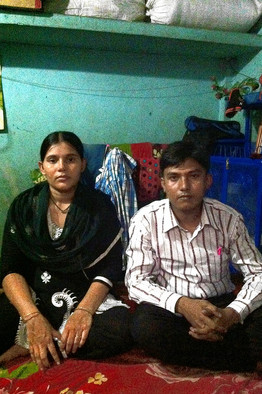
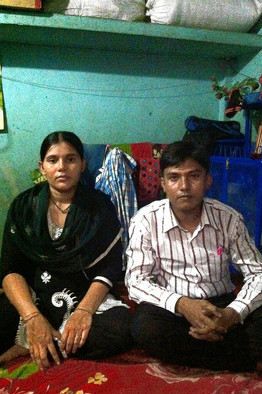
Mohammad Mazharul Islam, a former worker at the Next Collections factory, where he alleges he was beaten.

The late hours at the Next Collections factory show the challenge retailers face in trying to police supply chains that can run to hundreds of factories in several countries. It also makes clear that recent pledges by retailers to crack down on poor working conditions in the wake of multiple deadly disasters in Bangladesh’s textile industry won’t amount to much without careful follow-up to monitor compliance.

Ha-Meem Group, which owns Next Collections, didn’t respond to repeated requests for comment. In an interview with The Wall Street Journal earlier this year, owner A.K. Azad said the company is eager to keep its workers happy.

Next Collections’ gray concrete compound, located along a dirt road in the congested outskirts of the Bangladeshi capital, keeps two sets of records and pay slips, according to interviews with nearly a dozen current and former workers and managers, and supported by pay documents reviewed by the Journal and a current manager at the factory group.

“It is easy, because auditors and buyers never come around late at night to check these things,” the current factory manager said in an interview. “Sometimes, it is the only way to meet the orders on time.”

From June through September, one set of computer-generated pay slips provided to buyers and reviewed by the Journal depicts a 48-hour workweek with no more than 12 hours of overtime. Another set of handwritten documents, confirmed by the current manager, outlines which workers received dinner stipends worth about 40 cents for working past 1 a.m. That set of documents appears to show that many employees were in fact routinely working more than 100 hours a week.

imagePhoto: Shelly Banjo/The Wall Street Journal
Next Collections keeps two sets of books on workers. The handwritten one logs late hours for worker 43012, not shown on the pay stub.

Many of the factory records were provided to the Journal by the Institute for Global Labour and Human Rights, a workers’ rights nonprofit based in Pittsburgh. Order and production records as well as clothing labels reviewed by the Journal show that the factory recently fulfilled orders for Gap, VF and PVH. Some of the workers interviewed for this article were referred to the Journal by the institute.

VF, whose brands include The North Face, Wrangler and Nautica, has decided to stop placing work with Next Collections after finding repeated violations of its standards on wages and hours worked, according to spokeswoman Carole Crosslin. She said VF will still place orders with other Ha-Meem Group factories.

A VF compliance officer found some of the violations during an audit in January. A review in March showed the factory had made progress, but the company pulled out after another check on Sept. 23 showed the problems had returned, according to Ms. Crosslin.

“Based on our audits of Next Collections and the unwillingness of the factory’s management to fully partner with us to meet and sustain compliance with our standards, we are planning to exit the facility,” Ms. Crosslin said.

imagePhoto: Saima Kamal for The Wall Street Journal
At the Next Collections factory, lit up in the far background, garment workers are sometimes kept until 5 a.m.


Gap said it launched an investigation into possible violations of its standards in response to inquiries by the Journal last week. It has interviewed 50 current workers and management but has yet to reach a conclusion.

“Our contracts require that factory management pay overtime and abide by all local labor laws and industry standards,” spokeswoman Debbie Mesloh said. “Should these allegations prove to be true, Gap Inc. will take action, up to and including terminating its business relationship.”

A spokesman for PVH said the company’s records show it hasn’t produced at the facility since early 2011 but that it would continue to look into possible unauthorized production, such as work that is subcontracted to the factory without PVH’s knowledge.

PVH, based in New York, has signed on to an accord led primarily by European companies that sets legally binding rules for safety improvements at Bangladeshi factories funded by retailers and apparel companies. Gap and VF have joined a separate pact led by American companies that isn’t binding and will help finance improvements that will be paid for by the factory owners. Both accords set up inspection regimes that are aimed at weeding out unsafe factories.

Labor groups and safety experts say fair treatment of workers and the sorts of practices that make factories less disaster prone go hand in hand. In many deadly incidents, workers have noticed problems but were ignored by managers focused on meeting orders.

That includes the Rana Plaza garment factory, where workers were alarmed by new cracks in the building but were forced to go back to work. The collapse of the building in April killed more than 1,100 people. The incident and a series of deadly fires that have killed hundreds more have focused international attention on safety conditions in Bangladesh.

Conditions at factories like Next Collections show that even if factories add fireproof doors and shore up cracks, the economics of a garment business that awards short-term contracts to the lowest bidders means factories still face pressure to violate wage and hour policies to compete, according to Charles Kernaghan, director of Institute for Global Labour and Human Rights.

Abundant workers who are among the lowest paid in the world have helped make Bangladesh one of the largest exporters of clothing for Western consumers hooked on cheap goods. The country’s minimum monthly wage stands at 3,000 taka, or about $40. Workers have held protests across the country in an effort to raise it to about $100.

Ha-Meem Group is a big player in the industry. The group of factories is run by Mr. Azad, the former president of the Federation of Bangladesh Chambers of Commerce and Industry and the owner of a prominent Bangladeshi television station and newspaper.

Next Collections began production in 2011 to absorb orders after a fire damaged another Ha-Meem Group factory nearby. The 2010 fire at That’s It Sportswear—which was producing clothes for the Gap, PVH and J.C. Penney Co. —killed at least 27 workers and injured 100 others.

Following a public outcry, Gap, PVH and Penney sent a letter asking Mr. Azad and Ha-Meem Group to improve safety at their factories. Gap stayed with Ha-Meem Group as the textile conglomerate made improvements to its buildings and strengthened its fire safety protocols.

In the interview earlier this year with the Journal, Mr. Azad said his company was working hard to upgrade factories, especially given safety concerns following the Rana Plaza disaster. He said the company had set up an internal committee to study improvements and planned to add sprinkler systems, among other steps.

“Customers are very concerned,” he said. If there is another major factory disaster in the country, he said, “Bangladesh will be history for garments.”

Workers and managers at the Next Collections facility say they feel the building is safe. Workers say they are comfortable navigating escape routes and handling equipment in case of a fire. Doors are typically unlocked, and regular fire safety drills are conducted, they said.

Still, current and former workers at Next Collections allege that hours are long and that managers shortchange their wages, force resignations from pregnant staff, deny workers maternity and holiday benefits, and physically abuse and verbally harass employees who are found to be trying to form a labor union.

In one case, former worker Mohammad Mazharul Islam said the factory’s managing director beat him with a stick so forcefully that he spent four nights in a nearby hospital, according to his accounts and hospital records reviewed by the Journal. The 25-year-old has since started another job at a garment factory nearby.

Commitments to improve such conditions can be hard to verify.

“None of the buyers can understand what goes on when they are not there,” said Azim Sheikh, a 26-year-old ironer at the factory who says he makes about $56 a month.