by Admin | Sep 27, 2013 | Highlights
[For Part 1 of our discussion, please click here]
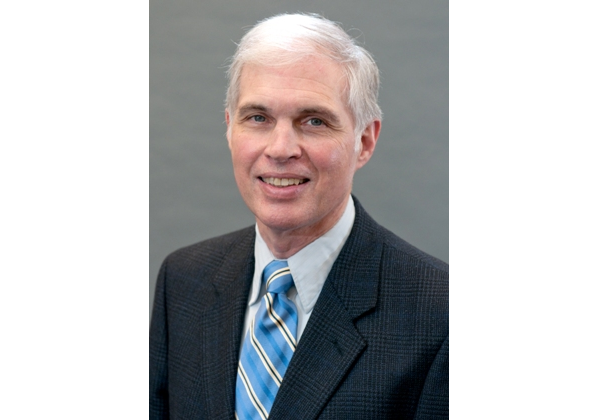
Dr. Jones specializes in trade policy and institutional issues, particularly those focusing on the World Trade Organization. He has served as a consultant to the National Science Foundation and the International Labor Office and as a research associate at the U.S. International Trade Commission, and was senior economist for trade policy at the U.S. Department of State. Dr. Jones is the author of numerous articles and four books, including Politics vs. Economics in World Steel Trade, Export Restraint and the New Protectionism, Who’s Afraid of the WTO? and most recently, The Doha Blues: Institutional Crisis and Reform in the WTO.

In light of some recent developments Boston Global Forum (BGF) has made, we had an opportunity to sit down with Professor Kent Jones of Babson College again to explore other possible solutions for our topic. Readers of our previous posts may have noticed that BGF was able to identify Better Factories Cambodia as a possible model for other countries to replicate. However, according to Professor Jones, there is a reason why this strategy may not be possible.
BGF: Many experts attributed the success of Better Factories and the International Labor Organization’s involvement in Cambodia to a trade agreement between the U.S and Cambodia in 1999, which basically required improved labor conditions for factory workers in exchange for a higher percentage of quota for garment exports into the U.S. If this is the case, why do you think that the U.S government, or any other Western powers, did not re-implement a similar agreement in order to incentivize local authorities to come up with better working conditions for garment workers in their countries?
Professor Kent Jones: There was indeed a formal special textiles/clothing trade agreement between Cambodia and the US in 1999, which led to improvements in working conditions there. Unfortunately, the circumstances that allowed this agreement have changed, and it is no longer possible to replicate it for other countries.
At the time, Cambodia, like all other developing countries, was subject to the Multifiber Agreement (MFA), a global system of trade quotas on nearly all categories of clothing sold in the US, Europe and other industrialized countries. Each exporting country typically had certain quota shares in the US market, which were strictly controlled.
The US-Cambodia agreement was designed to provide an incentive for Cambodia to improve worker rights and working conditions in exchange for significant increases in its quota access to the US market. As part of the arrangement US AFL-CIO representatives went to Cambodia to organize workers there and monitor progress. There were controversies during those years as to how much progress was being made, but in the end Cambodia did receive increased market access as a result of the reforms that took place.
There were two important elements of the deal that were crucial in making it work. One was that the MFA ruled the world textile/clothing market. This global system of quotas allowed countries like the US to offer special deals to certain countries based on criteria such as progress on worker rights (other deals were based on political criteria). The second element was that Cambodia was not in the WTO; it joined eventually in 2004.
These circumstances were important because the MFA was being phased out at the time for members of the WTO, based on the new agreements of the Uruguay Round of trade negotiations, completed in 1994. As long as the MFA was in force, Cambodia could benefit from its special agreement on market access with the US, since all other countries were restricted by MFA quotas. As the MFA was phased out over the period 1995-2005, all WTO countries were gradually allowed more and more unfettered access to the US and European markets, which was eroding the benefits of any extra quota access granted to Cambodia.
Still, the US-Cambodia deal allowed the US to continue the incentive program until Cambodia joined the WTO (after a long accession process) in 2004. At that point, Cambodia was entitled to the full benefits of the MFA phase-out that was completed in 2005. The US no longer had any leverage to control Cambodian market access to the US, based on the MFN treatment Cambodia received upon joining the WTO, and the MFA phase-out that now applied to Cambodia as well.
We now have a quota-free global trading environment in textiles and clothing. Tariffs are still imposed on these products, but they are regulated by the WTO tariff binding rule, which prohibits countries from raising tariffs unilaterally. In addition, the MFN rule prohibits WTO members from raising tariffs against any other individual WTO member on a discriminatory basis. Thus a deal like the earlier US-Cambodia agreement would no longer be possible for any WTO members, including Bangladesh.
The legacy of the agreement was that it gave the ILO, workers’ rights and labor unions a foothold in Cambodia, and these groups continue to have some impact there. Improvements in working conditions and worker rights in Bangladesh and other countries will have to come from other strategies besides intergovernmental trade deals.
This is why, as I suggested in our discussion a few weeks ago, that company codes of conduct, backed up with consumer group or NGO pressure, would be the most promising path.
Otherwise, a formal plan for improving a country’s work environment would require the government itself to agree to ILO and/or outside group monitoring of labor conditions. The US and other countries may need to find other means of leverage in order to persuade reluctant governments to implement reforms.
BGF: Thank you for your insights, Professor.

by Admin | Sep 26, 2013 | Highlights
In its September monthly meeting, the Boston Global Forum looks at successful labor-rights implementation models and ways to implement these models in Bangladesh, Vietnam, and Cambodia .

Photo: Arnold Zack (left) with Governor Michael Dukakis at the BGF meeting
The Boston Global Forum has been working feverishly to find pragmatic solutions that can ameliorate health and safety conditions of garment factory workers in Bangladesh. In order to prevent another disaster like the Rana Plaza collapse or Tazreen factory fire, we have garnered support from impassioned government and academic leaders who are committed to devoting their time, knowledge and insight to the cause. In BGF’s September monthly meeting held on September 18, 2013, Governor Michael Dukakis, Arbitrator and Harvard Law School Researcher Arnold Zack, Harvard Business School Professor John Quelch and Co-Founder and Editor-in-Chief Mr Nguyen Anh Tuan met in Cambridge, Massachusetts to share proceedings from the month previous and divulge ideas to accelerate the movement.
Chaired by Governor Dukakis, BGF’s monthly meeting opened with a discussion and analysis of the recent two-day conference held at New York University’s Stern Center on Business and Human Rights on the future of the garment industry in Bangladesh with reference to human rights issues. Major US and European retailers, governmental organizations, Bangladeshi officials and other key players were invited to participate in the conference. In realization of the need to both organize another round-table discussion and to ensure greater participation, Mr Tuan proposed an online conference, organized by BGF, in the coming months.
In this month’s meeting, the crux of the conversation was on the search for model third-world countries where international labor law standards have been successfully and sustainably demonstrated. Rising to the top was the International Labor Organization’s Better Factories Cambodia program. Formerly known as the ‘ILO Garment Sector Project’, Better Factories Cambodia rose out of a trade agreement between the United States and Cambodia in 2001 through which the US assured Cambodia access to its markets in exchange for improved working conditions in the garment industry. The ILO works closely with the Cambodian government, the Garment Manufacturer’s Association in Cambodia and international retailers to ensure safe and conducive working conditions in Cambodia.
Better Factories Cambodia employs multiple assiduous approaches to implement the highest possible safety standards in garment factories. Mr Zack said that the ILO uses a monitoring and evaluation procedure based on 500 different elements addressing fundamental issues like child labor and freedom of unions, and selective issues like over-time wages, maternity leave and protective equipment. The results then feed into extensive reports that detail levels of compliance of garment factories to these factors.
The success of Better Factories Cambodia also lies in its unique labor dispute resolution mechanism- the Arbitration Council. This national tripartite institution is made up of representatives from labor unions, the ministry and factory owners. All labor cases and conflicts are brought before the council that has developed a reputation for fairness and independence. The success of this form of mediation has made the council a model for judicial reform in Cambodia. Such is the triumph of Better Factories Cambodia that “factories from China are now relocating to Cambodia”, said Zack. He adds that retailers are proud of their association with ethical working conditions, in Cambodia, and are not discouraged by being held accountable to international standards.
Despite its success, the Cambodian model has been replicated in only a handful of countries, for instance in Lesotho. Thus far, it hasn’t been applied to Bangladesh. Troubled by the program’s limited expansion, Governor Dukakis raised provocative questions at the BGF meeting: “Why haven’t the U.S. and other interested countries been pushing it? Why aren’t we and others actively advocating for it?” Upon consequent research by the BGF team, it was discovered that the answer might lie in the understanding the transition from a global system of trade quotas called the ‘Multifiber Agreement’ to the WTO’s quota-free trading environment.

Governor Dukakis and John Quelch discuss future steps for the BGF
After deliberating over ILO’s Cambodian model, members of the Boston Global Forum steered the discussion towards other possible strategies to address the ‘Issue of the Year’. One key approach proposed was recognizing the importance of consumer education and pressure in maintaining international standards. Another approach suggested was for BGF to focus on work place safety under the larger aegis of worker rights. Professor Quelch introduced a broad-picture paradigm to the discussion by asking whether BGF should focus on Bangladesh alone or persevere for an all-ASEAN absorption of ILO standards? In support for the Cambodian model, he also suggested that BGF should research the reasons behind the success of the Cambodian model and publish its findings online as a statement of advocacy.
In closing, Professor Quelch reminded the BGF about the need to collaborate with experts in the field by inviting their participation through written commentary and statements on the website. He also proposed actively reaching out to Michael Posner, Labor Rights Advocate and head of the Stern Center for Business and Human Rights to demonstrate our willingness to aid his efforts on the issue.
The Boston Global Forum will work on these propositions in the coming month and will convene for another round of discussions in October 2013. If you wish to join our conversation or participate in our meetings, please send in your request to our Editor-in-Chief, Mr Nguyen Anh Tuan at [email protected]
by Admin | Sep 28, 2013 | Highlights
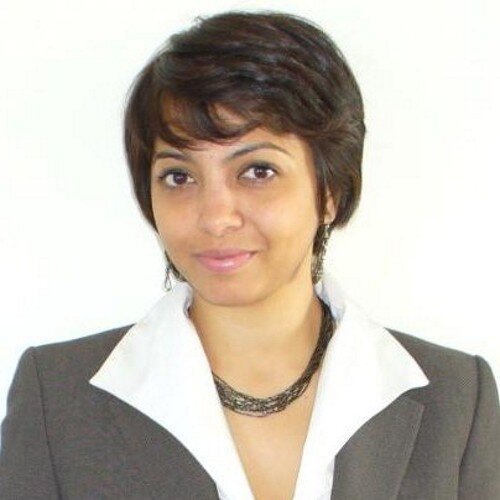
Shruthi Rao has over a decade of experience in sustainability project management, from inception to implementation. She has worked on environmentally sustainable projects across various industries, including education, newspaper publishing, and IT, encompassing areas such as carbon and water footprint analysis, data center energy efficiency, life cycle assessment (LCA) and e-waste management, and building business case for renewable energy. Working at A Clean Future (ACF) as a managing consultant, Rao is currently expanding her study of sustainability to the garment industry keeping in mind all three levels- health, social and environmental.

BGF- Is it possible to make fashion, which is such a niche and extravagant industry, sustainable?
Rao- Absolutely! It can be made sustainable and we want to start with apparel in the light of the recent events in the garment industry. Not only are there labor issues and work place safety issues but fashion is also one of the most environmentally polluting industries, especially with chemicals and water. ACF has a think tank component that is aimed at bringing people together to talk about what are the gaps that need to be identified for sustainable fashion. When we did some research, we looked for markers of sustainability of the fashion industry. Food industry has labels, construction has ‘green building’ options, but there is nothing for apparel, nothing that says how sustainably they were made. That is the talk of 2013. We at ACF want to look at sustainability from sourcing of raw material to manufacturing to production to use and disposal.
BGF-What is the final aim of ACF’s project?
Rao-As a think tank we try to identify gaps. The history of the fashion-industry shows that it is not a forward-thinking industry, not even their technology and business models. But what they respond to, very quickly, is consumer demand. The only way to bring about change in the industry is by leveraging consumer demand. We realized that there was no way to convey to consumers, while they shop, whether the garment was made sustainably or not. Currently, the only way is to research brand reputation and brand reputation can be easily skewed or mislead. We started looking for product-level information for consumers. Every garment bears information on how to iron or wash or where it was made, but nothing on how it was made. So we decided to conduct a market assessment to see if consumers would be interested in such information at a product level. We launched our internet survey about a month ago and 400 people have already filled it out. Our plan is to publish our findings about this consumer insight in a white paper and then raise awareness on how much consumers would like to know about these issues. We are trying to understand what are those cultural idiosyncrasies are that make consumers choose one garment/brand over another. We want to find out all aspects of sustainability and then find a way to describe it in a simply packaged manner- like a label on a garment. We also want to speak with fashion industry representatives and see what’s possible for them and if they would be ready for a label. We think companies like Patagonia and Eileen Fisher would be interested in communicating their responsible actions to people. We are also interested in finding out if retailers and departmental stores would be interested in reserving a section for sustainable clothes if brands and consumers express interest and willingness.
The Sustainable Apparel Coalition came up with the Higg Index – a standardized way of collecting information from all companies. From the industry-side there is effort going on. But there is not much happening at the other end. We hoped to bridge the gap and initiate effort from the consumer side too.
BGF-How will you source information on sustainability and how do you plan to present it?
Rao-We can’t go by what brands say so we are looking at combining information from each brand to get this information. For this, we’ll refer to the Higg Index. The Higg Index is a way of organizing all available brand information such that it is easily and readily available to the public. If I want to, I can go to a company’s annual report to find out how sustainable they are but for an end consumer, this is not always possible. We are looking into different methods- either take information from the public domain and display it, or communicate with fashion brands and use their information to convey it to consumers or work with Sustainable Apparel Coalition to deliver their research. We’re conducting an evaluation project to assess which method works best.
Our aim is to avoid confusing labels, like the ones that exist in the food industry. We want to standardize our information and present it in a way that resonates with the larger group not just the ones who are sustainably inclined. We want the information to be readily available so consumers don’t have to conduct independent research. Campaigns like GoodGuide are good for people who care enough to look. We want to find a way that makes product information available without the extra step of searching for it.
As our next step, we want to do industry surveys and get industry feedback on how to present this information about sustainability to consumers.
To read more about ‘A Clean Future’s’ sustainable fashion initiative and its consumer survey, please click here.
by Admin | Sep 27, 2013 | Highlights
Even though championed by many people as the representative model for the improvement of international labor standard, Better Factories Cambodia has recently come under pressure and criticism from both the Cambodian government and the factory association when the group decided to introduce an extensive initiative to improve garment workers’ conditions. This dilemma comes as the authority argues that tougher supervision will force businesses out of Cambodia and into less-regulated neighboring countries. This is clearly an existing paradox that any country must solve. If you were the Prime Minister or President of Cambodia? What should you do?
Boston Global Forum will work on these propositions in the coming month and will convene for another round of discussions in October 2013. If you wish to join our conversation or participate in our meetings, please send in your request to our Editor-in-Chief, Mr Nguyen Anh Tuan at [email protected]
The original story was reported by Kate O’Keeffe of the Wall Street Journal.
U.N.-Backed Group to Publicize Safety Failings Over Government Objection
A monitoring group backed by the United Nations said it would begin to publicize garment factories’ compliance with worker rights and safety standards in Cambodia, a controversial program that its organizers say will be the world’s most extensive initiative to improve working conditions at plants.
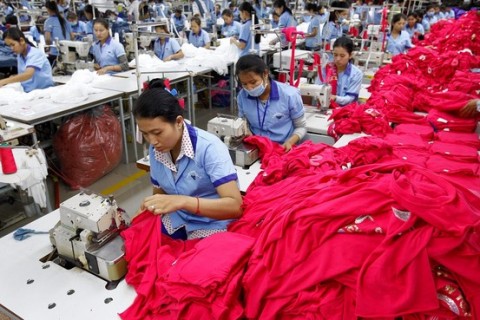 Photo: European Pressphoto Agency
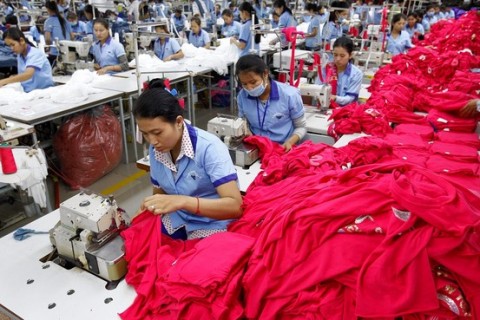
A group plans to publicize compliance with worker rights at garment factories. Above, a Cambodia facility.
The program, which Better Factories Cambodia began rolling out on Friday, comes as the global garment industry faces increasing pressure to improve conditions after the collapse of a garment factory in Bangladesh killed more than 1,100 people in April.
Accidents also have occurred in Cambodia recently, including two at factories in May, one of which left two people dead.
But Cambodia’s government and the country’s factory association have opposed the new program, saying it could wind up shaming only some factory owners and driving business to other countries where oversight is less rigorous.
The Better Factories program, set up by the U.N. and other groups a dozen years ago to improve conditions in Cambodia’s garment trade, is trying to reassert itself after coming under fire from some worker advocacy groups for not doing enough to improve factory conditions. Better Factories, among other things, inspects manufacturing facilities for problems such as child labor and unsafe conditions and offers training for factories to upgrade but has no enforcement power.
Jill Tucker, Better Factories Cambodia’s chief technical adviser, said she hoped that the new push to publicize compliance with worker rights and other standards not only will improve factory conditions in the Southeast Asian nation, but also will pressure people in the garment industry in other countries.
Getting support for the plan from all of Better Factories’ financial backers—which include the Cambodian government, the garment manufacturers’ association, unions, international buyers and foreign governments, such as the U.S.—has been a challenge, Ms. Tucker said.
Sat Samoth, undersecretary of state at Cambodia’s Labor Ministry, said the disclosure plan would violate a memorandum of understanding between the government and the U.N. International Labour Organization.
And the plan won’t help workers, Mr. Sat said. “If we disclose the names of the factories, and then the buyers stop purchasing the products, what will happen to the workers? They will lose their jobs,” he said. The government punishes factories that break the country’s labor laws.
Ken Loo, secretary-general of the Garment Manufacturers Association in Cambodia, called the Better Factories plan an example of “vigilante justice” and said that any change at factories has to be “demand-driven.”
“Consumers talk, talk, talk. But at the end of the day, they just buy the cheapest thing on the shelf,” he said.
Photo: Will Baxter/Bloomberg News
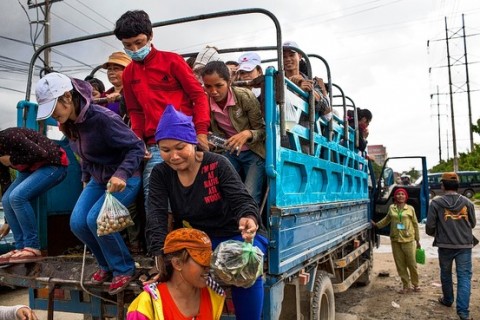
The Garment Manufacturers Association in Cambodia called the plan ‘vigilante justice.’ Above, workers leave a truck at the end of a workday in the country.
Starting this January, Ms. Tucker said, Better Factories plans to release information on a new website about the performance of all factories it has inspected at least twice regarding 21 issues, such as wages, worker rights, fire safety and treatment of unions.
Currently Better Factories Cambodia submits confidential reports to factories, whose business partners have the option to buy them. It also publishes public summaries that don’t name plants.
Under the new program, factories that have had three or more Better Factories inspections and still fall two standard deviations below the mean for compliance will be subject to an even higher level of disclosure. About 15 of the 450 factories the program monitors currently would fit that description. The public will see how they measure up against 53 legal requirements.
During the first year of the initiative, factories will get one opportunity to resolve any violations before they are disclosed. From then on, their performance will be published without negotiation.
Wal-Mart Stores Inc. the world’s largest retailer by sales, applauded Better Factories Cambodia’s plan. “We know that transparency is vital to make progress in improving factory conditions throughout the global supply chain, and can only be accomplished by working with stakeholders across the industry,” it said.
Sweden-based H&M Hennes & Mauritz AB also expressed support for the plan and said it wouldn’t lead the retailer to abandon any potentially problematic plants without good reason.
“H&M is aware of the challenges the factories in Cambodia face,” said spokeswoman Andrea Roos. The company doesn’t immediately stop working with factories if problems are detected, she said. As long as factories take negative findings seriously and commit to resolving issues, H&M prefers to maintain long-term relationships with them, Ms. Roos said.
Kong Athit, vice president of the Coalition of Cambodian Apparel Workers’ Democratic Union, said the Better Factories initiative would give the union more ammunition to pressure brands to force their factory partners to improve conditions.
Created a dozen years ago, the Better Factories program in Cambodia initially had a powerful weapon to encourage factories to improve: Under a 1999 trade deal, the U.S. offered to expand access to its market, which had quotas on garment imports, if Cambodian companies improved labor standards.
The 2005 expiration of the quota system left the Better Factories program without much leverage to pressure factories. It also enabled manufacturers to campaign successfully for Better Factories to stop naming them in their public reports, which, the companies said, could hurt their business, said Sandra Polaski, a deputy director general of the U.N. International Labour Organization.
Mr. Loo, of the manufacturers’ association, said the factories weren’t powerful enough to have forced the program into making the change.
Ms. Polaski and Ms. Tucker said the decision was a bad one that eroded the program’s progress in the country.
The ILO now is pushing for greater transparency in all of its monitoring programs globally. The organization’s Better Work Haiti program publicly discloses key portions of its factory audits, though the garment industry there is quite small.
In Bangladesh, following the Rana Plaza disaster, a consortium of more than 80 brands signed a fire and building-safety accord, which will publicly disclose factory performance.
David Welsh, Cambodia program director for the Solidarity Center, a nongovernmental organization affiliated with the U.S.-based AFL-CIO labor group, said that if any stakeholder in Cambodia doesn’t get on board with the new Better Factories proposal, “it’s a de facto admission that they either can’t or won’t monitor what’s going on in their factories and an admission that presumably, they suspect what’s going on doesn’t meet international labor standards.”
by Admin | Sep 25, 2013 | Papers & Reports, Highlights
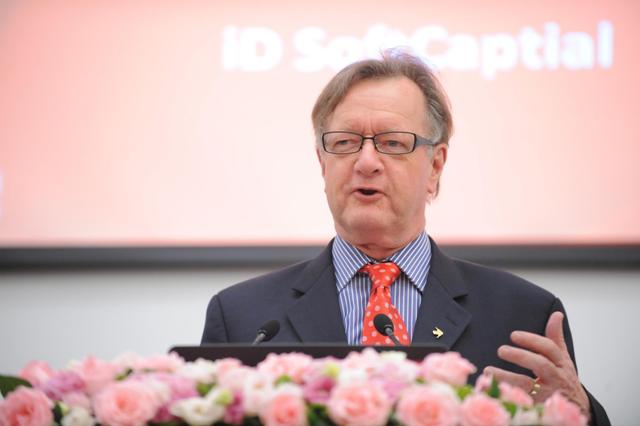
Professor John Quelch, the co-founder and member of Board of Director of Boston Global Forum, is a distinguished Professor of Business Administration, who has has recently authored a Harvard Business School case study on the tragic Rana Plaza garment factory collapse that claimed 1127 lives on April 24, 2013. The case study offers an insightful snapshot of the reform analysis needed in the garment manufacturing industry. He currently leads the discussion on Boston Global Forum on this globally challenging complex issue.
His study recognizes that the Bangladeshi parliament, cornered by domestic and international pressure following this tragedy, ratified changes to their Labor Acts earlier this summer. The case study examines the systemic failure of government protection of human rights for garment factory employees, extols the need for adherence to the principles of socially responsible manufacturing and provides an overview of the cooperation pact signed by 80 global retailers and two labor unions to improve working conditions in Bangladesh.
The Bangladesh Garment Industry
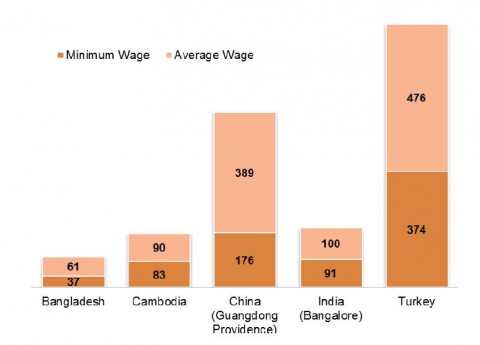
The Bangladesh Garment Industry was a major force in its economy, employed about 3.6 million people or roughly 2% of the population. Its export value was worth $21 billion in 2012, and accounted for 13% of GDP in 2011. Nearly 90% of garments produced in Bangladesh were exported to the U.S, Europe and Canada. In 2012, the US alone received $4.9 billion worth of garment exports from Bangladesh. Low cost production and large capacity were key incentives for multinational corporations (MNCs) to produce garments in Bangladesh. Combined labor cost differentials were expected to help Bangladesh’s garment industry to reach $30 billion by 2015.
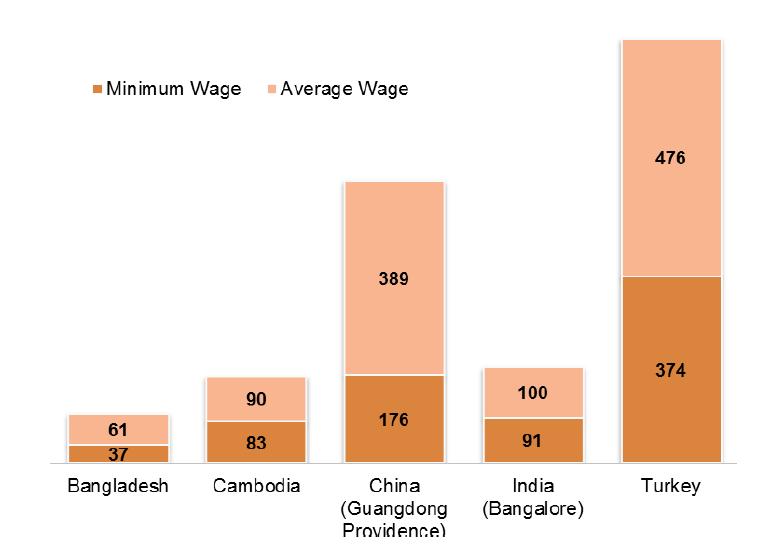
Garment Industry Monthly and Minimum Wages by Country
On April 24, 2013, the nine-storey Rana Plaza building collapsed, killing 1,100 workers and injuring 2,500 more. The disaster might be prevented due to the fact that there was a warning of the building unsafe and recommendation that the worker be evacuated by an engineer to the building owner. However, it was passed over in silence, and by the declaration of a local government official that the building was safe.
And MNCs’ response….
After the collapse, MNCs with operations in Bangladesh had several options on how to respond to the Rana Plaza tragedy.
MNCS were not directly responsible for the disaster, and many MNCS that had already been conducting factory inspections (like Wal Mart) would continue to do business as usual, and retain private records of infractions with no obligations to alert workers of safety hazards.
Some MNCS decided to shift all of its production away from Bangladesh to other , lower risk countries (like Disney corporation) in order to lessen the risk of negative press or irresponsible labor practices tainting the brand.
The other MNCs could decide to remain its manufacture in Bangladesh and partner with factories to improve safety conditions in the garment industry.