(BGF) – The latest installment of the BGF Leader Series featured Robert Desimone, the Director of the McGovern Institute and Don Berkey Professor in the Department of Brain and Cognitive Sciences at MIT, and a member of the BGF Board of Thinkers. As a result of Professor Desimone’s work and the McGovern Institute’s accomplishments, the Boston Global Forum is going to recognize and honor the McGovern Institute’s research achievements and Edward M. Scolnick Prize in Neuroscience in the Boston Global Archive, and at a later stage the BGF will add it to the Boston Global Museum. Throughout his talk, which focused on the topic “unlocking the human brain”, Professor Desimone noted the important technological advances that are currently being made which are allowing for new breakthroughs in the field of neuroscience.
In many respects, the McGovern Institute for Brain Research at MIT is at the forefront of these advances and breakthroughs in both technology and neuroscience. Currently, the McGovern Institute has a team of 19 faculty researchers of whom several are members of the National Academy of Science and one, Robert Horvitz, is a Nobel Laureate. Additionally, the faculty at the McGovern Institute features three members who are leading the way in optogenetics – the insertion of genetic material into neurons to make them sensitive to light thus giving researchers control over the neural circuits.
Given its extremely talented faculty, the McGovern Institute is well-placed to both drive advances the field of neuroscience, as well as ultimately translate those advances into beneficial treatments and therapies for patients suffering from brain disorders.
Looking back to his time at the National Institute for Mental Health (NIMH), Professor Desimone recalled having a realization that, despite the intelligence, dedication, and commitment of the clinicians and psychiatrists on staff, it was difficult for them to make any progress in developing new treatments for their patient population: “the sad fact was that the pipeline of new ideas – new drugs and so on – was really pretty dry”. It was at this point in his career that Professor Desimone became aware that it was essential to deepen our understanding of the fundamentals of how brains work if there was to be any progress in the development of new treatments.
It was also at this point that Professor Desimone happened to accept the offer to become the Director the McGovern Institute, an institute focused on understanding how the human brain functions and translating that knowledge into beneficial therapies and treatments for patients suffering with brain disorders. Additionally, in recent years, an array of new technological advances have driven the field of neuroscience forward. In particular, Professor Desimone mentioned three technological advances that have had particularly significant impacts on neuroscience research: the sequencing of the genetic code; advancements in brain imaging; and recent efforts at Stanford University to make the brains of animals transparent.
The effort to sequence the human genome was initially an extraordinarily large and expensive feat. However, in the years since the human genome was first successfully sequenced, the price of sequencing the genome has dropped so low that it is feasible to sequence an individual’s genome in order to identify genetic mutations. While direct links between genetic mutations and psychiatric disorders only exist in rare cases, being able to identify genetic mutations can play a crucial role in better understanding and recognizing genetic vulnerabilities that can lead to brain disorders. Moreover, a more in-depth knowledge of genetic vulnerabilities can help further deepen the understanding of how a genetic mutation can result in an abnormally functioning brain circuit that ultimately results in a brain disorder.
As for advances in brain imaging, the use of MRIs and the further developments in MRI technologies have greatly contributed to neuroscience research. MRI technology now allows researchers to image functional changes so that they can “track the activity patterns in the brain – at least on a coarse temporal time-scale – and you can actually see the brain at work as people solve problems, have emotions, understand situations, and so on, and its been applied now to many different patient groups to try and track down sources of abnormal neural circuits.”
Professor Desimone hopes that this technological advance will be merged with the advances in genome sequencing. He holds out hope that, if the advances in brain imaging and genome sequencing are combined, “We might be able to say that the vulnerability involves abnormal activity in certain particular brain circuits that we’ve identified in MRIs by imaging people that we’ve done this genotyping on. Once we’ve narrowed that down between the gene alteration and the abnormal activity in circuits, that is going to put us on the right path to new discoveries.”
Thirdly, researchers at Stanford University’s Karl Deisseroth Lab found a way to render the brains of animals transparent. This advance could make it easier for researchers to more accurately label and track the connections of neural circuits. As Professor Desimone noted: “People are just now gearing up to apply this new technology and human brain material from people who have died but have lived lives where they’ve suffered from schizophrenia, Alzheimer’s Disease, and so on and we will be able, with unprecedented ability, to track the abnormalities in this brain tissue from people who have died with disease.”
Professor Desimone also discussed the potential that neuroscience research could help us better understand cultural differences. As he noted, neuroscience research currently involves scientists working across the globe. Given the global scope of the research, it is possible that we may develop a deeper understanding of how the human brain functions in different cultures. This information could play a crucial role in helping to decipher cultural differences, minimize cultural misunderstandings, and facilitate greater cross-cultural understanding and collaboration.
The discoveries and advances Professor Desimone discussed during his BGF Leader Series lecture have all occurred recently, with some even occurring within the past year. Given the rapid pace of development in neuroscience it is likely that there will continue to be new and exciting discoveries about the fundamentals of the human brain for years to come, with exciting global implications. Although much uncertainty remains regarding the fundamentals of how the human brain functions, it is clear that the McGovern Institute will continue to lead the neuroscience research that will unlock the secrets of the human brain.
In a recent article in the Washington Post, Simon Denyer discusses the U.S. efforts to rebalance its foreign policy toward Asia. In particular, the article notes that the U.S. rebalancing has not been particularly effective in reducing regional tensions. As Denyer notes, the U.S. alliance with Japan means that the U.S. is hardly a neutral party in its efforts to balance its relations with China and Japan. Moreover, the fact that the U.S. was not given much, if any, notice about China’s imposition of an “air defense zone” in the East China Sea or Japanese Prime Minister Shinzo Abe’s visit to the Yasakuni Shrine shows that the U.S. efforts in the region are ineffective. Given these actions by both China and Japan, the risk of miscalculation is particularly high. This echoes a point made by Joseph Nye during his BGF Distinguished Lecture: neither side wants war but there is a risk of miscalculation. Thus the article concludes that crisis management in the region must be an immediate priority for the U.S. An excerpt of the article if provided below. Click here to read the full article.
Obama’s Asia rebalance turns into headache as China, Japan relations spiral down
By Simon Denyer
Beijing recently announced that Japanese Prime Minister Shinzo Abe was simply not welcome there. At the same time, the media in both countries have stoked the fire with speculation about a possible military confrontation that could even suck in the United States, which is bound by treaty to defend Japan in case of attack.
U.S. officials and experts say conflict between the Asian powers remains unlikely, with both sides keen to preserve economic ties, and neither likely to emerge as a clear winner.
Nevertheless, as naval vessels spar in disputed waters and fighter jets patrol disputed skies, the risk of accidents or miscalculations has risen. Maintaining peace in Asia’s seas has become a major U.S. concern in the year ahead, officials say.
Obama had hoped his foreign policy “pivot” toward Asia would shift U.S. government attention away from trouble spots like Afghanistan and Iraq and toward a region brimming with economic opportunities. It aimed to strengthen longstanding alliances in Asia and bring new resolve to managing the relationship with China.
But experts say the U.S. effort to deepen relations with both China and its traditional Asian allies could become an impossible balancing act.
“In a perfect world you could do both simultaneously without conflict, but in practice, whatever you do with one side, the other side sees it as being done against them,” said Ely Ratner at the Center for a New American Security in Washington.
Daniel Russel, assistant U.S. secretary of state for East Asian and Pacific affairs, said the security umbrella provided by Washington had preserved regional peace for decades. The rebalance merely reinforces that commitment to Asia in a time of rising Chinese influence and assertiveness, he argued.
But some experts argue that the current emphasis on strengthening security links with Japan, South Korea, Vietnam, Australia and the Philippines could actually be raising regional tensions.
“It is only encouraging those in China who have been saying for some time that Americans have reverted to Cold War thinking, and this is part of a containment strategy,” said Mel Gurtov, a professor of political science at Portland State University, and editor of the Asian Perspectivejournal.
America’s alliance with Japan means the United States is far from a neutral party in the China-Japan spat, “and the most important relationship we have to cultivate, with China, is bound to suffer.
In a sign of the increasing strain in U.S.-China relations, , American lawmakerswarned last week at a House subcommittee hearing that the United States must not tolerate China’s use of military coercion in pursuit of its territorial claims. Beijing’s nationalist Global Times newspaper responded by arguing that U.S. meddling risked “triggering an all-out confrontation with China,” – although the paper simultaneously advocated restraint and cooperation.
Tensions escalated in late November after China imposed an air defense identification zone over vast swathes of the East China Sea, including over islandsadministered by the Japanese. It demanded that all noncommercial aircraft entering the zone identify themselves or face “defensive emergency measures”. Calling China’s bluff, the United States flew two B-52 bombers through the zone within days.
Then, in December, Abe paid a visit to the Yasukuni Shrine in Tokyo, where 14 war criminals from World War II are honored. That stoked anger in both China and South Korea, where memories of Japanese wartime atrocities remain fresh, and prompted Beijing’s declaration that Abe had “shut the door to dialogue.”
U.S. efforts to calm tensions have so far had little apparent effect. Indeed, it is not clear either side is paying Washington much attention: U.S. officials say they learned less than an hour in advance about the air defense zone — which came just before Vice President Biden’s visit to the region– and got little notice about Abe’s visit to the shrine
Russel said the roll-out of China’s air defense zone had increased the risk of “miscalculation and an accident” that could lead to conflict.
“This was not simply a failure to communicate,” he said in a telephone interview. “It was an action that bypassed a consultative, collaborative process, and is a type of behavior that is inconsistent with the stature and status that China clearly seeks in the region.”
The Yasukuni visit, he said, was a concern of a much lower order of magnitude, but was nevertheless “very disappointing.”
Russel said Obama’s efforts to build a relationship with Chinese President Xi Jinping had improved channels of communication and given Washington the chance “to speak very directly and very candidly to China about our concerns.”
Nevertheless,Beijing is not backing down from its territorial claims. Indeed, this month it announced an effort to exert tighter control over fishing in the waters of the South China Sea, which are contested by countries such as Vietnam and the Philippines: the State Department called that move “provocative and potentially dangerous.”
For Washington, the immediate priority is crisis management — getting both sides to agree to some rules of engagement in contested waters and skies, as well as encouraging them to set up hotlines.
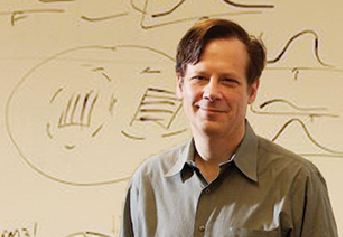
Welcome! I am Tuan Nguyen, Co-Founder and Editor-in-Chief of the Boston Global Forum. I am very honored to introduce Professor Robert Desimone.
Robert Desimone is the director of the McGovern Institute and the Doris and Don Berkey Professor in the Department of Brain and Cognitive Sciences at MIT and a member of the Boston Global Forum’s Board of Thinkers. Prior to joining the McGovern Institute in 2004, he was director of the Intramural Research Program at the National Institutes of Mental Health, the largest mental health research center in the world. He is a member of the National Academy of Sciences and the American Academy of Arts and Sciences and a recipient of numerous awards, including the Troland Prize of the National Academy of Sciences, and the Golden Brain Award of the Minerva Foundation.
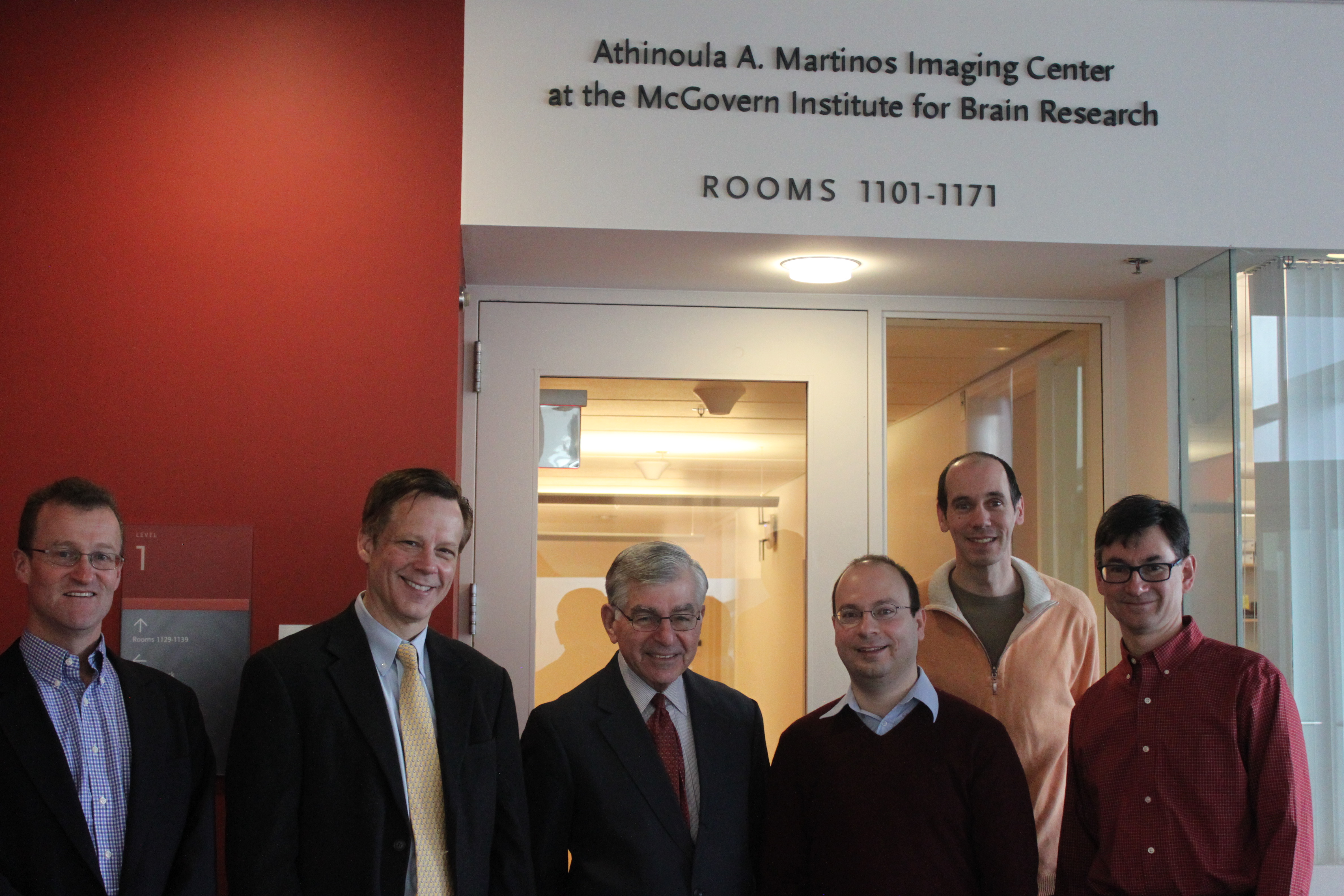
Governor Michael Dukakis, Chairman of Boston Global Forum visited the McGovern Institute on December 12, 2013. He is very impressed and has a high respect for the achievements of the McGovern Institute and Professor Robert Desimone. He and Kitty Dukakis will visit the Institute again in late April 2014. Today Chairman Michael Dukakis and Kitty Dukakis are in Los Angeles, they send their warmest regards to Professor Robert Desimone and the McGovern Institute for Brain Research.
Boston Global Forum will recognize and honor the McGovern Institute’s research achievements and Edward M. Scolnick Prize in Neuroscience in the Boston Global Archive, and at a later stage BGF will add it to the Boston Global Museum, an initiative we are working on for the future.
Today, We are honored to present to you Professor Robert Desimone on the BGF Leader Series.
Professor Desimone’s Presentation:
Photos from Chairman Dukakis’ visit to the McGovern Institute:
Chairman Michael Dukakis visiting with researchers from the McGovern Institute at MIT, and the McGovern Institute’s Director, Professor Robert Desimone.
Chairman Michael Dukakis learning more about the McGovern Institute’s groundbreaking research.
Chairman Dukakis meeting with a researcher from the McGovern Institute.
Robert Desimone is director of the McGovern Institute and the Doris and Don Berkey Professor in the Department of Brain and Cognitive Sciences at MIT and a member of the Boston Global Forum’s Board of Thinkers. Prior to joining the McGovern Institute in 2004, he was director of the Intramural Research Program at the National Institutes of Mental Health, the largest mental health research center in the world. He is a member of the National Academy of Sciences and the American Academy of Arts and Sciences and a recipient of numerous awards, including the Troland Prize of the National Academy of Sciences, and the Golden Brain Award of the Minerva Foundation.
This video, provided by the McGovern Institute, provides a brief introduction to Professor Robert Desimone’s background, research, and work at the McGovern Institute.
This video provides further information on Professor Desimone’s work.
For more information on Professor Desimone’s work, click here to read a profile on Professor Desimone contained in the McGovern Institute’s Brain Scan publication or visit the MIT news page to read an interview with Professor Desimone on the Federal BRAIN Initiative.
This brief introduction provides insight into the McGovern Institute’s research, objectives, and overall operating philosophy of linking a better understanding the brain to their efforts to improve the lives of people living with brain disorders.
This video provides a longer, more in-depth introduction to the research being conducted at the McGovern Institute, as well as the researchers who make it all possible.
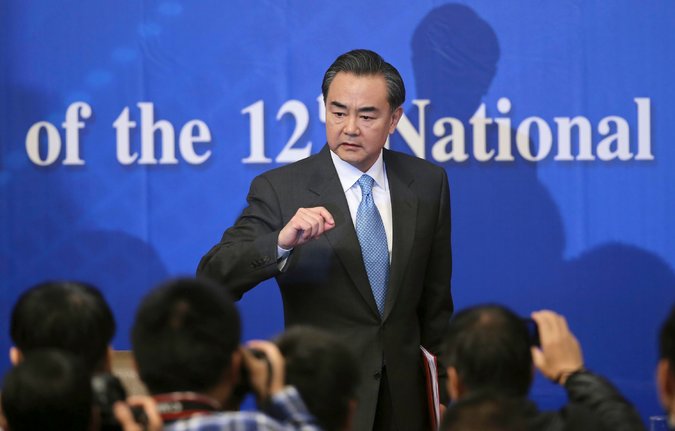
In an article published in the New York Times on March 8, 2014, Edward Wong discussed recent comments the Chinese Foreign Minister, Wang Yi. On March 8th, Mr. Wang made comments that reflected the regional tensions between China and Japan. Mr. Wang noted that there would be no compromise on the issues of territory or history, direct references to China’s territorial dispute with Japan in the South China Sea as well as Japanese Prime Minister Shinzo Abe’s recent visit to the Yusukuni Shine, which honors Japanese war dead including a number of war criminals from WWII. Additionally, Wong discusses Mr. Wang’s comments that China was seeking to engage in negotiations in order to resolve territorial disputes in the South China Sea, but that China would “never accept unreasonable demands from smaller countries.” Finally, the article touches upon China’s commitment build a new model of relations between the U.S. and China, rather than simply maintaining a competitive relationship. An excerpt from the article is contained below. Click here to read the full article.
China’s Hard Line: ‘No Room for Compromise’
By Edward Wong
BEIJING — The Chinese foreign minister took a strong stand Saturday on China’s growing territorial disputes with neighboring nations, saying that “there is no room for compromise” with Japan and that China would “never accept unreasonable demands from smaller countries,” an apparent reference to Southeast Asian nations.
The foreign minister, Wang Yi, a former ambassador to Japan, made his comments at a news conference on the fourth day of the National People’s Congress, an annual meeting of China’s rubber-stamp legislature. Mr. Wang took questions from foreign and Chinese news organizations on the same morning he learned that a Malaysia Airlines flight bound for Beijinghad disappeared, and he spoke on a range of subjects that included Ukraine, the Korean Peninsula and relations between China and the United States. Mr. Wang stressed several times that China was committed to regional peace.
But Mr. Wang did not mince words on the subject of Japan and its prime minister, Shinzo Abe, who has angered Chinese leaders with recent public remarks on China-Japan relations and with a visit in December to the Yasukuni Shrine in Tokyo, where Japanese war dead are honored, including 14 Class A war criminals. In the East China Sea, China refuses to accept Japan’s administration of, or its claims to, islands that Japan calls the Senkaku and China calls the Diaoyu.
“On the two issues of principle — history and territory — there is no room for compromise,” Mr. Wang said in answer to a question from a Japanese reporter on the deterioration of China-Japan relations. “If some people in Japan insist on overturning the verdict on its past aggression, I don’t think the international community and all peace-loving people in the world will ever tolerate or condone that.”
Tensions between China and Japan have been playing out in diplomacy around the globe. In January, the Chinese ambassador to Britain and his Japanese counterpart both wrote op-ed articles for The Daily Telegraph in which they equated the other country to Lord Voldemort, the villain in the Harry Potter series. The two ambassadors even refused to sit at the same table during a televised BBC interview. Also in January, Mr. Abe told an audience at the Davos conference in Switzerland that the rivalry between China and Japan was similar to that between Germany and Britain before World War I, meaning their differences could supersede their close trade ties.
“I wish to emphasize that 2014 is not 1914, still less 1894,” Mr. Wang said Saturday. “Instead of using Germany before the First World War as an object lesson, why not use Germany after the Second World War as a role model?”
He added, “Only by making a clean break with the past and stop going back on one’s own words can the relationship emerge from the current impasse and have a future.”
In the South China Sea, China has been trying to stake sovereignty to islands and waters that are also claimed by Southeast Asian nations. Vietnam, the Philippines and Malaysia are among the opponents to China’s claims. The United States has said it takes no side on sovereignty issues but will maintain freedom of navigation. More recently, it has asserted that the so-called nine dashes map that some Chinese officials say defines China’s ambitious claims in the South China Sea violates international law because the territorial boundaries are not based on land features.
“As for China’s territorial and maritime disputes with some countries,” Mr. Wang said, “China would like to carry out equal-footing consultation and negotiation and properly handle by peaceful means on the basis of respecting historical facts and international law. There will not be any change to this position.”
“We will never bully smaller countries, yet we will never accept unreasonable demands from smaller countries,” he added.
As for relations with the United States, which is expected to remain the supreme military power in the Pacific for years to come, Mr. Wang said, “We stand ready to work with the United States to uphold peace and stability in the Asia-Pacific region. We believe the Asia-Pacific region should be the testing ground for our commitment to building a new model of major-power relations, and not a competitive arena.”